


Food Technology Standards: May 2026 – Methods for Residue Detection, Bacterial Control, and Spice Quality
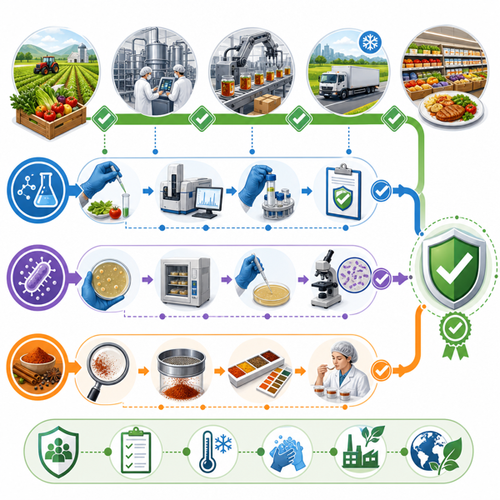
Ensuring food safety and quality remains at the forefront of the global food industry. In May 2026, five new international standards were published, reflecting significant advancements in analytical methods, hygiene protocols, and specifications for both raw and processed foods. Spanning meat residue detection, microbial safety in dairy, and spice specifications, these updates address critical touchpoints across the food chain. For professionals in food technology—including quality managers, compliance officers, food safety engineers, and procurement specialists—adherence to the latest standards is essential for safeguarding products, meeting regulatory requirements, and bolstering consumer confidence.
Overview
Food technology is constantly evolving with new scientific discoveries, changes in global regulations, and emerging risks. The publication of international standards plays a critical role in defining best practices for safety, quality, traceability, and fair trade across all segments of the food sector. These newly released ISO standards for May 2026 provide robust tools for residue analysis, microbial enumeration, quality assessment, and food labeling. This article covers:
- Key highlights and implications of five new standards in the food sector
- Practical insights for implementation and compliance
- The broader impact on food supply chains and international trade
Industry professionals will gain a clear understanding of recent changes—and actionable steps for integrating new requirements into their safety and quality management systems.
Detailed Standards Coverage
ISO 23883:2026 - Fluoroquinolone Residue Detection in Meat and Fish
Meat, fish and their products — Determination of fluoroquinolone residue content — High performance liquid chromatography-tandem mass spectrometry method
This new international standard specifies sensitive, validated methods for determining the content of fluoroquinolone residues in meat, fish, and their products using high performance liquid chromatography-tandem mass spectrometry (HPLC-MS/MS). Fluoroquinolones—such as enrofloxacin, ciprofloxacin, norfloxacin, ofloxacin, and pefloxacin—are widely used as veterinary drugs. However, their residues are strictly regulated due to health concerns, including the development of antimicrobial resistance.
Scope and requirements:
- Applies to all meat and fish products from livestock, poultry, and aquaculture
- Specifies reagents, calibration protocols, validation, sample preparation, extraction, cleanup, and detection
- Requires analytical equipment capable of high sensitivity and selectivity: HPLC-MS/MS with electrospray ionization
- Emphasizes method validation, precision parameters (repeatability and reproducibility), and detection/quantification limits
- Laboratories must use certified reference materials for calibration and regularly verify accuracy using internal standards
Who should comply:
- Food laboratories, processors, slaughterhouses, aquaculture and fishing companies, regulatory and inspection agencies
Notable implications:
- Aligns with stringent food safety regulations and international trade requirements regarding veterinary residues
- Enhances consumer safety and confidence by supporting reliable, confirmatory analysis of residues
- Supports rapid response in case of non-compliance findings and risk-based surveillance
Key highlights:
- Multi-residue, multi-matrix detection capability in one analytical run
- Demonstrates high precision at trace (low μg/kg) concentrations in complex food matrices
- Complements regulatory Maximum Residue Limit (MRL) enforcement
Access the full standard:View ISO 23883:2026 on iTeh Standards
ISO/TS 27265:2026 - Enumeration of Thermoresistant Spores in Milk and Dairy
Heat-processed milk and dried milk products — Enumeration of thermoresistant spores of thermophilic bacteria
Bacterial spores, particularly those tolerant to heat, are a persistent concern in dairy processing. This technical specification updates methods for enumerating thermoresistant spores of thermophilic bacteria in a wide array of heat-treated milk and dried dairy products. Using colony-count techniques after rigorous heat treatment, labs can reliably detect populations capable of surviving sterilization or UHT processing.
Scope and requirements:
- Applies to pasteurized, UHT, sterilized milk, dried whole milk, skim milk, buttermilk, and whey products
- Introduces two validated heating procedures: 106 °C (30 min, autoclave) and alternative 100 °C (30 min, water bath)
- Specifies culture media composition, pouring/spread plating, incubation at 55 °C (48 h), and enumeration protocols
- Ensures differentiation between procedures in test reporting for clarity
Who should comply:
- Dairy manufacturers, microbiological laboratories, food safety auditors, and regulatory bodies
Notable improvements:
- Provides flexibility and harmonization for different laboratory capacities worldwide
- Directly supports quality control, shelf-life determination, and product safety, as spores can cause spoilage and potential health risks
Key highlights:
- Dual heating options increase feasibility and accuracy
- Spore enumeration methods are aligned with international food microbiology best practices
- Results guide cleaning, sanitation, and raw material selection in dairy plants
Access the full standard:View ISO/TS 27265:2026 on iTeh Standards
ISO 25166:2026 - Zhacai (Pickled and Squeezed Vegetables): Specification and Test Methods
Zhacai (pickled and squeezed vegetables) — Specification and test methods
Zhacai is a traditional East Asian preserved vegetable, and this new standard codifies product specifications and safe production requirements for the first time at the international level. Covering both product quality and safety parameters, ISO 25166:2026 is essential for producers and exporters of Zhacai in global markets.
Scope and requirements:
- Defines sensory and physical-chemical requirements: color, flavor, texture, salt and acid content, impurity limits
- Sets strict microbiological and contaminant thresholds, including limits for lead, cadmium, coliforms, salmonella, and staphylococcus aureus
- Specifies acceptable additives and their maximum levels
- Lists packaging, labeling, sampling, storage, and transportation requirements for traceability and safety
- Includes validated test methods for each quality/safety parameter
Who should comply:
- Zhacai manufacturers, food packers, trade inspectors, and food safety labs
Practical results:
- Reduces risk of heavy metal and microbiological contamination
- Guarantees consistency of product quality for consumers and trading partners
- Supports compliance with food import/export regulations
Key highlights:
- First international benchmark for the authenticity and safety of Zhacai
- Coverage of end-to-end production, from contaminants to transport
- Standardized test methods for all quality and safety attributes
Access the full standard:View ISO 25166:2026 on iTeh Standards
ISO 973:2026 - Pimento (Allspice): Whole or Ground Specification
Pimento [Pimenta dioica (L.) Merr.], whole or ground — Specification
Allspice is globally traded as both a culinary and medicinal ingredient. This third edition of ISO 973:2026 redefines the quality parameters for both whole and ground pimento, supporting transparent trade and consumer protection.
Scope and requirements:
- Specifies sensory requirements (flavor, odor), freedom from contaminants (animal and vegetable matter), and precise chemical composition (volatile oil, ash, moisture)
- Defines clear thresholds for foreign and extraneous matter
- Provides recommendations for storage and transport to ensure preservation of sensory properties and safety
Who should comply:
- Spice producers, importers/exporters, wholesalers, quality assurance testers, food safety authorities
Implications:
- Ensures product uniformity and authenticity, protecting buyers from adulteration
- Harmonizes international trade in pimento/allspice
- Supports improved shelf life and product quality via storage recommendations
Key highlights:
- Updated and stricter limits on moisture content for improved microbiological safety
- New labeling and marking requirements
- Enhanced guidance for supply chain logistics
Access the full standard:View ISO 973:2026 on iTeh Standards
ISO 959-1:2026 - Black Pepper: Specification (Part 1)
Pepper (Piper nigrum L.), whole or ground — Specification — Part 1: Black pepper
Black pepper is one of the highest traded spices globally, and this major update supports all stakeholders in assuring its purity and quality. This standard specifies requirements for whole and ground black pepper across major commercial categories (non-processed, semi-processed, and processed).
Scope and requirements:
- Defines product types and associated grading requirements for appearance, chemical composition, odor, and flavor
- Sets strict limits on extraneous matter, light berries and broken berries, foreign matter, total and acid-insoluble ash, volatile oil, piperine, moisture, and other key quality attributes
- Includes sampling, test methods, marking, and packing requirements
- Offers informative annexes on storage/transport and berry microscopy
Who should comply:
- Pepper producers, spice mills, exporters/importers, food labs, regulatory inspectors, and procurement teams
Significance:
- Facilitates standardized testing and fair international trade
- Protects buyers and consumers from adulterated and substandard shipments
What's new:
- Reduced maximum moisture content for food safety and shelf-life improvements
- Inclusion of “best before date” and enhanced traceability in labeling
- Updated cross-references to aligned international analytical standards
Key highlights:
- Covers all selling forms (whole and ground, processed and semi-processed)
- Focuses on attributes important for flavor, appearance, and shelf stability
- Supports enactment of food safety management systems within spice supply chains
Access the full standard:View ISO 959-1:2026 on iTeh Standards
Industry Impact & Compliance
Adoption of these latest standards presents both immediate and long-term benefits for organizations across the food industry:
- Regulatory alignment: Ensure compliance with national and international food safety and trade regulations.
- Risk reduction: Minimize contamination incidents, costly recalls, and reputational damage by applying state-of-the-art testing and quality assurance.
- Competitive advantage: Demonstrate rigorous quality commitments to partners, retailers, and consumers.
- Efficiency: Streamlined test methodologies and harmonized product definitions reduce market entry barriers and enhance audit readiness.
Compliance timelines depend on local regulatory uptake, customer agreements, and the specific nature of each standard. Immediate review of quality protocols and supplier contracts is strongly advised.
Risks of non-compliance include product rejection, legal action, loss of certifications, and erosion of marketplace trust.
Technical Insights
While these standards address diverse food categories, common technical threads include:
- Reliance on validated, performance-based instrumental methods (e.g., HPLC-MS/MS for residues; precise moisture and volatile oil determinations for spices)
- Emphasis on laboratory best practices, including the use of certified reference materials and strict quality controls
- Detailed protocols for representative sampling and robust test reporting
- Unified focus on end-to-end traceability (from sampling through transport and storage)
Implementation best practices:
- Update laboratory SOPs and staff competencies to reflect each new method
- Audit supply chain partners for product conformity and documentation
- Leverage accredited third-party testing as needed
- Maintain full documentation for both product and process audits
Testing and Certification:
- Invest in updated equipment and materials, especially where enhanced detection sensitivity or new packaging/labeling rules apply
- Schedule proficiency testing and external validation for new analytical and microbiological methods
Conclusion and Next Steps
The May 2026 wave of food technology standards delivers powerful tools for industries committed to innovation, food safety, and consumer protection. From residue testing in complex animal matrices to spore monitoring, vegetable product benchmarks, and rigorous spice specifications, these standards represent the next step in harmonizing global food quality and safety.
Recommended actions for organizations:
- Review each new ISO standard relevant to your production or supply chain
- Engage with technical staff and quality teams to assess current compliance and plan for implementation
- Train laboratory and production personnel on updated methods and specifications
- Monitor regulatory updates and client requirements referencing these new standards
- Visit iTeh Standards for complete text access and ongoing updates
Stay at the forefront of food technology by integrating these standards into your risk management and quality assurance frameworks.
Explore these and other essential international food standards at iTeh Standards
Categories
- Latest News
- New Arrivals
- Generalities
- Services and Management
- Natural Sciences
- Health Care
- Environment
- Metrology and Measurement
- Testing
- Mechanical Systems
- Fluid Systems
- Manufacturing
- Energy and Heat
- Electrical Engineering
- Electronics
- Telecommunications
- Information Technology
- Image Technology
- Precision Mechanics
- Road Vehicles
- Railway Engineering
- Shipbuilding
- Aircraft and Space
- Materials Handling
- Packaging
- Textile and Leather
- Clothing
- Agriculture
- Food technology
- Chemical Technology
- Mining and Minerals
- Petroleum
- Metallurgy
- Wood technology
- Glass and Ceramics
- Rubber and Plastics
- Paper Technology
- Paint Industries
- Construction
- Civil Engineering
- Military Engineering
- Entertainment