


May 2026: New ISO Standard Enhances Safety for Materials Handling Equipment
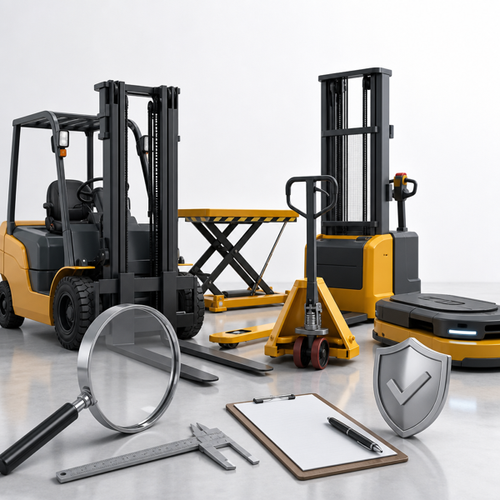
In May 2026, the field of materials handling equipment sees a significant advancement in operational safety with the release of a key ISO standard. The latest publication sets forth critical stability testing requirements designed to address specific high-risk use cases for industrial trucks. As industries demand greater productivity and flexibility, ensuring that equipment can withstand challenging stacking situations is essential to prevent accidents and maintain workplace safety.
Overview
Materials handling equipment—encompassing the broad spectrum of industrial trucks used in warehousing, logistics, manufacturing, and distribution—relies on robust international standards to ensure safety, performance, and compliance. With workplace environments growing increasingly complex and operational demands intensifying, the implementation of new and revised standards is vital for aligning with best practices, minimizing incidents, and meeting regulatory obligations.
This article explores the latest addition to the ISO 22915 series, focusing on stability testing for industrial trucks operating under specialized and high-risk conditions. Readers will gain insight into:
- The scope and applicability of the new standard
- Technical requirements for compliance
- Who must implement these protocols—and why
- Best practices and compliance timelines for adopting these requirements
Detailed Standards Coverage
ISO 22915-8:2026 – Additional Stability Test for Industrial Trucks in Special Stacking Conditions
Industrial trucks — Verification of stability — Part 8: Additional stability test for trucks operating in the special condition of stacking with mast tilted forward and load elevated
The newly published ISO 22915-8:2026 serves as a crucial addendum to the established suite of industrial truck stability standards. This part specifically introduces an additional test procedure for situations in which a truck is stacking loads with its mast tilted forward and the load held at an elevated height—a scenario associated with heightened risk of tip-over accidents and instability.
Scope and Applicability
ISO 22915-8:2026 is applicable to multiple classes of industrial trucks (as defined in ISO 5053-1) when these are fitted with a tiltable mast. Covered truck types include:
- Counterbalance lift trucks
- Reach and straddle trucks
- Pallet-stacking trucks
- Side-loading trucks
- Multi-directional lift trucks
- Rough-terrain trucks
- Articulated counterbalance lift trucks
These variants are widely used in industries where high stacking, heavy loads, and tight storage spaces are common. The additional testing protocol is designed to be integrated into the regular verification process for new or modified truck designs.
Key Requirements and Specifications
The standard lays out precise test conditions and verification steps, with attention to real-world operational configurations:
- Test Environment: The truck is positioned on a tilt table under controlled conditions.
- Mast Position: The mast is fully tilted forward and elevated with a test load in place—simulating maximum risk.
- Stability Measurement: The truck’s resistance to tipping is evaluated, ensuring compliance with minimum stability thresholds.
- Configuration-Specific Parameters: Test details vary by truck design (counterbalance, reach, straddle, etc.), with each sub-class having tailored requirements to address unique stability dynamics.
Compliance and Implementation
Manufacturers, safety engineers, and facility managers must ensure that applicable trucks pass the additional stability verification to comply with ISO 22915-8:2026. For new truck models released after the publication date, immediate integration is recommended; existing fleets should be evaluated, and upgrade plans considered where applicable.
Notable Updates from Previous Guidance
While building on the foundational principles of ISO 22915, Part 8 marks a focused evolution, addressing the increased risks inherent to stacking operations with tilted and elevated masts—widely recognized as a leading cause of tip-over incidents in warehouse and distribution centers. By formalizing the test protocol, the standard closes a crucial safety gap and brings regulatory clarity to OEMs and operators alike.
Key highlights:
- Defines a repeatable test method for critical stacking scenarios with mast tilt and elevation
- Specifies requirements for diverse truck types and operational configurations
- Mandates compliance for OEMs, fleet managers, and operations in high-density storage
Access the full standard:View ISO 22915-8:2026 on iTeh Standards
Industry Impact & Compliance
The introduction of ISO 22915-8:2026 significantly affects procurement, safety protocols, and compliance pathways in sectors utilizing industrial trucks for warehousing and logistics.
Implications for Businesses
- Duty of Care: Employers have a legal and moral obligation to minimize risk—adopting the latest stability testing ensures best-in-class safety practice.
- Procurement: Sourcing trucks compliant with the new standard reduces future retrofitting costs and liability risks.
- Operator Training: Personnel must understand new requirements and be trained to recognize compliant equipment.
- Regulatory Inspections: Reference to ISO standards in national and regional regulations makes compliance a prerequisite for operation in many markets.
Timelines and Transition
- Immediate Application for New Equipment: Manufacturers are expected to integrate the new testing protocol as standard procedure for models produced after May 2026.
- Existing Fleet Assessment: While not strictly retroactive, risk assessments should include evaluation for compliance, especially in high-density stacking environments.
- Certification and Documentation: Comprehensive records of compliance testing are necessary for audits and insurance purposes.
Benefits of Adoption
- Enhanced operator and workplace safety
- Reduced incident rates and downtime
- Improved equipment lifecycle value
- Stronger legal and regulatory standing
Risks of Non-Compliance
- Elevated accident and injury potential
- Fines, sanctions, and operational bans in regulated regions
- Legal liability and reputational damage
Technical Insights
ISO 22915-8:2026 shares a core philosophy with related stability standards: objective, reproducible testing based on real-world risk scenarios. Across all covered truck types, several key technical themes emerge:
- Emphasis on Realism: The test simulates operational extremes to ensure safety in worst-case stacking conditions.
- Standardized Measurements: Use of a tilt table and defined mast positioning leads to reliable comparative data.
- Alignment with ISO Family: This standard complements ISO 22915 Parts 1–7, providing a holistic approach to truck stability.
- Tailored Protocols: Each truck type receives appropriate adaptations to reflect unique geometries and loading patterns.
Implementation Best Practices
- Early Design Integration: OEMs should build stability testing into prototype phases to minimize redesign cycles.
- Operator Awareness: Safety training should explicitly cover the relevance of stability in tilted/elevated stacking.
- Routine Verification: Even in fielded equipment, periodic assessment against ISO 22915-8:2026 helps catch and correct developing issues.
Testing and Certification Considerations
- Testing should be performed by accredited laboratories familiar with tilt-table verification methods.
- Documentation must be thorough, listing truck configuration, load details, mast angles, and pass/fail outcomes.
- Certification to ISO 22915-8:2026 can be a competitive differentiator for manufacturers and fleet operators.
Conclusion and Next Steps
The release of ISO 22915-8:2026 marks a pivotal moment for anyone engaged in the operation, design, or management of industrial trucks in the materials handling equipment sector. Its focus on high-risk stacking situations addresses a longstanding industry need, providing both practical testing protocols and actionable guidance for compliance.
Recommendations for organizations:
- Review procurement and equipment assessment policies for alignment with ISO 22915-8:2026
- Collaborate with manufacturers and testing bodies to ensure all required equipment is tested and compliant
- Enhance operator training to include awareness of the new stability requirements
- Maintain thorough documentation to support regulatory audits and internal safety reviews
Staying up to date with ISO’s evolving standards ensures not only legal compliance but organizational excellence in safety and operational efficiency.
To access the full standard and stay informed about future updates, visit ISO 22915-8:2026 on iTeh Standards.
Categories
- Latest News
- New Arrivals
- Generalities
- Services and Management
- Natural Sciences
- Health Care
- Environment
- Metrology and Measurement
- Testing
- Mechanical Systems
- Fluid Systems
- Manufacturing
- Energy and Heat
- Electrical Engineering
- Electronics
- Telecommunications
- Information Technology
- Image Technology
- Precision Mechanics
- Road Vehicles
- Railway Engineering
- Shipbuilding
- Aircraft and Space
- Materials Handling
- Packaging
- Textile and Leather
- Clothing
- Agriculture
- Food technology
- Chemical Technology
- Mining and Minerals
- Petroleum
- Metallurgy
- Wood technology
- Glass and Ceramics
- Rubber and Plastics
- Paper Technology
- Paint Industries
- Construction
- Civil Engineering
- Military Engineering
- Entertainment