


ISO 28219:2026 Standard Enhances Product Labelling for Packaging and Distribution — May 2026 Launch
ISO 28219:2026 Standard Enhances Product Labelling for Packaging and Distribution — May 2026 Launch
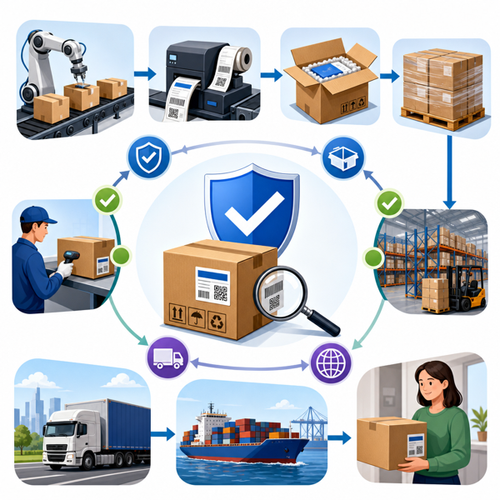
Efficient supply chains and accurate traceability begin with proper labelling. In May 2026, the International Organization for Standardization (ISO) published ISO 28219:2026, a significant update aimed at revolutionizing how products, parts, and components are labelled and directly marked. Focusing on both machine-readable approaches (like linear bar codes and two-dimensional symbols) and clear human-readable data, this standard is set to uplift quality, compliance, and efficiency across the packaging and distribution sector.
With one major standard covered in this release, businesses can now rely on the latest practices for identification, tracking, and regulatory adherence throughout complex global supply chains.
Overview
Packaging and distribution of goods represent the backbone of today’s globalized trade. Proper labelling is not only essential for inventory and asset management, but also for quality assurance, product traceability, and regulatory compliance throughout the supply chain. Modern standards, such as the newly released ISO 28219:2026, address the rising complexity of logistical networks by unifying bar code and marking technologies across industries.
This article presents a detailed look at ISO 28219:2026, outlining what’s new, its scope, critical technical requirements, and what industry professionals should do to stay compliant and competitive. Whether you’re a supply chain manager, compliance officer, quality control leader, product engineer, or procurement specialist, understanding this standard could make a measurable impact on your operations.
Detailed Standards Coverage
ISO 28219:2026 – Labelling and Direct Product Marking with Linear Bar Code and Two-Dimensional Symbols
Full Title: Packaging — Labelling and direct product marking with linear bar code and two-dimensional symbols
The ISO 28219:2026 standard provides an overarching framework for the labelling and direct marking of products, parts, and components using both linear (1D) bar codes and two-dimensional (2D) data carriers—such as QR codes, Data Matrix, and composite symbologies. Building upon previous versions, this third edition features important technical updates that reflect evolving industry requirements, particularly around traceability, serialization, and digital integration.
Scope & Applicability
ISO 28219:2026 establishes:
- The content and specifications for machine-readable symbols (bar codes and 2D codes)
- Human-readable label requirements, ensuring clarity and accessibility
- Direct marking guidelines to enable reading in both fixed and handheld scanning environments at manufacturing sites and throughout the product lifecycle
Its applications span across entire supply chains: from inventory and distribution, to manufacturing, acquisition, transportation, repair, and end-of-life processes. Any organization that marks, packages, or handles items subject to tracking, quality assurance, inventory control, or regulatory checks will benefit from this standard.
Key Requirements and Specifications
The standard provides in-depth guidance around:
- Unique item and batch identification: Defines the use of unique codes, serialization, and lot numbers for both items and product groups.
- Data Format Requirements: Specifies the accepted structure for data to be encoded, supporting both GS1 Application Identifiers (AIs) and ANSI MH10.8.2 Data Identifiers (DIs). Ensures compatibility for multi-sector implementations.
- Bar Code and Symbol Management: Recommends best-practice symbologies (such as Code 128, Data Matrix, QR Codes), their layout and placement, symbol quality requirements per ISO/IEC 15415/15416/29158, and protective packaging considerations.
- Mandatory and Optional Data Fields: Distinguishes between baseline data requirements—like enterprise codes, item identification codes, lot/batch numbers—and additional information (country of origin, production or expiration dates, links to digital resources).
- Syntax and Concatenation: Details the correct use of DIs, AIs, data separators, and specifies rules for concatenating multiple data fields within bar codes.
- Direct Internet Links: Advocates embedding URLs (per IEC 61406-x and ISO/IEC 18975) in 2D barcodes for seamless integration with digital supply chain and product information platforms.
- Label Construction and Durability: Annexes cover adhesive and durability requirements, ensuring marking longevity throughout various environments.
Who Needs to Comply
- Manufacturers of packaged goods
- Supply chain and distribution centers
- Procurement and logistics professionals
- Quality assurance teams and auditors
- Companies in aerospace, automotive, electronics, pharmaceuticals, defense, and general manufacturing
Practical Implications for Implementation
Complying with ISO 28219:2026 means:
- Upgrading or validating existing labelling systems
- Ensuring that product and package markings meet the defined machine-readability and human-readability standards
- Harmonizing data formats and coding conventions across trading partners
- Integrating support for digital traceability and product lifecycle information access via embedded URLs
- Improved error reduction, product recall efficiency, counterfeit mitigation, and regulatory readiness
Notable Changes from Previous Versions
- Support for URL formats (incorporating IEC 61406-x and ISO/IEC 18975)
- Mandatory use of concatenated fields and 2D symbologies
- Removal of stacked symbologies in favor of modern 2D codes
Key highlights:
- Unified, cross-industry labelling approach with machine and human readability
- Codified support for digital supply chain integration (URLs, digital twins)
- Enhanced serialization, traceability, and batch management features
Access the full standard:View ISO 28219:2026 on iTeh Standards
Industry Impact & Compliance
The enhanced requirements in ISO 28219:2026 are poised to bring substantial operational and compliance benefits to the packaging and distribution sector:
- Improved Traceability: Serial numbers, batch codes, and unique identifiers ensure rapid isolation of affected goods, supporting effective recalls and reducing counterfeiting risks.
- Seamless Digital Integration: With support for encoded URLs, companies can bridge the gap between physical logistics and online data/sharing platforms, supporting the rise of Industry 4.0 initiatives and digital product passports.
- Harmonized Supply Chains: By standardizing identifiers and label requirements, partners across the globe can interpret, trust, and process information quickly and accurately, regardless of the origin of goods.
- Regulatory Readiness: As digitalization becomes a regulatory priority (especially for pharmaceuticals, automotive, and electronics), ISO 28219:2026 provides a recognized, standardized method for compliance.
Compliance Considerations and Timelines
- Organizations should audit their current marking and scanning setups.
- New purchases of labelling and scanning equipment should reference ISO 28219:2026 compliance.
- Transition periods may be needed for legacy systems—early adoption provides a competitive advantage and operational security.
- Documentation and training for relevant teams should be updated to reflect new requirements and best practices.
Benefits of Adoption
- Reduced operational errors due to standardized label content
- Simplified audits and quality assurance processes
- Faster, more accurate inventory and asset management
- Value chain transparency supporting sustainability and customer trust
Risks of Non-Compliance
- Inconsistent markings leading to lost inventory and misrouted goods
- Non-conformance in regulated industries leading to fines, recall costs, or loss of market access
- Inability to integrate with advanced digital logistics or customer-facing platforms
Technical Insights
Common Technical Requirements
- Machine-readable symbols (1D/2D) must pass ISO/IEC-defined print quality checks (e.g., per ISO/IEC 15415/15416/29158)
- Markings must incorporate globally recognized identifier structures (GS1, ANSI MH10.8.2, ISO/IEC 15459, DUNS, CAGE codes)
- Layout and positioning must allow for both fixtured and handheld scanning environments
- Concatenated data fields should be limited in length and, if exceeding 48 characters, 2D codes are required
- Human-readable information must mirror the encoded data for accessibility and redundancy
Implementation Best Practices
- Assess Existing Infrastructure: Evaluate current software, hardware, and workflows for compatibility with new standards
- Upgrade Labelling Systems: Ensure print quality, symbol selection, data formatting, and durability are optimized for both linear and 2D codes
- Train Teams: Update process documentation, quality manuals, and staff skills to correctly generate, read, and interpret new markings
- Establish Data Governance: Maintain integrity and uniqueness of enterprise codes, batch numbers, and serialized identifiers
- Audit Regularly: Implement periodic reviews of label content and scanning accuracy to mitigate errors and ensure ongoing compliance
Testing and Certification Considerations
- Use certified testing tools to verify bar code and symbol print quality (ISO/IEC 15415/15416)
- Validate correct data population in both machine- and human-readable fields
- Document operational procedures for label creation, application, and scanning to satisfy potential certification or inspection demands
- Support external audits with clear traceability from marking to database and digital platforms
Conclusion / Next Steps
The May 2026 update represented by ISO 28219:2026 is a pivotal step for stakeholders in the packaging and distribution of goods. By adopting this standard, businesses will be better equipped to meet contemporary traceability, quality, and regulatory demands as well as provide enhanced value to supply chain partners and end customers.
Key Takeaways:
- ISO 28219:2026 offers a unified, robust approach to labelling and direct marking, blending traditional and digital supply chain requirements.
- Early adoption secures compliance, improves operational accuracy, and future-proofs your supply chain against advancing digitalization trends.
- Teams should audit, update, and document all related marking and labelling processes, ensuring all software and hardware are brought up to standard.
Action Steps:
- Download the full standard and share with relevant stakeholders
- Initiate a gap analysis to identify process or technology updates required
- Stay informed about future updates and related standards through iTeh Standards
By aligning with ISO 28219:2026, organizations not only mitigate regulatory and operational risks but also seize new opportunities for supply chain integration, transparency, and digital transformation.
Categories
- Latest News
- New Arrivals
- Generalities
- Services and Management
- Natural Sciences
- Health Care
- Environment
- Metrology and Measurement
- Testing
- Mechanical Systems
- Fluid Systems
- Manufacturing
- Energy and Heat
- Electrical Engineering
- Electronics
- Telecommunications
- Information Technology
- Image Technology
- Precision Mechanics
- Road Vehicles
- Railway Engineering
- Shipbuilding
- Aircraft and Space
- Materials Handling
- Packaging
- Textile and Leather
- Clothing
- Agriculture
- Food technology
- Chemical Technology
- Mining and Minerals
- Petroleum
- Metallurgy
- Wood technology
- Glass and Ceramics
- Rubber and Plastics
- Paper Technology
- Paint Industries
- Construction
- Civil Engineering
- Military Engineering
- Entertainment