


May 2026: New Standards Advance Meteorology, Biotechnology, and Nanotechnology
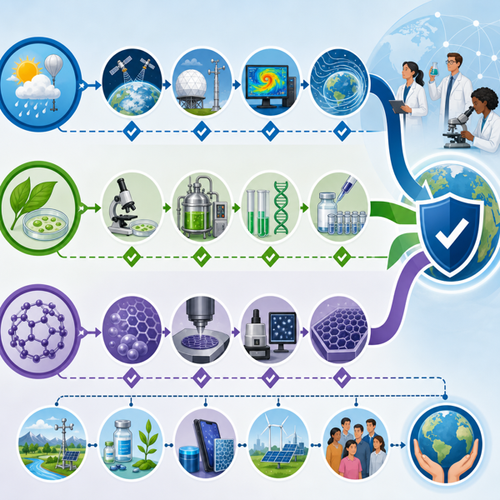
May 2026 Brings Key Standards Advances for Meteorology, Biotechnology, and Nanotechnology
Across the field of natural and applied sciences, May 2026 saw the release of four significant international standards. These cover critical areas such as meteorological instrument calibration and test methods, universal best practices for cell viability analytical methods in biotechnology, and a template for specifying carbon nanotube products in nanomanufacturing. Together, they push forward reliability, quality, and traceability in scientific measurement, industrial laboratories, and high-tech materials supply chains. Professionals across research, quality management, regulatory compliance, and engineering will find these updates vital for ensuring best practices and maintaining global competitiveness.
Overview / Introduction
The natural and applied sciences sector underpins progress in climate observation, emerging therapeutics, advanced materials, and precision manufacturing. Standards in this field provide the foundation for consistent data, safe products, and comparable results across laboratories and industries worldwide.
The latest May 2026 standards release includes:
- Two detailed updates for meteorology instruments (radiosondes), focusing on humidity sensor and temperature sensor laboratory test procedures.
- A comprehensive specification for biotech professionals conducting cell viability analysis.
- A new template and key characteristic guidelines for carbon nanotube materials in advanced manufacturing.
In this article, we’ll break down each standard, highlighting who should comply, practical implementation considerations, and what’s changed compared to previous practice.
Detailed Standards Coverage
ISO 8932-2:2026 - Laboratory Test Method for Errors in Radiosonde Humidity Sensor Calibration
Meteorology — Radiosonde — Part 2: Laboratory test method for errors in radiosonde humidity sensor calibration
Reliable weather prediction and climate data depend on precise upper-atmosphere measurements, with radiosondes playing a central role. ISO 8932-2:2026 sets out rigorous laboratory test methods and technical requirements for determining calibration error in radiosonde humidity sensors, essential for quality assurance in mass-produced devices.
The standard details:
- Technical specifications for laboratory setups to evaluate humidity calibration error, including the use of precision hygrometers, humidity generators, climate chambers, and measurement software.
- Test procedures for assessing sensor accuracy across a wide temperature range from −90°C to 35°C and relative humidity from 1%rh to 100%rh. Importantly, relative humidity is calculated over liquid water even below 0°C, as per the standard.
- Methods for uncertainty evaluation, capturing factors such as test setup limitations, reference instruments, and environmental conditions.
Who should comply:
- Radiosonde manufacturers and calibration laboratories.
- National meteorological services and research institutions carrying out independent sensor checks.
Practical impact:
- Ensures SI-traceable calibration, promoting global comparability of atmospheric measurements.
- Reduces dry-bias and temperature-dependent errors that can affect climate model accuracy and weather forecasts.
- Establishes uniform reporting and uncertainty analysis methods, enabling regulatory confidence and better sensor batch verification.
Key highlights:
- Specifies environmental control for laboratory test setups.
- Requires uncertainty evaluation for both reference relative humidity and radiosonde sensors.
- Details step-by-step procedures and reporting methods based on SI traceability.
Access the full standard:View ISO 8932-2:2026 on iTeh Standards
ISO 8934-1:2026 - General Requirements for Cell Viability Analytical Methods
Biotechnology — Cell viability analytical methods — Part 1: General requirements and considerations
Cell viability assessment is central to biotechnology research, therapeutic development, process control, and quality release testing. ISO 8934-1:2026 establishes the first truly universal reference for cell viability analytical methods, promoting harmonization and comparability in one of biotech’s most critical measurement domains.
The document covers:
- Definitions and selection criteria for “fit for purpose” cell viability analytical methods.
- Requirements for standard operating procedures (SOPs) and quality control materials.
- Guidance for managing sources of variability across pre-analytical, analytical, and post-analytical stages (e.g., sample preparation, environmental factors, data analysis).
- Principles of method validation, including qualification characteristics (accuracy, repeatability, sensitivity), and documentation/reporting best practices.
Who should comply:
- Biotech R&D labs (cell culture, drug development, toxicity testing).
- Therapy manufacturers and cell bank quality managers.
- QC/QA professionals in regulated cell therapy or cellular product sectors.
Practical impact:
- Fosters consistent reporting, reducing errors and enabling reliable product release and research reproducibility.
- Minimizes cross-lab variability, supporting regulatory submissions and audit readiness.
- Provides a harmonized framework applicable to sectors as diverse as stem cell manufacturing, biologics QC, and academic research.
Key highlights:
- Defines core and sector-neutral concepts for cell viability measurement.
- Recommends SOP development and quality control material management.
- Emphasizes method qualification, validation, and ongoing verification across the measurement lifecycle.
Access the full standard:View ISO 8934-1:2026 on iTeh Standards
ISO 8932-3:2026 - Test Method for Solar Radiation Error of Temperature Sensors in Radiosondes
Meteorology — Radiosonde — Part 3: Laboratory test method for solar radiation error of temperature sensor in radiosonde
Solar radiation can introduce substantial error in upper-air temperature readings, as radiosonde sensors are often directly exposed to sunlight during daytime soundings. ISO 8932-3:2026 provides a laboratory method to quantify and correct these errors, supporting higher accuracy for climate research and operational meteorology.
Key components of the standard:
- Defined laboratory setups using wind tunnels, climate chambers, solar simulators, and precision instrumentation to replicate in-flight solar exposure.
- Test protocols for assessing the impact of varying air pressure (3 hPa to 1,000 hPa), temperature (−70°C to 50°C), ventilation, sensor boom tilt, and illumination angles.
- Data evaluation techniques, including measurement uncertainty quantification, and guidelines for reporting results.
Who should comply:
- Radiosonde manufacturers seeking certification and performance benchmarking.
- Independent labs validating sensor accuracy under controlled conditions.
- Meteorological agencies responsible for observational data integrity.
Practical impact:
- Enables corrections for solar-induced temperature sensor bias, critical to improving the accuracy of climate models and weather prediction.
- Promotes the use of SI-traceable methods across meteorological testing facilities.
- Supports harmonized correction algorithms and international data comparability.
Key highlights:
- Specifies wind tunnel and solar simulator setups for ground-based calibration.
- Covers broad environmental parameter space for realistic simulation.
- Outlines robust uncertainty assessment methods for reported errors.
Access the full standard:View ISO 8932-3:2026 on iTeh Standards
IEC TS 62565-2-1:2026 - Blank Detail Specification for Single-Walled Carbon Nanotubes
Nanomanufacturing - Product specification - Part 2-1: Carbon nanotube-related products - Blank detail specification: single-walled carbon nanotubes in powders and dispersions
Nanomanufacturing demands precise material properties—especially for single-walled carbon nanotubes (SWCNTs), which are used in electronics, composites, energy storage, and beyond. The IEC TS 62565-2-1:2026 is a new Technical Specification providing a blank detail specification (BDS) and format to define, measure, and report the key control characteristics (KCCs) of SWCNT powders and dispersions.
Key areas covered:
- Lists and defines relevant KCCs (such as tube length, diameter, purity, chirality, conductivity) and recommended measurement and documentation practices.
- Provides a specification template for industry use, supporting detailed bilateral quality agreements between manufacturers and customers.
- Allows “not applicable” or “not specified” for properties irrelevant to the particular application, reinforcing flexibility.
Who should comply:
- SWCNT suppliers and nanomanufacturers.
- Procurement specialists sourcing nanomaterials for advanced technologies.
- Quality teams validating nanomaterial specifications for regulated products.
Practical impact:
- Facilitates transparent communication between buyers and sellers, reducing risk of mis-specification.
- Supports quality control, process consistency, and traceability for high-performance nanomaterials.
- Lays the groundwork for future KCC measurement standards.
Key highlights:
- Establishes harmonized format for specifying and reporting SWCNT properties.
- Promotes traceability in measurement and agreement on property limits.
- Strengthens procurement, quality assurance, and regulatory compliance across the nanotechnology supply chain.
Access the full standard:View IEC TS 62565-2-1:2026 on iTeh Standards
Industry Impact & Compliance
Adopting the latest international standards in natural and applied sciences is more than just a compliance exercise—it’s critical to:
- Ensuring data reliability for climate studies and scientific research
- Supporting regulatory and audit requirements in biotechnology and advanced manufacturing
- Enhancing buyer-supplier confidence in global materials trade
- Enabling accurate, comparable, and traceable measurement results across geographies and sectors
Compliance considerations:
- Training relevant teams on new technical requirements and documentation practices
- Updating internal SOPs and validation protocols
- Reviewing procurement contracts for nanomaterials to reference current detail specification templates
- Scheduling independent laboratory verification for radiosonde batch calibration and correction
Benefits:
- Reduces the risk of faulty measurements impacting research or regulated product release
- Strengthens quality systems and audit readiness for regulatory scrutiny
- Facilitates global harmonization, easing international trade and cross-border collaboration
- Demonstrates commitment to scientific integrity and continuous improvement
Risks of non-compliance:
- Data inconsistency or irreproducibility leading to failed studies or quality issues
- Regulatory non-adherence with potential delays or recalls
- Loss of credibility in research or supplier relationships
Technical Insights
While each standard focuses on its own domain, some unifying technical themes and best practices emerge:
- SI Traceability: All methods emphasize calibration and uncertainty evaluation traceable to the International System of Units (SI), making results credible worldwide.
- Measurement Uncertainty: Detailed processes for assessing and reporting uncertainty (both Type A and B) strengthen reliability and auditability.
- Controlled Laboratory Environment: Rigorous environmental controls (temperature, humidity, pressure, airflow, illumination) underpin repeatability.
- Documentation and SOPs: Whether for cell analysis or nanomaterial procurement, robust SOPs and qualification protocols support standardization.
- Validation and Verification: Ongoing method qualification, validation, and verification are essential for sustainable compliance and competitive advantage.
- Segregation of Pre-Analytical, Analytical, Post-Analytical Phases: Biotechnology standards, in particular, stress handling variability at every lifecycle phase.
Implementation tips:
- Prioritize staff training on new clauses and document practices
- Update your laboratory and production equipment as outlined
- Document your SOP changes and schedule regular audits
- Engage third-party or accredited labs for independent verification where required
Conclusion / Next Steps
The May 2026 international standards updates across meteorological instrumentation, biotechnology analytics, and nanomanufacturing illustrate the evolving needs of science and industry for transparency, repeatability, and global trust.
Key takeaways:
- Leveraging new standards is vital to uphold data quality, comply with regulations, and maintain market leadership.
- Harmonized procedures for calibration, measurement, and reporting benefit both suppliers and customers in rapidly advancing fields.
- Early adoption aids in smoother compliance transitions and reduces operational risks.
Recommendations:
- Review each relevant standard in full and assess your current practices against new requirements
- Engage with iTeh Standards for up-to-date authoritative documentation and support
- Stay proactive: monitoring upcoming revisions and participating in industry discussions ensures your organization remains at the forefront of scientific best practices
For access to these and other essential standards, visit iTeh Standards. Stay informed, stay compliant, and ensure your organization thrives in the ever-evolving landscape of science and technology.
Categories
- Latest News
- New Arrivals
- Generalities
- Services and Management
- Natural Sciences
- Health Care
- Environment
- Metrology and Measurement
- Testing
- Mechanical Systems
- Fluid Systems
- Manufacturing
- Energy and Heat
- Electrical Engineering
- Electronics
- Telecommunications
- Information Technology
- Image Technology
- Precision Mechanics
- Road Vehicles
- Railway Engineering
- Shipbuilding
- Aircraft and Space
- Materials Handling
- Packaging
- Textile and Leather
- Clothing
- Agriculture
- Food technology
- Chemical Technology
- Mining and Minerals
- Petroleum
- Metallurgy
- Wood technology
- Glass and Ceramics
- Rubber and Plastics
- Paper Technology
- Paint Industries
- Construction
- Civil Engineering
- Military Engineering
- Entertainment