


May 2026: New Standards Released for Telecom and AV Engineering
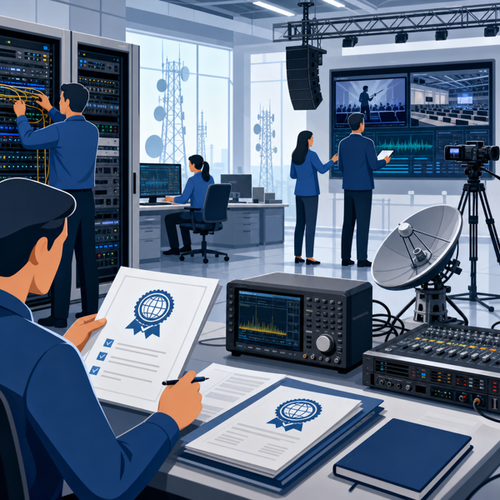
The month of May 2026 brings a wave of significant updates in the field of telecommunications and audio/video engineering, with the publication of four new international standards. These encompass fibre optic interconnection, optical cable testing, metaverse multimedia systems, and electrical safety for communication equipment. For industry professionals, these standards are more than just technical documents—they represent the latest benchmarks for quality, performance, and safety in a fast-evolving technological domain.
This comprehensive review breaks down these newly released standards, highlighting major technical changes, compliance imperatives, and actionable guidance for implementation. Whether you work in telecom infrastructure, ICT system integration, data centers, or broadcast engineering, understanding these changes is essential for staying compliant, competitive, and innovative.
Overview / Introduction
Telecommunications and audio/video engineering are dynamic fields underpinning modern communications, immersive media, and critical IT infrastructure worldwide. International standards in these areas ensure interoperability, safety, reliability, and exceptional quality across the supply chain—from design and manufacturing to deployment and maintenance.
This article presents an in-depth look at the four pivotal standards published in May 2026:
- Performance and durability requirements for multimode fibre optic connectors
- Uniform test procedures for optical cable bending stiffness
- Framework for multimedia systems in the metaverse
- Safety guidelines for power transfer over communication cables at higher voltages
By understanding these standards, professionals can make informed decisions, streamline compliance, and adopt best practices to mitigate risk and drive technological progress.
Detailed Standards Coverage
EN IEC 61753-022-02:2026 - Performance Standard for Multimode Fibre Optic Connectors (Category C Controlled Environment)
Fibre optic interconnecting devices and passive components - Performance standard - Part 022-02: Multimode fibre optic connectors terminated as pigtails and patchcords for category C - Controlled environment
This newly released standard specifies the minimum test requirements and performance benchmarks for multimode fibre optic connectors terminated as pigtails and patchcords, specifically for Category C (controlled environment) applications as defined in IEC 61753-1. These components are vital in high-performance networks, including data centers, telecom exchanges, and enterprise networks where reliability and long-term operation are paramount.
Scope and Key Updates
The standard covers all aspects of connector design, termination, and quality assurance, including compatibility with fibre types (A1-OM2 through A1-OM5), cable formats, and interface standards (IEC 61754, IEC 63267). A significant element is the inclusion of both rectangular and cylindrical ferrule connectors, ensuring broader applicability for emerging connector designs.
EN IEC 61753-022-02:2026 introduces notable revisions from its predecessor:
- Provisions for rectangular ferrule connectors
- New terms, definitions, and updated fibre naming conventions
- Revised test severities in line with IEC 61753-1
- Addition of the torsion test and reduction of retention/flexing test durations
- Deletion of outdated test methods (static side load test)
- Lowered mating durability cycles (enhancing test realism for typical deployments)
- Practical visual examination protocols for reinforced cables under stress
Key Requirements and Implementation
Organizations manufacturing or deploying fibre optic patchcords and pigtails must ensure:
- Compliance with dimensional and endface geometry standards
- Pass/fail adherence to attenuation and return loss criteria for both initial and post-test states
- Documentation of all test results and visual inspections per the annexed procedures
- Use of qualified cable materials (per IEC 60794-2-23/50) and correct connector interface implementation
Primary audiences include:
- Telecom operators and solution integrators
- Data center engineering and QA teams
- Manufacturers and certifiers of fibre optic cabling products
Notable Practical Implications
These updates directly enhance reliability in controlled environmental conditions, ensuring minimized signal loss and robust mechanical engagement during repeated installations and temperature cycling.
Key highlights:
- Clear test criteria for both cylindrical and rectangular connectors
- Enhanced visual/mechanical inspection protocols
- Broader compatibility with modern fibre and cable types
Access the full standard:View EN IEC 61753-022-02:2026 on iTeh Standards
IEC 60794-1-117:2026 - Mechanical Test Methods: Bending Stiffness for Optical Fibre Cables
Optical fibre cables - Part 1-117: Generic specification - Basic optical cable test procedures - Mechanical test methods - Bending stiffness, method E17
IEC 60794-1-117:2026 defines standardized procedures for testing the bending stiffness of optical fibre cables, crucial for both the physical protection of fibres and efficient installation in complex network topologies.
Scope and Technical Evolution
This test method applies to all optical fibre cables—be they dedicated for telecommunications, hybrid cables with electrical conductors, or special-purpose variants. The standard harmonizes three primary bending stiffness measurement techniques:
- Method E17A: Three-point bend
- Method E17B: Cantilever bend
- Method E17C: Buckling bend
The first edition consolidates and refines earlier guidelines by explicitly detailing reporting requirements for each method, improving transparency and comparability across manufacturers and projects.
Key Requirements
- Consistent sample preparation and compliance with specified apparatus setups
- Precision in force and displacement measurements to support repeatable, objective stiffness ratings
- Adoption of clear reporting templates (Sections 6.6, 7.6, 8.6) to standardize test documentation
- Conformance with relevant safety and quality standards
Who should comply:
- Optical cable manufacturers
- Network design engineers and project certifiers
- Testing and certification labs
Implementation Benefits
Adhering to the standard delivers precise, documented cable stiffness characteristics vital for:
- Network reliability and minimized fibre breakage risk
- Optimized cable routing and handling during installation, maintenance, or upgrades
- Transparent, comparable quality assurance across suppliers and geographies
Key highlights:
- Three robust, complementary methods for all fibre cable types
- Comprehensive test and reporting protocols
- Enhanced traceability in cable quality and sourcing
Access the full standard:View IEC 60794-1-117:2026 on iTeh Standards
IEC TR 63614-1:2026 - General Considerations for Multimedia Systems and Equipment in the Metaverse
Multimedia systems and equipment for metaverse - Part 1: General
IEC TR 63614-1:2026 introduces a foundational framework for standardization efforts aimed at multimedia systems and equipment in the context of the metaverse—a rapidly emerging, immersive digital environment integrating extended reality (XR), virtual reality (VR), and AI-enhanced multimedia.
Scope and General Concepts
The technical report defines key terminology (such as "metaverse," "system," "device," and "equipment"), and delineates the intersection of multimedia systems with metaverse platforms. It compares conventional virtual worlds with metaverse scenarios, emphasizing new experience paradigms (e.g., avatars, persistent virtual economies, AI-driven content).
The document also:
- Explores multimedia device and content evolution in the context of pervasive, persistent, and highly interactive virtual environments
- Outlines the impact of metaverse technologies on device requirements (including audio, video, network bandwidth, latency, and interoperability)
- Details the role and integration of artificial intelligence in enhancing interactive experiences
Intended Audience:
- Audio/video equipment manufacturers
- Multimedia software developers
- Network infrastructure designers
- Researchers in virtual/augmented reality and immersive media
Practical Implications
This report serves as a roadmap for organizations seeking to innovate or position themselves in the metaverse era. While non-prescriptive, it establishes a common conceptual foundation, setting the stage for future technical specifications covering classification, gap analysis, and AI use cases.
Key highlights:
- Definitions for core metaverse and multimedia concepts
- Impact analysis on future multimedia systems development
- Lays groundwork for next-gen immersive technology standards
Access the full standard:View IEC TR 63614-1:2026 on iTeh Standards
EN IEC 63316:2026 - Safety Standard for Power Transfer Above 60 VDC Between Communication Ports
Audio/video, information and communication technology equipment – Safety – Power transfer between communication equipment ports using communication wires and cables cabling at non-mains voltage above 60 V DC and ES2/ES3 AC voltage
EN IEC 63316:2026 is a pivotal safety standard addressing the risks associated with transferring power (at voltages above 60 V DC or corresponding AC) between communication equipment ports via communication wires and cables. Such circuits are critical for modern network infrastructure, including remote powering (reverse power feeding, line powering, etc.) of devices like:
- Optical Network Units (ONUs)
- Remote DSLAMs
- Amplifiers and repeaters
- Service provider termination and midspan equipment
Scope and Key Requirements
- Prescribes safeguards (e.g., insulation, fire protection, accessibility controls) for circuits supplying power exceeding 60 V DC (classified as ES2 or ES3 per IEC 62368-1)
- Specifies test methods for injury and fire mitigation, including flammability tests and current/voltage limit verification
- Clarifies application boundaries—distinct from traditional PoE, USB, and low-voltage systems, and not covering circuits below 60 V DC (managed by IEC 62368-1)
- Provides in-depth operational guidelines and annexed safety considerations for remote power feeding, including special configurations used worldwide in telecom and CATV sectors
Who Must Comply
- Communication carriers and service providers (telecom, cable TV)
- OEMs of communication equipment sourcing/receiving power through network cables
- Installation contractors and system integrators responsible for equipment deployment and maintenance
- Testing/certification laboratories ensuring compliance
Key Implementation Impacts
- Implementation of rigorous test protocols to limit electrical shock and fire risks
- Requirements for physical design (port insulation, circuit limiting, equipment housing)
- Clear delineation of responsibilities in power-sourcing vs. powered endpoint design
- Enhanced safety in high-reliability network deployments—especially in environments with higher voltage remote powering
Key highlights:
- Addresses increased use of high-voltage network powering (reverse power, long-span powering)
- Harmonized test and safeguard requirements
- Delineation from other international safety standards (IEC 62368 series)
Access the full standard:View EN IEC 63316:2026 on iTeh Standards
Industry Impact & Compliance
The adoption of these standards marks a move toward greater safety, interoperability, and technical excellence within telecommunications and AV engineering. Compliance isn't just about meeting regulatory requirements—it's about actual operational risk mitigation, improved product lifespan, reputation management, and maintaining international compatibility.
Why compliance matters:
- Legal and market acceptance: Many tenders, contracts, and regulatory regimes require current international standards
- End-user safety: Proactively mitigating risk of shock, fire, or connectivity failure
- Operational efficiency: Predictable installation and maintenance outcomes
- Competitive advantage: Demonstrating alignment with state-of-the-art practices
Timelines: Most standards have a recommended implementation window tied to local regulations (often 12-24 months from publication). Early adoption is encouraged to remain ahead of the curve and support smooth certification.
Risks of Non-Compliance:
- Delays in market entry
- Liability exposure for unsafe/faulty products
- Costly redesigns or recalls if product/system fails certification
- Reputational harm in sensitive infrastructure sectors
Technical Insights
Common Technical Requirements Across the Standards
- Documented and reproducible testing: All four standards emphasize the necessity of clear, actionable testing regimes—critical for repeatability, benchmarking, and dispute resolution
- Visual and endface geometry examination: Across fibre and connector standards, visual requirements ensure that microscopic defects do not compromise network performance
- Standardized reporting: Clear templates and formats (as seen in IEC 60794-1-117) foster greater transparency between vendor and client, streamlining quality validation
- Environment-specific criteria: Several standards (e.g., EN IEC 61753-022-02:2026) are tailored for defined deployment environments (controlled vs. severe/uncontrolled), guiding engineers on relevant parameter selection
- Safety engineering: EN IEC 63316:2026 brings critical focus to hardware/infrastructure safety, helping protect both personnel and property
Implementation Best Practices
- Gap analysis: Perform an audit of current practices, design files, and engineering assumptions against the new requirements
- Training: Update internal teams—especially in design, QA/QC, field deployment—on revised test procedures, acceptance criteria, and documentation templates
- Supplier engagement: Ensure that all upstream vendors align with the latest editions; specify compliant materials and components in purchasing docs
- Testing and certification: Partner with accredited labs for pre- and post-production verification; maintain full test records for regulatory audits
- Multimedia/metaverse innovations: For product managers and R&D, monitor IEC TR 63614-1 as a strategic guide to future-proof device/interfaces
Conclusion / Next Steps
In May 2026, these newly published standards represent a vital refresh of best practices in telecommunications and audio/video engineering—encompassing network physical layer, advanced multimedia systems, and electrical safety domains.
Key Takeaways:
- Proactive adoption minimizes risk and enables confident innovation
- Cross-disciplinary impact covers fibre optics, cable mechanics, immersive multimedia, and electrical safety
- Staying updated ensures smoother certification, stakeholder trust, and operational continuity
Recommendations for Organizations:
- Review and align internal specifications with the latest standard editions
- Engage with procurement and engineering teams to implement new testing and documentation requirements
- Stay informed via iTeh Standards and consider joining relevant industry consortia for early insights on future updates
Explore all four standards and full documentation on iTeh Standards
By staying ahead of regulatory requirements and technological innovations, organizations secure their leadership position in the rapidly evolving field of telecommunications and audio/video engineering.
Categories
- Latest News
- New Arrivals
- Generalities
- Services and Management
- Natural Sciences
- Health Care
- Environment
- Metrology and Measurement
- Testing
- Mechanical Systems
- Fluid Systems
- Manufacturing
- Energy and Heat
- Electrical Engineering
- Electronics
- Telecommunications
- Information Technology
- Image Technology
- Precision Mechanics
- Road Vehicles
- Railway Engineering
- Shipbuilding
- Aircraft and Space
- Materials Handling
- Packaging
- Textile and Leather
- Clothing
- Agriculture
- Food technology
- Chemical Technology
- Mining and Minerals
- Petroleum
- Metallurgy
- Wood technology
- Glass and Ceramics
- Rubber and Plastics
- Paper Technology
- Paint Industries
- Construction
- Civil Engineering
- Military Engineering
- Entertainment