

ASTM C341/C341M-18
(Practice)Standard Practice for Preparation and Conditioning of Cast, Drilled, or Sawed Specimens of Hydraulic-Cement Mortar and Concrete Used for Length Change Measurements
General Information
- Abstract
SIGNIFICANCE AND USE
4.1 Measurements of length change permit assessment of the potential for volumetric expansion or contraction of cast, drilled, or sawed specimens of hydraulic-cement mortar, and concrete due to various causes other than externally applied forces and temperature changes. This practice is particularly useful for comparative evaluation of this potential in different mortar or concrete specimens.
SCOPE
1.1 This practice covers the procedures for the preparation and conditioning of cast, drilled, or sawed specimens of hydraulic-cement mortar and concrete for length change due to causes other than externally applied forces. It can be readily adapted, if desired, to studies of length change involving alternative schedules or environmental treatments.
1.2 The values stated in either inch-pound units or SI units shall be regarded separately as standard. The units stated in each system may not be exact equivalents; therefore, each system must be used independently of the other, without combining in any way. The inch-pound units are shown in brackets.
1.3 This standard does not purport to address all of the safety concerns, if any, associated with its use. It is the responsibility of the user of this standard to establish appropriate safety, health, and environmental practices and determine the applicability of regulatory limitations prior to use.
1.4 This international standard was developed in accordance with internationally recognized principles on standardization established in the Decision on Principles for the Development of International Standards, Guides and Recommendations issued by the World Trade Organization Technical Barriers to Trade (TBT) Committee.
- Status
- Published
- Publication Date
- 30-Nov-2018
- Technical Committee
- C09 - Concrete and Concrete Aggregates
- Drafting Committee
- C09.68 - Volume Change
Buy Documents

ASTM C341/C341M-18 - Standard Practice for Preparation and Conditioning of Cast, Drilled, or Sawed Specimens of Hydraulic-Cement Mortar and Concrete Used for Length Change Measurements
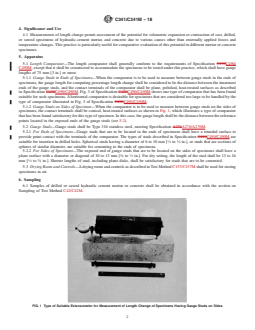
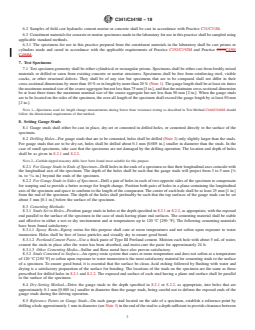
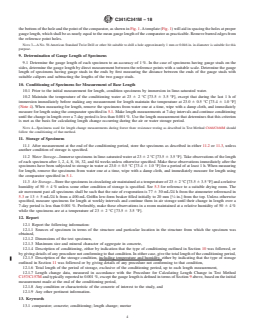
REDLINE ASTM C341/C341M-18 - Standard Practice for Preparation and Conditioning of Cast, Drilled, or Sawed Specimens of Hydraulic-Cement Mortar and Concrete Used for Length Change Measurements
Overview
ASTM C341/C341M-18 is the globally recognized standard developed by ASTM International for the preparation and conditioning of cast, drilled, or sawed specimens of hydraulic-cement mortar and concrete, specifically for length change measurements. This practice outlines the procedures for specimen sampling, preparation, and conditioning so their potential for volumetric expansion or contraction can be evaluated. The standard is crucial for comparative evaluations of length change in different mortar or concrete mixes, supporting quality control, research, and structural assessment in construction and materials engineering.
Key Topics
Specimen Types and Preparation:
The standard includes guidance for preparing concrete and mortar specimens that are either cast, drilled, or sawed. Specimens must be free from reinforcement, cracks, and substantial defects and prepared to standardized sizes for meaningful comparison.Conditioning Procedures:
Conditioning is performed to standardize the initial moisture and temperature state of the specimens. Immersion in lime-saturated water and controlled storage conditions (temperature and humidity) are specified to ensure reliable length change data.Measurement Techniques:
Use of designated apparatus such as length comparators and gauge studs (with detailed requirements for size and placement) is specified for precise and repeatable assessment of linear dimensional changes.Length Change Assessment:
The process measures the expansion or contraction of concrete and mortar specimens caused by internal reactions (like chemical changes or drying) rather than direct mechanical forces or temperature variation.Reporting Requirements:
Comprehensive reporting involves noting specimen source, geometry, aggregate characteristics, conditioning, storage conditions, length change data, and any other relevant factors.
Applications
ASTM C341/C341M-18 has widespread value for professionals involved in construction materials testing and research, as well as in the evaluation of concrete durability and performance. Typical applications include:
Quality Control:
Comparing different concrete or mortar mixes for volume stability and susceptibility to expansion or contraction, supporting durability assessments during material selection and concrete mix design.Research and Development:
Used in laboratories to assess the effectiveness of additives, supplementary cementitious materials, or admixtures in reducing length changes and thus improving infrastructure longevity.Field and Structural Assessment:
Necessary for evaluating existing structures by analyzing core-sampled or sawn specimens from concrete in situ, particularly when assessing the potential for deleterious expansion due to chemical attack or drying shrinkage.Compliance and Certification:
Assures that prepared and conditioned specimens meet precise standards when length change data is required for project specifications or regulatory compliance.
Related Standards
For comprehensive materials analysis, ASTM C341/C341M-18 is often used with related standards, including:
- ASTM C157/C157M: Test Method for Length Change of Hardened Hydraulic-Cement Mortar and Concrete.
- ASTM C490/C490M: Practice for Use of Apparatus for the Determination of Length Change of Hardened Cement Paste, Mortar, and Concrete.
- ASTM C42/C42M: Test Method for Obtaining and Testing Drilled Cores and Sawed Beams of Concrete.
- ASTM C31/C31M and C192/C192M: Practices for Making and Curing Concrete Test Specimens in the Field and Laboratory, respectively.
- ASTM C666/C666M: Test Method for Resistance of Concrete to Rapid Freezing and Thawing.
- ASTM C125: Terminology Relating to Concrete and Concrete Aggregates.
Summary
ASTM C341/C341M-18 ensures standardized procedures for preparing, conditioning, and measuring hydraulic-cement mortar and concrete specimens for length change. By following this practice, laboratories, field engineers, and quality control professionals enhance the reliability and comparability of data, contributing to safer and more durable concrete structures worldwide. Incorporating ASTM C341/C341M-18 into your testing protocol supports compliance with international standards and optimizes concrete performance assessment.
Relations
- Effective Date
- 01-Dec-2018
- Refers
ASTM C31/C31M-24a - Standard Practice for Making and Curing Concrete Test Specimens in the Field - Effective Date
- 01-Apr-2024
- Effective Date
- 01-Feb-2024
- Refers
ASTM C31/C31M-24 - Standard Practice for Making and Curing Concrete Test Specimens in the Field - Effective Date
- 01-Jan-2024
- Effective Date
- 01-Jan-2024
- Effective Date
- 15-Dec-2019
- Effective Date
- 01-Jan-2019
- Effective Date
- 01-Oct-2018
- Effective Date
- 01-Jul-2018
- Effective Date
- 15-Mar-2018
- Refers
ASTM C31/C31M-18 - Standard Practice for Making and Curing Concrete Test Specimens in the Field - Effective Date
- 01-Jan-2018
- Effective Date
- 01-Jan-2018
- Effective Date
- 15-Aug-2017
- Effective Date
- 15-Dec-2016
- Effective Date
- 01-Oct-2016
Buy Documents
ASTM C341/C341M-18 - Standard Practice for Preparation and Conditioning of Cast, Drilled, or Sawed Specimens of Hydraulic-Cement Mortar and Concrete Used for Length Change Measurements
REDLINE ASTM C341/C341M-18 - Standard Practice for Preparation and Conditioning of Cast, Drilled, or Sawed Specimens of Hydraulic-Cement Mortar and Concrete Used for Length Change Measurements
Get Certified
Connect with accredited certification bodies for this standard

DIBt (Deutsches Institut für Bautechnik)
German Institute for Building Technology.
DIN CERTCO
DIN Group product certification.

Aboma Certification B.V.
Specialized in construction, metal, and transport sectors.
Sponsored listings
Frequently Asked Questions
ASTM C341/C341M-18 is a standard published by ASTM International. Its full title is "Standard Practice for Preparation and Conditioning of Cast, Drilled, or Sawed Specimens of Hydraulic-Cement Mortar and Concrete Used for Length Change Measurements". This standard covers: SIGNIFICANCE AND USE 4.1 Measurements of length change permit assessment of the potential for volumetric expansion or contraction of cast, drilled, or sawed specimens of hydraulic-cement mortar, and concrete due to various causes other than externally applied forces and temperature changes. This practice is particularly useful for comparative evaluation of this potential in different mortar or concrete specimens. SCOPE 1.1 This practice covers the procedures for the preparation and conditioning of cast, drilled, or sawed specimens of hydraulic-cement mortar and concrete for length change due to causes other than externally applied forces. It can be readily adapted, if desired, to studies of length change involving alternative schedules or environmental treatments. 1.2 The values stated in either inch-pound units or SI units shall be regarded separately as standard. The units stated in each system may not be exact equivalents; therefore, each system must be used independently of the other, without combining in any way. The inch-pound units are shown in brackets. 1.3 This standard does not purport to address all of the safety concerns, if any, associated with its use. It is the responsibility of the user of this standard to establish appropriate safety, health, and environmental practices and determine the applicability of regulatory limitations prior to use. 1.4 This international standard was developed in accordance with internationally recognized principles on standardization established in the Decision on Principles for the Development of International Standards, Guides and Recommendations issued by the World Trade Organization Technical Barriers to Trade (TBT) Committee.
SIGNIFICANCE AND USE 4.1 Measurements of length change permit assessment of the potential for volumetric expansion or contraction of cast, drilled, or sawed specimens of hydraulic-cement mortar, and concrete due to various causes other than externally applied forces and temperature changes. This practice is particularly useful for comparative evaluation of this potential in different mortar or concrete specimens. SCOPE 1.1 This practice covers the procedures for the preparation and conditioning of cast, drilled, or sawed specimens of hydraulic-cement mortar and concrete for length change due to causes other than externally applied forces. It can be readily adapted, if desired, to studies of length change involving alternative schedules or environmental treatments. 1.2 The values stated in either inch-pound units or SI units shall be regarded separately as standard. The units stated in each system may not be exact equivalents; therefore, each system must be used independently of the other, without combining in any way. The inch-pound units are shown in brackets. 1.3 This standard does not purport to address all of the safety concerns, if any, associated with its use. It is the responsibility of the user of this standard to establish appropriate safety, health, and environmental practices and determine the applicability of regulatory limitations prior to use. 1.4 This international standard was developed in accordance with internationally recognized principles on standardization established in the Decision on Principles for the Development of International Standards, Guides and Recommendations issued by the World Trade Organization Technical Barriers to Trade (TBT) Committee.
ASTM C341/C341M-18 is classified under the following ICS (International Classification for Standards) categories: 91.100.10 - Cement. Gypsum. Lime. Mortar. The ICS classification helps identify the subject area and facilitates finding related standards.
ASTM C341/C341M-18 has the following relationships with other standards: It is inter standard links to ASTM C341/C341M-13, ASTM C31/C31M-24a, ASTM A276/A276M-24a, ASTM C31/C31M-24, ASTM A276/A276M-24, ASTM C125-19a, ASTM C125-19, ASTM C125-18b, ASTM C125-18a, ASTM C42/C42M-18, ASTM C31/C31M-18, ASTM C125-18, ASTM C157/C157M-17, ASTM C125-16, ASTM C42/C42M-16. Understanding these relationships helps ensure you are using the most current and applicable version of the standard.
ASTM C341/C341M-18 is available in PDF format for immediate download after purchase. The document can be added to your cart and obtained through the secure checkout process. Digital delivery ensures instant access to the complete standard document.
Standards Content (Sample)
This international standard was developed in accordance with internationally recognized principles on standardization established in the Decision on Principles for the
Development of International Standards, Guides and Recommendations issued by the World Trade Organization Technical Barriers to Trade (TBT) Committee.
Designation: C341/C341M − 18
Standard Practice for
Preparation and Conditioning of Cast, Drilled, or Sawed
Specimens of Hydraulic-Cement Mortar and Concrete Used
for Length Change Measurements
This standard is issued under the fixed designation C341/C341M; the number immediately following the designation indicates the year
of original adoption or, in the case of revision, the year of last revision. A number in parentheses indicates the year of last reapproval.
A superscript epsilon (´) indicates an editorial change since the last revision or reapproval.
1. Scope* C31/C31M Practice for Making and Curing Concrete Test
Specimens in the Field
1.1 This practice covers the procedures for the preparation
C42/C42M Test Method for Obtaining and Testing Drilled
and conditioning of cast, drilled, or sawed specimens of
Cores and Sawed Beams of Concrete
hydraulic-cement mortar and concrete for length change due to
C157/C157M Test Method for Length Change of Hardened
causes other than externally applied forces. It can be readily
Hydraulic-Cement Mortar and Concrete
adapted, if desired, to studies of length change involving
C192/C192M Practice for Making and Curing Concrete Test
alternative schedules or environmental treatments.
Specimens in the Laboratory
1.2 The values stated in either inch-pound units or SI units
C490/C490M Practice for Use of Apparatus for the Deter-
shall be regarded separately as standard. The units stated in
mination of Length Change of Hardened Cement Paste,
each system may not be exact equivalents; therefore, each
Mortar, and Concrete
system must be used independently of the other, without
C666/C666M Test Method for Resistance of Concrete to
combining in any way. The inch-pound units are shown in
Rapid Freezing and Thawing
brackets.
3. Terminology
1.3 This standard does not purport to address all of the
safety concerns, if any, associated with its use. It is the
3.1 Definitions:
responsibility of the user of this standard to establish appro-
3.1.1 For definitions of terms used in this practice, refer to
priate safety, health, and environmental practices and deter-
Terminology C125.
mine the applicability of regulatory limitations prior to use.
3.2 Definitions of Terms Specific to This Standard:
1.4 This international standard was developed in accor-
3.2.1 length change, n—an increase or decrease in a linear
dance with internationally recognized principles on standard-
dimension of a test specimen, which has been caused to change
ization established in the Decision on Principles for the
by any factor other than externally applied forces and tempera-
Development of International Standards, Guides and Recom-
ture changes.
mendations issued by the World Trade Organization Technical
Barriers to Trade (TBT) Committee.
4. Significance and Use
4.1 Measurements of length change permit assessment of
2. Referenced Documents
the potential for volumetric expansion or contraction of cast,
2.1 ASTM Standards:
drilled, or sawed specimens of hydraulic-cement mortar, and
A276/A276M Specification for Stainless Steel Bars and
concrete due to various causes other than externally applied
Shapes
forces and temperature changes. This practice is particularly
C125 Terminology Relating to Concrete and Concrete Ag-
useful for comparative evaluation of this potential in different
gregates
mortar or concrete specimens.
5. Apparatus
This practice is under the jurisdiction of ASTM Committee C09 on Concrete
andConcreteAggregatesandisthedirectresponsibilityofSubcommitteeC09.68on
5.1 Length Comparator—The length comparator shall gen-
Volume Change.
erally conform to the requirements of Specification C490/
Current edition approved Dec. 1, 2018. Published January 2019. Originally
C490M, except that it shall be constructed to accommodate the
approved in 1954. Last previous edition approved in 2013 as C341/C341M – 13.
DOI: 10.1520/C0341_C0341M-18.
specimens to be tested under this practice, which shall have
For referenced ASTM standards, visit the ASTM website, www.astm.org, or
gauge lengths of 75 mm [3 in.] or more.
contact ASTM Customer Service at service@astm.org. For Annual Book of ASTM
5.1.1 Gauge Studs in Ends of Specimens—When the com-
Standards volume information, refer to the standard’s Document Summary page on
the ASTM website. parator is to be used to measure between gauge studs in the
*A Summary of Changes section appears at the end of this standard
Copyright © ASTM International, 100 Barr Harbor Drive, PO Box C700, West Conshohocken, PA 19428-2959. United States
C341/C341M − 18
ends of specimens, the gauge length for computing percentage 5.3 Drying Room and Controls—A drying room and con-
length change shall be considered to be the distance between trols as described in Test Method C157/C157M shall be used
the innermost ends of the gauge studs, and the contact for storing specimens in air.
terminals of the comparator shall be plane, polished, heat-
treated surfaces as described in Specification C490/C490M. 6. Sampling
Fig. 3 of Specification C490/C490M shows one type of
6.1 Samples of drilled or sawed hydraulic cement mortar or
comparator that has been found suitable for such specimens.A
concrete shall be obtained in accordance with the section on
horizontal comparator is desirable for specimens that are
Sampling of Test Method C42/C42M.
considered too large to be handled by the type of comparator
6.2 Samples of field cast hydraulic cement mortar or con-
illustrated in Fig. 3 of Specification C490/C490M.
crete shall be cast in accordance with Practice C31/C31M.
5.1.2 Gauge Studs on Sides of Specimen—When the com-
parator is to be used to measure between gauge studs on the 6.3 Constituent materials for concrete or mortar specimens
sides of specimens, the contact terminals shall be conical, made in the laboratory for use in this practice shall be sampled
heat-treated surfaces as shown in Fig. 1, which illustrates a using applicable standard methods.
type of comparator that has been found satisfactory for this 6.3.1 The specimens for use in this practice prepared from
type of specimen. In this case, the gauge length shall be the
the constituent materials in the laboratory shall be cast prisms
distance between the reference points located in the exposed or cylinders made and cured in accordance with the applicable
ends of the gauge studs (see 5.2).
requirements of Practice C192/C192M and Practice C490/
C490M.
5.2 Gauge Studs—Gauge studs shall be Type 316 stainless
steel, meeting Specification A276/A276M.
7. Test Specimens
5.2.1 For Ends of Specimens—Gauge studs that are to be
located in the ends of specimens shall have a rounded surface 7.1 Test specimen geometry shall be either cylindrical or
to provide point contact with the terminals of the comparator. rectangular prisms. Specimens shall be either cast from freshly
The types of studs described in Specification C490/C490M are mixed materials or drilled or sawn from existing concrete or
suitable for insertion in drilled holes. Spherical studs having a mortar structures. Specimens shall be free from reinforcing
1 3
diameter of 6 to 10 mm [ ⁄4 to ⁄8 in.], or studs that are sections steel,visiblecracks,orotherstructuraldefects.Theyshallbeof
of spheres of similar diameter, are suitable for cementing to the any size but specimens that are to be compared shall not differ
ends of specimens. in their cross-sectional dimensions by more than 10 % or in
5.2.2 For Sides of Specimens—The exposed end of gauge length by more than 20 % (Note 1). The gauge length shall be
studs that are to be located on the sides of specimens shall have at least six times the maximum nominal size of the coarse
a plane surface with a diameter or diagonal of 10 to 13 mm [ ⁄8 aggregate but not less than 75 mm [3 in.], and that the
to ⁄2 in.]. For dry setting, the length of the stud shall be 13 to minimum cross-sectional dimension be at least three times the
1 5
16 mm [ ⁄2 to ⁄8 in.]. Shorter lengths of stud, including plane maximum nominal size of the coarse aggregate but not less
disks, shall be satisfactory for studs that are to be cemented. than 50 mm [2 in.]. When the gauge studs are to be located on
FIG. 1 Type of Suitable Extensometer for Measurement of Length Change of Specimens Having Gauge Studs on Sides
C341/C341M − 18
the sides of the specimen, the over-all length of the specimen is essential that the surface be clean.Acid etching followed by
shall exceed the gauge length by at least 50 mm [2 in.]. flushing with water and drying is a satisfactory preparation of
the surface for bonding. The locations of the studs on the
NOTE 1—Specimens used for length change measurements during
specimen are the same as those prescribed for drilled holes in
freeze thaw resistance testing as described in Test Method C666/C666M
should follow the dimensional requirements of that method.
8.2.1 and 8.2.2. The exposed end surface of each stud having
a plane end surface shall be parallel to the surface of the
8. Setting Gauge Studs
specimen.
8.1 Gauge studs shall either be cast in place, dry-set or
8.4 Dry-Setting Method—Drive the gauge studs to the depth
cemented in drilled holes, or cemented directly to the surface
specified in 8.2.1 or 8.2.2, as appropriate, into holes that are
of the specimen.
approximately 0.1 mm [0.005 in.] smaller in diameter than the
8.2 Drilling Holes—For gauge studs that are to b
...
This document is not an ASTM standard and is intended only to provide the user of an ASTM standard an indication of what changes have been made to the previous version. Because
it may not be technically possible to adequately depict all changes accurately, ASTM recommends that users consult prior editions as appropriate. In all cases only the current version
of the standard as published by ASTM is to be considered the official document.
Designation: C341/C341M − 13 C341/C341M − 18
Standard Practice for
Preparation and Conditioning of Cast, Drilled, or Sawed
Specimens of Hydraulic-Cement Mortar and Concrete Used
for Length Change Measurements
This standard is issued under the fixed designation C341/C341M; the number immediately following the designation indicates the year
of original adoption or, in the case of revision, the year of last revision. A number in parentheses indicates the year of last reapproval.
A superscript epsilon (´) indicates an editorial change since the last revision or reapproval.
1. Scope*
1.1 This practice covers the procedures for the preparation and conditioning of cast, drilled, or sawed specimens of
hydraulic-cement mortar and concrete for length change due to causes other than externally applied forces. It can be readily
adapted, if desired, to studies of length change involving alternatealternative schedules or environmental treatment other than the
standard procedures prescribed by this practice.treatments.
1.2 The values stated in either inch-pound units or SI units shall be regarded separately as standard. The units stated in each
system may not be exact equivalents; therefore, each system must be used independently of the other, without combining in any
way. The inch-pound units are shown in brackets.
1.3 This standard does not purport to address all of the safety concerns, if any, associated with its use. It is the responsibility
of the user of this standard to establish appropriate safety safety, health, and healthenvironmental practices and determine the
applicability of regulatory limitations prior to use.
1.4 This international standard was developed in accordance with internationally recognized principles on standardization
established in the Decision on Principles for the Development of International Standards, Guides and Recommendations issued
by the World Trade Organization Technical Barriers to Trade (TBT) Committee.
2. Referenced Documents
2.1 ASTM Standards:
A276A276/A276M Specification for Stainless Steel Bars and Shapes
C125 Terminology Relating to Concrete and Concrete Aggregates
C31/C31M Practice for Making and Curing Concrete Test Specimens in the Field
C42/C42M Test Method for Obtaining and Testing Drilled Cores and Sawed Beams of Concrete
C157/C157M Test Method for Length Change of Hardened Hydraulic-Cement Mortar and Concrete
C192/C192M Practice for Making and Curing Concrete Test Specimens in the Laboratory
C490C490/C490M Practice for Use of Apparatus for the Determination of Length Change of Hardened Cement Paste, Mortar,
and Concrete
C666/C666M Test Method for Resistance of Concrete to Rapid Freezing and Thawing
3. Terminology
3.1 Definitions:
3.1.1 For definitions of terms used in this practice, refer to Terminology C125.
3.2 DefinitionDefinitions of Terms Specific to This Standard:
3.2.1 length change, n—an increase or decrease in a linear dimension of a test specimen, which has been caused to change by
any factor other than externally applied forces and temperature changes.
This practice is under the jurisdiction of ASTM Committee C09 on Concrete and Concrete Aggregates and is the direct responsibility of Subcommittee C09.68 on Volume
Change.
Current edition approved Dec. 15, 2013Dec. 1, 2018. Published January 2014January 2019. Originally approved in 1954. Last previous edition approved in 20062013 as
C341/C341M – 065.C341/C341M – 13. DOI: 10.1520/C0341_C0341M-13.10.1520/C0341_C0341M-18.
For referenced ASTM standards, visit the ASTM website, www.astm.org, or contact ASTM Customer Service at service@astm.org. For Annual Book of ASTM Standards
volume information, refer to the standard’s Document Summary page on the ASTM website.
*A Summary of Changes section appears at the end of this standard
Copyright © ASTM International, 100 Barr Harbor Drive, PO Box C700, West Conshohocken, PA 19428-2959. United States
C341/C341M − 18
4. Significance and Use
4.1 Measurements of length change permit assessment of the potential for volumetric expansion or contraction of cast, drilled,
or sawed specimens of hydraulic-cement mortar, and concrete due to various causes other than externally applied forces and
temperature changes. This practice is particularly useful for comparative evaluation of this potential in different mortar or concrete
specimens.
5. Apparatus
5.1 Length Comparator—The length comparator shall generally conform to the requirements of Specification C490C490/
C490M, except that it shall be constructed to accommodate the specimens to be tested under this practice, which shall have gauge
lengths of 75 mm [3 in.] or more.
5.1.1 Gauge Studs in Ends of Specimens—When the comparator is to be used to measure between gauge studs in the ends of
specimens, the gauge length for computing percentage length change shall be considered to be the distance between the innermost
ends of the gauge studs, and the contact terminals of the comparator shall be plane, polished, heat-treated surfaces as described
in Specification C490C490/C490M. Fig. 3 of Specification C490C490/C490M shows one type of comparator that has been found
suitable for such specimens. A horizontal comparator is desirable for specimens that are considered too large to be handled by the
type of comparator illustrated in Fig. 3 of Specification C490C490/C490M.
5.1.2 Gauge Studs on Sides of Specimen—When the comparator is to be used to measure between gauge studs on the sides of
specimens, the contact terminals shall be conical, heat-treated surfaces as shown in Fig. 1, which illustrates a type of comparator
that has been found satisfactory for this type of specimen. In this case, the gauge length shall be the distance between the reference
points located in the exposed ends of the gauge studs (see 5.2).
5.2 Gauge Studs—Gauge studs shall be Type 316 stainless steel, meeting Specification A276A276/A276M.
5.2.1 For Ends of Specimens—Gauge studs that are to be located in the ends of specimens shall have a rounded surface to
provide point contact with the terminals of the comparator. The types of studs described in Specification C490C490/C490M are
1 3
suitable for insertion in drilled holes. Spherical studs having a diameter of 6 to 10 mm [ ⁄4 to ⁄8 in.], or studs that are sections of
spheres of similar diameter, are suitable for cementing to the ends of specimens.
5.2.2 For Sides of Specimens—The exposed end of gauge studs that are to be located on the sides of specimens shall have a
3 1
plane surface with a diameter or diagonal of 10 to 13 mm [ ⁄8 to ⁄2 in.]. For dry setting, the length of the stud shall be 13 to 16
1 5
mm [ ⁄2 to ⁄8 in.]. Shorter lengths of stud, including plane disks, shall be satisfactory for studs that are to be cemented.
5.3 Drying Room and Controls—A drying room and controls as described in Test Method C157/C157M shall be used for storing
specimens in air.
6. Sampling
6.1 Samples of drilled or sawed hydraulic cement mortar or concrete shall be obtained in accordance with the section on
Sampling of Test Method C42/C42M.
FIG. 1 Type of Suitable Extensometer for Measurement of Length Change of Specimens Having Gauge Studs on Sides
C341/C341M − 18
6.2 Samples of field cast hydraulic cement mortar or concrete shall be cast in accordance with Practice C31/C31M.
6.3 Constituent materials for concrete or mortar specimens made in the laboratory for use in this practice shall be sampled using
applicable standard methods.
6.3.1 The specimens for use in this practice prepared from the constituent materials in the laboratory shall be cast prisms or
cylinders made and cured in accordance with the applicable requirements of Practice C192/C192M and Practice C490C490/
C490M.
7. Test Specimens
7.1 Test specimen geometry shall be either cylindrical or rectangular prisms. Specimens shall be either cast from freshly mixed
materials or drilled or sawn from existing concrete or mortar structures. Specimens shall be free from reinforcing steel, visible
cracks, or other structural defects. They shall be of any size but specimens that are to be compared shall not differ in their
cross-sectional dimensions by more than 10 % or in length by more than 20 % (Note 1). The gauge length shall be at least six times
the maximum nominal size of the coarse aggregate but not less than 75 mm [3 in.], and that the minimum cross-sectional dimension
be at least three times the maximum nominal size of the coarse aggregate but not less than 50 mm [2 in.]. When the gauge studs
are to be located on the sides of the specimen, the over-all length of the specimen shall exceed the gauge length by at least 50 mm
[2 in.].
NOTE 1—Specimens used for length change measurements during freeze thaw resistance testing as described in Test Method C666/C666M should
follow the dimensional requirements of that method.
8. Setting Gauge Studs
8.1 Gauge studs shall either be cast in place, dry-set or cemented in drilled holes, or cemented directly to the surface of the
specimen.
8.2 Drilling Holes—For gauge studs that are to be cemented, holes shall be drilled (Note 2) only slightly larger than the studs.
For gauge studs that are to be dry-set, holes shall be drilled about 0.1 mm [0.005 in.] smaller in diameter than the studs. In the
case of small specimens, take care that the specimens are not damaged by the drilling operation. The location and depth of holes
shall be as given in 8.2.1 and 8.2.2.
NOTE 2—Carbide-tipped masonry drills have been found most suitable for this purpose.
8.2.1 For Gauge Studs in Ends of Spec
...