

ASTM B978/B978M-23
(Specification)Standard Specification for Concentric-Lay-Stranded Aluminum Conductors, Aluminum Matrix Composite Reinforced (ACAMCR), Formerly ACCR
General Information
- Abstract
ABSTRACT
This specification applies to concentric-lay-stranded conductors made from round aluminum-zirconium alloy wires and an aluminum matrix composite (AMC) core wire(s) for use as overhead electrical conductors. It covers ordering information, requirements for wires, joints and lay, construction requirements, rated strength of conductor, density, mass per unit length and electrical resistance, and cross-sectional area. The standard also addresses workmanship, finish, and appearance, together with mechanical as well as electrical and dimensional tests, tests and retests, inspection, and packaging and package marking.
SCOPE
1.1 This specification covers concentric-lay-stranded conductors made from round aluminum-zirconium alloy wires and an aluminum matrix composite (AMC) core wire(s) for use as overhead electrical conductors (Explanatory Note 1 and Explanatory Note 2).
1.2 The values stated in either SI units or inch-pound units are to be regarded separately as standard. The values stated in each system are not necessarily exact equivalents; therefore, to ensure conformance with the standard, each system shall be used independently of the other, and values from the two systems shall not be combined.
1.3 This international standard was developed in accordance with internationally recognized principles on standardization established in the Decision on Principles for the Development of International Standards, Guides and Recommendations issued by the World Trade Organization Technical Barriers to Trade (TBT) Committee.
- Status
- Published
- Publication Date
- 14-Feb-2023
- Technical Committee
- B01 - Electrical Conductors
- Drafting Committee
- B01.07 - Conductors of Light Metals
Buy Documents
ASTM B978/B978M-23 - Standard Specification for Concentric-Lay-Stranded Aluminum Conductors, Aluminum Matrix Composite Reinforced (ACAMCR), Formerly ACCR
REDLINE ASTM B978/B978M-23 - Standard Specification for Concentric-Lay-Stranded Aluminum Conductors, Aluminum Matrix Composite Reinforced (ACAMCR), Formerly ACCR
Overview
ASTM B978/B978M-23: Standard Specification for Concentric-Lay-Stranded Aluminum Conductors, Aluminum Matrix Composite Reinforced (ACAMCR), Formerly ACCR provides comprehensive requirements for concentric-lay-stranded conductors manufactured from round aluminum-zirconium (Al-Zr) alloy wires with an aluminum matrix composite (AMC) core. This international ASTM standard ensures the performance, reliability, and consistency of ACAMCR conductors used in overhead electrical transmission and distribution systems, including high-temperature, low-sag (HTLS) applications. It specifies both metric (SI) and inch-pound units for global applicability.
Key Topics
Key elements addressed by ASTM B978/B978M-23 include:
- Material Specifications: Requirements for aluminum-zirconium alloy wires (per ASTM B941) and AMC core wires (per ASTM B976) prior to stranding.
- Conductor Construction: Details regarding the number and arrangement of wires, layers, direction and length of lay, stranding classes, and cross-sectional area.
- Mechanical and Electrical Properties: Requirements for rated strength, mass per unit length, conductor density, and DC electrical resistance.
- Workmanship and Appearance: Standards for conductor cleanliness, finish, and absence of manufacturing defects.
- Testing and Inspection: Procedures for mechanical, electrical, and dimensional tests, including type tests and production sample tests, with clear guidelines for compliance, retesting, and rejection criteria.
- Packaging and Marking: Recommendations for safe handling, reel sizes, packaging protection, and detailed package and product identification.
- Ordering Information: Mandates clear specification of quantities, sizes, stranding, inspection location, packaging, and any special requirements in purchase documents.
Applications
Practical uses of ACAMCR conductors manufactured to ASTM B978/B978M-23:
- Overhead Power Transmission: ACAMCR conductors are especially valued in long-span, high-capacity transmission lines where superior strength-to-weight and thermal performance are needed.
- High-Temperature, Low-Sag Applications: The incorporation of AMC cores allows these conductors to operate at higher temperatures with reduced sag, supporting the growing demands of modern electrical grids.
- Utility Upgrades and Grid Expansion: Utilities and transmission companies adopt ACAMCR conductors for retrofitting existing lines or installing new lines to enhance current-carrying capacity, efficiency, and service reliability.
- International Power Networks: The dual-unit (SI and inch-pound) specifications facilitate global trade and technical implementation across diverse regions and grid standards.
Benefits of compliance include:
- Enhanced line efficiency and thermal performance
- Reduced maintenance due to durable construction and consistent quality
- Clear guidance for suppliers, manufacturers, and purchasers throughout the supply chain
Related Standards
ASTM B978/B978M-23 references and complements the following standards:
- ASTM B263/B263M: Test Method for Determination of Cross-Sectional Area of Stranded Conductors
- ASTM B354: Terminology Relating to Uninsulated Metallic Electrical Conductors
- ASTM B682: Specification for Standard Metric Sizes of Electrical Conductors
- ASTM B941: Specification for Heat Resistant Aluminum-Zirconium Alloy Wire for Electrical Purposes
- ASTM B976: Specification for Fiber Reinforced Aluminum Matrix Composite (AMC) Core Wire for ACAMCR Conductors
- ASTM B1008: Test Method for Stress-Strain Testing for Overhead Electrical Conductors
- NIST Handbook 100: Copper Wire Tables (for calculation methods)
- Aluminum Association Publication 50: Code Words for Overhead Aluminum Electrical Conductors
By following ASTM B978/B978M-23, industry stakeholders ensure their aluminum matrix composite reinforced conductors meet internationally recognized requirements for performance, safety, and interoperability in modern overhead electrical infrastructure.
Relations
- Effective Date
- 01-Apr-2024
- Effective Date
- 01-Jan-2020
- Refers
ASTM B1008-18 - Standard Test Method for Stress-Strain Testing for Overhead Electrical Conductors - Effective Date
- 01-Nov-2018
- Effective Date
- 01-Sep-2016
- Effective Date
- 01-Apr-2014
- Effective Date
- 01-Dec-2012
- Effective Date
- 01-Apr-2011
- Effective Date
- 15-Oct-2010
- Effective Date
- 01-Oct-2010
- Effective Date
- 01-Mar-2005
- Effective Date
- 10-Sep-1998
Buy Documents
ASTM B978/B978M-23 - Standard Specification for Concentric-Lay-Stranded Aluminum Conductors, Aluminum Matrix Composite Reinforced (ACAMCR), Formerly ACCR
REDLINE ASTM B978/B978M-23 - Standard Specification for Concentric-Lay-Stranded Aluminum Conductors, Aluminum Matrix Composite Reinforced (ACAMCR), Formerly ACCR
Get Certified
Connect with accredited certification bodies for this standard

IMQ S.p.A. (Certification)
Italian electrical product certification.

SLG Prüf- und Zertifizierungs GmbH
German testing and certification body.

UL Solutions
Global safety science company with testing, inspection and certification.
Sponsored listings
Frequently Asked Questions
ASTM B978/B978M-23 is a technical specification published by ASTM International. Its full title is "Standard Specification for Concentric-Lay-Stranded Aluminum Conductors, Aluminum Matrix Composite Reinforced (ACAMCR), Formerly ACCR". This standard covers: ABSTRACT This specification applies to concentric-lay-stranded conductors made from round aluminum-zirconium alloy wires and an aluminum matrix composite (AMC) core wire(s) for use as overhead electrical conductors. It covers ordering information, requirements for wires, joints and lay, construction requirements, rated strength of conductor, density, mass per unit length and electrical resistance, and cross-sectional area. The standard also addresses workmanship, finish, and appearance, together with mechanical as well as electrical and dimensional tests, tests and retests, inspection, and packaging and package marking. SCOPE 1.1 This specification covers concentric-lay-stranded conductors made from round aluminum-zirconium alloy wires and an aluminum matrix composite (AMC) core wire(s) for use as overhead electrical conductors (Explanatory Note 1 and Explanatory Note 2). 1.2 The values stated in either SI units or inch-pound units are to be regarded separately as standard. The values stated in each system are not necessarily exact equivalents; therefore, to ensure conformance with the standard, each system shall be used independently of the other, and values from the two systems shall not be combined. 1.3 This international standard was developed in accordance with internationally recognized principles on standardization established in the Decision on Principles for the Development of International Standards, Guides and Recommendations issued by the World Trade Organization Technical Barriers to Trade (TBT) Committee.
ABSTRACT This specification applies to concentric-lay-stranded conductors made from round aluminum-zirconium alloy wires and an aluminum matrix composite (AMC) core wire(s) for use as overhead electrical conductors. It covers ordering information, requirements for wires, joints and lay, construction requirements, rated strength of conductor, density, mass per unit length and electrical resistance, and cross-sectional area. The standard also addresses workmanship, finish, and appearance, together with mechanical as well as electrical and dimensional tests, tests and retests, inspection, and packaging and package marking. SCOPE 1.1 This specification covers concentric-lay-stranded conductors made from round aluminum-zirconium alloy wires and an aluminum matrix composite (AMC) core wire(s) for use as overhead electrical conductors (Explanatory Note 1 and Explanatory Note 2). 1.2 The values stated in either SI units or inch-pound units are to be regarded separately as standard. The values stated in each system are not necessarily exact equivalents; therefore, to ensure conformance with the standard, each system shall be used independently of the other, and values from the two systems shall not be combined. 1.3 This international standard was developed in accordance with internationally recognized principles on standardization established in the Decision on Principles for the Development of International Standards, Guides and Recommendations issued by the World Trade Organization Technical Barriers to Trade (TBT) Committee.
ASTM B978/B978M-23 is classified under the following ICS (International Classification for Standards) categories: 29.060.10 - Wires. The ICS classification helps identify the subject area and facilitates finding related standards.
ASTM B978/B978M-23 has the following relationships with other standards: It is inter standard links to ASTM B941-24, ASTM B263/B263M-14(2020), ASTM B1008-18, ASTM B354-16, ASTM B263/B263M-14, ASTM B354-12, ASTM B976-11, ASTM B941-10, ASTM B263/B263M-04(2010)e1, ASTM B354-05, ASTM B354-98. Understanding these relationships helps ensure you are using the most current and applicable version of the standard.
ASTM B978/B978M-23 is available in PDF format for immediate download after purchase. The document can be added to your cart and obtained through the secure checkout process. Digital delivery ensures instant access to the complete standard document.
Standards Content (Sample)
This international standard was developed in accordance with internationally recognized principles on standardization established in the Decision on Principles for the
Development of International Standards, Guides and Recommendations issued by the World Trade Organization Technical Barriers to Trade (TBT) Committee.
Designation: B978/B978M − 23
Standard Specification for
Concentric-Lay-Stranded Aluminum Conductors, Aluminum
Matrix Composite Reinforced (ACAMCR), Formerly ACCR
This standard is issued under the fixed designation B978/B978M; the number immediately following the designation indicates the year
of original adoption or, in the case of revision, the year of last revision. A number in parentheses indicates the year of last reapproval.
A superscript epsilon (´) indicates an editorial change since the last revision or reapproval.
1. Scope Aluminum Matrix Composite Reinforced (ACAMCR)
(formerly known as ACCR)
1.1 This specification covers concentric-lay-stranded con-
B1008 Test Method for Stress-Strain Testing for Overhead
ductors made from round aluminum-zirconium alloy wires and
Electrical Conductors
an aluminum matrix composite (AMC) core wire(s) for use as
2.3 NIST Document:
overhead electrical conductors (Explanatory Note 1 and Ex-
NBS Handbook 100 Copper Wire Tables
planatory Note 2).
2.4 Aluminum Association Documents:
1.2 The values stated in either SI units or inch-pound units
Publication 50 Code Words for Overhead Aluminum Elec-
are to be regarded separately as standard. The values stated in
trical Conductors
each system are not necessarily exact equivalents; therefore, to
3. Terminology
ensure conformance with the standard, each system shall be
used independently of the other, and values from the two
3.1 Acronyms:
systems shall not be combined.
3.1.1 ACAMCR—aluminum conductor, aluminum matrix
1.3 This international standard was developed in accor- composite reinforced
dance with internationally recognized principles on standard-
3.1.2 AMC—aluminum matrix composite
ization established in the Decision on Principles for the
3.1.3 Al-Zr—aluminum zirconium
Development of International Standards, Guides and Recom-
mendations issued by the World Trade Organization Technical
4. Ordering Information
Barriers to Trade (TBT) Committee.
4.1 Orders for material under this specification shall include
the following information:
2. Referenced Documents
4.1.1 Quantity of each size, stranding, and class,
2.1 The following documents form a part of this specifica-
4.1.2 Conductor size, area (Section 8 and Table 1 and Table
tion to the extent referenced herein:
2),
4.1.3 Number of wires, aluminum-zirconium alloy and
2.2 ASTM Standards:
AMC (see Table 1 and Table 2),
B263/B263M Test Method for Determination of Cross-
4.1.4 Type of AMC core wires (see 5.3),
Sectional Area of Stranded Conductors
4.1.5 Direction of lay of outer layer of aluminum-zirconium
B354 Terminology Relating to Uninsulated Metallic Electri-
alloy wires if other than right-hand (see 7.3),
cal Conductors
4.1.6 Special tension test, if desired (see 14.3),
B941 Specification for Heat Resistant Aluminum-Zirconium
4.1.7 Place of inspection (Section 16),
Alloy Wire for Electrical Purposes
4.1.8 Package size and type (see 17.1),
B976 Specification for Fiber Reinforced Aluminum Matrix
4.1.9 Heavy wood lagging, if required (see 17.3), and
Composite (AMC) Core Wire for Aluminum Conductors
4.1.10 Special package marking, if required (see 17.4).
5. Requirement for Wires
This specification is under the jurisdiction of ASTM Committee B01 on
5.1 Tests for mechanical and electrical properties of
Electrical Conductors and is the direct responsibility of Subcommittee B01.07 on
Conductors of Light Metals. aluminum-zirconium alloy and core wires shall be made before
Current edition approved Feb. 15, 2023. Published March 2023. Originally
stranding.
approved in 2014. Last previous edition approved in 2021 as B978/B978M – 21.
DOI: 10.1520/B0978_B0978M-23.
2 3
For referenced ASTM standards, visit the ASTM website, www.astm.org, or Available from National Institute of Standards and Technology (NIST), 100
contact ASTM Customer Service at service@astm.org. For Annual Book of ASTM Bureau Dr., Stop 1070, Gaithersburg, MD 20899-1070, http://www.nist.gov.
Standards volume information, refer to the standard’s Document Summary page on Available from Aluminum Association, 1400 Crystal Dr., Suite 430, Arlington,
the ASTM website. VA 22202, http://www.aluminum.org.
Copyright © ASTM International, 100 Barr Harbor Drive, PO Box C700, West Conshohocken, PA 19428-2959. United States
B978/B978M − 23
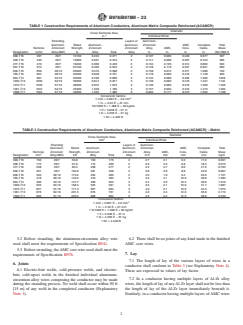
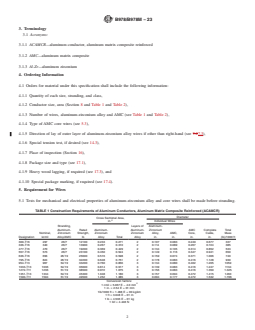
TABLE 1 Construction Requirements of Aluminum Conductors, Aluminum Matrix Composite Reinforced (ACAMCR)
Diameter
Cross Sectional Area,
in. Individual Wires
Stranding, Layers of Aluminum-
Aluminum- Rated Aluminum- Aluminum- Zirconium AMC Complete Total
Nominal, Zirconium Strength, Zirconium Zirconium Alloy, AMC, Core, Cable, Mass
Designation kcmil Alloy/AMC lb Alloy Total Alloy in. in. in. in. (lb)/1000 ft
300-T16 297 26/7 12100 0.233 0.271 2 0.107 0.083 0.249 0.677 337
336-T16 340 26/7 13900 0.267 0.310 2 0.114 0.089 0.267 0.724 385
477-T16 470 26/7 19200 0.369 0.429 2 0.134 0.105 0.314 0.852 533
557-T16 573 26/7 23100 0.450 0.524 2 0.149 0.116 0.347 0.941 650
636-T16 656 26/19 25600 0.516 0.598 2 0.159 0.074 0.371 1.006 740
795-T16 824 26/19 32200 0.648 0.751 2 0.178 0.083 0.416 1.128 930
954-T13 967 54/19 33200 0.760 0.856 3 0.134 0.080 0.402 1.205 1059
1033-T13 1036 54/19 35600 0.814 0.917 3 0.139 0.083 0.416 1.247 1134
1272-T11 1236 51/19 38500 0.972 1.075 3 0.156 0.083 0.416 1.350 1.325
1351-T13 1334 54/19 45300 1.048 1.180 3 0.157 0.094 0.472 1.415 1460
1590-T11 1594 51/19 49500 1.252 1.385 3 0.094 0.177 0.472 1.532 1.706
Conversion factors:
1 cmil = 5.067 E – 4.0 mm
1 in. = 2.54 E + 01 mm
1lb/1000 ft = 1.488 E + 00 kg/km
1 ft = 3.048 E – 01 m
1 lb = 4.536 E – 01 kg
1 lbf = 4.448 N
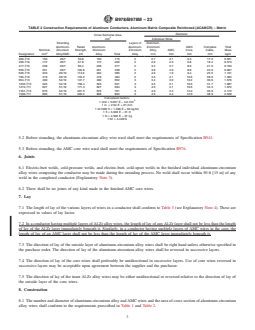
TABLE 2 Construction Requirements of Aluminum Conductors, Aluminum Matrix Composite Reinforced (ACAMCR) – Metric
Diameter
Cross Sectional Area,
mm Individual Wires
Stranding Layers of Aluminum-
Aluminum- Rated Aluminum- Aluminum- Zirconium AMC Complete Total
Nominal, Zirconium Strength, Zirconium Zirconium Alloy, AMC, Core, Cable, Mass
Designation mm Alloy/AMC kN Alloy Total Alloy mm mm mm mm kg/m
300-T16 150 26/7 53.8 150 175 2 2.7 2.1 6.3 17.2 0.501
336-T16 172 26/7 61.8 172 200 2 2.9 2.3 6.8 18.4 0.573
477-T16 238 26/7 85.4 238 277 2 3.4 2.7 8.0 21.6 0.793
556-T16 291 26/7 102.8 291 338 2 3.8 2.9 8.8 23.9 0.967
636-T16 333 26/19 113.9 332 385 2 4.0 1.9 9.4 25.5 1.101
795-T16 418 26/19 143.2 418 484 2 4.5 2.1 10.6 28.6 1.384
954-T13 490 54/19 147.7 490 552 3 3.4 2.0 10.2 30.6 1.576
1033-T13 525 54/19 158.4 525 591 3 3.5 2.1 10.6 31.7 1.687
1272-T11 627 51/19 171.3 627 694 3 4.0 2.1 10.6 34.3 1.972
1351-T13 676 54/19 201.5 676 761 3 4.0 2.4 12.0 35.9 2.172
1590-T11 806 51/19 220.2 808 894 3 4.5 2.4 12.0 38.9 2.539
Conversion factors:
1 cmil = 5.067 E – 4.0 mm
1 in. = 2.54 E + 01 mm
1 lb/1000 ft = 1.488 E + 00 kg/km
1 ft = 3.048 E – 01 m
1 lb = 4.536 E – 01 kg
1 lbf = 4.448 N
5.2 Before stranding, the aluminum-zirconium alloy wire 6.2 There shall be no joints of any kind made in the finished
used shall meet the requirements of Specification B941. AMC core wires.
5.3 Before stranding, the AMC core wire used shall meet the
7. Lay
requirements of Specification B976.
7.1 The length of lay of the various layers of wires in a
6. Joints
conductor shall conform to Table 3 (see Explanatory Note 4).
6.1 Electric-butt welds, cold-pressure welds, and electric-
These are expressed in values of lay factor.
butt, cold-upset welds in the finished individual aluminum-
7.2 In a conductor having multiple layers of Al-Zr alloy
zirconium alloy wires composing the conductor may be made
wires, the length of lay of any Al-Zr layer shall not be less than
during the stranding process. No weld shall occur within 50 ft
[15 m] of any weld in the completed conductor (Explanatory the length of lay of the Al-Zr layer immediately beneath it.
Note 3). Similarly, in a conductor having multiple layers of AMC wires
B978/B978M − 23
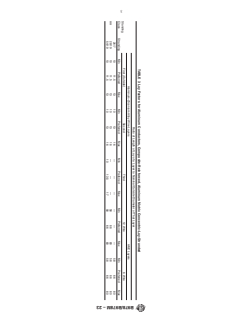
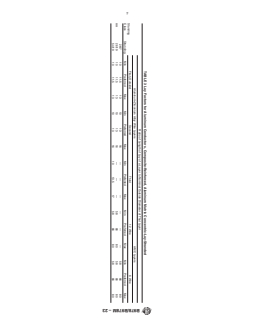
TABLE 3 Lay Factors for Aluminum Conductors, Composite-Reinforced, Aluminum Matrix Concentric-Lay-Stranded
Ratio of Length of Lay of a Layer to Nominal Outside Diameter of That Layer
Aluminum-Zirconium Alloy Wire Layers AMC Layers
First (Outside) Second Third 12 Wire 6 Wire
Standing
Class Stranding Min Preferred Max Min Preferred Max Min Preferred Max Min Preferred Max Min Preferred Max
26/7 10 11.5 13 10 13 16 — — — — — — 58 66 80
AA 26/19 10 11.5 13 10 13 16 — — — 58 66 80 58 66 80
54/19 10 11.5 13 10 13 16 10 13.5 17 58 66 80 58 66 80
B978/B978M − 23
in the core, the length of lay of an AMC layer shall not be less 9.2 Rated strengths of various constructions are given in
than the length of lay of the AMC layer immediately beneath Table 1 and Table 2.
it.
10. Density
7.3 The direction of lay of the outside layer of aluminum-
10.1 For the purpose of calculating mass per unit length,
zirconium alloy wires shall be right hand unless otherwise
cross sections, etc., the density of the aluminum-zirconium
specified in the purchase order. The direction of lay of the
alloy shall be taken from Specification B941.
aluminum-zirconium alloy wires shall be reversed in succes-
sive layers. 10.2 For the purpose of calculating mass per unit length,
cross sections, etc., the density of the AMC wire shall be taken
7.4 The direction of lay of the core wires shall preferably be
from Specification B976.
unidirectional in successive layers. Use of core wires reversed
in successive layers may be acceptable upon agreement be-
11. Mass Per Unit Length and Electrical Resistance
tween the supplier and the purchaser.
11.1 The mass per unit length and electrical resistance of a
7.5 The direction of lay of the inner Al-Zr alloy wires may
unit length of stranded conductor are a function of the length of
be either unidirectional or reversed relative to the direction of
lay. The approximate mass and electrical resistance may be
lay of the outside layer of the core wires.
determined using the standard increments shown in Table 4.
When greater accuracy is desired the increment based on the
8. Construction
specific lay of the conductor may be calculated (Explanatory
8.1 The number and diameter of aluminum-zirconium alloy
Note 6).
and AMC wires and the area of cross section of aluminum-
11.2 In the calculation of the electrical resistance of a
zirconium alloy wires shall conform to the requirements
conductor, the AMC core wires may be included. The electrical
prescribed in Table 1 and Table 2.
resistance of the AMC core wires shall be taken as
9. Rated Strength of Conductor
39.88 Ω·cmil ⁄ft [0.0642 Ω·mm /m] at 68 °F [20 °C]. The
electrical resistance of aluminum-zirconium wires shall be
9.1 The rated strength of a completed conductor shall be
taken as 17.28 Ω·cmil/ft [0.02873 Ω·mm /m] at 68 °F [20 °C].
taken as the sum of the aluminum-zirconium alloy load rating
These are typical DC resistance values, not minimum values.
and the AMC load rating, calculated as follows.
9.1.1 The strength contribution of the aluminum alloy wires
12. Cross-sectional Area
shall be taken as:
12.1 The area of cross section of the aluminum-zirconium
Aluminum zirconium alloy load = ~min wire strength
alloy wires of a conductor shall be not less than 98 % of the
× nominal wire area!
area specified. Unless otherwise specified by the purchaser, the
× ~0.967! × number strands
manufacturer may have the option of determining the cross-
× stranding derating factor sectional area by either of the following methods, except that in
case of question regarding area compliance, the method of
(See Explanatory Note 5) for more information.)
12.1.2 shall be used:
9.1.2 The minimum aluminum-zirconium alloy wire
12.1.1 The area of cross section may be determined by
strength and nominal diameter may be obtained from Specifi-
calculations from diameter measurements, expressed to four
cation B941. The number of strands is found in Table 1 and
decimal places for inches or three decimal places for
Table 2, and the stranding derating factor is found in Table 4.
millimeters, of the component aluminum-zirconium alloy
The strength contribution of the AMC core wires shall be taken
wires at any point when measured perpendicularly to their
as:
axes.
Core load = min wire load × number strands × stranding factor
12.1.2 The area of cross section of the aluminum-zirconium
alloy wires of a conductor may be determined by Test Method
9.1.3 The minimum core wire strength may be obtained
B263/B263M. In applying that test method the increment in
from Specification B976. The number of strands is found in
mass per unit length resulting from stranding may be the
Table 1 and Table 2, and the stranding factor is found in Table
applicable value specified in 11.1 or may be calculated from
4.
the measured component dimensions of the sample under test.
In case of questions regarding area compliance, the actual mass
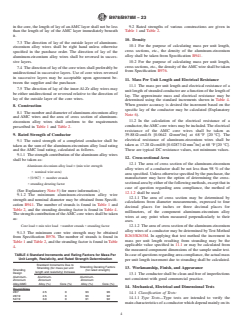
TABLE 4 Standard Increments and Rating Factors for Mass Per
Unit Length, Resistivity, and Rated Strength Determination per unit length increment due to stranding shall be calculated.
Standard Increments Due to
Stranding Derating Factors
13. Workmanship, Finish, and Appearance
Stranding (for mass per unit
Stranding
...
This document is not an ASTM standard and is intended only to provide the user of an ASTM standard an indication of what changes have been made to the previous version. Because
it may not be technically possible to adequately depict all changes accurately, ASTM recommends that users consult prior editions as appropriate. In all cases only the current version
of the standard as published by ASTM is to be considered the official document.
Designation: B978/B978M − 21 B978/B978M − 23
Standard Specification for
Concentric-Lay-Stranded Aluminum Conductors, Aluminum
Matrix Composite Reinforced (ACAMCR), Formerly ACCR
This standard is issued under the fixed designation B978/B978M; the number immediately following the designation indicates the year
of original adoption or, in the case of revision, the year of last revision. A number in parentheses indicates the year of last reapproval.
A superscript epsilon (´) indicates an editorial change since the last revision or reapproval.
1. Scope
1.1 This specification covers concentric-lay-stranded conductors made from round aluminum-zirconium alloy wires and an
aluminum matrix composite (AMC) core wire(s) for use as overhead electrical conductors (Explanatory Note 1 and Explanatory
Note 2).
1.2 The values stated in either SI units or inch-pound units are to be regarded separately as standard. The values stated in each
system are not necessarily exact equivalents; therefore, to ensure conformance with the standard, each system shall be used
independently of the other, and values from the two systems shall not be combined.
1.3 This international standard was developed in accordance with internationally recognized principles on standardization
established in the Decision on Principles for the Development of International Standards, Guides and Recommendations issued
by the World Trade Organization Technical Barriers to Trade (TBT) Committee.
2. Referenced Documents
2.1 The following documents form a part of this specification to the extent referenced herein:
2.2 ASTM Standards:
B263B263/B263M Test Method for Determination of Cross-Sectional Area of Stranded Conductors
B354 Terminology Relating to Uninsulated Metallic Electrical Conductors
B682 Specification for Standard Metric Sizes of Electrical Conductors
B941 Specification for Heat Resistant Aluminum-Zirconium Alloy Wire for Electrical Purposes
B976 Specification for Fiber Reinforced Aluminum Matrix Composite (AMC) Core Wire for Aluminum Conductors Aluminum
Matrix Composite Reinforced (ACAMCR) (formerly known as ACCR)
B1008 Test Method for Stress-Strain Testing for Overhead Electrical Conductors
E29 Practice for Using Significant Digits in Test Data to Determine Conformance with Specifications
2.3 NIST Document:
NBS Handbook 100 Copper Wire Tables
2.4 Aluminum Association Documents:
Publication 50 Code Words for Overhead Aluminum Electrical Conductors
This specification is under the jurisdiction of ASTM Committee B01 on Electrical Conductors and is the direct responsibility of Subcommittee B01.07 on Conductors
of Light Metals.
Current edition approved Oct. 1, 2021Feb. 15, 2023. Published October 2021March 2023. Originally approved in 2014. Last previous edition approved in 20142021 as
B978/B978M – 14.B978/B978M – 21. DOI: 10.1520/B0978_B0978M-21.10.1520/B0978_B0978M-23.
For referenced ASTM standards, visit the ASTM website, www.astm.org, or contact ASTM Customer Service at service@astm.org. For Annual Book of ASTM Standards
volume information, refer to the standard’s Document Summary page on the ASTM website.
Available from National Institute of Standards and Technology (NIST), 100 Bureau Dr., Stop 1070, Gaithersburg, MD 20899-1070, http://www.nist.gov.
Available from Aluminum Association, 1400 Crystal Dr., Suite 430, Arlington, VA 22202, http://www.aluminum.org.
Copyright © ASTM International, 100 Barr Harbor Drive, PO Box C700, West Conshohocken, PA 19428-2959. United States
B978/B978M − 23
3. Terminology
3.1 Acronyms:
3.1.1 ACAMCR—aluminum conductor, aluminum matrix composite reinforced
3.1.2 AMC—aluminum matrix composite
3.1.3 Al-Zr—aluminum zirconium
4. Ordering Information
4.1 Orders for material under this specification shall include the following information:
4.1.1 Quantity of each size, stranding, and class,
4.1.2 Conductor size, area (Section 8 and Table 1 and Table 2),
4.1.3 Number of wires, aluminum-zirconium alloy and AMC (see Table 1 and Table 2),
4.1.4 Type of AMC core wires (see 5.3),
4.1.5 Direction of lay of outer layer of aluminum-zirconium alloy wires if other than right-hand (see 7.27.3),
4.1.6 Special tension test, if desired (see 14.3),
4.1.7 Place of inspection (Section 16),
4.1.8 Package size and type (see 17.1),
4.1.9 Heavy wood lagging, if required (see 17.3), and
4.1.10 Special package marking, if required (see 17.4).
5. Requirement for Wires
5.1 Tests for mechanical and electrical properties of aluminum-zirconium alloy and core wires shall be made before stranding.
TABLE 1 Construction Requirements of Aluminum Conductors, Aluminum Matrix Composite Reinforced (ACAMCR)
Diameter
Cross Sectional Area,
in. Individual Wires
Stranding, Layers of Aluminum-
Aluminum- Rated Aluminum- Aluminum- Zirconium AMC Complete Total
Nominal, Zirconium Strength, Zirconium Zirconium Alloy, AMC, Core, Cable, Mass
Designation kcmil Alloy/AMC lb Alloy Total Alloy in. in. in. in. (lb)/1000 ft
300-T16 297 26/7 12100 0.233 0.271 2 0.107 0.083 0.249 0.677 337
336-T16 340 26/7 13900 0.267 0.310 2 0.114 0.089 0.267 0.724 385
477-T16 470 26/7 19200 0.369 0.429 2 0.134 0.105 0.314 0.852 533
557-T16 573 26/7 23100 0.450 0.524 2 0.149 0.116 0.347 0.941 650
636-T16 656 26/19 25600 0.516 0.598 2 0.159 0.074 0.371 1.006 740
795-T16 824 26/19 32200 0.648 0.751 2 0.178 0.083 0.416 1.128 930
954-T13 967 54/19 33200 0.760 0.856 3 0.134 0.080 0.402 1.205 1059
1033-T13 1036 54/19 35600 0.814 0.917 3 0.139 0.083 0.416 1.247 1134
1272-T11 1236 51/19 38500 0.972 1.075 3 0.156 0.083 0.416 1.350 1.325
1351-T13 1334 54/19 45300 1.048 1.180 3 0.157 0.094 0.472 1.415 1460
1590-T11 1594 51/19 49500 1.252 1.385 3 0.094 0.177 0.472 1.532 1.706
Conversion factors:
1 cmil = 5.067 E – 4.0 mm
1 in. = 2.54 E + 01 mm
1lb/1000 ft = 1.488 E + 00 kg/km
1 ft = 3.048 E – 01 m
1 lb = 4.536 E – 01 kg
1 lbf = 4.448 N
B978/B978M − 23
TABLE 2 Construction Requirements of Aluminum Conductors, Aluminum Matrix Composite Reinforced (ACAMCR) – Metric
Diameter
Cross Sectional Area,
mm Individual Wires
Stranding Layers of Aluminum-
Aluminum- Rated Aluminum- Aluminum- Zirconium AMC Complete Total
Nominal, Zirconium Strength, Zirconium Zirconium Alloy, AMC, Core, Cable, Mass
Designation mm Alloy/AMC kN Alloy Total Alloy mm mm mm mm kg/m
300-T16 150 26/7 53.8 150 175 2 2.7 2.1 6.3 17.2 0.501
336-T16 172 26/7 61.8 172 200 2 2.9 2.3 6.8 18.4 0.573
477-T16 238 26/7 85.4 238 277 2 3.4 2.7 8.0 21.6 0.793
556-T16 291 26/7 102.8 291 338 2 3.8 2.9 8.8 23.9 0.967
636-T16 333 26/19 113.9 332 385 2 4.0 1.9 9.4 25.5 1.101
795-T16 418 26/19 143.2 418 484 2 4.5 2.1 10.6 28.6 1.384
954-T13 490 54/19 147.7 490 552 3 3.4 2.0 10.2 30.6 1.576
1033-T13 525 54/19 158.4 525 591 3 3.5 2.1 10.6 31.7 1.687
1272-T11 627 51/19 171.3 627 694 3 4.0 2.1 10.6 34.3 1.972
1351-T13 676 54/19 201.5 676 761 3 4.0 2.4 12.0 35.9 2.172
1590-T11 806 51/19 220.2 808 894 3 4.5 2.4 12.0 38.9 2.539
Conversion factors:
1 cmil = 5.067 E – 4.0 mm
1 in. = 2.54 E + 01 mm
1 lb/1000 ft = 1.488 E + 00 kg/km
1 ft = 3.048 E – 01 m
1 lb = 4.536 E – 01 kg
1 lbf = 4.448 N
5.2 Before stranding, the aluminum-zirconium alloy wire used shall meet the requirements of Specification B941.
5.3 Before stranding, the AMC core wire used shall meet the requirements of Specification B976.
6. Joints
6.1 Electric-butt welds, cold-pressure welds, and electric-butt, cold-upset welds in the finished individual aluminum-zirconium
alloy wires composing the conductor may be made during the stranding process. No weld shall occur within 50 ft [15 m] of any
weld in the completed conductor (Explanatory Note 3).
6.2 There shall be no joints of any kind made in the finished AMC core wires.
7. Lay
7.1 The length of lay of the various layers of wires in a conductor shall conform to Table 3 (see Explanatory Note 4). These are
expressed in values of lay factor.
7.2 In a conductor having multiple layers of Al-Zr alloy wires, the length of lay of any Al-Zr layer shall not be less than the length
of lay of the Al-Zr layer immediately beneath it. Similarly, in a conductor having multiple layers of AMC wires in the core, the
length of lay of an AMC layer shall not be less than the length of lay of the AMC layer immediately beneath it.
7.3 The direction of lay of the outside layer of aluminum-zirconium alloy wires shall be right hand unless otherwise specified in
the purchase order. The direction of lay of the aluminum-zirconium alloy wires shall be reversed in successive layers.
7.4 The direction of lay of the core wires shall preferably be unidirectional in successive layers. Use of core wires reversed in
successive layers may be acceptable upon agreement between the supplier and the purchaser.
7.5 The direction of lay of the inner Al-Zr alloy wires may be either unidirectional or reversed relative to the direction of lay of
the outside layer of the core wires.
8. Construction
8.1 The number and diameter of aluminum-zirconium alloy and AMC wires and the area of cross section of aluminum-zirconium
alloy wires shall conform to the requirements prescribed in Table 1 and Table 2.
B978/B978M − 23
TABLE 3 Lay Factors for Aluminum Conductors, Composite-Reinforced, Aluminum Matrix Concentric-Lay-Stranded
Ratio of Length of Lay of a Layer to Nominal Outside Diameter of That Layer
Aluminum-Zirconium Alloy Wire Layers AMC Layers
First (Outside) Second Third 12 Wire 6 Wire
Standing
Class Stranding Min Preferred Max Min Preferred Max Min Preferred Max Min Preferred Max Min Preferred Max
26/7 10 11.5 13 10 13 16 — — — — — — 58 66 80
AA 26/19 10 11.5 13 10 13 16 — — — 58 66 80 58 66 80
54/19 10 11.5 13 10 13 16 10 13.5 17 58 66 80 58 66 80
B978/B978M − 23
9. Rated Strength of Conductor
9.1 The rated strength of a completed conductor shall be taken as the sum of the aluminum-zirconium alloy load rating and the
AMC load rating, calculated as follows.
9.1.1 The strength contribution of the aluminum alloy wires shall be taken as:
Aluminum zirconium alloy load = ~min wire strength
× nominal wire area!
×~0.967! ×number strands
×stranding derating factor
(See Explanatory Note 5) for more information.)
9.1.2 The minimum aluminum-zirconium alloy wire strength and nominal diameter may be obtained from Specification B941. The
number of strands is found in Table 1 and Table 2, and the stranding derating factor is found in Table 4. The strength contribution
of the AMC core wires shall be taken as:
Core load = min wire load ×number strands ×stranding factor
9.1.3 The minimum core wire strength may be obtained from Specification B976. The number of strands is found in Table 1 and
Table 2, and the stranding factor is found in Table 4.
9.2 Rated strengths of various constructions are given in Table 1 and Table 2.
10. Density
10.1 For the purpose of calculating mass per unit length, cross sections, etc., the density of the aluminum-zirconium alloy shall
3 3
be taken as 2698from Specification B941kg/m. [0.0975 lb/in. ] at 20 °C.
10.2 For the purpose of calculating mass per unit length, cross sections, etc., the density of the AMC wire shall be taken as
3 3
3370from Specification B976kg/m. [0.122 lb/in. ] at 20 °C.
11. Mass Per Unit Length and Electrical Resistance
11.1 The mass per unit length and electrical resistance of a unit length of stranded conductor are a function of the length of lay.
The approximate mass and electrical resistance may be determined using the standard increments shown in Table 4. When greater
accuracy is desired the increment based on the specific lay of the conductor may be calculated (Explanatory Note 6).
11.2 In the calculation of the electrical resistance of a conductor, the AMC core wires may be included. The electrical resistance
of the AMC core wires shall be taken as 39.88 Ω·cmil ⁄ft [0.0642 Ω·mm /m] at 68 °F [20 °C]. The electrical resistance of
aluminum-zirconium wires shall be taken as 17.28 Ω·cmil/ft [0.02873 Ω·mm /m] at 68 °F [20 °C]. These are typical DC resistance
values, not minimum values.
12. Cross-sectional Area
12.1 The area of cross section of the aluminum-zirconium alloy wires of a conductor shall be not less than 98 % of the area
TABLE 4 Standard Increments and Rating Factors for Mass Per
Unit Length, Resistivity, and Rated Strength Determination
Standard Increments Due to
Stranding Derating Factors
Stranding (for mass per unit
Stranding
(for rated strength)
length and resistivity) Increase
Design
Aluminum- Aluminum- Aluminum-
Zirconium Zirconium Zirconium
Alloy/AMC Alloy (%) Core (%) Alloy (%) Core (%)
Round Wires
26/7 2.5 0 93 96
26/19 2.5 0 93 92
54/19 3.0 0 91 92
B978/B978M − 23
specified. Unless otherwise specified by the purchaser, the manufacturer may have the option of determining the cross-sectional
area by either of the following methods, except that in case of question regarding area compliance, the method of 12.1.2 shall be
used:
12.1.1 The area of cross section may be determined by calculations from diameter measurements, expressed to four decimal places
for inches or three decimal places for millimeters, of the component aluminum-zirconium alloy wires at any point when measured
perpendicularly to their axes.
12.1.2 The area of cross section of the aluminum-zirconium alloy wires of a conductor may be determined by Test
...