

ASTM E585/E585M-23
(Specification)Standard Specification for Compacted Mineral-Insulated, Metal-Sheathed, Base Metal Thermocouple Cable
General Information
- Abstract
ABSTRACT
This specification establishes the required material, processing and testing requirements, and also the optional supplementary testing and quality assurance and verification choices for compacted, mineral-insulated, metal-sheathed, base metal thermocouple cables with at least two thermoelements. The material of construction includes standard base metal thermoelements, austenitic stainless steel or other corrosion resistant sheath material, and either magnesia (MgO) or alumina (Al2O3) insulation. The required tests to which the thermocouple cables shall undergo for quality verification are dimensions, insulation resistance at room temperature, calibration, electrical continuity, insulation density, sheath integrity, and EMF versus temperature values.
SCOPE
1.1 This specification establishes requirements for compacted, mineral-insulated, metal-sheathed (MIMS), base metal thermocouple cable,2 with at least two thermoelements.3
1.2 This specification describes the required material, processing and testing requirements, optional supplementary testing, quality assurance, and verification choices.
1.3 The material of construction includes standard base metal thermoelements, austenitic stainless steel or other corrosion resistant sheath material, and either magnesia (MgO) or alumina (Al2O3) insulation.
1.4 The values stated in either SI units or inch-pound units are to be regarded separately as standard. The values stated in each system may not be exact equivalents; therefore, each system shall be used independently of the other. Combining values from the two systems may result in non-conformance with the standard.
1.5 This standard does not purport to address all of the safety concerns, if any, associated with its use. It is the responsibility of the user of this standard to establish appropriate safety, health, and environmental practices and determine the applicability of regulatory limitations prior to use.
1.6 This international standard was developed in accordance with internationally recognized principles on standardization established in the Decision on Principles for the Development of International Standards, Guides and Recommendations issued by the World Trade Organization Technical Barriers to Trade (TBT) Committee.
- Status
- Published
- Publication Date
- 30-Jun-2023
- Technical Committee
- E20 - Temperature Measurement
- Drafting Committee
- E20.12 - Thermocouples - Specifications
Buy Documents
ASTM E585/E585M-23 - Standard Specification for Compacted Mineral-Insulated, Metal-Sheathed, Base Metal Thermocouple Cable
REDLINE ASTM E585/E585M-23 - Standard Specification for Compacted Mineral-Insulated, Metal-Sheathed, Base Metal Thermocouple Cable
Overview
ASTM E585/E585M-23 is the international standard specification for compacted mineral-insulated, metal-sheathed (MIMS) base metal thermocouple cable, issued by ASTM International. This standard defines essential requirements for the materials, processing, testing, and quality assurance of MIMS thermocouple cable, which incorporates a sheath of corrosion-resistant metal, base metal thermoelements, and mineral insulation (magnesia or alumina). It applies to cable with at least two thermoelements, providing detailed guidance to ensure cable performance in demanding industrial temperature measurement applications.
Key Topics
- Material Requirements: Specifies the use of solid wire thermoelements (Types E, J, K, N, or T), austenitic stainless steel, or nickel-chrome alloy sheath, and magnesia (MgO) or alumina (Al2O3) insulation.
- Dimensional Standards: Establishes minimum sheath wall thickness, thermoelement and insulation diameters as a percentage of cable diameter, ensuring reliability and safety.
- Testing Protocols: Mandates room temperature insulation resistance, calibration against specified tolerances, electrical continuity, insulation density, and sheath integrity tests.
- Supplementary Options: Offers guidance on optional elevated temperature tests, surface finish requirements, dielectric breakdown tests, and quality program verifications to address diverse operational conditions.
- Identification & Traceability: Requires thorough documentation and product labeling for traceability from raw material to finished cable.
- Packaging & Shipping: Details sealing, cleanliness, packaging, and marking requirements to maintain cable integrity throughout handling and delivery.
Applications
ASTM E585/E585M-23 covers mineral-insulated thermocouple cable widely used in:
- Industrial Process Control: Reliable measurement in harsh or corrosive environments, such as chemical plants, power generation, metal processing, and pharmaceuticals.
- Manufacturing Thermocouples: Serves as primary sheathed cable for fabrication of sensors conforming to high temperature and precision measurement requirements.
- Critical Installations: Suitable for use in locations demanding high mechanical strength, excellent insulation, and protection against moisture and contaminants.
- Extension Cables: Functions as extension wire where environmental protection is paramount.
Key advantages derived from compliance include enhanced cable durability, stable insulation resistance, and assured measurement accuracy over the cable's service life.
Related Standards
ASTM E585/E585M-23 references multiple related standards to ensure comprehensive performance and material requirements. Key related documents include:
- ASTM A213/A213M: Seamless alloy-steel tube specifications for sheaths
- ASTM E230/E230M: Temperature-electromotive force (emf) tables for standardized thermocouples
- ASTM E608/E608M: Specifications for mineral-insulated, metal-sheathed thermocouples
- ASTM E839: Test methods for sheathed thermocouples and cables
- ASTM E1652: Requirements for magnesium oxide and aluminum oxide insulators
- ASTM A632, B163, B167, B423, B516: Sheath and insulation material specifications
- ANSI B46.1: Surface texture standards
Adherence to ASTM E585/E585M-23 ensures compatibility and performance in line with international best practices for temperature measurement instrumentation.
Keywords: ASTM E585/E585M-23, mineral-insulated thermocouple cable, MIMS cable, temperature measurement, base metal thermocouple, insulation resistance, sheath integrity, industrial process control, calibration, ASTM standards.
Relations
- Effective Date
- 01-Apr-2024
- Effective Date
- 01-Mar-2024
- Effective Date
- 01-Mar-2024
- Effective Date
- 01-Dec-2023
- Effective Date
- 01-Nov-2023
- Effective Date
- 01-Nov-2023
- Refers
ASTM E839-23 - Standard Test Methods for Sheathed Thermocouples and Sheathed Thermocouple Cable - Effective Date
- 01-Nov-2023
- Effective Date
- 01-May-2023
- Effective Date
- 01-Nov-2019
- Effective Date
- 01-Sep-2019
- Effective Date
- 01-Sep-2019
- Effective Date
- 01-Nov-2018
- Effective Date
- 01-Nov-2018
- Effective Date
- 01-Sep-2018
- Effective Date
- 01-Jul-2018
Buy Documents
ASTM E585/E585M-23 - Standard Specification for Compacted Mineral-Insulated, Metal-Sheathed, Base Metal Thermocouple Cable
REDLINE ASTM E585/E585M-23 - Standard Specification for Compacted Mineral-Insulated, Metal-Sheathed, Base Metal Thermocouple Cable
Get Certified
Connect with accredited certification bodies for this standard

BSMI (Bureau of Standards, Metrology and Inspection)
Taiwan's standards and inspection authority.
Sponsored listings
Frequently Asked Questions
ASTM E585/E585M-23 is a technical specification published by ASTM International. Its full title is "Standard Specification for Compacted Mineral-Insulated, Metal-Sheathed, Base Metal Thermocouple Cable". This standard covers: ABSTRACT This specification establishes the required material, processing and testing requirements, and also the optional supplementary testing and quality assurance and verification choices for compacted, mineral-insulated, metal-sheathed, base metal thermocouple cables with at least two thermoelements. The material of construction includes standard base metal thermoelements, austenitic stainless steel or other corrosion resistant sheath material, and either magnesia (MgO) or alumina (Al2O3) insulation. The required tests to which the thermocouple cables shall undergo for quality verification are dimensions, insulation resistance at room temperature, calibration, electrical continuity, insulation density, sheath integrity, and EMF versus temperature values. SCOPE 1.1 This specification establishes requirements for compacted, mineral-insulated, metal-sheathed (MIMS), base metal thermocouple cable,2 with at least two thermoelements.3 1.2 This specification describes the required material, processing and testing requirements, optional supplementary testing, quality assurance, and verification choices. 1.3 The material of construction includes standard base metal thermoelements, austenitic stainless steel or other corrosion resistant sheath material, and either magnesia (MgO) or alumina (Al2O3) insulation. 1.4 The values stated in either SI units or inch-pound units are to be regarded separately as standard. The values stated in each system may not be exact equivalents; therefore, each system shall be used independently of the other. Combining values from the two systems may result in non-conformance with the standard. 1.5 This standard does not purport to address all of the safety concerns, if any, associated with its use. It is the responsibility of the user of this standard to establish appropriate safety, health, and environmental practices and determine the applicability of regulatory limitations prior to use. 1.6 This international standard was developed in accordance with internationally recognized principles on standardization established in the Decision on Principles for the Development of International Standards, Guides and Recommendations issued by the World Trade Organization Technical Barriers to Trade (TBT) Committee.
ABSTRACT This specification establishes the required material, processing and testing requirements, and also the optional supplementary testing and quality assurance and verification choices for compacted, mineral-insulated, metal-sheathed, base metal thermocouple cables with at least two thermoelements. The material of construction includes standard base metal thermoelements, austenitic stainless steel or other corrosion resistant sheath material, and either magnesia (MgO) or alumina (Al2O3) insulation. The required tests to which the thermocouple cables shall undergo for quality verification are dimensions, insulation resistance at room temperature, calibration, electrical continuity, insulation density, sheath integrity, and EMF versus temperature values. SCOPE 1.1 This specification establishes requirements for compacted, mineral-insulated, metal-sheathed (MIMS), base metal thermocouple cable,2 with at least two thermoelements.3 1.2 This specification describes the required material, processing and testing requirements, optional supplementary testing, quality assurance, and verification choices. 1.3 The material of construction includes standard base metal thermoelements, austenitic stainless steel or other corrosion resistant sheath material, and either magnesia (MgO) or alumina (Al2O3) insulation. 1.4 The values stated in either SI units or inch-pound units are to be regarded separately as standard. The values stated in each system may not be exact equivalents; therefore, each system shall be used independently of the other. Combining values from the two systems may result in non-conformance with the standard. 1.5 This standard does not purport to address all of the safety concerns, if any, associated with its use. It is the responsibility of the user of this standard to establish appropriate safety, health, and environmental practices and determine the applicability of regulatory limitations prior to use. 1.6 This international standard was developed in accordance with internationally recognized principles on standardization established in the Decision on Principles for the Development of International Standards, Guides and Recommendations issued by the World Trade Organization Technical Barriers to Trade (TBT) Committee.
ASTM E585/E585M-23 is classified under the following ICS (International Classification for Standards) categories: 17.200.20 - Temperature-measuring instruments. The ICS classification helps identify the subject area and facilitates finding related standards.
ASTM E585/E585M-23 has the following relationships with other standards: It is inter standard links to ASTM B516-24, ASTM A249/A249M-24, ASTM A269/A269M-24, ASTM E344-23, ASTM B167-23, ASTM E230/E230M-23a, ASTM E839-23, ASTM E230/E230M-23, ASTM A213/A213M-19, ASTM A632-19, ASTM E344-19, ASTM B516-18, ASTM B163-18, ASTM A213/A213M-18a, ASTM A249/A249M-18. Understanding these relationships helps ensure you are using the most current and applicable version of the standard.
ASTM E585/E585M-23 is available in PDF format for immediate download after purchase. The document can be added to your cart and obtained through the secure checkout process. Digital delivery ensures instant access to the complete standard document.
Standards Content (Sample)
This international standard was developed in accordance with internationally recognized principles on standardization established in the Decision on Principles for the
Development of International Standards, Guides and Recommendations issued by the World Trade Organization Technical Barriers to Trade (TBT) Committee.
Designation: E585/E585M − 23 An American National Standard
Standard Specification for
Compacted Mineral-Insulated, Metal-Sheathed, Base Metal
Thermocouple Cable
This standard is issued under the fixed designation E585/E585M; the number immediately following the designation indicates the year
of original adoption or, in the case of revision, the year of last revision. A number in parentheses indicates the year of last reapproval.
A superscript epsilon (´) indicates an editorial change since the last revision or reapproval.
1. Scope of a conflict between this specification and other specifications
referenced herein, this specification shall take precedence.
1.1 This specification establishes requirements for
compacted, mineral-insulated, metal-sheathed (MIMS), base 2.2 ASTM Standards:
2 3
metal thermocouple cable, with at least two thermoelements. A213/A213M Specification for Seamless Ferritic and Aus-
tenitic Alloy-Steel Boiler, Superheater, and Heat-
1.2 This specification describes the required material, pro-
Exchanger Tubes
cessing and testing requirements, optional supplementary
A249/A249M Specification for Welded Austenitic Steel
testing, quality assurance, and verification choices.
Boiler, Superheater, Heat-Exchanger, and Condenser
1.3 The material of construction includes standard base
Tubes
metal thermoelements, austenitic stainless steel or other corro-
A269/A269M Specification for Seamless and Welded Aus-
sion resistant sheath material, and either magnesia (MgO) or
tenitic Stainless Steel Tubing for General Service
alumina (Al O ) insulation.
2 3
A632 Specification for Seamless and Welded Austenitic
1.4 The values stated in either SI units or inch-pound units Stainless Steel Tubing (Small-Diameter) for General Ser-
vice
are to be regarded separately as standard. The values stated in
each system may not be exact equivalents; therefore, each B163 Specification for Seamless Nickel and Nickel Alloy
Condenser and Heat-Exchanger Tubes
system shall be used independently of the other. Combining
values from the two systems may result in non-conformance B167 Specification for Standard Specification for Nickel-
Chromium-Aluminum Alloys (UNS N06699) Nickel-
with the standard.
Chromium-Iron Alloys (UNS N06600, N06601, N06603,
1.5 This standard does not purport to address all of the
N06690, N06693, N06025, N06045, and N06696) Nickel-
safety concerns, if any, associated with its use. It is the
Chromium-Cobalt-Molybdenum Alloy (UNS N06617)
responsibility of the user of this standard to establish appro-
Nickel-Iron-Chromium-Tungsten Alloy (UNS N06674)
priate safety, health, and environmental practices and deter-
and Nickel-Chromium-Molybdenum-Copper Alloy (UNS
mine the applicability of regulatory limitations prior to use.
N06235) Seamless Pipe and Tube
1.6 This international standard was developed in accor-
B423 Specification for Nickel-Iron-Chromium-
dance with internationally recognized principles on standard-
Molybdenum-Copper Alloy Seamless Pipe and Tube
ization established in the Decision on Principles for the
B516 Specification for Welded Nickel-Chromium-
Development of International Standards, Guides and Recom-
Aluminum Alloy (UNS N06699) and Nickel-Chromium-
mendations issued by the World Trade Organization Technical
Iron Alloy (UNS N06600, UNS N06601, UNS N06603,
Barriers to Trade (TBT) Committee.
UNS N06025, UNS N06045, UNS N06690, and UNS
2. Referenced Documents N06693) Tubes
E112 Test Methods for Determining Average Grain Size
2.1 The following documents of the latest issue form a part
E220 Test Method for Calibration of Thermocouples By
of this specification to the extent specified herein. In the event
Comparison Techniques
E230/E230M Specification for Temperature-Electromotive
This specification is under the jurisdiction of ASTM Committee E20 on
Force (emf) Tables for Standardized Thermocouples
Temperature Measurement and is the direct responsibility of Subcommittee E20.12
E235/E235M Specification for Type K and Type N Mineral-
on Thermocouples - Specifications.
Current edition approved July 1, 2023. Published July 2023. Originally approved
Insulated, Metal-Sheathed Thermocouples for Nuclear or
in 1996. Last previous edition approved in 2018 as E585/E585M – 18. DOI:
10.1520/E0585_E0585M-23.
2 4
The terms “MIMS cable”, or “thermocouple cable”, or “MIMS thermocouple For referenced ASTM standards, visit the ASTM website, www.astm.org, or
cable”, or “cable” will be used herein to describe mineral-insulated, metal-sheathed, contact ASTM Customer Service at service@astm.org. For Annual Book of ASTM
base metal thermocouple cable. Standards volume information, refer to the standard’s Document Summary page on
“Wire” is also used to describe “thermoelements.” the ASTM website.
Copyright © ASTM International, 100 Barr Harbor Drive, PO Box C700, West Conshohocken, PA 19428-2959. United States
E585/E585M − 23
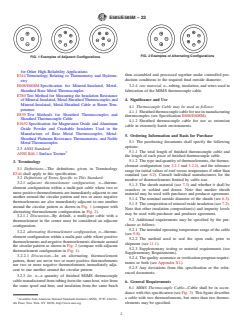
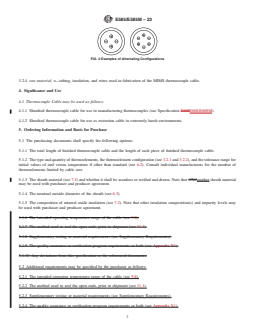
FIG. 2 Examples of Alternating Configurations
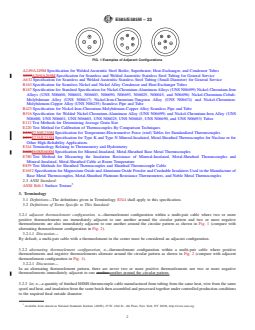
FIG. 1 Examples of Adjacent Configurations
for Other High-Reliability Applications
then assembled and processed together under controlled pro-
E344 Terminology Relating to Thermometry and Hydrom-
duction conditions to the required final outside diameter.
etry
E608/E608M Specification for Mineral-Insulated, Metal- 3.2.4 raw material, n—tubing, insulation, and wires used in
Sheathed Base Metal Thermocouples
fabrication of the MIMS thermocouple cable.
E780 Test Method for Measuring the Insulation Resistance
of Mineral-Insulated, Metal-Sheathed Thermocouples and
4. Significance and Use
Mineral-Insulated, Metal-Sheathed Cable at Room Tem-
4.1 Thermocouple Cable may be used as follows:
perature
4.1.1 Sheathed thermocouple cable for use in manufacturing
E839 Test Methods for Sheathed Thermocouples and
thermocouples (see Specification E608/E608M).
Sheathed Thermocouple Cable
4.1.2 Sheathed thermocouple cable for use as extension
E1652 Specification for Magnesium Oxide and Aluminum
cable in extremely harsh environments.
Oxide Powder and Crushable Insulators Used in the
Manufacture of Base Metal Thermocouples, Metal-
5. Ordering Information and Basis for Purchase
Sheathed Platinum Resistance Thermometers, and Noble
5.1 The purchasing documents shall specify the following
Metal Thermocouples
options:
2.3 ANSI Standard:
5.1.1 The total length of finished thermocouple cable and
ANSI B46.1 Surface Texture
the length of each piece of finished thermocouple cable.
5.1.2 The type and quantity of thermoelements, the thermo-
3. Terminology
element configuration (see 3.2.1 and 3.2.2), and the tolerance
3.1 Definitions—The definitions given in Terminology
range for initial values of emf versus temperature if other than
E344 shall apply to this specification.
standard (see 6.2). Consult individual manufacturers for the
3.2 Definitions of Terms Specific to This Standard:
number of thermoelements limited by cable size.
3.2.1 adjacent thermoelement configuration, n—thermo-
5.1.3 The sheath material (see 7.3) and whether it shall be
element configuration within a multi-pair cable where two or
seamless or welded and drawn. Note that another sheath
more positive thermoelements are immediately adjacent to one
material may be used with purchaser and producer agreement.
another around the circular pattern and two or more negative
5.1.4 The nominal outside diameter of the sheath (see 6.3).
thermoelements are also immediately adjacent to one another
5.1.5 The composition of mineral oxide insulation (see 7.2).
around the circular pattern as shown in Fig. 1 (compare with
Note that other insulation composition(s) and impurity levels
alternating thermoelement configuration in Fig. 2).
may be used with purchaser and producer agreement.
3.2.1.1 Discussion—By default, a multi-pair cable with a
5.2 Additional requirements may be specified by the pur-
thermoelement in the center must be considered an adjacent
chaser as follows:
configuration.
5.2.1 The intended operating temperature range of the cable
3.2.2 alternating thermoelement configuration, n—thermo-
(see 9.8).
element configuration within a multi-pair cable where positive
5.2.2 The method used to seal the open ends, prior to
thermoelements and negative thermoelements alternate around
shipment (see 11.1).
the circular pattern as shown in Fig. 2 (compare with adjacent
5.2.3 Supplementary testing or material requirements (see
thermoelement configuration in Fig. 1).
Supplementary Requirements).
3.2.2.1 Discussion—In an alternating thermoelement
5.2.4 The quality assurance or verification program require-
pattern, there are never two or more positive thermoelements
ments or both (see Appendix X1).
nor two or more negative thermoelements immediately adja-
5.2.5 Any deviations from this specification or the refer-
cent to one another around the circular pattern.
enced documents.
3.2.3 lot, n—a quantity of finished MIMS thermocouple
cable manufactured from tubing from the same heat, wire from
6. General Requirements
the same spool and heat, and insulation from the same batch
6.1 MIMS Thermocouple Cable—Cable shall be in accor-
dance with this specification (see Fig. 3). This figure describes
a cable with two thermoelements, but more than two thermo-
Available from American National Standards Institute (ANSI), 25 W. 43rd St.,
4th Floor, New York, NY 10036, http://www.ansi.org. elements may be specified.
E585/E585M − 23
TABLE 1 Dimensions and Tolerances of MIMS Cable in SI
(Metric) and U.S. Customary Units
Preferred Sizes—Nominal Outside
Diameter, A
Diameters listed below are
commonly available sizes.
Diameter, millimetres
0.50
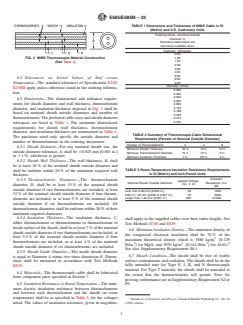
FIG. 3 MIMS Thermocouple Material Construction 1.00
1.50
(See Table 1)
2.00
3.00
4.50
6.00
6.2 Tolerances on Initial Values of Emf versus
8.00
9.50
Temperature—The standard tolerances of Specification E230/
Diameter, inches
E230M apply unless otherwise stated in the ordering informa-
0.020
tion.
0.032
0.040
6.3 Dimensions—The dimensional and tolerance require-
0.062
ments for sheath diameter and wall thickness, thermoelement
0.093
0.125
diameter, and insulation thickness depicted in Fig. 3 shall be
0.188
based on nominal sheath outside diameters and number of
0.250
thermoelements. The preferred cable sizes and sheath diameter
0.313
0.375
tolerances are listed in Table 1. The minimum dimensional
requirements for sheath wall thickness, thermoelement
diameter, and insulation thickness are summarized in Table 2.
TABLE 2 Summary of Thermocouple Cable Dimensional
The purchaser need only specify the outside diameter and
Requirements (Percent of Nominal Outside Diameter)
number of thermoelements in the ordering documents.
Number of Thermoelements 2 4 6
6.3.1 Sheath Diameter—For any nominal sheath size, the
Minimum Sheath Thickness 10 % 10 % 10 %
outside diameter tolerance, A, shall be 60.025 mm [0.001 in.]
Minimum Thermoelement Diameter 15 % 12 % 9 %
or 61 %, whichever is greater.
Minimum Insulation Thickness 7 % 5.5 % 4 %
6.3.2 Sheath Wall Thickness—The wall thickness, B, shall
be at least 10 % of the nominal sheath outside diameter and
TABLE 3 Room-Temperature Insulation Resistance Requirements
shall be uniform within 20 % of the minimum required wall
in SI (Metric) and Inch-Pound Units
thickness.
Insulation
6.3.3 Thermoelement Diameter—The thermoelement
Applied Voltage,
Nominal Sheath Outside Diameter Resistance, min,
min, V, dc
diameter, D, shall be at least 15 % of the nominal sheath
MΩ
outside diameter if two thermoelements are included, at least
Less than 0.80 mm [0.030 in.] 50 1000
12 % of the nominal sheath outside diameter if four thermo- 0.80 to 1.45 mm [0.030 to 0.057 in.] 50 5000
Larger than 1.45 mm [0.057 in.] 500 10 000
elements are included, or at least 9 % of the nominal sheath
outside diameter if six thermoelements are included. All
thermoelement diameters shall be uniform within 20 % of their
minimum required diameters.
6.3.4 Insulation Thickness—The insulation thickness, C,
shall apply to the supplied cables over their entire lengths. See
either thermoelement to thermoelement or thermoelement to
Test Methods E780 and E839.
inside surface of the sheath, shall be at least 7 % of the nominal
6.6 Minimum Insulation Density—The minimum density of
sheath outside diameter if two thermoelements are included, at
the compacted electrical insulation shall be 70 % of the
least 5.5 % of the nominal sheath outside diameter if four
maximum theoretical density which is 3580 kg/m [0.129
thermoelements are included, or at least 4 % of the nominal
3 3 3 6
lb/in. ] for MgO, and 3970 kg/m [0.144 lb/in. ] for Al O .
2 3
sheath outside diameter if six thermoelements are included.
See also Supplementary Requirement S6.1.
6.3.5 Sheath Inside Diameter—The inside sheath diameter
6.7 Sheath Condition—The sheath shall be free of visible
is equal to Diameter A minus two times dimension B. Dimen-
surface contaminants and oxidation. The sheath shall be in the
sions shall be measured in accordance with Test Methods
fully annealed state for Type E, J, K, and N thermocouple
E839.
material. For Type T material, the sheath shall be annealed to
6.4 Materials—The thermocouple cable shall be fabricated
the extent that the thermoelements will permit. Tests for
from component parts specified in Section 7.
proving conformance are in Supplementary Requirement S2 or
6.5 Insulation Resistance at Room Temperature—The mini-
S9.
mum electric insulation resistance between thermoelements
and between each thermoelement and the sheath (at room
temperature) shall be as specified in Table 3, for the voltages
Handbook of Chemistry and Physics, Chemical Rubber Publishing Co., No. 76
noted. The values of insulation resistance, given in megohms, (1995) edition.
E585/E585M − 23
TABLE 4 Standard Tests
6.8 Sheath Integrity—The sheath of the finished thermo-
couple cable shall exclude gases and liquids. There shall be no Section Test Test Piece
9.1.1, 9.6 Dimensional inspection Sample
holes, cracks, or other void defects that penetrate through the
A
9.1.2, 9.7 Insulation resistance
sheath wall. Tests for proving conformance to this requirement
at room temperature
are in Supplementary Requirement S3. 9.1.3, 9.8 Calibration Sample
A
9.1.4, 9.9 Electrical continuity
6.9 Quality verification requirements are specified on an
A
Each length of finished thermocouple cable shall be tested.
optional basis. The purchaser may require material traceability,
as desired (see Appendix X1).
6.10 The tests in this specification are the minimum to
specification are met. The producer is also responsible for the
determine if the specification requirements have been met.
quality of the finished product.
Additional optional supplementary requirements are listed in
the Supplementary Requirements section and may be included
9. Quality Verification and Test Requirements
in the purchase order requirements, if desired by the purchaser.
9.1 The following tests are required for all thermocouple
7. Material Requirements
cable furnished under this specification:
7.1 Thermoelements: 9.1.1 Dimensional inspection,
7.1.1 The thermoelements shall be solid wire, round in cross 9.1.2 Insulation resistance at room temperature,
section. 9.1.3 Calibration, and
7.1.2 The thermoelements shall only be of Type E, J, K, N, 9.1.4 Electrical continuity.
or T. All wire used for fabrication shall meet the supplemental
9.2 Documentation—Certificate of conformance in accor-
cleanliness requirements of Specification A632, except that
dance with Section 10.
acetone or any other solvent that might leave a harmful residue
9.3 Optional testing is defined in the Supplementary Re-
shall not be used for final cleaning.
quirements section. If the purchaser desires that these tests be
7.1.3 The emf-versus-temperature relationship shall meet
performed in whole, or in part, it shall be stated on the
the initial calibration tolerance of 6.2.
purchasing documents.
7.2 Insulation:
9.4 A quality assurance or verification program or both, is
7.2.1 The insulation shall only be magnesia (MgO) or
defined in Appendix X1. The purchaser may choose this
alumina (Al O ) conforming to Specification E1652. Unless
2 3
program or any part thereof, as an optional requirement.
otherwise agreed upon between the purchaser and the producer,
only Type 1 magnesia or Type 1 alumina shall be used. 9.5 Standard Tests—The producer shall perform inspection
and tests in accordance with Table 4, using the methods
7.3 Sheath Material:
described in Test Methods E839. Sampling shall be performed
7.3.1 The sheath material may be seamless or welded and
from each lot.
drawn tubing of austenitic stainless steel (typically type TP304,
TP304L, TP310, TP310S, TP316, TP316L, TP321, or TP347)
9.6 Dimensional Inspection—The producer shall measure a
or heat-resistant nickel-chrome alloy (typically type Alloy 600,
sample of finished thermocouple cable to determine confor-
Alloy 601, or Alloy 625).
mance to 6.3 for the following: outside diameter, thermoele-
7.3.2 The producer’s customary tubing specification shall be
ment diameter, sheath wall thickness, and insulation thickness.
applicable for the sheath material. See Supplementary Require-
Dimensions shall be measured per Test Methods E839.
ment S8.
9.7 Insulation Resistance at Room Temperature—The insu-
7.3.3 A nickel-chrome-iron sheath, as in Specifications
lation resistance of each length of cable shall be tested to
B163, B167, or B516, is recommended for fresh water service.
determine conformance to Table 3 and 6.5.
There are high molybdenum stainless steels that are specifi-
9.8 Calibration—Compliance with the tolerances on initial
cally made for use in salt water, such as type 316 and
values of emf versus temperature shall be demonstrated by
proprietary alloys. UNS N08825 or other proprietary alloys, as
calibration of a sample of finished cable. The sample shall be
in Specification B423, may be recommended for chloride-
fabricated into a thermocouple and calibrated using the general
containing environments above 60 °C
procedures outlined in Test Method E220. The tolerances on
7.3.4 Alternative heat-resistant tubing materials may be
initial values of emf versus temperature are defined in Table 5.
specified for the sheath by the producer, provided the
...
This document is not an ASTM standard and is intended only to provide the user of an ASTM standard an indication of what changes have been made to the previous version. Because
it may not be technically possible to adequately depict all changes accurately, ASTM recommends that users consult prior editions as appropriate. In all cases only the current version
of the standard as published by ASTM is to be considered the official document.
Designation: E585/E585M − 18 E585/E585M − 23 An American National Standard
Standard Specification for
Compacted Mineral-Insulated, Metal-Sheathed, Base Metal
Thermocouple Cable
This standard is issued under the fixed designation E585/E585M; the number immediately following the designation indicates the year
of original adoption or, in the case of revision, the year of last revision. A number in parentheses indicates the year of last reapproval.
A superscript epsilon (´) indicates an editorial change since the last revision or reapproval.
1. Scope
1.1 This specification establishes requirements for compacted, mineral-insulated, metal-sheathed (MIMS), base metal thermo-
2 3
couple cable, with at least two thermoelements.
1.2 This specification describes the required material, processing and testing requirements, optional supplementary testing, quality
assurance, and verification choices.
1.3 The material of construction includes standard base metal thermoelements, austenitic stainless steel or other corrosion resistant
sheath material, and either magnesia (MgO) or alumina (Al O ) insulation.
2 3
1.4 The values stated in either SI units or inch-pound units are to be regarded separately as standard. The values stated in each
system may not be exact equivalents; therefore, each system shall be used independently of the other. Combining values from the
two systems may result in non-conformance with the standard.
1.5 This standard does not purport to address all of the safety concerns, if any, associated with its use. It is the responsibility
of the user of this standard to establish appropriate safety, health, and environmental practices and determine the applicability of
regulatory limitations prior to use.
1.6 This international standard was developed in accordance with internationally recognized principles on standardization
established in the Decision on Principles for the Development of International Standards, Guides and Recommendations issued
by the World Trade Organization Technical Barriers to Trade (TBT) Committee.
2. Referenced Documents
2.1 The following documents of the latest issue form a part of this specification to the extent specified herein. In the event of a
conflict between this specification and other specifications referenced herein, this specification shall take precedence.
2.2 ASTM Standards:
A213/A213M Specification for Seamless Ferritic and Austenitic Alloy-Steel Boiler, Superheater, and Heat-Exchanger Tubes
This specification is under the jurisdiction of ASTM Committee E20 on Temperature Measurement and is the direct responsibility of Subcommittee E20.12 on
Thermocouples - Specifications.
Current edition approved June 1, 2018July 1, 2023. Published June 2018July 2023. Originally approved in 1996. Last previous edition approved in 20122018 as
E585/E585M – 12.E585/E585M – 18. DOI: 10.1520/E0585_E0585M-18.10.1520/E0585_E0585M-23.
The terms “MIMS cable”, or “thermocouple cable”, or “MIMS thermocouple cable”, or “cable” will be used herein to describe mineral-insulated, metal-sheathed, base
metal thermocouple cable.
“Wire” is also used to describe “thermoelements.”
For referenced ASTM standards, visit the ASTM website, www.astm.org, or contact ASTM Customer Service at service@astm.org. For Annual Book of ASTM Standards
volume information, refer to the standard’s Document Summary page on the ASTM website.
Copyright © ASTM International, 100 Barr Harbor Drive, PO Box C700, West Conshohocken, PA 19428-2959. United States
E585/E585M − 23
FIG. 1 Examples of Adjacent Configurations
A249/A249M Specification for Welded Austenitic Steel Boiler, Superheater, Heat-Exchanger, and Condenser Tubes
A269A269/A269M Specification for Seamless and Welded Austenitic Stainless Steel Tubing for General Service
A632 Specification for Seamless and Welded Austenitic Stainless Steel Tubing (Small-Diameter) for General Service
B163 Specification for Seamless Nickel and Nickel Alloy Condenser and Heat-Exchanger Tubes
B167 Specification for Standard Specification for Nickel-Chromium-Aluminum Alloys (UNS N06699) Nickel-Chromium-Iron
Alloys (UNS N06600, N06601, N06603, N06690, N06693, N06025, N06045, and N06696) Nickel-Chromium-Cobalt-
Molybdenum Alloy (UNS N06617) Nickel-Iron-Chromium-Tungsten Alloy (UNS N06674) and Nickel-Chromium-
Molybdenum-Copper Alloy (UNS N06235) Seamless Pipe and Tube
B423 Specification for Nickel-Iron-Chromium-Molybdenum-Copper Alloy Seamless Pipe and Tube
B516 Specification for Welded Nickel-Chromium-Aluminum Alloy (UNS N06699) and Nickel-Chromium-Iron Alloy (UNS
N06600, UNS N06601, UNS N06603, UNS N06025, UNS N06045, UNS N06690, and UNS N06693) Tubes
E112 Test Methods for Determining Average Grain Size
E220 Test Method for Calibration of Thermocouples By Comparison Techniques
E230E230/E230M Specification for Temperature-Electromotive Force (emf) Tables for Standardized Thermocouples
E235E235/E235M Specification for Type K and Type N Mineral-Insulated, Metal-Sheathed Thermocouples for Nuclear or for
Other High-Reliability Applications
E344 Terminology Relating to Thermometry and Hydrometry
E608E608/E608M Specification for Mineral-Insulated, Metal-Sheathed Base Metal Thermocouples
E780 Test Method for Measuring the Insulation Resistance of Mineral-Insulated, Metal-Sheathed Thermocouples and
Mineral-Insulated, Metal-Sheathed Cable at Room Temperature
E839 Test Methods for Sheathed Thermocouples and Sheathed Thermocouple Cable
E1652 Specification for Magnesium Oxide and Aluminum Oxide Powder and Crushable Insulators Used in the Manufacture of
Base Metal Thermocouples, Metal-Sheathed Platinum Resistance Thermometers, and Noble Metal Thermocouples
2.3 ANSI Standard:
ANSI B46.1 Surface Texture
3. Terminology
3.1 Definitions—The definitions given in Terminology E344 shall apply to this specification.
3.2 Definitions of Terms Specific to This Standard:
3.2.1 adjacent thermoelement configuration, n—thermoelement configuration within a multi-pair cable where two or more
positive thermoelements are immediately adjacent to one another around the circular pattern and two or more negative
thermoelements are also immediately adjacent to one another around the circular pattern as shown in Fig. 1 (compare with
alternating thermoelement configuration in Fig. 2).
3.2.1.1 Discussion—
By default, a multi-pair cable with a thermoelement in the center must be considered an adjacent configuration.
3.2.2 alternating thermoelement configuration, n—thermoelement configuration within a multi-pair cable where positive
thermoelements and negative thermoelements alternate around the circular pattern as shown in Fig. 2 (compare with adjacent
thermoelement configuration in Fig. 1).
3.2.2.1 Discussion—
In an alternating thermoelement pattern, there are never two or more positive thermoelements nor two or more negative
thermoelements immediately adjacent to one another.another around the circular pattern.
3.2.3 lot, n—a quantity of finished MIMS thermocouple cable manufactured from tubing from the same heat, wire from the same
spool and heat, and insulation from the same batch then assembled and processed together under controlled production conditions
to the required final outside diameter.
Available from American National Standards Institute (ANSI), 25 W. 43rd St., 4th Floor, New York, NY 10036, http://www.ansi.org.
E585/E585M − 23
FIG. 2 Examples of Alternating Configurations
3.2.4 raw material, n—tubing, insulation, and wires used in fabrication of the MIMS thermocouple cable.
4. Significance and Use
4.1 Thermocouple Cable may be used as follows:
4.1.1 Sheathed thermocouple cable for use in manufacturing thermocouples (see Specification E608E608/E608M).
4.1.2 Sheathed thermocouple cable for use as extension cable in extremely harsh environments.
5. Ordering Information and Basis for Purchase
5.1 The purchasing documents shall specify the following options:
5.1.1 The total length of finished thermocouple cable and the length of each piece of finished thermocouple cable.
5.1.2 The type and quantity of thermoelements, the thermoelement configuration (see 3.2.1 and 3.2.2), and the tolerance range for
initial values of emf versus temperature if other than standard (see 6.2). Consult individual manufacturers for the number of
thermoelements limited by cable size.
5.1.3 The sheath material (see 7.3) and whether it shall be seamless or welded and drawn. Note that otheranother sheath material
may be used with purchaser and producer agreement.
5.1.4 The nominal outside diameter of the sheath (see 6.3).
5.1.5 The composition of mineral oxide insulation (see 7.2). Note that other insulation composition(s) and impurity levels may
be used with purchaser and producer agreement.
5.1.6 The intended operating temperature range of the cable (see 9.8).
5.1.7 The method used to seal the open ends, prior to shipment (see 11.1).
5.1.8 Supplementary testing or material requirements (see Supplementary Requirements).
5.1.9 The quality assurance or verification program requirements or both (see Appendix X1).
5.1.10 Any deviations from this specification or the referenced documents.
5.2 Additional requirements may be specified by the purchaser as follows:
5.2.1 The intended operating temperature range of the cable (see 9.8).
5.2.2 The method used to seal the open ends, prior to shipment (see 11.1).
5.2.3 Supplementary testing or material requirements (see Supplementary Requirements).
5.2.4 The quality assurance or verification program requirements or both (see Appendix X1).
E585/E585M − 23
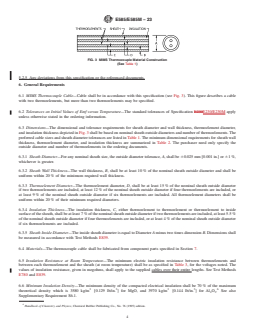
FIG. 3 MIMS Thermocouple Material Construction
(See Table 1)
5.2.5 Any deviations from this specification or the referenced documents.
6. General Requirements
6.1 MIMS Thermocouple Cable—Cable shall be in accordance with this specification (see Fig. 3). This figure describes a cable
with two thermoelements, but more than two thermoelements may be specified.
6.2 Tolerances on Initial Values of Emf versus Temperature—The standard tolerances of Specification E230E230/E230M apply
unless otherwise stated in the ordering information.
6.3 Dimensions—The dimensional and tolerance requirements for sheath diameter and wall thickness, thermoelement diameter,
and insulation thickness depicted in Fig. 3 shall be based on nominal sheath outside diameters and number of thermoelements. The
preferred cable sizes and sheath diameter tolerances are listed in Table 1. The minimum dimensional requirements for sheath wall
thickness, thermoelement diameter, and insulation thickness are summarized in Table 2. The purchaser need only specify the
outside diameter and number of thermoelements in the ordering documents.
6.3.1 Sheath Diameter—For any nominal sheath size, the outside diameter tolerance, A, shall be 60.025 mm [0.001 in.] or 61 %,
whichever is greater.
6.3.2 Sheath Wall Thickness—The wall thickness, B, shall be at least 10 % of the nominal sheath outside diameter and shall be
uniform within 20 % of the minimum required wall thickness.
6.3.3 Thermoelement Diameter—The thermoelement diameter, D, shall be at least 15 % of the nominal sheath outside diameter
if two thermoelements are included, at least 12 % of the nominal sheath outside diameter if four thermoelements are included, or
at least 9 % of the nominal sheath outside diameter if six thermoelements are included. All thermoelement diameters shall be
uniform within 20 % of their minimum required diameters.
6.3.4 Insulation Thickness—The insulation thickness, C, either thermoelement to thermoelement or thermoelement to inside
surface of the sheath, shall be at least 7 % of the nominal sheath outside diameter if two thermoelements are included, at least 5.5 %
of the nominal sheath outside diameter if four thermoelements are included, or at least 4 % of the nominal sheath outside diameter
if six thermoelements are included.
6.3.5 Sheath Inside Diameter—The inside sheath diameter is equal to Diameter A minus two times dimension B. Dimensions shall
be measured in accordance with Test Methods E839.
6.4 Materials—The thermocouple cable shall be fabricated from component parts specified in Section 7.
6.5 Insulation Resistance at Room Temperature—The minimum electric insulation resistance between thermoelements and
between each thermoelement and the sheath (at room temperature) shall be as specified in Table 3, for the voltages noted. The
values of insulation resistance, given in megohms, shall apply to the supplied cables over their entire lengths. See Test Methods
E780 and E839.
6.6 Minimum Insulation Density—The minimum density of the compacted electrical insulation shall be 70 % of the maximum
3 3 3 3 6
theoretical density which is 3580 kg/m [0.129 lb/in. ] for MgO, and 3970 kg/m [0.144 lb/in. ] for Al O . See also
2 3
Supplementary Requirement S6.1.
Handbook of Chemistry and Physics, Chemical Rubber Publishing Co., No. 76 (1995) edition.
E585/E585M − 23
TABLE 1 Dimensions and Tolerances of MIMS Cable in SI
(Metric) and Inch-Pound Units
Preferred Sizes—Nominal Outside
Diameter, A, in millimetres [inches]
Diameters listed below are
commonly available sizes.
Diameter
millimetres inches
0.50 0.020
. . . 0.032
1.00 0.040
1.50 0.062
2.00 . . .
. . . 0.093
3.00 0.125
4.50 0.188
6.00 0.250
8.00 0.375
TABLE 1 Dimensions and Tolerances of MIMS Cable in SI
(Metric) and U.S. Customary Units
Preferred Sizes—Nominal Outside
Diameter, A
Diameters listed below are
commonly available sizes.
Diameter, millimetres
0.50
1.00
1.50
2.00
3.00
4.50
6.00
8.00
9.50
Diameter, inches
0.020
0.032
0.040
0.062
0.093
0.125
0.188
0.250
0.313
0.375
TABLE 2 Summary of Thermocouple Cable Dimensional
Requirements (Percent of Nominal Outside Diameter)
Number of Thermoelements 2 4 6
Minimum Sheath Thickness 10 % 10 % 10 %
Minimum Thermoelement Diameter 15 % 12 % 9 %
Minimum Insulation Thickness 7 % 5.5 % 4 %
TABLE 3 Room-Temperature Insulation Resistance Requirements
in SI (Metric) and Inch-Pound Units
Insulation
Applied Voltage,
Nominal Sheath Outside Diameter Resistance, min,
min, V, dc
MΩ
Less than 0.80 mm [0.030 in.] 50 1000
0.80 to 1.45 mm [0.030 to 0.057 in.] 50 5000
Larger than 1.45 mm [0.057 in.] 500 10 000
6.7 Sheath Condition—The sheath shall be free of visible surface contaminants and oxidation. The sheath shall be in the fully
annealed state for Type E, J, K, and N thermocouple material. For Type T material, the sheath shall be annealed to the extent that
the thermoelements will permit. Tests for proving conformance are in Supplementary Requirement S2 or S9.
E585/E585M − 23
6.8 Sheath Integrity—The sheath of the finished thermocouple cable shall exclude gases and liquids. There shall be no holes,
cracks, or other void defects that penetrate through the sheath wall. Tests for proving conformance to this requirement are in
Supplementary Requirement S3.
6.9 Quality verification requirements are specified on an optional basis. The purchaser may require material traceability, as desired
(see Appendix X1).
6.10 The tests in this specification are the minimum to determine if the specification requirements have been met. Additional
optional supplementary requirements are listed in the Supplementary Requirements section and may be included in the purchase
order requirements, if desired by the purchaser.
7. Material Requirements
7.1 Thermoelements:
7.1.1 The thermoelements shall be solid wire, round in cross section.
7.1.2 The thermoelements shall only be of Type E, J, K, N, or T. All wire used for fabrication shall meet the supplemental
cleanliness requirements of Specification A632, except that acetone or any other solvent that might leave a harmful residue shall
not be used for final cleaning.
7.1.3 The emf-versus-temperature relationship shall meet the initial calibration tolerance of 6.2.
7.2 Insulation:
7.2.1 The insulation shall only be magnesia (MgO) or alumina (Al O ) conforming to Specification E1652. Unless otherwise
2 3
agreed upon between the purchaser and the producer, only Type 1 magnesia or Type 1 alumina shall be used.
7.3 Sheath Material:
7.3.1 The sheath material may be seamless or welded and drawn tubing of austenitic stainless steel (typically type TP304, TP304L,
TP310, TP310S, TP316, TP316L, TP321, or TP347) or heat-resistant nickel-chrome alloy (typically type Alloy 600, Alloy 601,
or Alloy 625).
7.3.2 The producer’s customary tubing specification shall be applicable for the sheath material. See Supplementary Requirement
S8.
7.3.3 A nickel-chrome-iron sheath, as in Specifications B163, B167, or B516, is recommended for fresh water service. There are
high molybdenum stainless steels that are specifically made for use in salt water, such as type 316 and proprietary alloys. UNS
N08825 or other proprietary alloys, as in Specification B423, may be recommended for chloride-containing environments above
60 °C
7.3.4 Alternative heat-resistant tubing materials may be specified for the sheath by the producer, provided the annealing
requirements in 6.7 are satisfied.
7.3.5 Each piece of tubing used in the fabrication of thermocouple material shall have its inside diameter meet the supplemental
cleanliness requirements of Specification A632, except that acetone or any other solvent that might leave a harmful residue shall
not be used for final cleaning.
8. Processing Requirements
8.1 The producer is responsible for raw materials and all processing to ensure that the overall requirements of this specification
are met. The producer is also responsible for the quality of the finished product.
E585/E585M − 23
TABLE 4 Standard Tests
Section Test Test Piece
9.1.1, 9.6 Dimensional inspection Sample
A
9.1.2, 9.7 Insulation resistance
at room temperature
9.1.3, 9.8 Calibration Sample
A
9.1.4, 9.9 Electrical continuity
A
Each length of finished thermocouple cable shall be tested.
9. Quality Verification and Test Requirements
9.1 The following tests are required for all thermocouple cable furnished under this specification:
9.1.1 Dimensional inspection,
9.1.2 Insulation resistance at room temperature,
9.1.3 Calibration, and
9.1.4 Electrical continuity.
9.2 Documentation—Certificate of conformance in accordance with Section 10.
9.3 Optional testing is defined in the Supplementary Requirements section. If the purchaser desires that these tests be performed
in whole, or in part, it shall be stated on the purchasing documents.
9.4 A quality assurance or verification program or both, is defined in Appendix X1. The purchaser may choose this program or
any part thereof, as an optional requirement.
9.5 Standard Tests—The producer shall perform inspection and tests in accordance with Table 4, using the me
...