

ASTM A955/A955M-20c
(Specification)Standard Specification for Deformed and Plain Stainless Steel Bars for Concrete Reinforcement
General Information
- Abstract
ABSTRACT
This specification covers deformed and plain austenitic and duplex (austenitic/duplex) stainless steel bars for concrete reinforcement proposed to be used in applications requiring corrosion resistance, controlled tensile properties or controlled magnetic permeability. For each specimen, one tension test, one bend test, if required, and one set of dimensional property tests shall be made. If the results of the test fail to meet the specified minimum requirements, a retest shall be permitted on two random specimens for each original tension specimen failure from the lot. If a specimen fails a bend test due to reasons other than mechanical or flaws, a retest shall be permitted on two random specimens from the same lot.
SCOPE
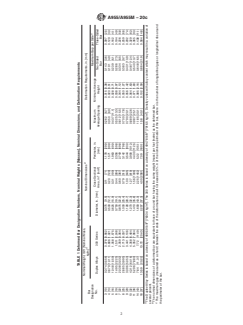
1.1 This specification covers deformed and plain stainless steel bars for concrete reinforcement in cut lengths and coils used in applications requiring resistance to corrosion, restrictive mechanical properties, or controlled magnetic permeability. This specification has a minimum actual tensile strength to actual yield strength ratio (Table 3). The standard sizes and dimensions of deformed bars and their numerical designation shall be those listed in Table 1.
1.1.1 A supplementary requirement (S1) is provided for use where a controlled magnetic permeability product is required by the purchaser. Supplementary Requirement S1 applies only when specified in the purchase order.
1.1.2 A supplementary controlled mechanical properties requirement (S2) is provided for use where a restricted yield strength range and a higher actual tensile to actual yield strength ratio is required by the purchaser. Supplementary Requirement S2 applies only when specified in the purchase order.
1.2 The chemical composition of the stainless steel alloy shall be selected for suitability to the application involved by agreement between the manufacturer and the purchaser. This is an important consideration in achieving the desired corrosion resistance or controlled magnetic permeability, or both, because these properties are not provided by all stainless steels.
1.3 Corrosion Resistance requirements are contained in Section 11 and Annex A1 and the test procedures options are Annex A2 (Rapid Macrocell Test) or Annex A3 (Cracked Beam Test).
1.4 The requirements for introduction of new alloys into a mandatory chemical composition requirements table in this specification are given in Annex A5.
1.5 Requirements for the relative deformation area of three-sided deformed bars are contained in Annex A4.
1.6 Bars are of three minimum yield strength levels, namely, 60 000 psi [420 MPa], 75 000 psi [520 MPa], and 80 000 psi [550 MPa], designated as Grade 60 [420], Grade 75 [520], or Grade 80 [550], respectively.
1.7 Plain bars in sizes up to and including 2 in. [50.8 mm] in diameter in coils or cut lengths are furnished in accordance with this specification in Grade 60 [420], Grade 75 [520], and Grade 80 [550], respectively. Mechanical testing, when required, shall be to the nearest nominal deformed bar size. Requirements providing for deformations and marking shall not be applicable to plain bars.
1.8 When stainless steel is to be welded, use a procedure suitable for the chemical composition and intended use or service.
Note 1: Welding of stainless steel reinforcement would occur after shipment from the manufacturer. Structural welding should be performed in accordance with the latest edition of AWS D1.6/D1.6M, any other internationally accepted stainless steel welding code, or a procedure suggested by the material manufacturer. AWS D1.6/D1.6M describes the proper selection of the filler metals, temperature control, as well as, performance, procedure qualification and inspection requirements.
1.9 This specification is applicable for orders in either inch-pound units (as Specification A955) or in SI units (as Specification A955M).
1.10 The text of this specification references notes and ...
- Status
- Published
- Publication Date
- 30-Apr-2020
- Technical Committee
- A01 - Steel, Stainless Steel and Related Alloys
- Drafting Committee
- A01.05 - Steel Reinforcement
Buy Documents
ASTM A955/A955M-20c - Standard Specification for Deformed and Plain Stainless Steel Bars for Concrete Reinforcement
REDLINE ASTM A955/A955M-20c - Standard Specification for Deformed and Plain Stainless Steel Bars for Concrete Reinforcement
Overview
ASTM A955/A955M-20c is the standard specification developed by ASTM for deformed and plain austenitic and duplex (austenitic/duplex) stainless steel bars used as concrete reinforcement. This standard details the requirements for manufacturing, mechanical properties, chemical composition, and testing of stainless steel bars intended for use in reinforced concrete structures where enhanced corrosion resistance, controlled tensile performance, or controlled magnetic permeability are critical. By adhering to ASTM A955/A955M, manufacturers, specifiers, and constructors can ensure reliable performance and durability in aggressive environments.
Key Topics
- Product Scope: Covers both deformed and plain stainless steel bars, in cut lengths and coils, for reinforced concrete applications. Applicable to structures requiring improved corrosion resistance and/or specific mechanical or magnetic properties.
- Grades and Strengths:
- Three strength grades: Grade 60 [420 MPa], Grade 75 [520 MPa], and Grade 80 [550 MPa].
- Available for both deformed and plain bars, with specified sizes.
- Material Types:
- Austenitic and duplex (austenitic-ferritic) stainless steels suitable for concrete reinforcement.
- Performance and Test Requirements:
- Minimum tensile and yield strength ratios.
- Elongation requirements and bending properties.
- Corrosion resistance evaluated via standardized test methods.
- Supplementary Requirements:
- S1: Controlled magnetic permeability (requires purchaser specification).
- S2: Restricted yield strength range and higher tensile-to-yield strength ratio (requires purchaser specification).
- Weldability:
- Provides guidance for welding procedures compatible with bar composition and final application, referencing AWS D1.6/D1.6M and other international codes.
- Dimensions and Marking:
- Standard bar sizes and deformation details.
- Requirements for marking and identification, ensuring traceability and product verification.
Applications
Stainless steel reinforcing bars specified by ASTM A955/A955M-20c are especially valuable in environments that challenge the durability of conventional carbon steel reinforcement. Common application areas include:
- Bridges and Infrastructure in Coastal or De-icing Salt Environments: Enhanced corrosion resistance helps prevent premature deterioration due to chloride exposure.
- Water Treatment and Marine Structures: Use in wastewater facilities, desalination plants, and marine piers where exposure to aggressive agents is high.
- Transportation Tunnels and Parking Structures: Long service life and reduced maintenance due to resistance to corrosion-induced damage.
- Architectural Concrete: For projects requiring both structural integrity and superior durability, such as high-profile civic buildings.
- Research or Specialized Uses: Where controlled magnetic permeability or tailored mechanical properties are essential.
Related Standards
This specification refers to several other ASTM and international standards for testing methods, terminology, and additional requirements for steel and stainless steel products:
- ASTM A6/A6M: General Requirements for Rolled Structural Steel Bars, Plates, Shapes, and Sheet Piling.
- ASTM A484/A484M: General Requirements for Stainless Steel Bars, Billets, and Forgings.
- ASTM A342/A342M: Test Methods for Permeability of Weakly Magnetic Materials.
- ASTM A370: Test Methods and Definitions for Mechanical Testing of Steel Products.
- AWS D1.6/D1.6M: Structural Welding Code – Stainless Steel.
For further details and comprehensive specifications, consult official ASTM documentation and referenced standards.
Keywords: ASTM A955, stainless steel reinforcing bar, concrete reinforcement, corrosion-resistant rebar, duplex stainless steel, austenitic stainless steel, ASTM rebar standard, magnetic permeability, mechanical properties, welded stainless reinforcement.
Relations
- Effective Date
- 01-Mar-2024
- Effective Date
- 01-Mar-2024
- Effective Date
- 01-Mar-2024
- Effective Date
- 01-Jan-2024
- Effective Date
- 01-Nov-2023
- Effective Date
- 01-Sep-2023
- Effective Date
- 01-Mar-2023
- Effective Date
- 05-May-2020
- Effective Date
- 01-Sep-2019
- Effective Date
- 01-Jul-2019
- Effective Date
- 01-May-2019
- Effective Date
- 01-Nov-2018
- Effective Date
- 01-Jan-2018
- Refers
ASTM A370-17a - Standard Test Methods and Definitions for Mechanical Testing of Steel Products - Effective Date
- 15-Nov-2017
- Effective Date
- 01-Nov-2017
Buy Documents
ASTM A955/A955M-20c - Standard Specification for Deformed and Plain Stainless Steel Bars for Concrete Reinforcement
REDLINE ASTM A955/A955M-20c - Standard Specification for Deformed and Plain Stainless Steel Bars for Concrete Reinforcement
Get Certified
Connect with accredited certification bodies for this standard

Element Materials Technology
Materials testing and product certification.

Inštitut za kovinske materiale in tehnologije
Institute of Metals and Technology. Materials testing, metallurgical analysis, NDT.
Sponsored listings
Frequently Asked Questions
ASTM A955/A955M-20c is a technical specification published by ASTM International. Its full title is "Standard Specification for Deformed and Plain Stainless Steel Bars for Concrete Reinforcement". This standard covers: ABSTRACT This specification covers deformed and plain austenitic and duplex (austenitic/duplex) stainless steel bars for concrete reinforcement proposed to be used in applications requiring corrosion resistance, controlled tensile properties or controlled magnetic permeability. For each specimen, one tension test, one bend test, if required, and one set of dimensional property tests shall be made. If the results of the test fail to meet the specified minimum requirements, a retest shall be permitted on two random specimens for each original tension specimen failure from the lot. If a specimen fails a bend test due to reasons other than mechanical or flaws, a retest shall be permitted on two random specimens from the same lot. SCOPE 1.1 This specification covers deformed and plain stainless steel bars for concrete reinforcement in cut lengths and coils used in applications requiring resistance to corrosion, restrictive mechanical properties, or controlled magnetic permeability. This specification has a minimum actual tensile strength to actual yield strength ratio (Table 3). The standard sizes and dimensions of deformed bars and their numerical designation shall be those listed in Table 1. 1.1.1 A supplementary requirement (S1) is provided for use where a controlled magnetic permeability product is required by the purchaser. Supplementary Requirement S1 applies only when specified in the purchase order. 1.1.2 A supplementary controlled mechanical properties requirement (S2) is provided for use where a restricted yield strength range and a higher actual tensile to actual yield strength ratio is required by the purchaser. Supplementary Requirement S2 applies only when specified in the purchase order. 1.2 The chemical composition of the stainless steel alloy shall be selected for suitability to the application involved by agreement between the manufacturer and the purchaser. This is an important consideration in achieving the desired corrosion resistance or controlled magnetic permeability, or both, because these properties are not provided by all stainless steels. 1.3 Corrosion Resistance requirements are contained in Section 11 and Annex A1 and the test procedures options are Annex A2 (Rapid Macrocell Test) or Annex A3 (Cracked Beam Test). 1.4 The requirements for introduction of new alloys into a mandatory chemical composition requirements table in this specification are given in Annex A5. 1.5 Requirements for the relative deformation area of three-sided deformed bars are contained in Annex A4. 1.6 Bars are of three minimum yield strength levels, namely, 60 000 psi [420 MPa], 75 000 psi [520 MPa], and 80 000 psi [550 MPa], designated as Grade 60 [420], Grade 75 [520], or Grade 80 [550], respectively. 1.7 Plain bars in sizes up to and including 2 in. [50.8 mm] in diameter in coils or cut lengths are furnished in accordance with this specification in Grade 60 [420], Grade 75 [520], and Grade 80 [550], respectively. Mechanical testing, when required, shall be to the nearest nominal deformed bar size. Requirements providing for deformations and marking shall not be applicable to plain bars. 1.8 When stainless steel is to be welded, use a procedure suitable for the chemical composition and intended use or service. Note 1: Welding of stainless steel reinforcement would occur after shipment from the manufacturer. Structural welding should be performed in accordance with the latest edition of AWS D1.6/D1.6M, any other internationally accepted stainless steel welding code, or a procedure suggested by the material manufacturer. AWS D1.6/D1.6M describes the proper selection of the filler metals, temperature control, as well as, performance, procedure qualification and inspection requirements. 1.9 This specification is applicable for orders in either inch-pound units (as Specification A955) or in SI units (as Specification A955M). 1.10 The text of this specification references notes and ...
ABSTRACT This specification covers deformed and plain austenitic and duplex (austenitic/duplex) stainless steel bars for concrete reinforcement proposed to be used in applications requiring corrosion resistance, controlled tensile properties or controlled magnetic permeability. For each specimen, one tension test, one bend test, if required, and one set of dimensional property tests shall be made. If the results of the test fail to meet the specified minimum requirements, a retest shall be permitted on two random specimens for each original tension specimen failure from the lot. If a specimen fails a bend test due to reasons other than mechanical or flaws, a retest shall be permitted on two random specimens from the same lot. SCOPE 1.1 This specification covers deformed and plain stainless steel bars for concrete reinforcement in cut lengths and coils used in applications requiring resistance to corrosion, restrictive mechanical properties, or controlled magnetic permeability. This specification has a minimum actual tensile strength to actual yield strength ratio (Table 3). The standard sizes and dimensions of deformed bars and their numerical designation shall be those listed in Table 1. 1.1.1 A supplementary requirement (S1) is provided for use where a controlled magnetic permeability product is required by the purchaser. Supplementary Requirement S1 applies only when specified in the purchase order. 1.1.2 A supplementary controlled mechanical properties requirement (S2) is provided for use where a restricted yield strength range and a higher actual tensile to actual yield strength ratio is required by the purchaser. Supplementary Requirement S2 applies only when specified in the purchase order. 1.2 The chemical composition of the stainless steel alloy shall be selected for suitability to the application involved by agreement between the manufacturer and the purchaser. This is an important consideration in achieving the desired corrosion resistance or controlled magnetic permeability, or both, because these properties are not provided by all stainless steels. 1.3 Corrosion Resistance requirements are contained in Section 11 and Annex A1 and the test procedures options are Annex A2 (Rapid Macrocell Test) or Annex A3 (Cracked Beam Test). 1.4 The requirements for introduction of new alloys into a mandatory chemical composition requirements table in this specification are given in Annex A5. 1.5 Requirements for the relative deformation area of three-sided deformed bars are contained in Annex A4. 1.6 Bars are of three minimum yield strength levels, namely, 60 000 psi [420 MPa], 75 000 psi [520 MPa], and 80 000 psi [550 MPa], designated as Grade 60 [420], Grade 75 [520], or Grade 80 [550], respectively. 1.7 Plain bars in sizes up to and including 2 in. [50.8 mm] in diameter in coils or cut lengths are furnished in accordance with this specification in Grade 60 [420], Grade 75 [520], and Grade 80 [550], respectively. Mechanical testing, when required, shall be to the nearest nominal deformed bar size. Requirements providing for deformations and marking shall not be applicable to plain bars. 1.8 When stainless steel is to be welded, use a procedure suitable for the chemical composition and intended use or service. Note 1: Welding of stainless steel reinforcement would occur after shipment from the manufacturer. Structural welding should be performed in accordance with the latest edition of AWS D1.6/D1.6M, any other internationally accepted stainless steel welding code, or a procedure suggested by the material manufacturer. AWS D1.6/D1.6M describes the proper selection of the filler metals, temperature control, as well as, performance, procedure qualification and inspection requirements. 1.9 This specification is applicable for orders in either inch-pound units (as Specification A955) or in SI units (as Specification A955M). 1.10 The text of this specification references notes and ...
ASTM A955/A955M-20c is classified under the following ICS (International Classification for Standards) categories: 77.140.60 - Steel bars and rods. The ICS classification helps identify the subject area and facilitates finding related standards.
ASTM A955/A955M-20c has the following relationships with other standards: It is inter standard links to ASTM A6/A6M-24, ASTM A370-24, ASTM A941-24, ASTM A484/A484M-24, ASTM A6/A6M-23, ASTM A484/A484M-23a, ASTM A484/A484M-23, ASTM A484/A484M-20a, ASTM A484/A484M-19, ASTM A370-19, ASTM G3-14(2019), ASTM A484/A484M-18a, ASTM A484/A484M-18, ASTM A370-17a, ASTM A6/A6M-17a. Understanding these relationships helps ensure you are using the most current and applicable version of the standard.
ASTM A955/A955M-20c is available in PDF format for immediate download after purchase. The document can be added to your cart and obtained through the secure checkout process. Digital delivery ensures instant access to the complete standard document.
Standards Content (Sample)
This international standard was developed in accordance with internationally recognized principles on standardization established in the Decision on Principles for the
Development of International Standards, Guides and Recommendations issued by the World Trade Organization Technical Barriers to Trade (TBT) Committee.
Designation:A955/A955M −20c
Standard Specification for
Deformed and Plain Stainless Steel Bars for Concrete
Reinforcement
This standard is issued under the fixed designationA955/A955M; the number immediately following the designation indicates the year
of original adoption or, in the case of revision, the year of last revision. A number in parentheses indicates the year of last reapproval.
A superscript epsilon (´) indicates an editorial change since the last revision or reapproval.
1. Scope* 1.6 Barsareofthreeminimumyieldstrengthlevels,namely,
60 000 psi [420 MPa], 75 000 psi [520 MPa], and 80 000 psi
1.1 This specification covers deformed and plain stainless
[550 MPa], designated as Grade 60 [420], Grade 75 [520], or
steel bars for concrete reinforcement in cut lengths and coils
Grade 80 [550], respectively.
used in applications requiring resistance to corrosion, restric-
tive mechanical properties, or controlled magnetic permeabil-
1.7 Plain bars in sizes up to and including 2 in. [50.8 mm]
ity. This specification has a minimum actual tensile strength to
in diameter in coils or cut lengths are furnished in accordance
actual yield strength ratio (Table 3). The standard sizes and
with this specification in Grade 60 [420], Grade 75 [520], and
dimensions of deformed bars and their numerical designation
Grade 80 [550], respectively. Mechanical testing, when
shall be those listed in Table 1.
required, shall be to the nearest nominal deformed bar size.
1.1.1 Asupplementary requirement (S1) is provided for use
Requirements providing for deformations and marking shall
where a controlled magnetic permeability product is required
not be applicable to plain bars.
by the purchaser. Supplementary Requirement S1 applies only
1.8 When stainless steel is to be welded, use a procedure
when specified in the purchase order.
suitable for the chemical composition and intended use or
1.1.2 A supplementary controlled mechanical properties
service.
requirement (S2) is provided for use where a restricted yield
strength range and a higher actual tensile to actual yield
NOTE 1—Welding of stainless steel reinforcement would occur after
strength ratio is required by the purchaser. Supplementary
shipment from the manufacturer. Structural welding should be performed
Requirement S2 applies only when specified in the purchase
in accordance with the latest edition of AWS D1.6/D1.6M, any other
order. internationally accepted stainless steel welding code, or a procedure
suggested by the material manufacturer. AWS D1.6/D1.6M describes the
1.2 The chemical composition of the stainless steel alloy
proper selection of the filler metals, temperature control, as well as,
shall be selected for suitability to the application involved by
performance, procedure qualification and inspection requirements.
agreement between the manufacturer and the purchaser.This is
1.9 This specification is applicable for orders in either
an important consideration in achieving the desired corrosion
inch-pound units (as Specification A995) or in SI units (as
resistance or controlled magnetic permeability, or both, be-
Specification A995M).
cause these properties are not provided by all stainless steels.
1.10 The text of this specification references notes and
1.3 Corrosion Resistance requirements are contained in
footnotes which provide explanatory material. These notes and
Section 11 and Annex A1 and the test procedures options are
footnotes (excluding those in tables and figures) shall not be
Annex A2 (Rapid Macrocell Test) or Annex A3 (Cracked
considered as requirements of the specification.
Beam Test).
1.4 The requirements for introduction of new alloys into a 1.11 Thevaluesstatedineitherinch-poundorSIunitsareto
mandatory chemical composition requirements table in this be regarded separately as standard.Within the text, the SI units
specification are given in Annex A5. are shown in brackets. The values stated in each system may
not be exact equivalents; therefore, each system shall be used
1.5 Requirements for the relative deformation area of three-
independently of the other. Combining values from the two
sided deformed bars are contained in Annex A4.
systems may result in nonconformance with the specification.
1.12 This specification does not purport to address all of the
safety concerns, if any, associated with its use. It is the
This specification is under the jurisdiction ofASTM Committee A01 on Steel,
Stainless Steel and Related Alloys and is the direct responsibility of Subcommittee
responsibility of the user of this specification to establish
A01.05 on Steel Reinforcement.
appropriate safety, health, and environmental practices and
Current edition approved May 1, 2020. Published May 2020. Originally
determine the applicability of regulatory limitations prior to
approved in 1996. Last previous edition approved in 2020 as A955/A955M – 20b.
DOI: 10.1520/A0955_A0955M-20C. use.
*A Summary of Changes section appears at the end of this standard
Copyright © ASTM International, 100 Barr Harbor Drive, PO Box C700, West Conshohocken, PA 19428-2959. United States
A955/A955M−20c
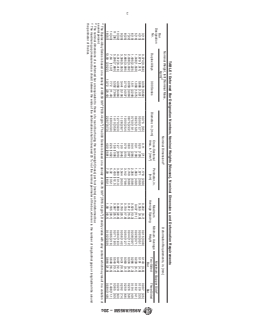
TABLE 1 Deformed Bar Designation Numbers, Nominal Weights [Masses], Nominal Dimensions, and Deformation Requirements
Nominal Weight, lb/ft [Nominal Mass,
B
Nominal Dimensions Deformation Requirements, in. [mm]
A
kg/m]
Bar
C
Designation Maximum Gap per Side
Cross-Sectional Perimeter, in. Maximum Minimum Average
No.
Duplex Alloys 300 Series Diameter, in. [mm]
2 2 Two-Sided Three-Sided
Area, in. [mm ] [mm] Average Spacing Height
Bar Bar
3 [10] 0.374 [0.556] 0.378 [0.562] 0.375 [9.5] 0.11 [71] 1.178 [29.9] 0.262 [6.7] 0.015 [0.38] 0.143 [3.6] 0.097 [2.5]
4 [13] 0.679 [1.011] 0.686 [1.021] 0.500 [12.7] 0.20 [129] 1.571 [39.9] 0.350 [8.9] 0.020 [0.51] 0.191 [4.9] 0.129 [3.3]
5 [16] 1.048 [1.559] 1.058 [1.575] 0.625 [15.9] 0.31 [199] 1.963 [49.9] 0.437 [11.1] 0.028 [0.71] 0.239 [6.1] 0.162 [4.1]
6 [19] 1.495 [2.225] 1.511 [2.248] 0.750 [19.1] 0.44 [284] 2.356 [59.8] 0.525 [13.3] 0.038 [0.97] 0.286 [7.3] 0.194 [4.9]
7 [22] 2.038 [3.032] 2.059 [3.064] 0.875 [22.2] 0.60 [367] 2.749 [69.8] 0.612 [15.5] 0.044 [1.12] 0.334 [8.5] 0.226 [5.8]
8 [25] 2.685 [3.995] 2.713 [4.037] 1.000 [25.4] 0.79 [510] 3.142 [79.8] 0.700 [17.8] 0.050 [1.27] 0.383 [9.7] 0.259 [6.6]
9 [29] 3.396 [5.053] 3.441 [5.106] 1.128 [28.7] 1.00 [645] 3.544 [90.0] 0.790 [20.1] 0.056 [1.42] 0.431 [10.9] 0.292 [7.4]
10 [32] 4.312 [6.416] 4.358 [6.484] 1.270 [32.3] 1.27 [819] 3.990 [101.3] 0.889 [22.6] 0.064 [1.63] 0.487 [12.4] 0.329 [8.3]
11 [36] 5.296 [7.880] 5.352 [7.964] 1.410 [35.8] 1.56 [1006] 4.430 [112.5] 0.987 [25.1] 0.071 [1.80] 0.540 [13.7] 0.365 [9.3]
14 [43] 7.64 [11.37] 7.72 [11.49] 1.693 [43.0] 2.25 [1452] 5.32 [135.1] 1.185 [30.1] 0.085 [2.16] 0.648 [16.5] 0.438 [11.1]
18 [57] 13.59 [20.22] 13.72 [20.43] 2.257 [57.3] 4.00 [2581] 7.09 [180.1] 1.58 [40.1] 0.102 [2.59] 0.864 [21.9] 0.584 [14.8]
A 3 3 3 3
The Duplex-Alloy Series is based on a density of 489.59 lb/ft [7833.4 kg/m ]. The 300 Series is based on a density of 494.78 lb/ft [7916.5 kg/m ]. Density varies with alloy content which may result in a variation of
several percent.
B
The nominal dimensions of a deformed bar are equivalent to those of a round bar having the same weight [mass] per foot [metre] as the deformed bar.
C
The maximum gap (measured as a chord) between the ends of the deformations shall not exceed 25 % ⁄n of the nominal perimeter of the bar, where n is the number of longitudinal gaps or longitudinal ribs around
the perimeter of the bar.
A955/A955M−20c
1.13 This international standard was developed in accor- 3.2.2 deformed bar, n—steel bar with protrusions; a bar that
dance with internationally recognized principles on standard- is intended for use as reinforcement in reinforced concrete
ization established in the Decision on Principles for the construction.
Development of International Standards, Guides and Recom- 3.2.2.1 Discussion—The surface of the bar is provided with
mendations issued by the World Trade Organization Technical protrusions that inhibit longitudinal movement of the bar
Barriers to Trade (TBT) Committee. relative to the concrete surrounding the bar in such construc-
tion. The protrusions conform to the provisions of this speci-
2. Referenced Documents
fication.
2.1 ASTM Standards:
3.2.3 lot, n—all of the bars of one bar designation number
A6/A6M Specification for General Requirements for Rolled
andpatternofdeformationscontainedinanindividualshipping
Structural Steel Bars, Plates, Shapes, and Sheet Piling
release or shipping order.
A342/A342M Test Methods for Permeability of Weakly
3.2.4 plain bar, n—steel bar without protrusions.
Magnetic Materials
3.2.5 relative deformation area, n—the ratio of the defor-
A370 Test Methods and Definitions for Mechanical Testing
mation bearing area (projected deformation area normal to the
of Steel Products
bar axis) to the shearing area (nominal bar perimeter times the
A484/A484M Specification for General Requirements for
average spacing of the deformations.
Stainless Steel Bars, Billets, and Forgings
3.2.6 rib, n—longitudinal protrusion on a deformed bar.
A751 Test Methods and Practices for Chemical Analysis of
Steel Products
3.2.7 three-sided bar, n—deformed steel bar with three rows
A941 TerminologyRelatingtoSteel,StainlessSteel,Related
of transverse deformations.
Alloys, and Ferroalloys
3.2.8 two-sided bar, n—deformed steel bar with two rows of
C192/C192M Practice for Making and Curing ConcreteTest
transverse deformations.
Specimens in the Laboratory
E29 Practice for Using Significant Digits in Test Data to 4. Ordering Information
Determine Conformance with Specifications
4.1 Ordersforstainlesssteelbarsforconcretereinforcement
E290 Test Methods for Bend Testing of Material for Ductil-
under this specification shall contain the following informaton
ity
4.1.1 Quantity (weight) [mass],
E527 Practice for Numbering Metals and Alloys in the
4.1.2 Deformed or plain,
Unified Numbering System (UNS)
4.1.3 UNS number,
G3 Practice for Conventions Applicable to Electrochemical
4.1.4 Bar designation number (size) of deformed bars or
Measurements in Corrosion Testing
nominal diameter (size) of plain bars,
2.2 U.S. Military Standard:
4.1.5 Cut lengths or coils,
MIL-STD-129 Marking for Shipment and Storage
4.1.6 Grade (strength level), and
2.3 U.S. Federal Standard: 4.1.7 ASTM designation A995 [A995M] and year of issue.
Fed. Std. No. 123 Marking for Shipment (Civil Agencies)
4.2 Thepurchasershallhavetheoptiontospecifyadditional
2.4 AWS Standard:
requirements, including but not limited to the following:
AWS D1.6/D1.6M Structural Welding Code – Stainless
4.2.1 Requirements for inspection (20.1),
Steel
4.2.2 Packaging and package marking (Section 23),
2.5 SAE Document:
4.2.3 Magnetic permeability supplementary requirement
SAE J 1086 Recommended Practice for Numbering Metals (S1),
and Alloys
4.2.4 Controlled mechanical properties supplementary re-
quirement (S2), and
3. Terminology
4.2.5 Other special requirements, if any.
3.1 Definitions—For definitions of terms used in this
5. Materials and Manufacture
specification, refer to 3.2 and Terminology A941.
5.1 The bars shall be processed from properly identified
3.2 Definitions of Terms Specific to This Specification:
heats of mold-cast or strand-cast steel. The steel shall be made
3.2.1 deformations, n—transverse protrusions on a de-
by any commercially acceptable process.
formed bar.
6. Chemical Composition
6.1 Thesteelshallconformtotherequirementsforchemical
For referenced ASTM standards, visit the ASTM website, www.astm.org, or
contact ASTM Customer Service at service@astm.org. For Annual Book of ASTM
composition specified in Table 2.
Standards volume information, refer to the standard’s Document Summary page on
the ASTM website. NOTE 2—Mechanical splices and headed bars produced from any of the
Available from DLA Document Services, Building 4/D, 700 Robbins Ave., UNS stainless steel alloy designations listed in Table 2 are fully inter-
Philadelphia, PA 19111-5094, http://quicksearch.dla.mil.
changeable and suitable for use with stainless steel bars of any UNS
Available from American Welding Society (AWS), 8669 NW 36 St., #130,
designation listed in Table 2.
Miami, FL 33166-6672, http://www.aws.org.
6.2 The chemical analysis of each heat of steel shall be
Available from SAE International (SAE), 400 Commonwealth Dr.,Warrendale,
PA 15096, http://www.sae.org. determined in accordance with Test Methods, Practices, and
A955/A955M−20c
A
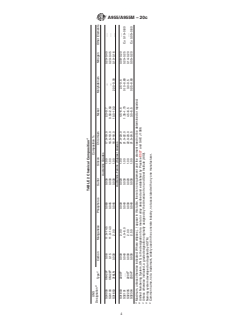
TABLE 2 Chemical Composition
UNS Composition %
B
Designation
C
Type Carbon Manganese Phosphorus Sulfur Silicon Chromium Nickel Molybdenum Nitrogen Other Elements
Austenitic Grades
D
S24000 XM-29 0.08 11.5–14.5 0.060 0.030 1.00 17.0–19.0 2.3–3.7 . 0.20–0.40 .
D
S24100 XM-28 0.15 11.0–14.0 0.045 0.030 1.00 16.5–19.0 0.50–2.50 . 0.20–0.45 .
S31653 316LN 0.030 2.00 0.045 0.030 1.00 16.0–18.0 10.0–13.0 2.00–3.00 0.10–0.16 .
Austenitic-Ferritic (Duplex) Grades
E
S31803 2205 0.030 2.00 0.030 0.020 1.00 21.0–23.0 4.5–6.5 2.5–3.5 0.08–0.20 .
S32101 . 0.040 4.0–6.0 0.040 0.030 1.00 21.0–22.0 1.35–1.70 0.10–0.80 0.20–0.25 Cu 0.10–0.80
D
S32205 2205 0.030 2.00 0.030 0.020 1.00 22.0–23.0 4.5–6.5 3.0–3.5 0.14–0.20 .
D
S32304 2304 0.030 2.50 0.040 0.030 1.00 21.5–24.5 3.0–5.5 0.05–0.60 0.05–0.20 Cu 0.05–0.60
A
Maximum, unless otherwise indicated. Where ellipses ({) appear in this table, there is no requirement and the element need not be determined or reported.
B
Unified Numbering System, UNS, is the designation for a metal or alloy described and established by Practice E527 and SAE J 1086.
C
Unless otherwise indicated, a grade designation originally assigned by the American Iron and Steel Institute (AISI).
D
Naming system developed and applied by ASTM.
E
Common name, not a trademark, widely used in the concrete industry, not associated with any one manufacturer.
A955/A955M−20c
Terminology A751. The manufacturer shall make the analysis measurement. The measurement shall begin from a point on a
on test samples taken preferably during the pouring of the heat. deformation at the beginning of the first space to a correspond-
ing point on a deformation after the last included space.
6.3 The steel shall conform to all applicable chemical
Spacing measurements shall not be made over a bar area
composition requirements in Specification A484/A484M.
containing bar marking symbols.
7. Requirements for Deformations
8.2 The average height of deformations shall be determined
from measurements made on not less than two typical defor-
7.1 Deformations shall be spaced along the bar at substan-
mations. Determinations shall be based on three measurements
tially uniform distances. The deformations on all sides of the
per deformation, one at the center of the overall length and the
bar shall be similar in size, shape, and pattern.
other two at the quarter points of the overall length.
7.2 Thedeformationsshallbeplacedwithrespecttotheaxis
8.3 For three-sided bars, the relative deformation area, R ,
of the bar so that the included angle is not less than 45°.Where d
shall meet the requirements of Annex A4.
the line of deformations forms an included angle with the axis
of the bar of from 45 to 70° inclusive, the deformations on a
8.4 Insufficient height, insufficient circumferential
two-sided bar shall alternately reverse in direction on each side
coverage, or excessive spacing of deformations shall not
or those on one side shall be reversed in direction from those
constitute cause for rejection unless it has been clearly estab-
on the opposite side. The deformations on three-sided bars
lished by determinations on each lot tested that typical defor-
shall reverse on one of the three sides (see Fig. 1). Where the
mation height, gap, or spacing does not conform to the
line of deformation is over 70°, a reversal in direction is not
minimum requirements prescribed in Section 7. No rejection
required.
shall be made on the basis of measurements if fewer than ten
adjacent deformations on each side of the bar are measured.
7.3 The average spacing or distance between deformations
on each side of the bar shall not exceed seven tenths of the
9. Tensile Requirements
nominal diameter of the bar.
9.1 The material, as represented by the test specimens, shall
7.4 The overall length of deformations shall be such that the
conformtotherequirementsfortensilepropertiesprescribedin
gap (measured as a chord) between the ends of the deforma-
Table 3, and, when required, controlled mechanical properties
tions shall not exceed 25 %⁄n, where n is the number of
supplementary requirement (S2). Supplementary Requirement
longitudinal gaps or longitudinal ribs, of the nominal perimeter
S2hasbotharestrictedyieldstrengthrangeandahigheractual
of the bar. Where the ends of the deformations terminate in a
tensile strength to actual yield strength ratio.
longitudinal rib, the width of the longitudinal rib shall be
considered as the gap between these ends. The summation of
9.2 The yield strength shall be determined by the offset
the gaps shall not exceed 25 % of the nominal perimeter of the
method (0.2 % offset), as described in Test Methods and
bar.The nominal perimeter of the bar shall be 3.1416 times the
Definitions A370.
nominal diameter.
9.3 When material is furnished in coils, the test specimen
7.5 The spacing, height, and gap of deformations shall
shall be taken from the coil and straightened prior to placing it
conform to the requirements prescribed in Table 1.
in the jaws of the tensile test machine. Straightening of the test
specimens shall be done carefully to avoid formation of local
8. Measurement of Deformations
sharp bends and to minimize cold work. (See Note 3.)
8.1 The average spacing of deformations shall be deter- 9.3.1 Test specimens taken from post-fabricated material
minedbymeasuringthelengthofaminimumoftenspacesand shall not be used to determine conformance to this specifica-
dividing that length by the number of spaces included in the tion.
FIG. 1Typical Three-Sided Deformed Bar
A955/A955M−20c
A
TABLE 3 Tensile Requirements
10.3 It shall be permissible to use other methods of bend
Grade 60 Grade 75 Grade 80
testing as described in Test Methods E290, such as placing a
[420] [520] [550]
specimen across two round bearings free to rotate and applying
Tensile strength, min, psi 90 000 [620] 100 000 [690] 100 000 [690]
thebendingforcewithafixedround-tipmandrelconformingto
[MPa]
the specified bend radius, allowing the bar to pass through with
Yield strength, min, psi [MPa] 60 000 [420] 75 000 [520] 80 000 [550]
Ratio of actual tensile 1.20 1.20 1.20
sufficient clearance. When failures occur under other methods
strength to actual yield
of bend testing, retests shall be permitted under the bend-test
strength, min
Elongation in 8 in. [200 mm], method prescribed in 10.2.
min, %
Bar designation no.
11. Corrosion Resistance Requirements
3, 4, 5 [10, 13, 16] 20 20 16
6 [19] 20 20 16
11.1 Corrosion resistance testing shall be performed one
7, 8, 9, 10, 11, 14, 18 20 20 16
timeinaccordancewithAnnexA1foreachstainlesssteelalloy
[22, 25, 29, 32, 36, 43,
processed as reinforcement by each manufacturer. Corrosion
57]
A
performance for the alloy shall be redemonstrated if the
Consult with the manufacturer for availability of grades and bar sizes.
processing method is significantly altered.
12. Magnetic Properties
TABLE 4 Bend Test Requirements
A
Bar Pin Diameter for Bend Test
12.1 Controlled magnetic permeability shall be specified by
Designation No.
Grade 60 [420] Grade 75 [520] Grade 80 [550]
invoking Supplementary Requirement S1.
B
1 1 1
3, 4, 5 3 ⁄2 d 3 ⁄2 d 3 ⁄2 d
[10, 13, 16]
13. Controlled Mechanical Properties
6 5d 5d 5d
[19]
13.1 Restricted yield strength range requirements and a
7, 8 5d 5d 5d
higher actual tensile strength to actual yield strength ratio shall
[22, 25]
be specified by invoking Supplementary Requirement S2.
9, 10, 11 7d 7d 7d
[29, 32, 36]
14, 18 9d 9d 9d
14. Permissible Variation in Weight [Mass]
[43, 57]
(90°) 14.1 Deformed reinforcing bars shall be evaluated on the
A
Test bends 180° unless noted otherwise. basis of nominal weight [mass].The weight [mass] determined
B
d = nominal diameter of specimen.
using the measured weight [mass] of the test specimen and
rounding in accordance with Practice E29, shall be at least
94 % of the applicable weight [mass] per unit prescribed in
Table 1. In no case shall overweight [excess mass] of any
deformed bar be the cause for rejection. Weight [mass]
NOTE 3—Insufficient straightening prior to attaching the extensometer
can result in lower-than-actual yield strength readings. Multiple bending
variation for plain rounds shall be computed on the basis of
distortion from mechanical straightening and fabricating machines can
permissible variation in diameter in accordance with Specifi-
lead to excessive cold work, resulting in higher magnetic permeability,
cations A6/A6M or A484/A484M.
higher yield strengths, lower elongation values, and a loss in deformation
height.
14.2 The specified limit of variation shall be evaluated in
accordance with Practice E29 (rounding method).
9.4 The percentage of elongation shall be as prescribed in
Table 3. When the actual percentage of elongation meets or
15. Finish
exceeds 25 %, the bending requirements in Section 10 shall be
waived.
15.1 The bars shall be free of detrimental surface imperfec-
tions. Imperfections shall be considered detrimental when
10. Bending Requirements
specimens containing them fail to conform to the tensile,
bending, weight [mass], dimensions, or cross-sectional area
10.1 The bend test specimen shall withstand being bent
requirements of this specification.
around a pin without cracking on the outside radius of the bent
portion. The requirements for degree of bending and sizes of
NOTE 4—Deformed reinforcing bars that will be mechanically spliced
pins are prescribed in Table 4.
or butt-spliced by welding may require a certain degree of roundness in
order for the splices to adequately achieve strength requirements.
10.2 The bend test shall be made on specimens of sufficient
15.2 After rolling, the bars shall be pickled to remove mill
length to ensure free bending and with apparatus that provides
scale, carbon steel contamination, and surface oxidation.
the following:
10.2.1 Continuous and uniform application of force
NOTE 5—Pickling improves the corrosion resistance of stainless steel
throughout the duration of the bending operation. reinforcement.The surface finishes of austenitic and duplex stainless steel
may be different in appearance.
10.2.2 Unrestricted movement of the specimen at points of
contact with the apparatus and bending around a pin free to
16. Number of Tests
rotate.
10.2.3 Close wrapping of the specimen around the pin 16.1 Onetensiontestandonebendtest,ifrequired(see9.4),
during the bending operation. shall be made of each bar size rolled from each heat.
A955/A955M−20c
16.2 One set of dimensional property tests including bar 18.2.1 Tension test specimens shall be long enough to
weight [mass] and spacing, height, and gap of deformations provide for an 8-in. [200-mm] gauge length and a distance of
shall be made of each bar size rolled from each heat. at least two bar diameters between each gauge mark and the
grips.
17. Retests
NOTE 7—It is recommended that sufficient additional length of the test
specimen be provided to fill the grips completely, leaving some excess
17.1 If the results of an original tension specimen fail to
length protruding beyond each grip. The grips should be shimmed so that
meet the specified minimum requirements and are within 2000
no more than ⁄2 in. [13 mm] of a grip protrudes from the head of the
psi [14 MPa] of the required tensile strength, within 1000 psi
tensile testing machine.
[7 MPa] of the required yield strength, or within two percent-
18.2.2 Gauge Marks—The 8-in. [200-mm] gauge length
age units of the required elongation, a retest shall be permitted
shall be marked on the specimen using a preset 8-in. [200-mm]
on two random specimens for each original tension specimen
punch or, alternately, may be punch marked every 2 in. [50
failure from the lot. Both retest specimens shall meet the
mm]) along the 8-in. [200-mm] gauge length, on one of the
requirements of this specification.
longitudinal ribs, if present, or in the clear spaces between
transverse deformations. Punch marks shall not be placed on a
17.2 If a bend test fails for reasons other than mechanical
transverse deformation.
reasons or flaws in the specimen as described in 17.5.2 and
17.5.3, a retest shall be permitted on two random specimens
NOTE 8—Light punch marks are desirable because deep marks severely
from the same lot. Both retest specimens shall meet the
indent the bar and may affect the results.
requirements of this specification. The retest shall be per-
18.3 The bend test specimens, if required, shall be the full
formedontestspecimensthatareatairtemperaturebutnotless
section of the bar rolled.
than 60°F [16°C].
19. Report
17.3 Ifaweight[mass]testfailsforreasonsotherthanflaws
in the specimen as described in 17.5.3, a retest shall be 19.1 The following information shall be reported on a per
permitted on two random specimens from the same lot. Both
heat or per lot basis as is appropriate.
retest specimens shall meet the requirements of this specifica- 19.1.1 UNS number,
tion.
19.1.2 Chemical analysis,
19.1.3 Finish,
17.4 Ifacorrosionresistancetestfailsforreasonsotherthan
19.1.4 Bar size and number of sides,
flaws as described in 17.5.3, a retest shall be permitted in
19.1.5 Tensile properties,
accordance with the testing requirements of Annex A1.
19.1.6 Bend test (if required),
17.5 If the original test or any of the random retests fails 19.1.7 Corrosion test (if appropriate),
because of any reasons listed in 17.5.1, 17.5.2,or 17.5.3, the 19.1.8 Magnetic permeability (if required), and
test shall be considered an invalid test. The original results 19.1.9 Controlled mechanical properties (if required).
from 17.5.1, 17.5.2,or 17.5.3 shall be discarded and the test
19.2 A Material Test Report, Certificate of Inspection, or
shall be repeated on a new specimen from the same lot.
similar document printed from or used in electronic form from
17.5.1 The elongation property of any tension test specimen
an electronic data interchange (EDI) transmission shall be
islessthanthatspecified,andanypartofthefractureisoutside
regardedashavingthesamevalidityasacounterpartprintedin
the middle half of the gauge length, as indicated by scribe
the certifier’s facility. The content of the EDI transmitted
marks on the specimen before testing,
document shall meet the requirements of the invoked ASTM
standard(s) and conform to any EDI agreement between the
NOTE 6—Marking specimens with multiple scribe or punch marks can
purchaser and the manufacturer. Notwithstanding the absence
reduce the occurrence of fracture outside or near these marks and the need
of a signature, the organization submitting the EDI transmis-
for declaring the test invalid.
sion is responsible for the content of the report.
17.5.2 Mechanical reasons such as failure of testing equip-
NOTE 9—The industry definition invoked here is: EDI is the computer-
ment or improper specimen preparation,
to-computer exchange of business information in a standard format such
17.5.3 Flawsaredetectedinatestspecimen,eitherbeforeor
as ANSI ASC X12.
during the performance of the test.
20. Inspection
18. Test Specimens
20.1 Inspection of the stainless steel reinforcing bars shall
be agreed upon between the purchaser and the manufacturer as
18.1 All mechanical tests shall be conducted in accordance
with Test Methods and Definitions A370. In case of any part of the purchase order or contract.
conflict between the requirements in this specification and the
21. Rejection and Rehearing
requirements of Test Methods and Definitions A370, the
requirements in this specification shall prevail.
21.1 Any rejection based on testing undertaken by the
purchaser shall be promptly reported to the manufacturer.
18.2 Tension test specimens shall be the full section of the
bar as rolled. Unit stress determinations for yield and tensile 21.2 Samples tested that represent rejected material shall be
strength shall be based on the nominal bar area. preserved for two weeks from the date rejection is reported to
A955/A955M−20c
consistent. Hence, the phrase “in the following order” was deleted in
the manufacturer. In case of dissatisfaction with the results of
ε1
Section 23.3 of A955/A955M – 11 .As rolls are replaced and redressed,
the tests, the manufacturer shall have the right to make claim
the manufacturers will arrange the markings in the order listed (Point of
for a rehearing within that time.
Origin, Size Designation, Type of Steel and Minimum Yield Strength
Designation). At that time, the phrase “in the following order” will be
22. Marking
reinstated in Section 23.3 and the two designations for Type of Steel, CR
and SS, will be replaced with SS.
22.1 When loaded for mill shipment, bars shall be properly
NOTE 11—As rolls are replaced and redressed, the manufacturers will
separated and tagged with the manufacturer’s heat or test
transition to numbers. Dots have been traditionally used to identify
identification number.
stainless steel strength grades.
22.2 Each manufacturer shall identify the symbols of his or
22.3.5 It shall be permissible to substitute a metric size bar
her marking system.
of Grade 420 for the corresponding inch-pound size bar of
22.3 All bars produced to this specification, except plain Grade 60, a metric sized bar of 520 for the co
...
This document is not an ASTM standard and is intended only to provide the user of an ASTM standard an indication of what changes have been made to the previous version. Because
it may not be technically possible to adequately depict all changes accurately, ASTM recommends that users consult prior editions as appropriate. In all cases only the current version
of the standard as published by ASTM is to be considered the official document.
Designation: A955/A955M − 20b A955/A955M − 20c
Standard Specification for
Deformed and Plain Stainless Steel Bars for Concrete
Reinforcement
This standard is issued under the fixed designation A955/A955M; the number immediately following the designation indicates the year
of original adoption or, in the case of revision, the year of last revision. A number in parentheses indicates the year of last reapproval.
A superscript epsilon (´) indicates an editorial change since the last revision or reapproval.
1. Scope*
1.1 This specification covers deformed and plain stainless steel bars for concrete reinforcement in cut lengths and coils used in
applications requiring resistance to corrosion, restrictive mechanical properties, or controlled magnetic permeability. This
specification has a minimum actual tensile strength to actual yield strength ratio (Table 3). The standard sizes and dimensions of
deformed bars and their numerical designation shall be those listed in Table 1.
1.1.1 A supplementary requirement (S1) is provided for use where a controlled magnetic permeability product is required by
the purchaser. Supplementary Requirement S1 applies only when specified in the purchase order.
1.1.2 A supplementary controlled mechanical properties requirement (S2) is provided for use where a restricted yield strength
range and a higher actual tensile to actual yield strength ratio is required by the purchaser. Supplementary Requirement S2 applies
only when specified in the purchase order.
1.2 The chemical composition of the stainless steel alloy shall be selected for suitability to the application involved by
agreement between the manufacturer and the purchaser. This is an important consideration in achieving the desired corrosion
resistance or controlled magnetic permeability, or both, because these properties are not provided by all stainless steels.
1.3 Corrosion Resistance requirements are contained in Section 11 and Annex A1 and the test procedures options are Annex
A2 (Rapid Macrocell Test) or Annex A3 (Cracked Beam Test).
1.4 The requirements for introduction of new alloys into a mandatory chemical composition requirements table in this
specification are given in Annex A5.
1.5 Requirements for the relative deformation area of three-sided deformed bars are contained in Annex A4.
1.6 Bars are of three minimum yield strength levels, namely, 60 000 psi [420 MPa], 75 000 psi [520 MPa], and 80 000 psi [550
MPa], designated as Grade 60 [420], Grade 75 [520], or Grade 80 [550], respectively.
1.7 Plain bars in sizes up to and including 2 in. [50.8 mm] in diameter in coils or cut lengths are furnished in accordance with
this specification in Grade 60 [420], Grade 75 [520], and Grade 80 [550], respectively. Mechanical testing, when required, shall
be to the nearest nominal deformed bar size. Requirements providing for deformations and marking shall not be applicable to plain
bars.
1.8 When stainless steel is to be welded, use a procedure suitable for the chemical composition and intended use or service.
NOTE 1—Welding of stainless steel reinforcement would occur after shipment from the manufacturer. Structural welding should be performed in
accordance with the latest edition of AWS D1.6/D1.6M, any other internationally accepted stainless steel welding code, or a procedure suggested by the
material manufacturer. AWS D1.6/D1.6M describes the proper selection of the filler metals, temperature control, as well as, performance, procedure
qualification and inspection requirements.
1.9 This specification is applicable for orders in either inch-pound units (as Specification A955) or in SI units (as Specification
A955M).
1.10 The text of this specification references notes and footnotes which provide explanatory material. These notes and footnotes
(excluding those in tables and figures) shall not be considered as requirements of the specification.
1.11 The values stated in either inch-pound or SI units are to be regarded separately as standard. Within the text, the SI units
are shown in brackets. The values stated in each system may not be exact equivalents; therefore, each system shall be used
independently of the other. Combining values from the two systems may result in nonconformance with the specification.
This specification is under the jurisdiction of ASTM Committee A01 on Steel, Stainless Steel and Related Alloys and is the direct responsibility of Subcommittee A01.05
on Steel Reinforcement.
Current edition approved April 1, 2020May 1, 2020. Published May 2020. Originally approved in 1996. Last previous edition approved in 2020 as A955/
A955M – 20a.A955/A955M – 20b. DOI: 10.1520/A0955_A0955M-20B.10.1520/A0955_A0955M-20C.
*A Summary of Changes section appears at the end of this standard
Copyright © ASTM International, 100 Barr Harbor Drive, PO Box C700, West Conshohocken, PA 19428-2959. United States
A955/A955M − 20c
TABLE 1 Deformed Bar Designation Numbers, Nominal Weights [Masses], Nominal Dimensions, and Deformation Requirements
Nominal Weight, lb/ft [Nominal Mass,
B
Nominal Dimensions Deformation Requirements, in. [mm]
A
kg/m]
Bar
C
Designation Maximum Gap per Side
Cross-Sectional Perimeter, in. Maximum Minimum Average
No.
Duplex Alloys 300 Series Diameter, in. [mm]
2 2 Two-Sided Three-Sided
Area, in. [mm ] [mm] Average Spacing Height
Bar Bar
3 [10] 0.374 [0.556] 0.378 [0.562] 0.375 [9.5] 0.11 [71] 1.178 [29.9] 0.262 [6.7] 0.015 [0.38] 0.143 [3.6] 0.097 [2.5]
4 [13] 0.679 [1.011] 0.686 [1.021] 0.500 [12.7] 0.20 [129] 1.571 [39.9] 0.350 [8.9] 0.020 [0.51] 0.191 [4.9] 0.129 [3.3]
5 [16] 1.048 [1.559] 1.058 [1.575] 0.625 [15.9] 0.31 [199] 1.963 [49.9] 0.437 [11.1] 0.028 [0.71] 0.239 [6.1] 0.162 [4.1]
6 [19] 1.495 [2.225] 1.511 [2.248] 0.750 [19.1] 0.44 [284] 2.356 [59.8] 0.525 [13.3] 0.038 [0.97] 0.286 [7.3] 0.194 [4.9]
7 [22] 2.038 [3.032] 2.059 [3.064] 0.875 [22.2] 0.60 [367] 2.749 [69.8] 0.612 [15.5] 0.044 [1.12] 0.334 [8.5] 0.226 [5.8]
8 [25] 2.685 [3.995] 2.713 [4.037] 1.000 [25.4] 0.79 [510] 3.142 [79.8] 0.700 [17.8] 0.050 [1.27] 0.383 [9.7] 0.259 [6.6]
9 [29] 3.396 [5.053] 3.441 [5.106] 1.128 [28.7] 1.00 [645] 3.544 [90.0] 0.790 [20.1] 0.056 [1.42] 0.431 [10.9] 0.292 [7.4]
10 [32] 4.312 [6.416] 4.358 [6.484] 1.270 [32.3] 1.27 [819] 3.990 [101.3] 0.889 [22.6] 0.064 [1.63] 0.487 [12.4] 0.329 [8.3]
11 [36] 5.296 [7.880] 5.352 [7.964] 1.410 [35.8] 1.56 [1006] 4.430 [112.5] 0.987 [25.1] 0.071 [1.80] 0.540 [13.7] 0.365 [9.3]
14 [43] 7.64 [11.37] 7.72 [11.49] 1.693 [43.0] 2.25 [1452] 5.32 [135.1] 1.185 [30.1] 0.085 [2.16] 0.648 [16.5] 0.438 [11.1]
18 [57] 13.59 [20.22] 13.72 [20.43] 2.257 [57.3] 4.00 [2581] 7.09 [180.1] 1.58 [40.1] 0.102 [2.59] 0.864 [21.9] 0.584 [14.8]
A 3 3 3 3
The Duplex-Alloy Series is based on a density of 489.59 lb/ft [7833.4 kg/m ]. The 300 Series is based on a density of 494.78 lb/ft [7916.5 kg/m ]. Density varies with alloy content which may result in a variation of
several percent.
B
The nominal dimensions of a deformed bar are equivalent to those of a round bar having the same weight [mass] per foot [metre] as the deformed bar.
C
The maximum gap (measured as a chord) between the ends of the deformations shall not exceed 25 % ⁄n of the nominal perimeter of the bar, where n is the number of longitudinal gaps or longitudinal ribs around
the perimeter of the bar.
A955/A955M − 20c
1.12 This specification does not purport to address all of the safety concerns, if any, associated with its use. It is the
responsibility of the user of this specification to establish appropriate safety, health, and environmental practices and determine
the applicability of regulatory limitations prior to use.
1.13 This international standard was developed in accordance with internationally recognized principles on standardization
established in the Decision on Principles for the Development of International Standards, Guides and Recommendations issued
by the World Trade Organization Technical Barriers to Trade (TBT) Committee.
2. Referenced Documents
2.1 ASTM Standards:
A6/A6M Specification for General Requirements for Rolled Structural Steel Bars, Plates, Shapes, and Sheet Piling
A342/A342M Test Methods for Permeability of Weakly Magnetic Materials
A370 Test Methods and Definitions for Mechanical Testing of Steel Products
A484/A484M Specification for General Requirements for Stainless Steel Bars, Billets, and Forgings
A751 Test Methods, Practices, and Terminology for Chemical Analysis of Steel Products
A941 Terminology Relating to Steel, Stainless Steel, Related Alloys, and Ferroalloys
C192/C192M Practice for Making and Curing Concrete Test Specimens in the Laboratory
E29 Practice for Using Significant Digits in Test Data to Determine Conformance with Specifications
E290 Test Methods for Bend Testing of Material for Ductility
E527 Practice for Numbering Metals and Alloys in the Unified Numbering System (UNS)
G3 Practice for Conventions Applicable to Electrochemical Measurements in Corrosion Testing
2.2 U.S. Military Standard:
MIL-STD-129 Marking for Shipment and Storage
2.3 U.S. Federal Standard:
Fed. Std. No. 123 Marking for Shipment (Civil Agencies)
2.4 AWS Standard:
AWS D1.6/D1.6M Structural Welding Code – Stainless Steel
2.5 SAE Document:
SAE J 1086 Recommended Practice for Numbering Metals and Alloys
3. Terminology
3.1 Definitions—For definitions of terms used in this specification, refer to 3.2 and Terminology A941.
3.2 Definitions of Terms Specific to This Specification:Definitions:Definitions of Terms Specific to This Specification:
3.2.1 deformations, n—transverse protrusions on a deformed bar.
3.2.2 deformed bar, n—steel bar with protrusions; a bar that is intended for use as reinforcement in reinforced concrete
construction.
3.2.2.1 Discussion—
The surface of the bar is provided with protrusions that inhibit longitudinal movement of the bar relative to the concrete
surrounding the bar in such construction. The protrusions conform to the provisions of this specification.
3.2.3 lot, n—all of the bars of one bar designation number and pattern of deformations contained in an individual shipping
release or shipping order.
3.2.4 plain bar, n—steel bar without protrusions.
3.2.5 relative deformation area, n—the ratio of the deformation bearing area (projected deformation area normal to the bar axis)
to the shearing area (nominal bar perimeter times the average spacing of the deformations.
3.2.6 rib, n—longitudinal protrusion on a deformed bar.
3.2.7 three-sided bar, n—deformed steel bar with three rows of transverse deformations.
3.2.8 two-sided bar, n—deformed steel bar with two rows of transverse deformations.
4. Ordering Information
4.1 Orders for stainless steel bars for concrete reinforcement under this specification shall contain the following informaton
4.1.1 Quantity (weight) [mass],
For referenced ASTM standards, visit the ASTM website, www.astm.org, or contact ASTM Customer Service at service@astm.org. For Annual Book of ASTM Standards
volume information, refer to the standard’s Document Summary page on the ASTM website.
Available from DLA Document Services, Building 4/D, 700 Robbins Ave., Philadelphia, PA 19111-5094, http://quicksearch.dla.mil.
Available from American Welding Society (AWS), 8669 NW 36 St., #130, Miami, FL 33166-6672, http://www.aws.org.
Available from SAE International (SAE), 400 Commonwealth Dr., Warrendale, PA 15096, http://www.sae.org.
A955/A955M − 20c
4.1.2 Deformed or plain,
4.1.3 UNS number,
4.1.4 Bar designation number (size) of deformed bars or nominal diameter (size) of plain bars,
4.1.5 Cut lengths or coils,
4.1.6 Grade (strength level), and
4.1.7 ASTM designation A955 [A955M] and year of issue.
4.2 The purchaser shall have the option to specify additional requirements, including but not limited to the following:
4.2.1 Requirements for inspection (20.1),
4.2.2 Packaging and package marking (Section 23),
4.2.3 Magnetic permeability supplementary requirement (S1),
4.2.4 Controlled mechanical properties supplementary requirement (S2), and
4.2.5 Other special requirements, if any.
5. Materials and Manufacture
5.1 The bars shall be processed from properly identified heats of mold-cast or strand-cast steel. The steel shall be made by any
commercially acceptable process.
6. Chemical Composition
6.1 The steel shall conform to the requirements for chemical composition specified in Table 2.
NOTE 2—Mechanical splices and headed bars produced from any of the UNS stainless steel alloy designations listed in Table 2 are fully interchangeable
and suitable for use with stainless steel bars of any UNS designation listed in Table 2.
6.2 The chemical analysis of each heat of steel shall be determined in accordance with Test Methods, Practices, and
Terminology A751. The manufacturer shall make the analysis on test samples taken preferably during the pouring of the heat.
6.3 The steel shall conform to all applicable chemical composition requirements in Specification A484/A484M.
7. Requirements for Deformations
7.1 Deformations shall be spaced along the bar at substantially uniform distances. The deformations on all sides of the bar shall
be similar in size, shape, and pattern.
7.2 The deformations shall be placed with respect to the axis of the bar so that the included angle is not less than 45°. Where
the line of deformations forms an included angle with the axis of the bar of from 45 to 70° inclusive, the deformations on a
two-sided bar shall alternately reverse in direction on each side or those on one side shall be reversed in direction from those on
the opposite side. The deformations on three-sided bars shall reverse on one of the three sides (see Fig. 1). Where the line of
deformation is over 70°, a reversal in direction is not required.
7.3 The average spacing or distance between deformations on each side of the bar shall not exceed seven tenths of the nominal
diameter of the bar.
7.4 The overall length of deformations shall be such that the gap (measured as a chord) between the ends of the deformations
shall not exceed 25 % ⁄n, where n is the number of longitudinal gaps or longitudinal ribs, of the nominal perimeter of the bar. Where
the ends of the deformations terminate in a longitudinal rib, the width of the longitudinal rib shall be considered as the gap between
these ends. The summation of the gaps shall not exceed 25 % of the nominal perimeter of the bar. The nominal perimeter of the
bar shall be 3.1416 times the nominal diameter.
7.5 The spacing, height, and gap of deformations shall conform to the requirements prescribed in Table 1.
8. Measurement of Deformations
8.1 The average spacing of deformations shall be determined by measuring the length of a minimum of ten spaces and dividing
that length by the number of spaces included in the measurement. The measurement shall begin from a point on a deformation at
the beginning of the first space to a corresponding point on a deformation after the last included space. Spacing measurements shall
not be made over a bar area containing bar marking symbols.
8.2 The average height of deformations shall be determined from measurements made on not less than two typical deformations.
Determinations shall be based on three measurements per deformation, one at the center of the overall length and the other two
at the quarter points of the overall length.
8.3 For three-sided bars, the relative deformation area, R , shall meet the requirements of Annex A4.
d
8.4 Insufficient height, insufficient circumferential coverage, or excessive spacing of deformations shall not constitute cause for
rejection unless it has been clearly established by determinations on each lot tested that typical deformation height, gap, or spacing
does not conform to the minimum requirements prescribed in Section 7. No rejection shall be made on the basis of measurements
if fewer than ten adjacent deformations on each side of the bar are measured.
A955/A955M − 20c
A
TABLE 2 Chemical Composition
UNS Composition %
B
Designation C
Type Carbon Manganese Phosphorus Sulfur Silicon Chromium Nickel Molybdenum Nitrogen Other Elements
Austenitic Grades
D
S24000 XM-29 0.08 11.5–14.5 0.060 0.030 1.00 17.0–19.0 2.3–3.7 . 0.20–0.40 .
D
S24100 XM-28 0.15 11.0–14.0 0.045 0.030 1.00 16.5–19.0 0.50–2.50 . 0.20–0.45 .
S31653 316LN 0.030 2.00 0.045 0.030 1.00 16.0–18.0 10.0–13.0 2.00–3.00 0.10–0.16 .
Austenitic-Ferritic (Duplex) Grades
E
S31803 2205 0.030 2.00 0.030 0.020 1.00 21.0–23.0 4.5–6.5 2.5–3.5 0.08–0.20 .
S32101 . 0.040 4.0–6.0 0.040 0.030 1.00 21.0–22.0 1.35–1.70 0.10–0.80 0.20–0.25 Cu 0.10–0.80
D
S32205 2205 0.030 2.00 0.030 0.020 1.00 22.0–23.0 4.5–6.5 3.0–3.5 0.14–0.20 .
D
S32304 2304 0.030 2.50 0.040 0.030 1.00 21.5–24.5 3.0–5.5 0.05–0.60 0.05–0.20 Cu 0.05–0.60
A
Maximum, unless otherwise indicated. Where ellipses ({) appear in this table, there is no requirement and the element need not be determined or reported.
B
Unified Numbering System, UNS, is the designation for a metal or alloy described and established by Practice E527 and SAE J 1086.
C
Unless otherwise indicated, a grade designation originally assigned by the American Iron and Steel Institute (AISI).
D
Naming system developed and applied by ASTM.
E
Common name, not a trademark, widely used in the concrete industry, not associated with any one manufacturer.
A955/A955M − 20c
FIG. 1 Typical Three-Sided Deformed Bar
A
TABLE 3 Tensile Requirements
Grade 60 Grade 75 Grade 80
[420] [520] [550]
Tensile strength, min, psi 90 000 [620] 100 000 [690] 100 000 [690]
[MPa]
Yield strength, min, psi [MPa] 60 000 [420] 75 000 [520] 80 000 [550]
Ratio of actual tensile 1.20 1.20 1.20
strength to actual yield
strength, min
Elongation in 8 in. [200 mm],
min, %
Bar designation no.
3, 4, 5 [10, 13, 16] 20 20 16
6 [19] 20 20 16
7, 8, 9, 10, 11, 14, 18 20 20 16
[22, 25, 29, 32, 36, 43,
57]
A
Consult with the manufacturer for availability of grades and bar sizes.
TABLE 4 Bend Test Requirements
A
Bar Pin Diameter for Bend Test
Designation No.
Grade 60 [420] Grade 75 [520] Grade 80 [550]
B
1 1 1
3, 4, 5 3 ⁄2d 3 ⁄2d 3 ⁄2d
[10, 13, 16]
6 5d 5d 5d
[19]
7, 8 5d 5d 5d
[22, 25]
9, 10, 11 7d 7d 7d
[29, 32, 36]
14, 18 9d 9d 9d
[43, 57]
(90°)
A
Test bends 180° unless noted otherwise.
B
d = nominal diameter of specimen.
9. Tensile Requirements
9.1 The material, as represented by the test specimens, shall conform to the requirements for tensile properties prescribed in
Table 3, and, when required, controlled mechanical properties supplementary requirement (S2). Supplementary Requirement S2
has both a restricted yield strength range and a higher actual tensile strength to actual yield strength ratio.
9.2 The yield strength shall be determined by the offset method (0.2 % offset), as described in Test Methods and Definitions
A370.
9.3 When material is furnished in coils, the test specimen shall be taken from the coil and straightened prior to placing it in the
jaws of the tensile test machine. Straightening of the test specimens shall be done carefully to avoid formation of local sharp bends
and to minimize cold work. (See Note 3.)
A955/A955M − 20c
9.3.1 Test specimens taken from post-fabricated material shall not be used to determine conformance to this specification.
NOTE 3—Insufficient straightening prior to attaching the extensometer can result in lower-than-actual yield strength readings. Multiple bending
distortion from mechanical straightening and fabricating machines can lead to excessive cold work, resulting in higher magnetic permeability, higher yield
strengths, lower elongation values, and a loss in deformation height.
9.4 The percentage of elongation shall be as prescribed in Table 3. When the actual percentage of elongation meets or exceeds
25 %, the bending requirements in Section 10 shall be waived.
10. Bending Requirements
10.1 The bend test specimen shall withstand being bent around a pin without cracking on the outside radius of the bent portion.
The requirements for degree of bending and sizes of pins are prescribed in Table 4.
10.2 The bend test shall be made on specimens of sufficient length to ensure free bending and with apparatus that provides the
following:
10.2.1 Continuous and uniform application of force throughout the duration of the bending operation.
10.2.2 Unrestricted movement of the specimen at points of contact with the apparatus and bending around a pin free to rotate.
10.2.3 Close wrapping of the specimen around the pin during the bending operation.
10.3 It shall be permissible to use other methods of bend testing as described in Test Methods E290, such as placing a specimen
across two round bearings free to rotate and applying the bending force with a fixed round-tip mandrel conforming to the specified
bend radius, allowing the bar to pass through with sufficient clearance. When failures occur under other methods of bend testing,
retests shall be permitted under the bend-test method prescribed in 10.2.
11. Corrosion Resistance Requirements
11.1 Corrosion resistance testing shall be performed one time in accordance with Annex A1 for each stainless steel alloy
processed as reinforcement by each manufacturer. Corrosion performance for the alloy shall be redemonstrated if the processing
method is significantly altered.
12. Magnetic Properties
12.1 Controlled magnetic permeability shall be specified by invoking Supplementary Requirement S1.
13. Controlled Mechanical Properties
13.1 Restricted yield strength range requirements and a higher actual tensile strength to actual yield strength ratio shall be
specified by invoking Supplementary Requirement S2.
14. Permissible Variation in Weight [Mass]
14.1 Deformed reinforcing bars shall be evaluated on the basis of nominal weight [mass]. The weight [mass] determined using
the measured weight [mass] of the test specimen and rounding in accordance with Practice E29, shall be at least
94 % of the applicable weight [mass] per unit prescribed in Table 1. In no case shall overweight [excess mass] of any deformed
bar be the cause for rejection. Weight [mass] variation for plain rounds shall be computed on the basis of permissible variation in
diameter in accordance with Specifications A6/A6M or A484/A484M.
14.2 The specified limit of variation shall be evaluated in accordance with Practice E29 (rounding method).
15. Finish
15.1 The bars shall be free of detrimental surface imperfections. Imperfections shall be considered detrimental when specimens
containing them fail to conform to the tensile, bending, weight [mass], dimensions, or cross-sectional area requirements of this
specification.
NOTE 4—Deformed reinforcing bars that will be mechanically spliced or butt-spliced by welding may require a certain degree of roundness in order
for the splices to adequately achieve strength requirements.
15.2 After rolling, the bars shall be pickled to remove mill scale, carbon steel contamination, and surface oxidation.
NOTE 5—Pickling improves the corrosion resistance of stainless steel reinforcement. The surface finishes of austenitic and duplex stainless steel may
be different in appearance.
16. Number of Tests
16.1 One tension test and one bend test, if required (see 9.4), shall be made of each bar size rolled from each heat.
16.2 One set of dimensional property tests including bar weight [mass] and spacing, height, and gap of deformations shall be
made of each bar size rolled from each heat.
A955/A955M − 20c
17. Retests
17.1 If the results of an original tension specimen fail to meet the specified minimum requirements and are within 2000 psi [14
MPa] of the required tensile strength, within 1000 psi [7 MPa] of the required yield strength, or within two percentage units of
the required elongation, a retest shall be permitted on two random specimens for each original tension specimen failure from the
lot. Both retest specimens shall meet the requirements of this specification.
17.2 If a bend test fails for reasons other than mechanical reasons or flaws in the specimen as described in 17.5.2 and 17.5.3,
a retest shall be permitted on two random specimens from the same lot. Both retest specimens shall meet the requirements of this
specification. The retest shall be performed on test specimens that are at air temperature but not less than 60°F [16°C].
17.3 If a weight [mass] test fails for reasons other than flaws in the specimen as described in 17.5.3, a retest shall be permitted
on two random specimens from the same lot. Both retest specimens shall meet the requirements of this specification.
17.4 If a corrosion resistance test fails for reasons other than flaws as described in 17.5.3, a retest shall be permitted in
accordance with the testing requirements of Annex A1.
17.5 If the original test or any of the random retests fails because of any reasons listed in 17.5.1, 17.5.2, or 17.5.3, the test shall
be considered an invalid test. The original results from 17.5.1, 17.5.2, or 17.5.3 shall be discarded and the test shall be repeated
on a new specimen from the same lot.
17.5.1 The elongation property of any tension test specimen is less than that specified, and any part of the fracture is outside
the middle half of the gage length, as indicated by scribe marks on the specimen before testing,
NOTE 6—Marking specimens with multiple scribe or punch marks can reduce the occurrence of fracture outside or near these marks and the need for
declaring the test invalid.
17.5.2 Mechanical reasons such as failure of testing equipment or improper specimen preparation,
17.5.3 Flaws are detected in a test specimen, either before or during the performance of the test.
18. Test Specimens
18.1 All mechanical tests shall be conducted in accordance with Test Methods and Definitions A370. In case of any conflict
between the requirements in this specification and the requirements of Test Methods and Definitions A370, the requirements in this
specification shall prevail.
18.2 Tension test specimens shall be the full section of the bar as rolled. Unit stress determinations for yield and tensile strength
shall be based on the nominal bar area.
18.2.1 Tension test specimens shall be long enough to provide for an 8-in. [200-mm] gage length and a distance of at least two
bar diameters between each gage mark and the grips.
NOTE 7—It is recommended that sufficient additional length of the test specimen be provided to fill the grips completely, leaving some excess length
protruding beyond each grip. The grips should be shimmed so that no more than ⁄2 in. [13 mm] of a grip protrudes from the head of the tensile testing
machine.
18.2.2 Gage Marks—The 8-in. [200-mm] gage length shall be marked on the specimen using a preset 8-in. [200-mm] punch
or, alternately, may be punch marked every 2 in. [50 mm]) along the 8-in. [200-mm] gage length, on one of the longitudinal ribs,
if present, or in the clear spaces between transverse deformations. Punch marks shall not be placed on a transverse deformation.
NOTE 8—Light punch marks are desirable because deep marks severely indent the bar and may affect the results.
18.3 The bend test specimens, if required, shall be the full section of the bar rolled.
19. Report
19.1 The following information shall be reported on a per heat or per lot basis as is appropriate.
19.1.1 UNS number,
19.1.2 Chemical analysis,
19.1.3 Finish,
19.1.4 Bar size and number of sides,
19.1.5 Tensile properties,
19.1.6 Bend test (if required),
19.1.7 Corrosion test (if appropriate),
19.1.8 Magnetic permeability (if required), and
19.1.9 Controlled mechanical properties (if required).
19.2 A Material Test Report, Certificate of Inspection, or similar document printed from or used in electronic form from an
electronic data interchange (EDI) transmission shall be regarded as having the same validity as a counterpart printed in the
certifier’s facility. The content of the EDI transmitted document shall meet the requirements of the invoked ASTM standard(s) and
conform to any EDI agreement between the purchaser and the manufacturer. Notwithstanding the absence of a signature, the
organization submitting the EDI transmission is responsible for the content of the report.
A955/A955M − 20c
NOTE 9—The industry definition invoked here is: EDI is the computer-to-computer exchange of business information in a standard format such as ANSI
ASC X12.
20. Inspection
20.1 Inspection of the stainless steel reinforcing bars shall be agreed upon between the purchaser and the manufacturer as part
of the purchase order or contract.
21. Rejection and Rehearing
21.1 Any rejection based on testing undertaken by the purchaser shall be promptly reported to the manufacturer.
21.2 Samples tested that represent rejected material shall be preserved for two weeks from the date rejection is reported to the
manufacturer. In case of dissatisfaction with the results of the tests, the manufacturer shall have the right to make claim for a
rehearing within that time.
22. Marking
22.1 When loaded for mill shipment, bars shall be properly separated and tagged with the manufacturer’s heat or test
identification number.
22.2 Each manufacturer shall identify the symbols of his or her marking system.
22.3 All bars produced to this specification, except plain bars, which shall be tagged by grade, shall be identified by
distinguishing marks legibly rolled onto the surface of one side of the bar to denote:
22.3.1 Point of Origin—Letter or symbol established as the manufacturer’s mill designation.
22.3.2 Size Designation—Arabic number corresponding to bar designation number of Table 1.
22.3.3 Type of Steel—Either the letters SS or CR indicating that the bar was produced to this specification.
22.3.4 Minimum Yield Strength Designation—For Grade 60 [420] bars, one dot or the number 60 [4]. For Grade 75 [520] bars,
two dots or the number 75 [5]. For Grade 80 [550] bars, three dots or the number 80 [6].
NOTE 10—Prior to the revision of this specification to require bar markings for Type of Steel and the Minimum Yi
...