

ASTM F2423-11(2020)
(Guide)Standard Guide for Functional, Kinematic, and Wear Assessment of Total Disc Prostheses
General Information
- Abstract
SIGNIFICANCE AND USE
4.1 This guide can be used to determine the fatigue and wear behavior of IVD prostheses subjected to functional and kinematic cyclic loading/motion for relatively large numbers of cycles (for example, various designs of IVD prostheses, as well as the effects of materials, manufacturing techniques and other design variables on one particular design can be determined using this guide).
4.2 This guide is intended to be applicable to IVD prostheses that support load and transmit motion by means of an articulating joint or by use of compliant materials. Ceramics, metals, or polymers, or combination thereof, are used in IVD prostheses, and it is the goal of this guide to enable a kinematic wear and/or fatigue comparison of these devices, regardless of material and type of device.
SCOPE
1.1 This guide provides guidance for wear and/or fatigue testing of total disc prostheses under functional and kinematic conditions and, to this end, describes test methods for assessment of the wear or functional characteristics, or both, of total disc prostheses.
1.2 Both lumbar and cervical prostheses are addressed.
1.3 Load and kinematic profiles for lumbar and cervical devices are not identical and, therefore, are addressed separately in the guide.
1.4 Partial disc replacements, such as nucleus replacements or facet joint replacements, are not intended to be addressed.
1.5 Wear is assessed using a weight loss method in a testing medium as defined in this guide.
1.6 This guide does not address any potential failure mode as it relates to the fixation of the implant to its bony interfaces.
1.7 It is the intent of this guide to enable comparison of intervertebral disc (IVD) prostheses with regard to wear and fatigue characteristics when tested under the specified conditions. It must be recognized, however, that there are many possible variations in in-vivo conditions. A single laboratory simulation with a fixed set of parameters might not be universally representative.
1.8 Most IVD prostheses primarily fall into two classifications: articulating ball-in-socket type prostheses, and elastomeric or compliant type prostheses. For the former, this guide primarily addresses Mode 1 wear (defined in 3.2.17.1); whereas for the latter, this guide addresses potential failure of the prosthesis when the implant is subjected to a range of motion and/or loads that fall within the full range of possible physiologic motions and loads.
1.9 For articulating components, this guide predominantly describes a Mode 1 test. The user is cautioned that other modes of wear may occur and may have significant influence on the functionality and performance of an articulating IVD prosthesis; therefore, the user should consider the effects of other wear modes on the performance of the prosthesis.
1.10 In order that the data be reproducible and comparable within and between laboratories, it is essential that uniform procedures are established. This guide is intended to facilitate uniform methods for testing and reporting of data for total disc replacement prostheses.
1.11 Without a substantial clinical retrieval history of IVD prostheses, actual loading profiles and patterns cannot be delineated at the time of the writing of this guide. It therefore follows that the load and motion conditions specified by this guide do not necessarily accurately reproduce those occurring in vivo. Rather, this guide provides useful boundary/endpoint conditions for evaluating prosthesis designs in a functional manner.
1.12 The values stated in SI units are to be regarded as the standard with the exception of angular measurements, which may be reported in either degrees or radians.
1.13 This guide is not intended to be a performance standard. It is the responsibility of the user of this guide to characterize the safety and effectiveness of the prosthesis under evaluation.
1.14 This standard does not purport to address all of t...
- Status
- Published
- Publication Date
- 30-Sep-2020
- Technical Committee
- F04 - Medical and Surgical Materials and Devices
- Drafting Committee
- F04.25 - Spinal Devices
Overview
ASTM F2423-11(2020), Standard Guide for Functional, Kinematic, and Wear Assessment of Total Disc Prostheses, provides comprehensive guidance on evaluating the wear and fatigue characteristics of total disc prostheses (TDPs). This standard is developed by ASTM to ensure uniformity in testing and reporting for intervertebral disc (IVD) prostheses used in spinal surgeries. It addresses both cervical and lumbar disc prostheses and establishes protocols for assessing device performance under simulated physiological loading and motion.
Key Topics
- Fatigue and Wear Testing: The guide outlines test methods for evaluating the fatigue and wear behavior of IVD prostheses subjected to repeated functional and kinematic loading. Wear is typically evaluated by measuring weight loss after exposure to simulated motion cycles.
- Applicability: The guide encompasses both articulating (ball-in-socket) and compliant (elastomeric) prosthesis designs and is suitable for devices manufactured from ceramics, metals, polymers, or their combinations.
- Separate Protocols for Cervical and Lumbar Devices: Recognizing the biomechanical differences, the guide provides protocols tailored to the unique loading and motion profiles found in cervical versus lumbar regions of the spine.
- Test Environments: Recommendations are given for simulating physiologic conditions, such as using bovine serum-based lubricants at controlled temperatures to mimic the spinal environment.
- Data Reproducibility and Reporting: Emphasis is placed on standardizing procedures to enable comparison of results between laboratories. Guidance for documenting testing conditions, specimen preparation, and failure modes is provided.
Applications
ASTM F2423-11(2020) is critically important in the following areas:
- Medical Device Development and Evaluation: Manufacturers of spinal implants use this standard to evaluate and optimize the durability and functional performance of new total disc prosthesis designs.
- Regulatory Submissions: The standardized testing methods detailed in the guide support consistent data generation for regulatory approval processes.
- Material and Design Comparisons: By following uniform test methods, clinical stakeholders and manufacturers can compare the effects of different materials, manufacturing processes, and design variables on prosthesis performance.
- Quality Assurance and Research: The guide assists researchers and quality assurance professionals in identifying wear and fatigue behaviors, supporting ongoing device improvement and post-market surveillance.
Key Benefits:
- Ensures consistent and reliable prosthesis evaluation.
- Facilitates benchmarking across different designs and materials.
- Aids in characterizing prosthesis performance under simulated service conditions.
Related Standards
For comprehensive functional and wear assessment, this guide references and aligns with several other standards:
- ASTM F561 – Retrieval and Analysis of Medical Devices and Associated Tissues and Fluids
- ASTM F1582 – Terminology Relating to Spinal Implants
- ASTM F1714 – Gravimetric Wear Assessment of Prosthetic Hip Designs in Simulator Devices
- ASTM F1877 – Practice for Characterization of Particles
- ASTM F2077 – Test Methods for Intervertebral Body Fusion Devices
- ISO 18192-1 – Implants for Surgery – Wear of Total Intervertebral Spinal Disc Prostheses – Part 1: Loading and Displacement Parameters for Wear Testing
These related standards ensure harmonization and comprehensive coverage for the assessment and comparison of spinal implant performance, contributing to safer and more effective spinal disc prostheses.
Using ASTM F2423-11(2020) ensures standardized, reproducible, and clinically relevant data for functional, kinematic, and wear assessment of total disc prostheses, thereby supporting innovation and safety in spinal device technologies.
Relations
- Effective Date
- 01-Jan-2019
- Effective Date
- 01-Apr-2018
- Effective Date
- 01-Oct-2017
- Effective Date
- 01-Oct-2016
- Effective Date
- 01-Oct-2016
- Effective Date
- 01-Oct-2014
- Effective Date
- 01-Sep-2013
- Effective Date
- 15-Mar-2013
- Effective Date
- 01-Dec-2011
- Effective Date
- 15-Jul-2011
- Effective Date
- 01-Sep-2010
- Effective Date
- 01-Jun-2010
- Effective Date
- 01-Jun-2008
- Effective Date
- 01-Nov-2005
- Effective Date
- 01-Nov-2005
Get Certified
Connect with accredited certification bodies for this standard

BSI Group
BSI (British Standards Institution) is the business standards company that helps organizations make excellence a habit.

TÜV Rheinland
TÜV Rheinland is a leading international provider of technical services.

TÜV SÜD
TÜV SÜD is a trusted partner of choice for safety, security and sustainability solutions.
Sponsored listings
Frequently Asked Questions
ASTM F2423-11(2020) is a guide published by ASTM International. Its full title is "Standard Guide for Functional, Kinematic, and Wear Assessment of Total Disc Prostheses". This standard covers: SIGNIFICANCE AND USE 4.1 This guide can be used to determine the fatigue and wear behavior of IVD prostheses subjected to functional and kinematic cyclic loading/motion for relatively large numbers of cycles (for example, various designs of IVD prostheses, as well as the effects of materials, manufacturing techniques and other design variables on one particular design can be determined using this guide). 4.2 This guide is intended to be applicable to IVD prostheses that support load and transmit motion by means of an articulating joint or by use of compliant materials. Ceramics, metals, or polymers, or combination thereof, are used in IVD prostheses, and it is the goal of this guide to enable a kinematic wear and/or fatigue comparison of these devices, regardless of material and type of device. SCOPE 1.1 This guide provides guidance for wear and/or fatigue testing of total disc prostheses under functional and kinematic conditions and, to this end, describes test methods for assessment of the wear or functional characteristics, or both, of total disc prostheses. 1.2 Both lumbar and cervical prostheses are addressed. 1.3 Load and kinematic profiles for lumbar and cervical devices are not identical and, therefore, are addressed separately in the guide. 1.4 Partial disc replacements, such as nucleus replacements or facet joint replacements, are not intended to be addressed. 1.5 Wear is assessed using a weight loss method in a testing medium as defined in this guide. 1.6 This guide does not address any potential failure mode as it relates to the fixation of the implant to its bony interfaces. 1.7 It is the intent of this guide to enable comparison of intervertebral disc (IVD) prostheses with regard to wear and fatigue characteristics when tested under the specified conditions. It must be recognized, however, that there are many possible variations in in-vivo conditions. A single laboratory simulation with a fixed set of parameters might not be universally representative. 1.8 Most IVD prostheses primarily fall into two classifications: articulating ball-in-socket type prostheses, and elastomeric or compliant type prostheses. For the former, this guide primarily addresses Mode 1 wear (defined in 3.2.17.1); whereas for the latter, this guide addresses potential failure of the prosthesis when the implant is subjected to a range of motion and/or loads that fall within the full range of possible physiologic motions and loads. 1.9 For articulating components, this guide predominantly describes a Mode 1 test. The user is cautioned that other modes of wear may occur and may have significant influence on the functionality and performance of an articulating IVD prosthesis; therefore, the user should consider the effects of other wear modes on the performance of the prosthesis. 1.10 In order that the data be reproducible and comparable within and between laboratories, it is essential that uniform procedures are established. This guide is intended to facilitate uniform methods for testing and reporting of data for total disc replacement prostheses. 1.11 Without a substantial clinical retrieval history of IVD prostheses, actual loading profiles and patterns cannot be delineated at the time of the writing of this guide. It therefore follows that the load and motion conditions specified by this guide do not necessarily accurately reproduce those occurring in vivo. Rather, this guide provides useful boundary/endpoint conditions for evaluating prosthesis designs in a functional manner. 1.12 The values stated in SI units are to be regarded as the standard with the exception of angular measurements, which may be reported in either degrees or radians. 1.13 This guide is not intended to be a performance standard. It is the responsibility of the user of this guide to characterize the safety and effectiveness of the prosthesis under evaluation. 1.14 This standard does not purport to address all of t...
SIGNIFICANCE AND USE 4.1 This guide can be used to determine the fatigue and wear behavior of IVD prostheses subjected to functional and kinematic cyclic loading/motion for relatively large numbers of cycles (for example, various designs of IVD prostheses, as well as the effects of materials, manufacturing techniques and other design variables on one particular design can be determined using this guide). 4.2 This guide is intended to be applicable to IVD prostheses that support load and transmit motion by means of an articulating joint or by use of compliant materials. Ceramics, metals, or polymers, or combination thereof, are used in IVD prostheses, and it is the goal of this guide to enable a kinematic wear and/or fatigue comparison of these devices, regardless of material and type of device. SCOPE 1.1 This guide provides guidance for wear and/or fatigue testing of total disc prostheses under functional and kinematic conditions and, to this end, describes test methods for assessment of the wear or functional characteristics, or both, of total disc prostheses. 1.2 Both lumbar and cervical prostheses are addressed. 1.3 Load and kinematic profiles for lumbar and cervical devices are not identical and, therefore, are addressed separately in the guide. 1.4 Partial disc replacements, such as nucleus replacements or facet joint replacements, are not intended to be addressed. 1.5 Wear is assessed using a weight loss method in a testing medium as defined in this guide. 1.6 This guide does not address any potential failure mode as it relates to the fixation of the implant to its bony interfaces. 1.7 It is the intent of this guide to enable comparison of intervertebral disc (IVD) prostheses with regard to wear and fatigue characteristics when tested under the specified conditions. It must be recognized, however, that there are many possible variations in in-vivo conditions. A single laboratory simulation with a fixed set of parameters might not be universally representative. 1.8 Most IVD prostheses primarily fall into two classifications: articulating ball-in-socket type prostheses, and elastomeric or compliant type prostheses. For the former, this guide primarily addresses Mode 1 wear (defined in 3.2.17.1); whereas for the latter, this guide addresses potential failure of the prosthesis when the implant is subjected to a range of motion and/or loads that fall within the full range of possible physiologic motions and loads. 1.9 For articulating components, this guide predominantly describes a Mode 1 test. The user is cautioned that other modes of wear may occur and may have significant influence on the functionality and performance of an articulating IVD prosthesis; therefore, the user should consider the effects of other wear modes on the performance of the prosthesis. 1.10 In order that the data be reproducible and comparable within and between laboratories, it is essential that uniform procedures are established. This guide is intended to facilitate uniform methods for testing and reporting of data for total disc replacement prostheses. 1.11 Without a substantial clinical retrieval history of IVD prostheses, actual loading profiles and patterns cannot be delineated at the time of the writing of this guide. It therefore follows that the load and motion conditions specified by this guide do not necessarily accurately reproduce those occurring in vivo. Rather, this guide provides useful boundary/endpoint conditions for evaluating prosthesis designs in a functional manner. 1.12 The values stated in SI units are to be regarded as the standard with the exception of angular measurements, which may be reported in either degrees or radians. 1.13 This guide is not intended to be a performance standard. It is the responsibility of the user of this guide to characterize the safety and effectiveness of the prosthesis under evaluation. 1.14 This standard does not purport to address all of t...
ASTM F2423-11(2020) is classified under the following ICS (International Classification for Standards) categories: 11.040.40 - Implants for surgery, prosthetics and orthotics. The ICS classification helps identify the subject area and facilitates finding related standards.
ASTM F2423-11(2020) has the following relationships with other standards: It is inter standard links to ASTM F561-19, ASTM F1714-96(2018), ASTM F2077-17, ASTM F1582-98(2016), ASTM F1877-16, ASTM F2077-14, ASTM F561-13, ASTM F1714-96(2013), ASTM F1582-98(2011), ASTM F2077-11, ASTM F561-05a(2010), ASTM F1877-05(2010), ASTM F1714-96(2008), ASTM F1877-05e1, ASTM F1877-05. Understanding these relationships helps ensure you are using the most current and applicable version of the standard.
ASTM F2423-11(2020) is available in PDF format for immediate download after purchase. The document can be added to your cart and obtained through the secure checkout process. Digital delivery ensures instant access to the complete standard document.
Standards Content (Sample)
This international standard was developed in accordance with internationally recognized principles on standardization established in the Decision on Principles for the
Development of International Standards, Guides and Recommendations issued by the World Trade Organization Technical Barriers to Trade (TBT) Committee.
Designation: F2423 − 11 (Reapproved 2020)
Standard Guide for
Functional, Kinematic, and Wear Assessment of Total Disc
Prostheses
This standard is issued under the fixed designation F2423; the number immediately following the designation indicates the year of
original adoption or, in the case of revision, the year of last revision.Anumber in parentheses indicates the year of last reapproval.A
superscript epsilon (´) indicates an editorial change since the last revision or reapproval.
1. Scope motion and/or loads that fall within the full range of possible
physiologic motions and loads.
1.1 This guide provides guidance for wear and/or fatigue
testing of total disc prostheses under functional and kinematic
1.9 For articulating components, this guide predominantly
conditions and, to this end, describes test methods for assess-
describesaMode1test.Theuseriscautionedthatothermodes
ment of the wear or functional characteristics, or both, of total
of wear may occur and may have significant influence on the
disc prostheses.
functionality and performance of an articulating IVD prosthe-
sis;therefore,theusershouldconsidertheeffectsofotherwear
1.2 Both lumbar and cervical prostheses are addressed.
modes on the performance of the prosthesis.
1.3 Load and kinematic profiles for lumbar and cervical
1.10 In order that the data be reproducible and comparable
devices are not identical and, therefore, are addressed sepa-
within and between laboratories, it is essential that uniform
rately in the guide.
procedures are established. This guide is intended to facilitate
1.4 Partial disc replacements, such as nucleus replacements
uniformmethodsfortestingandreportingofdatafortotaldisc
or facet joint replacements, are not intended to be addressed.
replacement prostheses.
1.5 Wearisassessedusingaweightlossmethodinatesting
1.11 Without a substantial clinical retrieval history of IVD
medium as defined in this guide.
prostheses, actual loading profiles and patterns cannot be
1.6 This guide does not address any potential failure mode
delineated at the time of the writing of this guide. It therefore
as it relates to the fixation of the implant to its bony interfaces.
follows that the load and motion conditions specified by this
guide do not necessarily accurately reproduce those occurring
1.7 It is the intent of this guide to enable comparison of
in vivo. Rather, this guide provides useful boundary/endpoint
intervertebral disc (IVD) prostheses with regard to wear and
conditions for evaluating prosthesis designs in a functional
fatigue characteristics when tested under the specified condi-
manner.
tions. It must be recognized, however, that there are many
possible variations in in-vivo conditions. A single laboratory
1.12 The values stated in SI units are to be regarded as the
simulation with a fixed set of parameters might not be
standard with the exception of angular measurements, which
universally representative.
may be reported in either degrees or radians.
1.8 Most IVD prostheses primarily fall into two classifica-
1.13 This guide is not intended to be a performance stan-
tions: articulating ball-in-socket type prostheses, and elasto-
dard. It is the responsibility of the user of this guide to
meric or compliant type prostheses. For the former, this guide
characterizethesafetyandeffectivenessoftheprosthesisunder
primarily addresses Mode 1 wear (defined in 3.2.17.1);
evaluation.
whereas for the latter, this guide addresses potential failure of
the prosthesis when the implant is subjected to a range of
1.14 This standard does not purport to address all of the
safety concerns, if any, associated with its use. It is the
responsibility of the user of this standard to establish appro-
1 priate safety, health, and environmental practices and deter-
This guide is under the jurisdiction ofASTM Committee F04 on Medical and
mine the applicability of regulatory limitations prior to use.
Surgical Materials and Devices and is the direct responsibility of Subcommittee
F04.25 on Spinal Devices.
1.15 This international standard was developed in accor-
Current edition approved Oct. 1, 2020. Published November 2020. Originally
dance with internationally recognized principles on standard-
approved in 2005. Last previous edition approved in 2016 as F2423–11 (2016).
DOI: 10.1520/F2423-11R20. ization established in the Decision on Principles for the
Copyright © ASTM International, 100 Barr Harbor Drive, PO Box C700, West Conshohocken, PA 19428-2959. United States
F2423 − 11 (2020)
Development of International Standards, Guides and Recom- 3.2.2.1 origin, n—center of the global coordinate system
mendations issued by the World Trade Organization Technical which is located at the initial position of the total disc
Barriers to Trade (TBT) Committee. replacement’s instantaneous center of rotation (COR).
3.2.2.1 Discussion—Some articulating devices do not have
2. Referenced Documents
a single center of rotation, but instead have either a mobile
2.1 ASTM Standards: center of rotation or multiple distinct centers of rotation,
F561 Practice for Retrieval and Analysis of Medical depending on the direction of movement. In this case, the
Devices, and Associated Tissues and Fluids origin should be explicitly defined by the user with a rationale
F1582Terminology Relating to Spinal Implants for that definition.
F1714GuideforGravimetricWearAssessmentofProsthetic
3.2.2.2 X-axis, n—positive X-axis is a global fixed axis
Hip Designs in Simulator Devices
relative to the test machine’s stationary base, and is to be
F1877Practice for Characterization of Particles
directed anteriorly relative to the specimen’s initial unloaded
F2077TestMethodsForIntervertebralBodyFusionDevices
position.
2.2 ISO Standard:
3.2.2.3 Y-axis, n—positive Y-axis is a global fixed axis
ISO 18192–1Implants for Surgery—Wear ofTotal Interver-
relative to the test machine’s stationary base, and is directed
tebral Spinal Disc Prostheses—Part 1: Loading and Dis-
laterally relative to the specimen’s initial unloaded position.
placement Parameters for Wear Testing and Correspond-
3.2.2.4 Z-axis, n—positive Z-axis is a global fixed axis
ing Environmental Conditions for Test
relative to the test machine’s stationary base, and is to be
3. Terminology directed superiorly relative to the specimen’s initial unloaded
position.
3.1 All functional and kinematic testing terminology is
3.2.2.5 x-axis, n—positive x-axis is a fixed axis relative to
consistent with the referenced standards (for example, Test
the IVD prosthesis and a moving axis relative to the global
Methods F2077, Terminology F1582, and so forth), unless
coordinate system, and is directed anteriorly relative to the
otherwise stated.
prosthesis.
3.2 Definitions:
3.2.2.6 y-axis, n—positive y-axis is a fixed axis relative to
3.2.1 axial load, n—theresultantforce, F ,appliedtothe
axial
the IVD prosthesis and a moving axis relative to the global
superior or inferior fixture-end plate that simulates the in-vivo
coordinate system, and is directed laterally relative to the
load that an IVD prosthesis (original healthy disc) must resist.
prosthesis.
3.2.1.1 Discussion—Based on a healthy disc, the primary
component would be an axial compressive force F in the 3.2.2.7 z-axis, n—positive z-axis is a fixed axis relative to
Z
the IVD prosthesis and a moving axis relative to the global
direction of the negative global Z axis, and it would pass
through the origin of the IVD prosthesis. Shear components in coordinate system, and is directed superiorly relative to the
prosthesis.
the XYplanewouldbe F and F .Lateralbendingmoment M
X Y X
and flexion/extension moment M components would be cre-
3.2.3 degradation, n—loss of material or function or mate-
Y
atedabouttheoriginwhentheaxialloaddoesnotpassthrough
rial properties as a result of causes other than that associated
it.
with wear.
3.2.2 coordinate system/axes, n—global XYZ orthogonal
3.2.4 fluid absorption, n—fluid absorbed by the device
axesaredefinedfollowingaright-handedCartesiancoordinate
material during testing.
system in which the XY plane bisects the sagittal plane angle
3.2.5 functional failure, n—permanent deformation or wear
between the superior and inferior surfaces that are intended to
that renders the IVD prosthesis assembly ineffective or unable
simulate the adjacent vertebral end plates. The global axes are
to resist load/motion or any secondary effects that result in a
stationary relative to the IVD prosthesis’s inferior end plate
reduction of clinically relevant motions or the motions in-
fixture, which, in this guide, is also considered to be stationary
tended by the design of the device.
with respect to the test machine’s frame. Lower case letters,
3.2.6 interval net volumetric wear rate VR during cycle
i
xyz, denote a local, moving orthogonal coordinate system
interval i (mm /million cycles), n—VR = WR/ρ, where ρ =
i i
attached to the superior end plate fixture with directions
mass density (for example, units of g/mm ) of the wear
initially coincident with those of the global XYZ axes, respec-
material.
tively. The 3-D motion of the superior relative to the inferior
3.2.7 interval net wear rate WR during cycle interval i
i
end plate fixture is specified and is to be measured in terms of
(g/million cycles), n—WR =((NW – NW )/(number of cycles
sequential Eulerian angular rotations about the xyz axes, i i i-1
in interval i))×10 .
respectively (z, axial rotation; x, lateral bending; and y,
3.2.7.1 Discussion—For i=1, NW =0.
flexion-extension). i-1
3.2.8 intervertebral disc (IVD) prosthesis, n—nonbiologic
structure intended to restore the support and motion or a
For referenced ASTM standards, visit the ASTM website, www.astm.org, or
portion thereof between adjacent vertebral bodies.
contact ASTM Customer Service at service@astm.org. For Annual Book of ASTM
Standards volume information, refer to the standard’s Document Summary page on
3.2.9 kinematic profile, n—relativemotionbetweenadjacent
the ASTM website.
vertebral bodies that the IVD prosthesis is subjected to while
Available fromAmerican National Standards Institute (ANSI), 25 W. 43rd St.,
4th Floor, New York, NY 10036, http://www.ansi.org. being tested.
F2423 − 11 (2020)
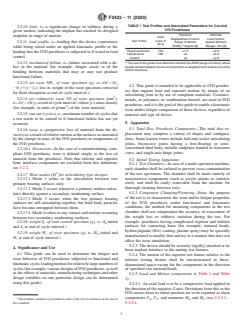
TABLE 1 Test Profiles and Associated Parameters for Cervical
3.2.10 limit, n—a significant change in stiffness during a
IVD Prostheses
given motion, indicating the implant has reached its designed
Preferred Alternate
endpoint in range of motion.
Axial
Displacement Control: Load Control:
Test Profile Load, N
3.2.11 load profile, n—loading that the device experiences Range of Motion Applied Moment
(2-4)
A
(ROM), degree (3) Ranges, Nm (3)
while being tested under an applied kinematic profile or the
Flexion/extension 100 ±7.5 ±2.0
loading that the IVD prosthesis is subjected to if tested in load
Lateral bend/ 100 ±6 ±2.0
control.
rotation ±6 ±4.0
A
3.2.12 mechanical failure, n—failure associated with a de-
TheuseroftheguidemustdeterminewhethertheROM(rangeofmotion)willbe
equally divided between flexion and extension or weighted more toward one of the
fect in the material (for example, fatigue crack) or of the
motion directions.
bonding between materials that may or may not produce
functional failure.
3.2.13 net wear NW of wear specimen (g), n—NW 5~W
i i 0
4.2 This guide is intended to be applicable to IVD prosthe-
2W 1 S 2S ; loss in weight of the wear specimen corrected
! ~ !
i i 0
ses that support load and transmit motion by means of an
for fluid absorption at end of cycle interval i.
articulating joint or by use of compliant materials. Ceramics,
3.2.14 net volumetric wear NV of wear specimen (mm ),
i
metals, or polymers, or combination thereof, are used in IVD
n—NV 5NW/ρ atendofcycleinterval iwhere ρ=massdensity
i i
prostheses,anditisthegoalofthisguidetoenableakinematic
(for example, in units of g/mm ) of the wear material.
wear and/or fatigue comparison of these devices, regardless of
3.2.15 run out (cycles), n—maximum number of cycles that material and type of device.
a test needs to be carried to if functional failure has not yet
5. Apparatus
occurred.
5.1 Total Disc Prosthesis Components—The total disc re-
3.2.16 wear, n—progressive loss of material from the de-
placement may comprise a variety of shapes and configura-
vice(s)asaresultofrelativemotionatthesurfacesasmeasured
tions. Some known forms include ball-and-socket articulating
by the change in mass of the IVD prosthesis or components of
joints, biconcave joints having a free-floating or semi-
the IVD prosthesis.
constrained third body, metallic endplates bonded to elastomer
3.2.16.1 Discussion—In the case of a nonarticulating, com-
cores, and single-axis hinge joints.
pliant IVD prosthesis, wear is defined simply as the loss of
material from the prosthesis. Note that inferior and superior
5.2 Spinal Testing Apparatus:
bone interface components are excluded from this definition;
5.2.1 Test Chambers—Incaseofamulti-specimenmachine,
see 5.2.2.
each chamber shall be isolated to prevent cross-contamination
of the test specimens. The chamber shall be made entirely of
3.2.17 Wear modes (1) for articulating type designs:
noncorrosive components (such as acrylic plastic or stainless
3.2.17.1 Mode 1 refers to the articulation between two
steel), and shall be easily removable from the machine for
primary bearing surfaces only.
thorough cleaning between tests.
3.2.17.2 Mode 2 occurs whenever a primary surface articu-
5.2.2 Component Clamping/Fixturing—Since the purpose
lates directly against a secondary, nonbearing surface.
of the test is to characterize the wear and/or fatigue properties
3.2.17.3 Mode 3 occurs when the two primary bearing
of the IVD prosthesis under functional and kinematic
surfaces are still articulating together, but third-body particles
conditions, the method for mounting components in the test
have become entrapped between them.
chamber shall not compromise the accuracy of assessment of
3.2.17.4 Mode 4 refers to any contact and motion occurring
the weight loss or stiffness variation during the test. For
between two secondary, nonbearing surfaces.
example, prostheses having complicated superior and inferior
3.2.18 weight S of soak control specimen (g), n—S initial
i 0
surfaces for contacting bone (for example, sintered beads,
and S at end of cycle interval i.
i
hydroxylapatite (HA) coating, plasma spray) may be specially
3.2.19 weight W of wear specimen (g), n—W initial and
i 0
manufactured to modify that surface in a manner that does not
W at end of cycle interval i.
i
affect the wear simulation.
5.2.3 The device should be securely (rigidly) attached at its
4. Significance and Use
bone-implant interface to the mating test fixtures.
4.1 This guide can be used to determine the fatigue and
5.2.4 The motion of the superior test fixture relative to the
wear behavior of IVD prostheses subjected to functional and
inferior testing fixture shall be unconstrained in three-
kinematiccyclicloading/motionforrelativelylargenumbersof
dimensional space except for the components in the direction
cycles(forexample,variousdesignsofIVDprostheses,aswell
of specified test motions/loads.
as the effects of materials, manufacturing techniques and other
5.2.5 Load and Motion (components in Table 1 and Table
design variables on one particular design can be determined
2):
using this guide).
5.2.5.1 An axial load is to be a compressive load applied in
thedirectionofthenegative Z-axis.Deviationsfromthisasthe
IVD moves from its initial position are to be reported as shear
components F , F , and moments M and M (see 5.2.5.2 –
Theboldfacenumbersinparenthesesrefertothelistofreferencesattheendof X Y X Y
this standard. 5.2.5.4.
F2423 − 11 (2020)
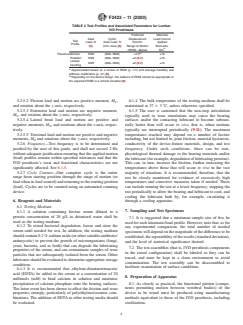
TABLE 2 Test Profiles and Associated Parameters for Lumbar
IVD Prostheses
Preferred Alternate
Axial Cyclic Displacement Load Control:
Test
Load, N Axial Load, N Control: Applied
Profile
(5) (min–max) (6) Range of Motion Moments,
A
(ROM), degree Nm
B
Flexion/extension 1200 (900–1850) ±7.5 ±10
Rotation 1200 (900–1850) ±3 (5,7) ±10
Lateral
1200 (900–1850) ±6 (5,7) ±12
bending
A
Approximated based on a review of ROM (p. 111) and average flexibility and
stiffness coefficients (p. 47) (6).
B
Depending on the device design, the balance of ROM should be appropriate to
the expected ROM in a clinical situation (8).
5.2.5.2 Flexion load and motion are positive moment, M , 6.1.4 The bulk temperature of the testing medium shall be
Y
and rotation about the y-axis, respectively. maintained at 37 6 3°C, unless otherwise specified.
5.2.5.3 Extension load and motion are negative moment, 6.1.5 The user is cautioned that the non-stop articulation
M , and rotation about the y-axis, respectively. typically used in wear simulations may cause the bearing
Y
5.2.5.4 Lateral bend load and motion are positive and surfaces and/or the contacting lubricant to become substan-
negative moments, M , and rotations about the x-axis, respec- tially hotter than will occur in vivo, that is, when motions
X
tively. typically are interrupted periodically (9-11). The maximum
5.2.5.5 Torsional load and motion are positive and negative temperatures reached may depend on a number of factors
moments, M and rotations about the z-axis, respectively. including, but not limited to, joint friction, material hysteresis,
Z
5.2.6 Frequency—Test frequency is to be determined and
conductivity of the device-fixture materials, design, and test
justified by the user of this guide, and shall not exceed 2 Hz frequency. Under such conditions, there can be non-
without adequate justification ensuring that the applied motion
physiological thermal damage to the bearing materials and/or
(load) profiles remain within specified tolerances and that the thelubricant(forexample,degradationoflubricatingproteins).
IVD prosthesis’s wear and functional characteristics are not
This can, in turn, increase the friction, further increasing the
significantly affected. See 6.1.5. temperatures above those that will occur in vivo in the vast
5.2.7 Cycle Counter—One complete cycle is the entire
majority of situations. It is recommended, therefore, that the
range from starting position through the range of motion (or test be closely monitored for evidence of excessively high
loadwheninloadcontrol)andreturningtothestartingposition
temperatures and corrective measures taken if needed. These
(load). Cycles are to be counted using an automated counting can include running the test at a lower frequency, stopping the
device.
test periodically to allow the bearing and lubricant to cool, and
cooling the lubricant bath by, for example, circulating it
6. Reagents and Materials
through a cooling apparatus.
6.1 Testing Medium:
7. Sampling and Test Specimens
6.1.1 A solution containing bovine serum diluted to a
protein concentration of 20 g/L in deionized water shall be
7.1 It is suggested that a minimum sample size of five be
used as the testing medium.
usedforeachkinematic/loadprofile.However,notethat,asfor
6.1.2 To retard bacterial degradation, freeze and store the
any experimental comparison, the total number of needed
serum until needed for test. In addition, the testing medium
specimenswilldependonthemagnitudeofthedifferencetobe
shouldcontain0.2%sodiumazide(orothersuitableantibiotic/
established,therepeatabilityoftheresults(standarddeviation),
antimycotic) to prevent the growth of microorganisms (fungi,
and the level of statistical significance desired.
yeast, bacteria, and so forth) that can degrade the lubricating
7.2 The test assemblies (that is, IVD prosthesis components
properties of the serum, and can contaminate samples of wear
in the tested configuration) shall be labeled so they can be
particles that are subsequently isolated from the serum. Other
traced, and must be kept in a clean environment to avoid
lubricantsshouldbeevaluatedtodetermineappropriatestorage
contamination. The test assembly can be disassembled to
conditions.
facilitate examination of surface conditions.
6.1.3 It is recommended that ethylene-diaminetetraacetic
acid (EDTA) be added to the serum at a concentration of 20
8. Preparation of Apparatus
millimols (mM) to bind calcium in solution and minimize
precipitation of calcium phosphate onto the bearing surfaces. 8.1 As closely as practical, the functional portion (compo-
The latter event has been shown to affect the friction and wear nents permitting motion between vertebral bodies) of the
properties strongly, particularly of polyethylene/ceramic com- device to be tested must be produced using manufacturing
binations.The addition of EDTAto other testing media should methods equivalent to those of the IVD prosthesis, including
be evaluated. sterilization.
F2423 − 11 (2020)
A. Neutral Position (t=0)
B. Flexed Position Rotated Through Angle θ(t)
γ = Angle of the Axial Load Relative to the Global Z-Axis
FIG. 1 2-D (XZ Plane Only) Loading Diagrams Showing F and its Resultant Reaction Force-Moment Components Shown Acting at
load
the Initial Physiologic Center of Rotation of the IVD Prostheses
8.2 It is permissible to exclude nonfunctional features that 9.3 Record weights, W and S , as the initial weights of the
0 0
may interfere with obtaining wear/fatigue functional measure- wear and soak controls, respectively. Place the loaded soak
ments. For example, bone-implant interfaces such as hydroxy- control specimens in holders in a soak chamber of the testing
lapatite (HA), plasma-spray titanium, and beads may be medium, such that the total surface area exposed to the testing
omitted, since they may abrade the fixtures and, thereby,
medium is the same as that of the wear components when
produce an unwanted mixture of functional and nonfunctional mounted in the spinal testing apparatus. Maintain the soak
component wear particles (see 5.2.2).
chamber temperature at 37 6 3°C, or specify if different.
8.3 It is permissible to make entirely different bone-implant
9.4 For all components, measure the geometry of relevant
interface components (that is, superior and inferior surfaces)
functional surfaces or features before starting the test. For
provided that the modification does not substantially alter the
example, articulating joints should have measurements of the
wear and functional characteristics of the device. For example,
bearing area. Prostheses having bonded polymer cores should
a ball-and-socket joint prosthesis may be manufactured having
have measurements of the external geometry such as starting
the polished articulation component (that is, functional sur-
circumference (to calculate changes caused by equatorial
faces or features of the device) and an opposite side that
bulging) and prosthesis height.
mounts directly to the testing apparatus, thereby simplifying
9.5 The limits of the ROM of the prosthesis in flexion/
the fixturing demands.
extension,leftandrightlateralbending,andleftandrightaxial
8.4 The requirements of Guide F1714, Specimen Prepara-
torsion shall be determined prior to the start of wear testing. If
tion section, shall be followed.
the device has no limit in a given direction, this should be
noted in lieu of the limit.
9. Procedure
9.6 Testing medium, temperature, and removal periods for
9.1 As a weight control for the testing, a minimum of two
identicalloadedsoakcontrolspecimensintestingmedium(see weighing components shall be identical for all control and test
6.1) shall be used. In other words, the loaded soak control
specimens.
specimen must be loaded statically with the same axial load
9.7 Unless otherwise justified by intended use and expected
vector as described in Fig. 1 since it is well known that load
servicelifeoftheIVDprosthesis,alltestsshouldbeconducted
can significantly affect fluid absorption.
to a run out of 10000000 cycles (see Appendix X1).
NOTE1—Theuserofthisguidemayjustifynotperformingsoakcontrol
tests in certain circumstances (for example, all metal components).
9.8 The testing medium shall be collected for subsequent
Before, and at all specified time intervals (determined by the user) of the
analysis at least once every one million cycles.
presoak period (defined in Guide F1714), the wear components and soak
controls should be removed from the soak bath, cleaned, dried, and
9.9 Place the prostheses in the spinal testing apparatus, add
weighed three times, in rotation, keeping the same specimen sequence
testing medium, and subject the IVD prosthesis to each of the
each time. The average of the three weights may be used for the wear
testsaslistedin9.11.Theprosthesesshallbevisuallyanalyzed
calculations. An analytical balance with a sensitivity of 610 µg or less
shallbeused.Thisdegreeofsensitivityforweighingisnecessarytodetect
at a minimum once per 1000000 cycles, with mechanical
the slight loss in weight of highly wear-resistant bearing materials (12).
failuresnoted.Amechanicalfailure(forexample,considerable
9.2 Alwaysweighspecimensintheclean,drycondition(see wearofthebearingsurface)maynotnecessitateterminationof
Annex A4 of Guide F1714). Keep the components in a the test since this guide attempts to characterize the time-
dust-free container and handle with clean tools or gloves or dependent wear properties of the
...