

ASTM D4486-23
(Test Method)Standard Test Method for Kinematic Viscosity of Volatile and Reactive Liquids
General Information
- Abstract
SIGNIFICANCE AND USE
5.1 Kinematic viscosity is a physical property which is of importance in the design of systems in which flowing liquids are used or handled.
SCOPE
1.1 This test method covers the measurement of kinematic viscosity of transparent, Newtonian liquids which because of their reactivity, instability, or volatility cannot be used in conventional capillary kinematic viscometers. This test method is applicable up to 2 × 10⁻⁵ N/m2 (2 atm) pressure and temperature range from −53 °C to +135 °C (−65 °F to +275 °F).
1.1.1 For the measurement of the kinematic viscosity of other liquids, see Test Method D445. The difference between the two methods is in the viscometers. The viscometers specified in used Specification D446 are open to the atmosphere, while the viscometers in this method are sealed. When volatile liquids are measured in sealed viscometers, the density of the vapor may not be negligible compared with the density of the liquid and the working equation of the viscometer has to account for that. See Section 11 for details.
1.2 WARNING—Mercury has been designated by many regulatory agencies as a hazardous substance that can cause serious medical issues. Mercury, or its vapor, has been demonstrated to be hazardous to health and corrosive to materials. Use Caution when handling mercury and mercury-containing products. See the applicable product Safety Data Sheet (SDS) for additional information. The potential exists that selling mercury or mercury-containing products, or both, is prohibited by local or national law. Users must determine legality of sales in their location.
1.3 This standard does not purport to address all of the safety concerns, if any, associated with its use. It is the responsibility of the user of this standard to establish appropriate safety, health, and environmental practices and determine the applicability of regulatory limitations prior to use. For specific warning statements, see 7.2, 7.3, 7.4, and Annex A1.
1.4 This international standard was developed in accordance with internationally recognized principles on standardization established in the Decision on Principles for the Development of International Standards, Guides and Recommendations issued by the World Trade Organization Technical Barriers to Trade (TBT) Committee.
- Status
- Published
- Publication Date
- 30-Nov-2023
- Technical Committee
- D02 - Petroleum Products, Liquid Fuels, and Lubricants
Overview
ASTM D4486-23 specifies the Standard Test Method for Kinematic Viscosity of Volatile and Reactive Liquids. Developed by ASTM International, this method is essential for measuring the kinematic viscosity of transparent, Newtonian liquids that are either volatile, reactive, or unstable-properties that make them unsuitable for conventional open capillary viscometers. The method enables precise viscosity measurement under controlled temperature and pressure, ensuring reliability even when handling challenging sample types.
The procedure is specifically designed to be applicable for temperatures ranging from −53°C to +135°C (−65°F to +275°F) and at pressures up to 2 × 10⁻⁵ N/m² (2 atm). ASTM D4486-23 is crucial for sectors where the physical property of viscosity impacts performance, safety, and quality of systems utilizing or transporting volatile or reactive liquids.
Keywords: kinematic viscosity, volatile liquids, reactive liquids, viscosity measurement, ASTM D4486, high-precision testing
Key Topics
- Kinematic viscosity: Ratio of dynamic viscosity to density, representing a liquid's resistance to flow under gravity.
- Applicable sample types: Designed for transparent, Newtonian liquids that are volatile, reactive, or unstable.
- Sealed viscometer systems: Uses viscometers sealed from the atmosphere, which allows measurement of samples that would otherwise change properties or evaporate.
- Temperature and pressure range: Suitable for a broad range of industrial and laboratory conditions (−53°C to +135°C; up to 2 atm pressure).
- Special considerations: Accounts for vapor density when it cannot be neglected relative to the liquid, requiring specific correction formulas.
- Safety and regulatory compliance: Contains detailed warnings regarding hazards related to chemicals (mercury, chromic acid, acetone, hydrochloric acid) and requires users to adopt appropriate health, safety, and environmental practices.
- Calibration and precision: Viscometers and measurement equipment must be carefully calibrated using standardized procedures to maintain accuracy and repeatability.
Applications
The ASTM D4486-23 standard delivers practical value in many fields where precise determination of viscosity for volatile or reactive liquids is necessary, such as:
- Chemical and petrochemical industries: For fluids with high volatility or reactivity, accurate viscosity measurement is crucial for process design, quality control, and safety.
- Pharmaceutical formulation: Provides reliable data for the processing and handling of reactant solutions and intermediates.
- Materials testing and research: Enables testing under specific temperature and pressure conditions not accommodated by conventional open viscometers.
- Transport systems design: Supports the safe and efficient movement of volatile or reactive fluids by providing essential material property data.
- Calibration laboratories: Offers robust methodology for verifying standards in the measurement of unusual or sensitive samples.
Adopting this test method enhances the reliability of data for processes where liquid behavior under various conditions directly impacts performance and product integrity.
Related Standards
For a comprehensive viscosity measurement framework, consider the following documents closely related to ASTM D4486-23:
- ASTM D445: Test Method for Kinematic Viscosity of Transparent and Opaque Liquids (and Calculation of Dynamic Viscosity); for less volatile or non-reactive samples using open viscometers.
- ASTM D446: Specifications and Operating Instructions for Glass Capillary Kinematic Viscometers.
- ASTM D2162: Practice for Basic Calibration of Master Viscometers and Viscosity Oil Standards.
- ASTM E1: Specification for ASTM Liquid-in-Glass Thermometers.
- ASTM D4175: Terminology Relating to Petroleum Products, Liquid Fuels, and Lubricants.
- IEEE/ASTM SI 10: Standard for Use of the International System of Units (SI).
By adhering to ASTM D4486-23 and its related standards, laboratories and industries ensure accurate, safe, and standardized viscosity testing for even the most challenging liquid samples.
Relations
- Replaces
ASTM D4486-18 - Standard Test Method for Kinematic Viscosity of Volatile and Reactive Liquids - Effective Date
- 01-Dec-2023
- Effective Date
- 01-Apr-2024
- Refers
ASTM D4175-23a - Standard Terminology Relating to Petroleum Products, Liquid Fuels, and Lubricants - Effective Date
- 15-Dec-2023
- Effective Date
- 01-Nov-2023
- Refers
ASTM D4175-23e1 - Standard Terminology Relating to Petroleum Products, Liquid Fuels, and Lubricants - Effective Date
- 01-Jul-2023
- Effective Date
- 01-Dec-2023
Get Certified
Connect with accredited certification bodies for this standard

BSMI (Bureau of Standards, Metrology and Inspection)
Taiwan's standards and inspection authority.
Sponsored listings
Frequently Asked Questions
ASTM D4486-23 is a standard published by ASTM International. Its full title is "Standard Test Method for Kinematic Viscosity of Volatile and Reactive Liquids". This standard covers: SIGNIFICANCE AND USE 5.1 Kinematic viscosity is a physical property which is of importance in the design of systems in which flowing liquids are used or handled. SCOPE 1.1 This test method covers the measurement of kinematic viscosity of transparent, Newtonian liquids which because of their reactivity, instability, or volatility cannot be used in conventional capillary kinematic viscometers. This test method is applicable up to 2 × 10⁻⁵ N/m2 (2 atm) pressure and temperature range from −53 °C to +135 °C (−65 °F to +275 °F). 1.1.1 For the measurement of the kinematic viscosity of other liquids, see Test Method D445. The difference between the two methods is in the viscometers. The viscometers specified in used Specification D446 are open to the atmosphere, while the viscometers in this method are sealed. When volatile liquids are measured in sealed viscometers, the density of the vapor may not be negligible compared with the density of the liquid and the working equation of the viscometer has to account for that. See Section 11 for details. 1.2 WARNING—Mercury has been designated by many regulatory agencies as a hazardous substance that can cause serious medical issues. Mercury, or its vapor, has been demonstrated to be hazardous to health and corrosive to materials. Use Caution when handling mercury and mercury-containing products. See the applicable product Safety Data Sheet (SDS) for additional information. The potential exists that selling mercury or mercury-containing products, or both, is prohibited by local or national law. Users must determine legality of sales in their location. 1.3 This standard does not purport to address all of the safety concerns, if any, associated with its use. It is the responsibility of the user of this standard to establish appropriate safety, health, and environmental practices and determine the applicability of regulatory limitations prior to use. For specific warning statements, see 7.2, 7.3, 7.4, and Annex A1. 1.4 This international standard was developed in accordance with internationally recognized principles on standardization established in the Decision on Principles for the Development of International Standards, Guides and Recommendations issued by the World Trade Organization Technical Barriers to Trade (TBT) Committee.
SIGNIFICANCE AND USE 5.1 Kinematic viscosity is a physical property which is of importance in the design of systems in which flowing liquids are used or handled. SCOPE 1.1 This test method covers the measurement of kinematic viscosity of transparent, Newtonian liquids which because of their reactivity, instability, or volatility cannot be used in conventional capillary kinematic viscometers. This test method is applicable up to 2 × 10⁻⁵ N/m2 (2 atm) pressure and temperature range from −53 °C to +135 °C (−65 °F to +275 °F). 1.1.1 For the measurement of the kinematic viscosity of other liquids, see Test Method D445. The difference between the two methods is in the viscometers. The viscometers specified in used Specification D446 are open to the atmosphere, while the viscometers in this method are sealed. When volatile liquids are measured in sealed viscometers, the density of the vapor may not be negligible compared with the density of the liquid and the working equation of the viscometer has to account for that. See Section 11 for details. 1.2 WARNING—Mercury has been designated by many regulatory agencies as a hazardous substance that can cause serious medical issues. Mercury, or its vapor, has been demonstrated to be hazardous to health and corrosive to materials. Use Caution when handling mercury and mercury-containing products. See the applicable product Safety Data Sheet (SDS) for additional information. The potential exists that selling mercury or mercury-containing products, or both, is prohibited by local or national law. Users must determine legality of sales in their location. 1.3 This standard does not purport to address all of the safety concerns, if any, associated with its use. It is the responsibility of the user of this standard to establish appropriate safety, health, and environmental practices and determine the applicability of regulatory limitations prior to use. For specific warning statements, see 7.2, 7.3, 7.4, and Annex A1. 1.4 This international standard was developed in accordance with internationally recognized principles on standardization established in the Decision on Principles for the Development of International Standards, Guides and Recommendations issued by the World Trade Organization Technical Barriers to Trade (TBT) Committee.
ASTM D4486-23 is classified under the following ICS (International Classification for Standards) categories: 17.060 - Measurement of volume, mass, density, viscosity. The ICS classification helps identify the subject area and facilitates finding related standards.
ASTM D4486-23 has the following relationships with other standards: It is inter standard links to ASTM D4486-18, ASTM D445-24, ASTM D4175-23a, ASTM D445-23, ASTM D4175-23e1, ASTM D6685-01(2015). Understanding these relationships helps ensure you are using the most current and applicable version of the standard.
ASTM D4486-23 is available in PDF format for immediate download after purchase. The document can be added to your cart and obtained through the secure checkout process. Digital delivery ensures instant access to the complete standard document.
Standards Content (Sample)
This international standard was developed in accordance with internationally recognized principles on standardization established in the Decision on Principles for the
Development of International Standards, Guides and Recommendations issued by the World Trade Organization Technical Barriers to Trade (TBT) Committee.
Designation: D4486 − 23
Standard Test Method for
Kinematic Viscosity of Volatile and Reactive Liquids
This standard is issued under the fixed designation D4486; the number immediately following the designation indicates the year of
original adoption or, in the case of revision, the year of last revision. A number in parentheses indicates the year of last reapproval. A
superscript epsilon (´) indicates an editorial change since the last revision or reapproval.
1. Scope* Development of International Standards, Guides and Recom-
mendations issued by the World Trade Organization Technical
1.1 This test method covers the measurement of kinematic
Barriers to Trade (TBT) Committee.
viscosity of transparent, Newtonian liquids which because of
their reactivity, instability, or volatility cannot be used in
2. Referenced Documents
conventional capillary kinematic viscometers. This test method
−5 2
2.1 ASTM Standards:
is applicable up to 2 × 10 N/m (2 atm) pressure and tem-
D445 Test Method for Kinematic Viscosity of Transparent
perature range from −53 °C to +135 °C (−65 °F to +275 °F).
and Opaque Liquids (and Calculation of Dynamic Viscos-
1.1.1 For the measurement of the kinematic viscosity of
ity)
other liquids, see Test Method D445. The difference between
D446 Specifications and Operating Instructions for Glass
the two methods is in the viscometers. The viscometers
Capillary Kinematic Viscometers
specified in used Specification D446 are open to the
D2162 Practice for Basic Calibration of Master Viscometers
atmosphere, while the viscometers in this method are sealed.
and Viscosity Oil Standards
When volatile liquids are measured in sealed viscometers, the
D4175 Terminology Relating to Petroleum Products, Liquid
density of the vapor may not be negligible compared with the
Fuels, and Lubricants
density of the liquid and the working equation of the viscom-
E1 Specification for ASTM Liquid-in-Glass Thermometers
eter has to account for that. See Section 11 for details.
SI 10 IEEE/ASTM Standard for Use of the International
1.2 WARNING—Mercury has been designated by many
System of Units (SI): The Modern Metric System
regulatory agencies as a hazardous substance that can cause
serious medical issues. Mercury, or its vapor, has been dem-
3. Terminology
onstrated to be hazardous to health and corrosive to materials.
3.1 Definitions:
Use Caution when handling mercury and mercury-containing
3.1.1 For definitions of terms used in this test method, refer
products. See the applicable product Safety Data Sheet (SDS)
to Terminology D4175.
for additional information. The potential exists that selling
3.2 Definitions of Terms Specific to This Standard:
mercury or mercury-containing products, or both, is prohibited
3.2.1 density, n—the mass per unit volume of a substance at
by local or national law. Users must determine legality of sales
a given temperature and pressure.
in their location.
3.2.1.1 Discussion—The cgs unit of density (ρ) has the
1.3 This standard does not purport to address all of the
dimensions of grams per cubic centimetre. The SI unit of
safety concerns, if any, associated with its use. It is the
density has the dimensions of kilograms per cubic metre.
responsibility of the user of this standard to establish appro-
3.2.2 dynamic viscosity, η, n—the ratio between the applied
priate safety, health, and environmental practices and deter-
shear stress and rate of shear of a material.
mine the applicability of regulatory limitations prior to use.
For specific warning statements, see 7.2, 7.3, 7.4, and Annex
3.2.2.1 Discussion——It is sometimes called the coefficient
A1.
of dynamic viscosity or absolute viscosity. Dynamic viscosity
1.4 This international standard was developed in accor-
is a measure of resistance to flow or deformation which
dance with internationally recognized principles on standard-
constitutes a material’s ability to transfer momentum in re-
ization established in the Decision on Principles for the
sponse to steady or time-dependent external shear forces.
Dynamic viscosity has the dimension of mass divided by
length and time and its SI unit is pascal times second (Pa·s).
This test method is under the jurisdiction of Committee D02 on Petroleum
Products, Liquid Fuels, and Lubricants and is the direct responsibility of Subcom-
mittee D02.L0.07 on Engineering Sciences of High Performance Fluids and Solids
(Formally D02.1100). For referenced ASTM standards, visit the ASTM website, www.astm.org, or
Current edition approved Dec. 1, 2023. Published December 2023. Originally contact ASTM Customer Service at service@astm.org. For Annual Book of ASTM
approved in 1991. Last previous edition approved in 2018 as D4486 – 18. DOI: Standards volume information, refer to the standard’s Document Summary page on
10.1520/D4486-23. the ASTM website.
*A Summary of Changes section appears at the end of this standard
Copyright © ASTM International, 100 Barr Harbor Drive, PO Box C700, West Conshohocken, PA 19428-2959. United States
D4486 − 23
Among the transport properties for heat, mass, and momentum
transfer, dynamic viscosity is the momentum conductivity.
3.2.3 kinematic viscosity, ν, n—the ratio of the dynamic
viscosity (η) to the density (ρ) of a material at the same
temperature and pressure.
3.2.3.1 Discussion—Kinematic viscosity is the ratio be-
tween momentum transport and momentum storage. Such
ratios are called diffusivities with dimensions of length squared
divided by time and the SI unit is metre squared divided by
second (m /s). Among the transport properties for heat, mass,
and momentum transfer, kinematic viscosity is the momentum
diffusivity.
3.2.3.2 Discussion—Formerly, kinematic viscosity was de-
fined specifically for viscometers covered by this test method
as the resistance to flow under gravity. More generally, it is the
ratio between momentum transport and momentum storage.
3.2.3.3 Discussion—For gravity-driven flow under a given
hydrostatic head, the pressure head of a liquid is proportional
to its density, ρ, if the density of the gas or vapor is negligible
compared to that of the liquid. For any particular viscometer
covered by this test method, the time of flow of a fixed volume
of liquid is directly proportional to its kinematic viscosity, ν,
where ν = η ⁄ρ, and η is the dynamic viscosity.
3.2.3.4 Discussion—If the density of the gas or vapor is not
Variants of sealed gravitational capillary viscometers have been used some of
them sustaining pressures up to 3 MPa. A survey is given in the book section
negligible compared to that of the liquid, it has to be taken into
“Sealed Gravitational Capillary Viscometers for Volatile Liquids” by A. Laesecke in
account in the calculation of the viscosity. Details are given in
“Experimental Thermodynamics Volume IX : Advances in Transport Properties of
Section 11.
Fluids” edited by M. J. Assael, A. R. H. Goodwin, V. Vesovic, & W. A. Wakeham,
Cambridge, UK: Royal Society of Chemistry, 2014, http://dx.doi.org/10.1039/
3.2.4 vulnerable liquid, n—a liquid which by reason of its
9781782625254.
volatility, instability or reactivity in the presence of air or any
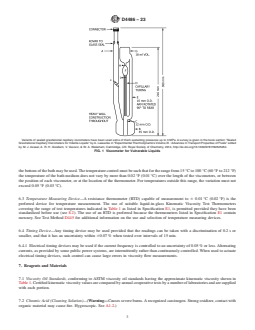
FIG. 1 Viscometer for Vulnerable Liquids
other specific gaseous medium may undergo physical or
chemical changes that may affect its viscosity.
at the location of the thermometer. For temperatures outside
this range, the variation must not exceed 0.05 °F (0.03 °C).
4. Summary of Test Method
6.3 Temperature Measuring Device—A resistance thermom-
4.1 The time is measured, in seconds, for a fixed volume of
eter (RTD) capable of measurement to 6 0.01 °C (0.02 °F) is
liquid to flow under gravity through the capillary of the
the preferred device for temperature measurement. The use of
viscometer under a reproducible driving head and at a closely
suitable liquid-in-glass Kinematic Viscosity Test Thermom-
controlled temperature. The kinematic viscosity is calculated
eters covering the range of test temperatures indicated in Table
from the measured flow time and the calibration constant of the
1 as listed in Specification E1, is permitted provided they have
viscometer.
been standardized before use (see 8.2). The use of an RTD is
preferred because the thermometers listed in Specification E1
5. Significance and Use
contain mercury. See Test Method D445 for additional infor-
5.1 Kinematic viscosity is a physical property which is of
mation on the use and selection of temperature measuring
importance in the design of systems in which flowing liquids
devices.
are used or handled.
6.4 Timing Device—Any timing device may be used pro-
vided that the readings can be taken with a discrimination of
6. Apparatus
0.2 s or smaller, and that it has an uncertainty within 60.07 %
6.1 Viscometer—A viscometer suitable for vulnerable fluids
when tested over intervals of 15 min.
similar to that shown in Fig. 1.
6.4.1 Electrical timing devices may be used if the current
frequency is controlled to an uncertainty of 0.05 % or less.
6.2 Viscometer Thermostat—Any transparent liquid or va-
Alternating currents, as provided by some public power
por bath of sufficient depth such that at no time during the
systems, are intermittently rather than continuously controlled.
measurement will any portion of the sample in the viscometer
When used to actuate electrical timing devices, such control
be less than 20 mm below the surface of the bath liquid or less
can cause large errors in viscosity flow measurements.
than 20 mm above the bottom of the bath may be used. The
temperature control must be such that for the range from 15 °C
7. Reagents and Materials
to 100 °C (60 °F to 212 °F) the temperature of the bath medium
does not vary by more than 0.02 °F (0.01 °C) over the length of 7.1 Viscosity Oil Standards, conforming to ASTM viscosity
the viscometers, or between the position of each viscometer, or oil standards having the approximate kinematic viscosity
D4486 − 23
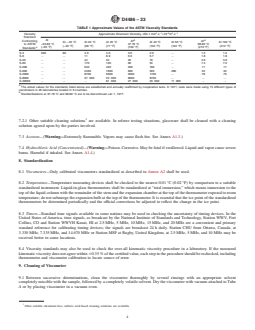
TABLE 1 Approximate Values of the ASTM Viscosity Standards
2 –1 –6 2 –1
Viscosity Approximate Kinematic Viscosity, cSt=1 mm ·s =10 m ·s
Standard
B B
At
Conforming At At
At − 40 °C At 20 °C At 25 °C At 40 °C At 50 °C At 100 °C
−53.89 °C 37.78 °C 98.89 °C
to ASTM
(−40 °F) (68 °F) (77 °F) (104 °F) (122 °F) (212 °F)
A (100 °F) (210 °F)
(−65 °F)
Standards
S-3 300 80 4.6 4.0 3.0 2.9 . 1.2 1.2
S-6 . . 11 8.9 6.0 5.7 . 1.8 1.8
S-20 . . 44 34 20 18 . 4.0 3.9
S-60 . . 170 120 60 54 . 7.4 7.2
S-200 . . 640 450 200 180 . 17 17
S-600 . . 2400 1600 600 520 280 33 32
S-2000 . . 8700 5600 2000 1700 . 78 75
S-8000 . . 37 000 23 000 8000 6700 . . .
S-30000 . . . 81 000 27 000 23 000 11 000 . .
A
The actual values for the standards listed above are established and annually reaffirmed by cooperative tests. In 1971, tests were made using 15 different types of
viscometers in 26 laboratories located in 9 countries.
B
Standardizations at 37.78 °C and 98.89 °C are to be discontinued Jan 1, 1977.
shown in Table 1. Certified kinematic viscosity values are primary standard reference for calibrating timing devices; the
compared by annual cooperative tests by a number of labora- signals are broadcast 24 h daily. Station CHU from Ottawa,
tories and are supplied with each portion. Canada, at 3.330 MHz, 7.335 MHz, and 14.670 MHz or
Station MSF at Rugby, United Kingdom, at 2.5 MHz, 5 MHz,
7.2 Chromic Acid (Cleaning Solution)—(Warning—Causes
and 10 MHz may be received better in some locations.
severe burns. A recognized carcinogen. Strong oxidizer, con-
tact with organic material may cause fire. Hygroscopic. See 8.4 Viscosity standards may also be used to check the
A1.2.) over-all kinematic viscosity procedure in a laboratory. If the
7.2.1 Other suitable cleaning solutions are available. In measured kinematic viscosity does not agree within 60.35 %
referee testing situations, glassware shall be cleaned with a of the certified value, each step in the procedure should be
cleaning solution agreed upon by the parties involved. rechecked, including thermometer and viscometer calibration
to locate source of error.
7.3 Acetone—(Warning—Extremely flammable. Vapors
may cause flash fire. See Annex A1.3.)
9. Cleaning of Viscometer
7.4 Hydrochloric Acid (Concentrated)—(Warning—
9.1 Between successive determinations, clean the viscom-
Poison. Corrosive. May be fatal if swallowed. Liquid and
eter thoroughly by several rinsings with an appropriate solvent
vapor cause severe burns. Harmful if inhaled. See Annex
completely miscible with the sample, followed by a completely
A1.4.)
volatile solvent. Dry the viscometer with vacuum attached to
Tube A or by placing viscometer in a vacuum oven.
8. Standardization
9.2 Periodically clean the instrument with chromic acid
8.1 Viscometers—Only calibrated viscometers standardized
(Warning—See 7.2 and A1.2.) to remove organic deposits,
as described in Annex A2 shall be used.
rinse thoroughly with distilled water and acetone (Warning—
8.2 Temperature—Temperature measuring devices shall be
See 7.3 and A1.3.), and dry with clean dry air. Inorganic
checked to the nearest 0.01 °C (0.02 °F) by comparison to a
deposits may be removed by hydrochloric acid (Warning—
suitable standardized instrument. Liquid-in-glass thermometers
See 7.4 and A1.4.) treatment before use of cleaning acid,
...
This document is not an ASTM standard and is intended only to provide the user of an ASTM standard an indication of what changes have been made to the previous version. Because
it may not be technically possible to adequately depict all changes accurately, ASTM recommends that users consult prior editions as appropriate. In all cases only the current version
of the standard as published by ASTM is to be considered the official document.
Designation: D4486 − 18 D4486 − 23
Standard Test Method for
Kinematic Viscosity of Volatile and Reactive Liquids
This standard is issued under the fixed designation D4486; the number immediately following the designation indicates the year of
original adoption or, in the case of revision, the year of last revision. A number in parentheses indicates the year of last reapproval. A
superscript epsilon (´) indicates an editorial change since the last revision or reapproval.
1. Scope*
1.1 This test method covers the measurement of kinematic viscosity of transparent, Newtonian liquids which because of their
reactivity, instability, or volatility cannot be used in conventional capillary kinematic viscometers. This test method is applicable
−5 2
up to 2 × 10 N/m (2 atm) pressure and temperature range from −53 °C to +135 °C (−65 °F to +275 °F).
1.1.1 For the measurement of the kinematic viscosity of other liquids, see Test Method D445. The difference between the two
methods is in the viscometers. The viscometers specified in used Specification D446 are open to the atmosphere, while the
viscometers in this method are sealed. When volatile liquids are measured in sealed viscometers, the density of the vapor may not
be negligible compared with the density of the liquid and the working equation of the viscometer has to account for that. See
Section 11 for details.
1.2 WARNING—Mercury has been designated by many regulatory agencies as a hazardous substance that can cause serious
medical issues. Mercury, or its vapor, has been demonstrated to be hazardous to health and corrosive to materials. Use Caution
when handling mercury and mercury-containing products. See the applicable product Safety Data Sheet (SDS) for additional
information. The potential exists that selling mercury or mercury-containing products, or both, is prohibited by local or national
law. Users must determine legality of sales in their location.
1.3 This standard does not purport to address all of the safety concerns, if any, associated with its use. It is the responsibility
of the user of this standard to establish appropriate safety, health, and environmental practices and determine the applicability of
regulatory limitations prior to use. For specific warning statements, see 7.2, 7.3, 7.4, and Annex A1.
1.4 This international standard was developed in accordance with internationally recognized principles on standardization
established in the Decision on Principles for the Development of International Standards, Guides and Recommendations issued
by the World Trade Organization Technical Barriers to Trade (TBT) Committee.
2. Referenced Documents
2.1 ASTM Standards:
D445 Test Method for Kinematic Viscosity of Transparent and Opaque Liquids (and Calculation of Dynamic Viscosity)
D446 Specifications and Operating Instructions for Glass Capillary Kinematic Viscometers
D2162 Practice for Basic Calibration of Master Viscometers and Viscosity Oil Standards
D4175 Terminology Relating to Petroleum Products, Liquid Fuels, and Lubricants
E1 Specification for ASTM Liquid-in-Glass Thermometers
SI 10 IEEE/ASTM Standard for Use of the International System of Units (SI): The Modern Metric System
This test method is under the jurisdiction of Committee D02 on Petroleum Products, Liquid Fuels, and Lubricants and is the direct responsibility of Subcommittee
D02.L0.07 on Engineering Sciences of High Performance Fluids and Solids (Formally D02.1100).
Current edition approved Dec. 1, 2018Dec. 1, 2023. Published February 2019December 2023. Originally approved in 1991. Last previous edition approved in 20102018
as D4486 – 10.D4486 – 18. DOI: 10.1520/D4486-18.10.1520/D4486-23.
For referenced ASTM standards, visit the ASTM website, www.astm.org, or contact ASTM Customer Service at service@astm.org. For Annual Book of ASTM Standards
volume information, refer to the standard’s Document Summary page on the ASTM website.
*A Summary of Changes section appears at the end of this standard
Copyright © ASTM International, 100 Barr Harbor Drive, PO Box C700, West Conshohocken, PA 19428-2959. United States
D4486 − 23
3. Terminology
3.1 Definitions:
3.1.1 For definitions of terms used in this test method, refer to Terminology D4175.
3.2 Definitions of Terms Specific to This Standard:
3.2.1 density—density, n—the mass per unit volume of a substance at a given temperature and pressure.
3.2.1.1 Discussion—
The cgs unit of density (ρ) has the dimensions of grams per cubic centimetre. The SI unit of density has the dimensions of
kilograms per cubic metre.
3.2.2 dynamic viscosity, η, n—the ratio between the applied shear stress and rate of shear of a material.
3.2.2.1 Discussion—
—It is sometimes called the coefficient of dynamic viscosity or absolute viscosity. Dynamic viscosity is a measure of resistance
to flow or deformation which constitutes a material’s ability to transfer momentum in response to steady or time-dependent external
shear forces. Dynamic viscosity has the dimension of mass divided by length and time and its SI unit is pascal times second (Pa·s).
Among the transport properties for heat, mass, and momentum transfer, dynamic viscosity is the momentum conductivity.
3.2.3 kinematic viscosity, ν, n—the ratio of the dynamic viscosity (η) to the density (ρ) of a material at the same temperature and
pressure.
3.2.3.1 Discussion—
—KinematicKinematic viscosity is the ratio between momentum transport and momentum storage. Such ratios are called
diffusivities with dimensions of length squared divided by time and the SI unit is metre squared divided by second (m /s). Among
the transport properties for heat, mass, and momentum transfer, kinematic viscosity is the momentum diffusivity.
3.2.3.2 Discussion—
Formerly, kinematic viscosity was defined specifically for viscometers covered by this test method as the resistance to flow under
gravity. More generally, it is the ratio between momentum transport and momentum storage.
3.2.3.3 Discussion—
—ForFor gravity-driven flow under a given hydrostatic head, the pressure head of a liquid is proportional to its density, ρ, if the
density of the gas or vapor is negligible compared to that of the liquid. For any particular viscometer covered by this test method,
the time of flow of a fixed volume of liquid is directly proportional to its kinematic viscosity, ν, where ν = η ⁄ρ, and η is the dynamic
viscosity.
3.2.3.4 Discussion—
If the density of the gas or vapor is not negligible compared to that of the liquid, it has to be taken into account in the calculation
of the viscosity. Details are given in Section 11.
3.2.4 vulnerable liquid—liquid, n—a liquid which by reason of its volatility, instability or reactivity in the presence of air or any
other specific gaseous medium may undergo physical or chemical changes that may affect its viscosity.
4. Summary of Test Method
4.1 The time is measured, in seconds, for a fixed volume of liquid to flow under gravity through the capillary of the viscometer
under a reproducible driving head and at a closely controlled temperature. The kinematic viscosity is calculated from the measured
flow time and the calibration constant of the viscometer.
5. Significance and Use
5.1 Kinematic viscosity is a physical property which is of importance in the design of systems in which flowing liquids are used
or handled.
6. Apparatus
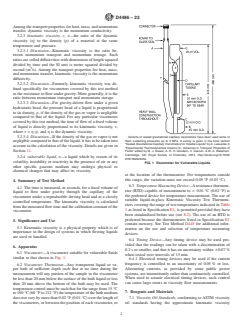
6.1 Viscometer—A viscometer suitable for vulnerable fluids similar to that shown in Fig. 1.
6.2 Viscometer Thermostat—Any transparent liquid or vapor bath of sufficient depth such that at no time during the measurement
will any portion of the sample in the viscometer be less than 20 mm below the surface of the bath liquid or less than 20 mm above
D4486 − 23
Variants of sealed gravitational capillary viscometers have been used some of them sustaining pressures up to 3 MPa. A survey is given in the book section “Sealed
Gravitational Capillary Viscometers for Volatile Liquids” by A. Laesecke in “Experimental Thermodynamics Volume IX : Advances in Transport Properties of Fluids” edited
by M. J. Assael, A. R. H. Goodwin, V. Vesovic, & W. A. Wakeham, Cambridge, UK: Royal Society of Chemistry, 2014, http://dx.doi.org/10.1039/9781782625254.
FIG. 1 Viscometer for Vulnerable Liquids
the bottom of the bath may be used. The temperature control must be such that for the range from 15 °C to 100 °C (60 °F to 212 °F)
the temperature of the bath medium does not vary by more than 0.02 °F (0.01 °C) over the length of the viscometers, or between
the position of each viscometer, or at the location of the thermometer. For temperatures outside this range, the variation must not
exceed 0.05 °F (0.03 °C).
6.3 Temperature Measuring Device—A resistance thermometer (RTD) capable of measurement to 6 0.01 °C (0.02 °F) is the
preferred device for temperature measurement. The use of suitable liquid-in-glass Kinematic Viscosity Test Thermometers
covering the range of test temperatures indicated in Table 1 as listed in Specification E1, is permitted provided they have been
standardized before use (see 8.2). The use of an RTD is preferred because the thermometers listed in Specification E1 contain
mercury. See Test Method D445 for additional information on the use and selection of temperature measuring devices.
6.4 Timing Device—Any timing device may be used provided that the readings can be taken with a discrimination of 0.2 s or
smaller, and that it has an uncertainty within 60.07 % when tested over intervals of 15 min.
6.4.1 Electrical timing devices may be used if the current frequency is controlled to an uncertainty of 0.05 % or less. Alternating
currents, as provided by some public power systems, are intermittently rather than continuously controlled. When used to actuate
electrical timing devices, such control can cause large errors in viscosity flow measurements.
7. Reagents and Materials
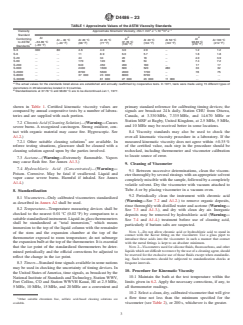
7.1 Viscosity Oil Standards, conforming to ASTM viscosity oil standards having the approximate kinematic viscosity shown in
Table 1. Certified kinematic viscosity values are compared by annual cooperative tests by a number of laboratories and are supplied
with each portion.
7.2 Chromic Acid (Cleaning Solution)—(Warning—Causes severe burns. A recognized carcinogen. Strong oxidizer, contact with
organic material may cause fire. Hygroscopic. See A1.2.)
D4486 − 23
TABLE 1 Approximate Values of the ASTM Viscosity Standards
2 –1 –6 2 –1
Viscosity Approximate Kinematic Viscosity, cSt=1 mm ·s =10 m ·s
Standard
B B
At
Conforming At At
At − 40 °C At 20 °C At 25 °C At 40 °C At 50 °C At 100 °C
−53.89 °C 37.78 °C 98.89 °C
to ASTM
(−40 °F) (68 °F) (77 °F) (104 °F) (122 °F) (212 °F)
A (100 °F) (210 °F)
(−65 °F)
Standards
S-3 300 80 4.6 4.0 3.0 2.9 . 1.2 1.2
S-6 . . 11 8.9 6.0 5.7 . 1.8 1.8
S-20 . . 44 34 20 18 . 4.0 3.9
S-60 . . 170 120 60 54 . 7.4 7.2
S-200 . . 640 450 200 180 . 17 17
S-600 . . 2400 1600 600 520 280 33 32
S-2000 . . 8700 5600 2000 1700 . 78 75
S-8000 . . 37 000 23 000 8000 6700 . . .
S-30000 . . . 81 000 27 000 23 000 11 000 . .
A
The actual values for the standards listed above are established and annually reaffirmed by cooperative tests. In 1971, tests were made using 15 different types of
viscometers in 26 laboratories located in 9 countries.
B
Standardizations at 37.78 °C and 98.89 °C are to be discontinued Jan 1, 1977.
7.2.1 Other suitable cleaning solutions are available. In referee testing situations, glassware shall be cleaned with a cleaning
solution agreed upon by the parties involved.
7.3 Acetone—(Warning—Extremely flammable. Vapors may cause flash fire. See Annex A1.3.)
7.4 Hydrochloric Acid (Concentrated)—(Warning—Poison. Corrosive. May be fatal if swallowed. Liquid and vapor cause severe
burns. Harmful if inhaled. See Annex A1.4.)
8. Standardization
8.1 Viscometers—Only calibrated viscometers standardized as described in Annex A2 shall be used.
8.2 Temperature—Temperature measuring devices shall be checked to the nearest 0.01 °C (0.02 °F) by comparison to a suitable
standardized instrument. Liquid-in-glass thermometers shall be standardized at “total immersion,” which means immersion to the
top of the liquid column with the remainder of the stem and the expansion chamber at the top of the thermometer exposed to room
temperature; do not submerge the expansion bulb at the top of the thermometer. It is essential that the ice point of the standardized
thermometers be determined periodically and the official corrections be adjusted to reflect the change in the ice point.
8.3 Timers—Standard time signals available in some nations may be used in checking the uncertainty of timing devices. In the
United States of America, time signals, as broadcast by the National Institute of Standards and Technology, Station WWV, Fort
Collins, CO and Station WWVH Kauai, HI at 2.5 MHz, 5 MHz, 10 MHz, 15 MHz, and 20 MHz are a convenient and primary
standard reference for calibrating timing devices; the signals are broadcast 24 h daily. Station CHU from Ottawa, Canada, at
3.330 MHz, 7.335 MHz, and 14.670 MHz or Station MSF at Rugby, United Kingdom, at 2.5 MHz, 5 MHz, and 10 MHz may be
received better in some locations.
8.4 Viscosity standards may also be used to check the over-all kinematic viscosity procedure in a laboratory. If the measured
kinematic viscosity does not agree within 60.35 % of the certifie
...