

ASTM A181/A181M-23
(Specification)Standard Specification for Carbon Steel Forgings, for General-Purpose Piping
General Information
- Abstract
ABSTRACT
This specification covers the carbon steel forgings used for general-purpose piping. Two classes of material are covered, Classes 60 and 70, and classified according to their mechanical properties. Except for flanges of all types, up to and including NPS 4 may be machined from hot-rolled or forged bar. Elbows, return bends, tees, and header tees shall not be machined directly from bar stock. Forgings shall be protected against sudden or too rapid cooling from the rolling or forging while passing through critical range. Heat treatment is neither required nor prohibited, but when applied, it shall consist of tempering, annealing, normalizing, or normalizing and tempering. Heat analysis shall be made to determine the percentage of the following elements: carbon, manganese, phosphorus, silicon, and sulfur. The mechanical properties of the material shall conform to the required tensile properties: tensile strength, yield strength, elongation, and reduction of area.
SCOPE
1.1 This specification2 covers nonstandard as-forged fittings, valve components, and parts for general service. Forgings made to this specification are limited to a maximum weight of 10 000 lb [4540 kg]. Larger forgings may be ordered to Specification A266/A266M.
1.2 Two classes of material are covered, designated as Classes 60 and 70, respectively, and are classified in accordance with their mechanical properties as specified in 6.1.
1.3 This specification is expressed in both inch-pound units and SI units. However, unless the order specifies the applicable “M” specification designation (SI units), the material shall be furnished to inch-pound units.
1.4 The values stated in either inch-pound units or SI units are to be regarded separately as standard. Within the text, the SI units are shown in brackets. The values stated in each system are not exact equivalents; therefore, each system must be used independently of the other. Combining values from the two systems may result in nonconformance with the specification.
1.5 This international standard was developed in accordance with internationally recognized principles on standardization established in the Decision on Principles for the Development of International Standards, Guides and Recommendations issued by the World Trade Organization Technical Barriers to Trade (TBT) Committee.
- Status
- Published
- Publication Date
- 30-Apr-2023
- Technical Committee
- A01 - Steel, Stainless Steel and Related Alloys
Buy Documents
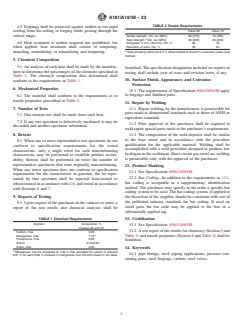


ASTM A181/A181M-23 - Standard Specification for Carbon Steel Forgings, for General-Purpose Piping
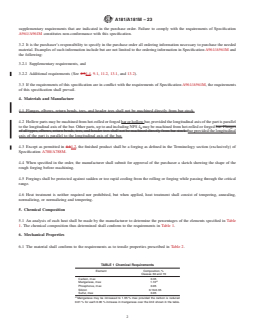
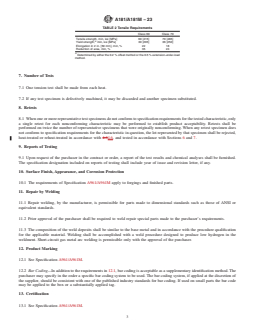
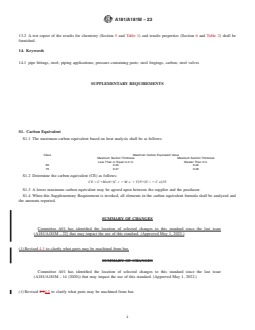
REDLINE ASTM A181/A181M-23 - Standard Specification for Carbon Steel Forgings, for General-Purpose Piping
Overview
ASTM A181/A181M-23 is the internationally recognized standard specification for carbon steel forgings intended for general-purpose piping applications. Issued by ASTM International, this standard outlines the requirements for nonstandard as-forged fittings, valve components, and parts, limited to a maximum forging weight of 10,000 lb (4540 kg). Providing guidelines for two classes of material (Class 60 and Class 70, classified by their mechanical properties), ASTM A181/A181M plays a critical role in ensuring material reliability, mechanical strength, and quality for piping systems used across a wide range of industries.
This standard provides comprehensive guidelines on manufacturing processes, mechanical properties, chemical composition, testing, and certification of carbon steel forgings. The scope covers fittings and components such as flanges, elbows, tees, and header tees, but restricts certain parts from being machined directly from bar stock. It details acceptable manufacturing and testing practices to ensure product performance and safety in piping systems.
Key Topics
Material Classes and Properties
- Covers two material classes: Class 60 and Class 70
- Requirements based on specific mechanical properties, including tensile strength and yield strength
Chemistry and Heat Analysis
- Specifies maximum allowable percentages for carbon, manganese, phosphorus, silicon, and sulfur
- Requires detailed chemical analysis for each heat
Manufacturing Requirements
- Covers acceptable forging practices and machining restrictions
- Prohibits machining certain fittings directly from bar stock, ensuring proper grain orientation and integrity
Heat Treatment and Cooling
- Heat treatment is optional; if applied must be tempering, annealing, normalizing, or normalizing and tempering
- Protection guidelines against rapid or uneven cooling through critical temperature ranges
Mechanical Testing
- Outlines mandatory tensile tests for each heat
- Specifies minimum requirements for tensile strength, yield strength, elongation, and reduction of area
- Provides procedures for retesting and acceptance criteria
Inspection and Certification
- Requirements for reporting chemical and mechanical test results
- Mandatory certification and product marking, allowing bar coding as supplementary identification
Applications
ASTM A181/A181M-23 is widely used in industries such as oil and gas, power generation, chemical processing, and water treatment, where robust and reliable piping systems are essential. Specific applications include:
- General service piping systems requiring high mechanical strength and durability
- Valve bodies and pressure-containing parts where safety and quality are critical
- Custom piping components in nonstandard sizes or configurations
By adhering to ASTM A181/A181M, manufacturers, specifiers, and end users can ensure that carbon steel forgings for piping applications meet internationally accepted quality and performance criteria. This standard supports regulatory compliance, operational safety, and consistent material traceability across global projects.
Related Standards
- ASTM A266/A266M - Specification for carbon steel forgings for pressure vessel components; used for forgings over 10,000 lb
- ASTM A788/A788M - Defines general requirements for steel forgings
- ASTM A961/A961M - Specifies common requirements for steel flanges, forged fittings, valves, and parts for piping applications
- ASME SA-181 - Parallel specification adopted for applications under the ASME Boiler and Pressure Vessel Code
Keywords: ASTM A181, carbon steel forgings, general-purpose piping, piping fittings, steel valves, pressure containing parts, mechanical properties, chemical composition, industry standards.
Relations
- Effective Date
- 01-Nov-2019
- Effective Date
- 01-May-2019
- Effective Date
- 01-Nov-2018
- Effective Date
- 01-Sep-2018
- Effective Date
- 01-Mar-2018
- Effective Date
- 01-Nov-2017
- Effective Date
- 01-May-2017
- Effective Date
- 01-Dec-2016
- Effective Date
- 01-Jun-2016
- Effective Date
- 01-Nov-2015
- Effective Date
- 01-May-2015
- Effective Date
- 01-Nov-2014
- Effective Date
- 01-Oct-2014
- Effective Date
- 15-May-2014
- Refers
ASTM A266/A266M-13 - Standard Specification for Carbon Steel Forgings for Pressure Vessel Components - Effective Date
- 01-Nov-2013
Buy Documents
ASTM A181/A181M-23 - Standard Specification for Carbon Steel Forgings, for General-Purpose Piping
REDLINE ASTM A181/A181M-23 - Standard Specification for Carbon Steel Forgings, for General-Purpose Piping
Get Certified
Connect with accredited certification bodies for this standard

Element Materials Technology
Materials testing and product certification.

Inštitut za kovinske materiale in tehnologije
Institute of Metals and Technology. Materials testing, metallurgical analysis, NDT.
Sponsored listings
Frequently Asked Questions
ASTM A181/A181M-23 is a technical specification published by ASTM International. Its full title is "Standard Specification for Carbon Steel Forgings, for General-Purpose Piping". This standard covers: ABSTRACT This specification covers the carbon steel forgings used for general-purpose piping. Two classes of material are covered, Classes 60 and 70, and classified according to their mechanical properties. Except for flanges of all types, up to and including NPS 4 may be machined from hot-rolled or forged bar. Elbows, return bends, tees, and header tees shall not be machined directly from bar stock. Forgings shall be protected against sudden or too rapid cooling from the rolling or forging while passing through critical range. Heat treatment is neither required nor prohibited, but when applied, it shall consist of tempering, annealing, normalizing, or normalizing and tempering. Heat analysis shall be made to determine the percentage of the following elements: carbon, manganese, phosphorus, silicon, and sulfur. The mechanical properties of the material shall conform to the required tensile properties: tensile strength, yield strength, elongation, and reduction of area. SCOPE 1.1 This specification2 covers nonstandard as-forged fittings, valve components, and parts for general service. Forgings made to this specification are limited to a maximum weight of 10 000 lb [4540 kg]. Larger forgings may be ordered to Specification A266/A266M. 1.2 Two classes of material are covered, designated as Classes 60 and 70, respectively, and are classified in accordance with their mechanical properties as specified in 6.1. 1.3 This specification is expressed in both inch-pound units and SI units. However, unless the order specifies the applicable “M” specification designation (SI units), the material shall be furnished to inch-pound units. 1.4 The values stated in either inch-pound units or SI units are to be regarded separately as standard. Within the text, the SI units are shown in brackets. The values stated in each system are not exact equivalents; therefore, each system must be used independently of the other. Combining values from the two systems may result in nonconformance with the specification. 1.5 This international standard was developed in accordance with internationally recognized principles on standardization established in the Decision on Principles for the Development of International Standards, Guides and Recommendations issued by the World Trade Organization Technical Barriers to Trade (TBT) Committee.
ABSTRACT This specification covers the carbon steel forgings used for general-purpose piping. Two classes of material are covered, Classes 60 and 70, and classified according to their mechanical properties. Except for flanges of all types, up to and including NPS 4 may be machined from hot-rolled or forged bar. Elbows, return bends, tees, and header tees shall not be machined directly from bar stock. Forgings shall be protected against sudden or too rapid cooling from the rolling or forging while passing through critical range. Heat treatment is neither required nor prohibited, but when applied, it shall consist of tempering, annealing, normalizing, or normalizing and tempering. Heat analysis shall be made to determine the percentage of the following elements: carbon, manganese, phosphorus, silicon, and sulfur. The mechanical properties of the material shall conform to the required tensile properties: tensile strength, yield strength, elongation, and reduction of area. SCOPE 1.1 This specification2 covers nonstandard as-forged fittings, valve components, and parts for general service. Forgings made to this specification are limited to a maximum weight of 10 000 lb [4540 kg]. Larger forgings may be ordered to Specification A266/A266M. 1.2 Two classes of material are covered, designated as Classes 60 and 70, respectively, and are classified in accordance with their mechanical properties as specified in 6.1. 1.3 This specification is expressed in both inch-pound units and SI units. However, unless the order specifies the applicable “M” specification designation (SI units), the material shall be furnished to inch-pound units. 1.4 The values stated in either inch-pound units or SI units are to be regarded separately as standard. Within the text, the SI units are shown in brackets. The values stated in each system are not exact equivalents; therefore, each system must be used independently of the other. Combining values from the two systems may result in nonconformance with the specification. 1.5 This international standard was developed in accordance with internationally recognized principles on standardization established in the Decision on Principles for the Development of International Standards, Guides and Recommendations issued by the World Trade Organization Technical Barriers to Trade (TBT) Committee.
ASTM A181/A181M-23 is classified under the following ICS (International Classification for Standards) categories: 77.140.85 - Iron and steel forgings. The ICS classification helps identify the subject area and facilitates finding related standards.
ASTM A181/A181M-23 has the following relationships with other standards: It is inter standard links to ASTM A961/A961M-19a, ASTM A788/A788M-19, ASTM A788/A788M-18b, ASTM A788/A788M-18a, ASTM A788/A788M-18, ASTM A788/A788M-17a, ASTM A788/A788M-17, ASTM A788/A788M-16a, ASTM A961/A961M-16, ASTM A961/A961M-15, ASTM A788/A788M-15, ASTM A961/A961M-14, ASTM A788/A788M-14a, ASTM A788/A788M-14, ASTM A266/A266M-13. Understanding these relationships helps ensure you are using the most current and applicable version of the standard.
ASTM A181/A181M-23 is available in PDF format for immediate download after purchase. The document can be added to your cart and obtained through the secure checkout process. Digital delivery ensures instant access to the complete standard document.
Standards Content (Sample)
This international standard was developed in accordance with internationally recognized principles on standardization established in the Decision on Principles for the
Development of International Standards, Guides and Recommendations issued by the World Trade Organization Technical Barriers to Trade (TBT) Committee.
Designation: A181/A181M − 23
Standard Specification for
Carbon Steel Forgings, for General-Purpose Piping
This standard is issued under the fixed designation A181/A181M; the number immediately following the designation indicates the year
of original adoption or, in the case of revision, the year of last revision. A number in parentheses indicates the year of last reapproval.
A superscript epsilon (´) indicates an editorial change since the last revision or reapproval.
This standard has been approved for use by agencies of the U.S. Department of Defense.
1. Scope* A266/A266M Specification for Carbon Steel Forgings for
2 Pressure Vessel Components
1.1 This specification covers nonstandard as-forged
A788/A788M Specification for Steel Forgings, General Re-
fittings, valve components, and parts for general service.
quirements
Forgings made to this specification are limited to a maximum
A961/A961M Specification for Common Requirements for
weight of 10 000 lb [4540 kg]. Larger forgings may be ordered
Steel Flanges, Forged Fittings, Valves, and Parts for
to Specification A266/A266M.
Piping Applications
1.2 Two classes of material are covered, designated as
3. General Requirements and Ordering Information
Classes 60 and 70, respectively, and are classified in accor-
dance with their mechanical properties as specified in 6.1.
3.1 Product furnished to this specification shall conform to
the requirements of Specification A961/A961M, including any
1.3 This specification is expressed in both inch-pound units
supplementary requirements that are indicated in the purchase
and SI units. However, unless the order specifies the applicable
order. Failure to comply with the requirements of Specification
“M” specification designation (SI units), the material shall be
A961/A961M constitutes non-conformance with this specifi-
furnished to inch-pound units.
cation.
1.4 The values stated in either inch-pound units or SI units
3.2 It is the purchaser’s responsibility to specify in the
are to be regarded separately as standard. Within the text, the
purchase order all ordering information necessary to purchase
SI units are shown in brackets. The values stated in each
the needed material. Examples of such information include but
system are not exact equivalents; therefore, each system must
are not limited to the ordering information in Specification
be used independently of the other. Combining values from the
A961/A961M and the following:
two systems may result in nonconformance with the specifi-
3.2.1 Supplementary requirements, and
cation.
3.2.2 Additional requirements (See 4.4, 9.1, 11.2, 13.1, and
1.5 This international standard was developed in accor-
13.2).
dance with internationally recognized principles on standard-
3.3 If the requirements of this specification are in conflict
ization established in the Decision on Principles for the
with the requirements of Specification A961/A961M, the
Development of International Standards, Guides and Recom-
requirements of this specification shall prevail.
mendations issued by the World Trade Organization Technical
Barriers to Trade (TBT) Committee.
4. Materials and Manufacture
4.1 Flanges, elbows, return bends, tees, and header tees
2. Referenced Documents
shall not be machined directly from bar stock.
2.1 ASTM Standards:
4.2 Hollow parts may be machined from hot-rolled or
forged bar or hollow bar, provided the longitudinal axis of the
part is parallel to the longitudinal axis of the bar. Other parts,
This specification is under the jurisdiction of ASTM Committee A01 on Steel,
Stainless Steel and Related Alloys and is the direct responsibility of Subcommittee
up to and including NPS 4, may be machined from hot-rolled
A01.22 on Steel Forgings and Wrought Fittings for Piping Applications and Bolting
or forged bar provided the longitudinal axis of the part is
Materials for Piping and Special Purpose Applications.
parallel to the longitudinal axis of the bar.
Current edition approved May 1, 2023. Published May 2023. Originally
approved in 1935. Last previous edition approved in 2022 as A181/A181M – 22.
4.3 Except as permitted in 4.2, the finished product shall be
DOI: 10.1520/A0181_A0181M-23.
a forging as defined in the Terminology section (exclusively) of
For ASME Boiler and Pressure Vessel Code applications see related Specifi-
Specification A788/A788M.
cation SA-181 in Section II of that Code.
For referenced ASTM standards, visit the ASTM website, www.astm.org, or
4.4 When specified in the order, the manufacturer shall
contact ASTM Customer Service at service@astm.org. For Annual Book of ASTM
submit for approval of the purchaser a sketch showing the
Standards volume information, refer to the standard’s Document Summary page on
the ASTM website. shape of the rough forging before machining.
*A Summary of Changes section appears at the end of this standard
Copyright © ASTM International, 100 Barr Harbor Drive, PO Box C700, West Conshohocken, PA 19428-2959. United States
A181/A181M − 23
TABLE 2 Tensile Requirements
4.5 Forgings shall be protected against sudden or too rapid
cooling from the rolling or forging while passing through the Class 60 Class 70
critical range. Tensile strength, min, ksi [MPa] 60 [415] 70 [485]
A
Yield strength, min, ksi [MPa] 30 [205] 36 [250]
4.6 Heat treatment is neither required nor prohibited, but
Elongation in 2 in. [50 mm], min, % 22 18
Reduction of area, min, % 35 24
when applied, heat treatment shall consist of tempering,
A
annealing, normalizing, or normalizing and tempering. Determined by either the 0.2 % offset method or the 0.5 % extension-under-load
method.
5. Chemical Composition
5.1 An analysis of each heat shall be made by the manufac-
furnished. The sp
...
This document is not an ASTM standard and is intended only to provide the user of an ASTM standard an indication of what changes have been made to the previous version. Because
it may not be technically possible to adequately depict all changes accurately, ASTM recommends that users consult prior editions as appropriate. In all cases only the current version
of the standard as published by ASTM is to be considered the official document.
Designation: A181/A181M − 22 A181/A181M − 23
Standard Specification for
Carbon Steel Forgings, for General-Purpose Piping
This standard is issued under the fixed designation A181/A181M; the number immediately following the designation indicates the year
of original adoption or, in the case of revision, the year of last revision. A number in parentheses indicates the year of last reapproval.
A superscript epsilon (´) indicates an editorial change since the last revision or reapproval.
This standard has been approved for use by agencies of the U.S. Department of Defense.
1. Scope*
1.1 This specification covers nonstandard as-forged fittings, valve components, and parts for general service. Forgings made to
this specification are limited to a maximum weight of 10 000 lb [4540 kg]. Larger forgings may be ordered to Specification
A266/A266M.
1.2 Two classes of material are covered, designated as Classes 60 and 70, respectively, and are classified in accordance with their
mechanical properties as specified in 6.1.
1.3 This specification is expressed in both inch-pound units and SI units. However, unless the order specifies the applicable “M”
specification designation (SI units), the material shall be furnished to inch-pound units.
1.4 The values stated in either inch-pound units or SI units are to be regarded separately as standard. Within the text, the SI units
are shown in brackets. The values stated in each system are not exact equivalents; therefore, each system must be used
independently of the other. Combining values from the two systems may result in nonconformance with the specification.
1.5 This international standard was developed in accordance with internationally recognized principles on standardization
established in the Decision on Principles for the Development of International Standards, Guides and Recommendations issued
by the World Trade Organization Technical Barriers to Trade (TBT) Committee.
2. Referenced Documents
2.1 ASTM Standards:
A266/A266M Specification for Carbon Steel Forgings for Pressure Vessel Components
A788/A788M Specification for Steel Forgings, General Requirements
A961/A961M Specification for Common Requirements for Steel Flanges, Forged Fittings, Valves, and Parts for Piping
Applications
3. General Requirements and Ordering Information
3.1 Product furnished to this specification shall conform to the requirements of Specification A961/A961M, including any
This specification is under the jurisdiction of ASTM Committee A01 on Steel, Stainless Steel and Related Alloys and is the direct responsibility of Subcommittee A01.22
on Steel Forgings and Wrought Fittings for Piping Applications and Bolting Materials for Piping and Special Purpose Applications.
Current edition approved May 1, 2022May 1, 2023. Published May 2022May 2023. Originally approved in 1935. Last previous edition approved in 20202022 as
A181/A181M – 14 (2020).A181/A181M – 22. DOI: 10.1520/A0181_A0181M-22.10.1520/A0181_A0181M-23.
For ASME Boiler and Pressure Vessel Code applications see related Specification SA-181 in Section II of that Code.
For referenced ASTM standards, visit the ASTM website, www.astm.org, or contact ASTM Customer Service at service@astm.org. For Annual Book of ASTM Standards
volume information, refer to the standard’s Document Summary page on the ASTM website.
*A Summary of Changes section appears at the end of this standard
Copyright © ASTM International, 100 Barr Harbor Drive, PO Box C700, West Conshohocken, PA 19428-2959. United States
A181/A181M − 23
supplementary requirements that are indicated in the purchase order. Failure to comply with the requirements of Specification
A961/A961M constitutes non-conformance with this specification.
3.2 It is the purchaser’s responsibility to specify in the purchase order all ordering information necessary to purchase the needed
material. Examples of such information include but are not limited to the ordering information in Specification A961/A961M and
the following:
3.2.1 Supplementary requirements, and
3.2.2 Additional requirements (See 4.34.4, 9.1, 11.2, 13.1, and 13.2).
3.3 If the requirements of this specification are in conflict with the requirements of Specification A961/A961M, the requirements
of this specification shall prevail.
4. Materials and Manufacture
4.1 Flanges, elbows, return bends, tees, and header tees shall not be machined directly from bar stock.
4.2 Hollow parts may be machined from hot-rolled or forged bar or hollow bar, provided the longitudinal axis of the part is parallel
to the longitudinal axis of the bar. Other parts, up to and including NPS 4, may be machined from hot-rolled or forged bar. Flanges
of all types, elbows, return bends, tees, and header tees shall not be machined directly from bar stock. bar provided the longitudinal
axis of the part is parallel to the longitudinal axis of the bar.
4.3 Except as permitted in 4.14.2, the finished product shall be a forging as defined in the Terminology section (exclusively) of
Specification A788/A788M.
4.4 When specified in the order, the manufacturer shall submit for approval of the purchaser a sketch showing the shape of the
rough forging before machining.
4.5 Forgings shall be protected against sudden or too rapid cooling from the rolling or forging while passing through the critical
range.
4.6 Heat treatment is neither required nor prohibited, but when applied, heat treatment shall consist of tempering, annealing,
normalizing, or normalizing and tempering.
5. Chemical Composition
5.1 An analysis of each heat shall be made by the manufacturer to determine the percentages of the elements specified in Table
1. The chemical composition thus determined shall conform to the requirements in Table 1.
6. Mechanical Properties
6.1 The material shall conform to the requirements as to tensile propert
...