

ASTM C832-21
(Test Method)Standard Test Method for Measuring Thermal Expansion and Creep of Refractories Under Load
General Information
- Abstract
SIGNIFICANCE AND USE
5.1 The thermal expansion under load and the 20 to 50 h creep properties of a refractory are useful in characterizing the load-bearing capacity of a refractory that is uniformly heated. Directly applicable examples are blast furnace stoves and glass furnace checkers.
SCOPE
1.1 This test method covers the procedure for measuring the linear change of refractory specimens that are subjected to compressive stress while being heated and while being held at elevated temperatures.
1.2 This test method does not apply to materials whose strength depends on pitch or carbonaceous bonds unless appropriate atmospheric control is used (see 7.3).
1.3 The values stated in inch-pound units are to be regarded as standard. The values given in parentheses are mathematical conversions to SI units that are provided for information only and are not considered standard.
1.4 This standard does not purport to address all of the safety concerns, if any, associated with its use. It is the responsibility of the user of this standard to establish appropriate safety, health, and environmental practices and determine the applicability of regulatory limitations prior to use.
1.5 This international standard was developed in accordance with internationally recognized principles on standardization established in the Decision on Principles for the Development of International Standards, Guides and Recommendations issued by the World Trade Organization Technical Barriers to Trade (TBT) Committee.
- Status
- Published
- Publication Date
- 31-Jul-2021
- Technical Committee
- C08 - Refractories
- Drafting Committee
- C08.01 - Strength
Buy Documents
ASTM C832-21 - Standard Test Method for Measuring Thermal Expansion and Creep of Refractories Under Load
REDLINE ASTM C832-21 - Standard Test Method for Measuring Thermal Expansion and Creep of Refractories Under Load
Overview
ASTM C832-21: Standard Test Method for Measuring Thermal Expansion and Creep of Refractories Under Load is a widely recognized standard published by ASTM International. This standard describes procedures for evaluating the linear dimensional changes and creep properties of refractory materials exposed to compressive stress while being heated. The method is particularly important for understanding how refractories behave under load at high temperatures, as commonly encountered in industrial furnace linings such as those used in blast furnace stoves and glass furnace checkers. The procedures in this standard are essential for determining the load-bearing capacity and deformation resistance of refractory products during prolonged exposure to elevated temperatures.
Key Topics
- Thermal Expansion Under Load: The test measures the linear change in length of refractory specimens heated under compression, characterizing their thermal dilation.
- Creep Testing: The standard evaluates the percent deformation of refractories subjected to constant compressive stress during prolonged high-temperature exposure (typically 20 to 50 hours).
- Maximum Dilation: Defines the point where the rate of thermal expansion equals the creep-deformation rate, critical for estimating expansion relief.
- Load-bearing Capacity: Results provide insights into a refractory’s ability to resist deformation under operational loads.
- Applicability: Not suitable for materials with pitch or carbonaceous bonds unless proper atmospheric controls are implemented.
- Testing Conditions: Emphasizes controlled heating, accurate specimen preparation, and calibration to ensure reproducible results.
- Safety and Environmental Practices: Users are responsible for ensuring appropriate safety, health, and environmental controls when applying this standard.
Applications
ASTM C832-21 is essential for industries that require refractory materials to perform reliably at high temperatures under mechanical load. Applications include:
- Industrial Furnaces: Assists in selecting suitable refractory linings for blast furnace stoves, regenerators, incinerators, and glass furnace checkers.
- Material Selection and Quality Control: Allows engineers and manufacturers to compare the load-bearing and thermal expansion properties of different refractory compositions for optimal performance and durability.
- Research and Development: Useful for studying new refractory formulations or technologies aimed at enhancing resistance to thermal shock, expansion, and creep.
- Failure Analysis: Helps in diagnosing operational issues linked to refractory deformation or collapse in service, supporting root-cause analysis and improvements.
- Compliance and Specification: Provides a benchmark for meeting standardized requirements in contracts, procurement, and technical documentation.
Related Standards
For comprehensive assessment and quality assurance of refractory materials, consider these related ASTM standards:
- ASTM E691 - Practice for Conducting an Interlaboratory Study to Determine the Precision of a Test Method
- ASTM C113 - Test Method for Reheat Change of Refractory Materials
- ASTM C16 - Test Method for Thermal Conductivity of Refractories
- ASTM C133 - Test Methods for Cold Crushing Strength and Modulus of Rupture of Refractories
Employing ASTM C832-21 alongside related standards ensures thorough evaluation of refractory materials, supporting reliable performance in demanding thermal environments and contributing to the safety and efficiency of high-temperature industrial processes.
Keywords: ASTM C832-21, thermal expansion, creep, refractories, compressive stress, high temperature testing, industrial furnace materials, load-bearing capacity, refractory testing standards.
Relations
- Effective Date
- 01-May-2013
- Effective Date
- 01-Nov-2011
- Effective Date
- 01-Oct-2008
- Effective Date
- 01-Nov-2005
- Effective Date
- 10-May-1999
Buy Documents
ASTM C832-21 - Standard Test Method for Measuring Thermal Expansion and Creep of Refractories Under Load
REDLINE ASTM C832-21 - Standard Test Method for Measuring Thermal Expansion and Creep of Refractories Under Load
Frequently Asked Questions
ASTM C832-21 is a standard published by ASTM International. Its full title is "Standard Test Method for Measuring Thermal Expansion and Creep of Refractories Under Load". This standard covers: SIGNIFICANCE AND USE 5.1 The thermal expansion under load and the 20 to 50 h creep properties of a refractory are useful in characterizing the load-bearing capacity of a refractory that is uniformly heated. Directly applicable examples are blast furnace stoves and glass furnace checkers. SCOPE 1.1 This test method covers the procedure for measuring the linear change of refractory specimens that are subjected to compressive stress while being heated and while being held at elevated temperatures. 1.2 This test method does not apply to materials whose strength depends on pitch or carbonaceous bonds unless appropriate atmospheric control is used (see 7.3). 1.3 The values stated in inch-pound units are to be regarded as standard. The values given in parentheses are mathematical conversions to SI units that are provided for information only and are not considered standard. 1.4 This standard does not purport to address all of the safety concerns, if any, associated with its use. It is the responsibility of the user of this standard to establish appropriate safety, health, and environmental practices and determine the applicability of regulatory limitations prior to use. 1.5 This international standard was developed in accordance with internationally recognized principles on standardization established in the Decision on Principles for the Development of International Standards, Guides and Recommendations issued by the World Trade Organization Technical Barriers to Trade (TBT) Committee.
SIGNIFICANCE AND USE 5.1 The thermal expansion under load and the 20 to 50 h creep properties of a refractory are useful in characterizing the load-bearing capacity of a refractory that is uniformly heated. Directly applicable examples are blast furnace stoves and glass furnace checkers. SCOPE 1.1 This test method covers the procedure for measuring the linear change of refractory specimens that are subjected to compressive stress while being heated and while being held at elevated temperatures. 1.2 This test method does not apply to materials whose strength depends on pitch or carbonaceous bonds unless appropriate atmospheric control is used (see 7.3). 1.3 The values stated in inch-pound units are to be regarded as standard. The values given in parentheses are mathematical conversions to SI units that are provided for information only and are not considered standard. 1.4 This standard does not purport to address all of the safety concerns, if any, associated with its use. It is the responsibility of the user of this standard to establish appropriate safety, health, and environmental practices and determine the applicability of regulatory limitations prior to use. 1.5 This international standard was developed in accordance with internationally recognized principles on standardization established in the Decision on Principles for the Development of International Standards, Guides and Recommendations issued by the World Trade Organization Technical Barriers to Trade (TBT) Committee.
ASTM C832-21 is classified under the following ICS (International Classification for Standards) categories: 81.080 - Refractories. The ICS classification helps identify the subject area and facilitates finding related standards.
ASTM C832-21 has the following relationships with other standards: It is inter standard links to ASTM E691-13, ASTM E691-11, ASTM E691-08, ASTM E691-05, ASTM E691-99. Understanding these relationships helps ensure you are using the most current and applicable version of the standard.
ASTM C832-21 is available in PDF format for immediate download after purchase. The document can be added to your cart and obtained through the secure checkout process. Digital delivery ensures instant access to the complete standard document.
Standards Content (Sample)
This international standard was developed in accordance with internationally recognized principles on standardization established in the Decision on Principles for the
Development of International Standards, Guides and Recommendations issued by the World Trade Organization Technical Barriers to Trade (TBT) Committee.
Designation: C832 − 21
Standard Test Method for
Measuring Thermal Expansion and Creep of Refractories
Under Load
This standard is issued under the fixed designation C832; the number immediately following the designation indicates the year of
original adoption or, in the case of revision, the year of last revision. A number in parentheses indicates the year of last reapproval. A
superscript epsilon (´) indicates an editorial change since the last revision or reapproval.
1. Scope can be used in estimating thermal-expansion relief when used
in conjunction with the temperature at maximum dilation.
1.1 This test method covers the procedure for measuring the
3.1.2 temperature at maximum dilation—in addition to es-
linear change of refractory specimens that are subjected to
timating thermal-expansion relief, it can be used to rank
compressive stress while being heated and while being held at
products in terms of relative refractoriness. In general, the
elevated temperatures.
higher the temperature at maximum dilation, the more refrac-
1.2 This test method does not apply to materials whose
tory the product and the better it is able to resist deformation at
strength depends on pitch or carbonaceous bonds unless
elevated temperatures.
appropriate atmospheric control is used (see 7.3).
3.1.3 20 to 50 h creep—thepercentdeformationbetweenthe
1.3 The values stated in inch-pound units are to be regarded
20 and 50 h can be used to rank products in terms of relative
as standard. The values given in parentheses are mathematical
load-bearing capacity at a particular temperature. Relative
conversions to SI units that are provided for information only
rankings of various products may differ at different tempera-
and are not considered standard.
tures.
1.4 This standard does not purport to address all of the
safety concerns, if any, associated with its use. It is the
4. Summary of Test Method
responsibility of the user of this standard to establish appro-
4.1 Test specimens sawed from samples of refractory brick
priate safety, health, and environmental practices and deter-
or from prefabricated samples of monolithic refractories are
mine the applicability of regulatory limitations prior to use.
placed in a furnace and subjected to a prescribed compressive
1.5 This international standard was developed in accor-
stress. Sensors are positioned for continuously measuring the
dance with internationally recognized principles on standard-
linear change of the specimens parallel to the direction of the
ization established in the Decision on Principles for the
compressive stress. The temperature and linear change of the
Development of International Standards, Guides and Recom-
specimens are continuously recorded while heating the furnace
mendations issued by the World Trade Organization Technical
at a controlled rate for thermal expansion under load testing.
Barriers to Trade (TBT) Committee.
The time and linear change of the specimens are also continu-
ously recorded while at soak temperature for 20 to 50 h of
2. Referenced Documents
creep testing.
2.1 ASTM Standards:
4.2 The user should be aware that other mechanisms,
E691 Practice for Conducting an Interlaboratory Study to
besides those related to creep, may be activated. This is
Determine the Precision of a Test Method
especially true as temperatures approach 3002 °F (1650 °C).
3. Terminology
Whenothermaterialresponsesareactivated,suchascorrosion,
oxidation, sintering, etc., strong caution should be exercised
3.1 Definitions of Terms Specific to This Standard:
when interpreting and identifying creep mechanisms.
3.1.1 maximum dilation—the percent expansion where the
thermal-expansion rate equals the creep-deformation rate. It
4.3 Since materials tend to exhibit faster creep rates during
the initial stage of deformation, the user should be cautioned
when extrapolating measured creep rates beyond the normal
This test method is under the jurisdiction of ASTM Committee C08 on
Refractories and is the direct responsibility of Subcommittee C08.01 on Strength.
50 h test time. The material must be in the secondary creep
Current edition approved Aug. 1, 2021. Published August 2021. Originally
stage in order to extrapolate to longer times.
approved in 1976. Last previous edition approved in 2021 as C832 – 00 (2021).
DOI: 10.1520/C0832-21.
For referenced ASTM standards, visit the ASTM website, www.astm.org, or 5. Significance and Use
contact ASTM Customer Service at service@astm.org. For Annual Book of ASTM
5.1 The thermal expansion under load and the 20 to 50 h
Standards volume information, refer to the standard’s Document Summary page on
the ASTM website. creep properties of a refractory are useful in characterizing the
Copyright © ASTM International, 100 Barr Harbor Drive, PO Box C700, West Conshohocken, PA 19428-2959. United States
C832 − 21
load-bearing capacity of a refractory that is uniformly heated. 6.4 Temperature Variations—Creep strain is related to tem-
Directly applicable examples are blast furnace stoves and glass perature through an exponential function. Thus, fluctuations in
furnace checkers.
test temperature or changes in temperature profile along the
length of the specimen can cause fluctuations in strain mea-
6. Interferences
surements or changes in creep rate (see 7.1 and 7.2).
6.1 Chemical Interactions with Test Environment—The test
environment (vacuum, inert gas, ambient air, etc.), including
7. Apparatus
moisture content (percent relative humidity), may have a
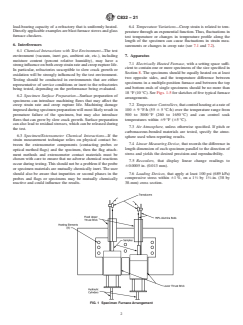
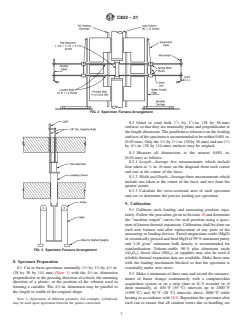
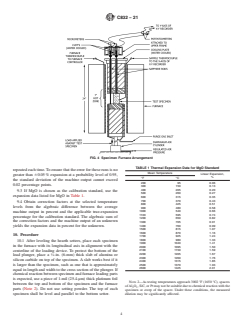
7.1 Electrically Heated Furnace, with a setting space suffi-
stronginfluenceonbothcreepstrainrateandcreeprupturelife.
cient to contain one or more specimens of the size specified in
In particular, refractories susceptible to slow crack growth or
Section 8. The specimens should be equally heated on at least
oxidation will be strongly influenced by the test environment.
two opposite sides, and the temperature difference between
Testing should be conducted in environments that are either
specimens in a multiple-position furnace and between the top
representative of service conditions or inert to the refractories
and bottom ends of single specimens should be no more than
being tested, depending on the performance being evaluated.
18 °F (10 °C). See Figs. 1-5 for sketches of five typical furnace
6.2 Specimen Surface Preparation—Surface preparation of
arrangements.
specimens can introduce machining flaws that may affect the
creep strain rate and creep rupture life. Machining damage 7.2 Temperature Controllers,thatcontrolheatingatarateof
imposed during specimen preparation will most likely result in 100 6 9 °F⁄h (55 6 5 °C⁄h) over the temperature range from
premature failure of the specimen, but may also introduce
500 to 3000 °F (260 to 1650 °C) and can control soak
flaws that can grow by slow crack growth. Surface preparation temperatures within 69°F(65 °C).
can also lead to residual stresses, which can be released during
7.3 Air Atmosphere, unless otherwise specified. If pitch or
the test.
carbonaceous-bonded materials are tested, specify the atmo-
6.3 Specimen/Extensometer Chemical Interactions—If the
sphere used when reporting results.
strain measurement technique relies on physical contact be-
7.4 Linear Measuring Device, that records the difference in
tween the extensometer components (contacting probes or
length dimension of each specimen parallel to the direction of
optical method flags) and the specimen, then the flag attach-
stress and yields the desired precision and reproducibility.
ment methods and extensometer contact materials must be
chosen with care to ensure that no adverse chemical reactions
7.5 Recorders, that display linear change readings to
occur during testing. This should not be a problem if the probe
60.0005 in. (0.013 mm).
or specimen materials are mutually chemically inert. The user
7.6 Loading Devices, that apply at least 100 psi (689 kPa)
should also be aware that impurities or second phases in the
1 1
probes and flags or specimens may be mutually chemically compressive stress within 61%,ona1 ⁄2 by 1 ⁄2-in. (38 by
reactive and could influence the results. 38-mm) cross section.
FIG. 1 Specimen Furnace Arrangement
C832 − 21
FIG. 2 Specimen Furnace Arrangement
1 1
8.2 Grind or sand both 1 ⁄2 by 1 ⁄2-in. (38 by 38-mm)
surfaces so that they are nominally plane and perpendicular to
the length dimension.The parallelness tolerance on the loading
surfacesofthespecimenisrecommendedtobewithin0.001in.
1 1 1
(0.03mm).Onlythe1 ⁄2by1 ⁄2-in.(38by38-mm)andone1 ⁄2
by 4 ⁄2-in. (38 by 114-mm) surfaces may be original.
8.3 Measure all dimensions to the nearest 0.001 in.
(0.03 mm) as follows:
8.3.1 Length—Average five measurements which include
four taken at ⁄4 in. (6 mm) on the diagonal from each corner
and one at the center of the faces.
8.3.2 WidthandDepth—Averagethreemeasurementswhich
include one taken at the center of the faces and two from the
quarter points.
8.3.3 Calculate the cross-sectional area of each specimen
and use to determine the precise loading per specimen.
9. Calibration
9.1 Calibrate each loading and measuring position sepa-
rately. Follow the procedure given in Section 10 and determine
the “machine output” curves for each position using a speci-
men of known thermal expansion. Calibration shall be done on
each new furnace and after replacement of any parts of the
measuring or loading devices. Fused magnesium oxide (MgO)
orisostaticallypressedandfiredMgOof99 %minimumpurity
and 3.18 g/cm minimum bulk density is recommended for
standardization. Volume-stable 90 % plus aluminum oxide
FIG. 3 Specimen Furnace Arrangement
(Al O ), fused silica (SiO ), or sapphire may also be used if
2 3 2
reliable thermal expansion data are available. Make these runs
8. Specimen Preparation
with the loading mechanism blocked so that the specimen is
1 1 1
essentially under zero stress.
8.1 Cut or form specimens nominally 1 ⁄2 by 1 ⁄2 by 4 ⁄2 in.
(38 by 38 by 114 mm) (Note 1) with the 4 ⁄2-in. dimension
9.2 Make a minimum of three runs and record the measure-
perpendicular to the pressing direction of a brick, the ramming
ments of linear change continuously with a computer/data
direct
...
This document is not an ASTM standard and is intended only to provide the user of an ASTM standard an indication of what changes have been made to the previous version. Because
it may not be technically possible to adequately depict all changes accurately, ASTM recommends that users consult prior editions as appropriate. In all cases only the current version
of the standard as published by ASTM is to be considered the official document.
Designation: C832 − 00 (Reapproved 2021) C832 − 21
Standard Test Method for
Measuring Thermal Expansion and Creep of Refractories
Under Load
This standard is issued under the fixed designation C832; the number immediately following the designation indicates the year of
original adoption or, in the case of revision, the year of last revision. A number in parentheses indicates the year of last reapproval. A
superscript epsilon (´) indicates an editorial change since the last revision or reapproval.
1. Scope
1.1 This test method covers the procedure for measuring the linear change of refractory specimens that are subjected to
compressive stress while being heated and while being held at elevated temperatures.
1.2 This test method does not apply to materials whose strength depends on pitch or carbonaceous bonds unless appropriate
atmospheric control is used (see 7.3).
1.3 The values stated in inch-pound units are to be regarded as standard. The values given in parentheses are mathematical
conversions to SI units that are provided for information only and are not considered standard.
1.4 This standard does not purport to address all of the safety concerns, if any, associated with its use. It is the responsibility
of the user of this standard to establish appropriate safety, health, and environmental practices and determine the applicability of
regulatory limitations prior to use.
1.5 This international standard was developed in accordance with internationally recognized principles on standardization
established in the Decision on Principles for the Development of International Standards, Guides and Recommendations issued
by the World Trade Organization Technical Barriers to Trade (TBT) Committee.
2. Referenced Documents
2.1 ASTM Standards:
E691 Practice for Conducting an Interlaboratory Study to Determine the Precision of a Test Method
3. Terminology
3.1 Definitions of Terms Specific to This Standard:
3.1.1 maximum dilation—the percent expansion where the thermal-expansion rate equals the creep-deformation rate. It can be used
in estimating thermal-expansion relief when used in conjunction with the temperature at maximum dilation.
3.1.2 temperature at maximum dilation—in addition to estimating thermal-expansion relief, it can be used to rank products in
terms of relative refractoriness. In general, the higher the temperature at maximum dilation, the more refractory the product and
the better it is able to resist deformation at elevated temperatures.
This test method is under the jurisdiction of ASTM Committee C08 on Refractories and is the direct responsibility of Subcommittee C08.01 on Strength.
Current edition approved Feb. 1, 2021Aug. 1, 2021. Published February 2021August 2021. Originally approved in 1976. Last previous edition approved in 20152021 as
C832 – 00 (2015).(2021). DOI: 10.1520/C0832-00R21.10.1520/C0832-21.
For referenced ASTM standards, visit the ASTM website, www.astm.org, or contact ASTM Customer Service at service@astm.org. For Annual Book of ASTM Standards
volume information, refer to the standard’s Document Summary page on the ASTM website.
Copyright © ASTM International, 100 Barr Harbor Drive, PO Box C700, West Conshohocken, PA 19428-2959. United States
C832 − 21
3.1.3 20 to 50 h creep—the percent deformation between the 20 and 50 h can be used to rank products in terms of relative
load-bearing capacity at a particular temperature. Relative rankings of various products may differ at different temperatures.
4. Summary of Test Method
4.1 Test specimens sawed from samples of refractory brick or from prefabricated samples of monolithic refractories are placed
in a furnace and subjected to a prescribed compressive stress. Sensors are positioned for continuously measuring the linear change
of the specimens parallel to the direction of the compressive stress. The temperature and linear change of the specimens are
continuously recorded while heating the furnace at a controlled rate for thermal expansion under load testing. The time and linear
change of the specimens are also continuously recorded while at soak temperature for 20 to 50 h of creep testing.
4.2 The user should be aware that other mechanisms, besides those related to creep, may be activated. This is especially true as
temperatures approach 1650 °C. 3002 °F (1650 °C). When other material responses are activated, such as corrosion, oxidation,
sintering, etc., strong caution should be exercised when interpreting and identifying creep mechanisms.
4.3 Since materials tend to exhibit faster creep rates during the initial stage of deformation, the user should be cautioned when
extrapolating measured creep rates beyond the normal 50 h test time. The material must be in the secondary creep stage in order
to extrapolate to longer times.
5. Significance and Use
5.1 The thermal expansion under load and the 20 to 50 h creep properties of a refractory are useful in characterizing the
load-bearing capacity of a refractory that is uniformly heated. Directly applicable examples are blast furnace stoves and glass
furnace checkers.
6. Interferences
6.1 Chemical Interactions with Test Environment—The test environment (vacuum, inert gas, ambient air, etc.), including moisture
content (percent relative humidity), may have a strong influence on both creep strain rate and creep rupture life. In particular,
refractories susceptible to slow crack growth or oxidation will be strongly influenced by the test environment. Testing should be
conducted in environments that are either representative of service conditions or inert to the refractories being tested, depending
on the performance being evaluated.
6.2 Specimen Surface Preparation—Surface preparation of specimens can introduce machining flaws that may affect the creep
strain rate and creep rupture life. Machining damage imposed during specimen preparation will most likely result in premature
failure of the specimen, but may also introduce flaws that can grow by slow crack growth. Surface preparation can also lead to
residual stresses, which can be released during the test.
6.3 Specimen/Extensometer Chemical Interactions—If the strain measurement technique relies on physical contact between the
extensometer components (contacting probes or optical method flags) and the specimen, then the flag attachment methods and
extensometer contact materials must be chosen with care to ensure that no adverse chemical reactions occur during testing. This
should not be a problem if the probe or specimen materials are mutually chemically inert. The user should also be aware that
impurities or second phases in the probes and flags or specimens may be mutually chemically reactive and could influence the
results.
6.4 Temperature Variations—Creep strain is related to temperature through an exponential function. Thus, fluctuations in test
temperature or changes in temperature profile along the length of the specimen can cause fluctuations in strain measurements or
changes in creep rate (see 7.1 and 7.2).
7. Apparatus
7.1 Electrically Heated Furnace, with a setting space sufficient to contain one or more specimens of the size specified in Section
8. The specimens should be equally heated on at least two opposite sides, and the temperature difference between specimens in
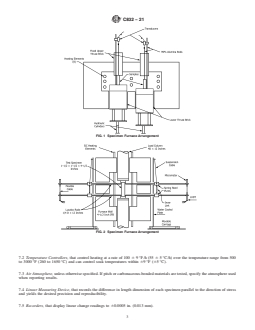
a multiple-position furnace and between the top and bottom ends of single specimens should be no more than 18 °F (10 °C). See
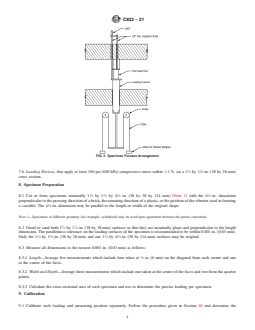
Figs. 1-5 for sketches of five typical furnace arrangements.
C832 − 21
FIG. 1 Specimen Furnace Arrangement
FIG. 2 Specimen Furnace Arrangement
7.2 Temperature Controllers, that control heating at a rate of 100 6 9 °F ⁄h (55 6 5 °C ⁄h) over the temperature range from 500
to 3000 °F (260 to 1650 °C) and can control soak temperatures within 69 °F (65 °C).
7.3 Air Atmosphere, unless otherwise specified. If pitch or carbonaceous-bonded materials are tested, specify the atmosphere used
when reporting results.
7.4 Linear Measuring Device, that records the difference in length dimension of each specimen parallel to the direction of stress
and yields the desired precision and reproducibility.
7.5 Recorders, that display linear change readings to 60.0005 in. (0.013 mm).
C832 − 21
FIG. 3 Specimen Furnace Arrangement
1 1
7.6 Loading Devices, that apply at least 100 psi (689 kPa) compressive stress within 61 %, on a 1 ⁄2 by 1 ⁄2-in. (38 by 38-mm)
cross section.
8. Specimen Preparation
1 1 1 1
8.1 Cut or form specimens nominally 1 ⁄2 by 1 ⁄2 by 4 ⁄2 in. (38 by 38 by 114 mm) (Note 1) with the 4 ⁄2-in. dimension
perpendicular to the pressing direction of a brick, the ramming direction of a plastic, or the position of the vibrator used in forming
a castable. The 4 ⁄2-in. dimension may be parallel to the length or width of the original shape.
NOTE 1—Specimens of different geometry (for example, cylindrical) may be used upon agreement between the parties concerned.
1 1
8.2 Grind or sand both 1 ⁄2 by 1 ⁄2-in. (38 by 38-mm) surfaces so that they are nominally plane and perpendicular to the length
dimension. The parallelness tolerance on the loading surfaces of the specimen is recommended to be within 0.001 in. (0.03 mm).
1 1 1 1
Only the 1 ⁄2 by 1 ⁄2-in. (38 by 38-mm) and one 1 ⁄2 by 4 ⁄2-in. (38 by 114-mm) surfaces may be original.
8.3 Measure all dimensions to the nearest 0.001 in. (0.03 mm) as follows:
8.3.1 Length—Average five measurements which include four taken at ⁄4 in. (6 mm) on the diagonal from each corner and one
at the center of the faces.
8.3.2 Width and Depth—Average three measurements which include one taken at the center of the faces and two from the quarter
points.
8.3.3 Calculate the cross-sectional area of each specimen and use to determine the precise loading per specimen.
9. Calibration
9.1 Calibrate each loading and measuring position separately. Follow the procedure given in Section 10 and determine the
C832 − 21
FIG. 4 Specimen Furnace Arrangement
“machine output” curves for each position using a specimen of known thermal expansion. Calibration shall be done on each new
furnace and after replacement of any parts of the measuring or loading devices. Fused magnesium oxide (MgO) or isostatically
pressed and fired MgO of 99 % minimum purity and 3.18
...