


ASTM E431-96(2022)
(Guide)Standard Guide to Interpretation of Radiographs of Semiconductors and Related Devices
Standard Guide to Interpretation of Radiographs of Semiconductors and Related Devices
SIGNIFICANCE AND USE
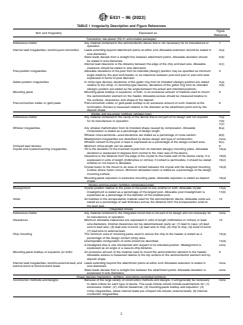
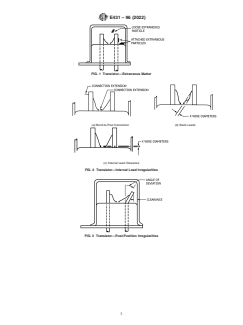
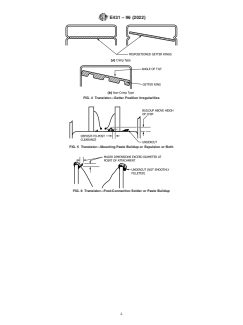
4.1 Illustrations provided in this guide are intended for use as references to aid in interpreting film or nonfilm images resulting from x-ray examinations (see Table 1) to ascertain quality of assembly and workmanship.
4.2 Required attributes of the design features or other construction details are not provided but are to be established as mutually agreed upon by manufacturers and users of these devices. Many devices share common assembly features; thus, these interpretations can be used for components not illustrated.
SCOPE
1.1 This guide provides illustrations of radiographs of semiconductors and related devices. Low powered transistors (through the TO-11 case configuration), diodes, low-power rectifiers, power devices, and integrated circuits are illustrated with common assembly features. Particular areas of construction are featured for these devices detailing critical points of design or assembly.
1.2 This standard does not purport to address all of the safety concerns, if any, associated with its use. It is the responsibility of the user of this standard to establish appropriate safety, health, and environmental practices and determine the applicability of regulatory limitations prior to use.
1.3 This international standard was developed in accordance with internationally recognized principles on standardization established in the Decision on Principles for the Development of International Standards, Guides and Recommendations issued by the World Trade Organization Technical Barriers to Trade (TBT) Committee.
General Information
- Status
- Published
- Publication Date
- 30-Sep-2022
- Technical Committee
- E07 - Nondestructive Testing
- Drafting Committee
- E07.02 - Reference Radiological Images
Relations
- Effective Date
- 01-Feb-2024
- Effective Date
- 01-Dec-2023
- Effective Date
- 01-Dec-2019
- Effective Date
- 01-Mar-2019
- Effective Date
- 01-Jan-2018
- Effective Date
- 15-Jun-2017
- Effective Date
- 01-Feb-2017
- Effective Date
- 01-Aug-2016
- Effective Date
- 01-Feb-2016
- Effective Date
- 01-Dec-2015
- Effective Date
- 01-Sep-2015
- Effective Date
- 01-Jun-2014
- Effective Date
- 01-Jun-2014
- Effective Date
- 01-Dec-2013
- Effective Date
- 15-Jun-2013
Overview
ASTM E431-96(2022): Standard Guide to Interpretation of Radiographs of Semiconductors and Related Devices is an international standard developed by ASTM International to serve as a reference for interpreting radiographic images of semiconductor devices. The guide supports both film and nonfilm (digital) radiographic techniques, offering illustrated examples that highlight important assembly features and potential irregularities. This standard is widely used for nondestructive testing (NDT) of electronic components such as transistors, diodes, rectifiers, power devices, and integrated circuits. It helps manufacturers and users maintain consistent quality and workmanship by providing interpretive guidance without prescribing product design criteria.
Key Topics
- Radiographic Reference Illustrations: Provides detailed images and descriptions of critical assembly areas, allowing users to compare and interpret x-ray and radioscopic images effectively.
- Semiconductor Device Types Covered:
- Low-powered transistors (TO-11 and smaller packages)
- Diodes (including whisker-type and whiskerless)
- Low-power rectifiers
- Power devices
- Integrated circuits
- Irregularity Identification:
- Extraneous matter
- Lead and bond irregularities
- Getter and mounting paste issues
- Crystal and chip mounting imperfections
- Internal voids and clearances
- Interpretation Framework: Offers a common language and reference points for quality assurance between manufacturers and users but leaves specific acceptance criteria to be mutually agreed upon.
- Safety and Regulatory Considerations: Notes the necessity for users to establish appropriate health, safety, and environmental practices and to consider regulatory limitations.
Applications
ASTM E431-96(2022) has significant value in the following areas:
- Quality Control in Manufacturing: Assists engineers and quality personnel in the nondestructive examination of semiconductor assemblies, ensuring reliability and identifying manufacturing defects early.
- Procurement and Incoming Inspection: Enables component purchasers and auditors to assess assembly workmanship and identify deviations that may affect the performance or longevity of electronic devices.
- Failure Analysis and Troubleshooting: Supports failure analysis teams in pinpointing causes of malfunction in semiconductors by providing visual examples of common irregularities.
- Training and Reference: Serves as a training aid for technicians and inspectors learning to interpret radiographic images of electronic devices.
- Global Trade Compliance: Provides a framework in line with internationally recognized standardization principles, supporting broader acceptance in cross-border supply chains.
Related Standards
Users of ASTM E431-96(2022) may also benefit from related ASTM standards that complement radiographic examination practices:
- ASTM E801 – Practice for Controlling Quality of Radiographic Examination of Electronic Devices
- ASTM E1161 – Practice for Radiographic Examination of Semiconductors and Electronic Components
- ASTM E1255 – Practice for Radioscopy
- ASTM E1316 – Terminology for Nondestructive Examinations
These standards can be referenced for detailed methodologies, terminology, and quality assurance requirements in radiographic inspection processes for electronic components.
Keywords: ASTM E431, semiconductor radiography, nondestructive testing, x-ray examination, radiographic interpretation, electronic devices, quality control, reference illustrations, integrated circuits, power devices, transistors, diodes, rectifiers, radioscopy.
Frequently Asked Questions
ASTM E431-96(2022) is a guide published by ASTM International. Its full title is "Standard Guide to Interpretation of Radiographs of Semiconductors and Related Devices". This standard covers: SIGNIFICANCE AND USE 4.1 Illustrations provided in this guide are intended for use as references to aid in interpreting film or nonfilm images resulting from x-ray examinations (see Table 1) to ascertain quality of assembly and workmanship. 4.2 Required attributes of the design features or other construction details are not provided but are to be established as mutually agreed upon by manufacturers and users of these devices. Many devices share common assembly features; thus, these interpretations can be used for components not illustrated. SCOPE 1.1 This guide provides illustrations of radiographs of semiconductors and related devices. Low powered transistors (through the TO-11 case configuration), diodes, low-power rectifiers, power devices, and integrated circuits are illustrated with common assembly features. Particular areas of construction are featured for these devices detailing critical points of design or assembly. 1.2 This standard does not purport to address all of the safety concerns, if any, associated with its use. It is the responsibility of the user of this standard to establish appropriate safety, health, and environmental practices and determine the applicability of regulatory limitations prior to use. 1.3 This international standard was developed in accordance with internationally recognized principles on standardization established in the Decision on Principles for the Development of International Standards, Guides and Recommendations issued by the World Trade Organization Technical Barriers to Trade (TBT) Committee.
SIGNIFICANCE AND USE 4.1 Illustrations provided in this guide are intended for use as references to aid in interpreting film or nonfilm images resulting from x-ray examinations (see Table 1) to ascertain quality of assembly and workmanship. 4.2 Required attributes of the design features or other construction details are not provided but are to be established as mutually agreed upon by manufacturers and users of these devices. Many devices share common assembly features; thus, these interpretations can be used for components not illustrated. SCOPE 1.1 This guide provides illustrations of radiographs of semiconductors and related devices. Low powered transistors (through the TO-11 case configuration), diodes, low-power rectifiers, power devices, and integrated circuits are illustrated with common assembly features. Particular areas of construction are featured for these devices detailing critical points of design or assembly. 1.2 This standard does not purport to address all of the safety concerns, if any, associated with its use. It is the responsibility of the user of this standard to establish appropriate safety, health, and environmental practices and determine the applicability of regulatory limitations prior to use. 1.3 This international standard was developed in accordance with internationally recognized principles on standardization established in the Decision on Principles for the Development of International Standards, Guides and Recommendations issued by the World Trade Organization Technical Barriers to Trade (TBT) Committee.
ASTM E431-96(2022) is classified under the following ICS (International Classification for Standards) categories: 31.080.01 - Semiconductor devices in general. The ICS classification helps identify the subject area and facilitates finding related standards.
ASTM E431-96(2022) has the following relationships with other standards: It is inter standard links to ASTM E1316-24, ASTM E1255-23, ASTM E1316-19b, ASTM E1316-19, ASTM E1316-18, ASTM E1316-17a, ASTM E1316-17, ASTM E1316-16a, ASTM E1316-16, ASTM E1316-15a, ASTM E1316-15, ASTM E1316-14, ASTM E1316-14e1, ASTM E1316-13d, ASTM E1316-13c. Understanding these relationships helps ensure you are using the most current and applicable version of the standard.
ASTM E431-96(2022) is available in PDF format for immediate download after purchase. The document can be added to your cart and obtained through the secure checkout process. Digital delivery ensures instant access to the complete standard document.
Standards Content (Sample)
This international standard was developed in accordance with internationally recognized principles on standardization established in the Decision on Principles for the
Development of International Standards, Guides and Recommendations issued by the World Trade Organization Technical Barriers to Trade (TBT) Committee.
Designation: E431 − 96 (Reapproved 2022)
Standard Guide to
Interpretation of Radiographs of Semiconductors and
Related Devices
This standard is issued under the fixed designation E431; the number immediately following the designation indicates the year of
original adoption or, in the case of revision, the year of last revision. A number in parentheses indicates the year of last reapproval. A
superscript epsilon (´) indicates an editorial change since the last revision or reapproval.
1. Scope 4. Significance and Use
1.1 This guide provides illustrations of radiographs of 4.1 Illustrations provided in this guide are intended for use
semiconductors and related devices. Low powered transistors
as references to aid in interpreting film or nonfilm images
(through the TO-11 case configuration), diodes, low-power resulting from x-ray examinations (see Table 1) to ascertain
rectifiers, power devices, and integrated circuits are illustrated
quality of assembly and workmanship.
with common assembly features. Particular areas of construc-
4.2 Required attributes of the design features or other
tion are featured for these devices detailing critical points of
construction details are not provided but are to be established
design or assembly.
as mutually agreed upon by manufacturers and users of these
1.2 This standard does not purport to address all of the
devices. Many devices share common assembly features; thus,
safety concerns, if any, associated with its use. It is the
these interpretations can be used for components not illus-
responsibility of the user of this standard to establish appro-
trated.
priate safety, health, and environmental practices and deter-
mine the applicability of regulatory limitations prior to use.
5. Use of Illustrations
1.3 This international standard was developed in accor-
5.1 The illustrations in this guide are for use in interpreting
dance with internationally recognized principles on standard-
radiographs of semiconductors and related devices. They
ization established in the Decision on Principles for the
provide reference points and information on the critical areas
Development of International Standards, Guides and Recom-
of such devices. These points must be clearly resolved in the
mendations issued by the World Trade Organization Technical
radiographs being interpreted. The radiographs to be inter-
Barriers to Trade (TBT) Committee.
preted must comply with the requirements of Practice E801 to
2. Referenced Documents ensure suitable image quality with minimal distortion. Addi-
tional information on the application of radiographic tech-
2.1 ASTM Standards:
niques to semiconductors and electronic components may be
E801 Practice for Controlling Quality of Radiographic Ex-
found in Test Method E1161.
amination of Electronic Devices
E1161 Practice for Radiographic Examination of Semicon-
5.2 The illustrations in this guide may also be used to
ductors and Electronic Components
interpret the radioscopic images of semiconductors and related
E1255 Practice for Radioscopy
devices when using radioscopic techniques. The radioscopic
E1316 Terminology for Nondestructive Examinations
images to be interpreted must comply with the requirements of
Practice E801 to ensure suitable image quality with minimal
3. Terminology
distortion. Additional information on the application of radio-
3.1 Definitions of terms used in these reference illustrations
scopic techniques may be found in Test Method E1161 and
may be found in Terminology E1316, Section D.
Practice E1255.
This guide is under the jurisdiction of ASTM Committee E07 on Nondestruc-
6. Description
tive Testing and is the direct responsibility of Subcommittee E07.02 on Reference
Radiological Images.
6.1 Description of irregularities and applicable figures are
Current edition approved Oct. 1, 2022. Published October 2022. Originally
shown in Table 1.
approved in 1971. Last previous edition approved in 2016 as E431 – 96(2016). DOI:
10.1520/E0431-96R22.
7. Keywords
For referenced ASTM standards, visit the ASTM website, www.astm.org, or
contact ASTM Customer Service at service@astm.org. For Annual Book of ASTM
7.1 electronic devices; nondestructive testing; radiographs;
Standards volume information, refer to the standard’s Document Summary page on
radiography; reference illustrations; semiconductors; x-ray
the ASTM website.
Copyright © ASTM International, 100 Barr Harbor Drive, PO Box C700, West Conshohocken, PA 19428-2959. United States
E431 − 96 (2022)
TABLE 1 Irregularity Description and Figure References
Figure
Item and Irregularity Expressed as
Reference
Transistors, low-power (TO-11 and smaller packages)
Extraneous matter Any material contained in the semiconductor device that is not necessary for its manufacture or 1
operation.
Internal lead irregularities, bond-to-post connection Leads extending beyond attachment points at either end. Allowable extension should be stated in 2(a)
wire diameters.
Slack leads deviate from a straight line between attachment points. Allowable deviation should 2(b)
be stated in wire diameters.
Internal lead clearance is the distance between the edge of the chip and lead wire. Allowable 2(c)
clearance should be stated in wire diameters.
Post-position irregularities Allowable deviations of the post from its intended (design) position may be specified as minimum 3
angle made by the post and header, or as clearance between post and post or post and case
expressed in terms of post diameter.
Getter-position irregularities In crimp-type devices, deviations of the getter ring from its intended (design) position are stated 4(a)
relative to the crimp. In noncrimp-type devices, deviations of the getter ring from its intended 4(b)
(design) position are stated as the angle between the actual and intended positions.
Mounting paste Mounting-paste buildup or expulsion, or both, is an excessive amount of material used to mount 5
the semiconductor element on the header. Allowable excess should be measured relative to
the surfaces, clearances, and shape of the deposit.
Post-connection solder or gold paste Post-connection solder or gold-paste buildup is an excessive amount of such material at the 6
termination. Excess is measured relative to the diameter at the attachment point and by the
deposit shape.
Diodes and low-power rectifiers (whisker-type)
Extraneous matter Any material contained in the cav
...
Questions, Comments and Discussion
Ask us and Technical Secretary will try to provide an answer. You can facilitate discussion about the standard in here.
Loading comments...