

ASTM D1265-23a
(Practice)Standard Practice for Sampling Liquefied Petroleum (LP) Gases, Manual Method
General Information
- Abstract
SIGNIFICANCE AND USE
5.1 Samples of liquefied petroleum gases are examined by various test methods to determine physical and chemical characteristics and conformance with specifications.
5.2 Equipment described by this practice may be suitable for transportation of LPG samples, subject to applicable transportation regulations.
SCOPE
1.1 This practice covers equipment and procedures for obtaining a representative sample of specification Liquefied Petroleum Gas (LPG), such as specified in Specification D1835, GPA 2140, and comparable international standards. This standard is applicable to flow-through cylinders with two valves and is not applicable to single valve cylinders or larger LPG sample containers such as those utilized for barbecue grills and/or forklift cylinders.
1.2 This practice is suitable for obtaining representative samples for all routine tests for LP gases required by Specification D1835. In the event of a dispute involving sample integrity when sampling for testing against Specification D1835 requirements, Practice D3700 shall be used as the referee sampling procedure.
1.3 This practice may also be used for other Natural Gas Liquid (NGL) products that are normally highly volatile, single phase materials (NGL mix, natural gasoline, field butane, etc.), defined in other industry specifications or contractual agreements, where use of open sample containers would risk the loss of volatile components. It is not intended for non-specification products that contain significant quantities of undissolved gases (N2, CO2), free water or other separated phases, such as raw or unprocessed gas/liquids mixtures and related materials. The same equipment can be used for these purposes, but additional precautions are generally needed to obtain representative samples of multiphase products (see Appendix X1 on Sampling Guidelines in Practice D3700).
Note 1: Practice D3700 describes a recommended practice for obtaining a representative sample of a light hydrocarbon fluid and the subsequent preparation of that sample for laboratory analysis when dissolved gases are present. Use of Practice D1265 will result in a small but predictable low bias for dissolved gases due to the liquid venting procedure to establish the 20 % minimum ullage.
1.4 This practice includes recommendations for the location of a sample point in a line or vessel. It is the responsibility of the user to ensure that the sampling point is located so as to obtain a representative sample.
1.5 The values stated in SI units are to be regarded as standard.
1.5.1 Exception—Non-SI units are shown in parentheses for information only.
1.6 This standard does not purport to address all of the safety concerns, if any, associated with its use. It is the responsibility of the user of this standard to establish appropriate safety, health, and environmental practices and determine the applicability of regulatory limitations prior to use.
1.7 This international standard was developed in accordance with internationally recognized principles on standardization established in the Decision on Principles for the Development of International Standards, Guides and Recommendations issued by the World Trade Organization Technical Barriers to Trade (TBT) Committee.
- Status
- Published
- Publication Date
- 30-Nov-2023
- Technical Committee
- D02 - Petroleum Products, Liquid Fuels, and Lubricants
- Drafting Committee
- D02.H0 - Liquefied Petroleum Gas
Overview
ASTM D1265-23a is the internationally recognized standard practice for sampling liquefied petroleum (LP) gases using manual methods. Developed by ASTM International, this standard provides detailed procedures and guidelines for obtaining representative LPG samples from flow-through cylinders with two valves, ensuring the integrity and accuracy of sampling for subsequent laboratory analysis. The standard is widely used in the petroleum industry to determine physical and chemical characteristics of LPG, ensuring compliance with relevant product specifications such as ASTM D1835, GPA 2140, and comparable international standards.
Key Topics
- Representative Sampling Procedures: Emphasis on methods to obtain accurate, representative samples of LPG that reflect the general characteristics of the source material, essential for reliable testing.
- Sample Container Requirements: Use of high-pressure, corrosion-resistant sample cylinders equipped with two valves and internal outage (ullage) tubes, designed to ensure safe handling and transport of highly volatile LPG samples.
- Safety and Compliance: Guidance on safety, health, and environmental practices, including static discharge prevention, proper grounding and bonding, and adherence to national and international transportation regulations (e.g., U.S. 49 CFR, Transport Canada, IATA).
- Minimizing Contamination and Losses: Techniques for purging lines and containers, creating and verifying proper ullage (20% minimum vapor space), and handling adsorptive losses or contamination-especially critical for light hydrocarbons and volatile natural gas liquids.
- Applicability Limits: Specificity that the standard applies only to flow-through double-ended cylinders with two valves, not single-valve or large containers such as those used for barbecue grills or industrial forklifts.
- Interferences and Equipment Maintenance: Recognition that materials comprising the sampling system can affect certain analyte measurements, necessitating the use of inert surfaces and regular leak checks.
Applications
- Quality Control Testing: Routine sampling for laboratory tests required by product specifications, such as ASTM D1835, to verify LPG quality, purity, and compliance.
- Dispute Resolution: In cases of disputes over sample integrity and test results, the standard provides a recognized baseline for procedures, with Practice D3700 specified as a referee method when needed.
- Transport and Regulatory Compliance: Ensures that LPG samples are obtained and transported safely, meeting the requirements of regulatory bodies for the handling and shipping of hazardous pressurized materials.
- Sampling of Natural Gas Liquids (NGLs): Besides specification LPG, the manual method outlined can be applied to volatile NGL products like natural gasoline and field butane, where maintaining sample integrity is critical.
- Closed-Loop and Specialty Sampling: Includes recommendations for closed-loop sample stations with sight glass or expansion chamber designs, enabling safe and efficient sampling with minimized environmental impact.
Related Standards
- ASTM D1835: Specification for Liquefied Petroleum (LP) Gases, outlining property requirements for LPG products.
- ASTM D3700: Practice for Obtaining LPG Samples Using a Floating Piston Cylinder-designated as the referee method in the event of sample disputes.
- ASTM D1838: Test Method for Copper Strip Corrosion by Liquefied Petroleum (LP) Gases.
- ASTM D6849: Practice for Storage and Use of LPG in Sample Cylinders for Test Methods.
- GPA 2140: Liquefied Petroleum Gas Specifications & Test Methods (Gas Processors Association).
- API RP 2003: Protection Against Ignitions Arising Out of Static, Lightning, and Stray Currents, referenced for static control.
- Regulatory References: U.S. 49 CFR, Canadian Transportation of Dangerous Goods Regulations, IATA regulations for international transport.
By following ASTM D1265-23a, users ensure precise and safe sampling of liquefied petroleum gases, supporting reliable analytical results and regulatory adherence while minimizing risk during handling and transport.
Relations
- Replaces
ASTM D1265-23 - Standard Practice for Sampling Liquefied Petroleum (LP) Gases, Manual Method - Effective Date
- 01-Dec-2023
- Effective Date
- 01-Dec-2023
- Effective Date
- 01-Dec-2023
- Effective Date
- 01-Dec-2023
- Effective Date
- 01-Dec-2023
- Effective Date
- 01-Dec-2023
- Referred By
ASTM D3700-21 - Standard Practice for Obtaining LPG Samples Using a Floating Piston Cylinder - Effective Date
- 01-Dec-2023
- Effective Date
- 01-Dec-2023
- Effective Date
- 01-Dec-2023
- Effective Date
- 01-Dec-2023
- Effective Date
- 01-Dec-2023
- Effective Date
- 01-Dec-2023
- Referred By
ASTM D1157-23 - Standard Test Method for Total Inhibitor Content (TBC) of Light Hydrocarbons - Effective Date
- 01-Dec-2023
- Effective Date
- 01-Dec-2023
- Effective Date
- 01-Dec-2023
Get Certified
Connect with accredited certification bodies for this standard

Element Materials Technology
Materials testing and product certification.

ABS Group Brazil
ABS Group certification services in Brazil.

ABS Quality Evaluations Inc.
American Bureau of Shipping quality certification.
Sponsored listings
Frequently Asked Questions
ASTM D1265-23a is a standard published by ASTM International. Its full title is "Standard Practice for Sampling Liquefied Petroleum (LP) Gases, Manual Method". This standard covers: SIGNIFICANCE AND USE 5.1 Samples of liquefied petroleum gases are examined by various test methods to determine physical and chemical characteristics and conformance with specifications. 5.2 Equipment described by this practice may be suitable for transportation of LPG samples, subject to applicable transportation regulations. SCOPE 1.1 This practice covers equipment and procedures for obtaining a representative sample of specification Liquefied Petroleum Gas (LPG), such as specified in Specification D1835, GPA 2140, and comparable international standards. This standard is applicable to flow-through cylinders with two valves and is not applicable to single valve cylinders or larger LPG sample containers such as those utilized for barbecue grills and/or forklift cylinders. 1.2 This practice is suitable for obtaining representative samples for all routine tests for LP gases required by Specification D1835. In the event of a dispute involving sample integrity when sampling for testing against Specification D1835 requirements, Practice D3700 shall be used as the referee sampling procedure. 1.3 This practice may also be used for other Natural Gas Liquid (NGL) products that are normally highly volatile, single phase materials (NGL mix, natural gasoline, field butane, etc.), defined in other industry specifications or contractual agreements, where use of open sample containers would risk the loss of volatile components. It is not intended for non-specification products that contain significant quantities of undissolved gases (N2, CO2), free water or other separated phases, such as raw or unprocessed gas/liquids mixtures and related materials. The same equipment can be used for these purposes, but additional precautions are generally needed to obtain representative samples of multiphase products (see Appendix X1 on Sampling Guidelines in Practice D3700). Note 1: Practice D3700 describes a recommended practice for obtaining a representative sample of a light hydrocarbon fluid and the subsequent preparation of that sample for laboratory analysis when dissolved gases are present. Use of Practice D1265 will result in a small but predictable low bias for dissolved gases due to the liquid venting procedure to establish the 20 % minimum ullage. 1.4 This practice includes recommendations for the location of a sample point in a line or vessel. It is the responsibility of the user to ensure that the sampling point is located so as to obtain a representative sample. 1.5 The values stated in SI units are to be regarded as standard. 1.5.1 Exception—Non-SI units are shown in parentheses for information only. 1.6 This standard does not purport to address all of the safety concerns, if any, associated with its use. It is the responsibility of the user of this standard to establish appropriate safety, health, and environmental practices and determine the applicability of regulatory limitations prior to use. 1.7 This international standard was developed in accordance with internationally recognized principles on standardization established in the Decision on Principles for the Development of International Standards, Guides and Recommendations issued by the World Trade Organization Technical Barriers to Trade (TBT) Committee.
SIGNIFICANCE AND USE 5.1 Samples of liquefied petroleum gases are examined by various test methods to determine physical and chemical characteristics and conformance with specifications. 5.2 Equipment described by this practice may be suitable for transportation of LPG samples, subject to applicable transportation regulations. SCOPE 1.1 This practice covers equipment and procedures for obtaining a representative sample of specification Liquefied Petroleum Gas (LPG), such as specified in Specification D1835, GPA 2140, and comparable international standards. This standard is applicable to flow-through cylinders with two valves and is not applicable to single valve cylinders or larger LPG sample containers such as those utilized for barbecue grills and/or forklift cylinders. 1.2 This practice is suitable for obtaining representative samples for all routine tests for LP gases required by Specification D1835. In the event of a dispute involving sample integrity when sampling for testing against Specification D1835 requirements, Practice D3700 shall be used as the referee sampling procedure. 1.3 This practice may also be used for other Natural Gas Liquid (NGL) products that are normally highly volatile, single phase materials (NGL mix, natural gasoline, field butane, etc.), defined in other industry specifications or contractual agreements, where use of open sample containers would risk the loss of volatile components. It is not intended for non-specification products that contain significant quantities of undissolved gases (N2, CO2), free water or other separated phases, such as raw or unprocessed gas/liquids mixtures and related materials. The same equipment can be used for these purposes, but additional precautions are generally needed to obtain representative samples of multiphase products (see Appendix X1 on Sampling Guidelines in Practice D3700). Note 1: Practice D3700 describes a recommended practice for obtaining a representative sample of a light hydrocarbon fluid and the subsequent preparation of that sample for laboratory analysis when dissolved gases are present. Use of Practice D1265 will result in a small but predictable low bias for dissolved gases due to the liquid venting procedure to establish the 20 % minimum ullage. 1.4 This practice includes recommendations for the location of a sample point in a line or vessel. It is the responsibility of the user to ensure that the sampling point is located so as to obtain a representative sample. 1.5 The values stated in SI units are to be regarded as standard. 1.5.1 Exception—Non-SI units are shown in parentheses for information only. 1.6 This standard does not purport to address all of the safety concerns, if any, associated with its use. It is the responsibility of the user of this standard to establish appropriate safety, health, and environmental practices and determine the applicability of regulatory limitations prior to use. 1.7 This international standard was developed in accordance with internationally recognized principles on standardization established in the Decision on Principles for the Development of International Standards, Guides and Recommendations issued by the World Trade Organization Technical Barriers to Trade (TBT) Committee.
ASTM D1265-23a is classified under the following ICS (International Classification for Standards) categories: 75.160.30 - Gaseous fuels. The ICS classification helps identify the subject area and facilitates finding related standards.
ASTM D1265-23a has the following relationships with other standards: It is inter standard links to ASTM D1265-23, ASTM D7995-19, ASTM D3764-23, ASTM D6122-23, ASTM D7994-17, ASTM D2712-23, ASTM D3700-21, ASTM D6849-22, ASTM D1267-23, ASTM D2713-20, ASTM D7423-23, ASTM D8340-22, ASTM D1157-23, ASTM D7901-23, ASTM D7453-22. Understanding these relationships helps ensure you are using the most current and applicable version of the standard.
ASTM D1265-23a is available in PDF format for immediate download after purchase. The document can be added to your cart and obtained through the secure checkout process. Digital delivery ensures instant access to the complete standard document.
Standards Content (Sample)
This international standard was developed in accordance with internationally recognized principles on standardization established in the Decision on Principles for the
Development of International Standards, Guides and Recommendations issued by the World Trade Organization Technical Barriers to Trade (TBT) Committee.
Designation: D1265 − 23a
Standard Practice for
Sampling Liquefied Petroleum (LP) Gases, Manual Method
This standard is issued under the fixed designation D1265; the number immediately following the designation indicates the year of
original adoption or, in the case of revision, the year of last revision. A number in parentheses indicates the year of last reapproval. A
superscript epsilon (´) indicates an editorial change since the last revision or reapproval.
1. Scope* 1.5 The values stated in SI units are to be regarded as
standard.
1.1 This practice covers equipment and procedures for
1.5.1 Exception—Non-SI units are shown in parentheses for
obtaining a representative sample of specification Liquefied
information only.
Petroleum Gas (LPG), such as specified in Specification
1.6 This standard does not purport to address all of the
D1835, GPA 2140, and comparable international standards.
safety concerns, if any, associated with its use. It is the
This standard is applicable to flow-through cylinders with two
responsibility of the user of this standard to establish appro-
valves and is not applicable to single valve cylinders or larger
priate safety, health, and environmental practices and deter-
LPG sample containers such as those utilized for barbecue
mine the applicability of regulatory limitations prior to use.
grills and/or forklift cylinders.
1.7 This international standard was developed in accor-
1.2 This practice is suitable for obtaining representative
dance with internationally recognized principles on standard-
samples for all routine tests for LP gases required by Specifi-
ization established in the Decision on Principles for the
cation D1835. In the event of a dispute involving sample
Development of International Standards, Guides and Recom-
integrity when sampling for testing against Specification
mendations issued by the World Trade Organization Technical
D1835 requirements, Practice D3700 shall be used as the
Barriers to Trade (TBT) Committee.
referee sampling procedure.
1.3 This practice may also be used for other Natural Gas
2. Referenced Documents
Liquid (NGL) products that are normally highly volatile, single 2
2.1 ASTM Standards:
phase materials (NGL mix, natural gasoline, field butane, etc.),
D1835 Specification for Liquefied Petroleum (LP) Gases
defined in other industry specifications or contractual
D1838 Test Method for Copper Strip Corrosion by Liquefied
agreements, where use of open sample containers would risk
Petroleum (LP) Gases
the loss of volatile components. It is not intended for non-
D3700 Practice for Obtaining LPG Samples Using a Float-
specification products that contain significant quantities of
ing Piston Cylinder
undissolved gases (N , CO ), free water or other separated
2 2
D4175 Terminology Relating to Petroleum Products, Liquid
phases, such as raw or unprocessed gas/liquids mixtures and
Fuels, and Lubricants
related materials. The same equipment can be used for these
D6849 Practice for Storage and Use of Liquefied Petroleum
purposes, but additional precautions are generally needed to
Gases (LPG) in Sample Cylinders for LPG Test Methods
obtain representative samples of multiphase products (see
2.2 Other Regulations:
Appendix X1 on Sampling Guidelines in Practice D3700).
Transport Canada (TC) Transportation of Dangerous Goods
NOTE 1—Practice D3700 describes a recommended practice for obtain-
Regulations
ing a representative sample of a light hydrocarbon fluid and the subse-
quent preparation of that sample for laboratory analysis when dissolved
GPA 2140 Gas Processors Association Liquefied Petroleum
gases are present. Use of Practice D1265 will result in a small but
Gas Specifications & Test Methods
predictable low bias for dissolved gases due to the liquid venting 5
IATA Transportation of Dangerous Goods by Air
procedure to establish the 20 % minimum ullage.
1.4 This practice includes recommendations for the location
of a sample point in a line or vessel. It is the responsibility of
For referenced ASTM standards, visit the ASTM website, www.astm.org, or
contact ASTM Customer Service at service@astm.org. For Annual Book of ASTM
the user to ensure that the sampling point is located so as to
Standards volume information, refer to the standard’s Document Summary page on
obtain a representative sample.
the ASTM website.
Available from the Canadian General Standards Board, Sales Centre, Gatineau,
This practice is under the jurisdiction of ASTM Committee D02 on Petroleum Canada K1A 1G6, https://www.laws-lois.justice.gc.ca/eng/regulations/SOR-2001-
Products, Liquid Fuels, and Lubricants and is the direct responsibility of Subcom- 286.
mittee D02.H0 on Liquefied Petroleum Gas. Available from Gas Processors Association (GPA), 6526 E. 60th St., Tulsa, OK
Current edition approved Dec. 1, 2023. Published January 2024. Originally 74145, http://www.gpaglobal.org.
approved in 1953. Last previous edition approved in 2023 as D1265 – 23. DOI: Available from IATA Customer Care, 800 Place Victoria, PO Box 113,
10.1520/D1265-23A. Montréal, Quebec H4Z 1M1. www.iata.org.
*A Summary of Changes section appears at the end of this standard
Copyright © ASTM International, 100 Barr Harbor Drive, PO Box C700, West Conshohocken, PA 19428-2959. United States
D1265 − 23a
U.S. 49 CFR Transportation 5. Significance and Use
2.3 Other Publications: 5.1 Samples of liquefied petroleum gases are examined by
API RP 2003 Protection Against Ignitions Arising Out of various test methods to determine physical and chemical
Static, Lightning, and Stray Currents characteristics and conformance with specifications.
5.2 Equipment described by this practice may be suitable
3. Terminology
for transportation of LPG samples, subject to applicable
transportation regulations.
3.1 Definitions:
3.1.1 For definitions of terms used in this practice, refer to
6. General Information
Terminology D4175.
6.1 Considerable effort is required to obtain a representative
3.1.2 high pressure sample cylinder, n—a container used for
sample, especially if the material being sampled is a mixture of
storage and transportation of a sample obtained at pressures
liquefied petroleum gases. Consider the following factors:
above atmospheric pressure.
6.1.1 Obtain samples of the liquid phase only.
3.1.3 liquefied petroleum gas (LP Gas, LPG), n—a narrow
6.1.2 When it is definitely known that the material being
boiling range mixture of hydrocarbons consisting of propane,
sampled is composed predominantly of only one liquefied
propylene, butanes and butylenes, individually or in specified
petroleum gas, a liquid sample may be taken from any part of
combinations, with limited amounts of other hydrocarbons
the vessel.
(such as ethane) and may contain naturally occurring,
6.1.3 When the material being sampled has been mixed or
petroleum-derived, non-hydrocarbons.
circulated until it is homogeneous, a liquid sample may be
3.1.4 maximum fill volume (reduced fill volume), n—the taken from any part of the vessel.
volume of a container that may be safely occupied by the liquid
6.1.4 Because of wide variations in the construction details
sample, usually expressed as a percentage of the total capacity. of containers for liquefied petroleum gases, it is difficult to
specify a uniform method for obtaining representative samples
3.1.4.1 Discussion—Some regulatory agencies use the ex-
of heterogeneous mixtures. If it is not practicable to homog-
pressions “maximum fill density” and “reduced fill density.”
enize a mixture to ensure uniformity, obtain liquid samples by
3.1.5 outage tube (internal), n—a “cut to length” tube
a procedure which has been agreed upon by the contracting
placed inside the cylinder used as a way to remove excess
parties.
liquid sample from the cylinder via manual evacuation after the
6.1.5 Directions for sampling cannot be made explicit
sample cylinder assembly is removed from the sample point.
enough to cover all cases. They must be supplemented by
3.1.5.1 Discussion—In relation to LPG sampling, outage
judgment, skill, and sampling experience. Extreme care and
tube is synonymous with the terms “ullage tube” and “dip
good judgment are necessary to ensure samples which repre-
tube.”
sent the general character and average condition of the mate-
3.1.6 outaging, n—practice of removing a portion of liquid rial. Because of the hazards involved, liquefied petroleum
contents from a conventional sampling cylinder after filling to gases should be sampled by, or under the supervision of,
provide expansion room. persons familiar with the necessary safety precautions.
6.1.6 Control hydrocarbon vapors vented during sampling
3.1.7 ullage (outage), n—in LPG sampling, the volume in a
to ensure compliance with applicable safety and environmental
container after filling that remains as vapor phase above the
regulations. Do not vent near ignition sources.
liquid contents to allow for thermal expansion of the liquid.
6.1.7 This standard is applicable to flow-through double-
3.1.8 upright, adj—the vertical orientation of the cylinder
ended cylinders with two valves. It is not applicable to
where the outage tube end is at the top.
single-ended (single valve) cylinders or larger LPG sample
containers such as those utilized for barbecue grills and/or
4. Summary of Practice
forklift cylinders. Additional pertinent information for these
applications can be found in Practice D6849.
4.1 A liquid sample of LPG is transferred from the source
6.1.8 Elimination of potential static charge accumulation
into a high pressure sample container by purging the container
and discharge is critical for safety. Provisions for grounding/
and filling it with liquid, then providing a minimum 20 %
bonding shall be in place for the sample station and sample
ullage by venting liquid, so that 80 % or less of the liquid
cylinders. Having continuous electrical contact to dissipate
volume remains.
charge is required, including the transfer lines. Non-conductive
NOTE 2—When sampling under very cold conditions, where there is a
materials cannot be utilized unless special grounding provi-
significant difference between original sample temperature and sample
sions are applied. More information on static charge accumu-
temperature in a laboratory or shipping situation, an ullage volume greater
lation and grounding/bonding can be obtained from API RP
than 20 % may be required to safely account for the significant expansion
2003.
of LPG with a large rise in temperature.
7. Interferences
7.1 Certain properties of interest can be affected by the
Available from U.S. Government Printing Office Superintendent of Documents,
material making up the sampling system and sample cylinder
732 N. Capitol St., NW, Mail Stop: SDE, Washington, DC 20401, https://
www.ecfr.gov/. assembly. Two examples of analytes commonly associated
D1265 − 23a
“pressurized sample container” or “high pressure sample cylinder” are
with adsorption (and desorption) at lower concentrations (for
recommended.
example, <100 ppm by mass) are active sulfur compounds and
NOTE 5—DOT 3E cylinders are exempt from requalification in some
water. Without the use of properly treated equipment, there is
jurisdictions. Other cylinders may need to be requalified according to local
potential for lower response from analytes than actually present
regulations. See 49 CFR 180.209 for information on requalification
in the sample due to adsorption (or, in the case of desorption,
requirements for cylinders.
higher response). NOTE 6—This standard is not applicable to single valve cylinders or
larger LPG sample containers such as those utilized for barbecue grills
7.2 Adsorption and desorption can result from physical
and/or forklift cylinders.
attraction or chemical attraction. Due to adsorption, tubing
8.1.1 The sample container should be fitted with an internal
and cylinder components exposed to a sample may need
outage (ullage) tube to permit release of a minimum 20 % of
surface treatment (that is, with an inert surface material) in
the container capacity as a liquid. The end of the container
order to collect a representative sample to be analyzed for the
fitted with the outage (ullage) tube shall be clearly marked.
property of interest.
Typical sample containers are shown in Figs. 1 and 2.
7.3 Tubing that is rough on the inside results in a larger
8.1.2 The use of sample containers without internal outage
surface area than expected. In order to reduce the surface area,
(ullage) tubes may be prohibited at some locations. Where
the tubing needs to be smooth. Additionally, a surface treat-
sample containers without internal outage (ullage) tubes are
ment on the internal wall is needed to reduce the potential for
acceptable, alternative purging and venting procedures to
polar molecules to adsorb. For stainless steel tubing and
obtain a minimum 20 % ullage in the container, as described in
cylinders (which have a high potential for adsorption of polar
11.2.1, are required.
molecules), this may be achieved by electropolishing and fused
8.1.3 Leak checks are to be performed prior to first use, after
silica coating.
any maintenance, and at the very least annually by pressurizing
7.3.1 This inerting treatment aids in reducing the potential
the cylinder to a minimum of 2758 kPa (400 psig) with inert
for adsorption of the analyte of interest.
gas, followed by immersing the cylinder fittings in a container
7.3.2 Samples to be tested for the presence of corrosive
of water.
compounds or sulfur compounds should be taken in containers
8.1.4 Regulatory and/or local site compliance may require
made inert to such compounds and equipped with valves
sample cylinder assemblies to incorporate a pressure relief
compatible with chemical, pressure, and temperature require-
device. The two common types of pressure relief devices are
ments; otherwise, determinations of mercaptans and hydrogen
the spring relief valve and the rupture disc.
sulfide, for example, can be misleading. Internal surfaces of
8.1.4.1 The spring relief valve (also known as a “poppet
sample containers, valves, outage tubes, and associated lines
valve”) is a reclosing device. It is designed to open at a preset
and fittings may be surface coated to reduce bare metal
pressure, where a minimal amount of sample material is
surfaces reacting with trace reactive components.
released to the immediate vicinity until the pressure drops to a
NOTE 3—Adsorption is not passivation. With adsorption, molecules are
level when the valve re-seats (recloses).
both adsorbing and desorbing. Since each individual action can occur at
8.1.4.2 The rupture disc is a non-reclosing device. This is
any time, there is potential for an analysis to see less or more of an analyte
often called a burst disc. It contains a bulged disc that is
than actually present in the sample. Passivation is a permanent or
designed to burst or fail when a specified pressure range is
long-term surface treatment that minimizes adsorption of polar com-
pounds.
reached. The disk is destroyed in the process of relieving
pressure, and the entire contents of the sample cylinder will be
8. Apparatus
released to the immediate vicinity.
8.1 High Pressure Sample Cylinder—Use corrosion resis-
8.1.4.3 The user is cautioned to understand the hazards
tant metal sample containers certified by the authority having
associated with the type of relief device being used. Both
jurisdiction for pressure vessels with adequate pressure rating
release sample material when a design pressure is reached.
for the product being sampled. Suitable materials include
However, a rupture disc releases all contents of the cylinder,
stainless steel, Monel, and possibly other materials. Protective
thereby creating potentially more risk of exposure or larger
internal coatings or surface treatments to render the internal
incident if an ignition source is encountered. While a spring
surface inert are acceptable. The size of the container depends
relief device does not release the entire content, if activated to
upon the amount of sample required for the laboratory tests to
release some pressure, the sample has been compromised and
be made. If the container is to be transported, it shall also
should be discarded just as if the cylinder had leaked (refer to
conform to specifications published in transportation legisla-
15.1).
tion such as U.S. 49 CFR or Canadian Transportation of
8.2 Sample Transfer Line made of stainless steel tubing or
Dangerous Goods Regulations, and their supplements,
other compatible metal hose, impervious to the product being
reissues, or similar regulations in other jurisdictions.
sampled, is required. The line can include a flexible metal hose
NOTE 4—It has been common practice to refer to LPG sample
made of material that is compatible with the chemical,
containers as “sample bombs.” Use of this term is discouraged because of
pressure, and temperature encountered during use. The most
obvious misunderstanding by many people. Alternate names such as
satisfactory line is one equipped with two valves on the
sample-container end, Fig. 1, a sampling valve, A, and a vent
valve, B. See 6.1.8 concerning elimination of potential static
Waters, T., Industrial Sampling Systems, Reliable Design & Maintenance for
Process Analyzers, Swagelok Company, 2013. charge accumulation.
D1265 − 23a
FIG. 1 Typical Sample Container and Sampling Connections (Upright)
8.3 Sample System—Consists of sampling line, cylinder, and to the sample source. Maintain the cylinder in an upright
vent valve. Electrical continuity should be established and position such that Valve C is at the top.
maintained across the sample system to decrease risk of static
10.1.2 Fill sample container by opening Valve A followed
discharge while sampling.
by Valve C and Valve D until liquid issues from Valve C. At
that time, close Valve C, followed by Valve D and Valve A on
PROCEDURE
the sample transfer line. Vent the sample transfer line by briefly
opening Valve B.
9. Purging Sample Transfer Line
10.1.3 Loosen the connection join
...
This document is not an ASTM standard and is intended only to provide the user of an ASTM standard an indication of what changes have been made to the previous version. Because
it may not be technically possible to adequately depict all changes accurately, ASTM recommends that users consult prior editions as appropriate. In all cases only the current version
of the standard as published by ASTM is to be considered the official document.
Designation: D1265 − 23 D1265 − 23a
Standard Practice for
Sampling Liquefied Petroleum (LP) Gases, Manual Method
This standard is issued under the fixed designation D1265; the number immediately following the designation indicates the year of
original adoption or, in the case of revision, the year of last revision. A number in parentheses indicates the year of last reapproval. A
superscript epsilon (´) indicates an editorial change since the last revision or reapproval.
1. Scope*
1.1 This practice covers equipment and procedures for obtaining a representative sample of specification Liquefied Petroleum Gas
(LPG), such as specified in Specification D1835, GPA 2140, and comparable international standards. This standard is applicable
to flow-through cylinders with two valves and is not applicable to single valve cylinders or larger LPG sample containers such as
those utilized for barbecue grills and/or forklift cylinders.
1.2 This practice is suitable for obtaining representative samples for all routine tests for LP gases required by Specification D1835.
In the event of a dispute involving sample integrity when sampling for testing against Specification D1835 requirements, Practice
D3700 shall be used as the referee sampling procedure.
1.3 This practice may also be used for other Natural Gas Liquid (NGL) products that are normally highly volatile, single phase
materials (NGL mix, natural gasoline, field butane, etc.), defined in other industry specifications or contractual agreements, where
use of open sample containers would risk the loss of volatile components. It is not intended for non-specification products that
contain significant quantities of undissolved gases (N , CO ), free water or other separated phases, such as raw or unprocessed
2 2
gas/liquids mixtures and related materials. The same equipment can be used for these purposes, but additional precautions are
generally needed to obtain representative samples of multiphase products (see Appendix X1 on Sampling Guidelines in Practice
D3700).
NOTE 1—Practice D3700 describes a recommended practice for obtaining a representative sample of a light hydrocarbon fluid and the subsequent
preparation of that sample for laboratory analysis when dissolved gases are present. Use of Practice D1265 will result in a small but predictable low bias
for dissolved gases due to the liquid venting procedure to establish the 20 % minimum ullage.
1.4 This practice includes recommendations for the location of a sample point in a line or vessel. It is the responsibility of the user
to ensure that the sampling point is located so as to obtain a representative sample.
1.5 The values stated in SI units are to be regarded as standard.
1.5.1 Exception—Non-SI units are shown in parentheses for information only.
1.6 This standard does not purport to address all of the safety concerns, if any, associated with its use. It is the responsibility
of the user of this standard to establish appropriate safety, health, and environmental practices and determine the applicability of
regulatory limitations prior to use.
1.7 This international standard was developed in accordance with internationally recognized principles on standardization
established in the Decision on Principles for the Development of International Standards, Guides and Recommendations issued
by the World Trade Organization Technical Barriers to Trade (TBT) Committee.
This practice is under the jurisdiction of ASTM Committee D02 on Petroleum Products, Liquid Fuels, and Lubricants and is the direct responsibility of Subcommittee
D02.H0 on Liquefied Petroleum Gas.
Current edition approved March 1, 2023Dec. 1, 2023. Published April 2023January 2024. Originally approved in 1953. Last previous edition approved in 20222023 as
D1265 – 22.D1265 – 23. DOI: 10.1520/D1265-23.10.1520/D1265-23A.
*A Summary of Changes section appears at the end of this standard
Copyright © ASTM International, 100 Barr Harbor Drive, PO Box C700, West Conshohocken, PA 19428-2959. United States
D1265 − 23a
2. Referenced Documents
2.1 ASTM Standards:
D1835 Specification for Liquefied Petroleum (LP) Gases
D1838 Test Method for Copper Strip Corrosion by Liquefied Petroleum (LP) Gases
D3700 Practice for Obtaining LPG Samples Using a Floating Piston Cylinder
D4175 Terminology Relating to Petroleum Products, Liquid Fuels, and Lubricants
D6849 Practice for Storage and Use of Liquefied Petroleum Gases (LPG) in Sample Cylinders for LPG Test Methods
2.2 Other Regulations:
Canadian Transportation of Dangerous Goods RegulationsTransport Canada (TC) Transportation of Dangerous Goods
Regulations
GPA 2140 Gas Processors Association Liquefied Petroleum Gas Specifications & Test Methods
IATA Transportation of Dangerous Goods by Air
U.S. 49 CFR Transportation
2.3 Other Publications:
API RP 2003 Protection Against Ignitions Arising Out of Static, Lightning, and Stray Currents
3. Terminology
3.1 Definitions:
3.1.1 For definitions of terms used in this practice, refer to Terminology D4175.
3.1.2 high pressure sample cylinder, n—a container used for storage and transportation of a sample obtained at pressures above
atmospheric pressure.
3.1.3 liquefied petroleum gas (LP Gas, LPG), n—a narrow boiling range mixture of hydrocarbons consisting of propane,
propylene, butanes and butylenes, individually or in specified combinations, with limited amounts of other hydrocarbons (such as
ethane) and may contain naturally occurring, petroleum-derived, non-hydrocarbons.
3.1.4 maximum fill volume (reduced fill volume), n—the volume of a container that may be safely occupied by the liquid sample,
usually expressed as a percentage of the total capacity.
3.1.4.1 Discussion—
Some regulatory agencies use the expressions “maximum fill density” and “reduced fill density.”
3.1.5 outage tube (internal), n—a “cut to length” tube placed inside the cylinder used as a way to remove excess liquid sample
from the cylinder via manual evacuation after the sample cylinder assembly is removed from the sample point.
3.1.5.1 Discussion—
In relation to LPG sampling, outage tube is synonymous with the terms “ullage tube” and “dip tube.”
3.1.6 outaging, n—practice of removing a portion of liquid contents from a conventional sampling cylinder after filling to provide
expansion room.
3.1.7 ullage (outage), n—in LPG sampling, the volume in a container after filling that remains as vapor phase above the liquid
contents to allow for thermal expansion of the liquid.
3.1.8 upright, adj—the vertical orientation of the cylinder where the outage tube end is at the top.
For referenced ASTM standards, visit the ASTM website, www.astm.org, or contact ASTM Customer Service at service@astm.org. For Annual Book of ASTM Standards
volume information, refer to the standard’s Document Summary page on the ASTM website.
Available from the Canadian General Standards Board, Sales Centre, Gatineau, Canada K1A 1G6, http://www.ongc-cgsb.gc.ca/.https://www.laws-lois.justice.gc.ca/eng/
regulations/SOR-2001-286.
Available from Gas Processors Association (GPA), 6526 E. 60th St., Tulsa, OK 74145, http://www.gpaglobal.org.
Available from IATA Customer Care, 800 Place Victoria, PO Box 113, Montréal, Quebec H4Z 1M1. www.iata.org.
Available from U.S. Government Printing Office Superintendent of Documents, 732 N. Capitol St., NW, Mail Stop: SDE, Washington, DC 20401, https://www.ecfr.gov/.
D1265 − 23a
4. Summary of Practice
4.1 A liquid sample of LPG is transferred from the source into a high pressure sample container by purging the container and
filling it with liquid, then providing a minimum 20 % ullage by venting liquid, so that 80 % or less of the liquid volume remains.
NOTE 2—When sampling under very cold conditions, where there is a significant difference between original sample temperature and sample temperature
in a laboratory or shipping situation, an ullage volume greater than 20 % may be required to safely account for the significant expansion of LPG with
a large rise in temperature.
5. Significance and Use
5.1 Samples of liquefied petroleum gases are examined by various test methods to determine physical and chemical characteristics
and conformance with specifications.
5.2 Equipment described by this practice may be suitable for transportation of LPG samples, subject to applicable transportation
regulations.
6. General Information
6.1 Considerable effort is required to obtain a representative sample, especially if the material being sampled is a mixture of
liquefied petroleum gases. Consider the following factors:
6.1.1 Obtain samples of the liquid phase only.
6.1.2 When it is definitely known that the material being sampled is composed predominantly of only one liquefied petroleum gas,
a liquid sample may be taken from any part of the vessel.
6.1.3 When the material being sampled has been mixed or circulated until it is homogeneous, a liquid sample may be taken from
any part of the vessel.
6.1.4 Because of wide variations in the construction details of containers for liquefied petroleum gases, it is difficult to specify a
uniform method for obtaining representative samples of heterogeneous mixtures. If it is not practicable to homogenize a mixture
to ensure uniformity, obtain liquid samples by a procedure which has been agreed upon by the contracting parties.
6.1.5 Directions for sampling cannot be made explicit enough to cover all cases. They must be supplemented by judgment, skill,
and sampling experience. Extreme care and good judgment are necessary to ensure samples which represent the general character
and average condition of the material. Because of the hazards involved, liquefied petroleum gases should be sampled by, or under
the supervision of, persons familiar with the necessary safety precautions.
6.1.6 Control hydrocarbon vapors vented during sampling to ensure compliance with applicable safety and environmental
regulations. Do not vent near ignition sources.
6.1.7 This standard is applicable to flow-through double-ended cylinders with two valves. It is not applicable to single-ended
(single valve) cylinders or larger LPG sample containers such as those utilized for barbecue grills and/or forklift cylinders.
Additional pertinent information for these applications can be found in Practice D6849.
6.1.8 Elimination of potential static charge accumulation and discharge is critical for safety. Provisions for grounding/bonding
shall be in place for the sample station and sample cylinders. Having continuous electrical contact to dissipate charge is required,
including the transfer lines. Non-conductive materials cannot be utilized unless special grounding provisions are applied. More
information on static charge accumulation and grounding/bonding can be obtained from API RP 2003.
7. Interferences
7.1 Certain properties of interest can be affected by the material making up the sampling system and sample cylinder assembly.
Two examples of analytes commonly associated with adsorption (and desorption) at lower concentrations (for example, <100 ppm
by mass) are active sulfur compounds and water. Without the use of properly treated equipment, there is potential for lower
response from analytes than actually present in the sample due to adsorption (or, in the case of desorption, higher response).
D1265 − 23a
7.2 Adsorption and desorption can result from physical attraction or chemical attraction. Due to adsorption, tubing and cylinder
components exposed to a sample may need surface treatment (that is, with an inert surface material) in order to collect a
representative sample to be analyzed for the property of interest.
7.3 Tubing that is rough on the inside results in a larger surface area than expected. In order to reduce the surface area, the tubing
needs to be smooth. Additionally, a surface treatment on the internal wall is needed to reduce the potential for polar molecules to
adsorb. For stainless steel tubing and cylinders (which have a high potential for adsorption of polar molecules), this may be
achieved by electropolishing and fused silica coating.
7.3.1 This inerting treatment aids in reducing the potential for adsorption of the analyte of interest.
7.3.2 Samples to be tested for the presence of corrosive compounds or sulfur compounds should be taken in containers made inert
to such compounds and equipped with valves compatible with chemical, pressure, and temperature requirements; otherwise,
determinations of mercaptans and hydrogen sulfide, for example, can be misleading. Internal surfaces of sample containers, valves,
outage tubes, and associated lines and fittings may be surface coated to reduce bare metal surfaces reacting with trace reactive
components.
NOTE 3—Adsorption is not passivation. With adsorption, molecules are both adsorbing and desorbing. Since each individual action can occur at any time,
there is potential for an analysis to see less or more of an analyte than actually present in the sample. Passivation is a permanent or long-term surface
treatment that minimizes adsorption of polar compounds.
8. Apparatus
8.1 High Pressure Sample Cylinder—Use corrosion resistant metal sample containers certified by the authority having jurisdiction
for pressure vessels with adequate pressure rating for the product being sampled. Suitable materials include stainless steel, Monel,
and possibly other materials. Protective internal coatings or surface treatments to render the internal surface inert are acceptable.
The size of the container depends upon the amount of sample required for the laboratory tests to be made. If the container is to
be transported, it shall also conform to specifications published in transportation legislation such as U.S. 49 CFR or Canadian
Transportation of Dangerous Goods Regulations, and their supplements, reissues, or similar regulations in other jurisdictions.
NOTE 4—It has been common practice to refer to LPG sample containers as “sample bombs.” Use of this term is discouraged because of obvious
misunderstanding by many people. Alternate names such as “pressurized sample container” or “high pressure sample cylinder” are recommended.
NOTE 5—DOT 3E cylinders are exempt from requalification in some jurisdictions. Other cylinders may need to be requalified according to local
regulations. See 49 CFR 180.209 for information on requalification requirements for cylinders.
NOTE 6—This standard is not applicable to single valve cylinders or larger LPG sample containers such as those utilized for barbecue grills and/or forklift
cylinders.
8.1.1 The sample container should be fitted with an internal outage (ullage) tube to permit release of a minimum 20 % of the
container capacity as a liquid. The end of the container fitted with the outage (ullage) tube shall be clearly marked. Typical sample
containers are shown in Figs. 1 and 2.
8.1.2 The use of sample containers without internal outage (ullage) tubes may be prohibited at some locations. Where sample
containers without internal outage (ullage) tubes are acceptable, alternative purging and venting procedures to obtain a minimum
20 % ullage in the container, as described in 11.2.1, are required.
8.1.3 Leak checks are to be performed prior to first use, after any maintenance, and at the very least annually by pressurizing the
cylinder to a minimum of 2758 kPa (400 psig) with inert gas, followed by immersing the cylinder fittings in a bucketcontainer of
water.
8.1.4 Regulatory and/or local site compliance may require sample cylinder assemblies to incorporate a pressure relief device. The
two common types of pressure relief devices are the spring relief valve and the rupture disc.
Waters, T., Industrial Sampling Systems, Reliable Design & Maintenance for Process Analyzers, Swagelok Company, 2013.
D1265 − 23a
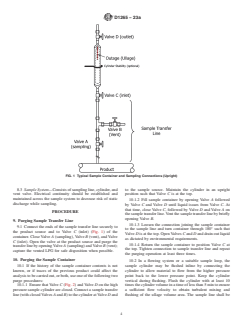
FIG. 1 Typical Sample Container and Sampling Connections (Upright)
8.1.4.1 The spring relief valve (also known as a “poppet valve”) is a reclosing device. It is designed to open at a preset pressure,
where a minimal amount of sample material is released to the immediate vicinity until the pressure drops to a level when the valve
re-seats (recloses).
8.1.4.2 The rupture disc is a non-reclosing device. This is often called a burst disc. It contains a bulged disc that is designed to
burst or fail when a specified pressure range is reached. The disk is destroyed in the process of relieving pressure, and the entire
contents of the sample cylinder will be released to the immediate vicinity.
8.1.4.3 The user is cautioned to understand the hazards associated with the type of relief device being used. Both release sample
material when a design pressure is reached. However, a rupture disc releases all contents of the cylinder, thereby creating
potentially more risk of exposure or larger incident if an ignition source is encountered. While a spring relief device does not
release the entire content, if activated to release some pressure, the sample has been compromised and should be discarded just
as if the cylinder had leaked (refer to 15.1).
8.2 Sample Transfer Line made of stainless steel tubing or other compatible metal hose, impervious to the product being sampled,
is required. The line can include a flexible metal hose made of material that is compatible with the chemical, pressure, and
temperature encountered during use. The most satisfactory line is one equipped with two valves on the sample-container end, Fig.
1, a sampling valve, A, and a vent valve, B. See 6.1.8 concerning elimination of potential static charge accumulation.
8.3 Sample System—Consists of sampling line, cylinder, and vent valve. Electrical continuity should be established and maintained
across the sample system to decrease risk of static discharge while sampling.
D1265 − 23a
FIG. 2 Typical Sample Container and Alternate Purging Connections (Inverted)
PROCEDURE
9. Purging Sample Transfer Line
9.1 Connect the ends of the sample transfer line securely to the product source and to Valve C (inlet) (Fig. 1) of the container.
Close Valve A (sampling), Valve B (vent), and V
...