

ASTM E3024/E3024M-22a
(Practice)Standard Practice for Magnetic Particle Testing for General Industry
General Information
- Abstract
SIGNIFICANCE AND USE
4.1 Description of Process—Magnetic particle testing consists of magnetizing the area to be examined, applying suitably prepared magnetic particles while the area is magnetized, and subsequently interpreting and evaluating any resulting particle accumulations. Maximum detectability occurs when the discontinuity is positioned on the surface and perpendicular to the direction of magnetic flux in the part.
4.2 This practice establishes the basic parameters for controlling the application of the magnetic particle testing method. This practice is written so that it can be specified on the engineering drawing, specification, or contract. It is not a detailed how-to procedure to be used by the examination personnel and, therefore, must be supplemented by a detailed written procedure that conforms to the requirements of this practice.
SCOPE
1.1 This practice establishes minimum requirements for magnetic particle testing used for the detection of surface or slightly subsurface discontinuities in ferromagnetic material. This practice is intended for industrial applications. Refer to Practice E1444/E1444M for aerospace applications. Guide E709 may be used in conjunction with this practice as a tutorial.
1.2 The magnetic particle testing method is used to detect cracks, laps, seams, inclusions, and other discontinuities on or near the surface of ferromagnetic materials. Magnetic particle testing may be applied to raw material, billets, finished and semi-finished materials, welds, and in-service parts. Magnetic particle testing is not applicable to non-ferromagnetic metals and alloys such as austenitic stainless steels. See Appendix X1 for additional information.
1.3 All areas of this practice may be open to agreement between the Level III or the cognizant engineering organization, as applicable, and the supplier.
1.4 Units—The values stated in either SI units or inch-pound units are to be regarded separately as standard. The values stated in each system are not necessarily exact equivalents; therefore, to ensure conformance with the standard, each system shall be used independently of the other, and values from the two systems shall not be combined.
1.4.1 This standard is a combined standard, an ASTM standard in which rationalized SI units and inch-pound units are included in the same standard, with each system of units to be regarded separately as standard.
1.5 This standard does not purport to address all of the safety concerns, if any, associated with its use. It is the responsibility of the user of this standard to establish appropriate safety, health, and environmental practices and determine the applicability of regulatory limitations prior to use.
1.6 This international standard was developed in accordance with internationally recognized principles on standardization established in the Decision on Principles for the Development of International Standards, Guides and Recommendations issued by the World Trade Organization Technical Barriers to Trade (TBT) Committee.
- Status
- Published
- Publication Date
- 14-Mar-2022
- Technical Committee
- E07 - Nondestructive Testing
- Drafting Committee
- E07.03 - Liquid Penetrant and Magnetic Particle Methods
Overview
ASTM E3024/E3024M-22a: Standard Practice for Magnetic Particle Testing for General Industry is an international standard developed by ASTM for the detection of surface and slightly subsurface discontinuities in ferromagnetic materials. This standard outlines the minimum requirements for magnetic particle testing (MPT), a widely used nondestructive testing (NDT) technique for identifying cracks, laps, seams, inclusions, and similar discontinuities which may compromise the integrity of industrial components.
Magnetic particle testing involves magnetizing the test area, applying specialized magnetic particles, and then interpreting any particle accumulations that indicate the presence of flaws. The method is most effective for discontinuities located on or near the surface and works best when the flaw is perpendicular to the direction of the magnetic field.
Key Topics
Scope and Applicability
- Applicable to any ferromagnetic materials in general industry
- Not intended for non-ferromagnetic metals (e.g., austenitic stainless steels)
- Excludes the detailed, step-by-step procedures; must be supplemented by a written procedure conforming to the standard
Personnel and Agency Qualification
- Requires examiners to be qualified under recognized practices (e.g., ASNT SNT-TC-1A, ANSI/ASNT CP-189, ISO 9712)
- NDT agencies may need to meet additional qualification standards specified by contracts
Process Controls
- Encompasses requirements for equipment calibration, lighting conditions, particle concentration, and system performance verification
- Specifies intervals for verification of instruments and equipment to maintain process integrity
Written Procedure Requirement
- Calls for a detailed, approved written procedure that covers all aspects of the magnetic particle inspection process, tailored to the specific part or component
Testing Sequence
- Usually performed after operations such as forging, heat treatment, and machining
- Must be done prior to surface treatments like plating or painting, unless otherwise specified
Applications
Magnetic particle testing according to ASTM E3024/E3024M-22a is used extensively across a variety of industrial sectors to ensure component reliability and quality. Typical applications include:
Inspection of Raw Materials and Fabricated Parts
- Covers billets, bars, castings, forgings, and machined components
Weld Inspection
- Effective for uncovering discontinuities in weldments during fabrication or in-service inspections
In-Service Inspection
- Employed for periodic safety checks on operational parts to detect fatigue cracks or other damage
Maintenance and Repair Operations
- Used for quality assurance during maintenance routines and after repairs
Notably, magnetic particle testing is not appropriate for evaluating non-ferromagnetic metals and alloys, such as austenitic stainless steel. For aerospace applications, users should refer to ASTM E1444/E1444M for industry-specific requirements.
Related Standards
For comprehensive and effective implementation of magnetic particle testing, the following related standards and guidelines are often referenced alongside ASTM E3024/E3024M-22a:
- ASTM E1444/E1444M – Practice for Magnetic Particle Testing (Aerospace)
- ASTM E709 – Guide for Magnetic Particle Testing (tutorial resource)
- ASTM E543 – Specification for Agencies Performing Nondestructive Testing
- ASTM E1316 – Terminology for Nondestructive Examinations
- ASTM E3022 – Practice for Measurement of Emission Characteristics for LED UV-A Lamps
- ASNT SNT-TC-1A, ANSI/ASNT CP-189 – Personnel Qualification and Certification
- ISO 9712 – Qualification and Certification of NDT Personnel
- SAE-AMS Series (e.g., AMS 2641, AMS 3040-3046) – Magnetic particle materials and inspection vehicles
Conclusion
ASTM E3024/E3024M-22a provides essential guidance and minimum requirements for magnetic particle testing in general industry, supporting quality assurance and structural safety in critical ferromagnetic components. By following this standard, organizations can ensure consistent, reliable non-destructive testing practices aligned with internationally recognized best practices and regulatory mandates.
Relations
- Effective Date
- 01-Feb-2024
- Effective Date
- 01-Dec-2019
- Effective Date
- 01-Mar-2019
- Effective Date
- 01-Jan-2018
- Effective Date
- 15-Jun-2017
- Effective Date
- 01-Feb-2017
- Effective Date
- 01-Aug-2016
- Effective Date
- 01-Jun-2016
- Effective Date
- 01-Feb-2016
- Effective Date
- 01-Dec-2015
- Effective Date
- 01-Sep-2015
- Effective Date
- 01-Sep-2015
- Effective Date
- 01-Jun-2014
- Effective Date
- 01-Jun-2014
- Effective Date
- 01-Dec-2013
Get Certified
Connect with accredited certification bodies for this standard

Element Materials Technology
Materials testing and product certification.

Inštitut za kovinske materiale in tehnologije
Institute of Metals and Technology. Materials testing, metallurgical analysis, NDT.
Sponsored listings
Frequently Asked Questions
ASTM E3024/E3024M-22a is a standard published by ASTM International. Its full title is "Standard Practice for Magnetic Particle Testing for General Industry". This standard covers: SIGNIFICANCE AND USE 4.1 Description of Process—Magnetic particle testing consists of magnetizing the area to be examined, applying suitably prepared magnetic particles while the area is magnetized, and subsequently interpreting and evaluating any resulting particle accumulations. Maximum detectability occurs when the discontinuity is positioned on the surface and perpendicular to the direction of magnetic flux in the part. 4.2 This practice establishes the basic parameters for controlling the application of the magnetic particle testing method. This practice is written so that it can be specified on the engineering drawing, specification, or contract. It is not a detailed how-to procedure to be used by the examination personnel and, therefore, must be supplemented by a detailed written procedure that conforms to the requirements of this practice. SCOPE 1.1 This practice establishes minimum requirements for magnetic particle testing used for the detection of surface or slightly subsurface discontinuities in ferromagnetic material. This practice is intended for industrial applications. Refer to Practice E1444/E1444M for aerospace applications. Guide E709 may be used in conjunction with this practice as a tutorial. 1.2 The magnetic particle testing method is used to detect cracks, laps, seams, inclusions, and other discontinuities on or near the surface of ferromagnetic materials. Magnetic particle testing may be applied to raw material, billets, finished and semi-finished materials, welds, and in-service parts. Magnetic particle testing is not applicable to non-ferromagnetic metals and alloys such as austenitic stainless steels. See Appendix X1 for additional information. 1.3 All areas of this practice may be open to agreement between the Level III or the cognizant engineering organization, as applicable, and the supplier. 1.4 Units—The values stated in either SI units or inch-pound units are to be regarded separately as standard. The values stated in each system are not necessarily exact equivalents; therefore, to ensure conformance with the standard, each system shall be used independently of the other, and values from the two systems shall not be combined. 1.4.1 This standard is a combined standard, an ASTM standard in which rationalized SI units and inch-pound units are included in the same standard, with each system of units to be regarded separately as standard. 1.5 This standard does not purport to address all of the safety concerns, if any, associated with its use. It is the responsibility of the user of this standard to establish appropriate safety, health, and environmental practices and determine the applicability of regulatory limitations prior to use. 1.6 This international standard was developed in accordance with internationally recognized principles on standardization established in the Decision on Principles for the Development of International Standards, Guides and Recommendations issued by the World Trade Organization Technical Barriers to Trade (TBT) Committee.
SIGNIFICANCE AND USE 4.1 Description of Process—Magnetic particle testing consists of magnetizing the area to be examined, applying suitably prepared magnetic particles while the area is magnetized, and subsequently interpreting and evaluating any resulting particle accumulations. Maximum detectability occurs when the discontinuity is positioned on the surface and perpendicular to the direction of magnetic flux in the part. 4.2 This practice establishes the basic parameters for controlling the application of the magnetic particle testing method. This practice is written so that it can be specified on the engineering drawing, specification, or contract. It is not a detailed how-to procedure to be used by the examination personnel and, therefore, must be supplemented by a detailed written procedure that conforms to the requirements of this practice. SCOPE 1.1 This practice establishes minimum requirements for magnetic particle testing used for the detection of surface or slightly subsurface discontinuities in ferromagnetic material. This practice is intended for industrial applications. Refer to Practice E1444/E1444M for aerospace applications. Guide E709 may be used in conjunction with this practice as a tutorial. 1.2 The magnetic particle testing method is used to detect cracks, laps, seams, inclusions, and other discontinuities on or near the surface of ferromagnetic materials. Magnetic particle testing may be applied to raw material, billets, finished and semi-finished materials, welds, and in-service parts. Magnetic particle testing is not applicable to non-ferromagnetic metals and alloys such as austenitic stainless steels. See Appendix X1 for additional information. 1.3 All areas of this practice may be open to agreement between the Level III or the cognizant engineering organization, as applicable, and the supplier. 1.4 Units—The values stated in either SI units or inch-pound units are to be regarded separately as standard. The values stated in each system are not necessarily exact equivalents; therefore, to ensure conformance with the standard, each system shall be used independently of the other, and values from the two systems shall not be combined. 1.4.1 This standard is a combined standard, an ASTM standard in which rationalized SI units and inch-pound units are included in the same standard, with each system of units to be regarded separately as standard. 1.5 This standard does not purport to address all of the safety concerns, if any, associated with its use. It is the responsibility of the user of this standard to establish appropriate safety, health, and environmental practices and determine the applicability of regulatory limitations prior to use. 1.6 This international standard was developed in accordance with internationally recognized principles on standardization established in the Decision on Principles for the Development of International Standards, Guides and Recommendations issued by the World Trade Organization Technical Barriers to Trade (TBT) Committee.
ASTM E3024/E3024M-22a is classified under the following ICS (International Classification for Standards) categories: 77.040.20 - Non-destructive testing of metals. The ICS classification helps identify the subject area and facilitates finding related standards.
ASTM E3024/E3024M-22a has the following relationships with other standards: It is inter standard links to ASTM E1316-24, ASTM E1316-19b, ASTM E1316-19, ASTM E1316-18, ASTM E1316-17a, ASTM E1316-17, ASTM E1316-16a, ASTM E1444/E1444M-16, ASTM E1316-16, ASTM E1316-15a, ASTM E1316-15, ASTM E3022-15, ASTM E1316-14, ASTM E1316-14e1, ASTM E1316-13d. Understanding these relationships helps ensure you are using the most current and applicable version of the standard.
ASTM E3024/E3024M-22a is available in PDF format for immediate download after purchase. The document can be added to your cart and obtained through the secure checkout process. Digital delivery ensures instant access to the complete standard document.
Standards Content (Sample)
This international standard was developed in accordance with internationally recognized principles on standardization established in the Decision on Principles for the
Development of International Standards, Guides and Recommendations issued by the World Trade Organization Technical Barriers to Trade (TBT) Committee.
Designation: E3024/E3024M − 22a
Standard Practice for
Magnetic Particle Testing for General Industry
ThisstandardisissuedunderthefixeddesignationE3024/E3024M;thenumberimmediatelyfollowingthedesignationindicatestheyear
of original adoption or, in the case of revision, the year of last revision.Anumber in parentheses indicates the year of last reapproval.
A superscript epsilon (´) indicates an editorial change since the last revision or reapproval.
1. Scope* ization established in the Decision on Principles for the
Development of International Standards, Guides and Recom-
1.1 This practice establishes minimum requirements for
mendations issued by the World Trade Organization Technical
magnetic particle testing used for the detection of surface or
Barriers to Trade (TBT) Committee.
slightly subsurface discontinuities in ferromagnetic material.
This practice is intended for industrial applications. Refer to
2. Referenced Documents
Practice E1444/E1444M for aerospace applications. Guide
2.1 The following documents form a part of this practice to
E709 may be used in conjunction with this practice as a
the extent specified herein.
tutorial.
2.2 ASTM Standards:
1.2 The magnetic particle testing method is used to detect
E543Specification forAgencies Performing Nondestructive
cracks, laps, seams, inclusions, and other discontinuities on or
Testing
near the surface of ferromagnetic materials. Magnetic particle
E709Guide for Magnetic Particle Testing
testing may be applied to raw material, billets, finished and
E1316Terminology for Nondestructive Examinations
semi-finished materials, welds, and in-service parts. Magnetic
E1444/E1444MPractice for Magnetic Particle Testing for
particle testing is not applicable to non-ferromagnetic metals
Aerospace
and alloys such as austenitic stainless steels. See Appendix X1
E2297GuideforUseofUV-AandVisibleLightSourcesand
for additional information.
MetersusedintheLiquidPenetrantandMagneticParticle
1.3 All areas of this practice may be open to agreement
Methods
between the Level III or the cognizant engineering
E3022Practice for Measurement of Emission Characteris-
organization, as applicable, and the supplier.
tics and Requirements for LED UV-A Lamps Used in
1.4 Units—The values stated in either SI units or inch-
Fluorescent Penetrant and Magnetic Particle Testing
pound units are to be regarded separately as standard. The
2.3 ASNT Documents:
values stated in each system are not necessarily exact equiva-
SNT-TC-1ARecommended Practice for Personnel Qualifi-
lents; therefore, to ensure conformance with the standard, each
cation and Certification in Nondestructive Testing
system shall be used independently of the other, and values
ANSI/ASNT CP-189Standard for Qualification and Certifi-
from the two systems shall not be combined.
cation of Nondestructive Testing Personnel
1.4.1 This standard is a combined standard, an ASTM 4,5
2.4 SAE-AMS Documents:
standard in which rationalized SI units and inch-pound units
AMS 2641Magnetic Particle Inspection Vehicle
are included in the same standard, with each system of units to
AMS 3040Magnetic Particles, Nonfluorescent, Dry Method
be regarded separately as standard.
AMS 3041 Magnetic Particles, Nonfluorescent, Wet
1.5 This standard does not purport to address all of the
Method, Oil Vehicle, Ready-To-Use
safety concerns, if any, associated with its use. It is the
AMS 3042 Magnetic Particles, Nonfluorescent, Wet
responsibility of the user of this standard to establish appro-
Method, Dry Powder
priate safety, health, and environmental practices and deter-
mine the applicability of regulatory limitations prior to use.
For referenced ASTM standards, visit the ASTM website, www.astm.org, or
1.6 This international standard was developed in accor-
contact ASTM Customer Service at service@astm.org. For Annual Book of ASTM
dance with internationally recognized principles on standard-
Standards volume information, refer to the standard’s Document Summary page on
the ASTM website.
AvailablefromAmericanSocietyforNondestructiveTesting(ASNT),P.O.Box
This practice is under the jurisdiction of ASTM Committee E07 on Nonde- 28518, 1711 Arlingate Ln., Columbus, OH 43228-0518, http://www.asnt.org.
structiveTesting and is the direct responsibility of Subcommittee E07.03 on Liquid AvailablefromSAEInternational(SAE),400CommonwealthDr.,Warrendale,
Penetrant and Magnetic Particle Methods. PA 15096, http://www.sae.org.
Current edition approved March 15, 2022. Published March 2022. Originally Copies of standards, specifications, drawings, and publications required by
approved in 2016. Last previous edition approved in 2022 as E3024/E3024M–22. manufacturers in connection with specification acquisition should be obtained from
DOI: 10.1520/E3024_E3024M-22A. the contracting activity or as directed by the contracting officer.
*A Summary of Changes section appears at the end of this standard
Copyright © ASTM International, 100 Barr Harbor Drive, PO Box C700, West Conshohocken, PA 19428-2959. United States
E3024/E3024M − 22a
AMS 3043 Magnetic Particles, Nonfluorescent, Wet 4. Significance and Use
Method, Oil Vehicle, Aerosol Packaged
4.1 Description of Process—Magnetic particle testing con-
AMS 3044Magnetic Particles, Fluorescent, Wet Method,
sistsofmagnetizingtheareatobeexamined,applyingsuitably
Dry Powder
prepared magnetic particles while the area is magnetized, and
AMS 3045Magnetic Particles, Fluorescent, Wet Method,
subsequently interpreting and evaluating any resulting particle
Oil Vehicle, Ready-To-Use
accumulations. Maximum detectability occurs when the dis-
AMS 3046Magnetic Particles, Fluorescent, Wet Method,
continuityispositionedonthesurfaceandperpendiculartothe
Oil Vehicle, Aerosol Packaged
direction of magnetic flux in the part.
AMS 5062Steel, Low Carbon Bars, Forgings, Tubing,
4.2 This practice establishes the basic parameters for con-
Sheet, Strip, and Plate 0.25 Carbon, Maximum
trollingtheapplicationofthemagneticparticletestingmethod.
AMS I-83387Inspection Process, Magnetic Rubber
This practice is written so that it can be specified on the
AS 4792Water ConditioningAgents forAqueous Magnetic
engineering drawing, specification, or contract. It is not a
Particle Inspection
detailed how-to procedure to be used by the examination
AS 5371Reference Standards Notched Shims for Magnetic
personnel and, therefore, must be supplemented by a detailed
Particle Inspection
5,6 written procedure that conforms to the requirements of this
2.5 Federal Standard:
practice.
FED-STD-313Material Safety Data Sheets, Preparation and
the Submission of
5. General Practice
5,7
2.6 Military Standard:
5.1 Personnel Qualification—Personnel performing exami-
A-A-59230Fluid, Magnetic Particle Inspection, Suspension
5,8
nations in accordance with this practice shall be qualified and
2.7 OSHA Document:
certifiedinaccordancewithASNTRecommendedPracticeNo.
29 CFR1910.1200 Hazard Communication
5,9
SNT-TC-1A, ANSI/ASNT Standard CP-189, ISO 9712, or as
2.8 ISO Documents:
specified in the contract or purchase order.
ISO 7810Identification Cards—Physical Characteristics
ISO 9712Nondestructive Testing—Qualification and Certi-
5.2 Agency Qualification—If specified in the contractual
fication of NDT Personnel agreement, NDT agencies shall be qualified and evaluated as
ISO 10012 Measurement Management Systems—
described in Specification E543. The applicable edition of
Requirements for Measurement Processes and Measuring Specification E543 shall be specified in the contractual agree-
Equipment
ment.
2.9 ANSI Documents:
5.3 Written Procedure—Magnetic particle testing shall be
ANSI/NCSLZ540.1Calibration Laboratories and Measur-
performedinaccordancewithawrittenprocedureapplicableto
ing Test Equipment – General Requirements
the part or group of parts under examination. The procedure
ANSI/NCSLZ540.3General Requirement for Calibration
shall be in accordance with the requirements of this practice.
Laboratories and Measuring Test Equipment
The process, when conducted in accordance with the written
2.10 Order of Precedence—In the event of conflict between
procedure, shall be capable of detecting discontinuities speci-
the text of this practice and the referenced documents cited
fied in the acceptance criteria. The written procedure may be
herein, the text of this practice takes precedence.
general if it clearly applies to all of the specified parts being
examined and meets the requirements of this practice. All
3. Terminology
written procedures, including technique sheets for specific
3.1 Definitions—The definitions relating to magnetic par-
parts,shallbeapprovedbyanindividualqualifiedandcertified
ticle testing, which appear in Terminology E1316, shall apply
atLevelIIIformagneticparticletestinginaccordancewiththe
to the terms used in this practice.
requirements of 5.1. When applicable, procedures shall be
submittedtothecognizantengineeringorganizationforreview,
3.2 Definitions of Terms Specific to This Standard:
or approval, or both, when requested.
3.2.1 magnetometer, n—mechanical instrument used to
5.3.1 Elements of the Written Procedure—The written pro-
measure magnetic field strength, in air, adjacent to the part.
cedure shall include at least the following elements, either
directly or by reference to the applicable documents:
AvailablefromU.S.GovernmentPrintingOfficeSuperintendentofDocuments,
5.3.1.1 Procedure identification number and the date it was
732 N. Capitol St., NW, Mail Stop: SDE, Washington, DC 20401, http://
written;
www.access.gpo.gov.
7 5.3.1.2 Identification of the part(s) to which the procedure
Available from Standardization Documents Order Desk, DODSSP, Bldg. 4,
Section D, 700 Robbins Ave., Philadelphia, PA 19111-5098, http:// applies; this shall include the material or alloy, or both;
dodssp.daps.dla.mil.
5.3.1.3 For new components, sequence of magnetic particle
AvailablefromU.S.GovernmentPrintingOfficeSuperintendentofDocuments,
testing as related to manufacturing process operation (for
732 N. Capitol St., NW, Mail Stop: SDE, Washington, DC 20401, http://
example, post-plating, after heat treat, etc.);
www.access.gpo.gov.
Available from International Organization for Standardization (ISO), ISO
5.3.1.4 Identification of test parts used for system perfor-
Central Secretariat, BIBC II, Chemin de Blandonnet 8, CP 401, 1214 Vernier,
mance verification (see 7.1.1 and 7.1.2);
Geneva, Switzerland, http://www.iso.org.
5.3.1.5 Process controls (see Table 1); including the defini-
Available from National Conference of Standards Laboratories, 1800 30th St.,
Suite 305b, Boulder, CO, 80301. tion of “use” in 7.3.2.2 and 7.4.4;
E3024/E3024M − 22a
TABLE 1 Process Control and Calibration
A
Item Maximum Time Between Verification Paragraph
B
Lighting
Visible light intensity Weekly 7.3.1.1, 7.3.1.2
Ambient visible light intensity Weekly 7.3.1.2
UV-A lamp intensity Daily 7.3.2, 7.4.5
Battery powered UV-A lamp intensity check Prior to and after each use 7.3.2.2
C
UV-A lamp integrity Daily 7.3.2
B
System Performance Daily 7.1,7.1.1, 7.1.2
Wet particle concentration 8 hours, or every shift change 7.2.1.1
B
Wet particle contamination 1 week 7.2.1.2
Water break test Daily 7.2.2
B
Equipment calibration check:
Ammeter accuracy 6 months 7.4.1
Timer control 6 months 7.4.2
Quick break 6 months 7.4.3
Yoke dead weight check 6 months 7.4.4
Yoke dead weight check (battery-powered) Before and after each use 7.4.4
UV-A radiometer and visible light photometer 6 months 7.4.7
Hall-Effect Gaussmeter accuracy 12 months 7.4.6
Magnetometer (Field Indicator) accuracy 6 months 7.4.6
A
When the test system is in operation.
B
The maximum time between verifications may be reduced or extended when substantiated by actual technical/reliability data.
C
Need not be recorded.
5.3.1.6 Areas of the part to be examined and where 5.4.1 Unless otherwise specified in the contract or part
appropriate, identified by a photograph, sketch, or relationship drawing, magnetic particle examination shall be performed
to a drawing, etc., to show the area; prior to shot peening and prior to applying protective finishes
5.3.1.7 Part preparation required before examination; such as priming, painting, plating (see 5.4.3 through 5.4.3.2),
5.3.1.8 Directions for positioning the item with respect to or other coatings.
the magnetizing equipment;
5.4.2 In-process examinations may not be substituted for
5.3.1.9 The type of magnetizing current and the equipment
final examination.
to be used;
5.4.3 Plating and Coatings—The written procedure shall
5.3.1.10 Method of establishing the magnetization (internal
specify any limitations or other requirements associated with
conductor, head, coil, prods, yoke, cable wrap, etc.);
plating or coatings.
5.3.1.11 Directionsofmagnetizationtobeused,theorderin
5.4.3.1 Use caution when examining parts with an electro-
whichtheyareapplied,andanydemagnetizationproceduresto
plated nickel coating as indications may form from the
be used between field applications;
resulting leakage fields within the nickel plating itself.
5.3.1.12 Thecurrentlevel,orthenumberofampereturns,to
5.4.3.2 For in-service examination, plating or coatings do
be used and the duration of its application or a procedure for
not require removal prior to examination unless they are
establishing proper magnetization;
damaged or they interfere with the examination process.
5.3.1.13 Type of magnetic particle material (dry or wet,
NOTE1—Examinationsensitivitydecreasesasplating/coatingthickness
visible or fluorescent, etc.) to be used and the method and
increases.
equipmenttobeusedforitsapplicationand,forthecaseofwet
particles, the particle concentration limits;
5.5 Materials:
5.3.1.14 Type of records and method of marking parts after
5.5.1 Dry Particle Requirements—Dry particles shall meet
examination;
the requirements of AMS 3040.
5.3.1.15 Acceptancerequirements,tobeusedforevaluating
5.5.2 Wet Particle Requirements—Wet particles shall meet
indications and disposition of parts after evaluation; and
the requirements of AMS 3041, 3042, 3043, 3044, 3045, or
5.3.1.16 Post-examinationdemagnetizationandcleaningre-
3046, as applicable.
quirements.
5.5.2.1 Dual Response—Dual response particles are detect-
5.3.1.17 The method and measurement frequency will be
ableinvisiblelightandalsodisplayfluorescencewhenviewed
defined for meeting the minimum examination intensity for all
underUV-AoracombinationofvisibleandUV-Alight.Usein
UV-A lamps, including battery-powered lamps. Any require-
accordance with the manufacturer’s recommendations.
ments for documentation of the measurements will also be
5.5.2.2 White Background and Black Oxide—A thin white
defined.
background is applied by aerosol to provide a thin (≤ 2 mil),
5.4 Examination Sequence—Perform magnetic particle ex- smooth, high contrast background prior to magnetization and
amination after all operations which might cause or reveal particleapplication.Afterbackgroundhasdried,magnetization
discontinuities. Such operations include, but are not limited to, and particle application follow normal procedures. The high
forging, heat treating, electroplating, forming, welding, contrast between the white background and black particles
grinding, straightening, machining, and proof loading. provides high sensitivity in visible light conditions. Detailed
E3024/E3024M − 22a
application and use instructions of the manufacturer shall be 6. Specific Practice
followed for optimum results.
6.1 Preparation of Parts for Testing
5.5.3 Suspension Vehicles—The suspension vehicle for the
6.1.1 Pre-examination Demagnetization—The part shall be
wet method shall be a light petroleum distillate conforming to
demagnetized before testing if prior operations have produced
AMS 2641 (Type I) or A-A-59230, or a suitably conditioned
a residual magnetic field that may interfere with the examina-
water that conforms to the requirements of 5.5.4. When
tion.
approved by the Level III or the cognizant engineering
6.1.2 Surface Cleanliness and Finish—The surface of the
organization, as applicable,AMS 2641 (Type II) may be used.
parttobeexaminedshallbeessentiallysmooth,clean,dry,and
When specified, the oil suspension vehicle shall meet the
free of oil, scale, machining marks, or other contaminants or
salient characteristics specified in A-A-59230.
conditions that might interfere with the efficiency of the
5.5.4 Conditioned Water Vehicle—When water is used as a
examination.
suspension vehicle for magnetic particles, the conditioning
6.1.3 Plugging and Masking—Plugging and masking is
agents used shall comply with AS 4792. Proper wetting shall
required when specified.
be determined by a water break test (see 7.2.2). Smoother
6.1.4 All areas on the part where electrical contact is made
surfaces generally require a greater percent of wetting agent
shall be sufficiently clean to prevent electrical arcing.
thanroughsurfaces.Foamingofthebathmustbeminimizedto
6.2 Magnetization Methods:
the point that it does not interfere with the examination
6.2.1 Types of Magnetizing Current—The types of currents
process.
used for magnetic particle testing are full-wave rectified
5.5.4.1 Water Vehicle Conditioning Agents—Any agents
current (1 or 3 phase), half-wave rectified current, alternating
addedtothewatervehicleforanypurposeshallconformtothe
current, direct current, and capacitor discharge current. The
requirements of the particle manufacturer.
equipmentusedshallfulfillthemagnetizinganddemagnetizing
5.5.5 Particle Concentration—The concentration of par-
requirementsadequately,asoutlinedherein,withoutdamageto
ticles in the suspension bath shall be as specified in the written
the part under examination, and they shall include the neces-
procedure.Particleconcentrationsoutsideoftherangeof0.1to
sary features required for safe operation.
0.4 mL in a 100mL bath sample for fluorescent particles and
6.2.2 Permanent Magnets—Permanent magnets may be
1.2 to 2.4 mLin a 100 mLsample for nonfluorescent particles
used when approved by the Level III or the cognizant engi-
shall not be used. Fluorescent particles and nonfluorescent
neering organization, as applicable, and when a technique has
particles shall not be used together.
been developed and approved.
5.5.5.1 The concentration of dual response particles in the
6.2.3 Yokes—When using yokes (electromagnetic probes)
wet-method bath suspension shall be adjusted to best perform
for magnetic particle testing, they shall meet the requirements
in the desired lighting environment. Higher particle concentra-
of 7.4.4.
tion is used for visible light areas and lower particle concen-
6.2.3.1 When using yokes, the pole pieces shall be posi-
tration is used for UV-A areas. Use in accordance with the
tioned in contact with the part surface as flat as possible.
particle manufacturer’s recommendations.
6.2.3.2 Yokelegpositioningshallincludeoverlappingshots
5.6 Safety—The safe handling of magnetic particles (wet or with consideration for the banding effects at the leg/pole
dry), oil vehicles, water baths, and water conditioner concen-
contact points.
tratesaregovernedbythesuppliers’SafetyDataSheets(SDS).
6.2.3.3 When examining localized areas on parts with com-
SDS,conformingto29CFR1910.1200,orequivalent,mustbe
plicatedgeometries,legspacingshallincludeconsiderationfor
provided by the supplier to any user and shall be prepared in
both field direction and banding effects.
accordance with FED-STD-313.
6.2.3.4 When using portable equipment that is not timer
5.6.1 Flammability—Flash point of oil vehicles shall be in controlled,anyexaminationthatdoesnothavethemagnetizing
accordance with AMS 2641, Type I carriers. The suppliers’ power on during both particle application and excess particle
SDS shall certify the flash point. removal is considered a residual examination.
5.6.2 Personnel Hazards—Precautions against inhalation, 6.2.3.5 For weld examinations, one yoke orientation shall
be approximately perpendicular to the weld with the second
skin contact, and eye exposure are detailed in the suppliers’
SDS. These precautions shall be observed. orientation set parallel to the weld.
6.2.3.6 Battery powered DC yokes may be used when
5.6.3 Electrical Hazards—Magnetizing equipment shall be
approved by the Level III and when a technique has been
maintained properly to prevent personnel hazards from elec-
developed and approved.
trical short circuits. Care must be taken to reduce arcing and
(1)The technique must be validated for material thickness
the possible ignition of oil baths.
greater than ⁄8 in. [9.5 mm].
5.6.4 UV-A Lamps—Replace cracked or broken ultraviolet
(2)Battery powered yokes may not show all surface
filtersimmediately.Brokenfilterscanallowharmfulultraviolet
indications for all thicknesses of material, even though the
energy to be emitted and must be replaced immediately.
requirements in 7.4.4 have been met or the field strength has
Spectacles designed to absorb ultraviolet energy are suggested
been indicated on a shim, or both.
for close, high-intensity UV-A light examination. LED UV-A
lamps used for evaluation purposes shall comply with Practice
NOTE 2—Use of dry magnetic particles for surface indications is not
E3022. See 7.3.2. recommended when using battery powered DC yokes.
E3024/E3024M − 22a
6.2.4 Magnetizing Current Application—Full-waverectified 6.2.8 Indirect Magnetization—Indirect part magnetization
current has the deepest penetration and should be used for uses pre-formed coils, cable wraps, yokes, field (flux) flow
examination of sub-surface discontinuities when using the wet fixtures, or an internal conductor to induce a magnetic field in
magneticparticlemethod.Half-waverectifiedcurrentmayalso a part when no direct electrical contact is made.
be used for examination of sub-surface discontinuities and due
6.2.9 Induced Current Magnetization—Induced current
tothepulsatingnatureofthewaveform,ithastheadvantageof magnetization (toroidal or circumferential field) is accom-
increased particle mobility. Alternating current is to be only
plished by inductively coupling a part to an electrical coil in
used for the detection of discontinuities open to the surface. order to create a suitable current flow within the part as
illustrated in Fig. X4.2. This method is often advantageous on
6.2.4.1 Direct Current (DC)—DirectCurrentisproducedby
ring-shaped parts with a central aperture and with an L/D ratio
banks of batteries, full-wave rectified AC, or a DC generator.
less than three, especially where the elimination of arcing or
6.2.4.2 Capacitor Discharge (CD) Current—A bank of
burning is of vital importance.
capacitors are used to store energy and when triggered the
6.2.10 Parallel Current Induced Magnetization—This
energy reaches high amperage with a very short duration
methodofmagnetizationmayoccurwhenaferromagneticpart
(normally less than 25 milliseconds). Because of the short
is placed alongside and parallel to a current-carrying conduc-
pulse duration, the current requirements are affected by the
tor. This type of magnetization shall only be used when
amount of material to be magnetized as well as the applied
approvedbytheLevelIIIandwhenanapprovedtechniquehas
amperage. The capacitor discharge technique may be used to
been developed for use on solid parts.
establish a residual magnetic field in tubing, casing, line pipe,
and drill pipe. For specific requirements, see Appendix X5.
6.3 Magnetic Field Strength:
6.2.5 Magnetic Field Directions—Discontinuities are diffi-
6.3.1 Magnetic Field Strength—The applied magnetic field
culttodetectbythemagneticparticlemethodwhentheymake shall have sufficient strength to produce satisfactory
an angle less than 45° to the direction of magnetization. To
indications, but it must not be so strong that it causes the
ensure the detection of discontinuities in any direction, each masking of relevant indications by nonrelevant accumulations
part must be magnetized in a minimum of two directions at
ofmagneticparticles.Adequatemagneticfieldstrengthmaybe
approximately right angles to each other. Depending on part
determined by one or a combination of the following methods.
geometry, this may consist of circular magnetization in two or
6.3.1.1 In unidirectional or multidirectional magnetizing
more directions, multiple circular and longitudinal
applications, by examining parts having known or artificial
magnetizations, or of longitudinal magnetization in two or
discontinuities of the type, size, and location specified in the
more directions. The pie-field indicator as illustrated in Fig.
acceptance requirements or by using the notched shims as
X4.1,theflexiblelaminatedstripsasdescribedinAnnexA3,or
defined in Annex A1.
a properly prepared master part using notched shims may only
6.3.1.2 In unidirectional magnetizing applications only, by
be used as a tool to demonstrate the direction of the external
using an electronic gaussmeter capable of measuring the peak
magnetic field. The pie-field indicator or flexible laminated
values of the tangential field as described in Annex A4.
strips shall not be used to determine adequate field strength.
Tangential-field strengths shall have a minimum value of 30
-4
6.2.6 Multidirectional Magnetization—Multidirectional Gauss (30 × 10 Tesla [T]) when measured at the part surface
magnetization may be used to fulfill the requirement for using an electronic gaussmeter as described in AnnexA4. The
magnetization in two or more directions if it is demonstrated maximum Gauss value derived is limited by the restrictions of
6.3.1.
that the technique is effective in all areas requiring examina-
tion. Examine parts in accordance with 6.3.1.1 or with shims
6.3.1.3 For circular magnetization, the written procedure
manufactured to the requirements of AS 5371 (Annex A2), or shallspecifytheamperagerequirementsforthespecificpartto
as otherwise approved by the Level III or the cognizant
beexamined.Iftherequirementsareunknown,theformulasin
engineering organization, as applicable. When used, the shims AppendixX3maybeusedasastartingpointindevelopingthe
shall be used to verify field direction, strength, and balance in
required amperage for specific parts.
multidirectional magnetization. Balancing of the combined
6.3.1.4 For longitudinal magnetization, the written proce-
magnetic field is critical and an adequate balance must be
dure shall specify the amp-turns, particle mobility
visually demonstrated to be effective in all areas requiring
characteristics, or external field strength requirements, or a
examination.Theparticleapplicationmustbetimedsothatthe
combinationthereof,forthespecificparttobeexamined.Ifthe
magnetizationlevelsreachfullvalueinalldirectionswhilethe
requirements are unknown, the formulas in Appendix X3 in
particles are mobile on the surface under examination.
Guide E709 may be used as a starting point in developing the
6.2.7 Direct Magnetization—Direct magnetization is ac- required amperage for specific parts. The current levels and
formulas in Guide E709 provide only a rough guide and shall
complished by passing current directly through the part under
only be used in conjunction with either 6.3.1.1,or 6.3.1.2.In
examination. Electrical contact is made to the part using head
some cases, these formulas may lead to over magnetization of
and tail stock, prods, clamps, magnetic leeches, or by other
the work piece and care should be exercised when using them.
means. Caution shall be taken to ensure that the electrical
current is not flowing while contacts are being applied or 6.3.2 Longitudinal Magnetization Using Coils—
removed and that excessive heating does not occur in any area Longitudinal magnetization is often accomplished by passing
of the part. Prods shall not be used for the examination of currentthroughacoilencirclingthepart,orsectionofthepart,
finished surfaces. to be examined (that is, by using a coil shot). This produces a
E3024/E3024M − 22a
magnetic field parallel to the axis of the coil. The actual minimum of two shots being used. The second shot shall
effectivedistancemustbedemonstratedbasedontheparticular follow the first while the particles are still mobile on the
part to be examined. For parts longer than these effective surface of the part.
distances, the entire length shall be examined by repositioning
6.4.2.3 Under special circumstances, such as the use of
the part within the coil, allowing for approximately 10%
automated equipment or for critical parts, the 0.5second
effective magnetic field overlap. See 6.3.1 for field strength
durationandthetwo-shotrequirementmaybewaivedprovided
methods that can be used in coil magnetization.
it is demonstrated that the procedure can detect known discon-
tinuities in reference parts.
6.3.3 Magnetizing Current Shots—In a series of magnetiz-
ingshots,unlessthereisaninterimdemagnetizationoperation, 6.4.2.4 Careshallbeexercisedtopreventanydamagetothe
the amperage value shall proceed from a lower to a higher part due to overheating or other causes. Weakly held indica-
selection. tions on highly finished parts are readily washed away, and
care must be exercised to prevent high-velocity flow over
6.3.4 Coil Shots—The value of the coil shot expressed in
critical surfaces. Surfaces to be examined shall not be handled
ampere-turns(AT)isconsideredtobethecurrentmultipliedby
or contacted until the examination is complete.
the number of coil turns.
6.4.2.5 Particle application by continuous immersion shall
6.3.5 The specimen under examination shall have a mini-
be used only when it has been documented that it can detect
mum L/D ratio of 2 for proper coil magnetization.
discontinuitiesorartificialdiscontinuitiesinpartsunderexami-
6.4 Particle Application
nation.
6.4.1 Dry Magnetic Particle Application, Continuous
6.4.3 Residual Magnetization Method—Intheresidualmag-
Method—When using dry particles, the flow of magnetizing
netization method, the magnetic particles (dry or wet) are
current shall be initiated prior to application of the magnetic
applied to the part under examination after the magnetizing
particles to the surface under examination and terminated after
force has been discontinued. The residual method is not as
particle application has been completed and any excess blown
sensitive as the continuous method. It can be useful on
off. Precautions shall be taken to prevent any damage to the
materials with high retentivity. When inducing circular fields
part due to overheating.
and longitudinal fields in long pieces, residual fields are
6.4.1.1 Apply dry powder so that a light, uniform, dust-like
normally sufficient to meet magnetizing requirements consis-
coating settles on the surface of the part under examination
tent with the requirements of 7.1.1 or 7.1.2. The residual
while the part is being magnetized. Specially designed powder
method has found wide use examining pipe and tubular goods.
blowers or shakers using compressed air or hand power shall
For magnetization requirements of oilfield tubulars, refer to
be used. The applicators shall introduce the particles into the
Appendix X5. It is also useful for the examination of parts or
air in a manner such that they reach the part surface in a
areas of parts, which because of geometric constraints, cannot
uniform cloud with a minimum of force.
beexaminedwiththecontinuousmethod.Theresidualmethod
6.4.1.2 After the powder is applied, and before the magne- shall be used only when it has been documented that it can
tizing force is removed, excess powder shall be removed, by detect discontinuities or artificial discontinuities in parts under
means of a dry air current with sufficient force to remove the examination and when approved by the Level III or the
excess particles, if they interfere with interpretation and cognizant engineering organization, as applicable. The test
evaluation, but not strong enough to disturb particles held by a parts shall have the same material and processing steps, and
leakage field that is indicative of discontinuities. In order to similar geometry, to the actual parts being examined.
recognizethebroad,fuzzy,lightlyheldpowderpatternsformed 6.4.4 Magnetic Slurry/Paint Application—Magnetic paints
by near-surface discontinuities, the formation of indications
or slurries are applied to the part with a brush, squeeze bottle,
mustbeobservedcarefullyduringbothpowderapplicationand or aerosol can before or during the magnetization operation.
removal of the excess powder.
This method is for special applications, such as overhead or
underwater examination.
6.4.1.3 Dry magnetic particles shall not be reused, unless a
process for reclamation has been established and approved by 6.4.5 Magnetic Polymer Application—Polymerizable mate-
the Level III. rial containing magnetic particles shall be held in contact with
thepartunderexaminationduringtheperiodofitscure.Before
6.4.2 Wet Magnetic Particle Application, Continuous
curing takes place, and while the magnetic particles are still
Method—Fluorescent or nonfluorescent particles suspended in
mobile,thepartshallbemagnetizedtothespecifiedlevel.This
a liquid vehicle at the required concentration shall be applied
requires prolonged or repeated periods of magnetization. This
by gently spraying or flowing the suspension over the area to
method is for special applications, such as bolt holes which
be examined.
cannot be examined readily by the wet or dry method.AMS-I-
6.4.2.1 Proper sequencing and timing of part magnetization
83387establishestheexaminationprocessformagneticrubber.
andapplicationofparticlesuspensionarerequiredtoobtainthe
proper formation and retention of indications. This requires
6.5 Evaluation—Following magnetization and particle ap-
that the stream of suspension be diverted from the part
plication and before demagnetizing, the parts shall be exam-
simultaneously with, or slightly before, energizing the mag-
ined for indications. All indications will be identified as
netic circuit.
relevantornonrelevant.Relevantindicationswillbecompared
6.4.2.2 The magnetizing current shall be applied for a to the proper accept/reject criteria and the parts accepted or
duration of at least 0.5 second for each application, with a rejected accordingly.
E3024/E3024M − 22a
6.5.1 Eye Glasses—When using fluorescent materials, per- purchase order, or specification. If an electronic gaussmeter is
sonnel shall not wear eye glasses that are photochromic usedforthismeasurement,theequivalencyshallbedetermined
(transition lenses) or that have permanently darkened lenses. prior to use.
This is not intended to prohibit the use of eyeglasses with 6.7.2 Post-Examination Cleaning—Cleaning shall be done
lenses treated to absorb ultraviolet light. with a suitable solvent, air blower, or by other means.
6.5.2 Dark Adaptation—Personnel must wait at least one 6.7.2.1 Parts shall be examined to ensure that the cleaning
minuteafterenteringadarkenedareafortheireyestoadjustto procedure has removed magnetic particle residues from all
the low-level lighting before performing fluorescent magnetic surfaces, including holes, crevices, passage ways, etc. Such
particle testing. residue could have an adverse effect on the intended use of the
6.5.3 Acceptance Requirements—The acceptance require- part.
ments applicable to the part or group of parts shall be 6.7.2.2 Care shall be taken to remove all plugs, masking, or
incorporatedaspartofthewrittenprocedureeitherspecifically other processing aids that may affect the intended use of the
or by reference to other applicable documents containing the part.
necessary information. 6.7.2.3 Partsshallbeprotectedfromcorrosionordamageas
required.
6.6 Recording of Indications—Whenrequiredbythewritten
6.8 Record of Examination—Results of all final magnetic
procedure, the location of all rejectable indications shall be
marked on the part, and permanent records of the location, particle examinations shall be recorded. All recorded results
shall be identified and filed. Records shall provide for trace-
direction, and frequency of indications may be made by one or
more of the following methods: ability to the specific part or lot examined.As a minimum, the
records shall include: identification of the procedure used,
6.6.1 Written Description—By recording the location,
length,direction,andnumberofindicationsinsketchortabular disposition of the examination; identification of the inspector’s
examination stamp, electronic ID, or signature; and the date of
form;
6.6.2 Transparent Tape—For dry particle indications, by examination.Recordsshallbekeptforthedurationspecifiedin
the purchase order or contract.
applying transparent adhesive-backed tape to which the indi-
cations will adhere and placing it on an approved form along
6.9 Marking of Accepted Parts—Parts that have been ac-
with information giving its location on the part;
cepted using magnetic particle testing shall be marked in
6.6.3 Strippable Film—By covering the indication with a
accordance with the applicable drawing, purchase order, con-
spray-on strippable film that fixes the indications in place and
tract prior to leaving the testing facility.
placing the resultant reproduction on an approved form along
with information giving its location on the part; and
7. Quality Control
6.6.4 Photography—By photographing or video recording
7.1 System Performance Verification—The overall perfor-
the indications themselves, the tape, or the strippable film
mance of the magnetic particle testing system, including the
reproduction and placing the photograph in a tabular form
equipment,materials,andthelightingenvironmentbeingused,
along with information giving its location on the part.
shallbeverifiedinitiallyandatregularintervalsthereafter.The
6.7 Post-Examination Demagnetization and Cleaning—All
required verification intervals are stated in Table 1. Records of
parts shall be demagnetized and cleaned after final examina-
the verification results shall be maintained and retained for the
tion. Apply corrosion protection as required.
time period specified in the contract. Establish a system in
6.7.1 Demagnetization:
accordancewithANSIZ540.1,ANSIZ540.3,orISO10012for
6.7.1.1 When using AC demagnetization, the part shall be calibration and certification of all current and voltage measur-
subjectedtoafieldwithapeakvaluegreaterthan,andinnearly
ing devices, ammeter shunts, timers, visible light photometers,
the same direction as, the field used during examination. This UV-A radiometers, gaussmeters, and magnetometers (field
AC field is then decreased gradually to zero. When using an indicators) used in verification.
AC demagnetizing coil, the part is passed through the coil 7.1.1 Use of Test Parts with Discontinuities—A reliable
while the current is flowing. For effective demagnetization, method for system performance verification is the use of
parts having complex configurations may require rotating or
representative reference parts containing discontinuities of the
tumblingwhilepassingthroughthefieldofthecoilpriortothe type, location, and size specified in the acceptance require-
current being shut off. Repeat this process as necessary.
mentsandexaminedinaccordancewithawrittenprocedure.If
6.7.1.2 When using DC demagnetization, the initial field correct magnetic particle indications can be produced and
shall be higher than, and in nearly the same direction as, the identified in these representative parts, the overall system
field reached during examination. The field shall then be performance is verified. Parts used for verification will be
reversed, decreased in magnitude, and the process repeated demagnetized, cleaned thoroughly following the examination,
(cycled) until an acceptably low value of residual field is and checked under UV-Aor visible light, as appropriate to the
reached.
examination process, to ensure that residual indications do not
6.7.1.3 Wheneverpossible,partsthathavebeenmagnetized remain.
circularly shall be magnetized in the longitudinal direction 7.1.2 Fabricated Test Parts with Artificial Discontinuities—
beforebeingdemagnetized.Afterdemagnetization,acalibrated Whenactualproductionpartswithknowndiscontinuitiesofthe
magnetometer shall not exceed a value agreed upon or as type,location,andsizeneededforverificationarenotavailable
specified on the engineering drawing or in the contract, or are impractical, fabricated test or production parts with
E3024/E3024M − 22a
artificial discontinuities or a ring specimen (see Guide E709, For adequacy, this visual observation shall be performed
Appendix X7) may be used. Artificial discontinuities may be individually under both UV-A or visible light conditions, or
both, as applicable.
fabricated to meet a particular need or may be commercially
available shims as shown in Annex A2. All applicable condi- 7.2.3 Determination of Particle Sensitivity—Appendix X2
describes several devices that can demonstrate the sensitivity
tions for the use of such reference parts, as described in 7.1.1,
of either wet-method or dry-method particles. These devices
shall apply.
contain permanent magnetization in some form and are inde-
7.2 Suspension Vehicle Tests (Not Required for Aerosol Can
pendent of the magnetizing system. They should not be
Suspensions)
magnetized or demagnetized before or after use. Such devices
7.2.1 Concentration/Contamination Tests—Particle concen-
can be useful whenever performance of the particles is subject
tration and contamination shall be determined upon start up, at
to question or needs to be verified.
regular intervals thereafter, and whenever the bath is changed
7.3 Lighting:
oradjusted.TherequiredtestingintervalsarestatedinTable1.
7.3.1 Visible Light—Conduct visible light intensity mea-
7.2.1.1 Determination of Wet Particle Concentration—For
surementsuponinitiallightinstallation,orwhenchangesoccur
recirculation systems, agitate the particle suspension a mini-
that would cause the light intensity to change and at the
mum of 30 min to ensure uniform distribution of particles
intervals specified in Table 1.
throughout the bath. For portable application devices, agitate
7.3.1.1 Visible light shall be used when examining with
the particle suspension for a sufficient period of time to ensure
nonfluorescent magnetic particles and for interpretation of
uniform distribution of particles throughout the bath. Place a
indications found with fluorescent magnetic particles. A mini-
100mL sample of the agitated suspension in a pear-shaped
mumlightintensityof100fc[1076lx]shallbeavailableatthe
centrifuge tube with a graduated stem in 0.05mL increments
surface of the part undergoing examination or evaluation.
for fluorescent baths and 0.1 mL for non-fluorescent baths.
7.3.1.2 Ambient Visible Light—Fluorescent magnetic par-
(Centrifuge tubes shall be as specified in Guide E709.) De-
ticle examinations shall be performed in a darkened area with
magnetize the sample and allow the tube to stand undisturbed
amaximumambientvisiblelightlevelof2fc[22lx]measured
forasettlingtimeofatleast60minifusingpetroleumdistillate
at the part surface.
or at least 30 min for conditioned water suspension. Read the
7.3.2 UV-A Lamps—UV-A lamps used for evaluation pur-
volume of settled particles. If the concentration is out of the
poses shall meet the requirements of 7.4.5. The minimum
tolerance stated in the written procedure add particles or
acceptable intensity is 1000 µW/cm at the surface being
suspension vehicle, as required, and re-determine the particle
examined. UV-A lamps shall be checked for cleanliness and
concentration. If the settled particles appear to be loose
integrity and shall be cleaned, repaired, or replaced as appro-
agglomerates rather than a solid layer, repeat the process with
priate. These checks of cleanliness/integrity need not be
a second sample. If the second sample also appears
recorded.
agglomerated, replace the entire bath suspension. Thirty min-
7.3.2.1 UV-Alamps that use an LED source shall produce a
ute settling times (for petroleum distillate suspensions), or
peak wavelength at 360 to 370 nanometers as measured with a
other accelerated tests, may be used if they have been verified
spectroradiometer. When requested, the manufacturer shall
to give results equivalent to the procedure described in this
provide a certification thereof.
clause.
7.3.2.2 Battery-powered UV-Alamps used to examine parts
7.2.1.2 Determination of Wet Particle Contamination— shall have their intensity measured as specified in Table 1, and
Perform the tests specified in 7.2.
...
This document is not an ASTM standard and is intended only to provide the user of an ASTM standard an indication of what changes have been made to the previous version. Because
it may not be technically possible to adequately depict all changes accurately, ASTM recommends that users consult prior editions as appropriate. In all cases only the current version
of the standard as published by ASTM is to be considered the official document.
Designation: E3024/E3024M − 22 E3024/E3024M − 22a
Standard Practice for
Magnetic Particle Testing for General Industry
This standard is issued under the fixed designation E3024/E3024M; the number immediately following the designation indicates the year
of original adoption or, in the case of revision, the year of last revision. A number in parentheses indicates the year of last reapproval.
A superscript epsilon (´) indicates an editorial change since the last revision or reapproval.
1. Scope*
1.1 This practice establishes minimum requirements for magnetic particle testing used for the detection of surface or slightly
subsurface discontinuities in ferromagnetic material. This practice is intended for industrial applications. Refer to Practice
E1444/E1444M for aerospace applications. Guide E709 may be used in conjunction with this practice as a tutorial.
1.2 The magnetic particle testing method is used to detect cracks, laps, seams, inclusions, and other discontinuities on or near the
surface of ferromagnetic materials. Magnetic particle testing may be applied to raw material, billets, finished and semi-finished
materials, welds, and in-service parts. Magnetic particle testing is not applicable to non-ferromagnetic metals and alloys such as
austenitic stainless steels. See Appendix X1 for additional information.
1.3 All areas of this practice may be open to agreement between the Level III or the cognizant engineering organization, as
applicable, and the supplier.
1.4 Units—The values stated in either SI units or inch-pound units are to be regarded separately as standard. The values stated in
each system are not necessarily exact equivalents; therefore, to ensure conformance with the standard, each system shall be used
independently of the other, and values from the two systems shall not be combined.
1.4.1 This standard is a combined standard, an ASTM standard in which rationalized SI units and inch-pound units are included
in the same standard, with each system of units to be regarded separately as standard.
1.5 This standard does not purport to address all of the safety concerns, if any, associated with its use. It is the responsibility
of the user of this standard to establish appropriate safety, health, and environmental practices and determine the applicability of
regulatory limitations prior to use.
1.6 This international standard was developed in accordance with internationally recognized principles on standardization
established in the Decision on Principles for the Development of International Standards, Guides and Recommendations issued
by the World Trade Organization Technical Barriers to Trade (TBT) Committee.
2. Referenced Documents
2.1 The following documents form a part of this practice to the extent specified herein.
2.2 ASTM Standards:
This practice is under the jurisdiction of ASTM Committee E07 on Nondestructive Testing and is the direct responsibility of Subcommittee E07.03 on Liquid Penetrant
and Magnetic Particle Methods.
Current edition approved March 1, 2022March 15, 2022. Published March 2022. Originally approved in 2016. Last previous edition approved in 20192022 as
ε1
E3024/E3024M – 19E3024/E3024M – 22. . DOI: 10.1520/E3024_E3024M-22.10.1520/E3024_E3024M-22A.
For referenced ASTM standards, visit the ASTM website, www.astm.org, or contact ASTM Customer Service at service@astm.org. For Annual Book of ASTM Standards
volume information, refer to the standard’s Document Summary page on the ASTM website.
*A Summary of Changes section appears at the end of this standard
Copyright © ASTM International, 100 Barr Harbor Drive, PO Box C700, West Conshohocken, PA 19428-2959. United States
E3024/E3024M − 22a
E543 Specification for Agencies Performing Nondestructive Testing
E709 Guide for Magnetic Particle Testing
E1316 Terminology for Nondestructive Examinations
E1444/E1444M Practice for Magnetic Particle Testing for Aerospace
E2297 Guide for Use of UV-A and Visible Light Sources and Meters used in the Liquid Penetrant and Magnetic Particle Methods
E3022 Practice for Measurement of Emission Characteristics and Requirements for LED UV-A Lamps Used in Fluorescent
Penetrant and Magnetic Particle Testing
2.3 ASNT Documents:
SNT-TC-1A Recommended Practice for Personnel Qualification and Certification in Nondestructive Testing
ANSI/ASNT CP-189 Standard for Qualification and Certification of Nondestructive Testing Personnel
4,5
2.4 SAE-AMS Documents:
AMS 2641 Magnetic Particle Inspection Vehicle
AMS 3040 Magnetic Particles, Nonfluorescent, Dry Method
AMS 3041 Magnetic Particles, Nonfluorescent, Wet Method, Oil Vehicle, Ready-To-Use
AMS 3042 Magnetic Particles, Nonfluorescent, Wet Method, Dry Powder
AMS 3043 Magnetic Particles, Nonfluorescent, Wet Method, Oil Vehicle, Aerosol Packaged
AMS 3044 Magnetic Particles, Fluorescent, Wet Method, Dry Powder
AMS 3045 Magnetic Particles, Fluorescent, Wet Method, Oil Vehicle, Ready-To-Use
AMS 3046 Magnetic Particles, Fluorescent, Wet Method, Oil Vehicle, Aerosol Packaged
AMS 5062 Steel, Low Carbon Bars, Forgings, Tubing, Sheet, Strip, and Plate 0.25 Carbon, Maximum
AMS I-83387 Inspection Process, Magnetic Rubber
AS 4792 Water Conditioning Agents for Aqueous Magnetic Particle Inspection
AS 5371 Reference Standards Notched Shims for Magnetic Particle Inspection
5,6
2.5 Federal Standard:
FED-STD-313 Material Safety Data Sheets, Preparation and the Submission of
5,7
2.6 Military Standard:
A-A-59230 Fluid, Magnetic Particle Inspection, Suspension
5,8
2.7 OSHA Document:
29 CFR 1910.1200 Hazard Communication
5,9
2.8 ISO Documents:
ISO 7810 Identification Cards—Physical Characteristics
ISO 9712 Nondestructive Testing—Qualification and Certification of NDT Personnel
ISO 10012 Measurement Management Systems—Requirements for Measurement Processes and Measuring Equipment
ISO 17025 General Requirements for the Competence of Testing and Calibration Laboratories
2.9 ANSI Documents:
ANSI/NCSL Z540.1 Calibration Laboratories and Measuring Test Equipment – General Requirements
ANSI/NCSL Z540.3 General Requirement for Calibration Laboratories and Measuring Test Equipment
2.10 Order of Precedence—In the event of conflict between the text of this practice and the referenced documents cited herein,
the text of this practice takes precedence.
3. Terminology
3.1 Definitions—The definitions relating to magnetic particle testing, which appear in Terminology E1316, shall apply to the terms
used in this practice.
3.2 Definitions of Terms Specific to This Standard:
Available from American Society for Nondestructive Testing (ASNT), P.O. Box 28518, 1711 Arlingate Ln., Columbus, OH 43228-0518, http://www.asnt.org.
Available from SAE International (SAE), 400 Commonwealth Dr., Warrendale, PA 15096, http://www.sae.org.
Copies of standards, specifications, drawings, and publications required by manufacturers in connection with specification acquisition should be obtained from the
contracting activity or as directed by the contracting officer.
Available from U.S. Government Printing Office Superintendent of Documents, 732 N. Capitol St., NW, Mail Stop: SDE, Washington, DC 20401, http://
www.access.gpo.gov.
Available from Standardization Documents Order Desk, DODSSP, Bldg. 4, Section D, 700 Robbins Ave., Philadelphia, PA 19111-5098, http://dodssp.daps.dla.mil.
Available from U.S. Government Printing Office Superintendent of Documents, 732 N. Capitol St., NW, Mail Stop: SDE, Washington, DC 20401, http://
www.access.gpo.gov.
Available from International Organization for Standardization (ISO), ISO Central Secretariat, BIBC II, Chemin de Blandonnet 8, CP 401, 1214 Vernier, Geneva,
Switzerland, http://www.iso.org.
Available from National Conference of Standards Laboratories, 1800 30th St., Suite 305b, Boulder, CO, 80301.
E3024/E3024M − 22a
3.2.1 magnetometer, n—mechanical instrument used to measure magnetic field strength, in air, adjacent to the part.
4. Significance and Use
4.1 Description of Process—Magnetic particle testing consists of magnetizing the area to be examined, applying suitably prepared
magnetic particles while the area is magnetized, and subsequently interpreting and evaluating any resulting particle accumulations.
Maximum detectability occurs when the discontinuity is positioned on the surface and perpendicular to the direction of magnetic
flux in the part.
4.2 This practice establishes the basic parameters for controlling the application of the magnetic particle testing method. This
practice is written so that it can be specified on the engineering drawing, specification, or contract. It is not a detailed how-to
procedure to be used by the examination personnel and, therefore, must be supplemented by a detailed written procedure that
conforms to the requirements of this practice.
5. General Practice
5.1 Personnel Qualification—Personnel performing examinations in accordance with this practice shall be qualified and certified
in accordance with ASNT Recommended Practice No. SNT-TC-1A, ANSI/ASNT Standard CP-189, ISO 9712, or as specified in
the contract or purchase order.
5.2 Agency Qualification—If specified in the contractual agreement, NDT agencies shall be qualified and evaluated as described
in Specification E543. The applicable edition of Specification E543 shall be specified in the contractual agreement.
5.3 Written Procedure—Magnetic particle testing shall be performed in accordance with a written procedure applicable to the part
or group of parts under examination. The procedure shall be in accordance with the requirements of this practice. The process,
when conducted in accordance with the written procedure, shall be capable of detecting discontinuities specified in the acceptance
criteria. The written procedure may be general if it clearly applies to all of the specified parts being examined and meets the
requirements of this practice. All written procedures, including technique sheets for specific parts, shall be approved by an
individual qualified and certified at Level III for magnetic particle testing in accordance with the requirements of 5.1. When
applicable, procedures shall be submitted to the cognizant engineering organization for review, or approval, or both, when
requested.
5.3.1 Elements of the Written Procedure—The written procedure shall include at least the following elements, either directly or
by reference to the applicable documents:
5.3.1.1 Procedure identification number and the date it was written;
5.3.1.2 Identification of the part(s) to which the procedure applies; this shall include the material or alloy, or both;
5.3.1.3 For new components, sequence of magnetic particle testing as related to manufacturing process operation (for example,
post-plating, after heat treat, etc.);
5.3.1.4 Identification of test parts used for system performance verification (see 7.1.1 and 7.1.2);
5.3.1.5 Process controls (see Table 1); including the definition of “use” in 7.3.2.2 and 7.4.4;
5.3.1.6 Areas of the part to be examined and where appropriate, identified by a photograph, sketch, or relationship to a drawing,
etc., to show the area;
5.3.1.7 Part preparation required before examination;
5.3.1.8 Directions for positioning the item with respect to the magnetizing equipment;
5.3.1.9 The type of magnetizing current and the equipment to be used;
5.3.1.10 Method of establishing the magnetization (internal conductor, head, coil, prods, yoke, cable wrap, etc.);
E3024/E3024M − 22a
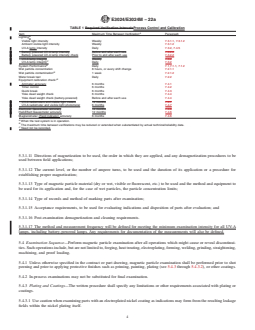
TABLE 1 Required Verification IntervalsProcess Control and Calibration
A
Item Maximum Time Between Verification Paragraph
B
Lighting
Visible light intensity Weekly 7.3.1.1, 7.3.1.2
Ambient visible light intensity Weekly 7.3.1.2
UV-A lamp intensity Daily 7.3.2, 7.4.5
Battery powered UV-A lamp intensity Before and after each use 7.3.2.2
Battery powered UV-A lamp intensity check Prior to and after each use 7.3.2.2
UV-A lamp integrity Weekly 7.3.2
C
UV-A lamp integrity Daily 7.3.2
B
System Performance Daily 7.1,7.1.1, 7.1.2
Wet particle concentration 8 hours, or every shift change 7.2.1.1
B
Wet particle contamination 1 week 7.2.1.2
Water break test Daily 7.2.2
B
Equipment calibration check:
Ammeter accuracy 6 months 7.4.1
Timer control 6 months 7.4.2
Quick break 6 months 7.4.3
Yoke dead weight check 6 months 7.4.4
Yoke dead weight check (battery-powered) Before and after each use 7.4.4
UV-A radiometers and visible light meters 12 months 7.4.7
UV-A radiometer and visible light photometer 6 months 7.4.7
Electronic Gaussmeter accuracy 12 months 7.4.6
Hall-Effect Gaussmeter accuracy 12 months 7.4.6
Magnetometer (Field Indicator) accuracy 6 months 7.4.6
A
When the test system is in operation.
B
The maximum time between verifications may be reduced or extended when substantiated by actual technical/reliability data.
C
Need not be recorded.
5.3.1.11 Directions of magnetization to be used, the order in which they are applied, and any demagnetization procedures to be
used between field applications;
5.3.1.12 The current level, or the number of ampere turns, to be used and the duration of its application or a procedure for
establishing proper magnetization;
5.3.1.13 Type of magnetic particle material (dry or wet, visible or fluorescent, etc.) to be used and the method and equipment to
be used for its application and, for the case of wet particles, the particle concentration limits;
5.3.1.14 Type of records and method of marking parts after examination;
5.3.1.15 Acceptance requirements, to be used for evaluating indications and disposition of parts after evaluation; and
5.3.1.16 Post-examination demagnetization and cleaning requirements.
5.3.1.17 The method and measurement frequency will be defined for meeting the minimum examination intensity for all UV-A
lamps, including battery-powered lamps. Any requirements for documentation of the measurements will also be defined.
5.4 Examination Sequence—Perform magnetic particle examination after all operations which might cause or reveal discontinui-
ties. Such operations include, but are not limited to, forging, heat treating, electroplating, forming, welding, grinding, straightening,
machining, and proof loading.
5.4.1 Unless otherwise specified in the contract or part drawing, magnetic particle examination shall be performed prior to shot
peening and prior to applying protective finishes such as priming, painting, plating (see 5.4.3 through 5.4.3.2), or other coatings.
5.4.2 In-process examinations may not be substituted for final examination.
5.4.3 Plating and Coatings—The written procedure shall specify any limitations or other requirements associated with plating or
coatings.
5.4.3.1 Use caution when examining parts with an electroplated nickel coating as indications may form from the resulting leakage
fields within the nickel plating itself.
E3024/E3024M − 22a
5.4.3.2 For in-service examination, plating or coatings do not require removal prior to examination unless they are damaged or
they interfere with the examination process.
NOTE 1—Examination sensitivity decreases as plating/coating thickness increases.
5.5 Materials:
5.5.1 Dry Particle Requirements—Dry particles shall meet the requirements of AMS 3040.
5.5.2 Wet Particle Requirements—Wet particles shall meet the requirements of AMS 3041, 3042, 3043, 3044, 3045, or 3046, as
applicable.
5.5.2.1 Dual Response—Dual response particles are detectable in visible light and also display fluorescence when viewed under
UV-A or a combination of visible and UV-A light. Use in accordance with the manufacturer’s recommendations.
5.5.2.2 White Background and Black Oxide—A thin white background is applied by aerosol to provide a thin (≤ 2 mil), smooth,
high contrast background prior to magnetization and particle application. After background has dried, magnetization and particle
application follow normal procedures. The high contrast between the white background and black particles provides high
sensitivity in visible light conditions. Detailed application and use instructions of the manufacturer shall be followed for optimum
results.
5.5.3 Suspension Vehicles—The suspension vehicle for the wet method shall be a light petroleum distillate conforming to AMS
2641 (Type I) or A-A-59230, or a suitably conditioned water that conforms to the requirements of 5.5.4. When approved by the
Level III or the cognizant engineering organization, as applicable, AMS 2641 (Type II) may be used. When specified, the oil
suspension vehicle shall meet the salient characteristics specified in A-A-59230.
5.5.4 Conditioned Water Vehicle—When water is used as a suspension vehicle for magnetic particles, the conditioning agents used
shall comply with AS 4792. Proper wetting shall be determined by a water break test (see 7.2.2). Smoother surfaces generally
require a greater percent of wetting agent than rough surfaces. Foaming of the bath must be minimized to the point that it does
not interfere with the examination process.
5.5.4.1 Water Vehicle Conditioning Agents—Any agents added to the water vehicle for any purpose shall conform to the
requirements of the particle manufacturer.
5.5.5 Particle Concentration—The concentration of particles in the suspension bath shall be as specified in the written procedure.
Particle concentrations outside of the range of 0.1 to 0.4 mL in a 100 mL bath sample for fluorescent particles and 1.2 to 2.4 mL
in a 100 mL sample for nonfluorescent particles shall not be used. Fluorescent particles and nonfluorescent particles shall not be
used together.
5.5.5.1 The concentration of dual response particles in the wet-method bath suspension shall be adjusted to best perform in the
desired lighting environment. Higher particle concentration is used for visible light areas and lower particle concentration is used
for UV-A areas. Use in accordance with the particle manufacturer’s recommendations.
5.6 Safety—The safe handling of magnetic particles (wet or dry), oil vehicles, water baths, and water conditioner concentrates are
governed by the suppliers’ Safety Data Sheets (SDS). SDS, conforming to 29 CFR 1910.1200, or equivalent, must be provided
by the supplier to any user and shall be prepared in accordance with FED-STD-313.
5.6.1 Flammability—Flash point of oil vehicles shall be in accordance with AMS 2641, Type I carriers. The suppliers’ SDS shall
certify the flash point.
5.6.2 Personnel Hazards—Precautions against inhalation, skin contact, and eye exposure are detailed in the suppliers’ SDS. These
precautions shall be observed.
5.6.3 Electrical Hazards—Magnetizing equipment shall be maintained properly to prevent personnel hazards from electrical short
circuits. Care must be taken to reduce arcing and the possible ignition of oil baths.
E3024/E3024M − 22a
5.6.4 Ultaviolet (UV-A) Lamp—UV-A Lamps—Replace cracked or broken ultraviolet filters immediately. Broken filters can allow
harmful shortwave ultraviolet energy to be emitted and must be replaced immediately. Spectacles designed to absorb ultraviolet
wavelength radiation energy are suggested for close, high-intensity UV-A lamp examination.light examination. LED UV-A lamps
used for evaluation purposes shall comply with Practice E3022. See 7.3.2.
6. Specific Practice
6.1 Preparation of Parts for Testing
6.1.1 Pre-examination Demagnetization—The part shall be demagnetized before testing if prior operations have produced a
residual magnetic field that may interfere with the examination.
6.1.2 Surface Cleanliness and Finish—The surface of the part to be examined shall be essentially smooth, clean, dry, and free of
oil, scale, machining marks, or other contaminants or conditions that might interfere with the efficiency of the examination.
6.1.3 Plugging and Masking—Plugging and masking is required when specified.
6.1.4 All areas on the part where electrical contact is made shall be sufficiently clean to prevent electrical arcing.
6.2 Magnetization Methods:
6.2.1 Types of Magnetizing Current—The types of currents used for magnetic particle testing are full-wave rectified current (1 or
3 phase), half-wave rectified current, alternating current, direct current, and capacitor discharge current. The equipment used shall
fulfill the magnetizing and demagnetizing requirements adequately, as outlined herein, without damage to the part under
examination, and they shall include the necessary features required for safe operation.
6.2.2 Permanent Magnets—Permanent magnets may be used when approved by the Level III or the cognizant engineering
organization, as applicable, and when a technique has been developed and approved.
6.2.3 Yokes—When using yokes (electromagnetic probes) for magnetic particle testing, they shall meet the requirements of 7.4.4.
6.2.3.1 When using yokes, the pole pieces shall be positioned in contact with the part surface as flat as possible.
6.2.3.2 Yoke leg positioning shall include overlapping shots with consideration for the banding effects at the leg/pole contact
points.
6.2.3.3 When examining localized areas on parts with complicated geometries, leg spacing shall include consideration for both
field direction and banding effects.
6.2.3.4 When using portable equipment that is not timer controlled, any examination that does not have the magnetizing power
on during both particle application and excess particle removal is considered a residual examination.
6.2.3.5 For weld examinations, one yoke orientation shall be approximately perpendicular to the weld with the second orientation
set parallel to the weld.
6.2.3.6 Battery powered DC yokes may be used when approved by the Level III and when a technique has been developed and
approved.
(1) The technique must be validated for material thickness greater than ⁄8 in. [9.5 mm].
(2) Battery powered yokes may not show all surface indications for all thicknesses of material, even though the requirements
in 7.4.4 have been met or the field strength has been indicated on a shim, or both.
NOTE 2—Use of dry magnetic particles for surface indications is not recommended when using battery powered DC yokes.
6.2.4 Magnetizing Current Application—Full-wave rectified current has the deepest penetration and should be used for
examination of sub-surface discontinuities when using the wet magnetic particle method. Half-wave rectified current may also be
used for examination of sub-surface discontinuities and due to the pulsating nature of the waveform, it has the advantage of
increased particle mobility. Alternating current is to be only used for the detection of discontinuities open to the surface.
E3024/E3024M − 22a
6.2.4.1 Direct Current (DC)—Direct Current is produced by banks of batteries, full-wave rectified AC, or a DC generator.
6.2.4.2 Capacitor Discharge (CD) Current—A bank of capacitors are used to store energy and when triggered the energy reaches
high amperage with a very short duration (normally less than 25 milliseconds). Because of the short pulse duration, the current
requirements are affected by the amount of material to be magnetized as well as the applied amperage. The capacitor discharge
technique may be used to establish a residual magnetic field in tubing, casing, line pipe, and drill pipe. For specific requirements,
see Appendix X5.
6.2.5 Magnetic Field Directions—Discontinuities are difficult to detect by the magnetic particle method when they make an angle
less than 45° to the direction of magnetization. To ensure the detection of discontinuities in any direction, each part must be
magnetized in a minimum of two directions at approximately right angles to each other. Depending on part geometry, this may
consist of circular magnetization in two or more directions, multiple circular and longitudinal magnetizations, or of longitudinal
magnetization in two or more directions. The pie-field indicator as illustrated in Fig. X4.1, the flexible laminated strips as described
in Annex A3, or a properly prepared master part using notched shims may only be used as a tool to demonstrate the direction of
the external magnetic field. The pie-field indicator or flexible laminated strips shall not be used to determine adequate field strength.
6.2.6 Multidirectional Magnetization—Multidirectional magnetization may be used to fulfill the requirement for magnetization in
two or more directions if it is demonstrated that the technique is effective in all areas requiring examination. Examine parts in
accordance with 6.3.1.1 or with shims manufactured to the requirements of AS 5371 (Annex A2), or as otherwise approved by the
Level III or the cognizant engineering organization, as applicable. When used, the shims shall be used to verify field direction,
strength, and balance in multidirectional magnetization. Balancing of the combined magnetic field is critical and an adequate
balance must be visually demonstrated to be effective in all areas requiring examination. The particle application must be timed
so that the magnetization levels reach full value in all directions while the particles are mobile on the surface under examination.
6.2.7 Direct Magnetization—Direct magnetization is accomplished by passing current directly through the part under examination.
Electrical contact is made to the part using head and tail stock, prods, clamps, magnetic leeches, or by other means. Caution shall
be taken to ensure that the electrical current is not flowing while contacts are being applied or removed and that excessive heating
does not occur in any area of the part. Prods shall not be used for the examination of finished surfaces.
6.2.8 Indirect Magnetization—Indirect part magnetization uses pre-formed coils, cable wraps, yokes, field (flux) flow fixtures, or
an internal conductor to induce a magnetic field in a part when no direct electrical contact is made.
6.2.9 Induced Current Magnetization—Induced current magnetization (toroidal or circumferential field) is accomplished by
inductively coupling a part to an electrical coil in order to create a suitable current flow within the part as illustrated in Fig. X4.2.
This method is often advantageous on ring-shaped parts with a central aperture and with an L/D ratio less than three, especially
where the elimination of arcing or burning is of vital importance.
6.2.10 Parallel Current Induced Magnetization—This method of magnetization may occur when a ferromagnetic part is placed
alongside and parallel to a current-carrying conductor. This type of magnetization shall only be used when approved by the Level
III and when an approved technique has been developed for use on solid parts.
6.3 Magnetic Field Strength:
6.3.1 Magnetic Field Strength—The applied magnetic field shall have sufficient strength to produce satisfactory indications, but
it must not be so strong that it causes the masking of relevant indications by nonrelevant accumulations of magnetic particles.
Adequate magnetic field strength may be determined by one or a combination of the following methods.
6.3.1.1 In unidirectional or multidirectional magnetizing applications, by examining parts having known or artificial discontinui-
ties of the type, size, and location specified in the acceptance requirements or by using the notched shims as defined in Annex A1.
6.3.1.2 In unidirectional magnetizing applications only, by using an electronic gaussmeter capable of measuring the peak values
-4
of the tangential field as described in Annex A4. Tangential-field strengths shall have a minimum value of 30 Gauss (30 × 10
Tesla [T]) when measured at the part surface using an electronic gaussmeter as described in Annex A4. The maximum Gauss value
derived is limited by the restrictions of 6.3.1.
E3024/E3024M − 22a
6.3.1.3 For circular magnetization, the written procedure shall specify the amperage requirements for the specific part to be
examined. If the requirements are unknown, the formulas in Appendix X3 may be used as a starting point in developing the
required amperage for specific parts.
6.3.1.4 For longitudinal magnetization, the written procedure shall specify the amp-turns, particle mobility characteristics, or
external field strength requirements, or a combination thereof, for the specific part to be examined. If the requirements are
unknown, the formulas in Appendix X3 in Guide E709 may be used as a starting point in developing the required amperage for
specific parts. The current levels and formulas in Guide E709 provide only a rough guide and shall only be used in conjunction
with either 6.3.1.1, or 6.3.1.2. In some cases, these formulas may lead to over magnetization of the work piece and care should
be exercised when using them.
6.3.2 Longitudinal Magnetization Using Coils—Longitudinal magnetization is often accomplished by passing current through a
coil encircling the part, or section of the part, to be examined (that is, by using a coil shot). This produces a magnetic field parallel
to the axis of the coil. The actual effective distance must be demonstrated based on the particular part to be examined. For parts
longer than these effective distances, the entire length shall be examined by repositioning the part within the coil, allowing for
approximately 10 % 10 % effective magnetic field overlap. See 6.3.1 for field strength methods that can be used in coil
magnetization.
6.3.3 Magnetizing Current Shots—In a series of magnetizing shots, unless there is an interim demagnetization operation, the
amperage value shall proceed from a lower to a higher selection.
6.3.4 Coil Shots—The value of the coil shot expressed in ampere-turns (AT) is considered to be the current multiplied by the
number of coil turns.
6.3.5 The specimen under examination shall have a minimum L/D ratio of 2 for proper coil magnetization.
6.4 Particle Application
6.4.1 Dry Magnetic Particle Application, Continuous Method—When using dry particles, the flow of magnetizing current shall be
initiated prior to application of the magnetic particles to the surface under examination and terminated after particle application
has been completed and any excess blown off. Precautions shall be taken to prevent any damage to the part due to overheating.
6.4.1.1 Apply dry powder so that a light, uniform, dust-like coating settles on the surface of the part under examination while the
part is being magnetized. Specially designed powder blowers or shakers using compressed air or hand power shall be used. The
applicators shall introduce the particles into the air in a manner such that they reach the part surface in a uniform cloud with a
minimum of force.
6.4.1.2 After the powder is applied, and before the magnetizing force is removed, excess powder shall be removed, by means of
a dry air current with sufficient force to remove the excess particles, if they interfere with interpretation and evaluation, but not
strong enough to disturb particles held by a leakage field that is indicative of discontinuities. In order to recognize the broad, fuzzy,
lightly held powder patterns formed by near-surface discontinuities, the formation of indications must be observed carefully during
both powder application and removal of the excess powder.
6.4.1.3 Dry magnetic particles shall not be reused, unless a process for reclamation has been established and approved by the Level
III.
6.4.2 Wet Magnetic Particle Application, Continuous Method—Fluorescent or nonfluorescent particles suspended in a liquid
vehicle at the required concentration shall be applied by gently spraying or flowing the suspension over the area to be examined.
6.4.2.1 Proper sequencing and timing of part magnetization and application of particle suspension are required to obtain the proper
formation and retention of indications. This requires that the stream of suspension be diverted from the part simultaneously with,
or slightly before, energizing the magnetic circuit.
6.4.2.2 The magnetizing current shall be applied for a duration of at least 0.5 second for each application, with a minimum of two
shots being used. The second shot shall follow the first while the particles are still mobile on the surface of the part.
E3024/E3024M − 22a
6.4.2.3 Under special circumstances, such as the use of automated equipment or for critical parts, the 0.5 second duration and the
two-shot requirement may be waived provided it is demonstrated that the procedure can detect known discontinuities in reference
parts.
6.4.2.4 Care shall be exercised to prevent any damage to the part due to overheating or other causes. Weakly held indications on
highly finished parts are readily washed away, and care must be exercised to prevent high-velocity flow over critical surfaces.
Surfaces to be examined shall not be handled or contacted until the examination is complete.
6.4.2.5 Particle application by continuous immersion shall be used only when it has been documented that it can detect
discontinuities or artificial discontinuities in parts under examination.
6.4.3 Residual Magnetization Method—In the residual magnetization method, the magnetic particles (dry or wet) are applied to
the part under examination after the magnetizing force has been discontinued. The residual method is not as sensitive as the
continuous method. It can be useful on materials with high retentivity. When inducing circular fields and longitudinal fields in long
pieces, residual fields are normally sufficient to meet magnetizing requirements consistent with the requirements of 7.1.1 or 7.1.2.
The residual method has found wide use examining pipe and tubular goods. For magnetization requirements of oilfield tubulars,
refer to Appendix X5. It is also useful for the examination of parts or areas of parts, which because of geometric constraints, cannot
be examined with the continuous method. The residual method shall be used only when it has been documented that it can detect
discontinuities or artificial discontinuities in parts under examination and when approved by the Level III or the cognizant
engineering organization, as applicable. The test parts shall have the same material and processing steps, and similar geometry, to
the actual parts being examined.
6.4.4 Magnetic Slurry/Paint Application—Magnetic paints or slurries are applied to the part with a brush, squeeze bottle, or
aerosol can before or during the magnetization operation. This method is for special applications, such as overhead or underwater
examination.
6.4.5 Magnetic Polymer Application—Polymerizable material containing magnetic particles shall be held in contact with the part
under examination during the period of its cure. Before curing takes place, and while the magnetic particles are still mobile, the
part shall be magnetized to the specified level. This requires prolonged or repeated periods of magnetization. This method is for
special applications, such as bolt holes which cannot be examined readily by the wet or dry method. AMS-I- 83387 establishes
the examination process for magnetic rubber.
6.5 Evaluation—Following magnetization and particle application, application and before demagnetizing, the parts shall be
examined for indications. All indications will be identified as relevant or nonrelevant. Relevant indications will be compared to
the proper accept/reject criteria and the parts accepted or rejected accordingly.
6.5.1 Eye Glasses—Personnel When using fluorescent materials, personnel shall not wear eye glasses that are photochromic
(transition lenses) or that have permanently darkened lenses. This is not intended to prohibit the use of eyeglasses with lenses
treated to absorb UV-A.ultraviolet light.
6.5.2 Dark Adaptation—Personnel must wait at least one minute after entering a darkened area for their eyes to adjust to the
low-level lighting before performing fluorescent magnetic particle testing.
6.5.3 Acceptance Requirements—The acceptance requirements applicable to the part or group of parts shall be incorporated as part
of the written procedure either specifically or by reference to other applicable documents containing the necessary information.
6.6 Recording of Indications—When required by the written procedure, the location of all rejectable indications shall be marked
on the part, and permanent records of the location, direction, and frequency of indications may be made by one or more of the
following methods:
6.6.1 Written Description—By recording the location, length, direction, and number of indications in sketch or tabular form;
6.6.2 Transparent Tape—For dry particle indications, by applying transparent adhesive-backed tape to which the indications will
adhere and placing it on an approved form along with information giving its location on the part;
6.6.3 Strippable Film—By covering the indication with a spray-on strippable film that fixes the indications in place and placing
the resultant reproduction on an approved form along with information giving its location on the part; and
E3024/E3024M − 22a
6.6.4 Photography—By photographing or video recording the indications themselves, the tape, or the strippable film reproduction
and placing the photograph in a tabular form along with information giving its location on the part.
6.7 Post-Examination Demagnetization and Cleaning—All parts shall be demagnetized and cleaned after final examination. Apply
corrosion protection as required.
6.7.1 Demagnetization:
6.7.1.1 When using AC demagnetization, the part shall be subjected to a field with a peak value greater than, and in nearly the
same direction as, the field used during examination. This AC field is then decreased gradually to zero. When using an AC
demagnetizing coil, the part is passed through the coil while the current is flowing. For effective demagnetization, parts having
complex configurations may require rotating or tumbling while passing through the field of the coil prior to the current being shut
off. Repeat this process as necessary.
6.7.1.2 When using DC demagnetization, the initial field shall be higher than, and in nearly the same direction as, the field reached
during examination. The field shall then be reversed, decreased in magnitude, and the process repeated (cycled) until an acceptably
low value of residual field is reached.
6.7.1.3 Whenever possible, parts that have been magnetized circularly shall be magnetized in the longitudinal direction before
being demagnetized. After demagnetization, a calibrated magnetometer shall not exceed a value agreed upon or as specified on the
engineering drawing or in the contract, purchase order, or specification. If an electronic gaussmeter is used for this measurement,
the equivalency shall be determined prior to use.
6.7.2 Post-Examination Cleaning—Cleaning shall be done with a suitable solvent, air blower, or by other means.
6.7.2.1 Parts shall be examined to ensure that the cleaning procedure has removed magnetic particle residues from all surfaces,
including holes, crevices, passage ways, etc. Such residue could have an adverse effect on the intended use of the part.
6.7.2.2 Care shall be taken to remove all plugs, masking, or other processing aids that may affect the intended use of the part.
6.7.2.3 Parts shall be protected from corrosion or damage as required.
6.8 Record of Examination—Results of all final magnetic particle examinations shall be recorded. All recorded results shall be
identified and filed. Records shall provide for traceability to the specific part or lot examined. As a minimum, the records shall
include: identification of the procedure used, disposition of the examination; identification of the inspector’s examination stamp,
electronic ID, or signature; and the date of examination. Records shall be kept for the duration specified in the purchase order or
contract.
6.9 Marking of Accepted Parts—Parts that have been accepted using magnetic particle testing shall be marked in accordance with
the applicable drawing, purchase order, contract prior to leaving the testing facility.
7. Quality Control
7.1 System Performance Verification—The overall performance of the magnetic particle testing system, including the equipment,
materials, and the lighting environment being used, shall be verified initially and at regular intervals thereafter. The required
verification intervals are stated in Table 1. Records of the verification results shall be maintained and retained for the time period
specified in the contract. Establish a system in accordance with ISO 17025ANSI Z540.1, ANSI Z540.3, or ISO 10012 for
calibration and certification of all current and voltage measuring devices, ammeter shunts, timers, lightmeters, electronic visible
light photometers, UV-A radiometers, gaussmeters, and magnetometers (field indicators) used in verification.
7.1.1 Use of Test Parts with Discontinuities—A reliable method for system performance verification is the use of representative
reference parts containing discontinuities of the type, location, and size specified in the acceptance requirements and examined in
accordance with a written procedure. If correct magnetic particle indications can be produced and identified in these representative
parts, the overall system performance is verified. Parts used for verification will be demagnetized, cleaned thoroughly following
the examination, and checked under UV-A or visible light, as appropriate to the examination process, to ensure that residual
indications do not remain.
E3024/E3024M − 22a
7.1.2 Fabricated Test Parts with Artificial Discontinuities—When actual production parts with known discontinuities of the type,
location, and size needed for verification are not available or are impractical, fabricated test or production parts with artificial
discontinuities or a ring specimen (see Guide E709, Appendix X7) may be used. Artificial discontinuities may be fabricated to meet
a particular need or may be commercially available shims as shown in Annex A2. All applicable conditions for the use of such
reference parts, as described in 7.1.1, shall apply.
7.2 Suspension Vehicle Tests (Not Required for Aerosol Can Suspensions)
7.2.1 Concentration/Contamination Tests—Particle concentration and contamination shall be determined upon start up, at regular
intervals thereafter, and whenever the bath is changed or adjusted. The required testing intervals are stated in Table 1.
7.2.1.1 Determination of Wet Particle Concentration—For recirculation systems, agitate the particle suspension a minimum of 30
min to ensure uniform distribution of particles throughout the bath. For portable application devices, agitate the particle suspension
for a sufficient period of time to ensure uniform distribution of particles throughout the bath. Place a 100 mL sample of the agitated
suspension in a pear-shaped centrifuge tube with a graduated stem in 0.05 mL increments for fluorescent baths and 0.1 mL for
non-fluorescent baths. (Centrifuge tubes shall be as specified in Guide E709.) Demagnetize the sample and allow the tube to stand
undisturbed for a settling time of at least 60 min if using petroleum distillate or at least 30 min for conditioned water suspension.
Read the volume of settled particles. If the concentration is out of the tolerance stated in the written procedure add particles or
suspension vehicle, as required, and re-determine the particle concentration. If the settled particles appear to be loose agglomerates
rather than a solid layer, repeat the process with a second sample. If the second sample also appears agglomerated, replace the
entire bath suspension. Thirty minute settling times (for petroleum distillate suspensions), or other accelerated tests, may be used
if they have been verified to give results equivalent to the procedure described in this clause.
7.2.1.2 Determination of Wet Particle Contamination for Recirculation Systems—Contamination—Perform the tests specified in
7.2.1.1. Examine Independently examine the graduated portion of the tube, under both UV-A (for fluorescent baths only) and
visible light (for both fluorescent and nonfluorescent baths), and visible light, for striations or bands, bands which are different in
color or appearance. Bands or striations may indicate contamination. If the total volume of the contaminants, including bands or
st
...