

ASTM E3077-17e2
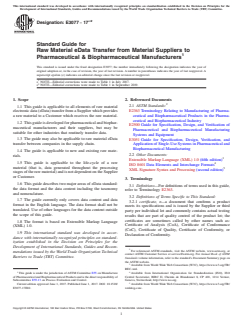
(Guide)Standard Guide for Raw Material eData Transfer from Material Suppliers to Pharmaceutical & Biopharmaceutical Manufacturers
General Information
- Abstract
SIGNIFICANCE AND USE
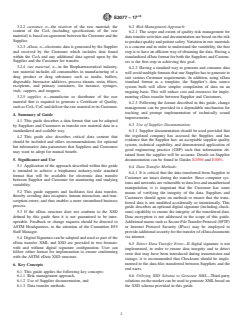
5.1 Application of the approach described within this guide is intended to achieve a biopharma industry-wide standard format that will be available for electronic data transfer between Supplier and Customer for monitoring and studying variability.
5.2 This guide supports and facilitates fast data transfer, thereby avoiding data recapture, human interaction, and transcription errors; and thus enables a more streamlined business process.
5.3 If the eData structure does not conform to the XSD defined by this guide then it is not guaranteed to be inter-operable. Feedback or change requests should be directed to ASTM Headquarters, to the attention of the Committee E55 Staff Manager.
5.4 Digital Signature can be adopted and used as part of the eData transfer. XML and XSD are provided in two formats: with and without digital signature configuration. User can follow either format for implmenation to ensure conforming with the ASTM eData XSD structure.
SCOPE
1.1 This guide is applicable to all elements of raw material electronic data (eData) transfer from a Supplier which provides a raw material to a Customer which receives the raw material.
1.2 This guide is developed for pharmaceutical and biopharmaceutical manufacturers and their suppliers, but may be suitable for other industries that routinely transfer data.
1.3 The guide may also be applicable to raw material eData transfer between companies in the supply chain.
1.4 The guide is applicable to new and existing raw materials.
1.5 This guide is applicable to the life-cycle of a raw material (that is, data generated throughout the processing stages of the raw material) and is not dependent on the Supplier or Customer.
1.6 This guide describes two major areas of eData standard: the data format and the data content including the taxonomy and nomenclature.
1.7 The guide currently only covers data content and data format in the English language. The data format shall not be translated. Use of other languages for the data content outside the scope of this guide.
1.8 The format is based on Extensible Markup Language (XML) 1.0.
1.9 This international standard was developed in accordance with internationally recognized principles on standardization established in the Decision on Principles for the Development of International Standards, Guides and Recommendations issued by the World Trade Organization Technical Barriers to Trade (TBT) Committee.
- Status
- Published
- Publication Date
- 31-May-2017
- Technical Committee
- E55 - Manufacture of Pharmaceutical and Biopharmaceutical Products
- Drafting Committee
- E55.13 - Process Evaluation and Control
Overview
ASTM E3077-17e2 is a standardized guide developed by ASTM International for the electronic transfer of raw material data (eData) between material suppliers and pharmaceutical or biopharmaceutical manufacturers. This guide establishes an industry-wide framework to standardize the format and content of electronic data exchange, aiming to enhance the monitoring and management of raw material variability. The use of ASTM E3077-17e2 facilitates efficient, accurate, and secure data transfer, reducing manual processes and minimizing transcription errors.
This standard is intended for application across the full life-cycle of raw materials, from manufacturing through distribution and use, and it is not restricted to specific suppliers or customers. While primarily designed for pharmaceutical and biopharmaceutical sectors, the guide’s principles may be adapted for use in other industries that require routine data exchange between supply chain partners.
Key Topics
- Standardized eData Format: Defines a consistent XML-based format for the transfer of raw material data, ensuring interoperability across systems.
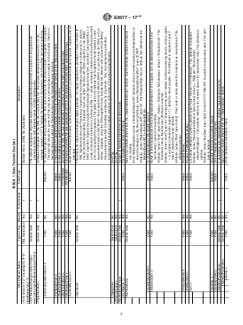
- Data Content Structure: Outlines both required and optional data fields, including critical information such as manufacturer, lot numbers, test results, and quality signatures.
- Risk Management: Establishes a risk-based approach for data transfer activities, supporting quality and patient safety objectives by enabling clear identification and traceability of raw materials.
- Digital Signatures & Data Integrity: Supports optional digital signatures for enhanced data integrity and traceability, providing mechanisms for data verification and error detection.
- Supplier Documentation: Emphasizes the importance of robust supplier quality systems and technical capability, ensuring data reliability.
Applications
ASTM E3077-17e2 provides tangible benefits for both suppliers and manufacturers of pharmaceutical and biopharmaceutical products:
- Increased Efficiency: Automates data transfer processes, significantly decreasing the need for manual data entry and reducing the risk of transcription errors.
- Enhanced Data Integrity: Utilizes digital signatures and checksums (if implemented) to ensure unaltered and authentic data transmission, fulfilling regulatory and business requirements.
- Improved Compliance: Supports regulatory adherence regarding electronic data management and data integrity, aligning with key guidance such as FDA’s Data Integrity and 21 CFR Part 11.
- Comprehensive Traceability: Tracks material data across different lots, batches, and stages of processing, supporting audit trails and quality investigations.
- Streamlined Supply Chain Communication: Provides a common electronic language for suppliers and manufacturers, facilitating smoother onboarding of new suppliers and harmonization across the industry.
- Customizable Data Exchange: Features optional fields and flexible coding mechanisms, allowing adaptation to specific business agreements while maintaining standardization.
Related Standards
ASTM E3077-17e2 incorporates and references several important standards and documents which can further support its implementation:
- ASTM E2363: Terminology Relating to Manufacturing of Pharmaceutical and Biopharmaceutical Products.
- ASTM E2500: Guide for Specification, Design, and Verification of Manufacturing Systems and Equipment.
- ASTM E3051: Guide for Specification, Design, Verification, and Application of Single-Use Systems in Manufacturing.
- ISO 8601: Data Elements and Interchange Formats - Information interchange - Representation of dates and times.
- XML 1.0 (W3C): Extensible Markup Language specification for the data format.
- XML Signature Syntax and Processing (W3C): Used for digital authentication of data files.
- 21 CFR Part 11 (FDA): Guidelines for electronic records and electronic signatures.
By deploying ASTM E3077-17e2, organizations can future-proof their raw material data transfer processes, facilitate regulatory compliance, and drive operational excellence in the pharmaceutical and biopharmaceutical supply chain. For detailed guidance and schema files, refer directly to the ASTM E3077-17e2 document at www.astm.org.
Relations
- Effective Date
- 15-Oct-2012
- Effective Date
- 01-Jun-2007
- Effective Date
- 15-Jul-2006
- Effective Date
- 15-Jan-2006
- Effective Date
- 15-Oct-2005
- Effective Date
- 15-Aug-2005
- Effective Date
- 01-Mar-2005
- Effective Date
- 01-Dec-2004
- Effective Date
- 01-Jul-2004
Get Certified
Connect with accredited certification bodies for this standard

BSI Group
BSI (British Standards Institution) is the business standards company that helps organizations make excellence a habit.

NYCE
Mexican standards and certification body.
Sponsored listings
Frequently Asked Questions
ASTM E3077-17e2 is a guide published by ASTM International. Its full title is "Standard Guide for Raw Material eData Transfer from Material Suppliers to Pharmaceutical & Biopharmaceutical Manufacturers". This standard covers: SIGNIFICANCE AND USE 5.1 Application of the approach described within this guide is intended to achieve a biopharma industry-wide standard format that will be available for electronic data transfer between Supplier and Customer for monitoring and studying variability. 5.2 This guide supports and facilitates fast data transfer, thereby avoiding data recapture, human interaction, and transcription errors; and thus enables a more streamlined business process. 5.3 If the eData structure does not conform to the XSD defined by this guide then it is not guaranteed to be inter-operable. Feedback or change requests should be directed to ASTM Headquarters, to the attention of the Committee E55 Staff Manager. 5.4 Digital Signature can be adopted and used as part of the eData transfer. XML and XSD are provided in two formats: with and without digital signature configuration. User can follow either format for implmenation to ensure conforming with the ASTM eData XSD structure. SCOPE 1.1 This guide is applicable to all elements of raw material electronic data (eData) transfer from a Supplier which provides a raw material to a Customer which receives the raw material. 1.2 This guide is developed for pharmaceutical and biopharmaceutical manufacturers and their suppliers, but may be suitable for other industries that routinely transfer data. 1.3 The guide may also be applicable to raw material eData transfer between companies in the supply chain. 1.4 The guide is applicable to new and existing raw materials. 1.5 This guide is applicable to the life-cycle of a raw material (that is, data generated throughout the processing stages of the raw material) and is not dependent on the Supplier or Customer. 1.6 This guide describes two major areas of eData standard: the data format and the data content including the taxonomy and nomenclature. 1.7 The guide currently only covers data content and data format in the English language. The data format shall not be translated. Use of other languages for the data content outside the scope of this guide. 1.8 The format is based on Extensible Markup Language (XML) 1.0. 1.9 This international standard was developed in accordance with internationally recognized principles on standardization established in the Decision on Principles for the Development of International Standards, Guides and Recommendations issued by the World Trade Organization Technical Barriers to Trade (TBT) Committee.
SIGNIFICANCE AND USE 5.1 Application of the approach described within this guide is intended to achieve a biopharma industry-wide standard format that will be available for electronic data transfer between Supplier and Customer for monitoring and studying variability. 5.2 This guide supports and facilitates fast data transfer, thereby avoiding data recapture, human interaction, and transcription errors; and thus enables a more streamlined business process. 5.3 If the eData structure does not conform to the XSD defined by this guide then it is not guaranteed to be inter-operable. Feedback or change requests should be directed to ASTM Headquarters, to the attention of the Committee E55 Staff Manager. 5.4 Digital Signature can be adopted and used as part of the eData transfer. XML and XSD are provided in two formats: with and without digital signature configuration. User can follow either format for implmenation to ensure conforming with the ASTM eData XSD structure. SCOPE 1.1 This guide is applicable to all elements of raw material electronic data (eData) transfer from a Supplier which provides a raw material to a Customer which receives the raw material. 1.2 This guide is developed for pharmaceutical and biopharmaceutical manufacturers and their suppliers, but may be suitable for other industries that routinely transfer data. 1.3 The guide may also be applicable to raw material eData transfer between companies in the supply chain. 1.4 The guide is applicable to new and existing raw materials. 1.5 This guide is applicable to the life-cycle of a raw material (that is, data generated throughout the processing stages of the raw material) and is not dependent on the Supplier or Customer. 1.6 This guide describes two major areas of eData standard: the data format and the data content including the taxonomy and nomenclature. 1.7 The guide currently only covers data content and data format in the English language. The data format shall not be translated. Use of other languages for the data content outside the scope of this guide. 1.8 The format is based on Extensible Markup Language (XML) 1.0. 1.9 This international standard was developed in accordance with internationally recognized principles on standardization established in the Decision on Principles for the Development of International Standards, Guides and Recommendations issued by the World Trade Organization Technical Barriers to Trade (TBT) Committee.
ASTM E3077-17e2 is classified under the following ICS (International Classification for Standards) categories: 35.240.63 - IT applications in trade. The ICS classification helps identify the subject area and facilitates finding related standards.
ASTM E3077-17e2 has the following relationships with other standards: It is inter standard links to ASTM E2500-07(2012), ASTM E2500-07, ASTM E2363-06a, ASTM E2363-06, ASTM E2363-05b, ASTM E2363-05a, ASTM E2363-05, ASTM E2363-04a, ASTM E2363-04. Understanding these relationships helps ensure you are using the most current and applicable version of the standard.
ASTM E3077-17e2 is available in PDF format for immediate download after purchase. The document can be added to your cart and obtained through the secure checkout process. Digital delivery ensures instant access to the complete standard document.
Standards Content (Sample)
This international standard was developed in accordance with internationally recognized principles on standardization established in the Decision on Principles for the
Development of International Standards, Guides and Recommendations issued by the World Trade Organization Technical Barriers to Trade (TBT) Committee.
´2
Designation: E3077 − 17
Standard Guide for
Raw Material eData Transfer from Material Suppliers to
Pharmaceutical & Biopharmaceutical Manufacturers
This standard is issued under the fixed designation E3077; the number immediately following the designation indicates the year of
original adoption or, in the case of revision, the year of last revision. A number in parentheses indicates the year of last reapproval. A
superscript epsilon (´) indicates an editorial change since the last revision or reapproval.
ε NOTE—Editorial corrections were made to Table 1 in July 2017.
ε NOTE—Editorial corrections were made to Table 1 in September 2019.
1. Scope 2. Referenced Documents
2.1 ASTM Standards:
1.1 This guide is applicable to all elements of raw material
E2363 Terminology Relating to Manufacturing of Pharma-
electronic data (eData) transfer from a Supplier which provides
ceutical and Biopharmaceutical Products in the Pharma-
a raw material to a Customer which receives the raw material.
ceutical and Biopharmaceutical Industry
1.2 This guide is developed for pharmaceutical and biophar-
E2500 Guide for Specification, Design, and Verification of
maceutical manufacturers and their suppliers, but may be
Pharmaceutical and Biopharmaceutical Manufacturing
suitable for other industries that routinely transfer data.
Systems and Equipment
1.3 The guide may also be applicable to raw material eData
E3051 Guide for Specification, Design, Verification, and
transfer between companies in the supply chain. Application of Single-Use Systems in Pharmaceutical and
Biopharmaceutical Manufacturing
1.4 The guide is applicable to new and existing raw mate-
2.2 Other Documents:
rials.
Extensible Markup Language (XML) 1.0 (fifth edition)
1.5 This guide is applicable to the life-cycle of a raw
ISO 8601 Data Elements and Interchange Formats
material (that is, data generated throughout the processing
XML Signature Syntax and Processing (second edition)
stages of the raw material) and is not dependent on the Supplier
or Customer.
3. Terminology
1.6 This guide describes two major areas of eData standard:
3.1 Definitions—For definitions of terms used in this guide,
the data format and the data content including the taxonomy
refer to Terminology E2363.
and nomenclature.
3.2 Definitions of Terms Specific to This Standard:
1.7 The guide currently only covers data content and data
3.2.1 certificate, n—a document that confirms a product
format in the English language. The data format shall not be
meets its specifications and is issued by the Supplier or third
translated. Use of other languages for the data content outside
party per individual lot and commonly contains actual testing
the scope of this guide.
results that are part of quality control of the product lot; the
certificates are sometimes called by other names such as:
1.8 The format is based on Extensible Markup Language
Certificate of Analysis (CoA), Certificate of Conformance
(XML) 1.0.
(CoC), Certificate of Quality, Certificate of Conformity, or
1.9 This international standard was developed in accor-
Declaration of Conformity.
dance with internationally recognized principles on standard-
ization established in the Decision on Principles for the
Development of International Standards, Guides and Recom-
For referenced ASTM standards, visit the ASTM website, www.astm.org, or
mendations issued by the World Trade Organization Technical
contact ASTM Customer Service at service@astm.org. For Annual Book of ASTM
Barriers to Trade (TBT) Committee.
Standards volume information, refer to the standard’s Document Summary page on
the ASTM website.
Available from World Wide Web Consortium (W3C), https://www.w3.org/TR/
REC-xml.
1 4
This guide is under the jurisdiction of ASTM Committee E55 on Manufacture Available from International Organization for Standardization (ISO), ISO
of Pharmaceutical and Biopharmaceutical Products and is the direct responsibility of Central Secretariat, BIBC II, Chemin de Blandonnet 8, CP 401, 1214 Vernier,
Subcommittee E55.13 on Process Evaluation and Control. Geneva, Switzerland, http://www.iso.org.
Current edition approved June 1, 2017. Published June 1, 2017. DOI: 10.1520/ Available from World Wide Web Consortium (W3C), https://www.w3.org/TR/
E3077-17E02. xmldsig-core.
Copyright © ASTM International, 100 Barr Harbor Drive, PO Box C700, West Conshohocken, PA 19428-2959. United States
´2
E3077 − 17
3.2.2 customer, n—the receiver of the raw material; the 6.2 Risk Management Approach:
content of the CoA (including specifications of the raw
6.2.1 The scope and extent of quality risk management for
material) is based on agreement between the Customer and the
data transfer activities and documentation are based on the risk
Supplier.
to product quality and patient safety. Variation in raw materials
3.2.3 eData, n—electronic data is generated by the Supplier
is a concern and in order to understand the variability, the first
and received by the Customer which includes data found
step is to have an efficient way of obtaining the data. Having a
within the CoA and any additional data agreed upon by the
standardized eData format for both the Suppliers and Custom-
Supplier and the Customer for transfer.
ers is the first step in achieving this goal.
3.2.4 raw material, n—in the Biopharmaceutical industry,
6.2.2 Having a standard way to generate and consume data
raw material includes all consumables in manufacturing of a
will avoid multiple formats that one Supplier has to generate to
drug product or drug substance such as media, buffers,
suit various Customer requirements. In addition, using eData
disposable, bioreactor additives, process titrants, resin, filters,
standard format as a template, the Supplier’s data source
excipients, and primary containers, for instance, syringes,
system built will allow simpler compilation of data on an
vials, cappers, and stoppers.
ongoing basis. This will reduce cost and resources for imple-
3.2.5 supplier, n—manufactur or distributor of the raw menting eData transfer between Supplier and Customers.
material that is required to generate a Certificate of Quality,
6.2.3 Following the format described in this guide, change
such as CoA, CoC and deliver the raw material to its Customer.
management can be provided in a dependable mechanism for
tracking and prompt implementation of technically sound
4. Summary of Guide
improvements.
4.1 This guide describes a data format that can be adopted
6.3 Use of Supplier Documentation:
by Suppliers and Customers to transfer raw material data in a
6.3.1 Supplier documentation should be used provided that
standardized and scalable way.
the regulated company has assessed the Supplier, and has
4.2 This guide also describes critical data content that
evidence that the Supplier has: an acceptable supplier quality
should be included and offers recommendations for optional
system, technical capability, and demonstrated application of
but informative data parameters that Suppliers and Customers
good engineering practice (GEP) such that information ob-
may want to adopt for mutual benefit.
tained from the supplier will be accurate. Details on Supplier
5. Significance and Use
documentation can be found in Guides E2500 and E3051.
5.1 Application of the approach described within this guide
6.4 Data Transfer Methods:
is intended to achieve a biopharma industry-wide standard
6.4.1 It is critical that the data transferred from Supplier to
format that will be available for electronic data transfer
Customer are intact during the transfer. Since computer sys-
between Supplier and Customer for monitoring and studying
tems and networks are vulnerable to data loss and unauthorized
variability.
manipulation, it is important that the Customer has some
5.2 This guide supports and facilitates fast data transfer,
means of verifying the integrity of the data. Suppliers and
thereby avoiding data recapture, human interaction, and tran-
Customers should agree on methods to ensure that the trans-
scription errors; and thus enables a more streamlined business
ferred data is not modified accidentally or intentionally. This
process.
guide describes an optional digital signature (including check-
5.3 If the eData structure does not conform to the XSD sum) capability to ensure the integrity of the transferred data.
defined by this guide then it is not guaranteed to be inter- Data encryption is not addressed in the scope of this guide.
operable. Feedback or change requests should be directed to Additional means such as Secure File Transfer Protocol (SFTP)
ASTM Headquarters, to the attention of the Committee E55
or Internet Protocol Security (IPsec) may be employed to
Staff Manager.
provide additional security for the transfer of eData documents
via internet.
5.4 Digital Signature can be adopted and used as part of the
eData transfer. XML and XSD are provided in two formats:
6.5 Detect Data Transfer Error—If digital signature is not
with and without digital signature configuration. User can
implemented, in order to ensure data integrity and to detect
follow either format for implmenation to ensure conforming
error that may have been introduced during transmission and
with the ASTM eData XSD structure.
storage, it is recommended that Checksum should be imple-
mented to the data files transferred between Suppliers and the
6. Key Concepts
end users.
6.1 This guide applies the following key concepts:
6.6 Utilizing XSD Schema to Generate XML—Third-party
6.1.1 Risk management approach,
6.1.2 Use of Supplier documentation, and solutions on the market can be used to generate XML based on
6.1.3 Data transfer methods. the XSD schema provided in this guide.
´2
E3077 − 17
6.7 Suppliers may reasonably request that Customers keep 7. Data Transfer Content
information confidential to avoid disclosure of sensitive infor-
7.1 Table 1 describes the data transfer content and their
...