

EN 12488:2016
(Main)Glass in building - Glazing recommendations - Assembly principles for vertical and sloping glazing
- Abstract
This European Standard defines principles of glazing as well as recommendations on the selection of components, e.g. frame sections, beads, drainage holes, etc., for fitting glazing into frames of any material.
This European Standard applies to all basic types of edge supported vertical and sloping glazing systems, in all types of fixed or opening frames used in buildings.
This European standard specifies also the functions, requirements and installation of glazing blocks within a frame during its manufacturing, transportation, installation and operational life. The standard applies to glazing blocks used for all types of flat or curved glass, as well as to derived processed types of glass.
For certain glass products, e.g. fire resistant glazing, security glass, other or additional requirements, rules or recommendations may apply.
The standard is applicable to European climate conditions.
This European Standard does not apply to the following:
- glass blocks and paver units (EN 1051 1);
- channel-shaped glass (EN 572 7);
- structural sealant glazing (see EN 13022 1 and EN 13022 2 and ETAG 002);
- adhesively bonded glazing in window;
- point fixed glazing;
- greenhouses (see EN 13031 1).
As this standard gives basic assembly principles only, national requirements, rules or recommendations may also apply.
- Status
- Published
- Publication Date
- 28-Jun-2016
- Withdrawal Date
- 30-Dec-2016
- Technical Committee
- CEN/TC 129 - Glass in building
- Drafting Committee
- CEN/TC 129/WG 12 - Glass in building - Assembly rules
- Current Stage
- 9060 - Closure of 2 Year Review Enquiry - Review Enquiry
- Start Date
- 02-Dec-2021
- Completion Date
- 02-Dec-2021



Overview
EN 12488:2016 - "Glass in building - Glazing recommendations - Assembly principles for vertical and sloping glazing" (CEN) sets out basic assembly principles and component selection guidance for fitting glazing into frames of any material. The standard applies to edge‑supported vertical and sloping glazing systems in both fixed and opening frames and is intended for European climate conditions. It also defines the functions, requirements and installation of glazing blocks during manufacture, transport, installation and service life.
The document is advisory (basic assembly principles); national regulations or manufacturer requirements may add further constraints.
Key topics and requirements
- Scope and applicability
- Covers all basic types of edge‑supported vertical (≤15° from vertical) and sloping (15°–85° from vertical) glazing.
- Excludes specific systems: glass blocks/pavers, channel‑shaped glass, structural sealant glazing, adhesively bonded glazing in windows, point‑fixed glazing and greenhouses.
- Glazing system components
- Guidance on frame selection, materials and finishes; beads; drainage openings; gaskets; sealants and putty.
- Recommendations for selection and positioning of glazing blocks (setting blocks, location blocks, distance pieces, compensation and temporary blocks).
- Rebate and support geometry
- Definitions and requirements for rebate depth, glazing rebate platform/upstand, face clearances, mechanical edge cover and edge clearance - used to determine safe glass support and transmitted loads.
- Durability and functional requirements
- Considerations for UV, chemical and atmospheric attack on sensitive components, weather tightness and special requirements for sloping glazing (water ponding, snow/ice entrapment).
- Drainage and ventilation
- Informative annex with recommendations for drained and pressure‑equalized systems, drainage channels and ventilation openings to avoid moisture entrapment.
- Installation lifecycle
- Roles of glazing blocks during manufacturing, transport, site installation and operational life; temporary blocks for transport; positioning guidance in informative annexes.
Practical applications and users
Who will use EN 12488:
- Architects and façade designers specifying glazed openings
- Façade and curtain‑wall engineers (for edge‑supported systems)
- Window and door manufacturers and component suppliers (frames, gaskets, sealants, glazing blocks)
- Glazing contractors and installers executing glazing works
- Building inspectors and specifiers verifying compliance and detailing
Typical uses:
- Specifying rebate geometry and glazing support details
- Selecting and locating setting and location blocks to ensure mechanical stability and drainage
- Designing drained and pressure‑equalized rebates for long‑term weather tightness
- Integrating glazing with framing systems while avoiding water or ice entrapment on sloped glazings
Related standards
Normative references to consult include (non‑exhaustive):
- EN 1279‑1 (insulating glass units)
- EN 15651‑2 (sealants for glazing)
- EN 13830 (curtain walling)
- EN 14351‑1 / prEN 14351‑2 (windows and doors) Consult national codes and manufacturer instructions for additional or region‑specific requirements.
Keywords: EN 12488, glazing recommendations, vertical glazing, sloping glazing, glazing blocks, glass in building, assembly principles, drained and pressure‑equalized, rebate, setting blocks.
Relations
- Effective Date
- 28-Jan-2026
- Effective Date
- 28-Jan-2026
- Effective Date
- 28-Jan-2026
- Effective Date
- 28-Jan-2026
- Effective Date
- 28-Jan-2026
- Effective Date
- 28-Jan-2026
- Effective Date
- 28-Jan-2026
- Effective Date
- 28-Jan-2026
- Effective Date
- 28-Jan-2026
- Effective Date
- 09-Sep-2026
- Effective Date
- 09-Feb-2026
- Effective Date
- 09-Feb-2026
- Effective Date
- 28-Jan-2026
- Effective Date
- 28-Jan-2026
- Effective Date
- 28-Jan-2026
Frequently Asked Questions
EN 12488:2016 is a standard published by the European Committee for Standardization (CEN). Its full title is "Glass in building - Glazing recommendations - Assembly principles for vertical and sloping glazing". This standard covers: This European Standard defines principles of glazing as well as recommendations on the selection of components, e.g. frame sections, beads, drainage holes, etc., for fitting glazing into frames of any material. This European Standard applies to all basic types of edge supported vertical and sloping glazing systems, in all types of fixed or opening frames used in buildings. This European standard specifies also the functions, requirements and installation of glazing blocks within a frame during its manufacturing, transportation, installation and operational life. The standard applies to glazing blocks used for all types of flat or curved glass, as well as to derived processed types of glass. For certain glass products, e.g. fire resistant glazing, security glass, other or additional requirements, rules or recommendations may apply. The standard is applicable to European climate conditions. This European Standard does not apply to the following: - glass blocks and paver units (EN 1051 1); - channel-shaped glass (EN 572 7); - structural sealant glazing (see EN 13022 1 and EN 13022 2 and ETAG 002); - adhesively bonded glazing in window; - point fixed glazing; - greenhouses (see EN 13031 1). As this standard gives basic assembly principles only, national requirements, rules or recommendations may also apply.
This European Standard defines principles of glazing as well as recommendations on the selection of components, e.g. frame sections, beads, drainage holes, etc., for fitting glazing into frames of any material. This European Standard applies to all basic types of edge supported vertical and sloping glazing systems, in all types of fixed or opening frames used in buildings. This European standard specifies also the functions, requirements and installation of glazing blocks within a frame during its manufacturing, transportation, installation and operational life. The standard applies to glazing blocks used for all types of flat or curved glass, as well as to derived processed types of glass. For certain glass products, e.g. fire resistant glazing, security glass, other or additional requirements, rules or recommendations may apply. The standard is applicable to European climate conditions. This European Standard does not apply to the following: - glass blocks and paver units (EN 1051 1); - channel-shaped glass (EN 572 7); - structural sealant glazing (see EN 13022 1 and EN 13022 2 and ETAG 002); - adhesively bonded glazing in window; - point fixed glazing; - greenhouses (see EN 13031 1). As this standard gives basic assembly principles only, national requirements, rules or recommendations may also apply.
EN 12488:2016 is classified under the following ICS (International Classification for Standards) categories: 81.040.20 - Glass in building. The ICS classification helps identify the subject area and facilitates finding related standards.
EN 12488:2016 has the following relationships with other standards: It is inter standard links to EN 13830:2015+A1:2020, EN 14351-2:2018, EN 15651-2:2017, EN 12365-1:2003, EN ISO 868:2003, EN 1279-1:2018, EN 13241:2003+A2:2016, EN 14351-1:2006+A2:2016, EN 16034:2014, EN 19100-1:2026, EN 50583-1:2016, EN 50583-2:2016, CEN/TS 19100-1:2021, EN ISO 14732:2025, EN ISO 15612:2018. Understanding these relationships helps ensure you are using the most current and applicable version of the standard.
EN 12488:2016 is associated with the following European legislation: EU Directives/Regulations: 88/609/EEC; Standardization Mandates: M/135_Am1. When a standard is cited in the Official Journal of the European Union, products manufactured in conformity with it benefit from a presumption of conformity with the essential requirements of the corresponding EU directive or regulation.
EN 12488:2016 is available in PDF format for immediate download after purchase. The document can be added to your cart and obtained through the secure checkout process. Digital delivery ensures instant access to the complete standard document.
Standards Content (Sample)
2003-01.Slovenski inštitut za standardizacijo. Razmnoževanje celote ali delov tega standarda ni dovoljeno.Glas im Bauwesen - Empfehlungen für die Verglasung - Verglasungsgrundlagen für vertikale und abfallende VerglasungVerre dans la construction - Recommandations pour la mise en oeuvre - Principes de pose pour vitrage vertical et inclinéGlass in buildings - Glazing recommendations - Assembly principles for vertical and sloping glazing81.040.20Steklo v gradbeništvuGlass in buildingICS:Ta slovenski standard je istoveten z:EN 12488:2016SIST EN 12488:2016en,fr,de01-november-2016SIST EN 12488:2016SLOVENSKI
STANDARD
EUROPEAN STANDARD NORME EUROPÉENNE EUROPÄISCHE NORM
EN 12488
June
t r s x ICS
z sä r v rä t r English Version
Glass in building æ Glazing recommendations æ Assembly principles for vertical and sloping glazing Verre dans la construction æ Recommandations pour la mise en oeuvre æ Principes de pose pour vitrage vertical et incliné
Glas im Bauwesen æ Empfehlungen für die Verglasung æVerglasungsgrundlagen für vertikale und abfallende Verglasung This European Standard was approved by CEN on
z April
t r s xä
egulations which stipulate the conditions for giving this European Standard the status of a national standard without any alterationä Upætoædate lists and bibliographical references concerning such national standards may be obtained on application to the CENæCENELEC Management Centre or to any CEN memberä
translation under the responsibility of a CEN member into its own language and notified to the CENæCENELEC Management Centre has the same status as the official versionsä
CEN members are the national standards bodies of Austriaá Belgiumá Bulgariaá Croatiaá Cyprusá Czech Republicá Denmarká Estoniaá Finlandá Former Yugoslav Republic of Macedoniaá Franceá Germanyá Greeceá Hungaryá Icelandá Irelandá Italyá Latviaá Lithuaniaá Luxembourgá Maltaá Netherlandsá Norwayá Polandá Portugalá Romaniaá Slovakiaá Sloveniaá Spainá Swedená Switzerlandá Turkey and United Kingdomä
EUROPEAN COMMITTEE FOR STANDARDIZATION COMITÉ EUROPÉEN DE NORMALISATION EUROPÄISCHES KOMITEE FÜR NORMUNG
CEN-CENELEC Management Centre:
Avenue Marnix 17,
B-1000 Brussels
t r s x CEN All rights of exploitation in any form and by any means reserved worldwide for CEN national Membersä Refä Noä EN
s t v z zã t r s x ESIST EN 12488:2016
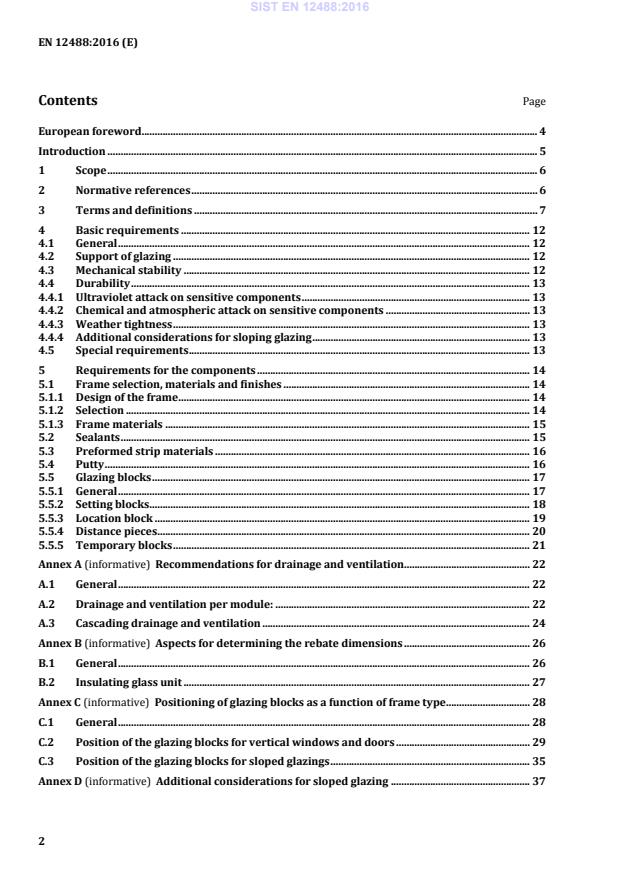
Recommendations for drainage and ventilation. 22 A.1 General . 22 A.2 Drainage and ventilation per module: . 22 A.3 Cascading drainage and ventilation . 24 Annex B (informative)
Aspects for determining the rebate dimensions . 26 B.1 General . 26 B.2 Insulating glass unit . 27 Annex C (informative)
Positioning of glazing blocks as a function of frame type . 28 C.1 General . 28 C.2 Position of the glazing blocks for vertical windows and doors . 29 C.3 Position of the glazing blocks for sloped glazings . 35 Annex D (informative)
Additional considerations for sloped glazing . 37 SIST EN 12488:2016
Vertical glazing,
open rebate Vertical glazing,
closed rebate Sloping glazing Key 1 glazing rebate platform 4 drainage channel 2 glazing rebate upstand 5 drainage opening 3 glazing bead
Figure 1 — Definition of a glazing rebate SIST EN 12488:2016
Vertical glazing Glazed roof – transom Key r = glass retention area Jp = edge clearance f = free intersection t = rebate depth = m + Jp m = mechanical edge cover = r + f d = face clearance w = width of glazing rebate
Figure 2 — Symbols and terms for glazing rebate dimensions
Key 1 setting block 2 location block 3 distance pieces 4 compensation block Figure 3 — Types of blocks SIST EN 12488:2016
...