

EN 1251-2:2000
(Main)Cryogenic vessels - Transportable vacuum insulated vessels of not more than 1000 litres volume - Part 2: Design, fabrication, inspection and testing
- Abstract
This European Standard is applicable to the design, fabrication, inspection and testing of transportable vacuum insulated cryogenic vessels of not more than 1000 litres volume and designed for a maximum allowable pressure greater than atmospheric. This standard applies to transportable vacuum insulated cryogenic vessels for fluids as specified in prEN 1251-1 and is not applicable to such vessels designed for toxic fluids.
- Status
- Published
- Publication Date
- 18-Jan-2000
- Withdrawal Date
- 30-Jul-2000
- Technical Committee
- CEN/TC 268 - Cryogenic vessels
- Drafting Committee
- CEN/TC 268/WG 2 - Compatibility, insulation, accessories
- Current Stage
- 9092 - Decision on results of review/2YR ENQ - revise - Review Enquiry
- Start Date
- 04-Mar-2024
- Completion Date
- 07-Oct-2026



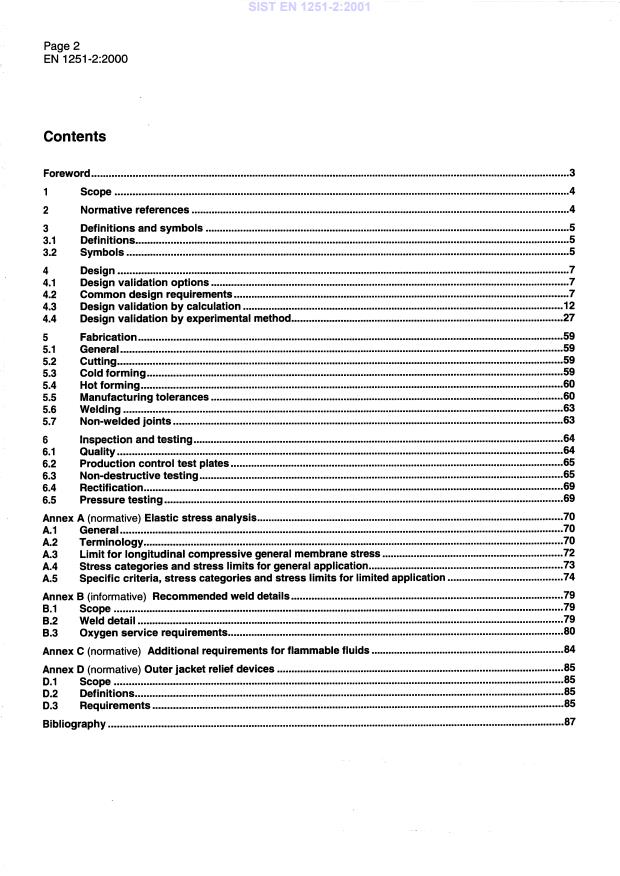
Overview
EN 1251-2:2000 is a European Standard published by CEN that specifies requirements for transportable vacuum insulated cryogenic vessels with a capacity of not more than 1000 litres. The standard covers the design, fabrication, inspection and testing of these vacuum‑insulated vessels when they are designed for a maximum allowable pressure greater than atmospheric. EN 1251-2 applies to vessels intended for the fluids listed in prEN 1251-1 and explicitly excludes vessels designed for toxic fluids.
Key Topics
- Scope and applicability: Limits on vessel volume (≤1000 L) and pressure class (greater than atmospheric); exclusion of toxic-fluid vessels.
- Design requirements: Principles for safe structural design and material selection appropriate for vacuum‑insulated, transportable cryogenic equipment (as defined in the standard).
- Fabrication and welding: Requirements for manufacturing processes and quality control during assembly and joining of cryogenic vessel components.
- Inspection and testing: Mandatory inspection regimes and testing procedures to verify integrity, vacuum insulation performance and pressure containment before and after commissioning.
- Documentation and marking: Requirements for technical documentation, records of inspections/tests, and marking to demonstrate compliance.
Applications
EN 1251-2 is used to ensure safety, reliability and regulatory compliance for small transportable cryogenic containers. Typical practical applications include:
- Manufacturing and certification of transportable vacuum insulated vessels used to store and transport non-toxic cryogenic fluids.
- Quality assurance and inspection planning by fabricators and testing laboratories.
- Procurement and technical specifications for industrial gas suppliers, research facilities, laboratories and maintenance organizations that deploy transportable cryogenic containers.
- Reference for safety engineers, compliance officers and certifying bodies assessing vessel conformity with European design and testing expectations.
Who Should Use This Standard
- Manufacturers and designers of transportable cryogenic vessels
- Welding and fabrication workshops producing vacuum-insulated containers
- Inspection bodies and testing laboratories performing compliance verification
- Procurement teams and end users specifying or operating non-toxic cryogenic vessels
Related Standards
- prEN 1251-1 - defines the fluids and related baseline requirements (referenced by EN 1251-2)
- Other European and national pressure-vessel and cryogenic standards (for broader conformity and regulatory alignment)
EN 1251-2:2000 is essential for professionals involved in the lifecycle of small, transportable vacuum insulated cryogenic vessels who need to meet consistent European requirements for design, fabrication, inspection and testing.
Relations
- Effective Date
- 28-Jan-2026
- Effective Date
- 28-Jan-2026
- Effective Date
- 28-Jan-2026
- Effective Date
- 28-Jan-2026
- Effective Date
- 28-Jan-2026
- Effective Date
- 28-Jan-2026
- Effective Date
- 28-Jan-2026
- Effective Date
- 28-Jan-2026
- Effective Date
- 28-Jan-2026
- Effective Date
- 28-Jan-2026
- Effective Date
- 28-Jan-2026
- Effective Date
- 28-Jan-2026
- Effective Date
- 28-Jan-2026
- Refers
EN ISO 5173:2023 - Destructive tests on welds in metallic materials - Bend tests (ISO 5173:2023) - Effective Date
- 28-Jan-2026
- Effective Date
- 28-Jan-2026
Get Certified
Connect with accredited certification bodies for this standard

Institut za varilstvo d.o.o. (Welding Institute)
Slovenia's leading welding institute since 1952. ISO 3834, EN 1090, pressure equipment certification, NDT personnel, welder qualification. Only IIW Au
Sponsored listings
Frequently Asked Questions
EN 1251-2:2000 is a standard published by the European Committee for Standardization (CEN). Its full title is "Cryogenic vessels - Transportable vacuum insulated vessels of not more than 1000 litres volume - Part 2: Design, fabrication, inspection and testing". This standard covers: This European Standard is applicable to the design, fabrication, inspection and testing of transportable vacuum insulated cryogenic vessels of not more than 1000 litres volume and designed for a maximum allowable pressure greater than atmospheric. This standard applies to transportable vacuum insulated cryogenic vessels for fluids as specified in prEN 1251-1 and is not applicable to such vessels designed for toxic fluids.
This European Standard is applicable to the design, fabrication, inspection and testing of transportable vacuum insulated cryogenic vessels of not more than 1000 litres volume and designed for a maximum allowable pressure greater than atmospheric. This standard applies to transportable vacuum insulated cryogenic vessels for fluids as specified in prEN 1251-1 and is not applicable to such vessels designed for toxic fluids.
EN 1251-2:2000 is classified under the following ICS (International Classification for Standards) categories: 23.020.40 - Cryogenic vessels. The ICS classification helps identify the subject area and facilitates finding related standards.
EN 1251-2:2000 has the following relationships with other standards: It is inter standard links to EN ISO 17637:2016, EN ISO 3834-3:2021, EN ISO 15614-2:2025, EN ISO 9606-1:2017, EN 1797:2001, EN 12213:1998, EN ISO 6520-1:2007, EN 1626:2008, EN ISO 23208:2019, EN ISO 2244:2002, EN 10204:2004, EN ISO 14732:2025, EN ISO 15614-1:2017, EN ISO 5173:2023, EN ISO 9606-2:2004. Understanding these relationships helps ensure you are using the most current and applicable version of the standard.
EN 1251-2:2000 is associated with the following European legislation: EU Directives/Regulations: 94/55/EC, 96/49/EC, 96/86/EC, 96/87/EC, TRRTP121; Standardization Mandates: M/086. When a standard is cited in the Official Journal of the European Union, products manufactured in conformity with it benefit from a presumption of conformity with the essential requirements of the corresponding EU directive or regulation.
EN 1251-2:2000 is available in PDF format for immediate download after purchase. The document can be added to your cart and obtained through the secure checkout process. Digital delivery ensures instant access to the complete standard document.
Standards Content (Sample)
2003-01.Slovenski inštitut za standardizacijo. Razmnoževanje celote ali delov tega standarda ni dovoljeno.Kryo-Behälter - Ortsbewegliche, vakuumisolierte Behälter mit einem Fassungsraum von nicht mehr als 1000 Liter - Teil 2: Bemessung, Herstellung und PrüfungRécipients cryogéniques - Récipients transportables, isolés sous vide, d'un volume n'excédant pas 1000 litres - Partie 2: Conception, fabrication, inspection et essaiCryogenic vessels - Transportable vacuum insulated vessels of not more than 1000 litres volume - Part 2: Design, fabrication, inspection and testing23.020.40Proti mrazu odporne posode (kriogenske posode)Cryogenic vesselsICS:Ta slovenski standard je istoveten z:EN 1251-2:2000SIST EN 1251-2:2001en01-januar-2001SIST EN 1251-2:2001SLOVENSKI
STANDARD
...