Materials and articles in contact with foodstuffs - Test methods for translucency of ceramic articles

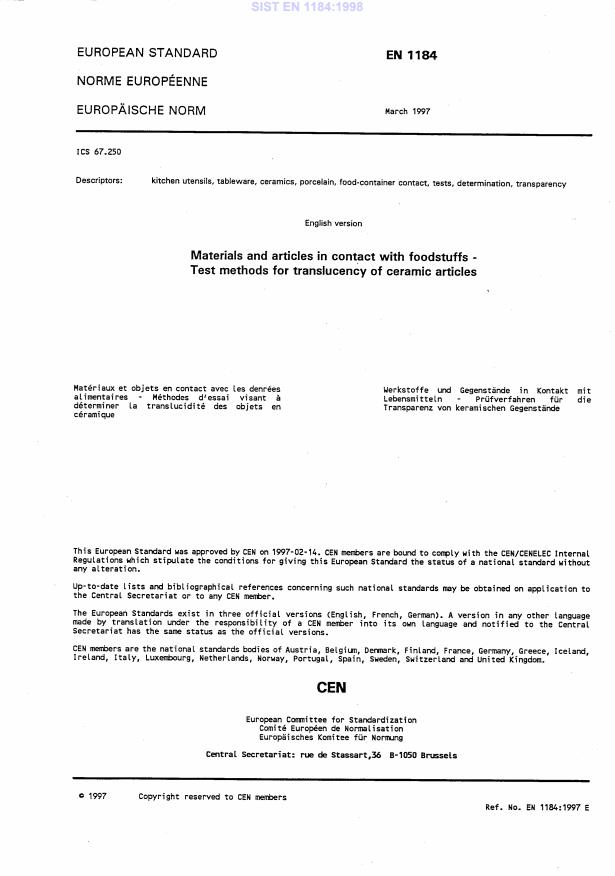
This European Standard specifies test methods for the determination of the translucency of ceramic articles. Two methods are described: - Method A, a qualitative method for estimating translucency, applicable to ceramic articles within a specified thickness range. - Method B, a quantitative method for the determination of body translucency requiring test specimens to be cut from ceramic articles.

Werkstoffe und Gegenstände in Kontakt mit Lebensmitteln - Prüfverfahren für die Transparenz von keramischen Gegenstände

Diese Europäische Norm legt Prüfverfahren für die Bestimmung der Transparenz von keramischen Gegenständen fest. Zwei Verfahren werden beschrieben: - Verfahren A, ein qualitatives Verfahren zur Bewertung der Transparenz, das aufkeramische Gegenstände innerhalb eines festgelegten Dickenbereiches anwendbar ist. - Verfahren B, ein quantitatives Verfahren zur Bestimmung der Transparenz von Prüfkörpern, die aus keramischen Gegenständen ausgeschnitten werden.

Matériaux et objets en contact avec les denrées alimentaires- Méthodes d'essai visant à déterminer la translucidité des objets en céramique

La présente norme européenne décrit les méthodes d'essai appliquées pour déterminer la translucidité des articles céramiques. Deux méthodes d'essai sont décrites: - La méthode A, méthode qualitative d'évaluation de la translucidité applicable aux articles céramiques dans une plage d'épaisseur spécifiée. - La méthode B, méthode d'essai quantitative permettant de déterminer la translucidité d'un corps à partir d'éprouvettes prélevées dans des articles céramiques.

Materiali in predmeti v stiku z živili - Preskusne metode ugotavljanja prepustnosti svetlobe keramičnih predmetov

General Information

Status
Published
Publication Date
18-Mar-1997
Withdrawal Date
29-Sep-1997
Current Stage
9060 - Closure of 2 Year Review Enquiry - Review Enquiry
Start Date
04-Mar-2023
Completion Date
04-Mar-2023

Overview

EN 1184:1997 is a European standard developed by CEN that specifies test methods for determining the translucency of ceramic articles used in contact with foodstuffs. Translucency is an important aesthetic and quality characteristic for ceramics, impacting both appearance and material performance. This standard provides two distinct methods for assessing translucency, ensuring consistent evaluation and conformity across the ceramic industry.

The standard applies specifically to ceramic materials and articles that come into contact with food, emphasizing safe and reliable use in food handling and serving applications. By standardizing translucency testing, EN 1184 supports enhanced product quality, consumer confidence, and regulatory compliance.

Key Topics

  • Scope of Testing
    EN 1184 covers ceramic articles intended to contact food, focusing on their optical property of translucency.

  • Test Methods Described

    • Method A (Qualitative):
      A subjective approach used to estimate translucency visually or by comparison, suitable for ceramics within a defined thickness range. This method helps rapidly classify products by translucency level.
    • Method B (Quantitative):
      A precise measurement technique that requires test specimens to be cut from the ceramics to determine the degree of body translucency numerically. This method is ideal for detailed analysis and quality control.
  • Materials Covered
    Ceramics intended for food contact, including tableware, tiles, and other relevant ceramic articles.

  • International Relevance
    Harmonizes testing procedures within Europe, also aligning with international food safety and materials standards.

Applications

  • Ceramic Manufacturing Quality Control
    Manufacturers can use EN 1184 test methods to standardize translucency measures during production, ensuring products meet desired quality and aesthetic specifications.

  • Product Certification and Compliance
    Helps manufacturers demonstrate compliance with European regulations on food contact materials, facilitating market access and consumer safety assurance.

  • Research and Development
    Enables material scientists and engineers to quantitatively examine the translucency properties of new ceramic formulations and optimize processes for enhanced translucency.

  • Consumer Product Evaluation
    Retailers and quality inspectors can apply the qualitative or quantitative translucency tests to verify product consistency and authenticity before distribution.

Related Standards

  • EN 1388 - Materials and articles in contact with foodstuffs: Methods for determining other ceramic material properties.
  • EN 1183 - Test methods for color stability of ceramic articles in contact with foodstuffs.
  • ISO 6486 - Ceramic articles for food contact: Test methods for release of lead and cadmium, often considered alongside optical properties testing.
  • CEN/TC 194 - Technical committee related to materials in contact with food, which oversees standards like EN 1184.

By implementing EN 1184:1997 test methods, ceramic manufacturers and quality professionals ensure accurate and standardized translucency evaluation, contributing to product reliability, compliance, and enhanced consumer trust in food contact ceramics.

Frequently Asked Questions

EN 1184:1997 is a standard published by the European Committee for Standardization (CEN). Its full title is "Materials and articles in contact with foodstuffs - Test methods for translucency of ceramic articles". This standard covers: This European Standard specifies test methods for the determination of the translucency of ceramic articles. Two methods are described: - Method A, a qualitative method for estimating translucency, applicable to ceramic articles within a specified thickness range. - Method B, a quantitative method for the determination of body translucency requiring test specimens to be cut from ceramic articles.

This European Standard specifies test methods for the determination of the translucency of ceramic articles. Two methods are described: - Method A, a qualitative method for estimating translucency, applicable to ceramic articles within a specified thickness range. - Method B, a quantitative method for the determination of body translucency requiring test specimens to be cut from ceramic articles.

EN 1184:1997 is classified under the following ICS (International Classification for Standards) categories: 67.250 - Materials and articles in contact with foodstuffs. The ICS classification helps identify the subject area and facilitates finding related standards.

You can purchase EN 1184:1997 directly from iTeh Standards. The document is available in PDF format and is delivered instantly after payment. Add the standard to your cart and complete the secure checkout process. iTeh Standards is an authorized distributor of CEN standards.

Standards Content (Sample)


2003-01.Slovenski inštitut za standardizacijo. Razmnoževanje celote ali delov tega standarda ni dovoljeno.Werkstoffe und Gegenstände in Kontakt mit Lebensmitteln - Prüfverfahren für die Transparenz von keramischen GegenständeMatériaux et objets en contact avec les denrées alimentaires- Méthodes d'essai visant a déterminer la translucidité des objets en céramiqueMaterials and articles in contact with foodstuffs - Test methods for translucenc
...

Questions, Comments and Discussion

Ask us and Technical Secretary will try to provide an answer. You can facilitate discussion about the standard in here.

Loading comments...

EN 1184:1997は、食品と接触する材料および製品に関するヨーロッパ標準であり、陶磁器製品の透光性を評価するための試験方法を指定しています。この標準は、陶磁器製品の適切な安全性と品質を確保するために重要です。透光性は、特に飲食物が接触する製品において、視覚的な美しさだけでなく、機能性にも影響を与えます。 この標準には、2つの試験方法が含まれており、陶磁器製品の透光性を評価するための柔軟性が提供されています。方法Aは、定められた厚さ範囲内の陶磁器製品に適用される定性的手法であり、製品の透光性を簡単に推定するために使用されます。この方法は、迅速に評価が可能であり、現場での簡易的なチェックに有用です。 一方で、方法Bは定量的な手法で、陶磁器製品から切り出された試料を用いて透光性を厳密に測定することを目的としています。この方法は、特に精度が求められる品質管理プロセスにおいて有効です。透光性の測定は、製品の視覚的特性や市場での競争力にも直結するため、業界において非常に重要な要素となります。 EN 1184:1997は、陶磁器製品の透光性に関する明確な評価基準を提供することで、製造業者と消費者の両方にとって信頼性の高い指標を確保します。この標準の適用は、食品と接触する製品の安全性と品質を高め、市場における透明性を向上させることに寄与します。標準化された試験方法を通じて、業界全体の品質基準を向上させることが期待されます。

The EN 1184:1997 standard addresses a critical aspect of food safety and quality by outlining specific test methods for determining the translucency of ceramic articles used in contact with foodstuffs. The scope of this standard is both focused and essential, as it caters to manufacturers, quality control professionals, and regulatory bodies involved with ceramic ware. One of the primary strengths of EN 1184:1997 is its dual approach to measuring translucency. Method A offers a qualitative assessment, which is advantageous for quick evaluations of translucency in ceramic articles that fall within a predetermined thickness. This method allows for a straightforward analysis without the need for complex instrumentation, making it accessible for manufacturers during routine checks or production assessments. Conversely, Method B provides a quantitative analysis, which is crucial for setting precise quality benchmarks. This method requires test specimens be cut from ceramic articles, enabling a more detailed understanding of the body's translucency. It ensures that manufacturers can meet higher standards of translucency that might be relevant for specific markets or consumer preferences. The relevance of this standard cannot be overstated, particularly in an era where consumer demand for quality and safety is paramount. Translucency in ceramic articles can influence both aesthetic appeal and functional performance, impacting consumer decision-making. Therefore, the standardized testing methods defined in EN 1184:1997 help ensure that products are consistent and reliable, fostering trust among consumers and adhering to regulatory expectations. Moreover, this standard is aligned with broader European regulations regarding materials in contact with foodstuffs, reinforcing its importance within the regulatory landscape. By standardizing the assessment of translucency, EN 1184:1997 contributes to enhanced safety protocols and quality assurance for food contact materials, making it a valuable resource for stakeholders in the ceramics industry. In summary, EN 1184:1997 serves as a robust framework for evaluating ceramic articles, with its well-defined methods for translucency testing offering significant benefits in terms of quality control and compliance in the realm of food safety.

Die Norm EN 1184:1997 ist ein entscheidendes Dokument für die Bewertung von Materialien und Artikeln, die mit Lebensmitteln in Kontakt kommen. Insbesondere beschäftigt sich diese europäische Norm mit den Prüfmethoden zur Bestimmung der Transparenz von keramischen Artikeln. Der Anwendungsbereich dieser Norm ist klar definiert und bietet wertvolle Anleitungen zur Bewertung der Transluzenz, ein wesentlicher Aspekt für die Sicherheit und Qualität von Keramikwaren, die in der Lebensmittelindustrie verwendet werden. Die Norm beschreibt zwei verschiedene Testmethoden, die den unterschiedlichen Anforderungen der Industrie Rechnung tragen. Methode A ist ein qualitativer Ansatz zur Schätzung der Transluzenz, der sich auf keramische Artikel innerhalb eines bestimmten Dickenspektrums konzentriert. Dies ermöglicht eine schnelle und einfache Beurteilung der Transparenz, was für Hersteller von Bedeutung ist, die sicherstellen möchten, dass ihre Produkte den geforderten Standards entsprechen. Methode B hingegen stellt eine quantitative Methode dar, die zur genauen Bestimmung der Durchsichtigkeit des Materials dient. Diese Methode erfordert, dass Prüfmuster aus den keramischen Artikeln entnommen werden, was eine präzisere Analyse der Materialeigenschaften ermöglicht. Diese quantitative Herangehensweise ist besonders für Forschungseinrichtungen und Qualitätskontrollen von Bedeutung, da sie genauere Informationen über die Materialbeschaffenheit liefert. Die Stärken der EN 1184:1997 liegen in ihrer klaren Struktur und dem praktischen Ansatz zur Beurteilung der Transluzenz von Keramikwaren. Durch die Bereitstellung sowohl qualitativer als auch quantitativer Methoden ist diese Norm flexibel und anpassungsfähig an die Bedürfnisse der Industrie. Ihr Beitrag zur Lebensmittelsicherheit und Qualitätskontrolle in der keramischen Industrie ist unerlässlich, da sie Standards setzt, die helfen können, mögliche Gesundheitsrisiken zu minimieren. Die Relevanz dieser Norm erstreckt sich über die europäischen Grenzen hinaus, da sie eine Grundlage für die Entwicklung ähnlicher nationaler Standards in verschiedenen Ländern bieten kann. Die EN 1184:1997 trägt somit zur Harmonisierung der Anforderungen an keramische Artikel in Kontakt mit Lebensmitteln bei und unterstützt die Hersteller dabei, in einem zunehmend globalisierten Markt wettbewerbsfähig zu bleiben.

La norme EN 1184:1997, intitulée "Matériaux et articles en contact avec des denrées alimentaires - Méthodes d'essai pour la translucidité des articles en céramique", joue un rôle crucial dans l'évaluation des propriétés des articles en céramique destinés à entrer en contact avec des aliments. La portée de cette norme est clairement définie, se concentrant sur l'établissement de méthodes d'essai pour déterminer la translucidité des articles en céramique, ce qui est essentiel pour garantir que ces matériaux répondent aux exigences de sécurité et de qualité. Les forces de cette norme résident dans les deux méthodes d'essai qu'elle propose. La méthode A, qualitative, permet d'estimer rapidement la translucidité des articles en céramique dans une plage d'épaisseur spécifiée, offrant ainsi un moyen efficace pour les fabricants de vérifier la conformité de leurs produits. D'autre part, la méthode B, quantitative, fournit une évaluation plus précise en exigeant que des échantillons soient découpés pour déterminer la translucidité du corps. Cette approche méthodique et rigoureuse assure que les articles respectent les normes de qualité requises. La pertinence de la norme EN 1184:1997 ne peut être sous-estimée. En tant que norme européenne, elle s'inscrit dans un cadre réglementaire qui vise à protéger la santé des consommateurs en garantissant que les matériaux utilisés dans les articles en contact avec les denrées alimentaires sont sûrs et appropriés. L'accent mis sur la translucidité, en tant que caractéristique physique, permet aux professionnels de l'industrie de contrôler des aspects cruciaux liés à l'esthétique et à la fonctionnalité des produits céramiques, tout en veillant à leur conformité réglementaire. Ainsi, la norme SIST EN 1184:1998 se positionne comme un outil indispensable pour les fabricants et les contrôleurs qualité dans le secteur des articles en céramique, aidant à maintenir des standards élevés tout en renforçant la confiance des consommateurs dans les produits alimentaires présentés.

SIST EN 1184:1998 표준은 식품과 접촉하는 재료 및 물품에 대한 시험 방법을 규정하고 있으며, 특히 도자기 제품의 투명도 측정에 초점을 맞추고 있다. 이 표준은 두 가지 방법을 제시하는데, 첫째는 A 방법으로 도자기 제품의 투명도를 추정하기 위한 정성적 방법이며, 둘째는 B 방법으로 도자기 제품에서 시험 샘플을 잘라내어 투명도를 정량적으로 측정하는 방법이다. 이 표준의 범위는 유럽 내에서의 도자기 제품 품질 관리와 관련하여 매우 중요하다. 도자기 제품은 식품과 접촉할 때 안전성뿐만 아니라 그 외관도 소비자의 선택에 큰 영향을 미친다. 따라서, EN 1184:1997 표준의 투명도 시험 방법은 제조업체가 제품의 시각적 특성을 검토하고 개선하는 데 필수적인 기준이 된다. EN 1184:1997의 강점은 두 가지 테스트 방법을 통해 다각적인 접근을 할 수 있다는 점이다. A 방법은 간단하고 빠른 추정이 가능하여 초기 생산 단계에서의 신속한 분석을 돕고, B 방법은 더 정밀한 데이터 수집이 가능하여 최종 품질 보증 단계에서의 중요한 역할을 한다. 또한, 이 표준은 도자기 제품의 투명도가 식품의 안전성과 비直적 연결성이 있는 만큼, 식품 산업에 있어서의 관련성과 활용도가 매우 크다. 결과적으로, EN 1184:1997 표준은 도자기 제품의 품질 기준을 명확히 하여 소비자에게 안전하고 신뢰할 수 있는 식품 포장 옵션을 제공하는 데 기여한다.