

ETSI EN 302 574-2 V2.1.1 (2016-06)
Satellite Earth Stations and Systems (SES); Harmonised Standard for Mobile Earth Stations (MES) operating in the 1 980 MHz to 2 010 MHz (earth-to-space) and 2 170 MHz to 2 200 MHz (space-to-earth) frequency bands covering the essential requirements of article 3.2 of the Directive 2014/53/EU; Part 2: User Equipment (UE) for wideband systems
General Information
- Abstract
REN/SES-00370
- Status
- Published
- Publication Date
- 16-Jun-2016
- Technical Committee
- SES SCN - Satellite Communications and Navigation
- Current Stage
- 12 - Delivery to the EC
- Due Date
- 06-Jul-2016
- Completion Date
- 17-Jun-2016
Buy Documents
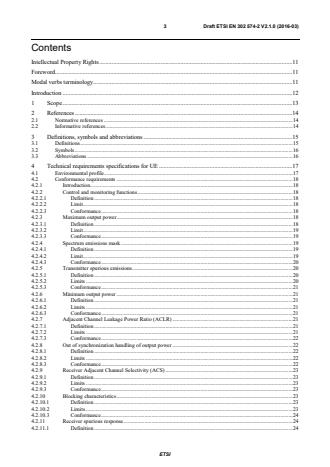
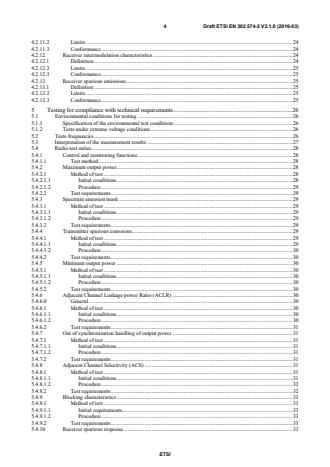
ETSI EN 302 574-2 V2.1.0 (2016-03) - Satellite Earth Stations and Systems (SES); Harmonised Standard for Satellite Earth Stations (MES) for MSS operating in the 2 GHz frequency bands; Part 2: User Equipment (UE) for wideband systems covering the essential requirements of article 3.2 of the Directive 2014/53/EU
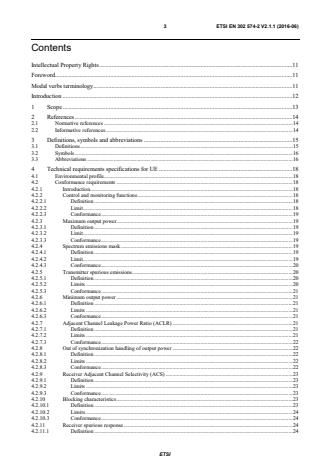
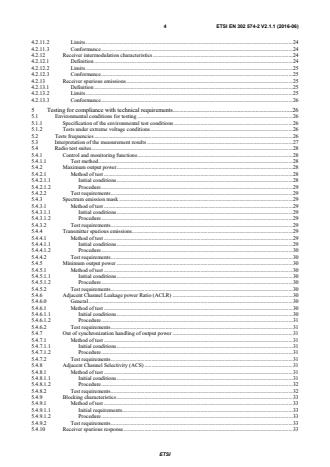
ETSI EN 302 574-2 V2.1.1 (2016-06) - Satellite Earth Stations and Systems (SES); Harmonised Standard for Mobile Earth Stations (MES) operating in the 1 980 MHz to 2 010 MHz (earth-to-space) and 2 170 MHz to 2 200 MHz (space-to-earth) frequency bands covering the essential requirements of article 3.2 of the Directive 2014/53/EU; Part 2: User Equipment (UE) for wideband systems

Overview
ETSI EN 302 574-2 V2.1.1 (2016-06) is a harmonised European standard for Satellite Earth Stations and Systems (SES) that specifies technical requirements for User Equipment (UE) used in Mobile Satellite Service (MSS) wideband systems operating in the 2 GHz frequency bands. The standard implements the essential requirement of Article 3.2 of Directive 2014/53/EU (Radio Equipment Directive), ensuring equipment effectively uses and supports efficient spectrum use to avoid harmful interference.
Key scope points:
- Applies to UEs with both transmit and receive capability in hybrid satellite/terrestrial networks (satellite and/or Complementary Ground Component - CGC).
- Satellite component is based on GEO/GSO constellations.
- Covers UEs with assigned channel bandwidth (CBw) ≥ 1 MHz.
- Applies to a range of device types: handsets, handhelds, portable, vehicle-mounted, aeronautical terminals (AT), host-connected, semi-fixed, fixed, and multimode terminals.
- Covers MSS frequency ranges referenced in the standard (e.g. 1980–2010 MHz uplink and 2170–2200 MHz downlink).
- Aeronautical Terminals are addressed for operation at altitudes ≥ 1 000 m.
Key Technical Topics and Requirements
- Spectrum emissions & masks: definitions and conformance tests to limit in-band and adjacent-band emissions.
- Transmitter spurious emissions: limits and measurement procedures to prevent harmful interference.
- Maximum & minimum output power: classification and test methods across Power Classes (UE Power Class 1, 1bis, 2, 3).
- Adjacent Channel Leakage Power Ratio (ACLR): transmitter spectral purity and measurement criteria.
- Receiver performance: adjacent channel selectivity (ACS), blocking, intermodulation, and spurious response requirements.
- Out-of-synchronization behavior: handling of output power to prevent interference during loss of sync.
- Environmental and test conditions: required test profiles, test frequencies and procedures for conformance testing.
- Device classes & clauses: specific clauses address terrestrial UEs (clauses 4–5), aeronautical ATs (clauses 6–7), and non-aeronautical E-UTRA terrestrial UEs (clauses 8–9).
Applications and Who Uses This Standard
SIST EN 302 574-2 is used by:
- Device manufacturers developing MSS-capable handsets, vehicular units, aeronautical terminals, and multimode terminations.
- Test laboratories performing compliance testing for emissions, receiver performance and conformance to the RE Directive.
- Certification bodies and regulators assessing compliance with Article 3.2 (spectrum efficiency and harmful interference mitigation).
- System integrators and network operators designing hybrid satellite/CGC networks and ensuring coexistence with terrestrial IMT services.
Practical benefits include enabling market access in the EU, reducing cross-service interference, and guiding design choices for spectral efficiency and robust receiver/transmitter behaviour.
Related Standards
- This harmonised EN is identical to ETSI EN 302 574-2 V2.1.1 (2016-06).
- Additional ENs may apply for other essential requirements of Directive 2014/53/EU; see the New Approach web site (http://www.newapproach.org) for referenced EN lists.
Keywords: SIST EN 302 574-2, MSS UE, 2 GHz satellite, wideband systems, spectrum emissions, ACLR, RE Directive, satellite user equipment, aeronautical terminal.
Buy Documents
ETSI EN 302 574-2 V2.1.0 (2016-03) - Satellite Earth Stations and Systems (SES); Harmonised Standard for Satellite Earth Stations (MES) for MSS operating in the 2 GHz frequency bands; Part 2: User Equipment (UE) for wideband systems covering the essential requirements of article 3.2 of the Directive 2014/53/EU
ETSI EN 302 574-2 V2.1.1 (2016-06) - Satellite Earth Stations and Systems (SES); Harmonised Standard for Mobile Earth Stations (MES) operating in the 1 980 MHz to 2 010 MHz (earth-to-space) and 2 170 MHz to 2 200 MHz (space-to-earth) frequency bands covering the essential requirements of article 3.2 of the Directive 2014/53/EU; Part 2: User Equipment (UE) for wideband systems
Frequently Asked Questions
ETSI EN 302 574-2 V2.1.1 (2016-06) is a standard published by the European Telecommunications Standards Institute (ETSI). Its full title is "Satellite Earth Stations and Systems (SES); Harmonised Standard for Mobile Earth Stations (MES) operating in the 1 980 MHz to 2 010 MHz (earth-to-space) and 2 170 MHz to 2 200 MHz (space-to-earth) frequency bands covering the essential requirements of article 3.2 of the Directive 2014/53/EU; Part 2: User Equipment (UE) for wideband systems". This standard covers: REN/SES-00370
REN/SES-00370
ETSI EN 302 574-2 V2.1.1 (2016-06) is available in PDF format for immediate download after purchase. The document can be added to your cart and obtained through the secure checkout process. Digital delivery ensures instant access to the complete standard document.
Standards Content (Sample)
Draft ETSI EN 302 574-2 V2.1.0 (2016-03)
HARMONISED EUROPEAN STANDARD
Satellite Earth Stations and Systems (SES);
Harmonised Standard for Satellite Earth Stations (MES)
for MSS operating in the 2 GHz frequency bands;
Part 2: User Equipment (UE) for wideband systems
covering the essential requirements
of article 3.2 of the Directive 2014/53/EU
2 Draft ETSI EN 302 574-2 V2.1.0 (2016-03)
Reference
REN/SES-00370
Keywords
broadband, IMT, mobile, satellite
ETSI
650 Route des Lucioles
F-06921 Sophia Antipolis Cedex - FRANCE
Tel.: +33 4 92 94 42 00 Fax: +33 4 93 65 47 16
Siret N° 348 623 562 00017 - NAF 742 C
Association à but non lucratif enregistrée à la
Sous-Préfecture de Grasse (06) N° 7803/88
Important notice
The present document can be downloaded from:
http://www.etsi.org/standards-search
The present document may be made available in electronic versions and/or in print. The content of any electronic and/or
print versions of the present document shall not be modified without the prior written authorization of ETSI. In case of any
existing or perceived difference in contents between such versions and/or in print, the only prevailing document is the
print of the Portable Document Format (PDF) version kept on a specific network drive within ETSI Secretariat.
Users of the present document should be aware that the document may be subject to revision or change of status.
Information on the current status of this and other ETSI documents is available at
https://portal.etsi.org/TB/ETSIDeliverableStatus.aspx
If you find errors in the present document, please send your comment to one of the following services:
https://portal.etsi.org/People/CommiteeSupportStaff.aspx
Copyright Notification
No part may be reproduced or utilized in any form or by any means, electronic or mechanical, including photocopying
and microfilm except as authorized by written permission of ETSI.
The content of the PDF version shall not be modified without the written authorization of ETSI.
The copyright and the foregoing restriction extend to reproduction in all media.
© European Telecommunications Standards Institute 2016.
All rights reserved.
TM TM TM
DECT , PLUGTESTS , UMTS and the ETSI logo are Trade Marks of ETSI registered for the benefit of its Members.
TM
3GPP and LTE™ are Trade Marks of ETSI registered for the benefit of its Members and
of the 3GPP Organizational Partners.
GSM® and the GSM logo are Trade Marks registered and owned by the GSM Association.
ETSI
3 Draft ETSI EN 302 574-2 V2.1.0 (2016-03)
Contents
Intellectual Property Rights . 11
Foreword . 11
Modal verbs terminology . 11
Introduction . 12
1 Scope . 13
2 References . 14
2.1 Normative references . 14
2.2 Informative references . 14
3 Definitions, symbols and abbreviations . 15
3.1 Definitions . 15
3.2 Symbols . 16
3.3 Abbreviations . 16
4 Technical requirements specifications for UE . 17
4.1 Environmental profile . 17
4.2 Conformance requirements . 18
4.2.1 Introduction. 18
4.2.2 Control and monitoring functions . 18
4.2.2.1 Definition . 18
4.2.2.2 Limit . 18
4.2.2.3 Conformance . 18
4.2.3 Maximum output power . 18
4.2.3.1 Definition . 18
4.2.3.2 Limit . 19
4.2.3.3 Conformance . 19
4.2.4 Spectrum emissions mask . 19
4.2.4.1 Definition . 19
4.2.4.2 Limit . 19
4.2.4.3 Conformance . 20
4.2.5 Transmitter spurious emis sions . 20
4.2.5.1 Definition . 20
4.2.5.2 Limits . 20
4.2.5.3 Conformance . 21
4.2.6 Minimum output power . 21
4.2.6.1 Definition . 21
4.2.6.2 Limits . 21
4.2.6.3 Conformance . 21
4.2.7 Adjacent Channel Leakage Power Ratio (ACLR) . 21
4.2.7.1 Definition . 21
4.2.7.2 Limits . 21
4.2.7.3 Conformance . 22
4.2.8 Out of synchronization handling of output power . 22
4.2.8.1 Definition . 22
4.2.8.2 Limits . 22
4.2.8.3 Conformance . 22
4.2.9 Receiver Adjacent Channel Selectivity (ACS) . 23
4.2.9.1 Definition . 23
4.2.9.2 Limits . 23
4.2.9.3 Conformance . 23
4.2.10 Blocking characteristics . 23
4.2.10.1 Definition . 23
4.2.10.2 Limits . 23
4.2.10.3 Conformance . 24
4.2.11 Receiver spurious response . 24
4.2.11.1 Definition . 24
ETSI
4 Draft ETSI EN 302 574-2 V2.1.0 (2016-03)
4.2.11.2 Limits . 24
4.2.11.3 Conformance . 24
4.2.12 Receiver intermodulation characteristics . 24
4.2.12.1 Definition . 24
4.2.12.2 Limits . 25
4.2.12.3 Conformance . 25
4.2.13 Receiver spurious emissions . 25
4.2.13.1 Definition . 25
4.2.13.2 Limits . 25
4.2.13.3 Conformance . 25
5 Testing for compliance with technical requirements . 26
5.1 Environmental conditions for testing . 26
5.1.1 Specification of the environmental test conditions . 26
5.1.2 Tests under extreme voltage conditions . 26
5.2 Tests frequencies . 26
5.3 Interpretation of the measurement results . 27
5.4 Radio test suites . 28
5.4.1 Control and monitoring functions . 28
5.4.1.1 Test method . 28
5.4.2 Maximum output power . 28
5.4.2.1 Method of test . 28
5.4.2.1.1 Initial conditions . 28
5.4.2.1.2 Procedure . 29
5.4.2.2 Test requirements . 29
5.4.3 Spectrum emission mask . 29
5.4.3.1 Method of test . 29
5.4.3.1.1 Initial conditions . 29
5.4.3.1.2 Procedure . 29
5.4.3.2 Test requirements . 29
5.4.4 Transmitter spurious emis sions . 29
5.4.4.1 Method of test . 29
5.4.4.1.1 Initial conditions . 29
5.4.4.1.2 Procedure . 30
5.4.4.2 Test requirements . 30
5.4.5 Minimum output power . 30
5.4.5.1 Method of test . 30
5.4.5.1.1 Initial conditions . 30
5.4.5.1.2 Procedure . 30
5.4.5.2 Test requirements . 30
5.4.6 Adjacent Channel Leakage power Ratio (ACLR) . 30
5.4.6.0 General . 30
5.4.6.1 Method of test . 30
5.4.6.1.1 Initial conditions . 30
5.4.6.1.2 Procedure . 30
5.4.6.2 Test requirements . 31
5.4.7 Out of synchronization handling of output power . 31
5.4.7.1 Method of test . 31
5.4.7.1.1 Initial conditions . 31
5.4.7.1.2 Procedure . 31
5.4.7.2 Test requirements . 31
5.4.8 Adjacent Channel Selectivity (ACS) . 31
5.4.8.1 Method of test . 31
5.4.8.1.1 Initial conditions . 31
5.4.8.1.2 Procedure . 32
5.4.8.2 Test requirements . 32
5.4.9 Blocking characteristics . 33
5.4.9.1 Method of test . 33
5.4.9.1.1 Initial requirements . 33
5.4.9.1.2 Procedure . 33
5.4.9.2 Test requirements . 33
5.4.10 Receiver spurious response . 33
ETSI
5 Draft ETSI EN 302 574-2 V2.1.0 (2016-03)
5.4.10.1 Method of test . 33
5.4.10.1.1 Initial conditions . 33
5.4.10.1.2 Procedure . 33
5.4.10.2 Test requirements . 33
5.4.11 Receiver intermodulation characteristics . 34
5.4.11.1 Method of test . 34
5.4.11.1.1 Initial conditions . 34
5.4.11.1.2 Procedure . 34
5.4.11.2 Test requirements . 34
5.4.12 Receiver spurious emissions . 34
5.4.12.1 Method of test . 34
5.4.12.1.1 Initial conditions . 34
5.4.12.1.2 Procedure . 34
5.4.12.2 Test requirements . 34
6 Technical requirements specifications for the UE mounted on aircraft (Aeronautical Terminals) . 34
6.1 Environmental profile . 34
6.2 Conformance requirements . 35
6.2.0 General . 35
6.2.1 Introduction. 35
6.2.2 Transmitter Maximum output power . 35
6.2.2.1 Definition . 35
6.2.2.2 Limit . 35
6.2.2.3 Conformance . 35
6.2.3 Transmitter Spectrum emissions mask . 35
6.2.3.1 Definition . 35
6.2.3.2 Limit . 36
6.2.3.3 Conformance . 36
6.2.4 Transmitter spurious emis sions . 36
6.2.4.1 Definition . 36
6.2.4.2 Limits . 36
6.2.4.3 Conformance . 37
6.2.5 Transmitter Minimum output power . 37
6.2.5.1 Definition . 37
6.2.5.2 Limits . 37
6.2.5.3 Conformance . 37
6.2.6 Adjacent Channel Leakage Power Ratio (ACLR) . 37
6.2.6.1 Definition . 37
6.2.6.2 Limits . 37
6.2.6.3 Conformance . 38
6.2.7 Receiver Adjacent Channel Selectivity (ACS) . 38
6.2.7.1 Definition . 38
6.2.7.2 Limits . 38
6.2.7.3 Conformance . 39
6.2.8 Blocking characteristics . 39
6.2.8.1 Definition . 39
6.2.8.2 Limits . 39
6.2.8.3 Conformance . 40
6.2.9 Receiver spurious response . 40
6.2.9.1 Definition . 40
6.2.9.2 Limits . 41
6.2.9.3 Conformance . 41
6.2.10 Receiver intermodulation characteristics . 41
6.2.10.1 Definition . 41
6.2.10.2 Limits . 41
6.2.10.3 Conformance . 42
6.2.11 Receiver spurious emissions . 42
6.2.11.1 Definition . 42
6.2.11.2 Limits . 42
6.2.11.3 Conformance . 42
7 Testing for compliance with technical requirements for Aeronautical Terminal (AT) . 43
ETSI
6 Draft ETSI EN 302 574-2 V2.1.0 (2016-03)
7.1 Environmental conditions for testing . 43
7.1.0 General . 43
7.1.1 Specification of the environmental test conditions . 43
7.2 Void . 43
7.3 Interpretation of the measurement results . 43
7.4 Radio test suites . 44
7.4.1 Void . 44
7.4.2 Maximum output power . 44
7.4.2.1 Method of test . 44
7.4.2.1.1 Initial conditions . 44
7.4.2.1.2 Procedure . 45
7.4.2.2 Test requirements . 45
7.4.3 Transmitter Spectrum emission mask . 45
7.4.3.1 Method of test . 45
7.4.3.1.1 initial conditions . 45
7.4.3.1.2 Procedure . 45
7.4.3.2 Test requirements . 46
7.4.4 Transmitter spurious emis sions . 46
7.4.4.1 Method of test . 46
7.4.4.1.1 Initial conditions . 46
7.4.4.1.2 Procedure . 46
7.4.4.2 Test requirements . 46
7.4.5 Transmitter Minimum output power . 46
7.4.5.1 Method of test . 46
7.4.5.1.1 Initial conditions . 46
7.4.5.1.2 Procedure . 47
7.4.5.2 Test requirements . 47
7.4.6 Adjacent Channel Leakage power Ratio (ACLR) . 47
7.4.6.1 Method of test . 47
7.4.6.1.1 Initial conditions . 47
7.4.6.1.2 Procedure . 48
7.4.6.2 Test requirements . 48
7.4.7 Void . 48
7.4.8 Receiver Adjacent Channel Selectivity (ACS) . 48
7.4.8.1 Method of test . 48
7.4.8.1.1 Initial conditions . 48
7.4.8.1.2 Procedure . 49
7.4.8.2 Test requirements . 49
7.4.9 Blocking characteristics . 49
7.4.9.1 Method of test . 49
7.4.9.1.1 Initial requirements . 49
7.4.9.1.2 In-Band Procedure . 50
7.4.9.1.3 Out-Of-Band Procedure . 50
7.4.9.1.4 Narrow-Band Procedure . 51
7.4.9.2 Test requirements . 51
7.4.10 Receiver spurious response . 51
7.4.10.1 Method of test . 51
7.4.10.1.1 Initial conditions . 51
7.4.10.1.2 Procedure . 51
7.4.10.2 Test requirements . 51
7.4.11 Receiver intermodulation characteristics . 52
7.4.11.1 Method of test . 52
7.4.11.1.1 Initial conditions . 52
7.4.11.1.2 Procedure . 52
7.4.11.2 Test Requirements . 52
7.4.12 Receiver spurious emissions . 53
7.4.12.1 Method of test . 53
7.4.12.1.1 Initial conditions . 53
7.4.12.1.2 Procedure . 53
7.4.12.2 Test requirements . 53
8 Technical requirements specifications for non-aeronautical UE E-UTRA . 53
ETSI
7 Draft ETSI EN 302 574-2 V2.1.0 (2016-03)
8.0 General . 53
8.1 Environmental profile . 54
8.2 Conformance requirements . 54
8.2.0 General . 54
8.2.1 Introduction. 55
8.2.2 Transmitter Maximum Output Power . 55
8.2.2.1 Transmitter maximum output power for Single Carrier . 55
8.2.2.1.1 Definition. 55
8.2.2.1.2 Limits . 56
8.2.2.1.3 Conformance . 56
8.2.2.2 Transmitter output power for intra-band contiguous Carrier Aggregation (DL CA and UL CA). 56
8.2.2.2.1 Definition. 56
8.2.2.2.2 Limits . 57
8.2.2.2.3 Conformance . 57
8.2.2.3 Transmitter output power for UL-MIMO . 57
8.2.2.3.1 Definition. 57
8.2.2.3.2 Limits . 58
8.2.2.3.3 Conformance . 58
8.2.3 Transmitter Spectrum Emission Mask . 58
8.2.3.1 Transmitter spectrum emission mask for Single Carrier . 58
8.2.3.1.1 Definition. 58
8.2.3.1.2 Limits . 58
8.2.3.1.3 Conformance . 59
8.2.3.2 Transmitter spectrum emission mask for intra-band contiguous Carrier Aggregation (DL CA and
UL CA) . 59
8.2.3.2.1 Definition.
...
HARMONISED EUROPEAN STANDARD
Satellite Earth Stations and Systems (SES);
Harmonised Standard for Mobile Earth Stations (MES)
operating in the 1 980 MHz to 2 010 MHz (earth-to-space) and
2 170 MHz to 2 200 MHz (space-to-earth) frequency bands
covering the essential requirements
of article 3.2 of the Directive 2014/53/EU;
Part 2: User Equipment (UE) for wideband systems
2 ETSI EN 302 574-2 V2.1.1 (2016-06)
Reference
REN/SES-00370
Keywords
broadband, IMT, mobile, satellite
ETSI
650 Route des Lucioles
F-06921 Sophia Antipolis Cedex - FRANCE
Tel.: +33 4 92 94 42 00 Fax: +33 4 93 65 47 16
Siret N° 348 623 562 00017 - NAF 742 C
Association à but non lucratif enregistrée à la
Sous-Préfecture de Grasse (06) N° 7803/88
Important notice
The present document can be downloaded from:
http://www.etsi.org/standards-search
The present document may be made available in electronic versions and/or in print. The content of any electronic and/or
print versions of the present document shall not be modified without the prior written authorization of ETSI. In case of any
existing or perceived difference in contents between such versions and/or in print, the only prevailing document is the
print of the Portable Document Format (PDF) version kept on a specific network drive within ETSI Secretariat.
Users of the present document should be aware that the document may be subject to revision or change of status.
Information on the current status of this and other ETSI documents is available at
https://portal.etsi.org/TB/ETSIDeliverableStatus.aspx
If you find errors in the present document, please send your comment to one of the following services:
https://portal.etsi.org/People/CommiteeSupportStaff.aspx
Copyright Notification
No part may be reproduced or utilized in any form or by any means, electronic or mechanical, including photocopying
and microfilm except as authorized by written permission of ETSI.
The content of the PDF version shall not be modified without the written authorization of ETSI.
The copyright and the foregoing restriction extend to reproduction in all media.
© European Telecommunications Standards Institute 2016.
All rights reserved.
TM TM TM
DECT , PLUGTESTS , UMTS and the ETSI logo are Trade Marks of ETSI registered for the benefit of its Members.
TM
3GPP and LTE™ are Trade Marks of ETSI registered for the benefit of its Members and
of the 3GPP Organizational Partners.
GSM® and the GSM logo are Trade Marks registered and owned by the GSM Association.
ETSI
3 ETSI EN 302 574-2 V2.1.1 (2016-06)
Contents
Intellectual Property Rights . 11
Foreword . 11
Modal verbs terminology . 11
Introduction . 12
1 Scope . 13
2 References . 14
2.1 Normative references . 14
2.2 Informative references . 14
3 Definitions, symbols and abbreviations . 15
3.1 Definitions . 15
3.2 Symbols . 16
3.3 Abbreviations . 16
4 Technical requirements specifications for UE . 18
4.1 Environmental profile . 18
4.2 Conformance requirements . 18
4.2.1 Introduction. 18
4.2.2 Control and monitoring functions . 18
4.2.2.1 Definition . 18
4.2.2.2 Limit . 18
4.2.2.3 Conformance . 19
4.2.3 Maximum output power . 19
4.2.3.1 Definition . 19
4.2.3.2 Limit . 19
4.2.3.3 Conformance . 19
4.2.4 Spectrum emissions mask . 19
4.2.4.1 Definition . 19
4.2.4.2 Limit . 19
4.2.4.3 Conformance . 20
4.2.5 Transmitter spurious emis sions . 20
4.2.5.1 Definition . 20
4.2.5.2 Limits . 20
4.2.5.3 Conformance . 21
4.2.6 Minimum output power . 21
4.2.6.1 Definition . 21
4.2.6.2 Limits . 21
4.2.6.3 Conformance . 21
4.2.7 Adjacent Channel Leakage Power Ratio (ACLR) . 21
4.2.7.1 Definition . 21
4.2.7.2 Limits . 21
4.2.7.3 Conformance . 22
4.2.8 Out of synchronization handling of output power . 22
4.2.8.1 Definition . 22
4.2.8.2 Limits . 22
4.2.8.3 Conformance . 22
4.2.9 Receiver Adjacent Channel Selectivity (ACS) . 23
4.2.9.1 Definition . 23
4.2.9.2 Limits . 23
4.2.9.3 Conformance . 23
4.2.10 Blocking characteristics . 23
4.2.10.1 Definition . 23
4.2.10.2 Limits . 24
4.2.10.3 Conformance . 24
4.2.11 Receiver spurious response . 24
4.2.11.1 Definition . 24
ETSI
4 ETSI EN 302 574-2 V2.1.1 (2016-06)
4.2.11.2 Limits . 24
4.2.11.3 Conformance . 24
4.2.12 Receiver intermodulation characteristics . 24
4.2.12.1 Definition . 24
4.2.12.2 Limits . 25
4.2.12.3 Conformance . 25
4.2.13 Receiver spurious emissions . 25
4.2.13.1 Definition . 25
4.2.13.2 Limits . 25
4.2.13.3 Conformance . 26
5 Testing for compliance with technical requirements . 26
5.1 Environmental conditions for testing . 26
5.1.1 Specification of the environmental test conditions . 26
5.1.2 Tests under extreme voltage conditions . 26
5.2 Tests frequencies . 26
5.3 Interpretation of the measurement results . 27
5.4 Radio test suites . 28
5.4.1 Control and monitoring functions . 28
5.4.1.1 Test method . 28
5.4.2 Maximum output power . 28
5.4.2.1 Method of test . 28
5.4.2.1.1 Initial conditions . 28
5.4.2.1.2 Procedure . 29
5.4.2.2 Test requirements . 29
5.4.3 Spectrum emission mask . 29
5.4.3.1 Method of test . 29
5.4.3.1.1 Initial conditions . 29
5.4.3.1.2 Procedure . 29
5.4.3.2 Test requirements . 29
5.4.4 Transmitter spurious emis sions . 29
5.4.4.1 Method of test . 29
5.4.4.1.1 Initial conditions . 29
5.4.4.1.2 Procedure . 30
5.4.4.2 Test requirements . 30
5.4.5 Minimum output power . 30
5.4.5.1 Method of test . 30
5.4.5.1.1 Initial conditions . 30
5.4.5.1.2 Procedure . 30
5.4.5.2 Test requirements . 30
5.4.6 Adjacent Channel Leakage power Ratio (ACLR) . 30
5.4.6.0 General . 30
5.4.6.1 Method of test . 30
5.4.6.1.1 Initial conditions . 30
5.4.6.1.2 Procedure . 31
5.4.6.2 Test requirements . 31
5.4.7 Out of synchronization handling of output power . 31
5.4.7.1 Method of test . 31
5.4.7.1.1 Initial conditions . 31
5.4.7.1.2 Procedure . 31
5.4.7.2 Test requirements . 31
5.4.8 Adjacent Channel Selectivity (ACS) . 31
5.4.8.1 Method of test . 31
5.4.8.1.1 Initial conditions . 31
5.4.8.1.2 Procedure . 32
5.4.8.2 Test requirements . 32
5.4.9 Blocking characteristics . 33
5.4.9.1 Method of test . 33
5.4.9.1.1 Initial requirements . 33
5.4.9.1.2 Procedure . 33
5.4.9.2 Test requirements . 33
5.4.10 Receiver spurious response . 33
ETSI
5 ETSI EN 302 574-2 V2.1.1 (2016-06)
5.4.10.1 Method of test . 33
5.4.10.1.1 Initial conditions . 33
5.4.10.1.2 Procedure . 33
5.4.10.2 Test requirements . 34
5.4.11 Receiver intermodulation characteristics . 34
5.4.11.1 Method of test . 34
5.4.11.1.1 Initial conditions . 34
5.4.11.1.2 Procedure . 34
5.4.11.2 Test requirements . 34
5.4.12 Receiver spurious emissions . 34
5.4.12.1 Method of test . 34
5.4.12.1.1 Initial conditions . 34
5.4.12.1.2 Procedure . 34
5.4.12.2 Test requirements . 34
6 Technical requirements specifications for the UE mounted on aircraft (Aeronautical Terminals) . 35
6.1 Environmental profile . 35
6.2 Conformance requirements . 35
6.2.0 General . 35
6.2.1 Introduction. 35
6.2.2 Transmitter Maximum output power . 35
6.2.2.1 Definition . 35
6.2.2.2 Limit . 36
6.2.2.3 Conformance . 36
6.2.3 Transmitter Spectrum emissions mask . 36
6.2.3.1 Definition . 36
6.2.3.2 Limit . 36
6.2.3.3 Conformance . 36
6.2.4 Transmitter spurious emis sions . 36
6.2.4.1 Definition . 36
6.2.4.2 Limits . 37
6.2.4.3 Conformance . 37
6.2.5 Transmitter Minimum output power . 37
6.2.5.1 Definition . 37
6.2.5.2 Limits . 37
6.2.5.3 Conformance . 38
6.2.6 Adjacent Channel Leakage Power Ratio (ACLR) . 38
6.2.6.1 Definition . 38
6.2.6.2 Limits . 38
6.2.6.3 Conformance . 38
6.2.7 Receiver Adjacent Channel Selectivity (ACS) . 38
6.2.7.1 Definition . 38
6.2.7.2 Limits . 38
6.2.7.3 Conformance . 39
6.2.8 Blocking characteristics . 39
6.2.8.1 Definition . 39
6.2.8.2 Limits . 39
6.2.8.3 Conformance . 41
6.2.9 Receiver spurious response . 41
6.2.9.1 Definition . 41
6.2.9.2 Limits . 41
6.2.9.3 Conformance . 41
6.2.10 Receiver intermodulation characteristics . 42
6.2.10.1 Definition . 42
6.2.10.2 Limits . 42
6.2.10.3 Conformance . 42
6.2.11 Receiver spurious emissions . 42
6.2.11.1 Definition . 42
6.2.11.2 Limits . 42
6.2.11.3 Conformance . 43
7 Testing for compliance with technical requirements for Aeronautical Terminal (AT) . 43
ETSI
6 ETSI EN 302 574-2 V2.1.1 (2016-06)
7.1 Environmental conditions for testing . 43
7.1.0 General . 43
7.1.1 Specification of the environmental test conditions . 43
7.2 Void . 43
7.3 Interpretation of the measurement results . 43
7.4 Radio test suites . 44
7.4.1 Void . 44
7.4.2 Maximum output power . 44
7.4.2.1 Method of test . 44
7.4.2.1.1 Initial conditions . 44
7.4.2.1.2 Procedure . 45
7.4.2.2 Test requirements . 45
7.4.3 Transmitter Spectrum emission mask . 45
7.4.3.1 Method of test . 45
7.4.3.1.1 initial conditions . 45
7.4.3.1.2 Procedure . 46
7.4.3.2 Test requirements . 46
7.4.4 Transmitter spurious emis sions . 46
7.4.4.1 Method of test . 46
7.4.4.1.1 Initial conditions . 46
7.4.4.1.2 Procedure . 46
7.4.4.2 Test requirements . 47
7.4.5 Transmitter Minimum output power . 47
7.4.5.1 Method of test . 47
7.4.5.1.1 Initial conditions . 47
7.4.5.1.2 Procedure . 47
7.4.5.2 Test requirements . 48
7.4.6 Adjacent Channel Leakage power Ratio (ACLR) . 48
7.4.6.1 Method of test . 48
7.4.6.1.1 Initial conditions . 48
7.4.6.1.2 Procedure . 48
7.4.6.2 Test requirements . 48
7.4.7 Void . 49
7.4.8 Receiver Adjacent Channel Selectivity (ACS) . 49
7.4.8.1 Method of test . 49
7.4.8.1.1 Initial conditions . 49
7.4.8.1.2 Procedure . 49
7.4.8.2 Test requirements . 50
7.4.9 Blocking characteristics . 50
7.4.9.1 Method of test . 50
7.4.9.1.1 Initial requirements . 50
7.4.9.1.2 In-Band Procedure . 50
7.4.9.1.3 Out-Of-Band Procedure . 51
7.4.9.1.4 Narrow-Band Procedure . 51
7.4.9.2 Test requirements . 52
7.4.10 Receiver spurious response . 52
7.4.10.1 Method of test . 52
7.4.10.1.1 Initial conditions . 52
7.4.10.1.2 Procedure . 52
7.4.10.2 Test requirements . 52
7.4.11 Receiver intermodulation characteristics . 52
7.4.11.1 Method of test . 52
7.4.11.1.1 Initial conditions . 52
7.4.11.1.2 Procedure . 53
7.4.11.2 Test Requirements . 53
7.4.12 Receiver spurious emissions . 53
7.4.12.1 Method of test . 53
7.4.12.1.1 Initial conditions . 53
7.4.12.1.2 Procedure . 54
7.4.12.2 Test requirements . 54
8 Technical requirements specifications for non-aeronautical UE E-UTRA . 54
ETSI
7 ETSI EN 302 574-2 V2.1.1 (2016-06)
8.0 General . 54
8.1 Environmental profile . 55
8.2 Conformance requirements . 55
8.2.0 General . 55
8.2.1 Introduction. 55
8.2.2 Transmitter Maximum Output Power . 56
8.2.2.1 Transmitter maximum output power for Single Carrier . 56
8.2.2.1.1 Definition. 56
8.2.2.1.2 Limits . 56
8.2.2.1.3 Conformance . 57
8.2.2.2 Transmitter output power for intra-band contiguous Carrier Aggregation (DL CA and UL CA). 57
8.2.2.2.1 Definition. 57
8.2.2.2.2 Limits . 57
8.2.2.2.3 Conformance . 57
8.2.2.3 Transmitter output power for UL-MIMO . 58
8.2.2.3.1 Definition. 58
8.2.2.3.2 Limits . 58
8.2.2.3.3 Conformance . 58
8.2.3 Transmitter Spectrum Emission Mask . 59
8.2.3.1 Transmitter spectrum emission mask for Single Carrier . 59
8.2.3.1.1 Definition. 59
8.2.3.1.2 Limits . 59
8.2.3.1.3 Conformance . 60
8.2.3.2 Transmitter spectrum emission mask for intra-band contiguous Carrier Aggregation (DL CA and
UL CA) . 60
8.2.3.2.1 Definition.
...
2003-01.Slovenski inštitut za standardizacijo. Razmnoževanje celote ali delov tega standarda ni dovoljeno.Satellite Earth Stations and Systems (SES) - Harmonised Standard for Satellite Earth Stations (MES) for MSS operating in the 2 GHz frequency bands - Part 2: User Equipment (UE) for wideband systems covering the essential requirements of article 3.2 of the Directive 2014/53/EU33.060.30Radiorelejni in fiksni satelitski komunikacijski sistemiRadio relay and fixed satellite communications systemsICS:Ta slovenski standard je istoveten z:ETSI EN 302 574-2 V2.1.1 (2016-06)SIST EN 302 574-2 V2.1.1:2016en01-september-2016SIST EN 302 574-2 V2.1.1:2016SLOVENSKI
STANDARD
HARMONISED EUROPEAN STANDARD SIST EN 302 574-2 V2.1.1:2016
ETSI ETSI EN 302 574-2 V2.1.1 (2016-06) 2
Reference REN/SES-00370 Keywords broadband, IMT, mobile, satellite ETSI 650 Route des Lucioles F-06921 Sophia Antipolis Cedex - FRANCE
Tel.: +33 4 92 94 42 00
Fax: +33 4 93 65 47 16
Siret N° 348 623 562 00017 - NAF 742 C Association à but non lucratif enregistrée à la Sous-Préfecture de Grasse (06) N° 7803/88
Important notice The present document can be downloaded from: http://www.etsi.org/standards-search The present document may be made available in electronic versions and/or in print. The content of any electronic and/or print versions of the present document shall not be modified without the prior written authorization of ETSI. In case of any existing or perceived difference in contents between such versions and/or in print, the only prevailing document is the print of the Portable Document Format (PDF) version kept on a specific network drive within ETSI Secretariat. Users of the present document should be aware that the document may be subject to revision or change of status. Information on the current status of this and other ETSI documents is available at https://portal.etsi.org/TB/ETSIDeliverableStatus.aspx If you find errors in the present document, please send your comment to one of the following services: https://portal.etsi.org/People/CommiteeSupportStaff.aspx Copyright Notification No part may be reproduced or utilized in any form or by any means, electronic or mechanical, including photocopying and microfilm except as authorized by written permission of ETSI. The content of the PDF version shall not be modified without the written authorization of ETSI. The copyright and the foregoing restriction extend to reproduction in all media.
© European Telecommunications Standards Institute 2016. All rights reserved.
DECTTM, PLUGTESTSTM, UMTSTM and the ETSI logo are Trade Marks of ETSI registered for the benefit of its Members. 3GPPTM and LTE™ are Trade Marks of ETSI registered for the benefit of its Members and of the 3GPP Organizational Partners. GSM® and the GSM logo are Trade Marks registered and owned by the GSM Association. SIST EN 302 574-2 V2.1.1:2016
ETSI ETSI EN 302 574-2 V2.1.1 (2016-06) 3 Contents Intellectual Property Rights . 11 Foreword . 11 Modal verbs terminology . 11 Introduction . 12 1 Scope . 13 2 References . 14 2.1 Normative references . 14 2.2 Informative references . 14 3 Definitions, symbols and abbreviations . 15 3.1 Definitions . 15 3.2 Symbols . 16 3.3 Abbreviations . 16 4 Technical requirements specifications for UE . 18 4.1 Environmental profile . 18 4.2 Conformance requirements . 18 4.2.1 Introduction. 18 4.2.2 Control and monitoring functions . 18 4.2.2.1 Definition . 18 4.2.2.2 Limit . 18 4.2.2.3 Conformance . 19 4.2.3 Maximum output power . 19 4.2.3.1 Definition . 19 4.2.3.2 Limit . 19 4.2.3.3 Conformance . 19 4.2.4 Spectrum emissions mask . 19 4.2.4.1 Definition . 19 4.2.4.2 Limit . 19 4.2.4.3 Conformance . 20 4.2.5 Transmitter spurious emissions . 20 4.2.5.1 Definition . 20 4.2.5.2 Limits . 20 4.2.5.3 Conformance . 21 4.2.6 Minimum output power . 21 4.2.6.1 Definition . 21 4.2.6.2 Limits . 21 4.2.6.3 Conformance . 21 4.2.7 Adjacent Channel Leakage Power Ratio (ACLR) . 21 4.2.7.1 Definition . 21 4.2.7.2 Limits . 21 4.2.7.3 Conformance . 22 4.2.8 Out of synchronization handling of output power . 22 4.2.8.1 Definition . 22 4.2.8.2 Limits . 22 4.2.8.3 Conformance . 22 4.2.9 Receiver Adjacent Channel Selectivity (ACS) . 23 4.2.9.1 Definition . 23 4.2.9.2 Limits . 23 4.2.9.3 Conformance . 23 4.2.10 Blocking characteristics . 23 4.2.10.1 Definition . 23 4.2.10.2 Limits . 24 4.2.10.3 Conformance . 24 4.2.11 Receiver spurious response . 24 4.2.11.1 Definition . 24 SIST EN 302 574-2 V2.1.1:2016
ETSI ETSI EN 302 574-2 V2.1.1 (2016-06) 4 4.2.11.2 Limits . 24 4.2.11.3 Conformance . 24 4.2.12 Receiver intermodulation characteristics . 24 4.2.12.1 Definition . 24 4.2.12.2 Limits . 25 4.2.12.3 Conformance . 25 4.2.13 Receiver spurious emissions . 25 4.2.13.1 Definition . 25 4.2.13.2 Limits . 25 4.2.13.3 Conformance . 26 5 Testing for compliance with technical requirements . 26 5.1 Environmental conditions for testing . 26 5.1.1 Specification of the environmental test conditions . 26 5.1.2 Tests under extreme voltage conditions . 26 5.2 Tests frequencies . 26 5.3 Interpretation of the measurement results . 27 5.4 Radio test suites . 28 5.4.1 Control and monitoring functions . 28 5.4.1.1 Test method . 28 5.4.2 Maximum output power . 28 5.4.2.1 Method of test . 28 5.4.2.1.1 Initial conditions . 28 5.4.2.1.2 Procedure . 29 5.4.2.2 Test requirements . 29 5.4.3 Spectrum emission mask . 29 5.4.3.1 Method of test . 29 5.4.3.1.1 Initial conditions . 29 5.4.3.1.2 Procedure . 29 5.4.3.2 Test requirements . 29 5.4.4 Transmitter spurious emissions . 29 5.4.4.1 Method of test . 29 5.4.4.1.1 Initial conditions . 29 5.4.4.1.2 Procedure . 30 5.4.4.2 Test requirements . 30 5.4.5 Minimum output power . 30 5.4.5.1 Method of test . 30 5.4.5.1.1 Initial conditions . 30 5.4.5.1.2 Procedure . 30 5.4.5.2 Test requirements . 30 5.4.6 Adjacent Channel Leakage power Ratio (ACLR) . 30 5.4.6.0 General . 30 5.4.6.1 Method of test . 30 5.4.6.1.1 Initial conditions . 30 5.4.6.1.2 Procedure . 31 5.4.6.2 Test requirements . 31 5.4.7 Out of synchronization handling of output power . 31 5.4.7.1 Method of test . 31 5.4.7.1.1 Initial conditions . 31 5.4.7.1.2 Procedure . 31 5.4.7.2 Test requirements . 31 5.4.8 Adjacent Channel Selectivity (ACS) . 31 5.4.8.1 Method of test . 31 5.4.8.1.1 Initial conditions . 31 5.4.8.1.2 Procedure . 32 5.4.8.2 Test requirements . 32 5.4.9 Blocking characteristics . 33 5.4.9.1 Method of test . 33 5.4.9.1.1 Initial requirements . 33 5.4.9.1.2 Procedure . 33 5.4.9.2 Test requirements . 33 5.4.10 Receiver spurious response . 33 SIST EN 302 574-2 V2.1.1:2016
ETSI ETSI EN 302 574-2 V2.1.1 (2016-06) 5 5.4.10.1 Method of test . 33 5.4.10.1.1 Initial conditions . 33 5.4.10.1.2 Procedure . 33 5.4.10.2 Test requirements . 34 5.4.11 Receiver intermodulation characteristics . 34 5.4.11.1 Method of test . 34 5.4.11.1.1 Initial conditions . 34 5.4.11.1.2 Procedure . 34 5.4.11.2 Test requirements . 34 5.4.12 Receiver spurious emissions . 34 5.4.12.1 Method of test . 34 5.4.12.1.1 Initial conditions . 34 5.4.12.1.2 Procedure . 34 5.4.12.2 Test requirements . 34 6 Technical requirements specifications for the UE mounted on aircraft (Aeronautical Terminals) . 35 6.1 Environmental profile . 35 6.2 Conformance requirements . 35 6.2.0 General . 35 6.2.1 Introduction. 35 6.2.2 Transmitter Maximum output power . 35 6.2.2.1 Definition . 35 6.2.2.2 Limit . 36 6.2.2.3 Conformance . 36 6.2.3 Transmitter Spectrum emissions mask . 36 6.2.3.1 Definition . 36 6.2.3.2 Limit . 36 6.2.3.3 Conformance . 36 6.2.4 Transmitter spurious emissions . 36 6.2.4.1 Definition . 36 6.2.4.2 Limits . 37 6.2.4.3 Conformance . 37 6.2.5 Transmitter Minimum output power . 37 6.2.5.1 Definition . 37 6.2.5.2 Limits . 37 6.2.5.3 Conformance . 38 6.2.6 Adjacent Channel Leakage Power Ratio (ACLR) . 38 6.2.6.1 Definition . 38 6.2.6.2 Limits . 38 6.2.6.3 Conformance . 38 6.2.7 Receiver Adjacent Channel Selectivity (ACS) . 38 6.2.7.1 Definition . 38 6.2.7.2 Limits . 38 6.2.7.3 Conformance . 39 6.2.8 Blocking characteristics . 39 6.2.8.1 Definition . 39 6.2.8.2 Limits . 39 6.2.8.3 Conformance . 41 6.2.9 Receiver spurious response . 41 6.2.9.1 Definition . 41 6.2.9.2 Limits . 41 6.2.9.3 Conformance . 41 6.2.10 Receiver intermodulation characteristics . 42 6.2.10.1 Definition . 42 6.2.10.2 Limits . 42 6.2.10.3 Conformance . 42 6.2.11 Receiver spurious emissions . 42 6.2.11.1 Definition . 42 6.2.11.2 Limits . 42 6.2.11.3 Conformance . 43 7 Testing for compliance with technical requirements for Aeronautical Terminal (AT) . 43 SIST EN 302 574-2 V2.1.1:2016
ETSI ETSI EN 302 574-2 V2.1.1 (2016-06) 6 7.1 Environmental conditions for testing . 43 7.1.0 General . 43 7.1.1 Specification of the environmental test conditions . 43 7.2 Void . 43 7.3 Interpretation of the measurement results . 43 7.4 Radio test suites . 44 7.4.1 Void . 44 7.4.2 Maximum output power . 44 7.4.2.1 Method of test . 44 7.4.2.1.1 Initial conditions . 44 7.4.2.1.2 Procedure . 45 7.4.2.2 Test requirements . 45 7.4.3 Transmitter Spectrum emission mask . 45 7.4.3.1 Method of test . 45 7.4.3.1.1 initial conditions . 45 7.4.3.1.2 Procedure . 46 7.4.3.2 Test requirements . 46 7.4.4 Transmitter spurious emissions . 46 7.4.4.1 Method of test . 46 7.4.4.1.1 Initial conditions . 46 7.4.4.1.2 Procedure . 46 7.4.4.2 Test requirements . 47 7.4.5 Transmitter Minimum output power . 47 7.4.5.1 Method of test . 47 7.4.5.1.1 Initial conditions . 47 7.4.5.1.2 Procedure . 47 7.4.5.2 Test requirements . 48 7.4.6 Adjacent Channel Leakage power Ratio (ACLR) . 48 7.4.6.1 Method of test . 48 7.4.6.1.1 Initial conditions . 48 7.4.6.1.2 Procedure . 48 7.4.6.2 Test requirements . 48 7.4.7 Void . 49 7.4.8 Receiver Adjacent Channel Selectivity (ACS) . 49 7.4.8.1 Method of test . 49 7.4.8.1.1 Initial conditions . 49 7.4.8.1.2 Procedure . 49 7.4.8.2 Test requirements . 50 7.4.9 Blocking characteristics . 50 7.4.9.1 Method of test . 50 7.4.9.1.1 Initial requirements . 50 7.4.9.1.2 In-Band Procedure . 50 7.4.9.1.3 Out-Of-Band Procedure . 51 7.4.9.1.4 Narrow-Band Procedure . 51 7.4.9.2 Test requirements . 52 7.4.10 Receiver spurious response . 52 7.4.10.1 Method of test . 52 7.4.10.1.1 Initial conditions . 52 7.4.10.1.2 Procedure . 52 7.4.10.2 Test requirements . 52 7.4.11 Receiver intermodulation characteristics . 52 7.4.11.1 Method of test . 52 7.4.11.1.1 Initial conditions . 52 7.4.11.1.2 Procedure . 53 7.4.11.2 Test Requirements . 53 7.4.12 Receiver spurious emissions . 53 7.4.12.1 Method of test . 53 7.4.12.1.1 Initial conditions . 53 7.4.12.1.2 Procedure . 54 7.4.12.2 Test requirements . 54 8 Technical requirements specifications for non-aeronautical UE E-UTRA . 54 SIST EN 302 574-2 V2.1.1:2016
ETSI ETSI EN 302 574-2 V2.1.1 (2016-06) 7 8.0 General . 54 8.1 Environmental profile . 55 8.2 Conformance requirements . 55 8.2.0 General . 55 8.2.1 Introduction. 55 8.2.2 Transmitter Maximum Output Power . 56 8.2.2.1 Transmitter maximum output power for Single Carrier . 56 8.2.2.1.1 Definition. 56 8.2.2.1.2 Limits . 56 8.2.2.1.3 Conformance . 57 8.2.2.2 Transmitter output power for intra-band contiguous Carrier Aggregation (DL CA and UL CA). 57 8.2.2.2.1 Definition. 57 8.2.2.2.2 Limits . 57 8.2.2.2.3 Conformance . 57 8.2.2.3 Transmitter output power for UL-MIMO . 58 8.2.2.3.1 Definition. 58 8.2.2.3.2 Limits . 58 8.2.2.3.3 Conformance . 58 8.2.3 Transmitter Spectrum Emission Mask . 59 8.2.3.1 Transmitter spectrum emission mask for Single Carrier . 59 8.2.3.1.1 Definition. 59 8.2.3.1.2 Limits . 59 8.2.3.1.3 Conformance . 60 8.2.3.2 Transmitter spectrum emission mask for intra-band contiguou
...