

IEC 62282-8-301:2023
(Main)Fuel cell technologies - Part 8-301: Energy storage systems using fuel cell modules in reverse mode - Power-to-methane energy systems based on solid oxide cells including reversible operation - Performance test methods
General Information
- Abstract
IEC 62282-8-301:2023 specifies performance test methods of power-to-methane systems based on solid oxide cells (SOCs). Water, CO2, and electricity are supplied to the system to produce methane and oxygen.
This document is not intended to be applied to solid oxide fuel cell (SOFC) cell/stack assembly units for power generation purposes only, since these are covered in IEC 62282-7-2. In addition, the test methods for SOC cell/stack assembly units including reversible operation (without any methanation reactor) are already described in IEC 62282-8-101.
This document is intended to be used for data exchanges in commercial transactions between the system manufacturers and customers. Users of this document can selectively execute test items suitable for their purposes from those described in this document.
- Status
- Published
- Publication Date
- 22-May-2023
- Technical Committee
- TC 105 - Fuel cell technologies
- Drafting Committee
- WG 211 - TC 105/WG 211
- Current Stage
- PPUB - Publication issued
- Start Date
- 23-May-2023
- Completion Date
- 26-May-2023
Buy Documents
IEC 62282-8-301:2023 - Fuel cell technologies - Part 8-301: Energy storage systems using fuel cell modules in reverse mode - Power-to-methane energy systems based on solid oxide cells including reversible operation - Performance test methods Released:5/23/2023
Overview
IEC 62282-8-301:2023 is an international standard developed by the International Electrotechnical Commission (IEC) that specifies performance test methods for power-to-methane energy storage systems based on solid oxide cells (SOCs). This document focuses on systems that use water, carbon dioxide (CO₂), and electricity to generate methane and oxygen, utilizing reversible solid oxide cell operation. It establishes a unified framework for testing, allowing manufacturers and customers to exchange consistent performance data for these advanced energy systems.
The standard specifically excludes solid oxide fuel cell (SOFC) units used solely for power generation, as well as SOC assemblies without a methanation reactor, which are covered in other IEC standards. Instead, IEC 62282-8-301 emphasizes the integrated approach where electrochemical and catalytic processes are combined to convert renewable electricity into storable, transportable methane - also called "green methane" or "carbon-neutral methane."
Key Topics
- System Scope: Covers power-to-methane systems using SOCs, where water and CO₂ produce methane via electrolysis and subsequent methanation.
- Performance Testing Methods: Defines procedures and instrumentation for testing overall system performance, SOC stack assemblies, and methanation reactors.
- Reference Conditions: Specifies standard operation temperature, pressure, and heating value bases to ensure consistency in testing across different systems.
- Test Items: Includes tests for start-up/shutdown, operation at rated and variable power input, and performance evaluation of individual components.
- Measurement and Instrumentation: Outlines measurement methods with specified uncertainties, ensuring accuracy and reliability of reported data.
- Commercial Relevance: Provides a common basis for performance data exchange during commercial transactions between manufacturers and customers.
Applications
Power-to-methane energy systems play a central role in the integration of renewable energy sources by converting surplus electricity (often from wind or solar) into methane, which can be stored long-term and transported using existing natural gas infrastructure. Practical applications include:
- Grid Balancing and Energy Storage: Enabling flexible, large-scale storage of renewable energy, which can be converted back to electricity or used for heating/fuel.
- Decarbonization Efforts: Producing synthetic methane (“green methane”) to replace fossil-derived methane, supporting climate and sustainability goals.
- Industrial Use: Supplying methane for chemical industries and energy-intensive applications, using low-carbon processes.
- Transport and Distribution: Leveraging current natural gas pipelines and storage facilities, making clean energy widely accessible.
- Reversible Operation: Facilitating both the generation of methane during surplus energy conditions and electricity production when needed.
IEC 62282-8-301:2023 ensures these applications operate reliably by specifying how system performance should be measured and reported, supporting informed decision-making and technology adoption.
Related Standards
For a comprehensive approach to fuel cell technologies and energy storage systems, the following related standards are essential:
- IEC 62282-7-2: Performance testing of solid oxide fuel cell (SOFC) stacks for power generation.
- IEC 62282-8-101: Test procedures for solid oxide single cells and stacks with reversible operation (excluding methanation reactors).
- Other IEC 62282-8 series parts:
- Part 8-102: Proton exchange membrane (PEM) cells and stacks with reversible operation.
- Part 8-201: Test procedures for power-to-power systems.
- Part 8-202: Safety considerations for power-to-power systems.
These closely related standards provide additional technical guidance on performance, safety, and interoperability for various fuel cell and electrolysis technologies.
Keywords: IEC 62282-8-301, fuel cell technologies, solid oxide cell, SOC, power-to-methane, energy storage systems, reversible operation, performance test methods, green methane, methanation reactor, renewable energy storage, synthetic methane, CO₂ electrolysis.
Buy Documents
IEC 62282-8-301:2023 - Fuel cell technologies - Part 8-301: Energy storage systems using fuel cell modules in reverse mode - Power-to-methane energy systems based on solid oxide cells including reversible operation - Performance test methods Released:5/23/2023
Get Certified
Connect with accredited certification bodies for this standard

DNV
DNV is an independent assurance and risk management provider.

Lloyd's Register
Lloyd's Register is a global professional services organisation specialising in engineering and technology.
DNV Energy Systems
Energy and renewable energy certification.
Sponsored listings
Frequently Asked Questions
IEC 62282-8-301:2023 is a standard published by the International Electrotechnical Commission (IEC). Its full title is "Fuel cell technologies - Part 8-301: Energy storage systems using fuel cell modules in reverse mode - Power-to-methane energy systems based on solid oxide cells including reversible operation - Performance test methods". This standard covers: IEC 62282-8-301:2023 specifies performance test methods of power-to-methane systems based on solid oxide cells (SOCs). Water, CO2, and electricity are supplied to the system to produce methane and oxygen. This document is not intended to be applied to solid oxide fuel cell (SOFC) cell/stack assembly units for power generation purposes only, since these are covered in IEC 62282-7-2. In addition, the test methods for SOC cell/stack assembly units including reversible operation (without any methanation reactor) are already described in IEC 62282-8-101. This document is intended to be used for data exchanges in commercial transactions between the system manufacturers and customers. Users of this document can selectively execute test items suitable for their purposes from those described in this document.
IEC 62282-8-301:2023 specifies performance test methods of power-to-methane systems based on solid oxide cells (SOCs). Water, CO2, and electricity are supplied to the system to produce methane and oxygen. This document is not intended to be applied to solid oxide fuel cell (SOFC) cell/stack assembly units for power generation purposes only, since these are covered in IEC 62282-7-2. In addition, the test methods for SOC cell/stack assembly units including reversible operation (without any methanation reactor) are already described in IEC 62282-8-101. This document is intended to be used for data exchanges in commercial transactions between the system manufacturers and customers. Users of this document can selectively execute test items suitable for their purposes from those described in this document.
IEC 62282-8-301:2023 is classified under the following ICS (International Classification for Standards) categories: 27.070 - Fuel cells. The ICS classification helps identify the subject area and facilitates finding related standards.
IEC 62282-8-301:2023 is available in PDF format for immediate download after purchase. The document can be added to your cart and obtained through the secure checkout process. Digital delivery ensures instant access to the complete standard document.
Standards Content (Sample)
IEC 62282-8-301 ®
Edition 1.0 2023-05
INTERNATIONAL
STANDARD
NORME
INTERNATIONALE
Fuel cell technologies –
Part 8-301: Energy storage systems using fuel cell modules in reverse mode –
Power-to-methane energy systems based on solid oxide cells including
reversible operation – Performance test methods
Technologies des piles à combustible –
Partie 8-301: Systèmes de stockage de l’énergie utilisant des modules à piles à
combustible en mode inversé – Systèmes de conversion de l’énergie en
méthane à base de piles à oxyde solide, comprenant le fonctionnement
réversible – Méthodes d’essai des performances
All rights reserved. Unless otherwise specified, no part of this publication may be reproduced or utilized in any form
or by any means, electronic or mechanical, including photocopying and microfilm, without permission in writing from
either IEC or IEC's member National Committee in the country of the requester. If you have any questions about IEC
copyright or have an enquiry about obtaining additional rights to this publication, please contact the address below or
your local IEC member National Committee for further information.
Droits de reproduction réservés. Sauf indication contraire, aucune partie de cette publication ne peut être reproduite ni
utilisée sous quelque forme que ce soit et par aucun procédé, électronique ou mécanique, y compris la photocopie et
les microfilms, sans l'accord écrit de l'IEC ou du Comité national de l'IEC du pays du demandeur. Si vous avez des
questions sur le copyright de l'IEC ou si vous désirez obtenir des droits supplémentaires sur cette publication, utilisez
les coordonnées ci-après ou contactez le Comité national de l'IEC de votre pays de résidence.
IEC Secretariat Tel.: +41 22 919 02 11
3, rue de Varembé info@iec.ch
CH-1211 Geneva 20 www.iec.ch
Switzerland
About the IEC
The International Electrotechnical Commission (IEC) is the leading global organization that prepares and publishes
International Standards for all electrical, electronic and related technologies.
About IEC publications
The technical content of IEC publications is kept under constant review by the IEC. Please make sure that you have the
latest edition, a corrigendum or an amendment might have been published.
IEC publications search - webstore.iec.ch/advsearchform IEC Products & Services Portal - products.iec.ch
The advanced search enables to find IEC publications by a Discover our powerful search engine and read freely all the
variety of criteria (reference number, text, technical publications previews. With a subscription you will always have
committee, …). It also gives information on projects, replaced access to up to date content tailored to your needs.
and withdrawn publications.
Electropedia - www.electropedia.org
IEC Just Published - webstore.iec.ch/justpublished
The world's leading online dictionary on electrotechnology,
Stay up to date on all new IEC publications. Just Published
containing more than 22 300 terminological entries in English
details all new publications released. Available online and once
and French, with equivalent terms in 19 additional languages.
a month by email.
Also known as the International Electrotechnical Vocabulary
(IEV) online.
IEC Customer Service Centre - webstore.iec.ch/csc
If you wish to give us your feedback on this publication or need
further assistance, please contact the Customer Service
Centre: sales@iec.ch.
A propos de l'IEC
La Commission Electrotechnique Internationale (IEC) est la première organisation mondiale qui élabore et publie des
Normes internationales pour tout ce qui a trait à l'électricité, à l'électronique et aux technologies apparentées.
A propos des publications IEC
Le contenu technique des publications IEC est constamment revu. Veuillez vous assurer que vous possédez l’édition la
plus récente, un corrigendum ou amendement peut avoir été publié.
Recherche de publications IEC - IEC Products & Services Portal - products.iec.ch
webstore.iec.ch/advsearchform Découvrez notre puissant moteur de recherche et consultez
La recherche avancée permet de trouver des publications IEC gratuitement tous les aperçus des publications. Avec un
en utilisant différents critères (numéro de référence, texte, abonnement, vous aurez toujours accès à un contenu à jour
comité d’études, …). Elle donne aussi des informations sur les adapté à vos besoins.
projets et les publications remplacées ou retirées.
Electropedia - www.electropedia.org
IEC Just Published - webstore.iec.ch/justpublished
Le premier dictionnaire d'électrotechnologie en ligne au monde,
Restez informé sur les nouvelles publications IEC. Just
avec plus de 22 300 articles terminologiques en anglais et en
Published détaille les nouvelles publications parues.
français, ainsi que les termes équivalents dans 19 langues
Disponible en ligne et une fois par mois par email.
additionnelles. Egalement appelé Vocabulaire
Electrotechnique International (IEV) en ligne.
Service Clients - webstore.iec.ch/csc
Si vous désirez nous donner des commentaires sur cette
publication ou si vous avez des questions contactez-nous:
sales@iec.ch.
IEC 62282-8-301 ®
Edition 1.0 2023-05
INTERNATIONAL
STANDARD
NORME
INTERNATIONALE
Fuel cell technologies –
Part 8-301: Energy storage systems using fuel cell modules in reverse mode –
Power-to-methane energy systems based on solid oxide cells including
reversible operation – Performance test methods
Technologies des piles à combustible –
Partie 8-301: Systèmes de stockage de l’énergie utilisant des modules à piles à
combustible en mode inversé – Systèmes de conversion de l’énergie en
méthane à base de piles à oxyde solide, comprenant le fonctionnement
réversible – Méthodes d’essai des performances
INTERNATIONAL
ELECTROTECHNICAL
COMMISSION
COMMISSION
ELECTROTECHNIQUE
INTERNATIONALE
ICS 27.070 ISBN 978-2-8322-6860-5
– 2 – IEC 62282-8-301:2023 © IEC 2023
CONTENTS
FOREWORD . 3
INTRODUCTION . 5
1 Scope . 6
2 Normative references . 7
3 Terms, definitions, abbreviated terms and symbols . 8
3.1 Terms and definitions . 8
3.2 Abbreviated terms and symbols . 13
3.2.1 Abbreviated terms . 13
3.2.2 Symbols . 13
4 Power-to-methane system based on SOC . 18
5 Reference conditions . 19
5.1 Temperature and pressure . 19
5.2 Heating value base . 19
6 Instrumentation and measurement methods. 19
6.1 General . 19
6.2 Instrument uncertainty . 20
6.3 Measurement methods . 21
6.3.1 Measurement methods for testing the power-to-methane energy system . 21
6.3.2 Measurement methods for testing components . 24
7 Test methods and procedures. 27
7.1 General . 27
7.2 System performance tests . 27
7.2.1 Start-up test. 27
7.2.2 Performance tests at rated operation . 28
7.2.3 Performance test at power input variation . 32
7.2.4 Shutdown test . 33
7.3 Performance test for components. 33
7.3.1 SOC cell/stack assembly unit . 33
7.3.2 Methanation reactor . 42
8 Test report . 45
8.1 General . 45
8.2 Title page . 45
8.3 Table of contents . 45
8.4 Summary report . 46
Annex A (informative) Guidelines for the contents of detailed and full reports . 47
A.1 General . 47
A.2 Detailed report . 47
A.3 Full report . 47
Bibliography . 48
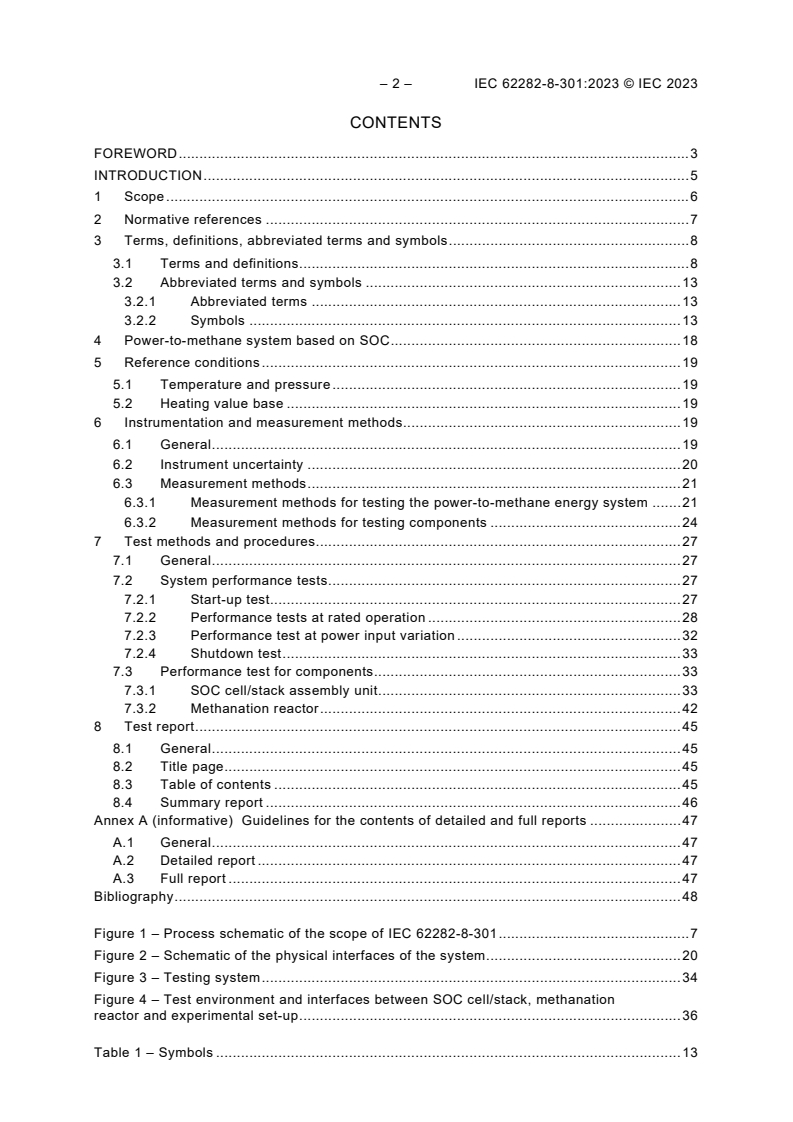
Figure 1 – Process schematic of the scope of IEC 62282-8-301 . 7
Figure 2 – Schematic of the physical interfaces of the system . 20
Figure 3 – Testing system . 34
Figure 4 – Test environment and interfaces between SOC cell/stack, methanation
reactor and experimental set-up . 36
Table 1 – Symbols . 13
INTERNATIONAL ELECTROTECHNICAL COMMISSION
____________
FUEL CELL TECHNOLOGIES –
Part 8-301: Energy storage systems using fuel cell modules in reverse
mode – Power-to-methane energy systems based on solid oxide cells
including reversible operation – Performance test methods
FOREWORD
1) The International Electrotechnical Commission (IEC) is a worldwide organization for standardization comprising
all national electrotechnical committees (IEC National Committees). The object of IEC is to promote international
co-operation on all questions concerning standardization in the electrical and electronic fields. To this end and
in addition to other activities, IEC publishes International Standards, Technical Specifications, Technical Reports,
Publicly Available Specifications (PAS) and Guides (hereafter referred to as "IEC Publication(s)"). Their
preparation is entrusted to technical committees; any IEC National Committee interested in the subject dealt with
may participate in this preparatory work. International, governmental and non-governmental organizations liaising
with the IEC also participate in this preparation. IEC collaborates closely with the International Organization for
Standardization (ISO) in accordance with conditions determined by agreement between the two organizations.
2) The formal decisions or agreements of IEC on technical matters express, as nearly as possible, an international
consensus of opinion on the relevant subjects since each technical committee has representation from all
interested IEC National Committees.
3) IEC Publications have the form of recommendations for international use and are accepted by IEC National
Committees in that sense. While all reasonable efforts are made to ensure that the technical content of IEC
Publications is accurate, IEC cannot be held responsible for the way in which they are used or for any
misinterpretation by any end user.
4) In order to promote international uniformity, IEC National Committees undertake to apply IEC Publications
transparently to the maximum extent possible in their national and regional publications. Any divergence between
any IEC Publication and the corresponding national or regional publication shall be clearly indicated in the latter.
5) IEC itself does not provide any attestation of conformity. Independent certification bodies provide conformity
assessment services and, in some areas, access to IEC marks of conformity. IEC is not responsible for any
services carried out by independent certification bodies.
6) All users should ensure that they have the latest edition of this publication.
7) No liability shall attach to IEC or its directors, employees, servants or agents including individual experts and
members of its technical committees and IEC National Committees for any personal injury, property damage or
other damage of any nature whatsoever, whether direct or indirect, or for costs (including legal fees) and
expenses arising out of the publication, use of, or reliance upon, this IEC Publication or any other IEC
Publications.
8) Attention is drawn to the Normative references cited in this publication. Use of the referenced publications is
indispensable for the correct application of this publication.
9) Attention is drawn to the possibility that some of the elements of this IEC Publication may be the subject of patent
rights. IEC shall not be held responsible for identifying any or all such patent rights.
IEC 62282-8-301 has been prepared by IEC technical committee 105: Fuel cell technologies.
It is an International Standard.
The text of this International Standard is based on the following documents:
Draft Report on voting
105/968/FDIS 105/983/RVD
Full information on the voting for its approval can be found in the report on voting indicated in
the above table.
The language used for the development of this International Standard is English.
– 4 – IEC 62282-8-301:2023 © IEC 2023
This document was drafted in accordance with ISO/IEC Directives, Part 2, and developed in
accordance with ISO/IEC Directives, Part 1 and ISO/IEC Directives, IEC Supplement, available
at www.iec.ch/members_experts/refdocs. The main document types developed by IEC are
described in greater detail at www.iec.ch/publications.
A list of all parts in the IEC 62282 series, published under the general title Fuel cell technologies,
can be found on the IEC website.
The committee has decided that the contents of this document will remain unchanged until the
stability date indicated on the IEC website under webstore.iec.ch in the data related to the
specific document. At this date, the document will be
• reconfirmed,
• withdrawn,
• replaced by a revised edition, or
• amended.
INTRODUCTION
This part of IEC 62282 describes performance evaluation methods for electric energy
conversion systems based on power-to-methane systems using solid oxide cells (SOCs) and
methanation reactors.
A typical application of the power-to-methane systems is an electrolytic production of methane
as the energy carrier suitable for a large-scale, long-term storage and transportation.
The combustion heat of methane per mol is about three times larger than that of hydrogen.
Methane is easily liquefied, which makes it suitable for storage and transportation via existing
infrastructures for natural gas (tanks, pipelines, tankers, or trucks) as well as for being easily
utilized by conventional equipment. Also, the use of "green methane" (produced by renewable
electricity) or "carbon neutral methane" in place of "fossil methane" is a promising option in the
near future.
The IEC 62282-8 series aims to develop performance test methods for power storage and
buffering systems based on electrochemical modules (combining electrolysis and fuel cells, in
particular reversible cells), taking into consideration both options of re-electrification and
substance (and heat) production for the sustainable integration of renewable energy sources.
Under the general title "Energy storage systems using fuel cell modules in reverse mode", the
IEC 62282-8 series consists of the following parts:
• IEC 62282-8-101: Test procedures for the performance of solid oxide single cells and
stacks, including reversible operation
• IEC 62282-8-102: Test procedures for the performance of single cells and stacks with proton
exchange membrane, including reversible operation
• IEC 62282-8-103 : Alkaline single cell and stack performance including reversible operation
• IEC 62282-8-201 : Test procedures for the performance of power-to-power systems
• IEC 62282-8-202 : Power-to-power systems – Safety
• IEC 62282-8-3xy (all parts): Power-to-substance systems
As a priority dictated by the emerging needs for industry and the opportunities for technological
development, IEC 62282-8-101, IEC 62282-8-102 and IEC 62282-8-201 were initiated jointly.
This document is the first of the IEC 62282-8-3xy series.
___________
Under consideration.
Second edition under preparation. Stage at the time of publication: IEC CDV 62282-8-201:2023.
Under consideration.
– 6 – IEC 62282-8-301:2023 © IEC 2023
FUEL CELL TECHNOLOGIES –
Part 8-301: Energy storage systems using fuel cell modules in reverse
mode – Power-to-methane energy systems based on solid oxide cells
including reversible operation – Performance test methods
1 Scope
This part of IEC 62282 specifies performance test methods of power-to-methane systems based
on solid oxide cells (SOCs). Water, CO , and electricity are supplied to the system to produce
methane and oxygen.
This document is not intended to be applied to solid oxide fuel cell (SOFC) cell/stack assembly
units for power generation purposes only, since these are covered in IEC 62282-7-2. In addition,
the test methods for SOC cell/stack assembly units including reversible operation (without any
methanation reactor) are already described in IEC 62282-8-101. Users can substitute the
selected test methods of this document with the equivalent test methods given in
IEC 62282-8-101 (solid oxide electrolysis cell (SOEC) to produce H only as well as SOFC
operation mode and reversible mode) and in IEC 62282-7-2 (SOFC mode only).
This document covers two types of processes as shown in Figure 1:
• Case 1: Steam and CO are introduced into the SOC (co-electrolysis process), and the
product gas (mainly, H + CO) is supplied to a methanation reactor (catalytic reactor);
• Case 2: Steam is introduced into the SOC to generate H , which is supplied into a
methanation reactor with CO .
Besides these two cases, the methanation catalyst can be integrated within the SOC, but this
case is not within the scope of this document. This document provides, for testing systems,
information on instruments and specifies measurement methods to test the performance of SOC
cell/stack assembly units and of the methanation reactor for energy conversion purposes. To
produce CH from water and CO , the SOC is operated in electrolysis mode (solid oxide
4 2
electrolysis cell (SOEC)). The SOC can be operated either in fuel cell mode (SOFC) or in
reversible operation mode or both. In this document, the system is considered not to have
components which store electricity, fluids, or heat.
This document is intended to be used for data exchanges in commercial transactions between
the system manufacturers and customers. Users of this document can selectively execute test
items suitable for their purposes from those described in this document.
Figure 1 – Process schematic of the scope of IEC 62282-8-301
2 Normative references
The following documents are referred to in the text in such a way that some or all of their content
constitutes requirements of this document. For dated references, only the edition cited applies.
For undated references, the latest edition of the referenced document (including any
amendments) applies.
IEC 60584-1, Thermocouples – Part 1: EMF specifications and tolerances
IEC 60584-3, Thermocouples – Part 3: Extension and compensating cables – Tolerances and
identification system
IEC 61515, Mineral insulated metal-sheathed thermocouple cables and thermocouples
IEC 62282-7-2:2021, Fuel cell technologies – Part 7-2: Test methods – Single cell and stack
performance tests for solid oxide fuel cells (SOFC)
IEC 62282-8-101:2020, Fuel cell technologies – Part 8-101: Energy storage systems using fuel
cell modules in reverse mode – Test procedures for the performance of solid oxide single cells
and stacks, including reversible operation
ISO 5167-1, Measurement of fluid flow by means of pressure differential devices inserted in
circular cross-section conduits running full – Part 1: General principles and requirements
ISO 5168, Measurement of fluid flow – Procedures for the evaluation of uncertainties
ISO 6141, Gas analysis – Contents of certificates for calibration gas mixtures
ISO 6142-1, Gas analysis – Preparation of calibration gas mixtures – Part 1: Gravimetric
method for Class I mixtures
ISO 6143, Gas analysis – Comparison methods for determining and checking the composition
of calibration gas mixtures
ISO 6145-7, Gas analysis – Preparation of calibration gas mixtures using dynamic methods –
Part 7: Thermal mass-flow controllers
– 8 – IEC 62282-8-301:2023 © IEC 2023
ISO 6974 (all parts), Natural gas – Determination of composition and associated uncertainty by
gas chromatography
ISO 6975, Natural gas – Extended analysis – Gas-chromatographic method
ISO 7066-2, Assessment of uncertainty in the calibration and use of flow measurement devices
– Part 2: Non-linear calibration relationships
ISO 8573-1, Compressed air – Part 1: Contaminants and purity classes
ISO 8756, Air quality – Handling of temperature, pressure and humidity data
ISO 10101 (all parts), Natural gas – Determination of water by the Karl Fischer method
ISO 11541, Natural gas – Determination of water content at high pressure
3 Terms, definitions, abbreviated terms and symbols
3.1 Terms and definitions
For the purposes of this document, the following terms and definitions apply.
ISO and IEC maintain terminology databases for use in standardization at the following
addresses:
• IEC Electropedia: available at https://www.electropedia.org/
• ISO Online browsing platform: available at https://www.iso.org/obp
3.1.1
active electrode area
effective electrode area
geometric area of the electrode where the electrochemical reaction takes place
Note 1 to entry: Usually this corresponds to the smaller of the two areas of negative electrode or positive electrode.
2 2
Note 2 to entry: Area perpendicular to the ionic current flow, usually expressed in m or cm .
[SOURCE: IEC 62282-8-101:2020, 3.1.1]
3.1.2
additional gas
gas added to the product gas from the negative electrode for the reaction in the methanation
reactor
Note 1 to entry: For Case 2 in Figure 1, the additional gas is CO .
Note 2 to entry: For Case 1 in Figure 1 (co-electrolysis mode), CO or H or both can be added to convert the
2 2
product gas from the negative electrode into CH efficiently.
3.1.3
area-specific resistance
ASR
internal resistivity of any component of a cell or a stack, including the change of potential due
to the electrochemical reaction
2 2
Note 1 to entry: It is normalized by the active electrode area and is expressed in Ω · m or Ω · cm .
[SOURCE: IEC 62282-8-101:2020, 3.1.2]
3.1.4
catalyst
substance that accelerates a reaction without being consumed itself
[SOURCE: IEC 60050-485:2020, 485-01-01, modified – "electrochemical reaction" has been
replaced by "reaction" and Note 1 and Note 2 have been deleted.]
3.1.5
cell
single cell
basic unit of a solid oxide cell
[SOURCE: IEC 62282-8-101:2020, 3.1.7, modified – "cell" has become a preferred term.]
3.1.6
cold state
state of a power-to-methane system at ambient temperature with no power input or output
Note 1 to entry: The cold state can come after the storage state during cooling-down of the system.
[SOURCE: IEC 60050-485:2020, 485-21-01, modified – "fuel cell power system" has been
replaced by "power-to-methane system" and the Note to entry has been added.]
3.1.7
compression force
axial load
compressive load applied to the single cell or to the end plates of a planar SOC stack to ensure
electric contact and gas tightness
Note 1 to entry: The compression force is in practice expressed in N.
[SOURCE: IEC 62282-8-101:2020, 3.1.7, modified – The preferred term "axial load" has
become an admitted term and the admitted term "compression force" has become a preferred
term.]
3.1.8
conditioning
preliminary step of treatment that is required to properly operate a SOC and is usually realized
by following a protocol specified by the manufacturer
[SOURCE: IEC 62282-8-101:2020, 3.1.8, modified – The Note 1 to entry has been deleted.]
3.1.9
conversion of CO into CH
2 4
catalytic conversion percentage of carbon dioxide into methane in the methanation reactor
3.1.10
conversion of H into CH
2 4
catalytic conversion percentage of hydrogen into methane in the methanation reactor
3.1.11
current density
electric current per unit active area of the electrode
2 2
Note 1 to entry: The current density is expressed in A/m or A/cm .
[SOURCE: IEC 60050-485:2020, 485-12-01, modified – "of the electrode" has been added and
the domain has been deleted.]
– 10 – IEC 62282-8-301:2023 © IEC 2023
3.1.12
electrode gas
gas present at the positive or negative electrode
Note 1 to entry: Electrode gases can be reactants, products or inert gas.
[SOURCE: IEC 62282-8-101:2020, 3.1.14]
3.1.13
interconnector
interconnect
electronically conductive and gas-tight component connecting single cells in a stack
[SOURCE: IEC 62282-8-101:2020, 3.1.4, modified – "electronically" has been added and the
Notes to entry have been deleted.]
3.1.14
methanation reactor
catalytic reactor which converts CO , CO, and H into CH
2 2 4
3.1.15
negative electrode
electrode at which fuel (reductant) gas is consumed or produced
Note 1 to entry: In the case of electrolysis mode with an oxide-ion conducting electrolyte such as yttria-stabilized
zirconia in a SOC, steam is reduced to produce hydrogen or a mixture of steam and CO is reduced to produce H +
2 2
CO.
Note 2 to entry: In the case of electrolysis mode for a proton conducting SOC, the negative electrode gas is
hydrogen or inert gas or both (Case 2 in Figure 1) or a mixture of hydrogen, CO and inert gas (Case 1, co-
electrolysis).
[SOURCE: IEC 62282-8-101:2020, 3.1.19, modified – "(reductant)" has been added and the
three Notes to entry have been replaced with two new Notes to entry.]
3.1.16
positive electrode
electrode at which oxygen is consumed or produced
Note 1 to entry: In the case of electrolysis mode for an oxide-ion conducting SOC, the positive electrode gas is
usually air to carry the generated oxygen.
Note 2 to entry: In the case of electrolysis mode for a proton conducting SOC, the positive electrode gas is steam
or a mixture of steam and inert gas to carry the generated oxygen.
[SOURCE: IEC 62282-8-101:2020, 3.1.21, modified – The three Notes to entry have been
replaced with two new Notes to entry.]
3.1.17
protection gas
mixture of hydrogen and inert gas (usually argon or nitrogen) to protect the transition metal-
containing negative electrodes of the SOC and the catalyst in the methanation reactor from
being re-oxidized in case of abnormal operating conditions (e.g. electrode gas interruption,
emergency stop of the test station)
3.1.18
rated conditions
recommended operation conditions (e.g. current, power) as specified by the manufacturer, at
which the SOC system has been designed to operate
3.1.19
reversible mode
regenerative mode
operation mode of a solid oxide cell which alternates between fuel cell mode and electrolysis
mode (Re-SOC)
Note 1 to entry: The term "reversible" in this context does not refer to the thermodynamic principle of an ideal
process.
[SOURCE: IEC 62282-8-101:2020, 3.1.26]
3.1.20
shutdown time
time required for shutdown from the rated state to the cold state
Note 1 to entry: The shutdown time is expressed in s, min, or h.
3.1.21
shutdown energy
total energy input during shutdown from the rated state to the cold state
Note 1 to entry: The shutdown energy is expressed in kJ.
3.1.22
solid oxide cell
SOC
electrochemical cell composed of three functional elements (negative electrode, electrolyte and
positive electrode)
[SOURCE: IEC 62282-8-101:2020, 3.1.28, modified – "based on ceramic oxide materials" and
the three Notes to entry have been deleted.]
3.1.23
solid oxide electrolysis cell
SOEC
SOC operated in electrolysis mode
[SOURCE: IEC 62282-8-101:2020, 3.1.29, modified – "i.e. reversed fuel cell mode" and the
three Notes to entry have been deleted.]
3.1.24
solid oxide fuel cell
SOFC
SOC operated in fuel cell mode
[SOURCE: IEC 62282-8-101:2020, 3.1.30, modified – Note 1 to entry has been deleted.]
3.1.25
space velocity
quotient of the entering volumetric flow rate of the reactants divided by the volume of the
catalyst bed
Note 1 to entry: The space velocity is expressed in 1/s.
– 12 – IEC 62282-8-301:2023 © IEC 2023
3.1.26
stable state
condition of a cell/stack assembly unit at which the unit is stable enough for any controlling
parameter and the output voltage or output current of the unit to remain within its tolerance
range of variation
[SOURCE: IEC 62282-7-2:2021, 3.1.9]
3.1.27
stack
assembly of cells, interconnectors, cooling plates, manifolds and a supporting structure
[SOURCE: IEC 60050-485:2020, 485-06-01, modified – The first preferred term "fuel cell stack"
has been deleted, "separators" has been replaced by "interconnectors" and "that
electrochemically converts, typically, hydrogen-rich gas and air reactants to DC power, heat
and other reaction products" has been deleted.]
3.1.28
start-up time
time required for start-up from the cold state to the rated state
Note 1 to entry: The start-up time is expressed in s, min, or h.
3.1.29
start-up energy
total energy input during start-up from the cold state to the rated state
Note 1 to entry: The start-up energy is expressed in kJ.
3.1.30
storage state
state of a power-to-methane system being non-operational and possibly requiring, under
conditions specified by the manufacturer, the input of thermal and electric energy, or an inert
atmosphere, or any combination thereof, in order to prevent deterioration of the components
and to energize the control systems
[SOURCE: IEC 60050-485-21-06, modified – "fuel cell power system" has been replaced by
"power-to-methane system" and “to energize the control systems" has been added.]
3.1.31
sweep gas
gas supplied to the positive electrode compartment of the SOC to carry the generated oxygen
Note 1 to entry: Air is frequently used as the sweep gas in the case of an oxide-ion conduction SOC to carry
generated O gas. For a proton-conducting SOC, steam or a mixture of steam and inert gas is supplied to carry the
.
generated O
3.1.32
test input parameter
TIP
parameter whose values can be set in order to define the test conditions of the test system
including the operating conditions of the test object
[SOURCE: IEC 62282-8-101:2020, 3.1.33, modified – The Note 1 to entry has been deleted.]
3.1.33
test output parameter
TOP
parameter that indicates the response of the test system/test object as a result of variation of
TIPs
[SOURCE: IEC 62282-8-101:2020, 3.1.34, modified – The Note 1 to entry has been deleted.]
3.2 Abbreviated terms and symbols
3.2.1 Abbreviated terms
AC alternating current
ASR area-specific resistance
CE current efficiency
DC direct current
DR degradation rate
FT Fischer Tropsch
GWP global warming potential
HHV higher heating value
LHV lower heating value
P2G power-to-gas
SOC solid oxide cell
SOEC solid oxide electrolysis cell
SOFC solid oxide fuel cell
Re-SOC reversible solid oxide cell
STP standard temperature and pressure
SV space velocity
TIP test input parameter
TOP test output parameter
3.2.2 Symbols
Table 1 lists the symbols and units that are used in this document.
Table 1 – Symbols
Symbol Definition Unit(s)
2 2
A Active (geometric) area of the cell/stack electrode(s)
m , cm
active
c Concentration
c Molar concentration of component i
mol/m
i
C Heat capacity
p
C Heat capacity of the heat transfer fluid at standard pressure J/(kg · K)
p,c
C Heat capacity of component i at standard pressure J/(kg · K)
p,i
E Energy
E
Electric energy input to the system kJ
el,in
E Electric energy output from the system kJ
el,out
E Specific electric energy consumed for producing a unit volume of CH
kJ/m
sp,CH4 4
– 14 – IEC 62282-8-301:2023 © IEC 2023
Symbol Definition Unit(s)
E Start-up energy of the system kJ
st
E Shutdown energy of the system kJ
sd
F Faraday constant, force
F Faraday constant (96 485,3) C/mol
F Compression force applied onto the cell/stack N
comp
f Frequency
f Excitation frequency for impedance measurement Hz
H Higher heating value
H
Higher heating value of methane kJ/mol
CH4
I, J Current, current density
I
Alternating current (AC current) supplied to the system A
AC
I Cell current A
cell
I DC current supplied to the system A
DC
I Stack current A
stack
I
Amplitude of alternating current A
pk
2 2
J Current density
A/m , A/cm
2 2
δJ Differential change in current density
A/m , A/cm
N, n Number of items
N Number of cells in the assembly unit
cell
n Number of carbon atoms in a hydrocarbon molecule
P Power
P AC electric power supplied to the system W
AC
P DC electric power supplied to the system W
DC
P Heat (thermal power) recovery rate at the methanation reactor kJ/s
th,MR
P
Sum of heat (thermal power) input rate of all heat transferring fluids of the kJ/s
th,sys,in
system
P Sum of heat (thermal power) output rate of all heat transferring fluids of kJ/s
th,sys,out
the system
ΔP Heat (thermal power) balance of the system kJ/s
th,sys
p Pressure
p Pressure of negative electrode gas at cell/stack inlet kPa
neg,in
p
Pressure of negative electrode gas at cell/stack outlet kPa
neg,out
p Pressure of positive electrode gas at cell/stack inlet kPa
pos,in
p Pressure of positive electrode gas at cell/stack outlet kPa
pos,out
p Pressure of the additional gas kPa
ad
p Pressure of gas at methanation reactor inlet kPa
MR,in
p Pressure of gas at methanation reactor outlet kPa
MR,out
p Standard pressure (101,325) kPa
V Volume
V volume of the catalyst bed
m
cat
Symbol Definition Unit(s)
Q Heat (thermal) energy
th
Q Heat (thermal) energy input to the system kJ
th,in
Q Heat (thermal) energy output from the system kJ
th,out
q Mass flow rate
m
q Mass flow rate of heat recovery fluid kg/s
m,c
q
Volumetric flow rate
V
q Volumetric flow rate of heat transfer fluid (at STP)
m /s
V,H
q Total volumetric flow rate at negative electrode inlet (at STP)
m /s
V,neg,in
q Total volumetric flow rate at positive electrode inlet (at STP)
m /s
V,pos,in
q Total volumetric flow rate at negative electrode outlet (at STP)
m /s
V,neg,out
q Total volumetric flow rate at positive electrode outlet (at STP)
m /s
V,pos,out
q Total volumetric flow rate of the additional gas (at STP)
m /s
V,ad
q
Total volumetric flow rate at methanation reactor inlet (at STP)
m /s
V,MR,in
q Total volumetric flow rate at methanation reactor outlet (at STP)
m /s
V,MR,out
q Volumetric flow rate of gas component i at negative electrode inlet (at
m /s
V,i,neg,in
STP)
q Volumetric flow rate of gas component i at positive electrode inlet (at STP)
m /s
V,i,pos,in
q Volumetric flow rate of gas component i at negative electrode outlet (at
m /s
V,i,neg,out
STP)
q Volumetric flow rate of gas component i at positive electrode outlet (at
m /s
V,i,pos,out
STP)
q Volumetric flow rate of gas component i in the additional gas (at STP)
m /s
V,i,ad
q Volumetric flow rate of gas component i at methanation reactor inlet (at
m /s
V,i,MR,in
STP)
q Volumetric flow rate of gas component i at methanation reactor outlet (at
m /s
V,i,MR,out
STP)
q Total volumetric flow rate of product gas at the outlet of the system (at
m /s
V,product,sys,out
STP)
q Volumetric flow rate of gas component i at the outlet of the system (at
m /s
V,i,sys,out
STP)
q Volumetric flow rate of gas component i at the inlet of the system (at STP)
m /s
V,i,sys,in
R Resistance, universal gas constant
R Resistance Ω
2 2
R Area-specific resistance
Ω ∙ m , Ω ∙ cm
ASR
R Ohmic resistance Ω
ohm
R Non-ohmic resistance Ω
non-ohm
R
Universal gas constant (8,314 5) J/(mol ∙ K)
g
r Production rate of gas
r Production rate of gas component i at electrode outlet (at STP)
m /s
i
r Production rate of hydrogen gas at negative electrode outlet (at STP)
m /s
H2,neg,out
r Production rate of gas equivalent to hydrogen at negative electrode outlet
m /s
H2,eq,neg,out
(at STP)
– 16 – IEC 62282-8-301:2023 © IEC 2023
Symbol Definition Unit(s)
SV Space velocity
SV quotient of the entering volumetric flow rate of reactants divided by the 1/s
volume of the catalyst bed
T Temperature
T Temperature of the heat recovery fluid at the inlet of the methanation K
c,in
reactor
T
Temperature of the heat recovery fluid at the outlet of the methanation K
c,out
reactor
T
Temperature of the cell or stack K
cell/stack
T Average temperature of the stack K
stack,av
T Internal stack temperature K
stack,intern
T Temperature of the bottom plate K
BP
T Temperature of the top plate K
TP
T Temperature of the furnace K
furnace
T Temperature of negative electrode gas stream at cell/stack inlet K
neg,in
T Temperature of positive electrode gas stream at cell/stack inlet K
pos,in
T Temperature of negative electrode gas stream at cell/stack outlet K
neg,out
T Temperature of positive electrode gas stream at cell/stack outlet K
pos,out
T Temperature of the pre-heater for preheating the negative electrode gas K
PH,neg
stream
T Temperature of the pre-heater for preheating the positive electrode gas K
PH,pos
stream
T Temperature of the additional gas stream K
ad
T Temperature of heat transfer fluid input K
H,in
T Temperature of heat transfer fluid output K
H,out
T Temperature of the pre-heater for preheating the additional gas stream K
PH,ad
T Temperature of gas stream at methanation reactor inlet K
MR,in
T Temperature of gas stream at methanation reactor outlet K
MR,out
T Temperature of the pre-heater for preheating the methanation reactor gas K
PH,MR
stream
T Standard temperature (273,15) K
t Time s, min, h
t Data acquisition time s, min, h
acq
t Measurement duration s, min, h
dur
t Equilibration time s, min, h
eq
t Duration time of operation at given conditions s, min, h
op
t Initial time -
t End time -
t Residence time for the methanation reactor s
MR
V Voltage
V AC voltage supplied to the system V
AC
V
Voltage of the cell V
cell
Symbol Definition Unit(s)
V Average cell voltage V
cell,av
V DC voltage supplied to the system V
DC
V Voltage of the stack V
stack
V Amplitude of alternating voltage V
pk
V Thermodynamic voltage based on HHV or LHV V
th
x Fraction
x Molar fraction of component i mol/mol
i
x
Molar fraction of component i in the negative electrode gas stream inlet at mol/mol
i,neg,in
cell/stack
x
Molar fraction of component i in the negative electrode gas stream outlet mol/mol
i,neg,out
at cell/stack
x Molar fraction of component i in the positive electrode gas stream inlet at mol/mol
i,pos,in
cell/stack
x Molar fraction of component i in the positive electrode gas stream outlet at mol/mol
i,pos,in
cell/stack
x Molar fraction of component i in the additional gas stream mol/mol
i,ad
x
Molar fraction of component i in the gas stream at methanation reactor mol/mol
i,MR,in
inlet
x
Molar fraction of component i in the gas stream at methanation reactor mol/mol
i,MR,out
outlet
x Molar fraction of component i in the product gas at system inlet mol/mol
i,sys,in
x Molar fraction of component i in the product gas at system outlet mol/mol
i,sys,out
x Mass fraction of component i kg/kg
m,i
x Steam molar fraction mol/mol
H O
x Hydrogen molar fraction mol/mol
H
x CO molar fraction mol/mol
CO2 2
x CO molar fraction mol/mol
CO
x Oxygen molar fraction mol/mol
O
y Conversion
y Conversion of H into CH %
CH4/H2 2 4
y Conversion of CO into CH %
CH /CO 2 4
4 2
Y, Z Impedance
Impedance Ω
Z
2 2
Specific impedance
Ω ∙ cm , Ω ∙ m
Modulus of impedance Ω
|Z|
2 2
Modulus of specific impedance
Ω ∙ cm , Ω ∙ m
Real part of impedance (resistance) Ω
Z’
2 2
Real part of specific impedance
Ω ∙ cm , Ω ∙ m
Imaginary part of impedance (reactance) Ω
Z’’
2 2
Imaginary part of specific impedance
Ω ∙ cm , Ω ∙ m
η Efficiency
η Current efficiency %
CE
η CH production efficiency %
CH4 4
– 18 – IEC 62282-8-301:2023 © IEC 2023
Symbol Definition Unit(s)
η Electrolytic efficiency %
el
η Total efficiency of the system %
total
η Voltage efficiency %
V
λ Power factor
λ Power factor -
ρ Density
ρ Density of heat transfer fluid
kg/m
H
4 Power-to-methane system based on SOC
The use of electricit
...