

IEC SRD 63326:2025
(Main)City needs analysis framework
General Information
- Abstract
IEC SRD 63326:2025 This framework provides a brief of City Needs and Smart City Framework, explains the importance of it in supporting Smart Cities, specifies the vision, mission, and the role of the proposed New Working Group of City Needs Framework, and explains the approach which would be adopted, and the operating principles. This context has occurred after the intelligent movement, while the time right to conclude the framework that supporting policies and standardization have a positive effect on the urban growth. This document discussed the special structure of cities and reviewed the performance, creating the framework with methodology about smart cities requirements. The framework methodology help stakeholders (governments, private companies, universities and research institutions, and civil society and so on) across clearly when looking at the micro-foundations view. Helping governments and developers, understanding the rules well, finding the high-efficient way to achieve the goal, helping citizens could living better, the problems while could be solved, helping researchers could know the smart projects exploration.
- Status
- Published
- Publication Date
- 12-Aug-2025
- Technical Committee
- SyC Smart Cities - Electrotechnical aspects of Smart Cities
- Drafting Committee
- WG 2 - SyC Smart Cities/WG 2
- Current Stage
- PPUB - Publication issued
- Start Date
- 13-Aug-2025
- Completion Date
- 05-Sep-2025


Overview
IEC SRD 63326:2025 - City needs analysis framework (CNAF) is an IEC Systems Reference Deliverable that defines a structured approach to identifying, describing and analysing the needs of cities to support smart city planning, policy and standards development. The document sets out the vision, mission and operating principles for a proposed working group on city needs, explains the framework methodology, and positions the CNAF to support alignment of smart-city standards with the Sustainable Development Goals (SDGs).
Keywords: IEC SRD 63326, City needs analysis framework, CNAF, smart cities, sustainable development goals
Key Topics
The standard covers practical and conceptual topics without prescribing technical implementation details:
- City systems approach - systems-level view of urban infrastructure and services to link needs to solutions.
- Hierarchy and stratification of city needs - methods to classify and prioritise needs according to city typologies and stages of development.
- City typologies and survey methods - guidance on urban classifications and research methods for needs surveys.
- CNAF methodology and approach - framework details for analysing needs, mapping needs to objectives and sustainable development targets.
- Smart solution domains - descriptive needs and stakeholder perspectives for:
- City information modelling (CIM)
- Water systems
- Intelligent Operations Centres (IOC)
- Smart urban planning
- Management of public health emergencies (PHE)
- Alignment with SDGs and standards harmonization - a common language to help Standards Development Organizations (SDOs) align their work.
Applications and Who Uses It
IEC SRD 63326:2025 is intended as a reference framework for a variety of stakeholders involved in smart city work:
- Government agencies and urban planners - to prioritise investments, design policy and coordinate cross-sector initiatives.
- Standards Development Organizations and technical committees - to ensure standards address relevant city needs and are interoperable across domains.
- Private sector solution providers and utilities - to map product/service offerings to verified city requirements.
- Researchers and universities - to use a consistent methodology for comparative studies and pilot projects.
- Civil society and regulators - to evaluate social, health and sustainability impacts and ensure inclusive decision-making.
Practical uses include needs assessment, requirements definition for smart-city projects, mapping standards to SDGs, and scoping interoperability work across domains.
Related Standards
- Builds on the descriptive framework in ISO 37105 (cities and communities).
- Published as an IEC Systems Reference Deliverable to inform IEC Smart Cities technical work and cross-SDO harmonization.
For implementers and policymakers, IEC SRD 63326:2025 provides a practical, standards-oriented lens to translate city priorities into coherent smart-city strategies and interoperable solutions.
Get Certified
Connect with accredited certification bodies for this standard

BSI Group
BSI (British Standards Institution) is the business standards company that helps organizations make excellence a habit.

Bureau Veritas
Bureau Veritas is a world leader in laboratory testing, inspection and certification services.

DNV
DNV is an independent assurance and risk management provider.
Sponsored listings
Frequently Asked Questions
IEC SRD 63326:2025 is a standardization document published by the International Electrotechnical Commission (IEC). Its full title is "City needs analysis framework". This standard covers: IEC SRD 63326:2025 This framework provides a brief of City Needs and Smart City Framework, explains the importance of it in supporting Smart Cities, specifies the vision, mission, and the role of the proposed New Working Group of City Needs Framework, and explains the approach which would be adopted, and the operating principles. This context has occurred after the intelligent movement, while the time right to conclude the framework that supporting policies and standardization have a positive effect on the urban growth. This document discussed the special structure of cities and reviewed the performance, creating the framework with methodology about smart cities requirements. The framework methodology help stakeholders (governments, private companies, universities and research institutions, and civil society and so on) across clearly when looking at the micro-foundations view. Helping governments and developers, understanding the rules well, finding the high-efficient way to achieve the goal, helping citizens could living better, the problems while could be solved, helping researchers could know the smart projects exploration.
IEC SRD 63326:2025 This framework provides a brief of City Needs and Smart City Framework, explains the importance of it in supporting Smart Cities, specifies the vision, mission, and the role of the proposed New Working Group of City Needs Framework, and explains the approach which would be adopted, and the operating principles. This context has occurred after the intelligent movement, while the time right to conclude the framework that supporting policies and standardization have a positive effect on the urban growth. This document discussed the special structure of cities and reviewed the performance, creating the framework with methodology about smart cities requirements. The framework methodology help stakeholders (governments, private companies, universities and research institutions, and civil society and so on) across clearly when looking at the micro-foundations view. Helping governments and developers, understanding the rules well, finding the high-efficient way to achieve the goal, helping citizens could living better, the problems while could be solved, helping researchers could know the smart projects exploration.
IEC SRD 63326:2025 is classified under the following ICS (International Classification for Standards) categories: 13.020.20 - Environmental economics. Sustainability. The ICS classification helps identify the subject area and facilitates finding related standards.
IEC SRD 63326:2025 is available in PDF format for immediate download after purchase. The document can be added to your cart and obtained through the secure checkout process. Digital delivery ensures instant access to the complete standard document.
Standards Content (Sample)
IEC SRD 63326 ®
Edition 1.0 2025-08
SYSTEMS REFERENCE
DELIVERABLE
City needs analysis framework
ICS 13.020.20 ISBN 978-2-8327-0636-7
All rights reserved. Unless otherwise specified, no part of this publication may be reproduced or utilized in any form or
by any means, electronic or mechanical, including photocopying and microfilm, without permission in writing from either
IEC or IEC's member National Committee in the country of the requester. If you have any questions about IEC copyright
or have an enquiry about obtaining additional rights to this publication, please contact the address below or your local
IEC member National Committee for further information.
IEC Secretariat Tel.: +41 22 919 02 11
3, rue de Varembé info@iec.ch
CH-1211 Geneva 20 www.iec.ch
Switzerland
About the IEC
The International Electrotechnical Commission (IEC) is the leading global organization that prepares and publishes
International Standards for all electrical, electronic and related technologies.
About IEC publications
The technical content of IEC publications is kept under constant review by the IEC. Please make sure that you have the
latest edition, a corrigendum or an amendment might have been published.
IEC publications search - IEC Products & Services Portal - products.iec.ch
webstore.iec.ch/advsearchform Discover our powerful search engine and read freely all the
publications previews, graphical symbols and the glossary.
The advanced search enables to find IEC publications by a
variety of criteria (reference number, text, technical With a subscription you will always have access to up to date
committee, …). It also gives information on projects, content tailored to your needs.
replaced and withdrawn publications.
Electropedia - www.electropedia.org
The world's leading online dictionary on electrotechnology,
IEC Just Published - webstore.iec.ch/justpublished
Stay up to date on all new IEC publications. Just Published containing more than 22 500 terminological entries in English
details all new publications released. Available online and and French, with equivalent terms in 25 additional languages.
once a month by email. Also known as the International Electrotechnical Vocabulary
(IEV) online.
IEC Customer Service Centre - webstore.iec.ch/csc
If you wish to give us your feedback on this publication or
need further assistance, please contact the Customer
Service Centre: sales@iec.ch.
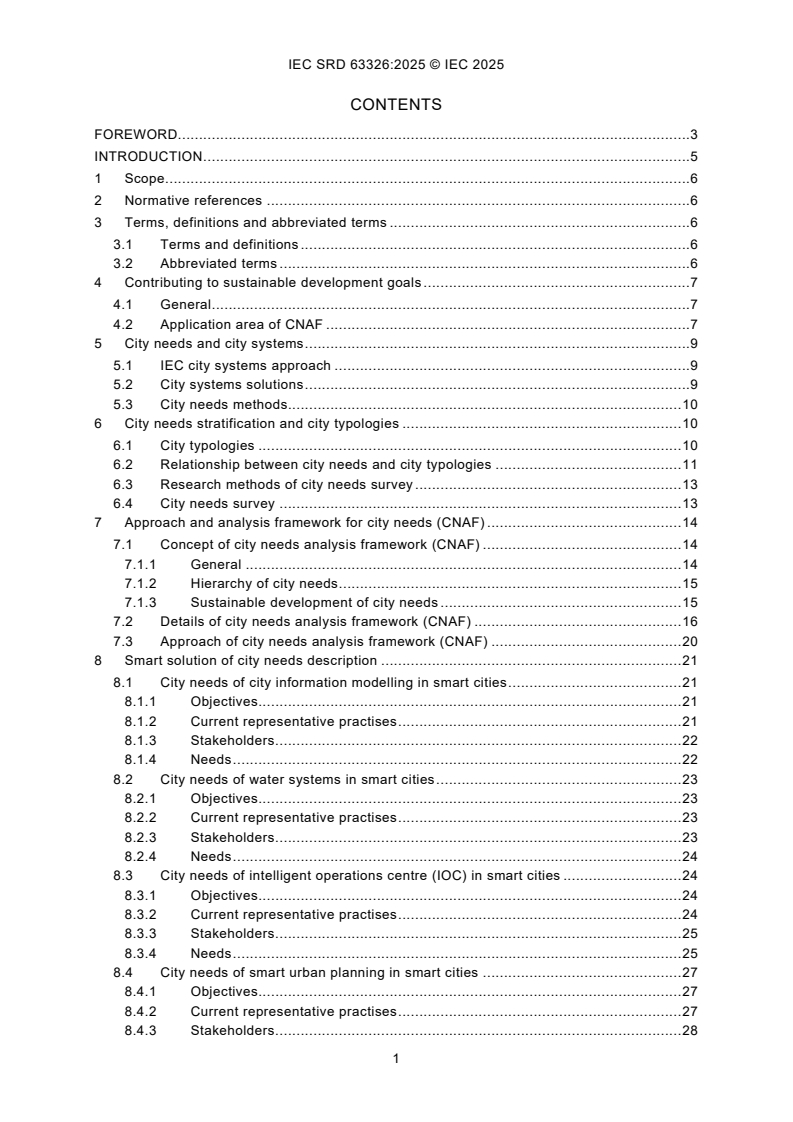
CONTENTS
FOREWORD. 3
INTRODUCTION . 5
1 Scope . 6
2 Normative references . 6
3 Terms, definitions and abbreviated terms . 6
3.1 Terms and definitions . 6
3.2 Abbreviated terms . 6
4 Contributing to sustainable development goals . 7
4.1 General . 7
4.2 Application area of CNAF . 7
5 City needs and city systems . 9
5.1 IEC city systems approach . 9
5.2 City systems solutions . 9
5.3 City needs methods . 10
6 City needs stratification and city typologies . 10
6.1 City typologies . 10
6.2 Relationship between city needs and city typologies . 11
6.3 Research methods of city needs survey . 13
6.4 City needs survey . 13
7 Approach and analysis framework for city needs (CNAF) . 14
7.1 Concept of city needs analysis framework (CNAF) . 14
7.1.1 General . 14
7.1.2 Hierarchy of city needs . 15
7.1.3 Sustainable development of city needs . 15
7.2 Details of city needs analysis framework (CNAF) . 16
7.3 Approach of city needs analysis framework (CNAF) . 20
8 Smart solution of city needs description . 21
8.1 City needs of city information modelling in smart cities . 21
8.1.1 Objectives . 21
8.1.2 Current representative practises . 21
8.1.3 Stakeholders . 22
8.1.4 Needs . 22
8.2 City needs of water systems in smart cities . 23
8.2.1 Objectives . 23
8.2.2 Current representative practises . 23
8.2.3 Stakeholders . 23
8.2.4 Needs . 24
8.3 City needs of intelligent operations centre (IOC) in smart cities . 24
8.3.1 Objectives . 24
8.3.2 Current representative practises . 24
8.3.3 Stakeholders . 25
8.3.4 Needs . 25
8.4 City needs of smart urban planning in smart cities . 27
8.4.1 Objectives . 27
8.4.2 Current representative practises . 27
8.4.3 Stakeholders . 28
8.4.4 Needs . 29
8.5 City needs of management of public health emergencies (PHE) in smart
cities . 29
8.5.1 Objectives . 29
8.5.2 Current representative practises . 29
8.5.3 Stakeholders . 30
8.5.4 Needs . 31
9 Analysis conclusions of city needs analysis framework . 31
Annex A (informative) Urban classifications . 32
Bibliography . 34
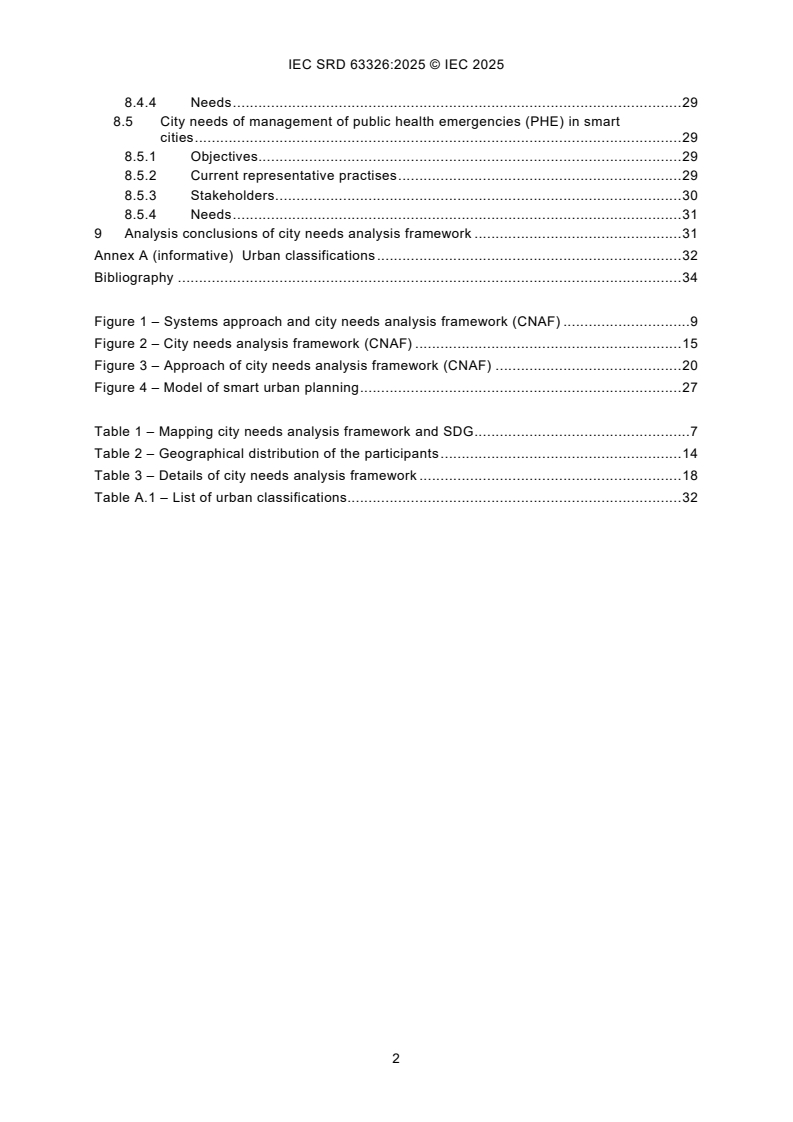
Figure 1 – Systems approach and city needs analysis framework (CNAF) . 9
Figure 2 – City needs analysis framework (CNAF) . 15
Figure 3 – Approach of city needs analysis framework (CNAF) . 20
Figure 4 – Model of smart urban planning . 27
Table 1 – Mapping city needs analysis framework and SDG . 7
Table 2 – Geographical distribution of the participants . 14
Table 3 – Details of city needs analysis framework . 18
Table A.1 – List of urban classifications. 32
INTERNATIONAL ELECTROTECHNICAL COMMISSION
____________
City needs analysis framework
FOREWORD
1) The International Electrotechnical Commission (IEC) is a worldwide organization for standardization comprising
all national electrotechnical committees (IEC National Committees). The object of IEC is to promote international
co-operation on all questions concerning standardization in the electrical and electronic fields. To this end and
in addition to other activities, IEC publishes International Standards, Technical Specifications, Technical Reports,
Publicly Available Specifications (PAS) and Guides (hereafter referred to as "IEC Publication(s) "). Their
preparation is entrusted to technical committees; any IEC National Committee interested in the subject dealt with
may participate in this preparatory work. International, governmental and non-governmental organizations liaising
with the IEC also participate in this preparation. IEC collaborates closely with the International Organization for
Standardization (ISO) in accordance with conditions determined by agreement between the two organizations.
2) The formal decisions or agreements of IEC on technical matters express, as nearly as possible, an international
consensus of opinion on the relevant subjects since each technical committee has representation from all
interested IEC National Committees.
3) IEC Publications have the form of recommendations for international use and are accepted by IEC National
Committees in that sense. While all reasonable efforts are made to ensure that the technical content of IEC
Publications is accurate, IEC cannot be held responsible for the way in which they are used or for any
misinterpretation by any end user.
4) In order to promote international uniformity, IEC National Committees undertake to apply IEC Publications
transparently to the maximum extent possible in their national and regional publications. Any divergence between
any IEC Publication and the corresponding national or regional publication shall be clearly indicated in the latter.
5) IEC itself does not provide any attestation of conformity. Independent certification bodies provide conformity
assessment services and, in some areas, access to IEC marks of conformity. IEC is not responsible for any
services carried out by independent certification bodies.
6) All users should ensure that they have the latest edition of this publication.
7) No liability shall attach to IEC or its directors, employees, servants or agents including individual experts and
members of its technical committees and IEC National Committees for any personal injury, property damage or
other damage of any nature whatsoever, whether direct or indirect, or for costs (including legal fees) and
expenses arising out of the publication, use of, or reliance upon, this IEC Publication or any other IEC
Publications.
8) Attention is drawn to the Normative references cited in this publication. Use of the referenced publications is
indispensable for the correct application of this publication.
9) IEC draws attention to the possibility that the implementation of this document may involve the use of (a)
patent(s). IEC takes no position concerning the evidence, validity or applicability of any claimed patent rights in
respect thereof. As of the date of publication of this document, IEC had not received notice of (a) patent(s), which
may be required to implement this document. However, implementers are cautioned that this may not represent
the latest information, which may be obtained from the patent database available at https://patents.iec.ch. IEC
shall not be held responsible for identifying any or all such patent rights.
IEC SRD 63326 has been prepared by IEC systems committee Smart Cities: Electrotechnical
aspects of smart cities. It is a Systems Reference Deliverable.
The text of this Systems Reference Deliverable is based on the following documents:
Draft Report on voting
SyCSmartCities/379/DTS SyCSmartCities/388/RVDTS
Full information on the voting for its approval can be found in the report on voting indicated in
the above table.
The language used for the development of this Systems Reference Deliverable is English.
This document was drafted in accordance with ISO/IEC Directives, Part 2, and developed in
accordance with ISO/IEC Directives, Part 1 and ISO/IEC Directives, IEC Supplement, available
at www.iec.ch/members_experts/refdocs. The main document types developed by IEC are
described in greater detail at www.iec.ch/publications.
The committee has decided that the contents of this document will remain unchanged until the
stability date indicated on the IEC website under webstore.iec.ch in the data related to the
specific document. At this date, the document will be
– reconfirmed,
– withdrawn, or
– revised.
INTRODUCTION
In the evolving landscape of urban development, the integration of smart technologies into city
infrastructure and governance has emerged as a pivotal strategy for addressing complex urban
challenges. This document represents a significant milestone in this journey, offering a
comprehensive framework to systematically identify and articulate the different needs of cities
in different stages. This document enriches the existing foundational principles, which
introduced a concept of city needs analysis framework (CNAF), by incorporating additional
critical aspects essential for a thorough analysis of city needs. Moreover, this document
elucidates methodologies for utilizing this framework to conduct a nuanced analysis of city
requirements, thereby facilitating a uniform basis for research and standard development.
The significance of this document extends beyond its immediate utility in analyzing city needs.
It serves as an invaluable resource for standards development organizations (SDOs), aiding in
the identification, description, and development of smart solutions tailored to the unique
requirements of cities. By providing a common language and conceptual framework, this
document plays a crucial role in harmonizing standards across different SDOs and Technical
Committees. Such alignment is essential for ensuring that the diverse standards relevant to
smart cities are coherent, interoperable, and collectively contribute to the overarching goal of
sustainable urban development.
Furthermore, this document is strategically aligned with the sustainable development goals
(SDGs), underscoring the importance of sustainable practices in the context of smart urban
planning and development. By fostering a holistic approach to city needs analysis, the document
encourages the integration of sustainability considerations into the core of smart city initiatives.
This alignment not only enhances the relevance of this document in the current global
sustainability discourse but also amplifies its potential impact on shaping the future of urban
living.
In essence, this document stands as a cornerstone document for all stakeholders involved in
the conception, planning, and implementation of smart city projects. The target users for this
document include the following stakeholders who have interest in city needs for smart cities:
a) smart city planners and service providers, who can learn about city needs for smart cities
needs and how to implement the ideas;
b) government agencies and heads, who can use city needs for smart cities and implement in
future works;
c) citizens who want to have a better understanding of city needs for smart cities;
d) city needs for smart cities operators who need to understand the requirements;
e) regulators who are responsible for developing and managing city needs for smart cities and
related regulations.
By offering a structured approach to identifying and addressing city needs, this document paves
the way for more coherent, efficient, and sustainable urban development practices. As cities
continue to evolve and face new challenges, the principles and methodologies outlined in this
document will undoubtedly play a pivotal role in guiding their transformation into smarter, more
resilient, and sustainable communities.
1 Scope
This document provides a framework that can be used to help identify and describe the most
important city needs in a systematic way to support clarity in smart city related standards and
consistency between different standards. It builds on the descriptive framework for cities and
communities contained in ISO 37105 by adding additional important aspects to be considered
when analysing city needs. In addition, this document also describes how the framework can
be used to analyse city needs and to provide a consistent basis for research.
This document will help standards development organisations (SDOs) in their work of identifying
and describing smart solutions to city needs. It also provides a useful tool to help align
standards from different SDOs and Technical Committees by giving them a common language
to describe the aspects of the city for which their standards have relevance.
2 Normative references
There are no normative references in this document.
3 Terms, definitions and abbreviated terms
For the purposes of this document, the following terms and definitions apply.
ISO and IEC maintain terminology databases for use in standardization at the following
addresses:
– IEC Electropedia: available at https://www.electropedia.org/
– ISO Online browsing platform: available at https://www.iso.org/obp
3.1 Terms and definitions
3.1.1
city needs
demands on physical and human resources caused by urban development and growth
Note 1 to entry: Because city needs are often interrelated, understanding them involves bringing together insights
from many city data platforms.
3.1.2
city needs analysis framework
cross-disciplinary framework that supports a holistic approach to analyzing and tackling city
needs
3.2 Abbreviated terms
AI artificial intelligence
CNAF city needs analysis framework
GIS geographic information system
ICT information and communication technology
IoT internet of things
SDG sustainable development goals
SUP smart urban planning
4 Contributing to sustainable development goals
4.1 General
The United Nations has released 17 sustainable development goals (SDGS), which aim to
promote peace, stability and safe development of the world by 2030, eliminate hunger, get rid
of poverty, access to health care, access to quality education, solve the employment of people,
urban economic trend growth, urban industry innovation. It requires extensive and deep
communication, sharing, cooperation and innovation among all levels of society. This document
mainly deals with the sustainable development goals.
4.2 Application area of CNAF
This document is designed to reflect the diversity, complexity, public nature and dynamic nature
of urban needs. The need includes seven aspects:
1 escape from poverty;
2 elimination of hunger;
3 access to health care;
4 access to quality education;
8.1 solving the problem of residents' employment;
8.2 urban economic growth;
9 urban industrial innovation.
The application areas of city needs studied in this document relate to some of the seven United
Nations sustainable development goals to meet by 2030 (Table 1). An application domain can
handle multiple targets. For example, the application areas of decent work and economic growth
relate to 8.1 solving residential employment and 8.2 urban economic growth.
Table 1 – Mapping city needs analysis framework and SDG
Smart urban planning application
SDG Contents
areas
Eradicate poverty in all its forms everywhere. This
includes reducing poverty, improving conditions in the
1 Escape from poorest communities and those living below the
Action plan against poverty
poverty poverty line, and ensuring that all people have equal
opportunities to fulfil their potential and improve their
quality of life.
End hunger, ensure that everyone, everywhere has
2 Eradicate
enough food and nutrition, and improve food security Action plan against hunger
hunger
and nutritional quality.
Ensure that everyone has access to quality health
care, regardless of wealth, place of birth, race,
gender, or any of their other characteristics. This
3 Access to
includes access to contraceptives, disease Health action plan
health care
prevention, vaccines and all necessary medical
equipment, and ensuring that everyone has fair and
equal access to health care.
Ensure that every child has access to quality
education, including early childhood and primary
4 Enjoy quality education, and close the gender gap in education.
Education action plan
education Improve access to education, reduce illiteracy,
provide lifelong learning opportunities for all, and
raise global standards of education.
Smart urban planning application
SDG Contents
areas
Ensure decent work for all, promote economic growth,
reduce unemployment and reduce the proportion of
8.1 Provide people in the informal economy. Balance formal and
employment for informal working conditions and provide social Employment security action plan
residents security and benefits for all. Encourage businesses
and organizations to create meaningful jobs and
strengthen protections for workers.
Promote economic growth and ensure that cities and
human settlements are inclusive, safe, resilient and
8.2 Urban sustainable. This includes providing affordable
Urban economic development action
economic housing, infrastructure and services, promoting urban
plan
growth development, creating jobs, building sustainable
consumption and production patterns, and
strengthening urban planning and management.
Promote innovation, including new technologies and
entrepreneurship, to promote economic growth and
sustainable development in cities and human
9.1 Urban
settlements. Strengthen urban industrial systems, Urban industrial innovation action
industrial
improve productivity, develop green technologies, plan
innovation
encourage innovation and entrepreneurship, enhance
urban competitiveness, and ensure inclusive
economic growth.
11.1
Ensure that everyone has access to appropriate,
Sustainable
safe, and affordable housing and basic services, and Guaranteed housing conditions
cities and
transform slums.
communities
Provide access to safe, affordable, accessible and
sustainable transport systems for all, improving road
safety, notably by expanding public transport, with
11.2 Smart transportation planning
special attention to the needs of those in vulnerable
situations, women, and children, persons with
disabilities and older persons.
Strengthen inclusive and sustainable urban
development, participatory, comprehensive, and Integrated management of
11.3
sustainable human settlements planning and communities
management capabilities in all countries.
Provide safe, inclusive, accessible, and green public
11.4 spaces to all people, especially women, children, the Public spaces for vulnerable groups
elderly, and people with disabilities.
Support the establishment of positive economic,
social, and environmental connections between
11.5 Integrated urban-rural development
urban, suburban, and rural areas by strengthening
national and regional development planning.
Significantly increase the number of cities and human
settlements that adopt and implement comprehensive
policies and plans to build inclusiveness, resource
efficiency, climate change mitigation and adaptation, Building resilient cities and
11.6
and resilience to disasters, and establish and communities
implement comprehensive disaster risk management
at all levels in accordance with the Sendai Disaster
Risk Reduction Framework 2015-2030.
Support least developed countries to use local
Assist in building disaster resistant
11.7 materials and build sustainable and disaster resistant
buildings
buildings through financial and technical assistance.
5 City needs and city systems
5.1 IEC city systems approach
One of the key tasks of the IEC Systems Committee Smart Cities is to identify, define and
analyse city needs from a systems perspective. This is because traditionally standards are
developed by technical bodies that each have a narrow focus on a specific type of product or
process. However, to develop smart solutions to the complex needs within a city, many different
products need to be used together, requiring the development of new processes, all of which
potentially have requirements for standardisation to ensure interoperability. In other words, city
systems solutions are needed to meet city needs in a smart and holistic way and each systems
solution requires a range of different types of standards to be developed.
In order for all of these products and services to be standardised in a way that will allow them
to support the necessary ecosystem of a city system solution, it is important to start by analysing
the city need as a whole. In this way, the needs and requirements of all the different parts of
the ecosystem can be identified. This can then be used to scope out the standardisation needs
relating to the solutions for that city need.
Effectively, one of the key roles of the IEC Systems Committee is to identify and scope out the
standardisation requirements of city systems solutions. See Figure 1.
Figure 1 – Systems approach and city needs analysis framework (CNAF)
5.2 City systems solutions
In the IEC Smart Cities Systems Committee, there are two different types of city systems
solutions identified to analyse city needs:
– smart solutions to needs related to individual city systems: water systems in smart cities,
smart parking, smart city management, smart urban planning;
– smart systems solutions to city needs, where a particular smart solution can address the
requirements of many different city systems: city information modeling, intelligent operations
centres.
In order to identify smart solutions to needs related to city systems, each city need has to be
broken down into its constituent parts and then smart solutions to each of those parts have to
be identified in a way that takes the requirements of the whole system into consideration. The
overall solution is therefore a systems solution in that all of the requirements of the individual
constituent parts are addressed to enable the whole to work effectively. It builds a systems
solution to a specific city need out of many parts.
System solutions take a systems solution that addresses a number of different city needs in
different city domains and analyse that systems solution to make sure that it is designed in a
way to address all those needs, as far as is feasible. It takes a systems solution and ensures
that it is designed in a way that enables it to help address many city needs.
5.3 City needs methods
In order to scope out the city systems solutions required for those needs, it is crucial to identify
and define city needs of different types of cities. It is also important that the IEC Smart Cities
Systems Committee can prioritise those needs to help decide which should be tackled first. This
task can be done using a variety of methods:
– surveys and interviews – where the ideas and opinions of key stakeholders in cities are
gathered and analysed;
– case studies of smart cities – where existing information regarding what cities have already
done is gathered and analysed to identify the needs or issues that many cities have chosen
to address;
– desktop research – to identify the consensus in the literature as to the key city needs.
To do this effectively, an analysis framework is needed to provide a consistent way of identifying
and describing city needs and their relationship with each other and to help decide how best to
prioritise them. This is not a simple matter as the framework would need to cover all the different
types of cities and be relevant to all the different regions around the world.
This document describes such an analysis framework – the city needs analysis framework
(CNAF).
6 City needs stratification and city typologies
6.1 City typologies
Cities are influenced by their natural, economic, cultural, political and other kinds of factors,
and can be classified into various types based on different features of the factors. City
typologies cover many disciplines, including geography, urban planning, economics, sociology.
These classification criteria are not isolated, but rather intertwined and mutually influential. A
city can possess multiple characteristics at the same time; thus, it is necessary to
comprehensively consider various factors during classification. Furthermore, as cities develop
and times change, their classification will also undergo corresponding alterations.
Annex A is a schematic list of urban classifications, intended to provide a general framework
for better understanding the characteristics and classification criteria of different cities. It shows
the city characteristics, influence factors, examples of representative cities, which gives a
glance of different city types.
NOTE This is only an illustrative list and is not exhaustive. There can be overlaps and intersections between
different classifications.
The classification features in Annex A are only a part of urban taxonomy. In fact, there are
various ways to classify cities, and they can be selected and combined based on different
starting points. Each classification method has its unique value and significance, which helps
us gain a deeper understanding of the characteristics and inherent development needs of cities.
Moreover, it is worth noting that urban classification is not absolute. A city can possess multiple
characteristics simultaneously; therefore, it is necessary to comprehensively consider various
factors in practical applications. At the same time, as cities develop and the times change,
urban classification will also undergo corresponding changes. It is necessary to continuously
update and adjust classification methods to adapt to new situations and demands.
These city classifications and influencing factors provide a comprehensive perspective to
understand the diversity of different city types and their inherent relationships in sustainable
development and needs. Urban planners and policymakers should develop more targeted urban
development strategies based on these differences.
6.2 Relationship between city needs and city typologies
The relationship between city needs and city types is complex and diverse, not a simple one-
to-one correspondence. As vibrant, organic entities, city needs are influenced by multiple
intertwined factors, including but not limited to natural and social attributes. Therefore, different
types of cities can have similar needs in some aspects, but the specific need details can vary
among city types and features.
Cities of different scales can have higher needs for healthcare services. However, this need
can manifest differently in large international metropolises, medium-sized cities, and rural-level
cities. A large international metropolis can prioritize introducing advanced medical technologies
and the ability to respond to global pandemics, while medium-sized cities can focus on the
widespread availability and improvement of primary healthcare services. Rural-level cities can
emphasize remote medical technologies and the enhancement of basic healthcare facilities.
The following list is an example of different needs.
a) Healthcare service needs
A deep analysis of healthcare needs for different city types:
1) large international metropolis (e.g., Shanghai): in a highly international environment, the
need not only for large comprehensive medical institutions but also for the ability to
control global diseases is crucial;
2) medium-sized City (e.g., Guangzhou): with the expansion of the city, attention to the
balanced distribution of medical resources and the application of smart healthcare
technologies is vital for improving healthcare service efficiency;
3) rural-level City (e.g., Hanmer Springs): emphasis on remote medical technologies,
health education, addressing the coverage issues of basic healthcare services.
b) Economic development needs
The impact of city scale and industrial structure on economic needs:
1) emerging industrial city (e.g., Shenzhen): the need for innovation and the ecosystem for
startups is more urgent, possibly emphasizing the construction of technology parks and
talent cultivation in city planning;
2) financial centre (e.g., London): economic needs can focus on financial regulation, the
development of financial technology, and the need for an efficient financial services
system;
3) cultural and creative city (e.g., Berlin): economic development needs can focus on
supporting the cultural and creative industries, promoting the prosperity of arts, design,
and creative enterprises.
c) Educational level needs
Detailed influence of culture and economic characteristics on educational needs:
1) research-oriented city (e.g., Cambridge): educational needs can concentrate on
supporting high-level scientific research and innovation, including the construction of
research bases and technology parks;
2) international trade city (e.g., Hong Kong): educational needs can focus on advanced
talents in international business and law, emphasizing international exchanges and
cooperation;
3) multicultural city (e.g., Toronto): educational needs can emphasize cross-cultural
communication and language diversity, driving multicultural education and international
exchange programs.
These examples highlight the multi-layered and complex nature of city needs. Urban planners
and decision-makers need to understand these differences and take targeted measures based
on the specific characteristics of each city. Only with a thorough understanding of the internal
correlations can sustainable urban development be better achieved.
However, the relationship between city types and city needs is not static, as urban diversity and
complexity result in different types of cities having similar needs in some aspects while
significant differences can exist in other aspects. The following explanations illustrate this
dynamic relationship.
d) Comprehensive nature of city needs: city needs are a comprehensive concept, including but
not limited to infrastructure, social services, economic development and cultural activities.
Different types of cities can have similar needs in some aspects, such as efficient
transportation systems and high-quality healthcare services.
e) City features and development directions: different types of cities possess unique features
and development directions. For instance, an industrial city can prioritize environmental
governance and industrial upgrading, while a historical and cultural city can focus on cultural
heritage and tourism development. Therefore, their needs will differ based on their
characteristics.
f) City development stages: cities can be in different development stages, impacting their
needs. Emerging technology and innovation cities can require the introduction of high-tech
industries and talents, while traditional manufacturing cities can concentrate on
transformation and upgrading.
g) Regional differences: different geographical regions and cultural backgrounds can lead to
variations in needs for similar types of cities. For example, a coastal city can pay more
attention to the utilization of marine resources, while an inland city can emphasize water
resource management.
h) External factors' influence: globalization, climate change, and other external factors can
influence city needs. Economic fluctuations worldwide can affect the needs of business and
financial cities.
For example, Shanghai (China), which is a port city, and San Jose (USA), which is a technology
innovation city, have common needs.
– High-quality education: As an international trade port, Shanghai needs specialized logistics
and international trade talents. Therefore, there is a significant need for professional
education in supply chain management and international trade. San Jose needs to cultivate
and attract world-class tech talents, resulting in high need for higher education and research
institutions.
– Healthcare services: As an international metropolis, Shanghai requires high-quality
healthcare services to meet the diverse needs of the population. As a hub for technological
innovation, San Jose requires advanced healthcare services to ensure the health of its
workforce.
Shanghai and San Jose have also unique needs.
– Port and logistics infrastructure: Shanghai needs continuous investment and development
in port, transportation, and logistics infrastructure to maintain its position as a global
transportation hub.
– Marine environmental protection: As a coastal city, Shanghai needs to focus on marine
environmental protection, preventing marine pollution, and maintaining the ecological
balance of water areas.
– Research and development investment: San Jose needs substantial research and
development investments to drive technological innovation and the development of new
technologies.
– Digital infrastructure: To support the high-tech industry, San Jose needs advanced digital
infrastructure, including high-speed internet and data centre.
These two city types share common needs in education and healthcare but exhibit clear
differences in infrastructure, industrial structure, and development direction. This underscores
the diversity of city types and needs, emphasizing the need for tailored measures to meet the
unique development needs of different cities.
6.3 Research methods of city needs survey
Apart from defining the target audience and figuring out the sample size, designing the
questionnaire outline and creating a list of questions is important to start the survey. An
increasing number of factors are taken into account when conducting a survey on the city needs.
This document categorizes the city needs into the aspects of city anatomy as described in
ISO 37105:
– physical environment;
– urban infrastructures;
– built domain;
– city functions;
– economy;
– culture;
– information and technology;
– citizens and civil society;
– government;
– any other aspect(s).
The questionnaire designing of the survey is a mix of close-ended questions and open-ended
questions based on these aspects. It contains both quantitative and qualitative data, which
helps in data collection, statistical analysis of the data and gathering precise information. The
target audience consists of stakeholders from government, industry, university and education
institutes, which keeps the diversity of the answers, so as to help in promoting the objectivity.
6.4 City needs survey
During April and May 2017, the IEC Smart Cities Systems committee conducted a global city
needs survey to investigate the most important city needs, using open-ended questions, and to
examine any variation in perceptions among different types of stakeholders (specifically
individuals, industry and government).
Simple demographic information was collected to identify the role of each respondent. Consent
was sought from each participant before the survey for their answers to be used in the work of
the IEC.
Both online and offline questionnaires were used in the data collection. The online questionnaire
was delivered through an online platform. The offline questionnaire was delivered via
email/interviews, and the data from these was manually typed.
Descriptive analysis was conducted to gain a picture of the socio-demographic information of
the participants. Qualitative analysis strategies were adopted to examine the patterns and
trends in the responses of city needs in the ten different domains through coding and categories
development.
The survey collected 67 valid samples. The participants were from Australia, China, India,
Japan, Malaysia, New Zealand, Portugal, Qatar, Russia and Scotland (see Table 2). Moreover,
nearly half of the participants were representatives of industry (46 %), one fifth worked in
government (20 %), and one tenth worked in universities (11 %), and nearly one fifth were
individuals (18 %). Individuals, industry and government become the three major stakeholders
in the analysis. In addition, more males than females participated in the survey (68 % Vs 32 %).
Most of the participants were aged between 31 to 50.
Table 2 – Geographical distribution of the participants
Country Cities Samples
Australia Ipswich and Sydney 2
China Beijing, Shanghai, Shenzhen, Chongqing, Guangzhou, Nanjing, 50
Chengdu, Wuhan, Hefei, Ningxia, Xi'an, Qiqihar, Yinchuan, Xiamen,
etc
India Bhubaneshwar 1
Japan Hyogo, Fujisawa, Tokyo, Yokohama 6
Malaysia Kuala Lumpur 1
New Zealand Auckland 3
Portugal Lisbon 1
Qatar Doha 1
Russia Moscow 1
Scotland Aberdeen 1
Total 67
Through analyzing the 67 samples from ten different countries, insight was gained into the
pattern of city needs as seen by each of the different stakeholders. The survey provided a good
start in identifying city needs in order to establish a sol
...