

ISO 5227:2022
(Main)Traditional Chinese medicine — Safety controls for cupping devices
General Information
- Abstract
This document specifies safety controls for cupping devices used for air suction or discharge. It applies to cupping devices that contain cups made of manufactured materials, such as plastic, glass, rubber, ceramic or silicone. It does not apply to cupping devices that contain cups made from natural materials (e.g. bamboo) or those that include additional features, such as magnetism or infrared.
- Status
- Published
- Publication Date
- 27-Nov-2022
- Technical Committee
- ISO/TC 249 - Traditional Chinese medicine
- Current Stage
- 6060 - International Standard published
- Start Date
- 28-Nov-2022
- Due Date
- 25-Aug-2023
- Completion Date
- 28-Nov-2022

Overview
ISO 5227:2022 - Traditional Chinese medicine - Safety controls for cupping devices - defines safety controls for cupping devices used for air suction or discharge. It covers devices with cups made from manufactured materials (plastic, glass, rubber, ceramic, silicone) and sets requirements for design, sterilization, cleaning, packaging, labeling and disposal. Devices made from natural materials (e.g., bamboo) or those with additional features (magnetism, infrared) are excluded.
Key Topics
- Scope and definitions: Applies to dry cupping (intact skin) and wet cupping (skin pricked to extract blood). Defines a cupping device as cups plus means of air suction/discharge (pump, fire, bulb, rotary).
- Design & manufacture: Devices must be designed and manufactured to be safe for practitioner and patient and comply with ISO 19611 and ISO 22213.
- Reuse restrictions:
- Wet cupping devices: single-use only.
- Dry cupping devices: may be reused after cleaning and disinfection.
- Sterility & sterilization: Pre-sterilized devices for wet cupping must be sterile before use; if sterility is compromised they must be resterilized per ISO 14937 either inside or outside the clinic.
- Cleaning & disinfection: Dry cupping devices require cleaning and disinfection according to manufacturer instructions in line with ISO 17664-2.
- Packaging & labeling: Package integrity per ISO 11607-1; labels and manuals must include product name, manufacturer details, lot number/date, sterilization method and expiry (if applicable), disinfection instructions and handling/storage information.
- Visual inspection & verification: Sampling and visual testing for defects; practitioners should verify safety controls (Annex A checklist).
- Post-use handling:
- Wet cupping devices: dispose immediately in medical waste containers.
- Dry cupping devices: place in dedicated container and clean/disinfect before reuse.
Applications
ISO 5227:2022 is practical for:
- Manufacturers designing and producing cupping devices to meet international safety expectations.
- Clinic operators and practitioners developing SOPs for safe use, sterilization, cleaning, and disposal.
- Procurement and quality teams verifying packaging, labeling, lot traceability and manufacturer claims.
- Regulatory authorities and auditors assessing conformance with infection-control and medical device requirements.
- Outsourced sterilization services ensuring processes meet ISO 14937 when resterilizing compromised items.
Related Standards
Normative and referenced standards include:
- ISO 19611, ISO 22213 (cupping device design)
- ISO 11607-1 (packaging for terminally sterilized medical devices)
- ISO 14937 (sterilization process requirements)
- ISO 17664-2 (processing information for non-critical devices) Additional guidance: ISO 13485, ISO 14971, ISO/IEC Guide 51 and Guide 63.
Keywords: ISO 5227:2022, cupping devices, Traditional Chinese medicine, safety controls, wet cupping, dry cupping, sterilization, disinfection, packaging, medical waste.
Get Certified
Connect with accredited certification bodies for this standard

BSI Group
BSI (British Standards Institution) is the business standards company that helps organizations make excellence a habit.

TÜV Rheinland
TÜV Rheinland is a leading international provider of technical services.

TÜV SÜD
TÜV SÜD is a trusted partner of choice for safety, security and sustainability solutions.
Sponsored listings
Frequently Asked Questions
ISO 5227:2022 is a standard published by the International Organization for Standardization (ISO). Its full title is "Traditional Chinese medicine — Safety controls for cupping devices". This standard covers: This document specifies safety controls for cupping devices used for air suction or discharge. It applies to cupping devices that contain cups made of manufactured materials, such as plastic, glass, rubber, ceramic or silicone. It does not apply to cupping devices that contain cups made from natural materials (e.g. bamboo) or those that include additional features, such as magnetism or infrared.
This document specifies safety controls for cupping devices used for air suction or discharge. It applies to cupping devices that contain cups made of manufactured materials, such as plastic, glass, rubber, ceramic or silicone. It does not apply to cupping devices that contain cups made from natural materials (e.g. bamboo) or those that include additional features, such as magnetism or infrared.
ISO 5227:2022 is classified under the following ICS (International Classification for Standards) categories: 11.040.60 - Therapy equipment. The ICS classification helps identify the subject area and facilitates finding related standards.
ISO 5227:2022 is available in PDF format for immediate download after purchase. The document can be added to your cart and obtained through the secure checkout process. Digital delivery ensures instant access to the complete standard document.
Standards Content (Sample)
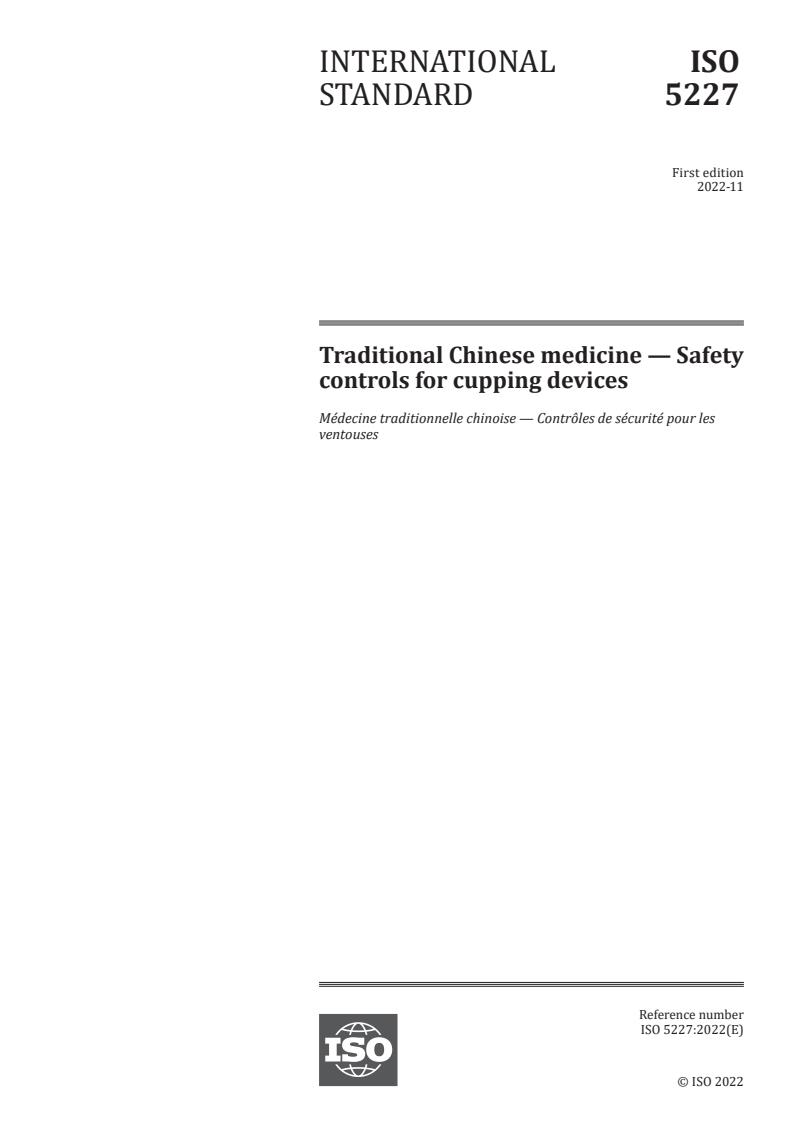
INTERNATIONAL ISO
STANDARD 5227
First edition
2022-11
Traditional Chinese medicine — Safety
controls for cupping devices
Médecine traditionnelle chinoise — Contrôles de sécurité pour les
ventouses
Reference number
© ISO 2022
All rights reserved. Unless otherwise specified, or required in the context of its implementation, no part of this publication may
be reproduced or utilized otherwise in any form or by any means, electronic or mechanical, including photocopying, or posting on
the internet or an intranet, without prior written permission. Permission can be requested from either ISO at the address below
or ISO’s member body in the country of the requester.
ISO copyright office
CP 401 • Ch. de Blandonnet 8
CH-1214 Vernier, Geneva
Phone: +41 22 749 01 11
Email: copyright@iso.org
Website: www.iso.org
Published in Switzerland
ii
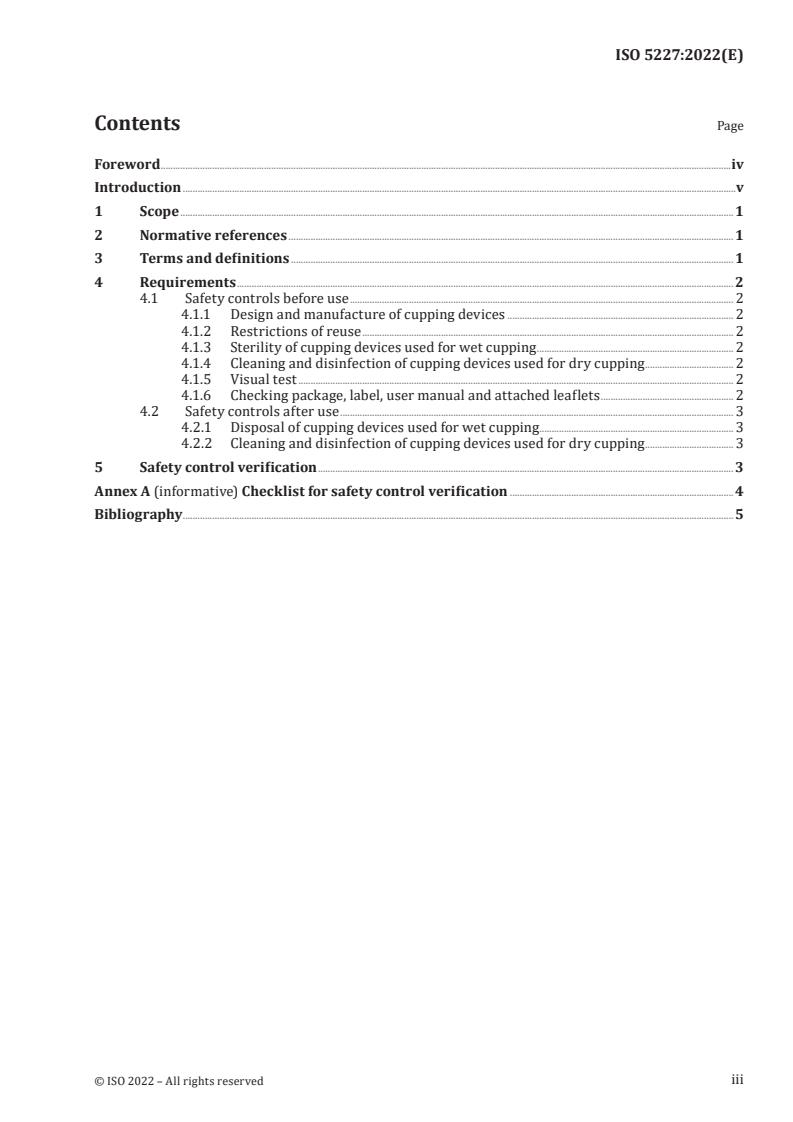
Contents Page
Foreword .iv
Introduction .v
1 S c op e . 1
2 Nor m at i ve r ef er enc e s . 1
3 Terms and definitions . 1
4 R e qu i r ement s . 2
4.1 S afety controls before use . 2
4.1.1 Design and manufacture of cupping devices . 2
4.1.2 Restrictions of reuse . 2
4.1.3 Sterility of cupping devices used for wet cupping . 2
4.1.4 Cleaning and disinfection of cupping devices used for dry cupping . 2
4.1.5 Visual test . 2
4.1.6 Checking package, label, user manual and attached leaflets . 2
4.2 S afety controls after use . 3
4.2.1 D isposal of cupping devices used for wet cupping. 3
4.2.2 C leaning and disinfection of cupping devices used for dry cupping . 3
5 Safety control verification . 3
Annex A (informative) Checklist for safety control verification . 4
Bibliography . 5
iii
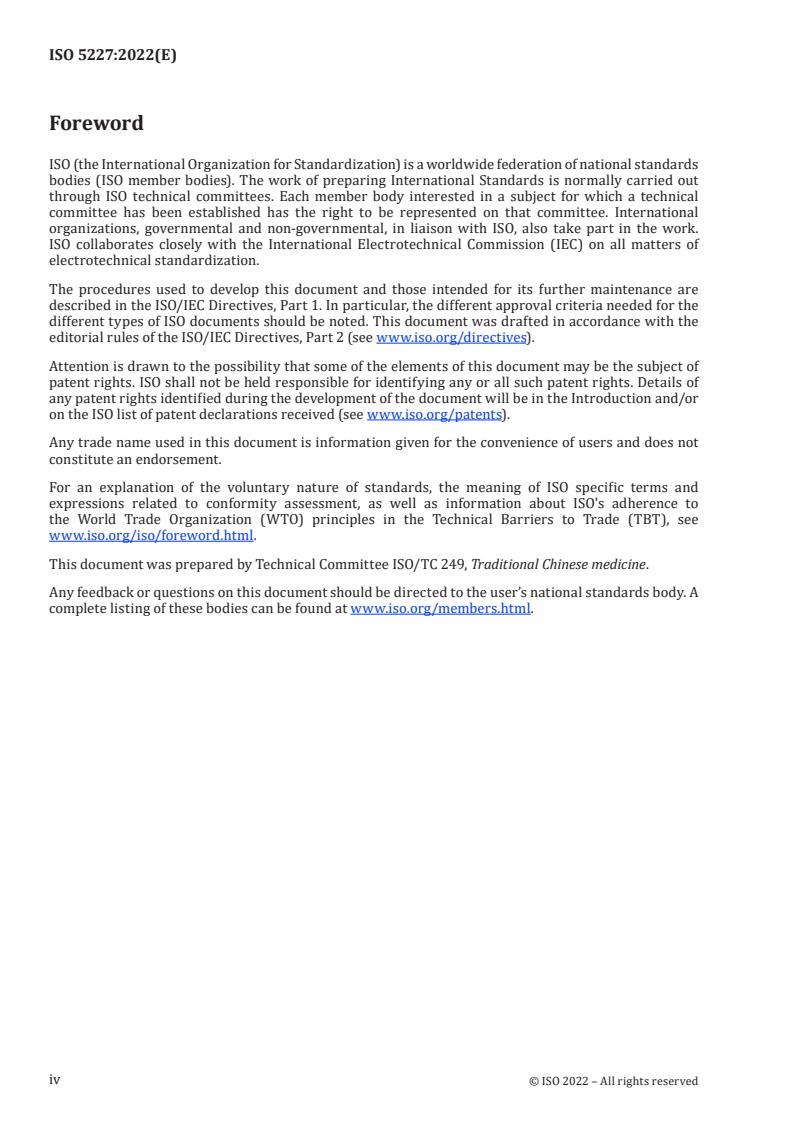
Foreword
ISO (the International Organization for Standardization) is a worldwide federation of national standards
bodies (ISO member bodies). The work of preparing International Standards is normally carried out
through ISO technical committees. Each member body interested in a subject for which a technical
committee has been established has the right to be represented on that committee. International
organizations, governmental and non-governmental, in liaison with ISO, also take part in the work.
ISO collaborates closely with the International Electrotechnical Commission (IEC) on all matters of
electrotechnical standardization.
The procedures used to develop this document and those intended for its further maintenance are
described in the ISO/IEC Directives, Part 1. In particular, the different approval criteria needed for the
different types of ISO documents should be noted. This document was drafted in accordance with the
editorial rules of the ISO/IEC Directives, Part 2 (see www.iso.org/directives).
Attention is drawn to the possibility that some of the elements of this document may be the subject of
patent rights. ISO shall not be held responsible for identifying any or all such patent rights. Details of
any patent rights identified during the development of the document will be in the Introduction and/or
on the ISO list of patent declarations received (see www.iso.org/patents).
Any trade name used in this document is information given for the convenience of users and does not
constitute an endorsement.
For an explanation of the voluntary nature of standards, the meaning of ISO specific terms and
expressions related to conformity assessment, as well as information about ISO's adherence to
the World Trade Organization (WTO) principles in the Technical Barriers to Trade (TBT), see
www.iso.org/iso/foreword.html.
This document was prepared by Technical Committee ISO/TC 249, Traditional Chinese medicine.
Any feedback or questions on this document should be directed to the user’s national standards body. A
complete listing of these bodies can be found at www.iso.org/members.html.
iv
Introduction
Cupping therapy is one of the most widely used traditional medical practices. It involves creating
a partial vacuum in cups placed on the skin for air suction or to extract the blood through various
techniques. Even though cupping devices are marketed and used in many countries, there is no
International Standard for safety controls for cupping devices. Such controls are needed to ensure
the safety of cupping devices, which touch the skin or come into contact with open wounds during
bleeding for wet cupping. These controls require the risk management of manufacturing, packaging
and labelling and the presentation, storage, reuse, servi
...