

ISO 5820:2024
(Main)Microbeam analysis — Hyper-dimensional data file specification (HMSA)
General Information
- Abstract
The MSA/MAS/AMAS hyper-dimensional data file specification (HMSA, for short) is a platform-independent data format to permit the exchange of hyper-dimensional microscopy and microanalytical data between different software applications. The applications include, but are not limited to: — Hyper-spectral maps, such as electron energy loss spectroscopy (EELS), energy dispersive x-ray spectrometry (XEDS), or cathodoluminescence spectroscopy (CL). — ‘Hyper-image’ maps, such as pattern maps using electron backscatter diffraction (EBSD) or convergent beam electron diffraction (CBED). — 3-dimensional maps, such as confocal microscopy, or focused ion beam (FIB) serial section maps. — 4-dimensional maps, such as double-tilt electron tomography. — Time-resolved microscopy and spectroscopy. In addition to storing hyper-dimensional data, the HMSA file format is applicable for storing conventional microscopy and microanalysis data, such as spectra, line profiles, images, and quantitative analyses, as well as experimental conditions and other metadata.
- Status
- Published
- Publication Date
- 08-Feb-2024
- Technical Committee
- ISO/TC 202 - Microbeam analysis
- Drafting Committee
- ISO/TC 202 - Microbeam analysis
- Current Stage
- 9092 - International Standard to be revised
- Start Date
- 30-Oct-2024
- Completion Date
- 29-Aug-2026
Overview
ISO 5820:2024 - Microbeam analysis: Hyper-dimensional data file specification (HMSA) defines a platform‑independent file format for exchanging hyper‑dimensional microscopy and microanalysis data between software applications. The standard covers storage of hyper‑spectral and hyper‑image maps (for example EELS, XEDS, CL, EBSD, CBED), 3D/4D datasets (confocal microscopy, FIB serial sectioning, double‑tilt tomography) and time‑resolved microscopy. In addition to multi‑dimensional arrays, HMSA supports conventional spectra, line profiles, images, quantitative analyses, experimental conditions and metadata.
Key topics and technical requirements
- Binary + XML file pair: HMSA uses a binary data component together with an XML descriptor for metadata and dataset indexing (see design overview and XML file specification).
- XML structure and conformance: Detailed rules for the XML declaration, character encoding (Unicode/internationalization), permitted elements/attributes, and validation requirements.
- Dataset descriptors: Elements such as , , and define how hyper‑dimensional arrays are stored and interpreted.
- Dimension mapping and calibration: Explicit guidance on ordering of dimensions, coordinate mapping equations and identity/calibration of axes.
- Conditions and metadata: A structured section (with templates and classes) captures instrument, probe, specimen and environmental metadata (Annex A provides condition templates).
- Minimalism and extensibility: The standard favors a minimal required core while allowing extensible fields to support vendor‑specific or domain‑specific metadata.
- Integrity and auxiliary features: Optional elements such as , timestamping (,
Applications
- Exchange of hyper‑spectral and hyper‑image datasets between microscopes, analysis software and archives.
- Long‑term data preservation with rich experimental metadata for reproducible microbeam analysis.
- Enabling multi‑tool workflows: combining EELS/XEDS maps with EBSD or tomography in a consistent file format.
- Facilitating automated processing, visualization and machine‑learning pipelines that consume calibrated, well‑described multi‑dimensional data.
Who should use this standard
- Microscope and detector manufacturers (to export interoperable data).
- Software developers for microscopy data analysis, visualization and data management.
- Materials scientists, electron microscopists and microanalysts aiming for reproducible, shareable datasets.
- Research facilities and data repositories implementing standardized archival formats.
Related standards
Other scientific imaging and data container formats (commonly used in microscopy and spectroscopy workflows) may be encountered in the same ecosystem; implementers should consider interoperability strategies when integrating ISO 5820:2024 (HMSA) into existing data infrastructures.
Get Certified
Connect with accredited certification bodies for this standard

ECOCERT
Organic and sustainability certification.

Eurofins Food Testing Global
Global leader in food, environment, and pharmaceutical product testing.

Intertek Bangladesh
Intertek certification and testing services in Bangladesh.
Sponsored listings
Frequently Asked Questions
ISO 5820:2024 is a standard published by the International Organization for Standardization (ISO). Its full title is "Microbeam analysis — Hyper-dimensional data file specification (HMSA)". This standard covers: The MSA/MAS/AMAS hyper-dimensional data file specification (HMSA, for short) is a platform-independent data format to permit the exchange of hyper-dimensional microscopy and microanalytical data between different software applications. The applications include, but are not limited to: — Hyper-spectral maps, such as electron energy loss spectroscopy (EELS), energy dispersive x-ray spectrometry (XEDS), or cathodoluminescence spectroscopy (CL). — ‘Hyper-image’ maps, such as pattern maps using electron backscatter diffraction (EBSD) or convergent beam electron diffraction (CBED). — 3-dimensional maps, such as confocal microscopy, or focused ion beam (FIB) serial section maps. — 4-dimensional maps, such as double-tilt electron tomography. — Time-resolved microscopy and spectroscopy. In addition to storing hyper-dimensional data, the HMSA file format is applicable for storing conventional microscopy and microanalysis data, such as spectra, line profiles, images, and quantitative analyses, as well as experimental conditions and other metadata.
The MSA/MAS/AMAS hyper-dimensional data file specification (HMSA, for short) is a platform-independent data format to permit the exchange of hyper-dimensional microscopy and microanalytical data between different software applications. The applications include, but are not limited to: — Hyper-spectral maps, such as electron energy loss spectroscopy (EELS), energy dispersive x-ray spectrometry (XEDS), or cathodoluminescence spectroscopy (CL). — ‘Hyper-image’ maps, such as pattern maps using electron backscatter diffraction (EBSD) or convergent beam electron diffraction (CBED). — 3-dimensional maps, such as confocal microscopy, or focused ion beam (FIB) serial section maps. — 4-dimensional maps, such as double-tilt electron tomography. — Time-resolved microscopy and spectroscopy. In addition to storing hyper-dimensional data, the HMSA file format is applicable for storing conventional microscopy and microanalysis data, such as spectra, line profiles, images, and quantitative analyses, as well as experimental conditions and other metadata.
ISO 5820:2024 is classified under the following ICS (International Classification for Standards) categories: 71.040.99 - Other standards related to analytical chemistry. The ICS classification helps identify the subject area and facilitates finding related standards.
ISO 5820:2024 is available in PDF format for immediate download after purchase. The document can be added to your cart and obtained through the secure checkout process. Digital delivery ensures instant access to the complete standard document.
Standards Content (Sample)
International
Standard
ISO 5820
First edition
Microbeam analysis — Hyper-
2024-02
dimensional data file specification
(HMSA)
Reference number
© ISO 2024
All rights reserved. Unless otherwise specified, or required in the context of its implementation, no part of this publication may
be reproduced or utilized otherwise in any form or by any means, electronic or mechanical, including photocopying, or posting on
the internet or an intranet, without prior written permission. Permission can be requested from either ISO at the address below
or ISO’s member body in the country of the requester.
ISO copyright office
CP 401 • Ch. de Blandonnet 8
CH-1214 Vernier, Geneva
Phone: +41 22 749 01 11
Email: copyright@iso.org
Website: www.iso.org
Published in Switzerland
ii
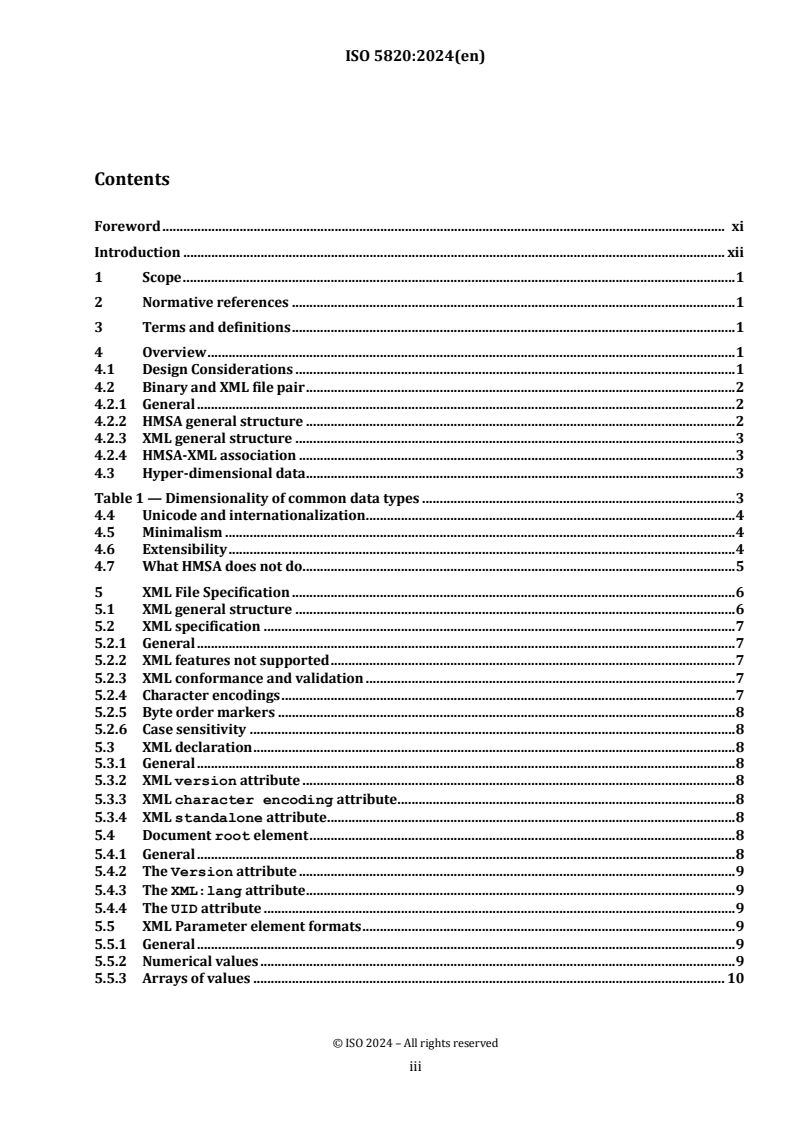
Contents
Foreword . xi
Introduction . xii
1 Scope . 1
2 Normative references . 1
3 Terms and definitions . 1
4 Overview . 1
4.1 Design Considerations . 1
4.2 Binary and XML file pair . 2
4.2.1 General . 2
4.2.2 HMSA general structure . 2
4.2.3 XML general structure . 3
4.2.4 HMSA-XML association . 3
4.3 Hyper-dimensional data . 3
Table 1 — Dimensionality of common data types . 3
4.4 Unicode and internationalization . 4
4.5 Minimalism . 4
4.6 Extensibility . 4
4.7 What HMSA does not do. 5
5 XML File Specification . 6
5.1 XML general structure . 6
5.2 XML specification . 7
5.2.1 General . 7
5.2.2 XML features not supported . 7
5.2.3 XML conformance and validation . 7
5.2.4 Character encodings . 7
5.2.5 Byte order markers . 8
5.2.6 Case sensitivity . 8
5.3 XML declaration . 8
5.3.1 General . 8
5.3.2 XML version attribute . 8
5.3.3 XML character encoding attribute . 8
5.3.4 XML standalone attribute . 8
5.4 Document root element . 8
5.4.1 General . 8
5.4.2 The Version attribute . 9
5.4.3 The XML:lang attribute . 9
5.4.4 The UID attribute . 9
5.5 XML Parameter element formats . 9
5.5.1 General . 9
5.5.2 Numerical values . 9
5.5.3 Arrays of values . 10
iii
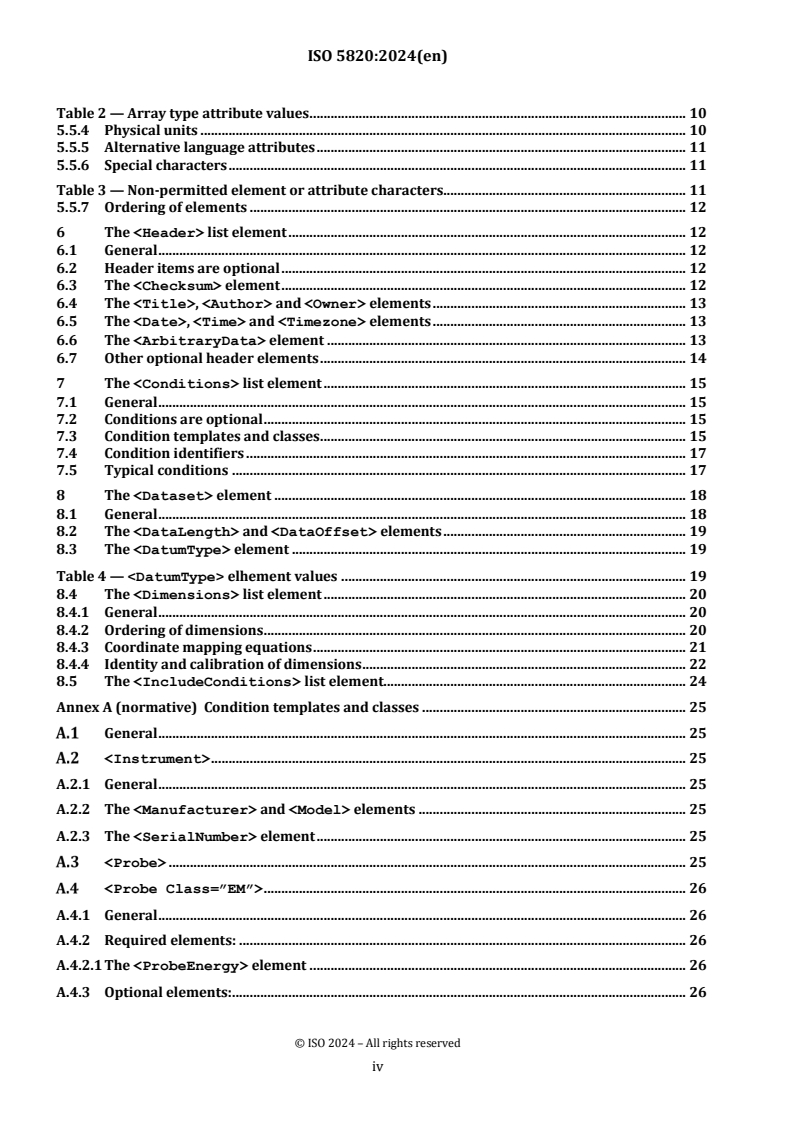
Table 2 — Array type attribute values. 10
5.5.4 Physical units . 10
5.5.5 Alternative language attributes . 11
5.5.6 Special characters . 11
Table 3 — Non-permitted element or attribute characters. 11
5.5.7 Ordering of elements . 12
6 The
6.1 General . 12
6.2 Header items are optional . 12
6.3 The element . 12
6.4 The , <Author> and <Owner> elements . 13</br>
6.5 The <Date>, <Time> and <Timezone> elements . 13</br>
6.6 The <ArbitraryData> element . 13</br>
6.7 Other optional header elements . 14</br>
7 The <Conditions> list element . 15</br>
7.1 General . 15</br>
7.2 Conditions are optional . 15</br>
7.3 Condition templates and classes. 15</br>
7.4 Condition identifiers . 17</br>
7.5 Typical conditions . 17</br>
8 The <Dataset> element . 18</br>
8.1 General . 18</br>
8.2 The <DataLength> and <DataOffset> elements . 19</br>
8.3 The <DatumType> element . 19</br>
Table 4 — <DatumType> elhement values . 19</br>
8.4 The <Dimensions> list element . 20</br>
8.4.1 General . 20</br>
8.4.2 Ordering of dimensions. 20</br>
8.4.3 Coordinate mapping equations . 21</br>
8.4.4 Identity and calibration of dimensions . 22</br>
8.5 The <IncludeConditions> list element. 24</br>
Annex A (normative) Condition templates and classes . 25</br>
General . 25</br>
<Instrument> . 25</br>
A.2.1 General . 25</br>
A.2.2 The <Manufacturer> and <Model> elements . 25</br>
A.2.3 The <SerialNumber> element . 25</br>
<Probe> . 25</br>
<Probe Class=”EM”> . 26</br>
A.4.1 General . 26</br>
A.4.2 Required elements: . 26</br>
A.4.2.1 The <ProbeEnergy> element . 26</br>
A.4.3 Optional elements:. 26</br>
iv</br>
A.4.3.1 The <GunType> element . 26</br>
A.4.3.2 The <EmissionCurrent> element . 26</br>
A.4.3.3 The <FilamentCurrent> element . 26</br>
A.4.3.4 The <ExtractorBias> element . 26</br>
A.4.3.5 The <GunPressure> element . 27</br>
A.4.3.6 The <ProbeDiameter> element . 27</br>
A.4.3.7 The <ProbeCurrent> element . 27</br>
A.4.3.8 The <ProbeConvergenceAngle> element . 27</br>
A.4.3.9 The <Aperture> element(s) . 27</br>
A.4.3.10 The <Control> element(s) . 27</br>
A.4.3.11 The <LensCurrent> element(s) . 27</br>
<Probe Class=”EM/SEM”> . 28</br>
A.5.1 General . 28</br>
A.5.2 Optional elements: . 28</br>
A.5.2.1 The <WorkingDistance> element . 28</br>
<Probe Class=”EM/TEM”> . 28</br>
A.6.1 General . 28</br>
A.6.2 Optional elements: . 28</br>
A.6.2.1 The <ProbeMode> element . 28</br>
A.6.3 Example: . 28</br>
<Specimen> . 29</br>
A.7.1 General . 29</br>
A.7.2 The <Name> element . 29</br>
A.7.3 The <Description> element . 29</br>
A.7.4 The <Owner> element . 29</br>
A.7.5 The <Origin> element . 29</br>
A.7.6 The <Material> element . 29</br>
A.7.7 The <Coating> element . 29</br>
A.7.8 The <Thickness> element . 30</br>
A.7.9 Example: . 30</br>
<SpecimenEnvironment>. 30</br>
A.8.1 General . 30</br>
A.8.2 The <Pressure> element . 30</br>
A.8.3 The <Temperature> element . 30</br>
A.8.4 The <Medium> element . 31</br>
v</br>
A.8.5 Example: . 31</br>
<MeasurementMode> . 31</br>
A.9.1 Optional elements:. 31</br>
A.9.1.1 The <Control> element(s) . 31</br>
<MeasurementMode Class=”TEM”> . 32</br>
A.10.1 General . 32</br>
A.10.2 Optional elements:. 32</br>
A.10.2.1 The <Aperture> element(s). 32</br>
A.10.2.2 The <LensCurrent> element(s) . 32</br>
<MeasurementMode Class=”TEM/Imaging”> . 32</br>
A.11.1 General . 32</br>
A.11.2 Optional elements:. 32</br>
A.11.2.1 The <Defocus> element . 32</br>
A.11.2.2 The <AcceptanceAngle> element . 33</br>
A.11.2.3 The <NominalMagnification> element . 33</br>
A.11.3 Example: . 33</br>
<Detector> . 33</br>
A.12.1 General . 33</br>
A.12.2 Optional elements:. 33</br>
A.12.2.1 The <Manufacturer> and <Model> elements . 33</br>
A.12.2.2 The <SerialNumber> element . 33</br>
A.12.2.3 The <SignalType> element . 34</br>
A.12.2.4 The <MeasurementUnit> element . 35</br>
A.12.2.5 The <CollectionMode> element . 35</br>
A.12.2.6 The <Distance> element . 35</br>
A.12.2.7 The <Area> element . 35</br>
A.12.2.8 The <SolidAngle> element . 35</br>
A.12.2.9 The <SemiAngle> element . 35</br>
A.12.2.10 The <Temperature> element . 36</br>
A.12.2.11 The <Elevation> element . 36</br>
A.12.2.12 The <Azimuth> element . 36</br>
A.12.2.13 The <DetectorName> element . 36</br>
A.12.2.14 The <Aperture> element(s). 36</br>
A.12.2.15 The <Control> element(s) . 36</br>
A.12.3 Example: . 37</br>
vi</br>
<Detector Class=”Camera”>. 37</br>
A.13.1 General . 37</br>
A.13.2 Base template: . 37</br>
A.13.3 Optional elements: . 37</br>
A.13.3.1 The <FocalLength> element . 37</br>
A.13.3.2 The <ExposureTime> element . 37</br>
A.13.3.3 The <FrameIntegration> element . 37</br>
A.13.3.4 The <Magnification> element . 37</br>
A.13.3.5 The <NumericalAperture> element . 38</br>
A.13.3.6 The <PixelSize> element . 38</br>
A.13.4 Example: . 38</br>
<Detector Class=”CL”>. 38</br>
A.14.1 General . 38</br>
A.14.2 Base templates: . 38</br>
A.14.3 Optional elements: . 38</br>
A.14.3.1 The <DispersionElement> element . 38</br>
A.14.3.2 The <Grating-d> element . 39</br>
A.14.3.3 The <EntranceSlit> element . 39</br>
A.14.4 Example: . 39</br>
<Detector Class=”WDS”> . 39</br>
A.15.1 General . 39</br>
A.15.2 Base templates: . 39</br>
A.15.3 Optional elements: . 39</br>
A.15.3.1 The <DispersionElement> element . 40</br>
A.15.3.2 The <Crystal-2d> element . 40</br>
A.15.3.3 The <RowlandCircleDiameter> element . 40</br>
A.15.3.4 The <PulseHeightAnalyzer> elements . 40</br>
A.15.3.5 The <Counter> element . 41</br>
A.15.3.6 The <WDSPosition> element . 41</br>
A.15.4 Examples: . 41</br>
<Detector Class=”XEDS”>. 42</br>
A.16.1 General . 42</br>
A.16.2 Base templates: . 42</br>
A.16.3 Optional elements: . 42</br>
A.16.3.1 The <Technology> element . 42</br>
vii</br>
A.16.3.2 The <NominalThroughput> element . 42</br>
A.16.3.3 The <TimeConstant> element . 43</br>
A.16.3.4 The <StrobeRate> element . 43</br>
A.16.3.5 The <Window> element . 43</br>
A.16.3.6 The <GoldLayer> element . 43</br>
A.16.3.7 The <DeadLayer> element . 44</br>
A.16.3.8 The <ActiveLayer> element . 44</br>
A.16.4 Examples: . 44</br>
<Acquisition> . 45</br>
A.17.1 General . 45</br>
A.17.2 The <DateTime> element . 45</br>
A.17.3 The <SpecimenPosition> element . 45</br>
A.17.4 Position elements: . 45</br>
A.17.4.1 The <X>, <Y> and <Z> elements. 45</br>
A.17.4.2 The <EulerRotation> element . 46</br>
A.17.4.3 The <R> element . 46</br>
A.17.4.4 The <TotalTime> element . 46</br>
A.17.4.5 The <FrameCount> element . 46</br>
A.17.4.6 The <FrameTime> element . 46</br>
A.17.4.7 The <DwellTime> element . 47</br>
A.17.4.8 The <DwellTime_Live> element . 47</br>
<Sequence> . 47</br>
A.18.1 General . 47</br>
A.18.2 The <Control> element . 47</br>
A.18.3 Example: . 48</br>
<Calibration> . 48</br>
A.19.1 General . 48</br>
A.19.2 The <Quantity> element . 48</br>
A.19.3 The <Unit> element . 49</br>
A.19.4 <Calibration Class="Constant"> . 49</br>
A.19.4.1 General . 49</br>
A.19.4.2 The <Value> element . 49</br>
A.19.4.3 Example: . 49</br>
A.19.5 <Calibration Class="LinearDispersion"> . 49</br>
A.19.5.1 General . 49</br>
viii</br>
A.19.5.2 The <Gradient> element . 49</br>
A.19.5.3 The <Intercept> element . 50</br>
A.19.6 <Calibration Class="PolynomialDispersion"> . 50</br>
A.19.6.1 General . 50</br>
A.19.6.2 The <Coefficients> element . 50</br>
A.19.7 <Calibration Class="Explicit"> . 50</br>
A.19.7.1 General . 50</br>
A.19.7.2 The <Values> element . 50</br>
A.19.8 <Calibration Class="Intensity">. 51</br>
A.19.8.1 General . 51</br>
A.19.8.2 The <Quantity> element . 51</br>
A.19.8.3 The <Unit> element . 51</br>
A.19.8.4 Example: . 51</br>
Annex B (normative) Units and prefixes . 52</br>
General . 52</br>
SI units . 52</br>
Table 5 — SI Units . 52</br>
SI-derived units. 52</br>
Table 6 — SI derived units . 52</br>
Non-SI units . 53</br>
Table 7 — Non-SI units . 53</br>
SI prefixes . 54</br>
Table 8 — SI magnitude prefixes . 54</br>
Annex C (normative) Unicode character substitutions . 55</br>
Annex D (informative) Example files . 56</br>
Optical micrograph . 56</br>
Single XEDS spectrum . 57</br>
SEM backscattered electron image. 58</br>
Conventional TEM image . 60</br>
Conventional electron diffraction pattern . 62</br>
SEM-XEDS hyper-spectral map . 64</br>
EPMA+XEDS+CL+BSE map . 66</br>
Annex E (Informative) Common dataset dimensions . 70</br>
General . 70</br>
<X>, <Y> and <Z> . 70</br>
ix</br>
<U> and <V> . 70</br>
<Position> . 71</br>
<Channel> . 71</br>
<Color> . 71</br>
<Rotation> and <Tilt> . 72</br>
<Focus> . 72</br>
<Measurement> . 73</br>
x</br>
Foreword</br>
ISO (the International Organization for Standardization) is a worldwide federation of national</br>
standards bodies (ISO member bodies). The work of preparing International Standards is normally</br>
carried out through ISO technical committees. Each member body interested in a subject for which a</br>
technical committee has been established has the right to be represented on that committee.</br>
International organizations, governmental and non-governmental, in liaison with ISO, also take part in</br>
the work. ISO collaborates closely with the International Electrotechnical Commission (IEC) on all</br>
matters of electrotechnical standardization.</br>
The procedures used to develop this document and those intended for its further maintenance are</br>
described in the ISO/IEC Directives, Part 1. In particular, the different approval criteria needed for the</br>
different types of ISO document should be noted. This document was drafted in accordance with the</br>
editorial rules of the ISO/IEC Directives, Part 2 (see www.iso.org/directives).</br>
ISO draws attention to the possibility that the implementation of this document may involve the use of</br>
(a) patent(s). ISO takes no position concerning the evidence, validity or applicability of any claimed</br>
patent rights in respect thereof. As of the date of publication of this document, ISO had not received</br>
notice of (a) patent(s) which may be required to implement this document. However, implementers</br>
are cautioned that this may not represent the latest information, which may be obtained from the</br>
patent database available at www.iso.org/patents. ISO shall not be held responsible for identifying any</br>
or all such patent rights.</br>
Any trade name used in this document is information given for the convenience of users and does not</br>
constitute an endorsement.</br>
For an explanation of the voluntary nature of standards, the meaning of ISO specific terms and</br>
expressions related to conformity assessment, as well as information about ISO's adherence to the</br>
World Trade Organization (WTO) principles in the Technical Barriers to Trade (TBT), see</br>
www.iso.org/iso/foreword.html.</br>
This document was prepared by Technical Committee ISO/TC 202, Microbeam analysis.</br>
Any feedback or questions on this document should be directed to the user’s national standards body.</br>
A complete listing of these bodies can be found at www.iso.org/members.html.</br>
xi</br>
Introduction</br>
Most if not all commercial microanalysis systems acquire and store data in proprietary formats. This</br>
hinders the transfer of data between instruments and or between laboratories, such as might be</br>
required for multi-technique analyses, round robin studies or collaborations. It is possible that even</br>
software from the same manufacturer but for different generations of instruments does not store data</br>
in compatible formats. This makes the archiving of data extremely difficult beyond the lifetime of the</br>
supported system. The format in this document has been developed by an independent group o</br>
<b>...</b>