


March 2026: Latest Updates in Telecommunications and Audio/Video Engineering Standards
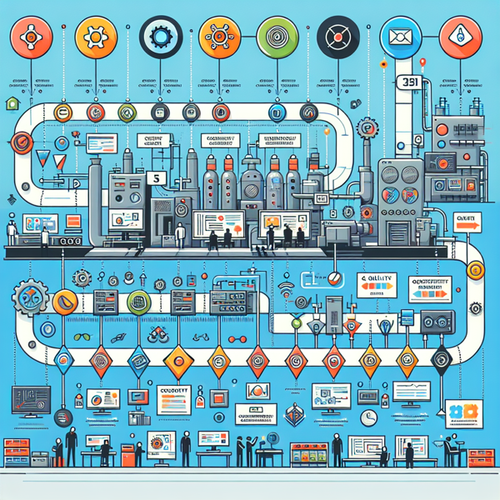
Stay at the forefront of the Telecommunications and Audio/Video Engineering industry with the latest standards published in March 2026. This article—the second of two parts—delves into five important updates that redefine best practices, technical requirements, and compliance strategies for audio, video, connector, cabling, and electromagnetic systems. Whether you're responsible for product development, procurement, quality assurance, or regulatory affairs, these standards will influence your operations and competitive standing.
Overview
The global Telecommunications and Audio/Video Engineering sector relies heavily on standards to ensure communication infrastructure functions safely, reliably, and interoperably. Advances in digital transformation, multimedia infrastructures, the metaverse, and electromagnetic environments all demand precise, up-to-date specifications. Standards from IEC, CLC, and other leading bodies not only guarantee technical performance but also facilitate smooth market entry and future-proofing of new technologies.
In this article, you'll discover:
- What the five new or revised March 2026 standards cover
- Major technical and procedural updates
- Who must comply and why it matters
- The real-world business and compliance impact
- Actionable guidance on implementing these standards
Detailed Standards Coverage
IEC TS 61000-1-6:2026 – Guidelines for Evaluating Measurement Uncertainty in EMC Testing
Electromagnetic compatibility (EMC) – Part 1-6: General – Guidelines for the evaluation of measurement uncertainty in EMC testing
The newly published IEC TS 61000-1-6:2026 is a foundational Technical Specification that standardizes how laboratories and technical committees assess measurement uncertainty (MU) in EMC (Electromagnetic Compatibility) testing and calibration. As industries and regulators demand more precise EMC assessments, this document provides universally applicable methods, mathematical formulae, reporting guidelines, and worked examples to support reliable measurement and conformity.
Scope & Key Requirements:
- Applies to all EMC testing and calibration as part of the IEC 61000 series
- Instructs on the classification and identification of measurement uncertainty sources
- Includes in-depth guidance on both emission and immunity test methods
- Revises uncertainty budgets and introduces GUM Supplement 1 (Monte Carlo simulation approach)
- Provides case studies and annexes addressing calibration, sampling statistics, robust statistics for interlaboratory comparison, and risk assessment for conformity
Who Should Comply:
- EMC test labs, calibration labs, technical committees, and manufacturers subject to EMC regulations
Practical Implications:
- Enables transparent and comparable measurement uncertainty budgets across labs
- Supports risk-based decisions in conformity assessments
- Aligns reporting practices with international best practices, reducing disputes
Major Changes from Previous Edition:
- Expanded responsibilities for committees and labs
- New sections on emission/immunity test uncertainty, calibration, and GUMS1
- Revised nomenclature and practical guidance
- Enhanced annexes addressing statistical treatment, risk, and metrological confirmation
Key highlights:
- Standardizes assessment of MU for all labs and committees working in EMC
- Enables risk-based approaches (e.g., in conformity assessment)
- Introduces new annexes for statistical robustness and equipment assessment
Access the full standard:View IEC TS 61000-1-6:2026 on iTeh Standards
IEC 61935-2:2022 – Testing of Balanced and Coaxial IT Cabling Cords
Specification for the testing of balanced and coaxial information technology cabling – Part 2: Cords as specified in ISO/IEC 11801-1 and related standards
IEC 61935-2:2022 delivers essential updates to the methods and requirements for evaluating the performance of both balanced and coaxial equipment, patch, and connection-point (CP) cords—fundamental components of IT cabling infrastructure. Now in its fourth edition, this standard broadens the types of cords covered, enhances test methodologies, and strengthens compatibility requirements for both new and legacy systems.
Scope & Key Requirements:
- Specifies test methods for balanced (twisted pair) and coaxial cords
- Focuses on applications described in ISO/IEC 11801-1
- Includes enhanced technical criteria: return loss, insertion loss, NEXT, PS NEXT, ACRF, unbalance parameters, screening attenuation, transfer impedance, DC resistance, propagation delay, delay skew, mechanical and environmental stress tests (tensile, flexure, bending, crushing, dust, and climatic sequence)
Major Technical Changes:
- Inclusion of cords up to category 8.1 and 8.2 as defined in ISO/IEC 11801-1
- Updated test methodologies and requirements
Who Should Comply:
- IT infrastructure professionals, network engineers, cable and component manufacturers, test labs
Practical Implications:
- Ensures cables and cords meet demanding performance standards for current and emerging data rates
- Increases reliability and longevity of IT cabling installations
Key highlights:
- Expands testing scope to latest high-speed IT cabling categories
- Covers comprehensive suite of mechanical, electrical, and environmental tests
- Supports reliable, high-performance networking
Access the full standard:View IEC 61935-2:2022 on iTeh Standards
IEC TR 63614-3:2026 – Gap Analysis for Metaverse Multimedia Systems
Multimedia systems and equipment for metaverse – Part 3: Gap analysis
As the metaverse continues to shape the future of immersive collaboration, IEC TR 63614-3:2026 stands out as the first technical report to systematically map the existing landscape of standards, applications, and technologies in this emerging domain. It delivers a comprehensive gap analysis to navigate present capabilities and identify needs for future standardization.
Scope & Key Requirements:
- Evaluates current standards for metaverse content, platforms, networks, and devices
- Includes structured analysis across major Standards Development Organizations (SDOs): ISO, ITU, IEEE, IETF, IEC Technical Committees, etc.
- Reviews metaverse domains such as extended reality (XR), VR/AR/MR, social platforms, asset management, interoperability, and network performance
- Identifies work items for future standardization—critical for ensuring convergence and interoperability
Who Should Comply/Be Interested:
- Multimedia and XR developers, standards strategists, technology planners, corporate innovation teams, SDO liaisons
Practical Implications:
- Provides authoritative roadmap for standards engagement in the metaverse
- Pinpoints areas of missing interoperability and reliability
- Aids organizations preparing to design, implement, or advocate for metaverse solutions
Key highlights:
- Comprehensive mapping of standards ecosystem for the metaverse
- Highlights interoperability, technical, and regulatory gaps
- Recommends work items for standardization in IEC TC 100
Access the full standard:View IEC TR 63614-3:2026 on iTeh Standards
EN IEC 63138-4:2026 – Multi-channel RF Connectors: Type L32-4 & L32-5
Multi-channel radio-frequency connectors – Part 4: Sectional specification for type L32-4 and L32-5 circular connectors
EN IEC 63138-4:2026 is critical for designers, suppliers, and manufacturers involved with RF (radio-frequency) signal distribution—especially in advanced mobile communication systems like TD-SCDMA and TD-LTE. This new Sectional Specification refines the construction, performance, and testing requirements for multi-channel (4 and 5 channel) circular connectors, introducing important compatibility and dimensional updates.
Scope & Key Requirements:
- Applies to circular connectors with four or five RF channels, rated 50 Ω, capable of simultaneous engagement/disengagement
- Defines precise mating face dimensions, gauge criteria, threaded coupling and anti-misinsertion mechanisms
- Specifies rigorous quality assessment procedures (lot-by-lot, periodic inspections)
- Updated parameter ‘g’ and adopts IEC 63138-1:2019 as the reference for general specification
- Features improved test methods, compatibility criteria, and markings
Major Technical Changes:
- Transition to IEC 63138-1:2019 base spec
- Full alignment of all tests and subclauses with latest international requirements
- Refined connector dimensions for enhanced fit and performance (notably, dimension "g")
Who Should Comply:
- Manufacturers, installers, integrators, and quality managers in telecom, RF, and broadcast sectors
Practical Implications:
- Supports deployment of high-density, high-integrity connectors in 4G/5G networks
- Reduces error, improves mechanical robustness, and ensures interface compatibility
Key highlights:
- Defines advanced multi-channel RF connector types and test specifics
- Full compliance with current international connector requirements
- Essential for maintaining signal integrity in advanced comms networks
Access the full standard:View EN IEC 63138-4:2026 on iTeh Standards
IEC 61757:2026 – Generic Specification for Fibre Optic Sensors
Fibre optic sensors – Generic specification
With the publication of IEC 61757:2026 (Second Edition), the landscape for fibre optic sensor design and deployment enters a new era of clarity and harmonization. This standard defines the metrological, physical, environmental, and mechanical parameters essential for reliably specifying and testing fibre optic sensors—the backbone of modern monitoring, industrial automation, and measurement systems.
Scope & Key Requirements:
- Applies to all types of fibre optic sensors, including subassemblies and variants as referenced in the IEC 61757 series
- Expands and clarifies the metrological parameters for performance assessment
- Updates terms, definitions, normative references, and technical descriptions (notably in Annex A)
- Covers requirements for quality assurance, testing protocols, interface levels, marking, packaging, and safety considerations
Major Technical Changes:
- Enhanced and expanded definitions of measurement parameters
- Revised technical details and expanded examples in annexes
- Improved procedures for compliance and testing
Who Should Comply:
- Developers, integrators, test labs, and specifiers in fibre optic sensing; industries involved in structural health, geotechnical, environmental, or process monitoring
Practical Implications:
- Promotes reliable, comparable performance and improved interoperability
- Streamlines procurement and quality control for smart infrastructure and industrial IoT
Key highlights:
- Defines the framework for all IEC 61757-based fibre optic sensor standards
- Expands key definitions and testing protocols for evolving applications
- Strengthens quality assurance and safety provisions
Access the full standard:View IEC 61757:2026 on iTeh Standards
Industry Impact & Compliance
Implementing the latest standards is essential for technology providers, manufacturers, and solution integrators seeking to:
- Maintain regulatory, quality, and safety compliance
- Stay competitive with up-to-date product offerings
- Enable interoperability across an increasingly complex ecosystem
Key compliance considerations:
- Review transition timelines for each standard (some previous versions may remain valid for defined ‘dow’ periods)
- Update quality systems, procurement specs, and contractual documents accordingly
- Train laboratory staff and engineering teams on new testing and documentation methods
Benefits of adoption:
- Enhanced risk management (better quantification and control of measurement uncertainties)
- Future-proofed product design, achieving performance as defined in the latest technical requirements
- Improved international market access and reduced likelihood of product disputes or recalls
Risks of non-compliance:
- Product rejections, costly re-engineering, or loss of customer trust
- Difficulty achieving certifications and market entry
- Increased likelihood of interoperability or safety incidents
Technical Insights
Common technical requirements across the new standards include:
- Emphasis on statistical rigor in testing and measurement (notably in EMC and fibre optic sensor standards)
- Clearly defined parameters for interoperability and backward compatibility, central to cabling, connector, and multimedia standards
- Detailed procedures for environmental and mechanical resilience (seen in connector, cable, and sensor specs)
- Focus on comprehensive documentation and performance traceability
Implementation best practices:
- Conduct a gap analysis of your organization’s current standards compliance versus these latest updates
- Update test procedures and qualification plans to reflect revised measurement and performance requirements
- Develop training and communication materials for relevant teams (engineering, production, procurement, laboratory)
- Collaborate with suppliers and service providers to align compliance efforts
- Schedule audits and calibration reviews to include updated uncertainty budgets and assessment criteria
Testing and certification considerations:
- Engage accredited laboratories for conformity assessment using current versions of each standard
- Maintain and reference detailed documentation of all measurement procedures, uncertainty calculations, and results
- Stay alert to international variations and deadlines for withdrawal of superseded standards
Conclusion & Next Steps
The March 2026 standards deliver significant improvements in measurement accuracy, equipment interoperability, risk assessment, and future-readiness. Organizations in the Telecommunications and Audio/Video Engineering sector should act now to:
- Obtain and review the full standards texts (see links above for easy access via iTeh Standards)
- Update internal compliance strategies, product designs, and procurement requirements
- Engage with industry groups and technical committees to remain on the leading edge
Remaining up to date with international standards is not only a regulatory requirement but a strategic opportunity. For comprehensive access and expert support, explore each standard in-depth at iTeh Standards and ensure your organization leads in quality, safety, and innovation in the rapidly evolving telecommunications and multimedia landscape.