

ISO/DIS 23450
(Main)Médecine bucco-dentaire -- Camera intraorale
General Information

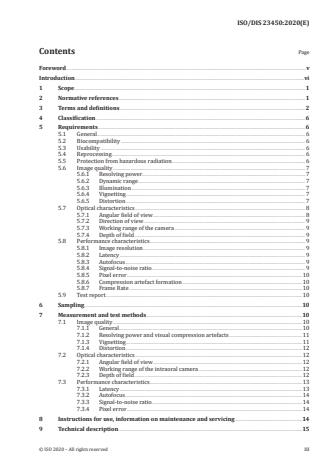
Standards Content (sample)
DRAFT INTERNATIONAL STANDARD
ISO/DIS 23450
ISO/TC 106/SC 4 Secretariat: DIN
Voting begins on: Voting terminates on:
2020-03-13 2020-06-05
Dentistry — Intraoral camera
Médecine bucco-dentaire — Camera intraorale
ICS: 11.060.20
THIS DOCUMENT IS A DRAFT CIRCULATED
This document is circulated as received from the committee secretariat.
FOR COMMENT AND APPROVAL. IT IS
THEREFORE SUBJECT TO CHANGE AND MAY
NOT BE REFERRED TO AS AN INTERNATIONAL
STANDARD UNTIL PUBLISHED AS SUCH.
IN ADDITION TO THEIR EVALUATION AS
ISO/CEN PARALLEL PROCESSING
BEING ACCEPTABLE FOR INDUSTRIAL,
TECHNOLOGICAL, COMMERCIAL AND
USER PURPOSES, DRAFT INTERNATIONAL
STANDARDS MAY ON OCCASION HAVE TO
BE CONSIDERED IN THE LIGHT OF THEIR
POTENTIAL TO BECOME STANDARDS TO
WHICH REFERENCE MAY BE MADE IN
Reference number
NATIONAL REGULATIONS.
ISO/DIS 23450:2020(E)
RECIPIENTS OF THIS DRAFT ARE INVITED
TO SUBMIT, WITH THEIR COMMENTS,
NOTIFICATION OF ANY RELEVANT PATENT
RIGHTS OF WHICH THEY ARE AWARE AND TO
PROVIDE SUPPORTING DOCUMENTATION. ISO 2020
---------------------- Page: 1 ----------------------
ISO/DIS 23450:2020(E)
COPYRIGHT PROTECTED DOCUMENT
© ISO 2020
All rights reserved. Unless otherwise specified, or required in the context of its implementation, no part of this publication may
be reproduced or utilized otherwise in any form or by any means, electronic or mechanical, including photocopying, or posting
on the internet or an intranet, without prior written permission. Permission can be requested from either ISO at the address
below or ISO’s member body in the country of the requester.ISO copyright office
CP 401 • Ch. de Blandonnet 8
CH-1214 Vernier, Geneva
Phone: +41 22 749 01 11
Fax: +41 22 749 09 47
Email: copyright@iso.org
Website: www.iso.org
Published in Switzerland
ii © ISO 2020 – All rights reserved
---------------------- Page: 2 ----------------------
ISO/DIS 23450:2020(E)
Contents Page
Foreword ..........................................................................................................................................................................................................................................v
Introduction ................................................................................................................................................................................................................................vi
1 Scope ................................................................................................................................................................................................................................. 1
2 Normative references ...................................................................................................................................................................................... 1
3 Terms and definitions ..................................................................................................................................................................................... 2
4 Classification ............................................................................................................................................................................................................ 6
5 Requirements .......................................................................................................................................................................................................... 6
5.1 General ........................................................................................................................................................................................................... 6
5.2 Biocompatibility .................................................................................................................................................................................... 6
5.3 Usability ........................................................................................................................................................................................................ 6
5.4 Reprocessing ............................................................................................................................................................................................. 6
5.5 Protection from hazardous radiation .................................................................................................................................. 6
5.6 Image quality ............................................................................................................................................................................................ 7
5.6.1 Resolving power ............................................................................................................................................................... 7
5.6.2 Dynamic range ................................................................................................................................................................... 7
5.6.3 Illumination .......................................................................................................................................................................... 7
5.6.4 Vignetting ............................................................................................................................................................................... 7
5.6.5 Distortion ............................................................................................................................................................................... 7
5.7 Optical characteristics ...................................................................................................................................................................... 8
5.7.1 Angular field of view..................................................................................................................................................... 8
5.7.2 Direction of view .............................................................................................................................................................. 9
5.7.3 Working range of the camera ................................................................................................................................ 9
5.7.4 Depth of field ....................................................................................................................................................................... 9
5.8 Performance characteristics........................................................................................................................................................ 9
5.8.1 Image resolution .............................................................................................................................................................. 9
5.8.2 Latency ..................................................................................................................................................................................... 9
5.8.3 Autofocus ................................................................................................................................................................................ 9
5.8.4 Signal-to-noise ratio ...................................................................................................................................................... 9
5.8.5 Pixel error ...........................................................................................................................................................................10
5.8.6 Compression artefact formation .....................................................................................................................10
5.8.7 Frame Rate .........................................................................................................................................................................10
5.9 Test report ................................................................................................................................................................................................10
6 Sampling .....................................................................................................................................................................................................................10
7 Measurement and test methods ........................................................................................................................................................10
7.1 Image quality .........................................................................................................................................................................................10
7.1.1 General...................................................................................................................................................................................10
7.1.2 Resolving power and visual compression artefacts .......................................................................11
7.1.3 Vignetting ............................................................................................................................................................................11
7.1.4 Distortion ............................................................................................................................................................................12
7.2 Optical characteristics ...................................................................................................................................................................12
7.2.1 Angular field of view..................................................................................................................................................12
7.2.2 Working range of the intraoral camera .....................................................................................................12
7.2.3 Depth of field ....................................................................................................................................................................12
7.3 Performance characteristics.....................................................................................................................................................13
7.3.1 Latency ..................................................................................................................................................................................13
7.3.2 Autofocus .............................................................................................................................................................................14
7.3.3 Signal-to-noise ratio ...................................................................................................................................................14
7.3.4 Pixel error ...........................................................................................................................................................................14
8 Instructions for use, information on maintenance and servicing ..................................................................14
9 Technical description ...................................................................................................................................................................................15
© ISO 2020 – All rights reserved iii---------------------- Page: 3 ----------------------
ISO/DIS 23450:2020(E)
10 Marking .......................................................................................................................................................................................................................15
10.1 General ........................................................................................................................................................................................................15
10.2 Intraoral camera .................................................................................................................................................................................15
11 Labelling .....................................................................................................................................................................................................................16
Annex A (informative) Examples of compression artefacts .......................................................................................................17
Annex B (informative) Line pairs conversion table ...........................................................................................................................18
iv © ISO 2020 – All rights reserved---------------------- Page: 4 ----------------------
ISO/DIS 23450:2020(E)
Foreword
ISO (the International Organization for Standardization) is a worldwide federation of national standards
bodies (ISO member bodies). The work of preparing International Standards is normally carried out
through ISO technical committees. Each member body interested in a subject for which a technical
committee has been established has the right to be represented on that committee. International
organizations, governmental and non-governmental, in liaison with ISO, also take part in the work.
ISO collaborates closely with the International Electrotechnical Commission (IEC) on all matters of
electrotechnical standardization.The procedures used to develop this document and those intended for its further maintenance are
described in the ISO/IEC Directives, Part 1. In particular, the different approval criteria needed for the
different types of ISO documents should be noted. This document was drafted in accordance with the
editorial rules of the ISO/IEC Directives, Part 2 (see www .iso .org/ directives).
Attention is drawn to the possibility that some of the elements of this document may be the subject of
patent rights. ISO shall not be held responsible for identifying any or all such patent rights. Details of
any patent rights identified during the development of the document will be in the Introduction and/or
on the ISO list of patent declarations received (see www .iso .org/ patents).Any trade name used in this document is information given for the convenience of users and does not
constitute an endorsement.For an explanation of the voluntary nature of standards, the meaning of ISO specific terms and
expressions related to conformity assessment, as well as information about ISO's adherence to the
World Trade Organization (WTO) principles in the Technical Barriers to Trade (TBT), see www .iso .org/
iso/ foreword .html.This document was prepared by Technical Committee ISO/TC 106, Dentistry, Subcommittee SC 4, Dental
instruments.Any feedback or questions on this document should be directed to the user’s national standards body. A
complete listing of these bodies can be found at www .iso .org/ members .html.© ISO 2020 – All rights reserved v
---------------------- Page: 5 ----------------------
ISO/DIS 23450:2020(E)
Introduction
In the field of dentistry, intraoral cameras have been used in the oral cavity of the patient for many
years. The intraoral camera provides the dentist with an aid which is able to significantly improve
communication with the patient, facilitate documentation and raise the diagnostics to another
qualitative level.Technological advancement enables the continuous development of new and improved intraoral
cameras, the handling of which is becoming easier and the possible applications of which are becoming
more extensive.These intraoral cameras are produced by the dental industry as high-quality medical devices under
recognised quality management systems.In order to maintain this high level of quality, this document describes the applicable technical product
features.This document refers to IEC 60601-1, the basic standard on safety of medical electrical equipment,
wherever by stating the respective clause numbers of IEC 60601-1 and IEC 80601-2-60.
vi © ISO 2020 – All rights reserved---------------------- Page: 6 ----------------------
DRAFT INTERNATIONAL STANDARD ISO/DIS 23450:2020(E)
Dentistry — Intraoral camera
1 Scope
This document specifies requirements and test methods for intraoral cameras used in dentistry on the
patient for pictorial representation of the oral cavity in order to support diagnosis and facilitate patient
information. It specifies requirements, test methods, instructions for use and marking.
This document is not applicable toa) powered polymerization activators for polymerization of dental materials;
b) exclusively extraoral camera equipment to prepare overviews or to record treatments;
c) dental microscopes for minimally invasive treatments;d) medical endoscopes;
e) camera handpieces for tooth illumination (transillumination);
f) CAD/CAM scanner handpieces;
g) combinations of dental instruments with camera functions;
h) cameras for endodontic purposes;
i) devices for root canal inspection (endoscopic microcameras);
j) cameras for tool navigation;
k) cameras for determination of tooth colour.
2 Normative references
The following documents, in whole or in part, are normatively referenced in this document and are
indispensable for its application. For dated references, only the edition cited applies. For undated
references, the latest edition of the referenced document (including any amendments) applies.
ISO 1942, Dentistry — VocabularyISO 9687, Dentistry — Graphical symbols for dental equipment
ISO 10993-1, Biological evaluation of medical devices — Part 1: Evaluation and testing within a risk
management processISO 15223-1, Medical devices — Symbols to be used with medical device labels, labelling and information to
be supplied — Part 1: General requirementsISO 17664, Processing of health care products — Information to be provided by the medical device
manufacturer for the processing of medical devicesISO 21530, Dentistry — Materials used for dental equipment surfaces — Determination of resistance to
chemical disinfectantsIEC 60601-1, Medical electrical equipment — Part 1: General requirements for basic safety and essential
performance + Amendment 1:2012IEC 62471, Photobiological safety of lamps and lamp systems
© ISO 2020 – All rights reserved 1
---------------------- Page: 7 ----------------------
ISO/DIS 23450:2020(E)
IEC 62366-1, Medical devices — Part 1: Application of usability engineering to medical devices
IEC 60601-1-6, Medical electrical equipment — Part 1-6: General requirements for basic safety and essential
performance - Collateral standard: UsabilityIEC 80601-2-60, Medical electrical equipment — Part 2-60: Particular requirements for the basic safety
and essential performance of dental equipment3 Terms and definitions
For the purposes of this document, the terms and definitions given in ISO 1942 and the following apply.
ISO and IEC maintain terminological databases for use in standardization at the following addresses:
— IEC Electropedia: available at http:// www .electropedia .org/— ISO Online browsing platform: available at http:// www .iso .org/ obp
3.1
intraoral camera
optical handpiece for use in the oral cavity of the patient to assist with diagnosis and facilitate patient
information3.2
patient side of intraoral camera
intraoral camera part which is designed to be introduced into the oral cavity where all parts of the
dental handpiece within 80 mm to the tip shall be considered as an applied part according to IEC 60601-1
Note 1 to entry: See Figure 1.[SOURCE: IEC 80601-2-60:2012,201.3.208 PATIENT SIDE OF DENTAL HANDPIECE]
2 © ISO 2020 – All rights reserved
---------------------- Page: 8 ----------------------
ISO/DIS 23450:2020(E)
Key
1 head (patient side of intraoral camera)
2 operation part (operator side of intraoral camera)
3 handheld part (operator side of intraoral camera)
4 viewing window (patient side of intraoral camera)
5 illumination part (patient side of intraoral camera)
6 interface (operator side of intraoral camera)
Figure 1 — Part designation of intraoral camera
3.3
operator side of intraoral camera
part of the intraoral camera which is designed to be handheld by the operator in normal use
3.4resolving power
ability to distinguish between points or lines of an object which are close together in an image
Note 1 to entry: The resolving power is defined as the line frequency in line pairs per millimetre (lp/mm), which
is still resolved with a CTF of 20 %.Note 2 to entry: A high resolving power means that the resolved distance is small.
Note 3 to entry: Unless otherwise specified, this term relates to distances perpendicular to th
...
Questions, Comments and Discussion
Ask us and Technical Secretary will try to provide an answer. You can facilitate discussion about the standard in here.