


March 2026: New Standard for Stainless Steel Gas Cylinders in Fluid Systems
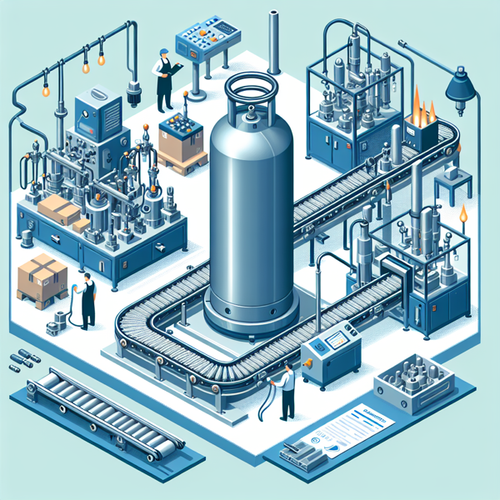
The March 2026 publication cycle brings a pivotal update for professionals in the fluid systems and components sector. The release of EN ISO 9809-4:2026 marks a significant step forward in the design, construction, and testing of refillable seamless stainless steel gas cylinders. This single, but comprehensive, standard sets new benchmarks for quality, safety, and international harmonization in gas containment for general use—directly impacting engineers, manufacturers, and compliance specialists across industrial, commercial, and research domains.
Overview
Fluid systems and components for general use underpin a broad spectrum of industries: from industrial gas supply to laboratories, healthcare, manufacturing, and logistics. Standards in this arena are vital to ensure that the pressure vessels and components handling volatile or valuable gases are safe, reliable, and universally accepted. They reduce accident risks, standardize performance expectations, and ease trade barriers by unifying technical requirements across borders.
In this article, you’ll discover:
- The full scope and technical highlights of the new EN ISO 9809-4:2026
- Key requirements and changes from previous editions
- Implementation guidance and industry impact
- Practical compliance considerations
Detailed Standards Coverage
EN ISO 9809-4:2026 – Stainless Steel Gas Cylinders with an Rm Value Less Than 1100 MPa
Gas cylinders – Design, construction and testing of refillable seamless steel gas cylinders and tubes – Part 4: Stainless steel cylinders with an R m value of less than 1,100 MPa (ISO 9809-4:2026)
This standard consolidates and updates requirements for the manufacture of refillable, seamless, stainless steel gas cylinders with water capacities up to 150 liters, designed to hold compressed, liquefied, or dissolved gases. For those desiring further harmonization, it allows optional application up to 450 liters under full conformance. The focus on cylinders made with stainless steels having maximum actual tensile strengths (Rm) below 1100 MPa reflects a push for optimized performance, improved corrosion resistance, and global regulatory acceptance.
Scope and Applications
EN ISO 9809-4:2026 applies to gas cylinders used across:
- Industrial gas suppliers
- Laboratories and scientific institutions
- Healthcare and medical gas applications
- Chemical processing, manufacturing, and logistics
This standard is especially important for any organization producing, refurbishing, or inspecting pressurized stainless steel gas containers intended for international or regulated markets.
Key Requirements and Specifications
The standard details:
- Materials: Specifies allowed stainless steel categories (ferritic, martensitic, austenitic, duplex) and controls on chemical composition, origin, and traceability.
- Design Calculations: Precise formulas for wall thickness of the shell and cylinder ends based on yield and tensile strengths; mandates minimum thickness for safety.
- Mechanical Properties: Requirements for proof stress, tensile strength, and elongation—including specific values and test methods (ISO 6892-1, ISO 6506-1, ISO 6508-1, etc.).
- Production Methods: Accepts forging, seamless tube manufacturing, pressing from plate, and advanced methods like cold working or cryoforming; prohibits post-forming addition of metal.
- Inspection and Testing: Batch-based destructive tests, ultrasonic examination, pressure cycling, bend and flattening tests, intergranular corrosion, hydraulic pressure and burst ratio checks.
- Quality Assurance: Stepwise handling of failed tests, retesting rules, and clear conditions for rejection, repair, or rendering cylinders unserviceable.
- Certification and Marking: Requires detailed markings and certification, including compatibility with UN Model Regulations to streamline global shipment and regulatory compliance.
Practical Implementation Implications
- Cylinder manufacturers must update design drawings, material sourcing, and batch documentation to reflect the new requirements.
- Inspection bodies must align test protocols and personnel qualifications with the revised standard.
- Quality managers and procurement teams should ensure supplier conformance to this edition, especially for applications in cross-border or regulated environments.
Notable Changes from Previous Editions
EN ISO 9809-4:2026 incorporates several technical updates:
- Revised definition in Clause 3.8
- Updated shell thickness formulas (Clause 7.2)
- Relocation of bend and flattening tests to prototype testing section
- Clarification in shear stress calculations for threaded necks
- Enhanced guidance for batch testing, adjustment of base check and mechanical test protocols
- Bibliography updates and improved cross-references to related ISO standards
Key highlights:
- Applies to refillable, seamless stainless steel cylinders up to 150 l (optional conforming up to 450 l)
- Comprehensive type approval and prototype testing requirements
- Robust quality, marking, and documentation provisions for international acceptance
Access the full standard:View EN ISO 9809-4:2026 on iTeh Standards
Industry Impact & Compliance
Updating to EN ISO 9809-4:2026 will help organizations:
- Mitigate operational and regulatory risks by aligning with state-of-the-art safety and performance benchmarks
- Expand market access, as the standard is recognized internationally and referenced in UN Model Regulations for the transport of dangerous goods and gases
- Enhance customer trust and product reliability by visibly demonstrating adherence to rigorous quality controls
Compliance Considerations:
- Immediate assessment of existing production lines for compatibility with new materials, testing, and certification requirements
- Training for staff in design, inspection, and records management based on the updated protocols
- Review of supplier and subcontractor qualifications to ensure entire supply chain adherence
Implementation Timelines:
- While organizations should transition as soon as practical, regulatory or contractual environments may impose specific deadlines—consult local authorities and clients.
Benefits of Adoption:
- Reduced accidents and liability
- Streamlined global logistics
- Easier approval in competitive tenders and regulated projects
Risks of Non-Compliance:
- Legal penalties or shipment rejections
- Loss of certifications
- Increased recall and remediation costs
Technical Insights
EN ISO 9809-4:2026 is meticulous in its technical stipulations, emphasizing:
- Testing Rigor: Each cylinder faces a suite of tests—hydraulic burst, impact, tensile, pressure cycling, and corrosion—ensuring only top-quality products enter the supply chain.
- Documentation: Full traceability from steel cast to finished cylinder batch, with detailed marking and certificates, minimizes fraud and enhances accountability.
- Process Control: Strict limits on allowable deviations in shape (roundness, straightness, verticality), surface finish, and workmanship ensure uniform safety across all units.
- Global Compatibility: Explicit references to related ISO standards and the UN Model Regulations foster seamless integration into international operations.
Implementation Best Practices:
- Proactively audit your production and QA systems against the new standard.
- Work with accredited laboratories for required destructive and non-destructive tests.
- Maintain comprehensive batch records and certificates for regulatory and customer audits.
Testing and Certification:
- Ensure inspectors are qualified and certified to ISO 9712.
- Use up-to-date calibrated test equipment.
- Engage with notified bodies or authorities for type approval, especially for novel designs or cross-border use.
Conclusion and Next Steps
This March 2026 update to the fluid systems and components standards—represented by EN ISO 9809-4:2026—marks a vital evolution for the safe, efficient, and internationally recognized use of stainless steel gas cylinders. Organizations are strongly encouraged to:
- Review and align technical documents, procurement policies, and quality assurance systems with the new standard
- Engage industry partners and certification bodies to ensure seamless adoption
- Stay informed via iTeh Standards for continuous updates and detailed guidance
Adopting EN ISO 9809-4:2026 secures your operations at every level—from supply chain integrity to ultimate user safety.
Access the full standard:View EN ISO 9809-4:2026 on iTeh Standards
Explore more standards, implementation guides, and best practices at iTeh Standards. Safeguard your operations with trusted, up-to-date compliance.
Categories
- Latest News
- New Arrivals
- Generalities
- Services and Management
- Natural Sciences
- Health Care
- Environment
- Metrology and Measurement
- Testing
- Mechanical Systems
- Fluid Systems
- Manufacturing
- Energy and Heat
- Electrical Engineering
- Electronics
- Telecommunications
- Information Technology
- Image Technology
- Precision Mechanics
- Road Vehicles
- Railway Engineering
- Shipbuilding
- Aircraft and Space
- Materials Handling
- Packaging
- Textile and Leather
- Clothing
- Agriculture
- Food technology
- Chemical Technology
- Mining and Minerals
- Petroleum
- Metallurgy
- Wood technology
- Glass and Ceramics
- Rubber and Plastics
- Paper Technology
- Paint Industries
- Construction
- Civil Engineering
- Military Engineering
- Entertainment