


April 2026: New ISO Standard Advances Smart Irrigation in Agriculture
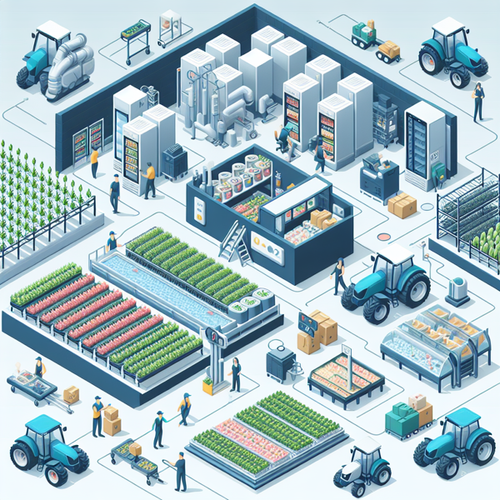
In April 2026, the agriculture industry witnessed a significant step forward in the adoption of digital and remote solutions for water management. The International Organization for Standardization (ISO) has released ISO 21622-1:2026, marking a new era for remote monitoring and control systems (RMCS) in irrigation. As the agricultural sector faces growing demands for sustainable resource usage and higher yields, this cutting-edge standard provides clear guidelines and technical requirements to drive operational efficiency and compliance. This article explores the central aspects of the new standard and what it means for forward-thinking industry professionals.
Overview / Introduction
Irrigation remains at the heart of modern agriculture, underpinning food security, sustainable resource use, and productivity. As water scarcity and precise application become more pressing, the integration of smart technologies is no longer a choice—it's a necessity. International standards guide these technological advancements by harmonizing expectations, ensuring interoperability, and improving safety and performance across markets.
The latest release—ISO 21622-1:2026, part of an evolving series—focuses on the general requirements and technical considerations for remote monitoring and control systems for irrigation (RMCS). This article will help you:
- Understand the scope and applicability of the new standard
- Discover the technical and operational highlights
- Assess the impact on compliance, implementation, and future developments
Detailed Standards Coverage
ISO 21622-1:2026 – General Considerations for Remote Monitoring and Control in Irrigation
Irrigation techniques — Remote monitoring and control for irrigation — Part 1: General considerations
Scope and Objective
ISO 21622-1:2026 establishes a comprehensive framework for any remote monitoring and control system (RMCS) used in irrigation, applicable to open-field farming, greenhouses, orchards, and other agricultural infrastructures. The standard not only covers systems that utilize programmable logic controllers and generic industrial automation but also includes purpose-built controllers specifically engineered for irrigation management.
The aim is to support manufacturers, suppliers, agronomists, compliance managers, and technology integrators in designing, specifying, and deploying RMCS that ensure dependability, interoperability, and alignment with international best practices.
Key Requirements and Specifications
- RMCS Typification, Classification, and Characterization: The standard introduces a structured method for categorizing RMCS based on type (monitoring-only, basic to advanced control), communication update intervals, and power supply specifications. This coding system simplifies specification and procurement.
- Design Parameters: Comprehensive criteria cover robustness, system architecture, sensor and actuator interfaces, data availability, time required for discrete actuation, and communication technologies (including protocols and interfaces).
- Power Supply and Runtime: Requirements address battery types, generators (solar, grid, wind, etc.), and runtime optimization, promoting reliability in remote installations.
- Environmental Robustness: Hardware must be fit for field conditions—including moisture, dust, and temperature extremes—with references to IEC standards for enclosures and electromagnetic compatibility (EMC).
- Software and Firmware: Stipulates user-friendly supervisory and control software, supporting firmware requirements, runtime updates, and security.
- Documentation and Maintenance: Mandates comprehensive documentation to aid maintenance, troubleshooting, and lifecycle support.
Who Needs to Comply?
- Irrigation manufacturers and system integrators
- Agricultural service providers deploying remote management
- Compliance officers and quality managers
- Technology suppliers and farm owners
Practical Implications for Implementation
Organizations adopting ISO 21622-1:2026 will benefit from improved clarity in device specification and replacement, streamlined procurement, and reduced integration risks. The clear typification and classification, especially around communications and power, empower buyers to select solutions fit for their real-world constraints—whether grid-connected or off-grid, high-frequency data needs or lower refresh intervals. Documentation requirements also ensure long-term maintainability and easier future upgrades.
Notable Changes and Innovations
This is a foundational standard for irrigation RMCS, introducing harmonized terminology, coding, and system-level design paradigms tailored to agricultural realities. It is especially notable for bridging industrial automation best practices with purpose-built agricultural solutions.
Key highlights:
- Structured coding for RMCS types, communications, and power supply (e.g., Type0 to Type3, Class A-F, etc.)
- Rigorous hardware and environmental requirements
- Integration with software, firmware, and cloud-based supervisory systems
Access the full standard:View ISO 21622-1:2026 on iTeh Standards
Industry Impact & Compliance
How the Standard Affects Businesses
Professionals in the agriculture sector, particularly those involved in irrigation infrastructure or technology, will find ISO 21622-1:2026 pivotal for future-proofing their investments. Adoption streamlines international project bidding, assures buyers of minimum performance, and makes future updates and integrations more predictable.
Compliance Considerations and Timelines
- Organizations are encouraged to align new RMCS solutions or upgrades with ISO 21622-1:2026 from April 2026 onward.
- Procurement and design specifications should reference the coding and definitions provided by the standard.
- System integrators and OEMs can use compliance as a differentiator in a competitive marketplace.
Benefits of Adopting ISO 21622-1:2026
- Enhanced operational reliability and risk management
- Compatibility across global markets
- Improved maintainability and ease of upgrades
- Clearer communication between stakeholders (engineers, suppliers, farm management)
Risks of Non-Compliance
- Incompatibility with international supply chains
- Higher integration and maintenance costs
- Regulatory and contract risks in government or multi-national projects
Technical Insights
Common RMCS Technical Requirements
Most systems covered by ISO 21622-1:2026 must address:
- Reliable sensor and actuator integration
- Environmental hardening against dust, water, and temperature
- Clear communications protocols and interfaces
- Secure power supply design (with backup run-times and generator options)
- EMC and electrical safety compliance
- Comprehensive system and operator documentation
Implementation Best Practices
- Classify Needs Clearly: Use the type and class coding to match solution capability to site needs (e.g., Type3 for maximum reliability in high-value crops).
- Specify Power Run-times: In remote agriculture, ensure energy solutions deliver required uptime as specified.
- Test Interoperability: Reference IEC/ISO interoperability standards for integration with broader farm management systems.
- Plan for Maintenance: Rigorous documentation, as required in ISO 21622-1:2026, enables lasting support and smooth upgrades.
- Certification: Engage with accredited certification bodies where applicable to validate your RMCS solutions.
Testing and Certification
- Hardware and software conformance testing should address environmental, runtime, EMC, and interoperability checks.
- Certifications deliver customer assurance and streamline regulatory approval in global markets.
Conclusion / Next Steps
The publication of ISO 21622-1:2026 heralds a new chapter in smart, sustainable agriculture. It brings structure and confidence to remote monitoring and control solutions, supporting growth, efficiency, and compliance throughout the global agriculture sector. Whether you're a manufacturer, designer, buyer, or compliance manager, understanding and applying these requirements will help you lead in innovation and operational excellence.
Recommendations:
- Review the full ISO 21622-1:2026 standard for detailed compliance guidance
- Evaluate your current and planned irrigation projects against the new requirements
- Promote cross-functional training for your teams to ensure efficient adoption
- Monitor iTeh Standards and related platforms for updates to the ISO 21622 series
Explore the complete ISO 21622-1:2026 standard and stay ahead in smart irrigation with iTeh Standards: View ISO 21622-1:2026
Stay proactive. Follow iTeh Standards for the most recent standardization news, detailed guidance, and compliance resources in Agriculture.
Categories
- Latest News
- New Arrivals
- Generalities
- Services and Management
- Natural Sciences
- Health Care
- Environment
- Metrology and Measurement
- Testing
- Mechanical Systems
- Fluid Systems
- Manufacturing
- Energy and Heat
- Electrical Engineering
- Electronics
- Telecommunications
- Information Technology
- Image Technology
- Precision Mechanics
- Road Vehicles
- Railway Engineering
- Shipbuilding
- Aircraft and Space
- Materials Handling
- Packaging
- Textile and Leather
- Clothing
- Agriculture
- Food technology
- Chemical Technology
- Mining and Minerals
- Petroleum
- Metallurgy
- Wood technology
- Glass and Ceramics
- Rubber and Plastics
- Paper Technology
- Paint Industries
- Construction
- Civil Engineering
- Military Engineering
- Entertainment