


April 2026 Electrical Engineering Standards: Insulators and ABC Accessories Update
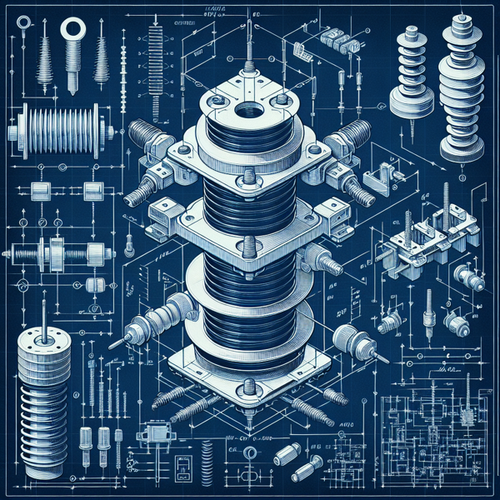
April 2026 Electrical Engineering Standards: Insulators and ABC Accessories Update
The April 2026 publication period marks a significant step forward for the electrical engineering industry, with the release of five pivotal standards. These updates span vital topics, including innovative composite insulators with embedded optical fibres and a comprehensive suite of requirements for low voltage aerial bundled cable (ABC) accessories. Whether you are responsible for system design, ongoing maintenance, or ensuring regulatory compliance in power distribution, these standards set a new benchmark for safety, reliability, and future-ready infrastructure.
Overview
Electrical engineering standards form the backbone of safe, effective, and reliable power transmission and distribution networks worldwide. This month’s updates, covering five newly published standards, introduce advanced methodologies, clearer definitions, and robust test regimes addressing both traditional and emerging technologies. In this article, you will gain:
- Insight into recent developments for composite insulators with integrated optical fibres, crucial for smart grid monitoring and data transmission.
- A detailed understanding of the EN 50483 series for ABC system accessories, covering general principles, mechanical fittings, clamps, and connectors for enhanced safety in overhead distribution.
- Expert guidance on implications for compliance, implementation best practices, and emerging technical requirements.
Staying current with these standards not only protects your organization from risk but empowers you to innovate confidently.
Detailed Standards Coverage
IEC TS 63264:2026 – Composite Insulators with Integrated Optical Fibres
Composite insulators with integrated optical fibres for AC voltages greater than 1 000 V and DC voltage greater than 1 500 V – Definitions, tests methods and acceptance criteria
IEC TS 63264:2026 introduces an advanced specification for composite insulators equipped with integrated optical fibres. These insulators—designed for transmission systems operating above 1 000 V AC or 1 500 V DC—combine electrical insulation and mechanical support with the additional functionality of fibre-optic data transmission. The specification defines:
- Terminology and designations related to fibre-optic composite insulators
- Additions and modifications to established test methods (design, type, sample, and routine tests)
- Acceptance criteria focused on both mechanical integrity and optical performance
Scope and Requirements: The standard applies where a fibre optic element is integrated into the insulator’s polymeric housing, load-bearing core, or filling media. Tests are tailored based on the specific arrangement and application (e.g., overhead lines, substations). Key requirements include:
- Detailed identification and classification
- Pre-stressing, immersion, and diffusion tests to ensure durability and electrical performance
- Optical attenuation and endurance testing under thermal cycling
- Mechanical, dielectric, power arc, and tightness (feedthrough) verification
Impacted Sectors: Utilities, transmission system operators, manufacturers of high-voltage components, and integrators of smart grid technologies should adopt this specification to support infrastructure modernization, on-line monitoring, and advanced sensing.
Notable Changes: IEC TS 63264:2026 is a new technical specification that augments existing product standards, offering guidance for fibre-optic integration not addressed in previous documents.
Key highlights:
- Integrates optical signal transmission with high-voltage insulation
- Specifies comprehensive optical, mechanical, and environmental performance tests
- Ensures compatibility with both AC and DC systems of increasing voltage levels
Access the full standard:View IEC TS 63264:2026 on iTeh Standards
EN 50483-1:2026 – Test Requirements for Low Voltage Aerial Bundled Cable Accessories, Part 1: Generalities
Test requirements for low voltage aerial bundled cable accessories – Part 1: Generalities
EN 50483-1:2026 lays down fundamental principles and definitions for all accessories used with low voltage aerial bundled cables (ABC), rated at 0.6/1 (1.2) kV. Serving as the foundation of the EN 50483 series, this standard addresses common product aspects, terminology, and general test directives.
Scope and Requirements: The document covers the main categories of accessories—tension and suspension clamps, brackets, and connectors (including insulation piercing connectors or IPCs, pre-insulated lugs, and sleeves). Essential points include:
- Comprehensive cataloguing and marking requirements for traceability
- Definitions of test procedures (type, sample, routine) and inspection protocols
- Quality assurance processes and record management
Who Needs to Comply: This general standard targets manufacturers, suppliers, and utilities specifying or procuring ABC accessories for overhead distribution—including public and private power networks.
Practical Implications: Adhering to this standard ensures unified product identification, test documentation, and streamlined project auditing. Updated from its 2009 predecessor, the new edition extends its scope to include brackets and clarifies test selection and acceptance.
Key highlights:
- Establishes terminology and cross-references for the entire EN 50483 series
- Clarifies product marking and traceability requirements
- Introduces expanded test procedures for broader product coverage
Access the full standard:View EN 50483-1:2026 on iTeh Standards
EN 50483-2:2026 – Tension and Suspension Clamps, Fittings, and Brackets for Self-Supporting System
Test requirements for low voltage aerial bundled cable accessories – Part 2: Tension and suspension clamps, fittings and brackets for self-supporting system
This standard addresses fittings and assembly devices essential for the safe, reliable support and tensioning of self-supporting ABC installations. EN 50483-2 prescribes the full suite of mechanical and electrical type tests for tension and suspension clamps, brackets, and associated hardware used in systems where all cable cores contribute to load support.
Key Requirements:
- Mechanical tensile load testing at ambient, high, and low temperatures
- Dielectrical voltage tests on both clamps and installed cables
- Verification of clamp bolt tightening and resistance to slip or movement
- Environmental conditioning and performance under simulated service stresses
Applicability: Distribution network designers, engineering consultancies, procurement decision-makers, and installer training programs will benefit from the precise testing protocols.
Implementation Considerations: The updated 2026 edition expands coverage to brackets and introduces new acceptance criteria in line with evolving cable constructions specified by HD 626 S2.
Key highlights:
- Defines comprehensive type tests for all self-supporting ABC tension and suspension accessories
- Mandates environmental, mechanical, and dielectric evaluation for product validation
- Expands requirements to address evolving designs and cable sizes
Access the full standard:View EN 50483-2:2026 on iTeh Standards
EN 50483-3:2026 – Tension and Suspension Clamps, Fittings, and Brackets for Neutral Messenger System
Test requirements for low voltage aerial bundled cable accessories – Part 3: Tension and suspension clamps, fittings and brackets for neutral messenger system
EN 50483-3:2026 builds on Part 2 by focusing on accessories for ABC installations where only a neutral messenger (insulated or bare) supports the cable bundle. This standard ensures that fittings can bear the full mechanical load, avoid conductor contact, and withstand a range of environmental conditions.
Scope and Requirements:
- Type tests for both tension and suspension clamps, covering high and low temperature tensile strength
- Electrical and dielectric verification (including optional swing and slip tests)
- Marking, installation, and bracket attachment guidelines
Target Industries: Electrical utilities, equipment manufacturers, and infrastructure projects employing neutral messenger systems (e.g., urban and suburban power distribution).
Practical Implications: Conformance helps prevent mechanical failure and unintended phase-neutral contact, supporting regulatory compliance, worker safety, and asset longevity.
Key highlights:
- Addresses complete suite of tests for neutral messenger-supported ABC accessories
- Includes mechanical, electrical, and environmental assessment required for approval
- Ensures safe installation and operation under diverse service conditions
Access the full standard:View EN 50483-3:2026 on iTeh Standards
EN 50483-4:2026 – Connectors for Low Voltage ABC Systems
Test requirements for low voltage aerial bundled cable accessories – Part 4: Connectors
EN 50483-4:2026 specifies the essential requirements and type tests for all connectors used in low voltage ABC systems. This includes insulation piercing connectors (IPCs), pre-insulated terminal lugs, and through connectors (sleeves).
Critical Requirements:
- Mechanical endurance and tensile testing for connector strength and reliability
- Electrical tests for dielectric withstand and current-carrying capability
- Procedures for verifying installation under various environmental and temperature conditions
- Endurance and cycling tests for electrical and mechanical performance
Applicability: All stakeholders in the design, procurement, manufacturing, installation, and testing of connectors in LV ABC overhead systems.
Notable Updates: The new edition integrates expanded requirements for brackets, addresses an array of connector designs, and streamlines compliance with both HD 626 S2 and evolving utility needs.
Key highlights:
- Covers test methods for all connector types—inclusive of IPCs and pre-insulated components
- Introduces endurance, watertightness, and electrical ageing assessments
- Enables safer, more reliable connection solutions for dynamic ABC networks
Access the full standard:View EN 50483-4:2026 on iTeh Standards
Industry Impact & Compliance
The revised and new standards described above will have a far-reaching impact on the electrical engineering landscape:
- Risk Mitigation: Enhanced testing and performance verification help minimize the risk of mechanical failure, unplanned outages, or product misapplication in energized systems.
- Legal and Regulatory Alignment: Utilities and contractors are increasingly subject to strict regulatory oversight—these standards facilitate evidence-based compliance.
- Procurement & Specification: Uniform definitions and requirements streamline cross-border and inter-company procurement, ensuring compatibility and supply chain reliability.
- Project Delivery: Well-specified products and accessories support faster installation and commissioning, reducing costly rework and warranty claims.
- Transition & Timelines: Updated standards set clear timelines for adoption, with recommended transition periods for phasing out superseded versions.
Lapses in compliance can result in safety incidents, regulatory fines, and reputational damage—early adoption is strongly advised.
Technical Insights
Across all five standards, several technical themes and best practices stand out:
- Rigorous Type & Sample Testing: Each accessory—whether an insulator, clamp or connector—must pass stringent mechanical, electrical, and environmental performance checks.
- Marking & Traceability: Universal requirements for product identification, manufacturer logo, and batch or traceability codes enable effective audit trails and recall processes.
- Adaptability to Climatic Variation: Environmental testing protocols simulate a broad range of geographic conditions, offering additional tests tailored for extremes of heat, cold, and humidity as per the region’s needs.
- Installation Guidelines: Each standard clarifies correct product assembly, attachment, and torque application, reducing the risks of field error.
- Compatibility with Modern Cables & Grids: The standards reference the latest versions of HD 626 S2 and anticipate integration with smart grid sensor technology.
Implementation Best Practices:
- Integrate Requirements Early in Design: Cross-reference the EN 50483 series and IEC TS 63264 in initial product specifications.
- Supplier Qualification: Audit supplier compliance to the new marking, testing, and traceability requirements.
- Training & Field Documentation: Update installation manuals and engineer training to reflect torque, assembly, and environmental test protocols.
- Pre-Qualification Testing: Perform pre-site acceptance tests in accordance with sample and type testing prescriptions.
- Continuous Monitoring: Leverage fibre-optic insulator data for predictive maintenance and system health monitoring.
Testing & Certification:
Certification bodies and in-house QA teams should update procedure manuals to reference these latest standards. Ensure calibration of testing equipment to recognized conditions and repeat type tests whenever materials or manufacturing processes change.
Conclusion & Next Steps
In April 2026, the standards published for electrical engineering raise the bar for safety, performance, and innovation in modern power networks. By embracing these updates, organizations not only safeguard their infrastructure and personnel but also position themselves for the smart, digitalized grids of tomorrow.
Key takeaways:
- Adopt IEC TS 63264:2026 for enabling and validating the use of composite insulators with integrated optical sensing.
- Specify and implement the updated EN 50483 series to ensure the long-term reliability and safety of low voltage ABC systems.
- Stay ahead with best practices in traceability, testing, and environmental adaptation.
Recommendations:
- Audit current practices and update procurement specifications promptly
- Train engineering and field teams on new requirements
- Consult the full standards via official sources for detailed test procedures and technical guidance
Explore these and other essential international standards at iTeh Standards and ensure your organization remains compliant, competitive, and future-ready.
Categories
- Latest News
- New Arrivals
- Generalities
- Services and Management
- Natural Sciences
- Health Care
- Environment
- Metrology and Measurement
- Testing
- Mechanical Systems
- Fluid Systems
- Manufacturing
- Energy and Heat
- Electrical Engineering
- Electronics
- Telecommunications
- Information Technology
- Image Technology
- Precision Mechanics
- Road Vehicles
- Railway Engineering
- Shipbuilding
- Aircraft and Space
- Materials Handling
- Packaging
- Textile and Leather
- Clothing
- Agriculture
- Food technology
- Chemical Technology
- Mining and Minerals
- Petroleum
- Metallurgy
- Wood technology
- Glass and Ceramics
- Rubber and Plastics
- Paper Technology
- Paint Industries
- Construction
- Civil Engineering
- Military Engineering
- Entertainment