


April 2026: Metallurgy Standards Update for Steel Sections and Structural Products
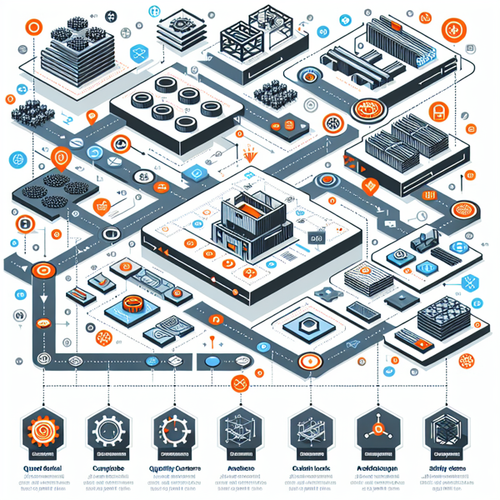
Metallurgy Standards Update: April 2026 - Steel Sections, Hollow Profiles & Tinplate
April 2026 has ushered in significant advancements in international standards for the metallurgy sector, with five key standards newly released. These updates span hot-rolled and cold-formed steel sections, technical delivery conditions for structural hollow sections, robust guidelines for finished structural steel products, and updated requirements for electrolytic tinplate. For engineers, compliance officers, quality managers, and researchers, these standards set a clear path for ensuring quality, safety, and market competitiveness across the steel value chain.
Overview / Introduction
Metallurgy underpins many critical industries—from construction and infrastructure to packaging and manufacturing. Reliable, harmonized standards ensure materials meet strict safety, performance, and sustainability criteria, guiding procurement, fabrication, and installation practices worldwide.
This article explores the newly issued April 2026 standards covering:
- Dimensions, tolerances, and sectional properties for steel sections
- Delivery conditions for hot-finished and cold-formed structural hollow sections
- Requirements for finished products in structural use
- Technical specifications for electrolytic tinplate
You'll discover:
- What each new standard covers
- Key requirements and practical implications
- Who should comply and why these updates matter
- Expert insights for smooth and effective implementation
Detailed Standards Coverage
ISO 657-1:2026 - Hot-Rolled Steel Sections: Dimensions & Tolerances
Hot-rolled steel sections — Dimensions, sectional properties and tolerances — Part 1: Angles, sloping flange channels and sloping flange beams
This comprehensive standard revises and updates global specifications for hot-rolled steel section profiles (equal/unequal angles, sloping flange channels, and I beams). It details the dimensions, permissible deviations, mass, sectional properties, and designation system, aligning with other structural steel delivery standards (notably ISO 630 series).
Industries impacted include steel producers, structural fabricators, civil engineers, construction contractors, and procurement specialists sourcing standardized steel profiles.
Key requirements:
- Detailed dimensional tolerances for angles, channels, and I beams
- Clear designation system and material references (e.g., steel grade, manufacturing standard)
- Precise calculation formulae for section properties (area, mass, inertia, modulus)
- Defined criteria for allowable shape, mass, and length deviations
- Surface condition specifications (in line with ISO 20723)
Notable changes:
- Revised designations and expanded sectional properties tables
- Updated tolerance limits for critical dimensions
- Inclusion of surface condition requirements for improved performance
Key highlights:
- Comprehensive tabulation of section data for international equivalency
- Provisions for custom agreements on tolerances and delivery (supports regional standards)
- Supports improved structural safety and integrity
Access the full standard:View ISO 657-1:2026 on iTeh Standards
prEN 10210-1 - Hot-Finished Structural Hollow Sections: Delivery Conditions
Hot-finished steel structural hollow sections - Part 1: Technical delivery conditions
This updated European draft standard (prEN 10210-1) establishes robust technical specifications for seamless, electric welded, or submerged arc welded hot-finished steel hollow sections. Intended for circular, square, rectangular, or elliptical forms, it is widely used in construction, civil engineering, bridges, towers, and frames.
The document emphasizes:
- Delivery requirements for product traceability and quality assurance
- Material grades and mechanical property equivalency with other major standards (EN 10025 series)
- Factory and product testing, documentation, and marking protocols
- Compatibility with Construction Products Regulation (CPR) and relevant EU directives
Key specifications:
- Mandatory heat treatment above 580 °C for cold-formed products requiring hot-finished properties
- Provisions for welded, seamless, and arc-welded products, including production and inspection requirements
- Tolerance and dimension references to EN 10210-2
- Multiple material grades to suit varying structural applications
Practical impacts:
- Assures product safety and reliability for load-bearing steelwork
- Simplifies sourcing and procurement by unifying product requirements
- Reduces risk in critical construction and infrastructure applications
Key highlights:
- Now merges Part 1 and 3, simplifying application for manufacturers and contractors
- Updated chemical composition and mechanical property tables
- Direct links to CPR compliance via EN 10380
Access the full standard:View prEN 10210-1 on iTeh Standards
prEN 10219-1 - Cold-Formed Welded Structural Hollow Sections: Delivery Conditions
Cold formed welded steel structural hollow sections - Part 1: Technical delivery conditions
prEN 10219-1 sets updated requirements for the delivery of steel hollow sections produced by electric welding or submerged arc welding of cold-formed feedstock. The standard covers circular, square, rectangular, and elliptical shapes for load-bearing applications in construction, infrastructure, and industrial projects.
Suitable for:
- Steel manufacturers and processors
- Structural fabricators
- Quality and compliance managers
Essential requirements:
- Stipulates technical delivery conditions encompassing manufacturing, heat treatment (limited to the weld line), and weldability
- Specifies a broad range of steel grades, enabling selection by performance requirement
- Aligns with EN 10219-2 for tolerances and geometrical properties
- Ensures inspection, marking, and traceability
- Covers product testing, including NDT for welds and mechanical properties
Implementation takeaways:
- Ensures equivalence of mechanical properties to hot-finished grades (but not geometrical equivalency)
- Integrates harmonization with EU regulations through EN 10380 compliance
- Facilitates market access due to broad European acceptance
Key highlights:
- Part 1 and Part 3 merged for a streamlined, unified document
- Updated chemical composition and mechanical property data
- Practical focus on product identification, inspection, and verification
Access the full standard:View prEN 10219-1 on iTeh Standards
prEN 10380 - Finished Non-Alloy and Alloy Steel Products for Structural Use
Finished non-alloy and alloy steel products for structural use
prEN 10380 is a cornerstone standard for all finished carbon and alloy steel products (excludes stainless steel) used as structural elements across construction works and related installations. It encompasses a wide array of product groups:
- Sections and profiles
- Plates, sheets, strips, and wide flats
- Bars, rods, and wires
- Hollows, piles, and sheet piles
Applicable to both coated and uncoated, weldable and non-weldable products, prEN 10380 is vital for suppliers, fabricators, and constructors working with steel for structural purposes.
Key requirements:
- Mandatory performance characteristics (yield strength, tensile strength, elongation, impact resistance)
- Environmental sustainability metrics, life-cycle assessment, and fire reaction performance
- Comprehensive Factory Production Control (FPC) measures and continuous surveillance
- Assessment and verification of constancy of performance (AVCP) aligned with EU Regulation 305/2011
Benefits and implications:
- Supports CE marking and regulatory compliance for structural steel products in Europe
- Ensures clarity and quality control throughout the supply chain
- Promotes sustainability through explicit LCA and waste/resource management criteria
Key highlights:
- Extended coverage with environmental and fire performance criteria
- Facilitates project documentation and off-the-shelf product compliance
- Detailed annexes for sampling, testing, and technical coordination with other standards
Access the full standard:View prEN 10380 on iTeh Standards
ISO 11949:2026 - Electrolytic Tinplate: Cold-Reduced Tinmill Products
Cold-reduced tinmill products — Electrolytic tinplate
ISO 11949:2026 governs the manufacture, testing, and specification of electrolytic tinplate for packaging and industrial applications (e.g., food containers, aerosols, closures). The standard applies to single and double cold-reduced low-carbon mild steel tinplate, available in sheets or coils.
Scope and audience:
- Steel producers, tinplate manufacturers, converters, quality assurance teams
- Packaging designers, food and beverage manufacturers, and anyone specifying tinmill products
Key requirements:
- Nominal thicknesses for single (0.150–0.600 mm) and double cold-reduced tinplate (0.100–0.390 mm)
- Strict tolerances on thickness, width, and flatness
- Prescriptive requirements for finish, passivation, oiling, and surface quality
- Performance specifications for hardness, tensile properties, and tin coating mass
- Detailed testing and marking protocols
Standout changes:
- Updated product designation, including differential coating options
- Refinement of test methods, marking, and inspection documentation
- Enhanced emphasis on sustainability and recyclability (aligned with packaging sector needs)
Key highlights:
- Enables global supply chain consistency for food-grade and industrial tinplate
- Assures performance in demanding forming, sealing, and corrosion protection applications
- Supports shorter procurement cycles and quality verification for end users
Access the full standard:View ISO 11949:2026 on iTeh Standards
Industry Impact & Compliance
Strategic Value for Businesses
Adoption of these new and revised standards ensures:
- Enhanced structural safety and minimized product failure risk
- Streamlined documentation and regulatory compliance, especially for EU Construction Products Regulation (CPR)
- Global market access and harmonization across borders
- Modernized supply chains with clearer procurement specifications
Compliance Considerations:
- Updated standards may supersede earlier versions—timely transition is essential
- Manufacturers must update production and inspection protocols to match new requirements
- Greater emphasis on traceability, documented testing, and marking to support compliance audits
- Environmental and sustainability data now matter for procurement decisions
Implementation timeline depends on organization size and product range. Early engagement with supply chain partners and certification agencies expedites compliance and mitigates project delays.
Benefits of early adoption:
- Demonstrable quality advantage in the market
- Improved safety record and reduced liability
- Easier and faster project signoffs, especially in regulated markets
Risks of non-compliance:
- Project delays, failed certifications, and potential legal penalties
- Reduced competitiveness and loss of market share
- Diminished reputation with key clients and regulators
Technical Insights
Common Technical Requirements
Across these standards you will find several recurring themes:
- Precise dimensions and tolerances for mechanical and structural integrity
- Prescriptive chemical and mechanical property requirements
- Emphasis on weldability and inspection, including non-destructive testing (NDT)
- Mandatory documentation supporting full lifecycle traceability
- Environmental sustainability as a core requirement (especially prEN 10380)
Implementation Best Practices
- Review supply chain contracts and update reference standards.
- Train production staff in new inspection, testing, and documentation protocols.
- Engage early with notified bodies or certification agencies for any regulated applications.
- Implement Factory Production Control (FPC) systems that align with AVCP requirements.
- Adopt digital tools to manage traceability and compliance evidence (digital certificates, batch tracking).
Testing and Certification
- Rigorously implement the standard’s requirements for sampling, sample location, and test frequency.
- Use specified methods for tensile, impact, hardness, and NDT per each standard’s annexes.
- Maintain clear records to facilitate audits and client due diligence processes.
- Ensure product marking, label traceability and documentation as per standard.
Conclusion / Next Steps
April 2026’s metallurgy standards refresh brings clarity, harmonization, and best-in-class requirements for steel section manufacturing, hollow profiles, structural steel products, and tinplate. For organizations involved at any stage of the value chain, prompt review and adoption are strongly recommended.
Key takeaways:
- These standards upgrade essential requirements for structural and packaging steel products
- Timely transition secures compliance, quality leadership, and business continuity
- Deepen partnerships with accredited labs, auditors, and digital solutions providers
- Monitor iTeh Standards for further updates in Part 2 covering additional metallurgy standards
Action:
- Explore each standard above via iTeh Standards
- Review in detail and consult with your compliance/engineering teams
- Implement the necessary changes and stay ahead of industry developments
For further insights, access, and personalized support, visit iTeh Standards.
Categories
- Latest News
- New Arrivals
- Generalities
- Services and Management
- Natural Sciences
- Health Care
- Environment
- Metrology and Measurement
- Testing
- Mechanical Systems
- Fluid Systems
- Manufacturing
- Energy and Heat
- Electrical Engineering
- Electronics
- Telecommunications
- Information Technology
- Image Technology
- Precision Mechanics
- Road Vehicles
- Railway Engineering
- Shipbuilding
- Aircraft and Space
- Materials Handling
- Packaging
- Textile and Leather
- Clothing
- Agriculture
- Food technology
- Chemical Technology
- Mining and Minerals
- Petroleum
- Metallurgy
- Wood technology
- Glass and Ceramics
- Rubber and Plastics
- Paper Technology
- Paint Industries
- Construction
- Civil Engineering
- Military Engineering
- Entertainment