


Crane Safety and Productivity: Key Certification Standards Explained
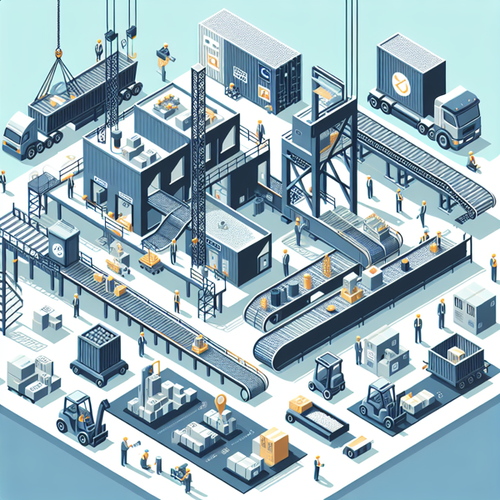
Crane technology stands at the heart of modern materials handling, bridging industry demands for productivity, safety, and efficiency. In today’s competitive landscape, compliance with internationally recognized crane standards is not just a legal necessity but a potent driver for business value. Four key European standards—EN 13557:2003/A1:2005, EN 13557:2024, EN 14439:2025/AC:2026, and EN 1991-3:2026—define the certification foundations for safe, efficient, and scalable crane operations in sectors ranging from construction and logistics to heavy manufacturing. Adopting these standards ensures companies meet stringent quality and safety requirements, reduces risk, and unlocks new opportunities for growth and international trade.
Overview: Why Crane Certification Standards Matter in Materials Handling
The materials handling industry revolves around the precise movement of goods, often in dynamic and challenging environments. Cranes are essential, yet by their very function, they carry significant risks—lifting heavy loads, operating near workers, and interacting with critical infrastructure. To mitigate hazards and streamline workflows, European standards organizations, under CEN, have established and continuously updated rigorous certification requirements.
Implementing current crane standards is now a must for any forward-looking business, as these standards:
- Enforce essential safety protocols and technical performance benchmarks
- Provide clarity and uniformity across international markets
- Reduce the potential for costly downtime, accidents, or legal penalties
- Facilitate productivity and scaling through systemized operation and maintenance
- Enhance market access and client trust by certifying compliance
In this guide, you’ll discover the scope, critical requirements, and real-world implications of the four most relevant crane standards. Whether you’re a business owner, safety manager, engineer, or simply interested in safe machine operation, this article delivers practical insights for safer, smarter, and more productive materials handling.
Detailed Standards Coverage
EN 13557:2003/A1:2005 – Control and Control Stations for Cranes
Cranes - Control and control stations
Introduced to provide a unified European baseline for the design and implementation of crane control devices and their stations, EN 13557:2003/A1:2005 outlines the essential requirements and safety features all cranes must have in their control interfaces. This standard ensures that both manual and automated crane controls meet minimum ergonomic and safety criteria, supporting both operator well-being and reliable machine operation.
Key aspects addressed include the layout and type of control devices (such as levers, switches, pedals), their required positions relative to the operator, and safety mechanisms to prevent unintended activation. The 2005 amendment clarifies normative references and incorporates feedback from real-world crane applications, further harmonizing requirements across the EU.
Targeted to crane manufacturers, operators, and materials handling facilities, compliance with this standard minimizes the risk of operator fatigue or error and increases system reliability.
Key highlights:
- Sets ergonomic criteria for control placement and actuation forces
- Establishes verification steps for control safety functionality
- Addresses hazards related to operator error and accidental activation
Access the full standard:View EN 13557:2003/A1:2005 on iTeh Standards
EN 13557:2024 – Crane Control Devices and Control Stations: Modernized Health and Safety Design
Cranes - Control devices and control stations
Responding to technological advances and changing industry needs, the 2024 revision of EN 13557 is the most comprehensive standard yet for crane control devices and control stations. It not only updates and expands the previous requirements, but also introduces guidance for new control technologies—such as touchscreens and cableless systems—while maintaining a laser focus on operator safety, usability, and management of key hazards.
This standard specifies in detail the design and verification requirements for all types of crane control devices (levers, joysticks, buttons, pedals, touchscreen interfaces) and their placements, from fixed cabins to moveable or remote control stations. Ergonomics, protection against electric shocks, emergency stop integration, and accessibility are all covered. Clear distinctions are also made between requirements for control devices that are physically connected versus cableless (wireless) systems, ensuring safety in all operating modes.
Practical guidance is given for window designs, operator access, climate control within cabins, and fire safety. There’s also emphasis on uniformity across control stations and clear labeling/symbols to prevent misinterpretation.
Who should comply?
- All crane manufacturers (including mobile and tower cranes)
- Facility designers and industrial safety managers
- Service providers for crane maintenance and modernization
Key highlights:
- Detailed specification of force limits for actuating levers, pedals, and buttons
- Clear separation and identification of emergency controls across multiple stations
- Rigorous guidance on cableless (wireless) controls to prevent unintended operation and signal errors
Access the full standard:View EN 13557:2024 on iTeh Standards
EN 14439:2025/AC:2026 – Tower Cranes: Safety and Performance Requirements
Cranes - Tower cranes
Tower cranes are a critical part of urban construction and large-scale manufacturing. The EN 14439:2025/AC:2026 standard defines the special design, installation, and operational requirements for tower cranes, ensuring both stability and safety during erection, use, and disassembly.
Given the unique risks associated with tower cranes—such as wind effects, high load handling, and the need for fine operator control at significant heights—EN 14439 incorporates stringent criteria for structural design, foundation requirements, motion limiting devices, and operator station ergonomics.
The standard also addresses routine inspection, maintenance access, and emergency procedures, reflecting lessons learned from decades of tower crane operation and recent advances in automation and remote monitoring technology.
Who needs to certify?
- Construction companies deploying tower cranes
- Tower crane manufacturers, engineering consultants, and safety officers
Key highlights:
- Comprehensive requirements for crane stability, load testing, and safe erection/dismantling
- Definitions for operating speeds, safety interlocks, and wind load thresholds
- Guidance on cab and control station design for optimal operator visibility
Access the full standard:View EN 14439:2025/AC:2026 on iTeh Standards
EN 1991-3:2026 – Actions Induced by Cranes and Machines (Eurocode 1, Part 3)
Eurocode 1 - Actions on structures - Part 3: Actions induced by cranes and machines
Unique among crane standards, EN 1991-3:2026 (Eurocode 1, Part 3) focuses not on crane structure or control systems themselves, but on the dynamic actions (loads and forces) cranes and machinery impose on supporting structures—such as runways, rails, and the surrounding building frame. Compliance with this standard is essential for engineers, architects, and designers responsible for the civil and structural aspects of facilities integrating cranes.
This edition provides in-depth methodologies to calculate vertical, horizontal, and fatigue-inducing forces transmitted by bridge, gantry, and wall cranes, including dynamic amplification factors, load groupings, and special considerations for multiple cranes operating in tandem. It also covers harmonic loads from fixed industrial machines and sets guidelines for classifying cranes according to dynamic response and fatigue cycles, supporting long-term structural integrity.
Target users:
- Structural and civil engineers designing crane-supporting infrastructure
- Facility owners, construction companies, and building code authorities
Key highlights:
- Thorough definition of static and dynamic effects for supporting structure design
- Application to both new builds and existing structures undergoing assessment
- Comprehensive annexes for simplified calculations and fatigue classification
Access the full standard:View EN 1991-3:2026 on iTeh Standards
Industry Impact & Compliance
Implementing and certifying to these crane standards is a strategic move that brings organizations into alignment with European legal expectations while unlocking substantial business benefits.
How Compliance Drives Advantage:
- Reduces workplace accidents and injuries: Codified controls and fail-safes make accidents less likely, protecting staff and reducing downtime.
- Ensures legal compliance: Many EU countries require adherence to these CEN standards; certification is often mandatory for insurance and government contracts.
- Boosts operational productivity: Standardized controls and verified structural capacities support higher throughput with fewer disruptions.
- Facilitates international trade and contracts: Certification reduces barriers in export markets and enhances supplier reliability in global supply chains.
- Protects investments: Rigorous verification and maintenance requirements extend equipment lifespan, optimizing capital expenditure.
Risks of Non-Compliance
Choosing not to comply exposes businesses to a range of risks:
- Regulatory penalties or shutdowns
- Increased incidence of equipment failure, leading to costly repairs or litigation
- Loss of certification status—hindering ability to bid for contracts
- Lower worker morale and reputation damage
Implementation Guidance: Best Practices for Adopting Crane Standards
Adopting these standards is more than just obtaining a certificate—it’s a continuous process of safety, training, and improvement. Here’s how organizations can streamline implementation:
- Gap Assessment: Begin by auditing current crane systems, controls, operator procedures, and supporting structures against the new standard requirements.
- Staff Training and Certification: Regularly train operators and maintenance personnel on updated control systems, ergonomic practices, and emergency procedures, using materials aligned with the standards.
- Systematic Documentation: Keep meticulous records of inspections, maintenance, and modifications—this supports both legal compliance and effective risk management.
- Engage Certified Suppliers: Only procure cranes, controls, and structural solutions from manufacturers with demonstrated conformity to the latest standards.
- Integrate With Broader Management Systems: Link crane certification efforts with your organization’s overarching health & safety and quality management systems (such as ISO 9001 or ISO 45001).
- Continuous Improvement: Monitor incidents and near-misses, conduct frequent reviews, and proactively implement design or procedural upgrades in line with evolving standards.
- Access Authoritative Resources: Leverage official documents, technical guides, and explanatory notes from standards bodies and specialized publishers like iTeh Standards for updates.
By following these steps, organizations not only ensure compliance but also create a culture of proactive risk management and operational excellence.
Conclusion & Next Steps: Building the Future on Crane Certification
Certification to current crane standards is not about ticking boxes—it is the cornerstone of a safe, productive, and scalable materials handling operation. As technologies evolve, these standards help businesses stay future-ready, earning investor and customer trust, and keeping teams protected.
To sustain competitive advantage:
- Stay abreast of changes—European standards are periodically revised to reflect technology and industry insights.
- Invest in ongoing training and regular audits, ensuring that safety and performance remain top priorities.
- Explore the latest versions of each standard directly via trusted sources, such as iTeh Standards, to guarantee that your practices are up-to-date, efficient, and ready for any audit or certification challenge.
Ready to level up your materials handling operations? Dive deeper into these essential standards to drive productivity, safety, and global credibility.
https://standards.iteh.ai/catalog/standards/cen/09796883-69d7-4a8e-b3db-acdae28bbffb/en-13557-2003-a1-2005https://standards.iteh.ai/catalog/standards/cen/de53d405-4a61-4ef7-ba17-53edf66a7aff/en-13557-2024https://standards.iteh.ai/catalog/standards/cen/01345112-277f-46ae-99ad-0079e1eabaf0/en-14439-2025-ac-2026https://standards.iteh.ai/catalog/standards/cen/88e83657-57df-4766-ba87-25d4c266da80/en-1991-3-2026
Categories
- Latest News
- New Arrivals
- Generalities
- Services and Management
- Natural Sciences
- Health Care
- Environment
- Metrology and Measurement
- Testing
- Mechanical Systems
- Fluid Systems
- Manufacturing
- Energy and Heat
- Electrical Engineering
- Electronics
- Telecommunications
- Information Technology
- Image Technology
- Precision Mechanics
- Road Vehicles
- Railway Engineering
- Shipbuilding
- Aircraft and Space
- Materials Handling
- Packaging
- Textile and Leather
- Clothing
- Agriculture
- Food technology
- Chemical Technology
- Mining and Minerals
- Petroleum
- Metallurgy
- Wood technology
- Glass and Ceramics
- Rubber and Plastics
- Paper Technology
- Paint Industries
- Construction
- Civil Engineering
- Military Engineering
- Entertainment