

ASTM D6381/D6381M-24
(Test Method)Standard Test Method for Measurement of Asphalt Shingle Mechanical Uplift Resistance
General Information
- Abstract
SIGNIFICANCE AND USE
5.1 Uplift resistance is one of the properties of an applied shingle that relates to its ability to withstand wind forces. The mechanical tests described are laboratory methods to measure that resistance at a designated temperature after the shingles have been sealed under designated conditions.
5.1.1 This test method determines the mechanical uplift resistance of sealed shingles by direct measurement in a prescribed manner. See Test Method D7158/D7158M for the relationship between this mechanical uplift resistance and the uplift forces derived from the action of wind.
5.2 Many factors influence the sealing characteristics of shingles in the field; for example, temperature, time, contamination by dirt and debris, roof slope, and interference by misplaced fasteners. It is not the objective of this test method to address all of these influences. This test method is designed to determine the mechanical uplift resistance when representative specimens of shingles are sealed under selected conditions prior to testing.
5.3 Procedure A produces lower results than Procedure B. Procedure A provides an edge-lift load value and Procedure B provides a perpendicular load value. The procedure applicable to a specific product depends on the specific product design, geometry, and rigidity. It is the responsibility of the user of this test method to determine the appropriate procedure with reference to the specific product and application. It is possible that engineering calculations would require both procedures to be employed, and for both results to be used in the calculation of the resistance of that specific product to the effects of wind.
5.4 When using this method in conjunction with Test Method D7158/D7158M to determine the uplift resistance of shingles as part of the determination of wind resistance of the shingles, determine the appropriate procedure (Procedure A, Procedure B, or both) in accordance with the discussion, and examples, of shingle geometry and seal...
SCOPE
1.1 This test method covers measuring the uplift resistance of asphalt roofing shingles by mechanical means. It is applicable to shingles that use a factory-applied or field-applied sealant.
1.2 There are several types of shingles designed for service without a factory-applied or field-applied sealant. These shingles, when applied in accordance with the manufacturers' application instructions, employ other means to provide resistance against the forces generated by the action of wind such as geometry and shingle construction. Field experience has shown that these types of shingles function satisfactorily in service. Because there are a variety of these shingle designs, it is not practical to describe in this test method how to test these shingles for uplift resistance. The testing of these types of shingles, therefore, goes beyond the scope of this test method.
1.3 This test method describes two procedures for measuring shingle uplift resistance. Procedure A employs a specially designed apparatus with a clamping device which facilitates lifting of the edge of the shingle and measuring the force required to break the seal. Procedure B employs a metal “T” section adhered to the weather surface of the shingle to facilitate application and measurement of a perpendicular force to break the seal.
1.4 It is not prohibited to use this test method over a range of sealing time and temperature combinations and testing temperatures to simulate a variety of actual field use conditions. The times and temperatures used shall be stated in the report.
1.5 The values stated in either SI units or inch-pound units are to be regarded separately as standard. The values stated in each system may not be exact equivalents; therefore, each system shall be used independently of the other. Combining values from the two systems may result in nonconformance with the standard.
1.6 This standard does not purport to address all of the saf...
- Status
- Published
- Publication Date
- 31-Dec-2023
- Technical Committee
- D08 - Roofing and Waterproofing
- Drafting Committee
- D08.02 - Steep Roofing Products and Assemblies
Buy Documents
ASTM D6381/D6381M-24 - Standard Test Method for Measurement of Asphalt Shingle Mechanical Uplift Resistance
REDLINE ASTM D6381/D6381M-24 - Standard Test Method for Measurement of Asphalt Shingle Mechanical Uplift Resistance
Overview
ASTM D6381/D6381M-24 is the internationally recognized standard test method for the measurement of asphalt shingle mechanical uplift resistance. Developed by ASTM International, this standard outlines laboratory procedures for evaluating the ability of asphalt roofing shingles to resist wind-induced uplift forces. Its application ensures that asphalt shingles, with factory-applied or field-applied sealants, are tested under controlled and repeatable conditions to assess their mechanical bond strength and reliability in resisting uplift, a critical factor for roofing performance and safety.
Key Topics
- Uplift Resistance of Asphalt Shingles: The main focus is measuring how well shingles can withstand forces that cause lifting during high wind events.
- Applicability: The method applies to asphalt shingles that use sealants to resist wind forces. Shingles that rely on geometry or construction, rather than sealant, are beyond this standard’s scope.
- Laboratory Procedures: The standard describes two distinct test procedures:
- Procedure A: Uses a clamping device to lift the edge of the shingle and measure the force required to break the seal at the edge.
- Procedure B: Employs a metal “T” section attached to the shingle surface to apply a perpendicular force and record the seal breakage.
- Consistency and Repeatability: By specifying apparatus, test specimen preparation, temperature and conditioning, and reporting requirements, ASTM D6381/D6381M-24 ensures reliable, consistent uplift resistance data that can support product development, quality control, and compliance.
- Reporting Requirements: The standard mandates documentation of shingle identification, test conditions, procedure used, force measurements, and observations related to the sealant bond performance.
Applications
Practical applications of ASTM D6381/D6381M-24 include:
- Quality Control: Manufacturers of asphalt roofing shingles routinely use this test method to verify product reliability and consistency in resisting wind uplift.
- Product Development: Engineering teams leverage the test method to assess the performance of new shingle designs or sealant formulations against uplift forces.
- Compliance and Certification: Roofing products must demonstrate compliance with industry standards for uplift resistance to meet regulatory, code, and warranty requirements.
- Roofing System Evaluation: Roofing professionals and consultants utilize the test results to specify appropriate products for high-wind areas and ensure roof system integrity.
- Research and Comparison: The standard provides a basis for comparing different shingle types, sealant formulations, and installation methods in controlled laboratory settings.
Related Standards
For a comprehensive evaluation of asphalt shingle performance, consider these related ASTM standards:
- ASTM D7158/D7158M - Test Method for Wind Resistance of Asphalt Shingles (Uplift Force/Uplift Resistance Method). This standard aligns uplift resistance measurements with expected wind loads.
- ASTM D3462/D3462M - Specification for Asphalt Shingles Made from Glass Felt and Surfaced with Mineral Granules. Defines material and physical requirements for asphalt shingles.
- ASTM D228/D228M - Test Methods for Sampling, Testing, and Analysis of Asphalt Roll Roofing, Cap Sheets, and Shingles Used in Roofing and Waterproofing.
- ASTM D1079 - Terminology Relating to Roofing and Waterproofing, providing definitions for industry-standard terms.
Keywords: asphalt shingle uplift resistance, ASTM D6381, mechanical uplift test, roofing standards, wind resistance, shingle sealant, ASTM roofing test methods, asphalt shingle laboratory testing.
Relations
- Effective Date
- 01-Jan-2024
- Effective Date
- 01-Feb-2024
- Effective Date
- 01-Jan-2024
- Effective Date
- 01-Jan-2024
Buy Documents
ASTM D6381/D6381M-24 - Standard Test Method for Measurement of Asphalt Shingle Mechanical Uplift Resistance
REDLINE ASTM D6381/D6381M-24 - Standard Test Method for Measurement of Asphalt Shingle Mechanical Uplift Resistance
Get Certified
Connect with accredited certification bodies for this standard

DIBt (Deutsches Institut für Bautechnik)
German Institute for Building Technology.
DIN CERTCO
DIN Group product certification.

Aboma Certification B.V.
Specialized in construction, metal, and transport sectors.
Sponsored listings
Frequently Asked Questions
ASTM D6381/D6381M-24 is a standard published by ASTM International. Its full title is "Standard Test Method for Measurement of Asphalt Shingle Mechanical Uplift Resistance". This standard covers: SIGNIFICANCE AND USE 5.1 Uplift resistance is one of the properties of an applied shingle that relates to its ability to withstand wind forces. The mechanical tests described are laboratory methods to measure that resistance at a designated temperature after the shingles have been sealed under designated conditions. 5.1.1 This test method determines the mechanical uplift resistance of sealed shingles by direct measurement in a prescribed manner. See Test Method D7158/D7158M for the relationship between this mechanical uplift resistance and the uplift forces derived from the action of wind. 5.2 Many factors influence the sealing characteristics of shingles in the field; for example, temperature, time, contamination by dirt and debris, roof slope, and interference by misplaced fasteners. It is not the objective of this test method to address all of these influences. This test method is designed to determine the mechanical uplift resistance when representative specimens of shingles are sealed under selected conditions prior to testing. 5.3 Procedure A produces lower results than Procedure B. Procedure A provides an edge-lift load value and Procedure B provides a perpendicular load value. The procedure applicable to a specific product depends on the specific product design, geometry, and rigidity. It is the responsibility of the user of this test method to determine the appropriate procedure with reference to the specific product and application. It is possible that engineering calculations would require both procedures to be employed, and for both results to be used in the calculation of the resistance of that specific product to the effects of wind. 5.4 When using this method in conjunction with Test Method D7158/D7158M to determine the uplift resistance of shingles as part of the determination of wind resistance of the shingles, determine the appropriate procedure (Procedure A, Procedure B, or both) in accordance with the discussion, and examples, of shingle geometry and seal... SCOPE 1.1 This test method covers measuring the uplift resistance of asphalt roofing shingles by mechanical means. It is applicable to shingles that use a factory-applied or field-applied sealant. 1.2 There are several types of shingles designed for service without a factory-applied or field-applied sealant. These shingles, when applied in accordance with the manufacturers' application instructions, employ other means to provide resistance against the forces generated by the action of wind such as geometry and shingle construction. Field experience has shown that these types of shingles function satisfactorily in service. Because there are a variety of these shingle designs, it is not practical to describe in this test method how to test these shingles for uplift resistance. The testing of these types of shingles, therefore, goes beyond the scope of this test method. 1.3 This test method describes two procedures for measuring shingle uplift resistance. Procedure A employs a specially designed apparatus with a clamping device which facilitates lifting of the edge of the shingle and measuring the force required to break the seal. Procedure B employs a metal “T” section adhered to the weather surface of the shingle to facilitate application and measurement of a perpendicular force to break the seal. 1.4 It is not prohibited to use this test method over a range of sealing time and temperature combinations and testing temperatures to simulate a variety of actual field use conditions. The times and temperatures used shall be stated in the report. 1.5 The values stated in either SI units or inch-pound units are to be regarded separately as standard. The values stated in each system may not be exact equivalents; therefore, each system shall be used independently of the other. Combining values from the two systems may result in nonconformance with the standard. 1.6 This standard does not purport to address all of the saf...
SIGNIFICANCE AND USE 5.1 Uplift resistance is one of the properties of an applied shingle that relates to its ability to withstand wind forces. The mechanical tests described are laboratory methods to measure that resistance at a designated temperature after the shingles have been sealed under designated conditions. 5.1.1 This test method determines the mechanical uplift resistance of sealed shingles by direct measurement in a prescribed manner. See Test Method D7158/D7158M for the relationship between this mechanical uplift resistance and the uplift forces derived from the action of wind. 5.2 Many factors influence the sealing characteristics of shingles in the field; for example, temperature, time, contamination by dirt and debris, roof slope, and interference by misplaced fasteners. It is not the objective of this test method to address all of these influences. This test method is designed to determine the mechanical uplift resistance when representative specimens of shingles are sealed under selected conditions prior to testing. 5.3 Procedure A produces lower results than Procedure B. Procedure A provides an edge-lift load value and Procedure B provides a perpendicular load value. The procedure applicable to a specific product depends on the specific product design, geometry, and rigidity. It is the responsibility of the user of this test method to determine the appropriate procedure with reference to the specific product and application. It is possible that engineering calculations would require both procedures to be employed, and for both results to be used in the calculation of the resistance of that specific product to the effects of wind. 5.4 When using this method in conjunction with Test Method D7158/D7158M to determine the uplift resistance of shingles as part of the determination of wind resistance of the shingles, determine the appropriate procedure (Procedure A, Procedure B, or both) in accordance with the discussion, and examples, of shingle geometry and seal... SCOPE 1.1 This test method covers measuring the uplift resistance of asphalt roofing shingles by mechanical means. It is applicable to shingles that use a factory-applied or field-applied sealant. 1.2 There are several types of shingles designed for service without a factory-applied or field-applied sealant. These shingles, when applied in accordance with the manufacturers' application instructions, employ other means to provide resistance against the forces generated by the action of wind such as geometry and shingle construction. Field experience has shown that these types of shingles function satisfactorily in service. Because there are a variety of these shingle designs, it is not practical to describe in this test method how to test these shingles for uplift resistance. The testing of these types of shingles, therefore, goes beyond the scope of this test method. 1.3 This test method describes two procedures for measuring shingle uplift resistance. Procedure A employs a specially designed apparatus with a clamping device which facilitates lifting of the edge of the shingle and measuring the force required to break the seal. Procedure B employs a metal “T” section adhered to the weather surface of the shingle to facilitate application and measurement of a perpendicular force to break the seal. 1.4 It is not prohibited to use this test method over a range of sealing time and temperature combinations and testing temperatures to simulate a variety of actual field use conditions. The times and temperatures used shall be stated in the report. 1.5 The values stated in either SI units or inch-pound units are to be regarded separately as standard. The values stated in each system may not be exact equivalents; therefore, each system shall be used independently of the other. Combining values from the two systems may result in nonconformance with the standard. 1.6 This standard does not purport to address all of the saf...
ASTM D6381/D6381M-24 is classified under the following ICS (International Classification for Standards) categories: 91.100.50 - Binders. Sealing materials. The ICS classification helps identify the subject area and facilitates finding related standards.
ASTM D6381/D6381M-24 has the following relationships with other standards: It is inter standard links to ASTM D6381/D6381M-15(2020), ASTM D7158/D7158M-24a, ASTM D7158/D7158M-24, ASTM D7158/D7158M-20. Understanding these relationships helps ensure you are using the most current and applicable version of the standard.
ASTM D6381/D6381M-24 is available in PDF format for immediate download after purchase. The document can be added to your cart and obtained through the secure checkout process. Digital delivery ensures instant access to the complete standard document.
Standards Content (Sample)
This international standard was developed in accordance with internationally recognized principles on standardization established in the Decision on Principles for the
Development of International Standards, Guides and Recommendations issued by the World Trade Organization Technical Barriers to Trade (TBT) Committee.
Designation: D6381/D6381M − 24
Standard Test Method for
Measurement of Asphalt Shingle Mechanical Uplift
Resistance
This standard is issued under the fixed designation D6381/D6381M; the number immediately following the designation indicates the
year of original adoption or, in the case of revision, the year of last revision. A number in parentheses indicates the year of last
reapproval. A superscript epsilon (´) indicates an editorial change since the last revision or reapproval.
1. Scope 1.6 This standard does not purport to address all of the
safety concerns, if any, associated with its use. It is the
1.1 This test method covers measuring the uplift resistance
responsibility of the user of this standard to establish appro-
of asphalt roofing shingles by mechanical means. It is appli-
priate safety, health, and environmental practices and deter-
cable to shingles that use a factory-applied or field-applied
mine the applicability of regulatory limitations prior to use.
sealant.
1.7 This international standard was developed in accor-
1.2 There are several types of shingles designed for service
dance with internationally recognized principles on standard-
without a factory-applied or field-applied sealant. These
ization established in the Decision on Principles for the
shingles, when applied in accordance with the manufacturers’
Development of International Standards, Guides and Recom-
application instructions, employ other means to provide resis-
mendations issued by the World Trade Organization Technical
tance against the forces generated by the action of wind such as
Barriers to Trade (TBT) Committee.
geometry and shingle construction. Field experience has shown
that these types of shingles function satisfactorily in service.
2. Referenced Documents
Because there are a variety of these shingle designs, it is not 2
2.1 ASTM Standards:
practical to describe in this test method how to test these
D228/D228M Test Methods for Sampling, Testing, and
shingles for uplift resistance. The testing of these types of
Analysis of Asphalt Roll Roofing, Cap Sheets, and
shingles, therefore, goes beyond the scope of this test method.
Shingles Used in Roofing and Waterproofing
1.3 This test method describes two procedures for measur- D1079 Terminology Relating to Roofing and Waterproofing
ing shingle uplift resistance. Procedure A employs a specially
D3462/D3462M Specification for Asphalt Shingles Made
designed apparatus with a clamping device which facilitates from Glass Felt and Surfaced with Mineral Granules
lifting of the edge of the shingle and measuring the force
D7158/D7158M Test Method for Wind Resistance of As-
required to break the seal. Procedure B employs a metal “T”
phalt Shingles (Uplift Force/Uplift Resistance Method)
section adhered to the weather surface of the shingle to
3. Terminology
facilitate application and measurement of a perpendicular force
to break the seal.
3.1 Definitions—For definitions of terms used in this test
method, refer to Terminology D1079.
1.4 It is not prohibited to use this test method over a range
of sealing time and temperature combinations and testing
3.2 Definitions of Terms Specific to This Standard:
temperatures to simulate a variety of actual field use condi-
3.2.1 seal—as it relates to steep roofing shingles, is the
tions. The times and temperatures used shall be stated in the
bonding that results from the activation of the sealant under the
report.
action of time and temperature.
1.5 The values stated in either SI units or inch-pound units 3.2.2 sealant—as it relates to steep roofing shingles, is
are to be regarded separately as standard. The values stated in
defined as factory-applied or field-applied material designed to
each system may not be exact equivalents; therefore, each seal the shingles to each other under the action of time and
system shall be used independently of the other. Combining
temperature after the shingles are applied to a roof.
values from the two systems may result in nonconformance
3.2.3 sealed—as it relates to steep roofing shingles, is the
with the standard.
condition of the shingles after the sealant has been activated by
the action of time and temperature.
This test method is under the jurisdiction of ASTM Committee D08 on Roofing
and Waterproofing and is the direct responsibility of Subcommittee D08.02 on Steep
Roofing Products and Assemblies. For referenced ASTM standards, visit the ASTM website, www.astm.org, or
Current edition approved Jan. 1, 2024. Published January 2024. Originally contact ASTM Customer Service at service@astm.org. For Annual Book of ASTM
approved in 1999. Last previous edition approved in 2020 as D6381/D6381M – 15 Standards volume information, refer to the standard’s Document Summary page on
(2020). DOI: 10.1520/D6381_D6381M-24. the ASTM website.
Copyright © ASTM International, 100 Barr Harbor Drive, PO Box C700, West Conshohocken, PA 19428-2959. United States
D6381/D6381M − 24
4. Summary of Test Method be employed, and for both results to be used in the calculation
of the resistance of that specific product to the effects of wind.
4.1 The test specimens are constructed from pieces of
shingles, overlaid and sealed prior to testing. All specimens are 5.4 When using this method in conjunction with Test
then conditioned and tested at selected temperatures. Speci- Method D7158/D7158M to determine the uplift resistance of
mens are tested in Procedure A by lifting the exposed edge and shingles as part of the determination of wind resistance of the
recording the uplift force required to break the seal, and in shingles, determine the appropriate procedure (Procedure A,
Procedure B by recording the perpendicular force required to Procedure B, or both) in accordance with the discussion, and
break the seal. examples, of shingle geometry and sealant configuration in
Section 12.2 of Test Method D7158/D7158M.
5. Significance and Use
6. Apparatus
5.1 Uplift resistance is one of the properties of an applied
shingle that relates to its ability to withstand wind forces. The 6.1 Tensile Testing Machine, shall be a constant-rate-of-
extension (CRE) type.
mechanical tests described are laboratory methods to measure
that resistance at a designated temperature after the shingles
6.2 Heavy-Duty Paper Cutter, steel rule, die, or template 95
have been sealed under designated conditions. 3 1 3
by 114 mm [3 ⁄4 by 4 ⁄2 in.] and 95 by 178 mm [3 ⁄4 by 7 in.]
5.1.1 This test method determines the mechanical uplift
for Procedure A, and 102 by 152 mm [4 by 6 in.] and 95 by
resistance of sealed shingles by direct measurement in a 3 1
38 mm [3 ⁄4 by 1 ⁄2 in.] for Procedure B.
prescribed manner. See Test Method D7158/D7158M for the
6.3 The test fixture for Procedure A is a specially designed
relationship between this mechanical uplift resistance and the
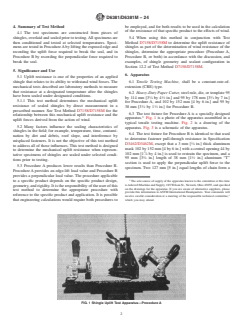
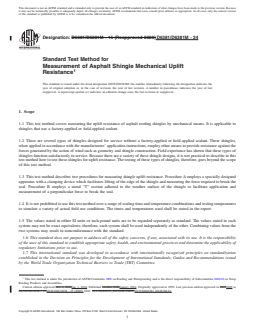
apparatus. Fig. 1 is a photo of the apparatus assembled in a
uplift forces derived from the action of wind.
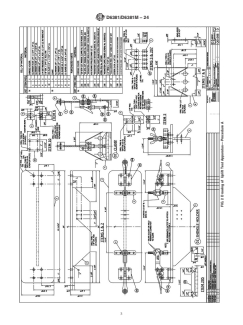
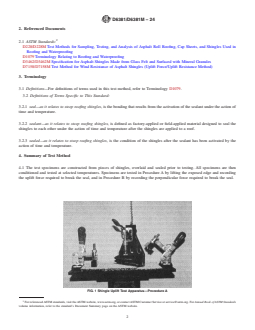
typical tensile testing machine. Fig. 2 is a drawing of the
5.2 Many factors influence the sealing characteristics of
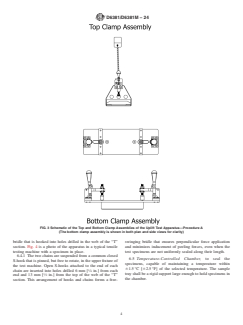
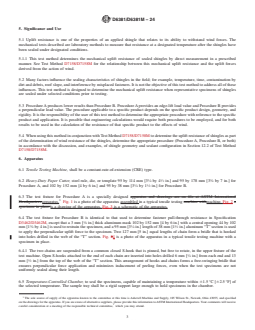
apparatus. Fig. 3 is a schematic of the apparatus.
shingles in the field; for example, temperature, time, contami-
6.4 The test fixture for Procedure B is identical to that used
nation by dirt and debris, roof slope, and interference by
to determine fastener pull-through resistance in Specification
misplaced fasteners. It is not the objective of this test method
D3462/D3462M, except that a 3 mm [ ⁄8 in.] thick aluminum
to address all of these influences. This test method is designed
mask 102 by 152 mm [4 by 6 in.] with a central opening 44 by
to determine the mechanical uplift resistance when represen-
102 mm [1 ⁄4 by 4 in.] is used to restrain the specimen, and a
tative specimens of shingles are sealed under selected condi-
3 1
95 mm [3 ⁄4 in.] length of 38 mm [1 ⁄2 in.] aluminum “T”
tions prior to testing.
section is used to apply the perpendicular uplift force to the
5.3 Procedure A produces lower results than Procedure B.
specimen. Two 127 mm [5 in.] equal lengths of chain form a
Procedure A provides an edge-lift load value and Procedure B
provides a perpendicular load value. The procedure applicable
to a specific product depends on the specific product design,
The sole source of supply of the apparatus known to the committee at this time
is Ashcraft Machine and Supply, 185 Wilson St., Newark, Ohio 43055, and specified
geometry, and rigidity. It is the responsibility of the user of this
on the drawings for the apparatus. If you are aware of alternative suppliers, please
test method to determine the appropriate procedure with
provide this information to ASTM International Headquarters. Your comments will
reference to the specific product and application. It is possible 1
receive careful consideration at a meeting of the responsible technical committee,
that engineering calculations would require both procedures to which you may attend.
FIG. 1 Shingle Uplift Test Apparatus—Procedure A
D6381/D6381M − 24
FIG. 2 Drawing of Uplift Test Apparatus—Procedure A
D6381/D6381M − 24
FIG. 3 Schematic of the Top and Bottom Clamp Assemblies of the Uplift Test Apparatus—Procedure A
(The bottom clamp assembly is shown in both plan and side views for clarity)
bridle that is hooked into holes drilled in the web of the “T” swinging bridle that ensures perpendicular force application
section. Fig. 4 is a photo of the apparatus in a typical tensile
and minimizes inducement of peeling forces, even when the
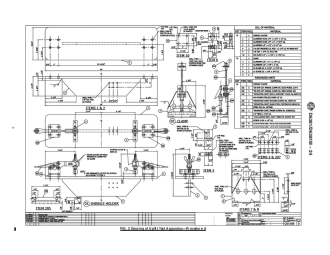
testing machine with a specimen in place.
test specimens are not uniformly sealed along their length.
6.4.1 The two chains are suspended from a common closed
6.5 Temperature-Controlled Chamber, to seal the
S-hook that is pinned, but free to rotate, in the upper fixture of
specimens, capable of maintaining a temperature within
the test machine. Open S-hooks attached to the end of each
1 61.5 °C [62.5 °F] of the selected temperature. The sample
chain are inserted into holes drilled 6 mm [ ⁄4 in.] from each
1 tray shall be a rigid support large enough to hold specimens in
end and 13 mm [ ⁄2 in.] from the top of the web of the “T”
the chamber.
section. This arrangement of hooks and chains forms a free-
D6381/D6381M − 24
FIG. 4 Shingle Uplift Test Apparatus—Procedure B
6.6 Temperature-Controlled Test Chamber, capable of con- factory-applied sealant is 50 %, then the sealant shall cover
trol within 61.5 °C [62.5 °F] which shall be used when 50 % of the width of the test specimen.
testing the specimens at other than room temperature.
7.4.1 For a specimen representing field-applied sealant, for
example, if the sealant is in a dot pattern then the same dot size
7. Specimen Preparation
and pattern shall be used on the laboratory-prepared specimen,
7.1 Samples for testing shall be selected in accordance with following the manufacturer’s application instructions.
the method specified in the sampling section of Test Methods
7.5 In Procedure A, a specimen consists of a bottom piece
D228/D228M. The test shall consist of ten specimens per test
3 3
95 by 178 mm [3 ⁄4 by 7 in.] and a top piece 95 by 114 mm [3 ⁄4
condition, as described in the following paragraphs.
by 4 ⁄2 in.], both cut from one shingle as shown in Fig. 5(a) for
7.2 Specimens taken from the sample of shingles shall be
single-layer shingles or Fig. 5(b) for multi-layer shingles. For
representative of the typical geometry (area), thickness
multi-layer shingles that do not have a single-layer area from
(caliper), and contamination level (back surface particles, and
which to cut the top piece, cut the top piece at the point of the
so forth) of the adhesive in the lot of material being investi-
fewest layers. Longer or shorter specimens are not prohibited
gated.
provided both clamps secure the specimen when it is aligned in
the test fixture. The length of the specimens shall be deter-
7.3 When using Procedure A, insertion of the test apparatus
mined for proper alignment in the fixture. Dimensional toler-
can be a problem for cases where the sealant is brittle and weak
ances are 63 mm [6 ⁄8 in.] on the width of the specimen.
or where it is applied close to the leading edge of the shingle.
For these and other such cases where normal insertion of the
7.6 In Procedure B, a specimen consists of a bottom piece
top clamp of the apparatus is a concern, an alternate technique
102 by 15
...
This document is not an ASTM standard and is intended only to provide the user of an ASTM standard an indication of what changes have been made to the previous version. Because
it may not be technically possible to adequately depict all changes accurately, ASTM recommends that users consult prior editions as appropriate. In all cases only the current version
of the standard as published by ASTM is to be considered the official document.
Designation: D6381/D6381M − 15 (Reapproved 2020) D6381/D6381M − 24
Standard Test Method for
Measurement of Asphalt Shingle Mechanical Uplift
Resistance
This standard is issued under the fixed designation D6381/D6381M; the number immediately following the designation indicates the
year of original adoption or, in the case of revision, the year of last revision. A number in parentheses indicates the year of last
reapproval. A superscript epsilon (´) indicates an editorial change since the last revision or reapproval.
1. Scope
1.1 This test method covers measuring the uplift resistance of asphalt roofing shingles by mechanical means. It is applicable to
shingles that use a factory-applied or field-applied sealant.
1.2 There are several types of shingles designed for service without a factory-applied or field-applied sealant. These shingles,
when applied in accordance with the manufacturers’ application instructions, employ other means to provide resistance against the
forces generated by the action of wind such as geometry and shingle construction. Field experience has shown that these types of
shingles function satisfactorily in service. Because there are a variety of these shingle designs, it is not practical to describe in this
test method how to test these shingles for uplift resistance. The testing of these types of shingles, therefore, goes beyond the scope
of this test method.
1.3 This test method describes two procedures for measuring shingle uplift resistance. Procedure A employs a specially designed
apparatus with a clamping device which facilitates lifting of the edge of the shingle and measuring the force required to break the
seal. Procedure B employs a metal “T” section adhered to the weather surface of the shingle to facilitate application and
measurement of a perpendicular force to break the seal.
1.4 It is not prohibited to use this test method over a range of sealing time and temperature combinations and testing temperatures
to simulate a variety of actual field use conditions. The times and temperatures used shall be stated in the report.
1.5 The values stated in either SI units or inch-pound units are to be regarded separately as standard. The values stated in each
system may not be exact equivalents; therefore, each system shall be used independently of the other. Combining values from the
two systems may result in nonconformance with the standard.
1.6 This standard does not purport to address all of the safety concerns, if any, associated with its use. It is the responsibility
of the user of this standard to establish appropriate safety, health, and environmental practices and determine the applicability of
regulatory limitations prior to use.
1.7 This international standard was developed in accordance with internationally recognized principles on standardization
established in the Decision on Principles for the Development of International Standards, Guides and Recommendations issued
by the World Trade Organization Technical Barriers to Trade (TBT) Committee.
This test method is under the jurisdiction of ASTM Committee D08 on Roofing and Waterproofing and is the direct responsibility of Subcommittee D08.02 on Steep
Roofing Products and Assemblies.
Current edition approved Oct. 1, 2020Jan. 1, 2024. Published October 2020January 2024. Originally approved in 1999. Last previous edition approved in 20152020 as
D6381/D6381M – 15.D6381/D6381M – 15 (2020). DOI: 10.1520/D6381_D6381M-15R20.10.1520/D6381_D6381M-24.
Copyright © ASTM International, 100 Barr Harbor Drive, PO Box C700, West Conshohocken, PA 19428-2959. United States
D6381/D6381M − 24
2. Referenced Documents
2.1 ASTM Standards:
D228/D228M Test Methods for Sampling, Testing, and Analysis of Asphalt Roll Roofing, Cap Sheets, and Shingles Used in
Roofing and Waterproofing
D1079 Terminology Relating to Roofing and Waterproofing
D3462/D3462M Specification for Asphalt Shingles Made from Glass Felt and Surfaced with Mineral Granules
D7158/D7158M Test Method for Wind Resistance of Asphalt Shingles (Uplift Force/Uplift Resistance Method)
3. Terminology
3.1 Definitions—For definitions of terms used in this test method, refer to Terminology D1079.
3.2 Definitions of Terms Specific to This Standard:
3.2.1 seal—as it relates to steep roofing shingles, is the bonding that results from the activation of the sealant under the action of
time and temperature.
3.2.2 sealant—as it relates to steep roofing shingles, is defined as factory-applied or field-applied material designed to seal the
shingles to each other under the action of time and temperature after the shingles are applied to a roof.
3.2.3 sealed—as it relates to steep roofing shingles, is the condition of the shingles after the sealant has been activated by the
action of time and temperature.
4. Summary of Test Method
4.1 The test specimens are constructed from pieces of shingles, overlaid and sealed prior to testing. All specimens are then
conditioned and tested at selected temperatures. Specimens are tested in Procedure A by lifting the exposed edge and recording
the uplift force required to break the seal, and in Procedure B by recording the perpendicular force required to break the seal.
FIG. 1 Shingle Uplift Test Apparatus—Procedure A
For referenced ASTM standards, visit the ASTM website, www.astm.org, or contact ASTM Customer Service at service@astm.org. For Annual Book of ASTM Standards
volume information, refer to the standard’s Document Summary page on the ASTM website.
D6381/D6381M − 24
5. Significance and Use
5.1 Uplift resistance is one of the properties of an applied shingle that relates to its ability to withstand wind forces. The
mechanical tests described are laboratory methods to measure that resistance at a designated temperature after the shingles have
been sealed under designated conditions.
5.1.1 This test method determines the mechanical uplift resistance of sealed shingles by direct measurement in a prescribed
manner. See Test Method D7158/D7158M for the relationship between this mechanical uplift resistance and the uplift forces
derived from the action of wind.
5.2 Many factors influence the sealing characteristics of shingles in the field; for example, temperature, time, contamination by
dirt and debris, roof slope, and interference by misplaced fasteners. It is not the objective of this test method to address all of these
influences. This test method is designed to determine the mechanical uplift resistance when representative specimens of shingles
are sealed under selected conditions prior to testing.
5.3 Procedure A produces lower results than Procedure B. Procedure A provides an edge-lift load value and Procedure B provides
a perpendicular load value. The procedure applicable to a specific product depends on the specific product design, geometry, and
rigidity. It is the responsibility of the user of this test method to determine the appropriate procedure with reference to the specific
product and application. It is possible that engineering calculations would require both procedures to be employed, and for both
results to be used in the calculation of the resistance of that specific product to the effects of wind.
5.4 When using this method in conjunction with Test Method D7158/D7158M to determine the uplift resistance of shingles as part
of the determination of wind resistance of the shingles, determine the appropriate procedure (Procedure A, Procedure B, or both)
in accordance with the discussion, and examples, of shingle geometry and sealant configuration in Section 12.2 of Test Method
D7158/D7158M.
6. Apparatus
6.1 Tensile Testing Machine, shall be a constant-rate-of-extension (CRE) type.
3 1 3
6.2 Heavy-Duty Paper Cutter, steel rule, die, or template 95 by 114 mm [3 ⁄4 by 4 ⁄2 in.] and 95 by 178 mm [3 ⁄4 by 7 in.] for
3 1
Procedure A, and 102 by 152 mm [4 by 6 in.] and 95 by 38 mm [3 ⁄4 by 1 ⁄2 in.] for Procedure B.
6.3 The test fixture for Procedure A is a specially designed apparatus and drawings are on file at ASTM International
Headquarters.apparatus. Fig. 1 is a photo of the apparatus assembled in a typical tensile testing machine withmachine. Fig. 2 a
specimen in place.is a drawing of the apparatus. Fig. 3 is a schematic of the apparatus.
6.4 The test fixture for Procedure B is identical to that used to determine fastener pull-through resistance in Specification
D3462/D3462M, except that a 3 mm [ ⁄8 in.] thick aluminum mask 102 by 152 mm [4 by 6 in.] with a central opening 44 by 102
3 3 1
mm [1 ⁄4 by 4 in.] is used to restrain the specimen, and a 95 mm [3 ⁄4 in.] length of 38 mm [1 ⁄2 in.] aluminum “T” section is used
to apply the perpendicular uplift force to the specimen. Two 127 mm [5 in.] equal lengths of chain form a bridle that is hooked
into holes drilled in the web of the “T” section. Fig. 24 is a photo of the apparatus in a typical tensile testing machine with a
specimen in place.
6.4.1 The two chains are suspended from a common closed S-hook that is pinned, but free to rotate, in the upper fixture of the
test machine. Open S-hooks attached to the end of each chain are inserted into holes drilled 6 mm [ ⁄4 in.] from each end and 13
mm [ ⁄2 in.] from the top of the web of the “T” section. This arrangement of hooks and chains forms a free-swinging bridle that
ensures perpendicular force application and minimizes inducement of peeling forces, even when the test specimens are not
uniformly sealed along their length.
6.5 Temperature-Controlled Chamber, to seal the specimens, capable of maintaining a temperature within 61.5 °C [62.5 °F] of
the selected temperature. The sample tray shall be a rigid support large enough to hold specimens in the chamber.
The sole source of supply of the apparatus known to the committee at this time is Ashcraft Machine and Supply, 185 Wilson St., Newark, Ohio 43055, and specified
on the drawings for the apparatus. If you are aware of alternative suppliers, please provide this information to ASTM International Headquarters. Your comments will receive
careful consideration at a meeting of the responsible technical committee, which you may attend.
D6381/D6381M − 24
FIG. 2 Drawing of Uplift Test Apparatus—Procedure A
D6381/D6381M − 24
FIG. 3 Schematic of the Top and Bottom Clamp Assemblies of the Uplift Test Apparatus—Procedure A
(The bottom clamp assembly is shown in both plan and side views for clarity)
6.6 Temperature-Controlled Test Chamber, capable of control within 61.5 °C [62.5 °F] which shall be used when testing the
specimens at other than room temperature.
7. Specimen Preparation
7.1 Samples for testing shall be selected in accordance with the method specified in the sampling section of Test Methods
D228/D228M. The test shall consist of ten specimens per test condition, as described in the following paragraphs.
7.2 Specimens taken from the sample of shingles shall be representative of the typical geometry (area), thickness (caliper), and
contamination level (back surface particles, and so forth) of the adhesive in the lot of material being investigated.
D6381/D6381M − 24
FIG. 24 Shingle Uplift Test Apparatus—Procedure B
7.3 When using Procedure A, insertion of the test apparatus can be a problem for cases where the sealant is brittle and weak or
where it is applied close to the leading edge of the shingle. For these and other such cases where normal insertion of the top clamp
of the apparatus is a concern, an alternate technique of attaching to the top of the specimen is not prohibited (see 7.7.3).
7.4 The sealant present on the specimen to be tested shall be proportionally representative of the sealant present on the shingle
when it is installed in the field. For example, if the linear coverage of the sealant geometry on a shingle using factory-applied
sealant is 50 %, then the sealant shall cover 50 % of the width of the test specimen.
7.4.1 For a specimen representing field-applied sealant, for example, if the sealant is in a dot pattern then the same dot size and
pattern shall be used on the laboratory-prepared specimen, following the manufacturer’s application instructions.
3 3
7.5 In Procedure A, a specimen consists of a bottom piece 95 by 178 mm [3 ⁄4 by 7 in.] and a top piece 95 by 114 mm [3 ⁄4 by
4 ⁄2 in.], both cut from one shingle as shown in Fig. 35a(a) for single-layer shingles or Fig. 35b(b) for multi-layer shingles. For
multi-layer shingles that do not have a single-layer area from which to cut the top piece, cut the top piece at the point of the fewest
layers. Longer or shorter specimens are not prohibited provided both clamps secure the specimen when it is aligned in the test
fixture. The length of the specimens shall be determined for proper alignment in the fixture. Dimensional tolerances are 63 mm
[6 ⁄8 in.] on the width of the specimen.
1 3
7.6 In Procedure B, a specim
...