


IEC 60794-4-30:2021
(Main)Optical fibre cables - Part 4-30: Aerial optical cables along electrical power lines - Family specification for optical phase conductor (OPPC) optical cables
General Information
- Abstract
IEC 60794-4-30:2021 specifies the optical fibre, cable elements, cable construction requirements, main requirements for installation and operating conditions, cable design characteristics and test for OPPC (optical phase conductor), used for carrying current as well as communication and data transmission. The corresponding environmental declaration can be built according to IEC TR 62839-1. The OPPC is a substitute for a conventional phase bare conductor containing optical fibres. Usually, the fibres are embedded loosely in protective buffer tubes. To fulfil mechanical and electrical requirements, an armouring of one or more layers with aluminium, aluminium alloy, and aluminium clad steel, galvanized steel or a mixture of them is helically stranded.
- Status
- Published
- Publication Date
- 06-Apr-2021
- Technical Committee
- SC 86A - Fibres and cables
- Current Stage
- PPUB - Publication issued
- Start Date
- 07-Apr-2021
- Completion Date
- 16-Apr-2021
Buy Documents
IEC 60794-4-30:2021 - Optical fibre cables - Part 4-30: Aerial optical cables along electrical power lines - Family specification for optical phase conductor (OPPC) optical cables Released:4/7/2021
Overview
IEC 60794-4-30:2021 is an international standard developed by the International Electrotechnical Commission (IEC) that specifies requirements for aerial optical phase conductor (OPPC) optical cables. These cables are designed to be installed along electrical power lines, serving a dual purpose: carrying electrical current as conductors in power distribution systems, and simultaneously enabling communication and data transmission through embedded optical fibres. The standard provides comprehensive guidelines on optical fibres, cable elements, construction methods, installation essentials, operating conditions, performance characteristics, and testing protocols specific to OPPC cables.
The OPPC cable is an innovative substitute for conventional bare phase conductors by integrating optical fibres within the conductor itself. This integration enhances grid communication capabilities without the need for separate communication infrastructure, facilitating smarter, more efficient power transmission networks. The fibres are typically housed in loosely embedded protective buffer tubes, while mechanical and electrical reliability is ensured via robust armouring with aluminium-based and steel materials helically stranded around the core.
Key Topics
- Optical Fibre Specifications: Defines the type and attenuation characteristics of optical fibres suitable for OPPC cables, ensuring high performance for data transmission.
- Cable Elements and Construction: Details protective buffer tubes, cable layering, and armouring materials such as aluminium, aluminium alloy, aluminium-clad steel, and galvanized steel, ensuring mechanical strength and corrosion resistance.
- Installation Requirements: Prescribes installation conditions along power lines, including methods to prevent cable twisting, compatibility with fittings, and closure installation.
- Operating Conditions: Covers environmental and electrical operating parameters for safe and efficient cable function.
- Cable Design Characteristics: Specifies mechanical and electrical properties including tensile strength, electrical resistance, stress-strain limits, and temperature cycling resilience.
- Testing Protocols: Establishes a comprehensive battery of tests-type tests, factory acceptance tests, routine tests-covering tensile performance, aeolian vibration, creep, breaking strength, twist resistance, water penetration, lightning resistance, and short-circuit effects.
- Quality Assurance and Marking: Guidelines to ensure consistent manufacturing quality, with standards for marking, packaging, and traceability.
- Environmental Considerations: Encourages building an environmental declaration as per IEC TR 62839-1 to assess the ecological impact of OPPC cables.
Applications
IEC 60794-4-30:2021 is critical for manufacturers, designers, and utilities involved in deploying aerial optical fibre cables along power transmission infrastructure. The practical applications include:
- Power Grid Modernization: Enables Power Utilities to integrate communication capabilities directly within power lines, supporting smart grid initiatives, real-time monitoring, and remote control.
- Data Transmission Overlays: Facilitates high-speed data and telecommunication services co-installed with electrical transmission lines, reducing infrastructure costs.
- Improved Infrastructure Reliability: OPPC cables meet rigorous mechanical and environmental testing requirements to endure harsh outdoor conditions and electrical stresses, thereby enhancing power system reliability.
- Installation Efficiency: Detailed guidance on fittings and cable suspension reduces installation risks and downtime.
- Multi-layer Armoured Protection: Enables use in regions exposed to varying weather, corrosion potential, and mechanical strain.
Related Standards
- IEC 60793-1-40: Optical fibres - Part 1-40: Attenuation measurement, complementing fibre testing requirements.
- IEC 60104: Aluminium-magnesium-silicon alloy wire specifications used in overhead conductors, related to armouring materials.
- IEC 60468: Resistivity measurement methods for metallic materials, supporting electrical property testing.
- IEC TR 62839-1: Guidelines for environmental declarations associated with optical fibre cables.
This family of IEC standards harmonizes to ensure OPPC cables meet international performance benchmarks, supporting interoperability, safety, and environmental responsibility.
By adhering to IEC 60794-4-30:2021, industry stakeholders ensure aerial optical phase conductor cables are designed, installed, and tested to rigorous international criteria, enabling dual current and communication transmission functionality essential for advancing modern power networks.
Buy Documents
IEC 60794-4-30:2021 - Optical fibre cables - Part 4-30: Aerial optical cables along electrical power lines - Family specification for optical phase conductor (OPPC) optical cables Released:4/7/2021
Get Certified
Connect with accredited certification bodies for this standard

TL 9000 QuEST Forum
Telecommunications quality management system.

ANCE
Mexican certification and testing association.

Intertek Slovenia
Intertek testing, inspection, and certification services in Slovenia.
Sponsored listings
Frequently Asked Questions
IEC 60794-4-30:2021 is a standard published by the International Electrotechnical Commission (IEC). Its full title is "Optical fibre cables - Part 4-30: Aerial optical cables along electrical power lines - Family specification for optical phase conductor (OPPC) optical cables". This standard covers: IEC 60794-4-30:2021 specifies the optical fibre, cable elements, cable construction requirements, main requirements for installation and operating conditions, cable design characteristics and test for OPPC (optical phase conductor), used for carrying current as well as communication and data transmission. The corresponding environmental declaration can be built according to IEC TR 62839-1. The OPPC is a substitute for a conventional phase bare conductor containing optical fibres. Usually, the fibres are embedded loosely in protective buffer tubes. To fulfil mechanical and electrical requirements, an armouring of one or more layers with aluminium, aluminium alloy, and aluminium clad steel, galvanized steel or a mixture of them is helically stranded.
IEC 60794-4-30:2021 specifies the optical fibre, cable elements, cable construction requirements, main requirements for installation and operating conditions, cable design characteristics and test for OPPC (optical phase conductor), used for carrying current as well as communication and data transmission. The corresponding environmental declaration can be built according to IEC TR 62839-1. The OPPC is a substitute for a conventional phase bare conductor containing optical fibres. Usually, the fibres are embedded loosely in protective buffer tubes. To fulfil mechanical and electrical requirements, an armouring of one or more layers with aluminium, aluminium alloy, and aluminium clad steel, galvanized steel or a mixture of them is helically stranded.
IEC 60794-4-30:2021 is classified under the following ICS (International Classification for Standards) categories: 33.180.10 - Fibres and cables. The ICS classification helps identify the subject area and facilitates finding related standards.
IEC 60794-4-30:2021 is available in PDF format for immediate download after purchase. The document can be added to your cart and obtained through the secure checkout process. Digital delivery ensures instant access to the complete standard document.
Standards Content (Sample)
IEC 60794-4-30 ®
Edition 1.0 2021-04
INTERNATIONAL
STANDARD
NORME
INTERNATIONALE
Optical fibre cables –
Part 4-30: Aerial optical cables along electrical power lines – Family
specification for optical phase conductor (OPPC) optical cables
Câbles à fibres optiques –
Partie 4-30: Câbles optiques aériens le long des lignes électriques de
puissance – Spécification de famille pour les conducteurs de phase à fibres
optiques (OPPC)
All rights reserved. Unless otherwise specified, no part of this publication may be reproduced or utilized in any form
or by any means, electronic or mechanical, including photocopying and microfilm, without permission in writing from
either IEC or IEC's member National Committee in the country of the requester. If you have any questions about IEC
copyright or have an enquiry about obtaining additional rights to this publication, please contact the address below or
your local IEC member National Committee for further information.
Droits de reproduction réservés. Sauf indication contraire, aucune partie de cette publication ne peut être reproduite ni
utilisée sous quelque forme que ce soit et par aucun procédé, électronique ou mécanique, y compris la photocopie et
les microfilms, sans l'accord écrit de l'IEC ou du Comité national de l'IEC du pays du demandeur. Si vous avez des
questions sur le copyright de l'IEC ou si vous désirez obtenir des droits supplémentaires sur cette publication, utilisez
les coordonnées ci-après ou contactez le Comité national de l'IEC de votre pays de résidence.
IEC Central Office Tel.: +41 22 919 02 11
3, rue de Varembé info@iec.ch
CH-1211 Geneva 20 www.iec.ch
Switzerland
About the IEC
The International Electrotechnical Commission (IEC) is the leading global organization that prepares and publishes
International Standards for all electrical, electronic and related technologies.
About IEC publications
The technical content of IEC publications is kept under constant review by the IEC. Please make sure that you have the
latest edition, a corrigendum or an amendment might have been published.
IEC publications search - webstore.iec.ch/advsearchform IEC online collection - oc.iec.ch
The advanced search enables to find IEC publications by a Discover our powerful search engine and read freely all the
variety of criteria (reference number, text, technical publications previews. With a subscription you will always have
committee, …). It also gives information on projects, replaced access to up to date content tailored to your needs.
and withdrawn publications.
Electropedia - www.electropedia.org
IEC Just Published - webstore.iec.ch/justpublished
The world's leading online dictionary on electrotechnology,
Stay up to date on all new IEC publications. Just Published
containing more than 22 000 terminological entries in English
details all new publications released. Available online and once
and French, with equivalent terms in 18 additional languages.
a month by email.
Also known as the International Electrotechnical Vocabulary
(IEV) online.
IEC Customer Service Centre - webstore.iec.ch/csc
If you wish to give us your feedback on this publication or need
further assistance, please contact the Customer Service
Centre: sales@iec.ch.
A propos de l'IEC
La Commission Electrotechnique Internationale (IEC) est la première organisation mondiale qui élabore et publie des
Normes internationales pour tout ce qui a trait à l'électricité, à l'électronique et aux technologies apparentées.
A propos des publications IEC
Le contenu technique des publications IEC est constamment revu. Veuillez vous assurer que vous possédez l’édition la
plus récente, un corrigendum ou amendement peut avoir été publié.
Recherche de publications IEC - Découvrez notre puissant moteur de recherche et consultez
webstore.iec.ch/advsearchform gratuitement tous les aperçus des publications. Avec un
La recherche avancée permet de trouver des publications IEC abonnement, vous aurez toujours accès à un contenu à jour
en utilisant différents critères (numéro de référence, texte, adapté à vos besoins.
comité d’études, …). Elle donne aussi des informations sur les
projets et les publications remplacées ou retirées. Electropedia - www.electropedia.org
Le premier dictionnaire d'électrotechnologie en ligne au monde,
IEC Just Published - webstore.iec.ch/justpublished
avec plus de 22 000 articles terminologiques en anglais et en
Restez informé sur les nouvelles publications IEC. Just
français, ainsi que les termes équivalents dans 16 langues
Published détaille les nouvelles publications parues.
additionnelles. Egalement appelé Vocabulaire
Disponible en ligne et une fois par mois par email.
Electrotechnique International (IEV) en ligne.
Service Clients - webstore.iec.ch/csc
Si vous désirez nous donner des commentaires sur cette
publication ou si vous avez des questions contactez-nous:
sales@iec.ch.
IEC online collection - oc.iec.ch
IEC 60794-4-30 ®
Edition 1.0 2021-04
INTERNATIONAL
STANDARD
NORME
INTERNATIONALE
Optical fibre cables –
Part 4-30: Aerial optical cables along electrical power lines – Family
specification for optical phase conductor (OPPC) optical cables
Câbles à fibres optiques –
Partie 4-30: Câbles optiques aériens le long des lignes électriques de
puissance – Spécification de famille pour les conducteurs de phase à fibres
optiques (OPPC)
INTERNATIONAL
ELECTROTECHNICAL
COMMISSION
COMMISSION
ELECTROTECHNIQUE
INTERNATIONALE
ICS 33.180.10 ISBN 978-2-8322-9594-6
– 2 – IEC 60794-4-30:2021 © IEC 2021
CONTENTS
FOREWORD . 4
1 Scope . 6
2 Normative references . 6
3 Terms and definitions . 7
4 Symbols and abbreviated terms . 8
5 Optical fibre . 8
6 Cable elements . 8
7 Cable construction . 8
7.1 General . 8
7.2 Anti-corrosion . 9
8 Main installation requirements . 9
8.1 General . 9
8.2 Installation methods and conditions of OPPC . 9
8.3 Installation methods and conditions of the fittings . 10
8.4 Anti-twist . 10
8.5 Installation methods and conditions of the closure . 10
9 Cable design characteristics . 10
10 Cable tests . 11
10.1 General . 11
10.2 Classification of tests . 12
10.2.1 Type test . 12
10.2.2 Factory acceptance tests . 12
10.2.3 Routine tests . 12
10.3 Tensile performance . 12
10.4 Aeolian vibration . 13
10.5 Creep. 13
10.6 Sheave test . 13
10.7 Stress-strain test . 14
10.8 Breaking strength . 14
10.9 Twist . 14
10.9.1 General . 14
10.9.2 Set up . 14
10.9.3 Procedure . 15
10.10 Temperature cycling . 15
10.11 Water penetration (applicable to optical unit only) . 15
10.12 Compound flow (drip) (applicable to optical unit only) . 15
10.13 Fibre coating compatibility . 15
10.14 Salt spray corrosion test . 16
10.15 DC resistance test . 16
10.16 Short-circuit . 16
10.17 Lightning test . 17
10.18 Current-temperature test . 17
10.19 Fitting compatibility . 17
11 Packaging and marking . 18
12 Quality assurance . 18
Annex A (informative) Typical OPPC structures . 19
Annex B (informative) Installation example . 20
Annex C (informative) Packaging and marking . 22
Bibliography . 23
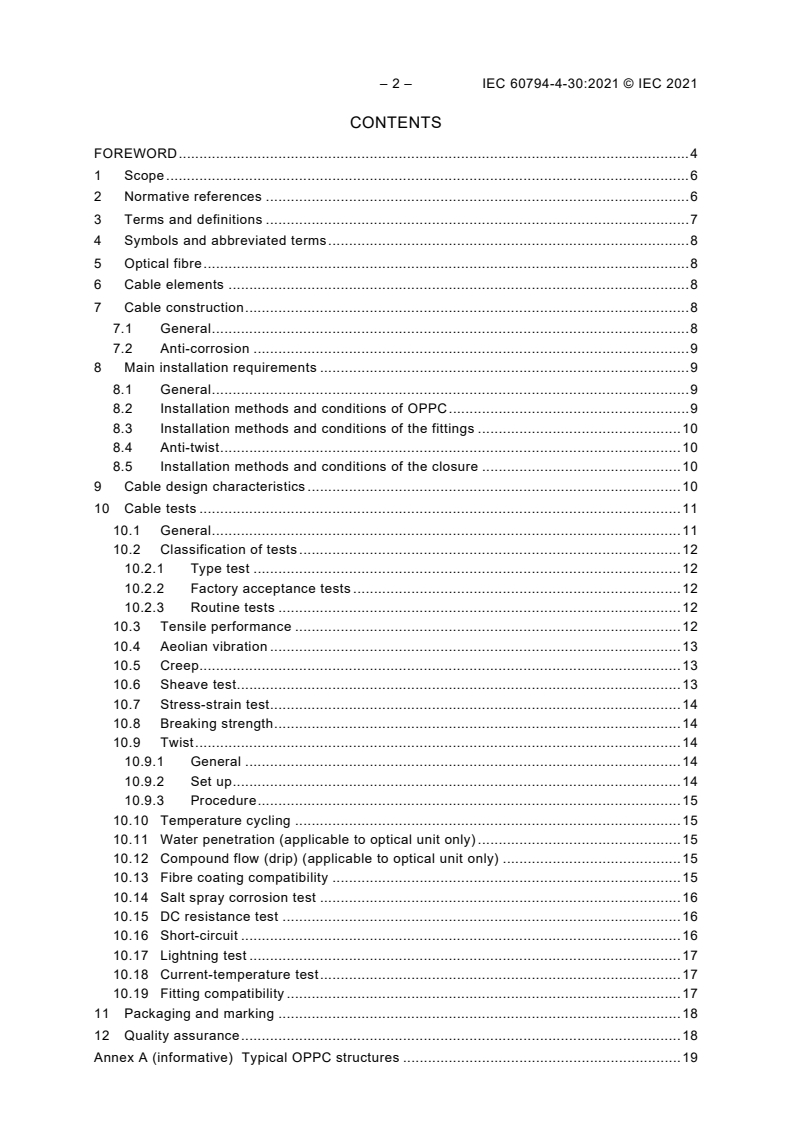
Figure A.1 – OPPC example structures . 19
Figure B.1 – OPPC’s closure installation example with support method . 20
Figure B.2 – OPPC’s closure installation example with suspension method . 20
Figure B.3 – Closure installation example with dead-end . 21
Figure B.4 – Closure installation example with a suspension clamp . 21
Table 1 – Cable design characteristics . 10
Table 2 – Lightning test conditions and parameters to be informed in the test report . 17
– 4 – IEC 60794-4-30:2021 © IEC 2021
INTERNATIONAL ELECTROTECHNICAL COMMISSION
____________
OPTICAL FIBRE CABLES –
Part 4-30: Aerial optical cables along electrical power lines – Family
specification for optical phase conductor (OPPC) optical cables
FOREWORD
1) The International Electrotechnical Commission (IEC) is a worldwide organization for standardization comprising
all national electrotechnical committees (IEC National Committees). The object of IEC is to promote international
co-operation on all questions concerning standardization in the electrical and electronic fields. To this end and
in addition to other activities, IEC publishes International Standards, Technical Specifications, Technical Reports,
Publicly Available Specifications (PAS) and Guides (hereafter referred to as "IEC Publication(s)"). Their
preparation is entrusted to technical committees; any IEC National Committee interested in the subject dealt with
may participate in this preparatory work. International, governmental and non-governmental organizations liaising
with the IEC also participate in this preparation. IEC collaborates closely with the International Organization for
Standardization (ISO) in accordance with conditions determined by agreement between the two organizations.
2) The formal decisions or agreements of IEC on technical matters express, as nearly as possible, an international
consensus of opinion on the relevant subjects since each technical committee has representation from all
interested IEC National Committees.
3) IEC Publications have the form of recommendations for international use and are accepted by IEC National
Committees in that sense. While all reasonable efforts are made to ensure that the technical content of IEC
Publications is accurate, IEC cannot be held responsible for the way in which they are used or for any
misinterpretation by any end user.
4) In order to promote international uniformity, IEC National Committees undertake to apply IEC Publications
transparently to the maximum extent possible in their national and regional publications. Any divergence between
any IEC Publication and the corresponding national or regional publication shall be clearly indicated in the latter.
5) IEC itself does not provide any attestation of conformity. Independent certification bodies provide conformity
assessment services and, in some areas, access to IEC marks of conformity. IEC is not responsible for any
services carried out by independent certification bodies.
6) All users should ensure that they have the latest edition of this publication.
7) No liability shall attach to IEC or its directors, employees, servants or agents including individual experts and
members of its technical committees and IEC National Committees for any personal injury, property damage or
other damage of any nature whatsoever, whether direct or indirect, or for costs (including legal fees) and
expenses arising out of the publication, use of, or reliance upon, this IEC Publication or any other IEC Publications.
8) Attention is drawn to the Normative references cited in this publication. Use of the referenced publications is
indispensable for the correct application of this publication.
9) Attention is drawn to the possibility that some of the elements of this IEC Publication may be the subject of patent
rights. IEC shall not be held responsible for identifying any or all such patent rights.
IEC 60794-4-30 has been prepared by subcommittee 86A: Fibres and cables, of IEC technical
committee 86: Fibre optics. It is an International Standard.
The text of this International Standard is based on the following documents:
FDIS Report on voting
86A/2079/FDIS 86A/2088/RVD
Full information on the voting for its approval can be found in the report on voting indicated in
the above table.
The language used for the development of this International Standard is English.
This document was drafted in accordance with ISO/IEC Directives, Part 2, and developed in
accordance with ISO/IEC Directives, Part 1 and ISO/IEC Directives, IEC Supplement, available
at www.iec.ch/members_experts/refdocs. The main document types developed by IEC are
described in greater detail at www.iec.ch/standardsdev/publications.
A list of all parts in the IEC 60794 series, published under the general title Optical fibre cables,
can be found on the IEC website.
The committee has decided that the contents of this document will remain unchanged until the
stability date indicated on the IEC website under "http://webstore.iec.ch" in the data related to
the specific document. At this date, the document will be
• reconfirmed,
• withdrawn,
• replaced by a revised edition, or
• amended.
– 6 – IEC 60794-4-30:2021 © IEC 2021
OPTICAL FIBRE CABLES –
Part 4-30: Aerial optical cables along electrical power lines – Family
specification for optical phase conductor (OPPC) optical cables
1 Scope
This part of IEC 60794, which is a family specification, specifies the optical fibre, cable elements,
cable construction requirements, main requirements for installation and operating conditions,
cable design characteristics and test for OPPC (optical phase conductor), used for carrying
current as well as communication and data transmission. The corresponding environmental
declaration can be built according to IEC TR 62839-1.
The OPPC is a substitute for a conventional phase bare conductor containing optical fibres.
Usually, the fibres are embedded loosely in protective buffer tubes. To fulfil mechanical and
electrical requirements, an armouring of one or more layers with aluminium, aluminium alloy,
and aluminium clad steel, galvanized steel or a mixture of them is helically stranded.
2 Normative references
The following documents are referred to in the text in such a way that some or all of their content
constitutes requirements of this document. For dated references, only the edition cited applies.
For undated references, the latest edition of the referenced document (including any
amendments) applies.
IEC 60104, Aluminium-magnesium-silicon alloy wire for overhead line conductors
IEC 60468, Method of measurement of resistivity of metallic materials
IEC 60793-1-40, Optical fibres – Part 1-40: Attenuation measurement methods
IEC 60793-2-50, Optical fibres – Part 2-50: Product specifications – Sectional specifications for
class B single-mode fibres
IEC 60794-1-1, Optical fibre cables – Part 1-1: Generic specification – General
IEC 60794-1-21, Optical fibre cables – Part 1-21: Generic specification – Basic optical cable
test procedures – Mechanical test methods
IEC 60794-1-22, Optical fibre cables – Part 1-22: Generic specification – Basic optical cable
test procedures – Environmental test methods
IEC 60794-1-24, Optical fibre cables – Part 1-24: Generic specification – Basic optical cable
test procedures – Electrical test methods
IEC 60794-1-219, Optical fibre cables – Part 1-219: Generic specification – Basic optical cable
test procedures – Material compatibility test, method F19
____________
Under preparation. Stage at the time of publication: IEC/CCDV 60794-1-219:2020.
IEC 60794-4, Optical fibre cables – Part 4: Sectional specification – Aerial optical cables along
electrical power lines
IEC 60888, Zinc-coated steel wires for stranded conductors
IEC 60889, Hard-drawn aluminium wire for overhead line conductors
IEC 61089, Round wire concentric lay overhead electrical stranded conductors
IEC 61232, Aluminium-clad steel wires for electrical purposes
IEC 61394, Overhead lines – Requirements for greases for aluminium, aluminium alloy and
steel bare conductors
IEC 61395, Overhead electrical conductors – Creep test procedures for stranded conductors
IEC 62219, Overhead electrical conductors – Formed wire, concentric lay, stranded conductors
3 Terms and definitions
For the purposes of this document, the terms and definitions given in IEC 60794-1-1,
IEC 60794-4 and the following apply.
ISO and IEC maintain terminological databases for use in standardization at the following
addresses:
• IEC Electropedia: available at http://www.electropedia.org/
• ISO Online browsing platform: available at http://www.iso.org/obp
3.1
optical phase conductor
OPPC
metallic hybrid optical cable that has the dual performance functions of a conventional phase
conductor with telecommunication capabilities
3.2
current-carrying capacity
calculated value for the maximum continuous current carrying capacity without degradation of
of any element of the cable under specific conditions
Note 1 to entry: The value depends on various parameters (e.g. solar, wind speed, ambient temperature).
Note 2 to entry: If the construction contains an aluminium tube or aluminium slotted core, these elements are
considered conductive parts.
3.3
operation temperature
steady state temperature the OPPC cable will reach during standard operation at the current
carrying capacity, without degradation of any element’s performance requirements under
specific conditions
3.4
emergency condition temperature
maximum temperature the OPPC cable will reach during emergency operation for a limited
period of time during cable’s lifetime without degradation of any element’s performance
requirements
– 8 – IEC 60794-4-30:2021 © IEC 2021
3.5
emergency condition duration
OPPC cable’s accumulated period running in emergency temperature mode within its lifetime
4 Symbols and abbreviated terms
For the purpose of this document, the abbreviated terms given in IEC 60794-1-1 apply.
5 Optical fibre
Single-mode optical fibres which comply with the relevant part of IEC 60793-2-50 shall be used.
Fibres other than those specified above can be used, if agreed between the customer and
supplier. The cabled fibre shall conform to IEC 60794-4.
Any reflective discontinuity specified with the optical return loss measurement shall be greater
than 55,0 dB.
The test method best suited to provide the functional requirements shall be in accordance with
IEC 60793-1-40.
6 Cable elements
Refer to the relevant parts of the IEC 60794-4 series.
a) The optical fibre unit(s) shall house the optical fibres and protect them from damage due to
environmental or mechanical forces such as longitudinal compression, crushing, bending,
twisting, tensile stress, long- and short-term heat effects caused by environmental variations
or by atmospheric discharges.
b) For loose tube constructions, one or more primary coated fibres or optical elements are
packaged loosely in a tube construction, with a suitable water-blocking system. The tube(s)
may be fabricated from stainless steel, aluminium, aluminium alloy, or a heat-resistant non-
metallic material. The tube diameter shall be agreed between the customer and the supplier.
c) When used in the tube, the filling compound shall not flow at the cable maximum operation
temperature or freeze at its lowest operation temperature.
d) The wire types can be from one or more of the following standards and their mechanical
properties shall comply, before stranding, with the requirements of the standards indicated:
– aluminium alloy according to IEC 60104;
– zinc-coated steel according to IEC 60888;
– hard-drawn aluminum according to IEC 60889;
– aluminum-clad steel according to IEC 61232.
Other wire types can be considered; the requirements shall be agreed between customer
and manufacturer.
e) Each cable element shall be compatible.
7 Cable construction
7.1 General
Refer to the relevant parts of the IEC 60794-4 series.
An OPPC consists of bearing elements, conductor elements and optical fibre units. Usually,
optical fibre units are within the bearing elements.
If the OPPC includes several tubes with fibres, it shall be possible to identify each individual
fibre and tube throughout the length of the cable. Use of an appropriate colour code is an
accepted methodology.
The stranded wires may be round according to IEC 61089 or have other cross-sectional shapes,
i.e. trapezoidal or z-form according to IEC 62219. Unless other requirements are mutually
agreed between the customer and the supplier, after stranding, the OPPC shall comply with
IEC 61089 or IEC 62219.
Typical OPPC structures with outer round wires are shown in Annex A. Formed wires can also
be used.
7.2 Anti-corrosion
In order to reduce the risk of corrosion, the wires on the strands and the tube protecting the
fibre optic cable element(s) should be composed of the same metal or be coated with grease.
If used, the type and the amount of grease to be applied shall be in accordance with IEC 61394
or shall be defined between the supplier and the customer.
8 Main installation requirements
8.1 General
Installation and operating conditions shall be agreed between customer and supplier. It is
recommended that a detailed study of the field conditions and technical information/support is
provided by the supplier or third party expert prior to the agreement. Installation of OPPC shall
match with its fittings and closures. Annex B gives some typical installation examples.
8.2 Installation methods and conditions of OPPC
Installation of OPPC is generally the same as that of overhead power lines conductors by
tension method and according to the manufacturer’s recommended procedure, slack stringing
is forbidden. Bending radius of OPPC for installation should be specified, and MIT shall be
according to Table 1. Installation mainly include how to
a) pay off and string OPPC;
b) install the fittings and adjust the sag of OPPC.
OPPC shall be extended from the cable reel by towing rope when deploying, and kept a loosen
arc all during the whole process. Special fixture or strained preformed line should be used when
the line is tightened. The sag and tension should be calculated according to the type, span and
weather condition of OPPC. The maximum pay off tension should not exceed MIT, and no extra
bending of the fibre which would damage or lower performance is allowed. The tensile force
should be less than 20 % of RTS when stringing, and the diameter of pay off guide wheels
should be at least 40 times of the OPPC diameter. V-groove type bull wheels should not be
used. The conductor reel should be placed in a straight line with tensioner to avoid conductor
binding. The use of neoprene, urethane lined dollies, sheaves, rollers or blocks, etc. is preferred.
Installation shall not be in bad weather such as wind and thunderstorm, and the installation
temperature should not be lower than −10 °C. OPPC installation should avoid surface friction
or damage. When replacing the OPPC, the new line should be connected with the old line and
anti-twisting measures taken. The old line should be used as a traction line, and the old fittings
should be removed after installation.
– 10 – IEC 60794-4-30:2021 © IEC 2021
8.3 Installation methods and conditions of the fittings
The OPPC cable shall be terminated with suitable fittings relevant to the type of cable.
The fittings used on OPPC shall be matched mechanically and electrically. Factors affecting
the interaction between fitting and OPPC are as follows.
a) If the fittings are too small, the contact pressure of the fitting will exceed the designed
compression limit of OPPC.
b) If the fittings are too large, there will not be enough contact area, and the fitting will not have
enough tension and grip strength. Also, the contact current transmission capacity between
fittings and OPPC will be deficient affecting the current transmission capacity.
After fittings installation, the OPPC should be jointed, and the end of the OPPC should be
sealed properly if not equipped with closure immediately.
The type of fittings shall be approved between the customer and the supplier. The fittings
compatibility shall comply with 10.19.
8.4 Anti-twist
An anti-twist device can be used during installation. When a supplier does not recommend an
anti-rotation device to be used during installation, they shall provide the maximum stringing
tension.
8.5 Installation methods and conditions of the closure
Installation shall not be in bad weather such as strong wind and high humidity and thunderstorm,
and the installation temperature should not be lower than −10 °C. If the closure is fixed by pillar
insulators, the fixture should be specially designed and processed according to the structure of
the connecting rod. If the closure is suspended by hanging insulators, the fitting type and
specification of the connecting with the tower pole should be specified.
The electrical connection of the closure should use a jumper connection. The closure fibre count
capacity should match that of the OPPC cable. Appropriate robust fixings should be used to
install the closure, and proper sealing measures should be taken to prevent moisture or water
from entering the closure.
9 Cable design characteristics
Table 1 is a summary of important cable characteristics. Other characteristics may be agreed
between customer and supplier.
Table 1 – Cable design characteristics
Ref Design characteristic Units
1 Number and type of fibres —
2 Conductor type —
3 Construction —
4 Overall diameter mm
5 Calculated cross-sectional area of wires concerning calculation of RTS
mm
6 Calculated mass kg/km
7 RTS (rated tensile strength) kN
8 Modulus of elasticity MPa
–1
9 Coefficient of linear expansion
K
Ref Design characteristic Units
10 DC resistance at 20°C Ω/km
11 Current-carrying capacity at specific condition A
12 Fault-current capacity I t
kA ·s
13 Lightning resistance Coulomb
14 MAT (maximum allowable tension) kN
15 MIT (maximum installation tension) kN
16 Allowable temperature range for storage and installation °C
17 Operation temperature °C
18 Emergency condition temperature °C
19 Emergency condition duration hours or days
20 Maximum long term strain % length
21 MAOC (maximum allowable ovality) %
10 Cable tests
10.1 General
The parameters specified in this document may be affected by measurement uncertainty arising
either from measurement errors or calibration errors. Acceptance criteria shall be interpreted
with respect to this consideration. For some tests specified in this document, the objective is
"no change in attenuation". The total uncertainty of measurement for this document shall be
less than or equal to 0,05 dB for attenuation or 0,05 dB/km for attenuation coefficient.
By agreement between customer and supplier, minor deviation from this limit may be accepted
at some low frequency, for example less than 10 % of the fibres. However, for mechanical tests,
no deviation in excess of 0,15 dB shall be accepted.
The optical attenuation measurements may be performed by using an optical time domain
reflectometer (OTDR) or a light source and a power meter, depending on the typology of the
cable test. If, for a specific test, distribution damage is envisioned for the fibres, the attenuation
shall be measured in terms of dB/km, while for localised damage the attenuation shall be
measured in terms of dB. Nevertheless, uncertainty measurement issues due to short fibre
length shall be considered when using OTDR.
If optical attenuation is monitored during the test, a permanent or temporary increase in optical
attenuation greater than 0,15 dB or 0,15 dB/km of test fibre, at 1 550 nm nominal wavelength,
shall constitute failure. Attenuation measurement procedure should be in accordance with
IEC 60793-1-40. Different monitoring wavelength can be used if agreed between customer and
supplier.
Specimens for the tests shall be taken from the supplier in advance of the tests. The number of
fibres tested shall be representative of the cable design according to fibre sampling indicated
in IEC 60794-1-1. Different sampling can be agreed between customer and supplier. Whenever
possible, an equal number of fibres shall be selected from each optical fibre unit.
– 12 – IEC 60794-4-30:2021 © IEC 2021
10.2 Classification of tests
10.2.1 Type test
A full verification of an OPPC design includes all type tests and characteristics specified in
Table 1 except for creep and salt spray corrosion which are optional, unless required by
customers. Type tests are required to be made before supplying a type of cable covered by this
document on a general commercial basis in order to demonstrate satisfactory performance
characteristics to meet the intended application and shall be carried out on a cable length which
meets the requirements of the relevant routine tests. These tests are of such a nature that, after
they have been made, they do not need be repeated unless significant changes are made in
the cable material, design or type of manufacturing process which might change the
performance characteristics. If some tests are to be repeated, they shall be agreed between
the customer and the supplier.
10.2.2 Factory acceptance tests
Factory acceptance tests are made on samples of completed cable, or components taken from
a completed cable adequate to verify that the finished product meets the design specifications.
Scope and incidence of sample tests, if required, shall be agreed between the customer and
the supplier. Failure of a test specimen to comply with any one of the requirements of this
document shall constitute grounds for rejection of the lot represented by the specimen. If any
lot is so rejected, the supplier shall have the right to test, only once, all individual drums of
cables in the lot and submit those which meet the requirements for acceptance.
10.2.3 Routine tests
Routine tests are made on 10 % of all production cable lengths to demonstrate their integrity in
Table 1. Failure of a test specimen to comply with any one of the requirements of this document
shall constitute grounds for rejection of the lot represented by the specimen. If any lot is so
rejected, the supplier shall have the right to test, only once, all individual drums of cables in the
lot and submit those which meet the requirements for acceptance.
10.3 Tensile performance
The cable shall be tested in accordance with IEC 60794-1-21, method E1, with the following
conditions:
– the cable shall be terminated with end fittings relevant to the type of cable considered;
– minimum length of cable under tension shall be 25 m, and control length shall be in
accordance with IEC 61089 (other sample control lengths may be used if mutually agreed
between the customer and the supplier);
– tension shall be steadily increased to MAT and released back to initial load. Higher values
may be used if mutually agreed between customer and supplier.
On completion of the test, the following criteria shall be considered:
– the attenuation increase shall comply with the general optical requirements stated in 10.1
up to reaching MAT; exceeding the values shall constitute failure;
– fibre strain;
– a strain margin lower than the specified value up to MAT shall constitute failure.
10.4 Aeolian vibration
The resistance of the cable to aeolian vibration shall be tested in accordance with
IEC 60794-1-21, method E19, with the following conditions:
– mechanical tension on cable during the test shall be maintained at 20 % ± 5 % of its RTS
value;
– the total cable length shall be enough to permit extension of the ends and for the equipment
to be attached for optical measurements;
– the optical attenuation shall be monitored along the whole test and attenuation of the optical
link shall be registered at regular intervals;
– suspension and dead end fittings approved for the OPPC cable shall be used to attach the
sample to the test equipment;
– number of vibration cycles to apply shall be minimum 10 000 000;
– the maximum allowable ovality (MAOC) of the optical unit shall be 10 % of the measured
diameter of the optical unit.
Any visible damage to the cable or to any of the cable elements shall be considered as a test
failure.
The change in attenuation of monitored optical fibres shall comply with the general optical
requirements stated in 10.1. The baseline for optical attenuation measurement shall be taken
at the beginning of test and after tensioning the cable.
10.5 Creep
If requested, this test is carried out according to IEC 61395, with the following conditions:
– OPPC shall be tensioned to 20 % RTS level and maintained within the limits specified in
IEC 61395 during the test;
– temperature of evaluation: 20 °C.
Additional or different conditions of evaluation can be applied if agreed between customer and
supplier. Test loads of interest for line designers could go from 10 % up to 25 % RTS.
The cable shall be terminated with fittings approved for the type of cable. Optionally, all wires
can be held together with epoxy resin in order to lock all elements during the test. No optical
measurements are required when performing this test. The predicted creep at one year and
10 years should be calculated using the equation fitted to the experimental 1 000 h creep results.
10.6 Sheave test
The test shall be performed to verify that the installation of the OPPC will not damage or
degrade their performance. The cable shall be tested in accordance with method E18B of
IEC 60794-1-21 with the following conditions:
– the minimum length of cable shall be 15 m; minimum length of cable bent under tension
shall be 2 m;
– the diameter of sheave shall not be larger than 40 times the cable diameter, but if agreed
with the cable manufacturer, smaller pulleys can be used;
– the moving speed of cable during test shall be up to 0,6 m/s.
Subject the cable sample to a minimum of 20 moving cycles with a bending angle of 45° ± 15°.
Mechanical tension on cable during the test shall be maintained at MIT or 15 % of RTS,
whichever is larger. Inspect the tension level and adjust, if necessary, each 5 cycles during the
test.
– 14 – IEC 60794-4-30:2021 © IEC 2021
The total cable length shall be enough to permit optical measurements and shall be terminated
with suitable fittings relevant to the OPPC cable.
The cable ends are prepared in order to allow transmitted optical power measurement in several
fibres during the test. The minimum test length of the optical fibres shall be 100 m. If necessary,
fibres shall be loop-spliced at the cable ends. Terminations should be positioned in such a way
to assure that movement of cable during cycles does not affect optical measurements. The
baseline for optical attenuation measurement shall be taken before tensioning the cable.
The ovality of OPPC and the ovality of optical unit(s) shall be calculated after the test. The
maximum allowable ovality of the cable (MAOC) and optical unit(s) shall not be greater than
10 %.
The change in attenuation of monitored optical fibres shall comply with the general optical
requirements stated in 10.1.
Under visual inspection, the OPPC section subjected to sheave test shall not show cracking,
bird caging, nor breaking of any element.
10.7 Stress-strain test
The cable shall be tested in accordance with IEC 61089 with the following conditions:
– the cable shall be terminated with end fittings relevant to the type of cable considered;
– sample length under tension shall be minimum 16 m and control length shall be in
accordance with IEC 61089 (other sample control lengths may be used if mutually agreed
between the customer and the supplier);
– the loading shall be in accordance with IEC 61089 or the value agreed between customer
and manufacturer.
During the test, there shall be no visual damage to the cable. All stress and strain values
obtained during the test and agreed upon by the supplier and the customer shall be recorded.
If required, the tensile performance test may be carried out simultaneously with this test.
10.8 Breaking strength
The cable shall withstand, without fracture of any wire, not less than 95 % of RTS. The cable
shall be terminated with suitable fittings relevant to the type of cable.
This test can be carried out with or without optical measurements.
10.9 Twist
10.9.1 General
When a twist test on the cable is required, there shall be no visual damage to the cable. The
change in attenuation of the monitored optical fibres shall comply with the general optical
requirements stated in 10.1.
10.9.2 Set up
A cable sample shall be installed in a suitable tension test machine. The length of the cable
between the dead-end assemblies shall be at least 10 m. One dead-end assembly shall be
attached to the tensioning device through a load cell. The other dead-end assembly shall be
attached to the stationery end of the test machine through a swivel. The OPPC cable sample
shall be fixed onto itself so as to allow rotational motion without disturbing the optical splice
arrangement. The cable sample shall be terminated beyond both dead-end assemblies such
that the optical fibres could not move relative to the cable.
10.9.3 Procedure
The cable shall be tensioned to 20 % of the cable RTS. The cable sample shall be rotated in
the direction of the lay of the strands for two and one-half turns. This number of turns shall be
calculated from the test cable length to produce a total twist in the cable of 90° per meter. The
cable sample shall be rotated back to the initial position. The cable shall be rotated in the
reverse direction to the lay of the strands. The cable sample shall be again reversed in direction
to rotate the cable sample to its original position. This constitutes one torsion cycle.
This cycle shall be repeated a second time. The signals from the optical power meters and the
cable tension as measured by the load cell shall be monitored continuously and recorded every
10 s using a digital data logging system.
10.10 Temperature cycling
The cable shall be tested in accordance with the combined test procedure of the method
specified in IEC 60794-1-22, method F1, with the following conditions:
– minimum length of cable to test: 500 m;
– low temperature extreme: −40 °C;
– high temperature extreme: +80 °C;
– precondition the sample: at 23 °C, before test, a minimum of 16 h;
– soak time at extreme temperatures: minimum 16 h;
– number of cycles: 2;
– temperature change rate: ≤ 40 °C/h.
Different conditions of evaluation can be applied if agreed between customer and supplier. Any
permanent increase in attenuation in optical fibres
...