

Your Guide to Modern Chemical Analysis Standards: Ensuring Quality, Productivity, and Compliance
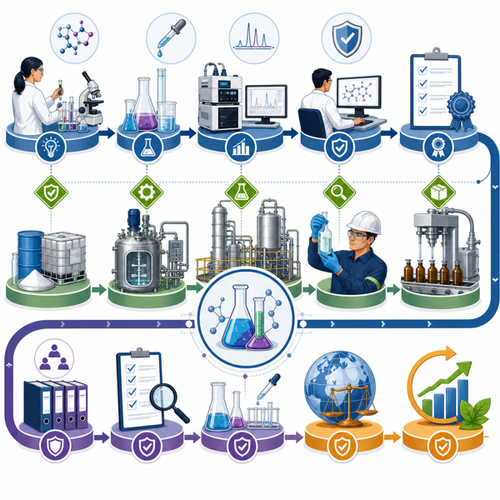
Chemical analysis forms the backbone of progress in the chemical technology sector, supporting advancements from pharmaceuticals to manufacturing and environmental protection. For businesses striving to remain at the forefront of innovation, integrating internationally recognized standards in chemical analysis is not just a regulatory checkbox—but a strategic imperative. In a world where the margin for error continually narrows, standards foster greater consistency, traceability, and reproducibility in laboratory and industrial settings. This guide walks you through four crucial ISO standards that underpin best practices in surface chemical analysis and the quality assessment of propylene oxide. Exploring both the technical requirements and the tangible business benefits, you’ll see why these standards are now essential for any organization leveraging new technologies and scaling operations globally.
Overview / Introduction
Chemical analysis lies at the heart of ensuring product integrity, environmental safety, and technological innovation across multiple industries. As global supply chains grow more complex and regulatory requirements tighten, businesses rely heavily on rigorous, well-defined standards to manage quality, safety, and efficiency. In recent years, the chemical technology sector has seen a surge in new materials, analytical techniques, and digital tools—all of which demand robust frameworks for measurement, calibration, and reporting.
International standards in chemical analysis provide this foundation. They enable organizations to:
- Achieve reliable, repeatable measurement results
- Comply with environmental and industrial regulations
- Respond quickly to technological change
- Enhance productivity, security, and scalability in operations
This article gives you an accessible, in-depth look at four of the most significant ISO standards in modern chemical analysis:
- ISO 16666:2025 – Principles and requirements for total reflection X-ray fluorescence (TXRF) analysis
- ISO 25095-1:2026 – Gas chromatography for propylene oxide purity and trace impurity determination
- ISO 25095-2:2026 – Liquid chromatography for aldehyde determination in propylene oxide
- ISO/TR 4550:2026 – State-of-the-art analytical approaches for bacteria and biofilm surface analysis
Whether your focus is industrial-scale processing, advanced surface chemistry, or cutting-edge biotechnological research, understanding and implementing these standards is the key to futureproofing your operation and maximizing both compliance and competitive advantage.
Detailed Standards Coverage
ISO 16666:2025 - Principles for Total Reflection X-ray Fluorescence (TXRF) Analysis
Surface chemical analysis — Total reflection X-ray fluorescence — Principles and general requirements
What this standard covers: ISO 16666:2025 lays out the physical principles and instrument specifications necessary for performing total reflection X-ray fluorescence analysis (TXRF), a powerful multi-element micro-analysis technique. TXRF enables simultaneous qualitative and quantitative determination of elemental content in minimal sample volumes, with applications in semiconductor manufacturing, environmental monitoring, biomedical analysis, and more.
Key requirements and specifications:
- Instrumental configurations and conditions: Includes details on the fixed glancing angles below the critical angle for total reflection, plus requirements for beam conditioning, sample carriers (reflectors), detectors, sample stages, and control units.
- Calibration and quality control: Specifies best practices for instrument calibration, quality checks, and verification of measurement results.
- Spectra analysis and reporting: Provides standardized protocols for spectra processing, deconvolution, reporting, and data traceability.
- Procedures for both qualitative and quantitative analysis, including the use of internal standards and traceability in TXRF measurements.
Who needs to comply:
- Laboratories conducting surface analysis and elemental quantification (e.g., materials R&D, environmental testing)
- Semiconductor and electronics manufacturers
- Researchers in analytical chemistry, physics, and nanotechnology
Practical implications: Implementing ISO 16666:2025 assures that your TXRF setup—including sample prep, instrument calibration, and data analysis—aligns with the global benchmark for accuracy and reliability. As industries increasingly rely on high-precision, micro-analytical methods, this standard is vital for scaling laboratory productivity and ensuring data reliability across sites and over time.
Key highlights:
- Defines optimized spectrometer setup and measurement procedures for TXRF
- Ensures reliable, repeatable detection of trace element concentrations
- Suitable for rapid, minimally destructive screening of flat and film-like samples
Access the full standard:View ISO 16666:2025 on iTeh Standards
ISO 25095-1:2026 - Gas Chromatography for Propylene Oxide
Propylene oxide for industrial use — Part 1: Determination of purity and trace impurities by gas chromatography
What this standard covers: ISO 25095-1:2026 specifies methods for determining both the purity and the level of trace impurities in propylene oxide—a key intermediate for polyurethanes and propylene glycols—using gas chromatography (GC). It covers various production routes, including co-oxidation and chlorohydrin processes, focusing on samples with high purity (≥ 99.70%) and ultra-low impurity contents (≥ 0.0003%).
Key requirements and specifications:
- Test setup using specified GC equipment with flame ionization detection (FID)
- Guidance on sample handling, preparation, and internal standards
- Calculation and application of correction factors for quantification
- Reporting frameworks for repeatability and reproducibility
Who needs to comply:
- Chemical producers and processors of propylene oxide and derivatives
- Quality assurance laboratories in the chemical manufacturing sector
- Regulatory compliance auditors and certification bodies
Practical implications: By following ISO 25095-1:2026, industry players ensure that their products meet global purity specifications, reducing the risk of downstream process failures or regulatory breaches. The method codifies not only how to analyze for quality, but also how to express, document, and communicate results in a universally accepted manner.
Key highlights:
- Supports multiple propylene oxide production methods
- Enables ultra-precise impurity detection in high-purity chemicals
- Standardizes chromatographic reporting and corrective calculations
Access the full standard:View ISO 25095-1:2026 on iTeh Standards
ISO 25095-2:2026 - Liquid Chromatography for Aldehyde Determination
Propylene oxide for industrial use — Part 2: Determination of aldehydes by liquid chromatography
What this standard covers: ISO 25095-2:2026 provides the method for determining the content of key aldehydes—formaldehyde, acetaldehyde, propionaldehyde, and acrolein—in propylene oxide using high-performance liquid chromatography (HPLC). It precisely covers the quantification range of 0.5 mg/kg to 100 mg/kg, ensuring accurate monitoring of these reactive, potentially hazardous impurities.
Key requirements and specifications:
- Prescribes reaction of samples with 2,4-dinitrophenylhydrazine (DNPH) under controlled conditions
- Details chromatographic conditions for separation and quantification (detector choice, calibration, blank prep, and controls)
- Emphasizes safety protocols and repeatability
Who needs to comply:
- Industrial producers and quality control labs handling propylene oxide
- Production engineers overseeing process safety and feedstock validation
- Chemical analysts and laboratory technicians in regulated environments
Practical implications: Monitoring and minimizing aldehyde content is central to both product quality and workplace safety. ISO 25095-2:2026 offers a best-practice framework, enabling laboratories to certify compliance with health, safety, and environmental standards, and to report results in line with global customer and regulator expectations.
Key highlights:
- Covers all key aldehyde contaminants in propylene oxide production
- Enhances operator safety through best-in-class handling and testing guidance
- Yields precise, reproducible analytical results
Access the full standard:View ISO 25095-2:2026 on iTeh Standards
ISO/TR 4550:2026 - Surface Chemical Analysis of Bacteria and Biofilms
Surface chemical analysis — Surface chemical analysis of bacteria and biofilms
What this standard covers: ISO/TR 4550:2026 acts as a comprehensive technical report, mapping the current state-of-the-art in physical and analytical measurements of bacteria, biofilms, and their interactions with antimicrobials. It guides users through analytical methods from X-ray photoelectron spectroscopy (XPS) and Fourier-transform infrared spectroscopy (FTIR), to Raman and advanced imaging, explaining strengths, limitations, and practical applications for each.
Key requirements and specifications:
- Overviews of leading-edge analytical techniques, including: Cryo-XPS, FTIR, secondary ion mass spectrometry (SIMS), X-ray fluorescence (XRF), and super-resolution microscopy
- Recommendations for sample preparation and data interpretation
- Reliability and reproducibility guidelines
- Insights into future standardization needs for antimicrobial research and biofilm analysis
Who needs to comply:
- Biotech, medtech, and pharmaceutical labs studying microbial surfaces
- Environmental testing and healthcare-related surface analysis labs
- Developers and researchers in antimicrobial resistance (AMR) and medical device hygiene
Practical implications: With growing focus on biofilm-related health risks and material corrosion, ISO/TR 4550:2026 steers organizations toward integrated, cutting-edge methodologies for analyzing microbial surfaces. Its guidance underpins innovation in medical device safety, new drug development, hygiene monitoring, and industrial biofilm management.
Key highlights:
- Synopsizes current and emerging techniques for bacterial and biofilm analysis
- Provides actionable guidance on method selection and implementation
- Informs future ISO standard development for microbiological surface chemistry
Access the full standard:View ISO/TR 4550:2026 on iTeh Standards
Industry Impact & Compliance
The adoption of these chemical analysis standards delivers significant benefits for both large organizations and small-to-medium enterprises (SMEs) across industries as varied as chemicals, electronics, life sciences, and environmental management. By aligning operations with ISO methodologies, organizations can:
- Increase productivity: Standardized approaches reduce trial-and-error in calibration, result analysis, and process validation, thus optimizing resources and lowering operational costs.
- Enhance security: Consistent testing protocols minimize the risk of contamination, cross-reaction, or false readings—critical for regulated sectors and high-value supply chains.
- Accelerate scalability: Harmonized procedures facilitate technology transfer, cross-border collaborations, and the expansion of laboratory capacity.
- Demonstrate regulatory compliance: Adhering to ISO standards satisfies both local and international regulatory frameworks, streamlining product approvals and reducing the risk of costly recalls or shutdowns.
- Enable competitive differentiation: Certification to recognized standards builds customer and partner trust, underscoring the organization’s commitment to quality and innovation.
Without robust standards, organizations face greater variability in data, higher chances of test errors, and increased vulnerability to quality lapses — all of which can disrupt scaling and innovation.
Implementation Guidance
Modern standards like ISO 16666:2025 and the ISO 25095 series are crafted to be practical and actionable—even as they reflect the state-of-the-art in chemical analysis. Here’s how organizations can integrate these protocols into daily operations and major innovation projects:
Gap Assessment:
- Conduct thorough reviews of existing processes, equipment, and documentation against the standard’s requirements.
- Identify gaps in calibration, sample prep, reporting, or safety protocols.
Training & Development:
- Invest in staff training—ensuring analysts, technicians, and managers understand both the technical and compliance aspects of each standard.
- Utilize vendor and industry workshops, online courses, and ISO’s own educational resources.
Standard Operating Procedures (SOPs):
- Develop or update SOPs to integrate prescribed methods and reporting formats.
- Ensure procedures are readily accessible, regularly reviewed, and tailored to your specific workflow.
Technological Upgrades:
- Reassess instrumentation and analytical tools: are current GC, HPLC, TXRF, or spectroscopy units capable of meeting the new requirements?
- Schedule necessary upgrades, calibrations, or new acquisitions as part of a continuous improvement plan.
Quality Management Integration:
- Align chemical analysis standards with broader quality frameworks (ISO 9001, ISO 17025, etc.) for end-to-end process traceability.
- Establish regular audits and feedback loops to ensure ongoing compliance and process optimization.
Best Practices:
- Maintain up-to-date reference libraries and analytical standards for calibration.
- Document all results using the specific reporting templates outlined in each standard.
- Foster a culture of continuous improvement and encourage feedback from operational staff.
- Leverage digital tools for result management, regulatory filing, and internal knowledge sharing.
Implementation Resources:
- iTeh Standards Platform – for access to the latest ISO, IEC, and national standards
- ISO and industry training modules
- Vendor application notes and implementation guides
Conclusion / Next Steps
Chemical analysis standards are more than technical documents—they are blueprints for operational excellence, global market access, and ongoing innovation. With accelerating technological change, compliance with standards like ISO 16666:2025, ISO 25095-1:2026, ISO 25095-2:2026, and ISO/TR 4550:2026 is your key to unlocking sustainable productivity, robust security, and seamless scalability.
Key takeaways:
- International chemical analysis standards ensure accurate, reliable, and universally accepted results
- Adopting new standards accelerates digital transformation, data integrity, and overall organizational agility
- Standards directly support regulatory compliance, market access, and customer confidence
Next steps for organizations:
- Review your current chemical analysis procedures against these standards
- Invest in staff training and equipment as needed
- Use resources like iTeh Standards to stay current and informed
- Implement or update SOPs to align with leading practices
Don’t leave your future to chance. Explore the full specifications, stay updated, and empower your team to achieve industry-leading performance through standards-driven chemical analysis.
Categories
- Latest News
- New Arrivals
- Generalities
- Services and Management
- Natural Sciences
- Health Care
- Environment
- Metrology and Measurement
- Testing
- Mechanical Systems
- Fluid Systems
- Manufacturing
- Energy and Heat
- Electrical Engineering
- Electronics
- Telecommunications
- Information Technology
- Image Technology
- Precision Mechanics
- Road Vehicles
- Railway Engineering
- Shipbuilding
- Aircraft and Space
- Materials Handling
- Packaging
- Textile and Leather
- Clothing
- Agriculture
- Food technology
- Chemical Technology
- Mining and Minerals
- Petroleum
- Metallurgy
- Wood technology
- Glass and Ceramics
- Rubber and Plastics
- Paper Technology
- Paint Industries
- Construction
- Civil Engineering
- Military Engineering
- Entertainment