


The Must-Know Standards for Bacteria-Eliminating Hand Disinfectants: Improving Hygiene and Safety
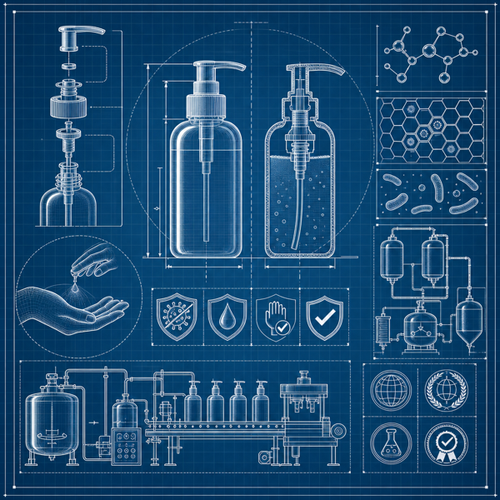
As concerns about infection control and public health escalate, the demand for effective hand hygiene solutions—both in industrial and domestic settings—has never been greater. Organizations dealing with the production, supply, or use of hand rubs and antimicrobial products must adhere to robust international standards to assure quality, performance, and legal compliance. In this guide, we’ll explore two foundational chemical technology standards—ASTM E2755-22 and ASTM E2897-22—that set requirements for evaluating the bacteria-eliminating effectiveness of hand disinfectants. Understanding and implementing these standards is critical for businesses aiming to enhance productivity, security, and scalability in an increasingly hygiene-conscious world.
Overview / Introduction
Hand hygiene is a central pillar in reducing the spread of infectious microorganisms. Especially in the wake of global health crises, both consumers and organizations are acutely aware of the need for reliable disinfectants in everyday life and high-stake environments like hospitals, food production, and public facilities. Standards such as those developed by ASTM International help ensure that chemical disinfectants—including hand rubs and topical antimicrobials—are both safe and effective.
This article demystifies the two most relevant standards for evaluating hand disinfectants:
- ASTM E2755-22: The gold standard for determining the bacteria-eliminating effectiveness of healthcare hand rubs on adult hands.
- ASTM E2897-22: A guidance document for assessing the efficacy of topical antimicrobial products, using ex vivo (non-living) porcine skin as a surrogate model.
You’ll gain a clear understanding of the scope, requirements, and real-world application of these standards, as well as actionable advice for implementation and compliance.
Detailed Standards Coverage
ASTM E2755-22 - Healthcare Hand Rub Bacteria-Elimination Test Method
Standard Test Method for Determining the Bacteria-Eliminating Effectiveness of Healthcare Personnel Hand Rub Formulations Using Hands of Adults
Scope and Purpose:
ASTM E2755-22 is the definitive test method for assessing how well hand rubs (including gels, antiseptics, sanitizers, sprays, foams, and wipes) eliminate bacteria from the hands of adult volunteers. This standard was developed to fill a need for a robust and practical alternative to previous methods, particularly in healthcare settings where rapid and repeated use of alcohol-based hand rubs is routine.
Key Requirements and Specifications:
- Measures effectiveness after a single application as well as multiple consecutive uses, simulating real workplace conditions.
- Utilizes experimentally contaminated hands—subjects’ hands are artificially inoculated with a controlled high-titer suspension of either Serratia marcescens (gram-negative) or Staphylococcus aureus (gram-positive).
- Focuses on dry application (hand rubs do not require water or rinsing), overcoming limitations in older standards.
- Data is compared with a reference control (e.g., 60% isopropanol) to ensure robustness and repeatability.
- All procedures must take place in a certified microbiological laboratory (bio-safety level 2), handled by trained personnel.
- Complies with FDA and international requirements on the use of human subjects for testing, including informed consent and proper decontamination.
- Includes detailed protocols for preparing bacterial inoculum, sampling, and data analysis.
Implementation and Target Users:
- Primarily intended for manufacturers of healthcare hand rubs, regulatory authorities, and quality control laboratories.
- Also valuable to suppliers in food production, hospitality, and public health institutions wishing to test or validate their products.
- Results support product claims, marketing, and regulatory submissions.
Notable Features:
- Allows evaluation after repeated applications to test for cumulative effects and potential build-up of non-volatile ingredients.
- Provides for flexibility in the choice of bacteria, reflecting varying microbial risks.
- Designed specifically for real-world relevance and accurate risk reduction.
Key highlights:
- Measures effectiveness of hand disinfectants in both single and repeated use
- Ensures results are robust, reproducible, and relevant to actual practice
- Mandatory for regulatory, marketing, or quality claims about product efficacy
Access the full standard:View ASTM E2755-22 on iTeh Standards
ASTM E2897-22 - Effectiveness Evaluation on Ex Vivo Porcine Skin
Standard Guide for Evaluation of the Effectiveness of Hand Hygiene Topical Antimicrobial Products using Ex Vivo Porcine Skin
Scope and Purpose:
ASTM E2897-22 outlines a safety-conscious, laboratory-based method for evaluating the antimicrobial effectiveness of hand hygiene products without using living human subjects. By substituting gamma-sterilized porcine skin—which closely replicates human skin in texture and properties—this standard delivers a high-throughput, cost-effective, and ethical solution for R&D, screening, and quality assurance.
Key Requirements and Specifications:
- Employs porcine skin as a surrogate for human skin, allowing controlled evaluation of potentially hazardous chemicals and conditions.
- Designed for in vitro (laboratory-only) use, making it suitable for early-stage product development and safety testing.
- Applies ‘cup scrub’ technique with suitable neutralizing fluids to accurately recover and quantify surviving bacteria.
- Compatible with both ‘leave-on’ (hand sanitizer) and ‘wash-off’ (hand soap) formulations.
- Activity is measured as the reduction in log number of bacteria, with comparisons made between treated and untreated surfaces.
- Allows flexibility in choosing test organisms tailored to the target risk or application.
Implementation and Target Users:
- Ideal for chemical product developers, R&D labs, safety officers, and manufacturers of hand hygiene products.
- Enables rapid screening of multiple formulations and product variations without regulatory hurdles of human testing.
- Particularly useful when testing with high-risk pathogens or under conditions unsuitable for volunteers.
Notable Features:
- Reduces cost and increases speed for product efficacy testing
- No exposure of human subjects—greater ethical and regulatory flexibility
- Enables simulation of many real-world conditions not feasible in other standardized tests
Key highlights:
- Safe, effective, and ethical model for efficacy testing
- Supports high-throughput product development and quality checks
- Extends applicability of disinfectant evaluation beyond real-world constraints
Access the full standard:View ASTM E2897-22 on iTeh Standards
Industry Impact & Compliance
Adhering to these standards is essential not only for meeting regulatory requirements but also for securing consumer trust in chemical disinfectant products. When businesses comply with ASTM E2755-22 and ASTM E2897-22:
- Regulatory Approval: Products can achieve acceptance by bodies like the FDA, WHO, and similar agencies worldwide.
- Market Access: Facilitates smoother entry into domestic and international markets through recognized, harmonized testing criteria.
- Consumer Safety: Minimizes risks of ineffective products, protecting public health and organizational reputation.
- Competitive Differentiation: Demonstrated compliance supports marketing claims and builds brand credibility.
- Operational Productivity: Reliable, effective products reduce hospital-acquired infections, sick days, and associated business disruptions.
- Risk Management: Reduces exposure to liability linked to failures in infection control and product misrepresentation.
Risks of Non-Compliance:
- Regulatory penalties, product recalls, or market withdrawals
- Damage to brand image and consumer trust
- Liability and legal challenges stemming from product-related outbreaks
- Increased internal costs for remediation and corrective action
Implementation Guidance
Common Steps for Adopting Hand Disinfectant Standards:
- Gap Analysis: Review current product development and quality assurance protocols to identify disparities with standard requirements.
- Training: Ensure staff are versed in microbiological safety, standard-specific procedures, and data interpretation.
- Facility Upgrades: Equip laboratories with required apparatus (incubators, colony counters, certified biosafety equipment, etc.).
- Documentation and SOPs: Develop or update Standard Operating Procedures (SOPs) to reflect standardized testing methods.
- Validation: Run pilot studies to verify your procedures match standard outcomes. Adjust as needed.
- Routine Monitoring: Implement regular product and process verification checks for ongoing compliance.
- Partner with Certified Labs: For organizations lacking in-house capacity, collaborating with accredited test facilities is strongly recommended.
Best Practices:
- Prioritize training in biosafety and handling of test organisms.
- Use reference controls for every test batch to ensure reliability of results.
- Maintain robust records for regulatory audits and continuous improvement.
- Utilize surrogate testing early in R&D to cut costs and reduce risk before entering human trials.
- Stay informed on updates to standards and emerging best practices.
Available Resources:
- Access standards documents and technical updates via iTeh Standards.
- Leverage online training modules from ASTM, WHO, and similar bodies.
- Engage with expert consultants for implementation support.
Conclusion / Next Steps
The adoption of internationally recognized hand disinfectant standards is now a non-negotiable requirement for businesses intent on ensuring safety, productivity, and growth. ASTM E2755-22 and ASTM E2897-22 empower organizations to validate and promote the effectiveness of hand rubs and antimicrobial products—key contributors to infection prevention and operational resilience in both industrial and domestic contexts.
Key Takeaways:
- These standards provide a scientifically rigorous foundation for product development, quality assurance, and regulatory compliance.
- Adoption increases consumer confidence, supports scaling and market expansion, and enhances workplace safety.
- Non-compliance carries tangible legal, reputational, and financial risks.
Recommendations:
- Review your organization’s current product testing protocols; benchmark them against ASTM E2755-22 and E2897-22.
- Access full standards via iTeh Standards to ensure thorough understanding and up-to-date compliance.
- Regularly train staff and upgrade facilities in line with evolving best practices.
Staying ahead in the hygiene and disinfection market requires more than meeting minimum regulatory thresholds—it means embracing the gold standard in chemical technology. Take action now to secure your business’s reputation, productivity, and future growth.
Categories
- Latest News
- New Arrivals
- Generalities
- Services and Management
- Natural Sciences
- Health Care
- Environment
- Metrology and Measurement
- Testing
- Mechanical Systems
- Fluid Systems
- Manufacturing
- Energy and Heat
- Electrical Engineering
- Electronics
- Telecommunications
- Information Technology
- Image Technology
- Precision Mechanics
- Road Vehicles
- Railway Engineering
- Shipbuilding
- Aircraft and Space
- Materials Handling
- Packaging
- Textile and Leather
- Clothing
- Agriculture
- Food technology
- Chemical Technology
- Mining and Minerals
- Petroleum
- Metallurgy
- Wood technology
- Glass and Ceramics
- Rubber and Plastics
- Paper Technology
- Paint Industries
- Construction
- Civil Engineering
- Military Engineering
- Entertainment