


Lifts and Escalators: Key Construction Standards for Safety, Accessibility, and Modernization
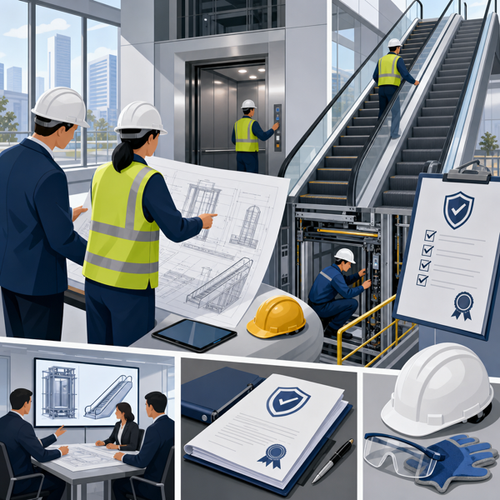
As modern cities grow vertically and public expectations for safety and accessibility rise, lifts and escalators have become critical to daily life—connecting homes, workplaces, hospitals, and transport hubs. Ensuring these systems are safe, reliable, and accessible is not only a legal responsibility for construction businesses but essential for scaling efficiency and creating inclusive environments. This article provides an in-depth overview of three of the most relevant international standards for lifts: SIST EN 81-1:1999/A2:2005, SIST EN 81-70:2018, and SIST EN 81-82:2026. Understanding and applying these widely recognized standards can accelerate productivity, reduce liability, and enhance the reputation of any organization involved in construction and facility management.
Overview / Introduction
Lifts (elevators) and escalators are foundational elements in the built environment, affecting everyone from children and older adults to people with mobility challenges. Given the complexity and frequency with which these systems are used, strict regulations and industry standards ensure safety, operational reliability, and universal access. The three European standards discussed in this article set benchmarks for:
- Safe design and installation of electric lifts
- Accessibility features for all users, including those with disabilities
- Modernization and improvement of existing installations
Readers will gain both technical and practical understanding of what these standards cover, who must apply them, and how conformance directly impacts user safety, legal compliance, and business scalability.
Detailed Standards Coverage
SIST EN 81-1:1999/A2:2005 – Safe Machinery and Pulley Spaces for Electric Lifts
Safety rules for the construction and installation of lifts – Part 1: Electric lifts – A2: Machinery and pulley spaces
This standard specifies core safety practices and requirements for the machine and pulley spaces in new electric lifts. It ensures the spaces housing crucial lift machinery are safely built, accessed, and maintained, protecting both lift users and maintenance staff.
What it covers:
- Location, construction, and dimensions for machine and pulley spaces
- Safe means of access, including lighting and passageways
- Strict specifications for walls, flooring, doors, and ventilation
- Provisions to protect workers during maintenance and emergencies
Key requirements:
- Only authorized personnel can access machine and pulley spaces
- Spaces must resist environmental influences (humidity, heat, dust)
- Minimal openings in floors/walls to prevent objects from falling
- Secure, well-lit access routes and durable, non-slip flooring
- Emergency communication and operational safety devices
Who needs to comply?
- Lift manufacturers
- Construction companies
- Facility managers overseeing installation or major upgrades
Practical implications: Implementing the standard ensures that lift systems are easier and safer to maintain, reducing downtime and extending asset life. It minimizes risk to workers and aligns with European directives, making inspection and certification processes much smoother.
Notable features:
- Prescribes clear minimum dimensions and access/egress requirements
- Specifies environmental controls (e.g., temperature between +5°C and +40°C, proper ventilation)
- Comprehensive safety checks and routine maintenance mandates
Key highlights:
- Enhanced worker safety and emergency preparedness
- Physical protection against electrical faults and mechanical hazards
- Easily maintained, compliant machinery spaces
Access the full standard:View SIST EN 81-1:1999/A2:2005 on iTeh Standards
SIST EN 81-70:2018 – Accessibility for All in New Passenger and Goods Lifts
Safety rules for the construction and installation of lifts – Part 70: Accessibility to lifts for persons including persons with disability
Cutting-edge buildings are required to serve the needs of everyone, including people with disabilities, the elderly, and families with young children. This standard establishes minimum requirements to ensure lifts are accessible and usable for all, integrating principles from both European regulations and the UN Convention on the Rights of Persons with Disabilities.
What it covers:
- Car dimensions and entrance sizes for wheelchair and mobility aid users
- Controls (push buttons, audible/visual indicators) designed for ease of use
- Ergonomic handrails, tip-up seats, and slip-resistant floors
- Guidance on increased accessibility and usability (visual, tactile, and audible feedback)
Key requirements:
- Automatic power-operated horizontally sliding doors with specified minimum opening widths
- Car sizes tailored to different accessibility needs—five car types from basic to large
- Minimum contrast and feedback requirements for push button controls
- Announcements and signals (audible and visual) tailored for persons with sensory impairments
Who needs to comply?
- New construction developers
- Elevator manufacturers and designers
- Public building owners (hospitals, malls, offices, transport stations)
Practical implications: Complying ensures your building is not just legally compliant, but truly inclusive—attracting a wider range of tenants, users, and visitors. It also reduces the risk of costly retrofits or discrimination complaints.
Notable features:
- Tables and matrices to match building type and car type to user needs
- Requirements for large buttons, accessible positioning, tactile symbols, and adjustable sound levels
- Handrail geometry and other physical support elements strictly defined
Key highlights:
- Guarantees independence and dignity for all passengers
- Clear criteria for multisensory controls and signals
- Future-proofs facilities against evolving regulations and demographic needs
Access the full standard:View SIST EN 81-70:2018 on iTeh Standards
SIST EN 81-82:2026 – Improving Accessibility of Existing Lifts
Safety rules for the construction and installation of lifts – Existing lifts – Part 82: Rules for the improvement of the accessibility of existing lifts for persons including persons with disability
Most buildings still rely on older lift installations that predate today’s accessibility norms. This standard provides a flexible, risk-based process to audit, prioritize, and improve the accessibility of lifts already in service—balancing ideal standards with the built environment’s physical limits.
What it covers:
- Methodology to assess and upgrade existing lifts for accessibility
- Detailed checklists aligned with latest standards (EN 81-20:2020, EN 81-70:2021+A1:2022)
- Effectiveness ranking for potential improvements, matched to disability groups
- Systematic guidance for evaluating, planning, and documenting upgrades
Key requirements:
- Periodic audits using an accessibility checklist
- Prioritization of upgrades based on benefit and feasibility
- Documentation and ongoing review of changes and residual barriers
Who needs to comply?
- Owners of buildings with existing lifts (apartments, offices, public facilities)
- Facility managers and maintenance contractors
- Municipal agencies overseeing public building safety
Practical implications: Owners can extend the utility and safety of older lifts, avoid legal penalties, and serve a broader population. The checklist-based approach ensures no critical area is overlooked, even where a full modernization is impractical.
Notable features:
- Effectiveness matrix matching improvement types to user groups
- Flexible—allows alternative solutions that achieve ‘equivalent’ accessibility
- Systematic process for upgrade planning and evaluation
Key highlights:
- Brings older lifts up to current safety and accessibility expectations
- Reduces risk of exclusion and legal liability
- Supports phased, prioritized improvements based on risk and benefit
Access the full standard:View SIST EN 81-82:2026 on iTeh Standards
Industry Impact & Compliance
Safety, accessibility, and compliance are now top priorities in the construction of lifts and escalators. Implementing these standards means addressing:
- Legal mandates under EU directives and national laws
- Building use by diverse populations—people with disabilities, seniors, and children
- Public perception of brand, reputation, and inclusivity
Benefits of adopting these standards:
- Reduce accident and injury liability
- Attract a wider user base, meeting tenant and client expectations
- Avoid costly retrofits and legal penalties by designing for compliance from the outset
- Streamline inspections and certifications, enabling rapid facility turnover
- Future-proof buildings for demographic and regulatory change
Risks of non-compliance:
- Legal action and insurance exclusion
- Reputation loss due to inaccessibility or accidents
- Operational interruptions following inspections or incidents
Organizations that proactively adopt ISO, EN, and SIST lift and escalator standards signal their commitment to safety, social responsibility, and long-term scalability.
Implementation Guidance
Implementing lift standards need not be daunting. Here are common approaches and best practices to ensure seamless adoption:
Early integration:
- Engage standards experts during project planning
- Align architectural and engineering plans to requirements early—for new and existing buildings
Comprehensive audits:
- Conduct accessibility and safety assessments using the checklists from EN 81-82
- Document baseline compliance, highlight priority upgrade areas
Stakeholder engagement:
- Involve users, building managers, and maintenance personnel in design reviews
- Address specific concerns for vulnerable populations early
Training and procedures:
- Train service and maintenance staff on new requirements and safe operating procedures
- Keep up-to-date, accessible technical documentation on site
Ongoing review:
- Schedule periodic inspections and updates
- Use effectiveness ranking to prioritize further improvements as needs evolve
Resources:
- iTeh Standards online catalog for latest documents and updates
- National standardization bodies and industry forums
- Specialist consultants and accessibility assessors
Conclusion / Next Steps
As urban environments and regulatory expectations evolve, strict adherence to lift and escalator standards is not just a matter of legal compliance but of business excellence, inclusivity, and resilience. Organizations that follow these standards from design to ongoing management stand to benefit in terms of safety, user satisfaction, and scalability.
Key takeaways:
- The three standards covered here form the cornerstone of safe, accessible, and modern vertical transportation in buildings
- Businesses that prioritize these standards can increase productivity, security, and futureproof their buildings for demographic shifts and legal changes
- Practical, phased implementation and periodic review make compliance achievable for both new and existing installations
Recommendations:
- Explore each standard in-depth using the iTeh Standards platform
- Integrate standard requirements from the planning stage for new construction
- Audit and upgrade existing lifts based on the systematic approach set out in EN 81-82
For more information, updates, and access to the complete standards, visit iTeh Standards.
Categories
- Latest News
- New Arrivals
- Generalities
- Services and Management
- Natural Sciences
- Health Care
- Environment
- Metrology and Measurement
- Testing
- Mechanical Systems
- Fluid Systems
- Manufacturing
- Energy and Heat
- Electrical Engineering
- Electronics
- Telecommunications
- Information Technology
- Image Technology
- Precision Mechanics
- Road Vehicles
- Railway Engineering
- Shipbuilding
- Aircraft and Space
- Materials Handling
- Packaging
- Textile and Leather
- Clothing
- Agriculture
- Food technology
- Chemical Technology
- Mining and Minerals
- Petroleum
- Metallurgy
- Wood technology
- Glass and Ceramics
- Rubber and Plastics
- Paper Technology
- Paint Industries
- Construction
- Civil Engineering
- Military Engineering
- Entertainment