


Lifts and Escalators: Essential Standards for Safer, More Accessible Buildings
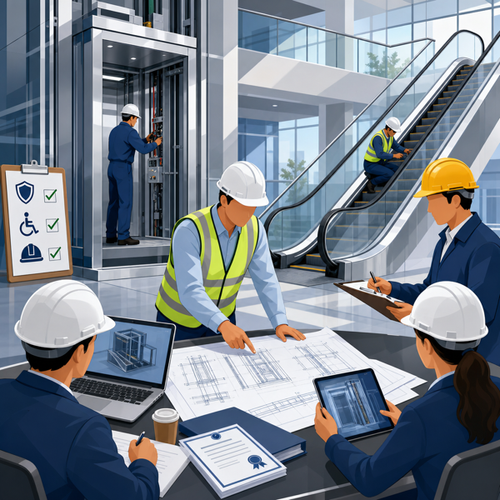
In today’s bustling urban environments, lifts and escalators have become foundational elements of modern infrastructure. However, their widespread usage introduces complex safety, accessibility, and operational challenges. To address these, international standards play a pivotal role. This article explores three essential standards covering new and existing lift installations, focusing on electric lift machinery spaces, accessibility considerations for people of all abilities, and upgrading older equipment. We will see how compliance not only minimizes risks but empowers businesses to boost productivity, elevate security standards, and scale their operations confidently and inclusively.
Overview / Introduction
The Modern Role of Lifts and Escalators in Construction
Lifts (elevators) and escalators are integral to virtually every commercial, public, and residential building. They enable efficient vertical mobility, enhance the user experience, save time, and, crucially, make buildings accessible to all individuals—including those with disabilities.
But as buildings grow more complex and user demands rise, ensuring that vertical transportation meets strict quality, safety, and accessibility benchmarks is not just good practice—it’s essential.
Why Standards Matter
International standards—such as those developed under the EN 81 series—provide comprehensive frameworks that address the construction, installation, safety, and accessibility requirements specific to lifts and escalators. These standards harmonize industry practices, help comply with legal obligations, and create environments that are both secure and inclusive.
Professionals who familiarize themselves with these standards and implement them effectively realize tangible benefits:
- Boosted productivity through reliable and efficient systems.
- Increased safety and reduced liability, minimizing incidents and costly downtime.
- Enhanced scalability and future-readiness through consistent, future-proof specifications.
- Barriers removed for persons with disabilities, supporting inclusivity and regulatory compliance.
In this guide, we focus on three critical standards:
- SIST EN 81-1:1999/A2:2005 — Electric lift machinery and pulley spaces
- SIST EN 81-70:2018 — Accessibility to lifts for persons including disabilities
- SIST EN 81-82:2026 — Upgrading accessibility in existing lifts
Let’s explore their scopes, key requirements, and why they are indispensable for safe, productive, and accessible buildings.
Detailed Standards Coverage
SIST EN 81-1:1999/A2:2005 – Electric Lifts: Machinery and Pulley Spaces
Full Standard Title: Safety rules for the construction and installation of lifts – Part 1: Electric lifts – A2: Machinery and pulley spaces
SIST EN 81-1:1999/A2:2005 is foundational for anyone involved with the design, construction, and installation of electric lifts. This amendment focuses specifically on the machinery and pulley spaces—the engine room of every lift installation. Its provisions ensure that both the equipment and personnel interacting with these systems are protected from harm and avoidable hazards.
Scope and Domain
This standard applies to the electrical machinery that operates lifts and all related spaces including:
- The machine room (where motors, control panels, drive systems are housed)
- Pulley spaces (which guide and tension the lift ropes)
- The lift well (shaft) and any areas where machinery is installed, whether inside or outside the main well
Key Requirements and Specifications
- Access and Egress: Safe means of access (staircases or ladders) for authorized personnel, with requirements for lighting, ventilation, and escape provisions in emergencies.
- Space Dimensions and Strength: Minimum requirements for the dimensions, height, and mechanical strength of rooms and passageways to enable safe work and maintenance.
- Environmental Protection: Machinery and electronics must be protected against dust, high humidity, excessive heat (+5°C to +40°C), and other environmental factors.
- Emergency Provisions: Emergency operation devices, inspection controls, lighting and socket outlets, and safety markings.
- Material and Construction: Strong, non-slip floors, solid walls, and safety doors or trap doors to prevent falls.
- Operation and Testing: Clear guidance on installation, periodical tests, inspection records, and maintenance registers.
Who Needs to Comply?
- Building owners and facility managers
- Construction and installation firms
- Lift manufacturers and maintenance providers
- Health and safety inspectors
Practical Implications
Implementing this standard means more than ticking boxes:
- Long-term durability and reliability—well-designed machinery spaces mean easier maintenance and lower lifecycle costs.
- Safety in practice—ensures all maintenance and emergency personnel can work with minimized risk.
- Legal compliance—meeting EU directives and harmonizing with national regulations.
Key highlights:
- Strict dimensional and ventilation requirements for machinery rooms.
- Access control and safe pathways for maintenance and inspection tasks.
- Integrated emergency and safety devices.
Access the full standard:View SIST EN 81-1:1999/A2:2005 on iTeh Standards
SIST EN 81-70:2018 – Accessibility to Lifts for Persons Including Disabilities
Full Standard Title: Safety rules for the construction and installation of lifts – Particular applications for passenger and goods passenger lifts – Part 70: Accessibility to lifts for persons including persons with disability
Modern buildings must be accessible to everyone, regardless of physical ability. SIST EN 81-70:2018 is a cornerstone standard specifying comprehensive requirements so that lifts can be easily and safely used by a wide range of users, including those with disabilities or reduced mobility.
Scope and Domain
This standard sets out minimum accessibility requirements for:
- All new passenger and passenger-goods lifts (as specified in EN 81-20)
- Serves as a reference for inclined and other lift types
Key Requirements and Specifications
- Door and Car Dimensions: Minimum door openings (at least 800 mm, up to 1100 mm for larger car types) and car sizes to ensure that wheelchairs, walking aids, and stretchers can be accommodated.
- Handrails and Seats: Mandatory handrails of specified dimensions and positions; optional tip-up seats for those who need them.
- Controls and Signals:
- Large, well-contrasted, tactile (touchable/identifiable) buttons within accessible height ranges (typically 850–1200 mm)
- Feedback for each action (both audible and visual)
- Emergency and alarm devices, properly contrasting, shaped, and marked
- Floor and Interior Requirements:
- Non-slip flooring
- Sufficient space for wheelchair turning, even with additional passengers
- Visual and tactile signals for floor indication, car position, and movement direction
- Acoustic and Visual Announcements:
- Adjustable sound levels for noisy environments
- Requirements for visual contrast and illuminated indicators
Who Needs to Comply?
- Designers, architects, and engineers specifying new lift installations
- Building owners and managers planning new construction or major renovations
- Public building authorities (schools, hospitals, government offices)
Practical Implications
- Universal accessibility—removes barriers to independence for people with disabilities, the elderly, and parents with strollers
- Legal and regulatory compliance—meets requirements of EU equality directives and national building codes
- Enhanced building reputation—inclusive spaces are more attractive to tenants and visitors
Key highlights:
- Specific car sizes and layouts for wheelchair access
- Large, tactile, and well-contrasted controls and indicators
- Adjustable and robust visual and audible communication systems
Access the full standard:View SIST EN 81-70:2018 on iTeh Standards
SIST EN 81-82:2026 – Improving Accessibility of Existing Lifts
Full Standard Title: Safety rules for the construction and installation of lifts – Existing lifts – Part 82: Rules for the improvement of the accessibility of existing lifts for persons including persons with disability
Older buildings often feature lifts that were installed before the current generation of accessibility standards. SIST EN 81-82:2026 provides a systematic, practical framework for assessing existing lifts and implementing upgrades that significantly improve user accessibility—crucial for meeting inclusivity goals and regulatory expectations.
Scope and Domain
This standard applies to:
- Any permanently installed lift serving defined building levels
- Lifts designed for transporting people or people with goods
- Does not cover advanced destination control systems (covered elsewhere)
Key Requirements and Specifications
- Methodology and Assessment: A detailed checklist and ranking matrix to:
- Identify existing barriers (e.g., narrow doors, inaccessible buttons, poor lighting)
- Evaluate improvement measures for effectiveness
- Prioritize upgrades according to users’ needs and available resources
- Accessible Entrances and Controls:
- Replacing manual with power-operated sliding doors where feasible
- Expanding entrance width (ideally to minimum 800 mm)
- Installing easily reachable, tactile, and contrasting call and floor selection buttons
- Adding visual and audible indicators and guidance systems
- Interior Modifications:
- Adding or improving handrails and seats
- Non-slip floors
- Refitting car interiors to approach modern dimensions where possible
- Documentation and Verification:
- All modification measures must be documented
- Verification in line with state-of-the-art standards and best practices
Who Needs to Comply?
- Owners and operators of buildings with older lifts
- Facility managers and health and safety professionals
- Lift maintenance and modernization specialists
Practical Implications
- Prioritized investment—owners can make incremental, high-impact improvements
- Targeted inclusivity—even partial upgrades significantly expand the range of people who can safely and independently use lifts
- Audit-friendly—systematic, documented process aligns with national legislation and EU requirements
Key highlights:
- Stepwise approach to increasing accessibility, tailored to each building’s constraints
- Prioritization of improvements by user benefit (vital, important, beneficial)
- State-of-the-art compliance without forcing impossible retrofits
Access the full standard:View SIST EN 81-82:2026 on iTeh Standards
Industry Impact & Compliance
Business Implications
Adhering to these key standards is not merely about risk avoidance. It’s a proactive strategy enabling facility owners and managers to:
- Enhance operational productivity by reducing unscheduled maintenance and downtime
- Deliver consistent user experiences, supporting building occupants and visitors of all needs
- Reduce liability risks stemming from non-compliance or accessibility-related accidents
- Meet stringent legal obligations as regulations increasingly mandate inclusive infrastructure
Benefits of Adoption
- Demonstrates commitment to safety and accessibility
- Attracts tenants and users valuing inclusivity
- Facilitates future scalability (retrofitting is easier when original installation aligns with standards)
- Protects asset value through future-proof investment
Risks of Non-Compliance
- Legal penalties and insurance claim issues following accidents or user complaints
- Increased operational costs due to more frequent breakdowns or difficulties retrofitting outdated systems
- Reputation loss—exclusionary buildings may become undesirable and underutilized
Implementation Guidance
Steps to Adopting Lift and Escalator Standards
- Assess Current Installations:
- Audit all lifts and escalators using the latest checklists (EN 81-82 provides an excellent model)
- Gap Analysis:
- Compare current state to requirements in SIST EN 81-1, 81-70, and (for older equipment) 81-82
- Develop an Upgrade Plan:
- Prioritize high-impact, feasible actions—start with improvements that benefit the largest or most vulnerable user groups
- Engage Certified Professionals:
- Involve qualified lift engineers, accessibility consultants, and maintenance providers
- Document and Verify:
- Record all modifications and verify compliance with required tests and inspections
- Train Staff and Communicate:
- Education reduces improper use and increases safety
- Schedule Regular Reviews:
- Accessibility and safety demands evolve—review systems periodically
Resources
- Official standards documentation (as linked throughout this guide)
- National building codes
- Local disability advocacy organizations (often provide practical accessibility advice)
- Professional engineering and facility management bodies
Conclusion / Next Steps
As urban spaces expand vertically and sustainability, inclusivity, and security become core values, high standards in lift and escalator safety and accessibility move from a nice-to-have to a must-have.
By implementing SIST EN 81-1:1999/A2:2005, SIST EN 81-70:2018, and SIST EN 81-82:2026—either in new builds or through progressive upgrades—organizations invest in safer, more welcoming environments and position themselves at the vanguard of responsible, future-ready facility management.
Key Takeaways:
- Rigorous standards are crucial for secure, reliable, and accessible lifts and escalators
- Compliance boosts productivity, eases scalability, and safeguards building value
- Implementation need not be overwhelming—incremental improvements offer major benefits
Action Steps:
- Explore the full standards on iTeh Standards to dive deeper and plan your compliance journey
- Conduct a comprehensive audit of your existing lifts and escalate improvements where most needed
- Stay tuned to ongoing developments in lift and accessibility regulations as legislation and best practices continue to evolve
For architects, engineers, building owners, and facility managers: Adopting these standards isn’t just about meeting requirements—it’s about maximizing opportunity, safety, and inclusivity for everyone.
Categories
- Latest News
- New Arrivals
- Generalities
- Services and Management
- Natural Sciences
- Health Care
- Environment
- Metrology and Measurement
- Testing
- Mechanical Systems
- Fluid Systems
- Manufacturing
- Energy and Heat
- Electrical Engineering
- Electronics
- Telecommunications
- Information Technology
- Image Technology
- Precision Mechanics
- Road Vehicles
- Railway Engineering
- Shipbuilding
- Aircraft and Space
- Materials Handling
- Packaging
- Textile and Leather
- Clothing
- Agriculture
- Food technology
- Chemical Technology
- Mining and Minerals
- Petroleum
- Metallurgy
- Wood technology
- Glass and Ceramics
- Rubber and Plastics
- Paper Technology
- Paint Industries
- Construction
- Civil Engineering
- Military Engineering
- Entertainment