


Sanitary Installations: Essential Standards for Showers, Baths, Toilets, and Mobile Cabins
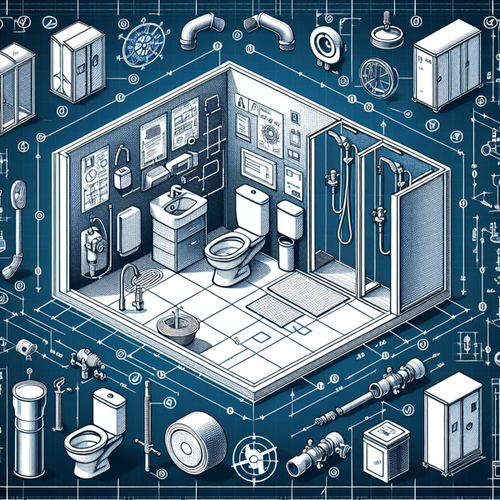
Today’s construction industry places increasing emphasis on hygiene, user safety, and operational efficiency—making compliance with sanitary installation standards not just a legal necessity but a business imperative. Whether you’re building new homes, refurbishing hotels, managing construction sites, or supporting public events, the quality and reliability of showers, baths, toilets, and mobile facilities have a direct impact on productivity and public health. In this article, we explore 4 pivotal European standards that set the benchmark for modern sanitary installations—each designed to ensure that sanitary products meet stringent requirements, deliver consistent performance, and support the scaling demands of business and public infrastructure.
Overview / Introduction
In construction, the installation and maintenance of sanitary facilities are critical for ensuring the wellbeing of occupants and end users. The field of sanitary installations covers a wide spectrum—from domestic bathrooms to mobile toilet cabins at temporary sites or large events. Adhering to established standards guarantees functional reliability, user safety, and facilitates compliance with building codes and health regulations.
Implementing sanitary installation standards, such as those set by SIST (Slovenian Institute for Standardization) and harmonized across Europe, streamlines operations for construction professionals and elevates living or working conditions for end users. This guide covers:
- The standards governing shower enclosures, mobile toilets, baths, and wall-hung W.C. pans
- Benefits of compliance and industry impact
- Guidance for practical implementation
Readers will gain a firm understanding of why these standards are increasingly vital for businesses aiming to scale operations, ensure hygiene, and protect users—plus how best to comply.
Detailed Standards Coverage
SIST EN 14428:2015 - Shower Enclosures: Functional Requirements and Test Methods
Shower Enclosures - Functional Requirements and Test Methods
SIST EN 14428:2015 stipulates the key functional requirements and test methods for shower enclosures—important for anyone involved in domestic construction, hospitality, student and healthcare accommodation (except for specialized medical settings), and public facilities. This standard ensures that when shower enclosures are properly installed per manufacturer instructions, they offer a high level of performance, durability, and safety.
The requirements outlined include:
- Cleanability: Surfaces must be free of sharp edges and safe to clean using typical cleaning agents without compromising enclosure integrity.
- Impact resistance and shatter properties: Materials like thermally toughened safety glass, laminated safety glass, and certain plastics are assessed for safety upon impact, minimizing injury risk if breakage occurs.
- Durability: Enclosures must withstand corrosion, resistance to chemicals, endurance tests (20,000 open/close cycles), and water retention tests.
- Stability: Products must absorb everyday impact (such as slips or falls) without losing functional integrity.
- Dangerous substances: Restrictions and regulations are referenced to ensure no harmful substance release, strengthening hygiene and health safety.
This standard details rigorous testing procedures and sets strict criteria for factory production control, product marking, and compliance verification under EU Construction Products Regulation.
Key highlights:
- Mandates impact-resistant materials to prevent danger from glass breakage
- Prescribes endurance and corrosion resistance tests for long-term use
- Requires clear installation instructions for safe handling by users and installers
Access the full standard:View SIST EN 14428:2015 on iTeh Standards
SIST EN 16194:2012 - Mobile Toilet Cabins: Requirements for Service and Product Deployment
Mobile Non-Sewer-Connected Toilet Cabins - Requirements of Services and Products Relating to the Deployment of Cabins and Sanitary Products
SIST EN 16194:2012 is a cornerstone standard for non-sewered, mobile toilet cabins used on construction sites, public events, agricultural and industrial settings, disaster relief, and other temporary venues. This standard is directed at manufacturers, rental companies, event managers, and facility operators.
Key topics covered:
- Cabin requirements: Ensures cabins are robust, self-contained, and accessible (including for wheelchair users), with adequate waste tank capacity and hygiene safeguards
- Sanitary product standards: Specifies products like sanitary concentrates, antifreeze for waste tanks, scented oils, and toilet paper, all meeting strict health and utility requirements
- Service requirements: Outlines the complete service cycle — from planning, delivery, and setup to in-use maintenance, scheduled cleaning/disposal, and removal, with detailed recommendations for frequency and quality
- Deployment planning: Offers guidance for determining the required number of cabins based on the size of crowd/event, location constraints, and use-case (standard, events, construction, agriculture, industry, etc.)
- Health and safety: Imposes minimum standards for cleaning, placement, ventilation, and accessibility, ensuring both user comfort and environmental hygiene
The practical outcome is a safer, cleaner, and more reliable experience for users, along with easier compliance and business scalability for providers.
Key highlights:
- Sets hygiene and safety standards supporting infectious disease control
- Provides schedules and recommendations for cleaning and waste management
- Ensures all cabins are accessible and meet legal health requirements
Access the full standard:View SIST EN 16194:2012 on iTeh Standards
SIST EN 232:2003 - Baths: Connecting Dimensions
Baths - Connecting Dimensions
SIST EN 232:2003 is a technical standard that defines the precise connecting dimensions required for all baths, regardless of their manufacturing material. It provides a harmonized set of measurements ensuring baths can be installed with standardized fittings for water supply and waste outlets, simplifying design and maintenance.
Critical aspects include:
- Basic dimensions: Outlines mandatory measurements (e.g., fixing positions, waste and overflow outlets), enabling compatibility with standard plumbing hardware (as referenced in EN 274-1 for waste fittings)
- Flexibility for design: The standard allows manufacturers flexibility in bath design and shape, provided they meet the specified connector measurements—fostering both innovation and interoperability
- Testing and compliance: Annexes describe methods for verifying connector positions with control gauges, ensuring every bath produced is compatible with plumbing infrastructure
This compatibility reduces installation errors, cost overruns, and project delays, while supporting modular construction and faster replacements.
Key highlights:
- Only connecting dimensions are mandatory—enabling creative bath designs
- Ensures seamless connection to plumbing and drainage networks
- Reduces risks of water leakage or misalignments
Access the full standard:View SIST EN 232:2003 on iTeh Standards
SIST EN 38:1998 - Wall Hung W.C. Pan with Independent Water Supply: Connecting Dimensions
Wall Hung W.C. Pan with Independent Water Supply - Connecting Dimensions
SIST EN 38:1998 establishes the mandatory connecting characteristics for wall-hung toilets (W.C. pans) with an independent water supply. Engineered for widespread use in residential, commercial, and public buildings, wall-hung toilets offer many advantages—including space efficiency, modern aesthetics, easy-clean surrounds, and improved sanitation.
Standardized in this guideline are:
- Critical connector metrics: Ensures all water supply and waste outlet connections meet specified dimensions, allowing safe and reliable installation with compatible fittings
- Exclusions: The standard is not intended for siphonic action W.C. pans, keeping its focus on models more typical in European installations
- Design freedom: Only the specified connector sizes are binding, giving manufacturers license for design innovation elsewhere
By adhering to these connecting dimensions, projects benefit from predictable, low-risk fit-outs— essential for mass installations in hotels, hospitals, student accommodations, and apartment complexes.
Key highlights:
- Guarantees hassle-free installation with standard plumbing supplies
- Facilitates rapid repairs or upgrades in high-turnover environments
- Supports interchangeable use across manufacturers and product lines
Access the full standard:View SIST EN 38:1998 on iTeh Standards
Industry Impact & Compliance
Modern construction demands robust sanitary solutions capable not just of meeting basic regulatory obligations, but enabling better hygiene, user comfort, operational efficiency, and scalability. Adherence to these standards offers several key benefits:
- Enhanced productivity: Streamlined specification and installation minimize project delays and reduce maintenance calls—keeping sites, public events, or buildings running smoothly.
- Legal compliance and security: Ensures installations fulfill both European and national requirements, protecting businesses from legal repercussions, penalties, or forced rework due to non-conforming products.
- User trust and satisfaction: High-quality, safe, and hygienic facilities foster trust among building occupants, customers, and the general public.
- Scaling and modularity: Standardized connecting dimensions enable easy upgrades and rapid facility expansion—critical for hotels, hospitals, sports arenas, and mobile operations.
- Risk management: Lower chances of water damage, leaks, or failures lower insurance risks and total cost of ownership.
Risks of non-compliance include:
- Legal liability and financial penalties
- Health and safety hazards for users
- Costly emergency repairs or retrofits, project delays
- Reputational damage and reduced facility usability
Implementation Guidance
For organizations adopting these standards, several best practices can maximize the benefits:
- Early integration: Factor sanitary installation standards into the earliest design and procurement stages—this avoids costly redesigns and ensures compatibility across all systems.
- Qualified suppliers: Source products from manufacturers and suppliers who can verify compliance with SIST, EN, or other referenced standards, complete with necessary test and installation documentation.
- Staff training: Ensure construction teams, facility managers, and cleaning staff are trained not only in installation, but in ongoing maintenance and hygiene protocols per standard guidance.
- Regular audits: Perform periodic checks to verify ongoing compliance, update installations as new standards emerge, and maintain detailed records of maintenance and upgrades for legal and insurance purposes.
- Consult authoritative resources: Use reputable standards databases and platforms (such as iTeh Standards) to stay up-to-date with changes, technical commentaries, and implementation tools.
Conclusion / Next Steps
The four European standards detailed above form a robust foundation for any construction, renovation, or facility management project seeking excellence in sanitary installations. Their scope encompasses not just product design, but service, installation, and long-term maintenance— all geared toward safer, more reliable, and easier-to-manage sanitary facilities.
Key takeaways:
- Adopting SIST EN 14428:2015, SIST EN 16194:2012, SIST EN 232:2003, and SIST EN 38:1998 is a strategic business move supporting legal security, user satisfaction, and efficient scaling.
- Industry professionals and businesses benefit from improved productivity, minimized risks, and streamlined operations.
- Compliance is easier than ever with resources like iTeh Standards, enabling continuous improvement and up-to-date knowledge.
Recommendation: Review your current and planned projects, align your specifications and procurement policies with these standards, and leverage authoritative resources to safeguard the future of your business and your clients’ wellbeing.
https://standards.iteh.ai/catalog/standards/sist/4b9ff7c5-8779-433e-a7ac-41c9528da508/sist-en-14428-2015https://standards.iteh.ai/catalog/standards/sist/8ce519b5-5228-499f-ae2b-dcb99e82e239/sist-en-16194-2012https://standards.iteh.ai/catalog/standards/sist/a5c780d4-18f3-4848-98b9-65c3f16edc86/sist-en-232-2003https://standards.iteh.ai/catalog/standards/sist/bcdbc7d8-1835-4cc6-9f54-c4623bbae984/sist-en-38-1998
Categories
- Latest News
- New Arrivals
- Generalities
- Services and Management
- Natural Sciences
- Health Care
- Environment
- Metrology and Measurement
- Testing
- Mechanical Systems
- Fluid Systems
- Manufacturing
- Energy and Heat
- Electrical Engineering
- Electronics
- Telecommunications
- Information Technology
- Image Technology
- Precision Mechanics
- Road Vehicles
- Railway Engineering
- Shipbuilding
- Aircraft and Space
- Materials Handling
- Packaging
- Textile and Leather
- Clothing
- Agriculture
- Food technology
- Chemical Technology
- Mining and Minerals
- Petroleum
- Metallurgy
- Wood technology
- Glass and Ceramics
- Rubber and Plastics
- Paper Technology
- Paint Industries
- Construction
- Civil Engineering
- Military Engineering
- Entertainment