


Thermal Insulation Standards for Buildings: Ensuring Performance, Airtightness, and Durability
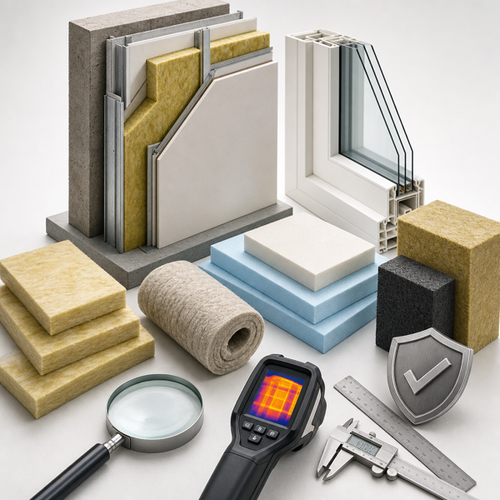
Thermal insulation is a defining aspect of modern construction, impacting energy efficiency, comfort, and the long-term sustainability of buildings. In today's rapidly evolving construction environment, two main international standards set the benchmark for performance and reliability: SIST EN 17888-2:2024 and SIST EN 17990:2025. This article provides an in-depth yet accessible overview of these standards, their requirements, and why they are crucial as businesses embrace new technologies and sustainable practices.
Overview / Introduction
As governments, businesses, and individuals increasingly focus on sustainability and energy conservation, the construction sector faces mounting pressure to deliver buildings that are both energy-efficient and future-ready. The role of thermal insulation standards has never been more important. These standards, developed through rigorous scientific and technical consensus, ensure a baseline of quality, safety, and performance for everyone involved—from architects and builders to facility managers and end users.
Implementing thermal insulation standards such as SIST EN 17888-2:2024 and SIST EN 17990:2025 ensures that:
- New construction and renovations achieve reliable energy performance
- Advanced technologies, such as smart heating and passive solar design, operate at maximum efficiency
- Risks, including heat loss, air leaks, and moisture ingress, are minimized through best practices and validated test methods
This guide will demystify each standard, highlight their practical significance, and explain why complying with these guidelines is essential for productivity, security, and scaling construction operations with confidence.
Detailed Standards Coverage
SIST EN 17888-2:2024 - Steady-State Data Analysis for Aggregate Heat Loss Test
Full Standard Title: Thermal performance of buildings - In situ testing of building test structures - Part 2: Steady-state data analysis for aggregate heat loss test
What this standard covers:
SIST EN 17888-2:2024 specifies the analytical procedures for evaluating data from in situ aggregate heat loss tests, allowing for the estimation of a building’s heat transfer coefficient. The process employs steady-state data analysis to determine how effectively a building’s envelope resists heat flow and incorporates sophisticated regression methods to reflect real-world conditions. Steady-state analysis helps capture a snapshot of a building’s thermal performance by mitigating dynamic effects and isolating true thermal losses.
Key requirements and specifications:
- Defines the principle energy balance equation for heat loss analysis
- Details data collection, cleaning, and averaging procedures (minimum 15 days of continuous, gap-free data)
- Requires calibration and verification of sensor data and removal of outliers
- Specifies the use of linear regression methods (Siviour and multiple linear regression techniques)
- Mandates comprehensive test reporting, including calculated aggregate heat transfer coefficients, solar aperture, and expanded uncertainties
- Outlines validation protocols such as residual, normality, and autocorrelation testing to ensure robust findings
Who needs to comply:
- Architects and construction engineers
- Testing laboratories
- Building owners and managers
- Developers seeking building certification (e.g., energy performance)
Practical implications for implementation: By applying the statistical and data management methods set out in this standard, construction professionals can more accurately assess real-life heat loss from buildings, identify areas for improvement, and support energy efficiency measures that align with regulatory and client expectations. These methods become central when integrating smart technologies, passive solar features, or when diagnosing underperformance in existing buildings.
Notable features:
- Covers the full analytical process from data acquisition to comprehensive reporting
- Quantifies and communicates measurement uncertainty for transparency
- Includes recommendations for addressing and correcting data anomalies and equipment inaccuracies
Key highlights:
- Provides methodology for reliable in situ heat loss assessment
- Enhances comparability and reproducibility in thermal performance testing
- Mandates robust documentation and error analysis, supporting quality assurance and certification
Access the full standard:View SIST EN 17888-2:2024 on iTeh Standards
SIST EN 17990:2025 - Durability of Bondings for Airtight Layers
Full Standard Title: Thermal insulation and energy economy in buildings - Method to determine the durability of bondings with adhesive tapes and adhesive masses for the establishment of airtight layers under climatic conditions representative for indoor environments
What this standard covers:
SIST EN 17990:2025 addresses the procedures for testing and validating the long-term durability of adhesive bonds—formed by tapes and masses—that are used to create airtight barriers in building envelopes. Maintaining airtightness is essential for energy efficiency, preventing moisture ingress, and upholding indoor air quality.
Key requirements and specifications:
- Specifies laboratory-based test methods for adhesive tapes and masses under indoor-like conditions
- Requires artificial aging of at least 120 days, simulating years of actual use
- Covers preparation of reference and product-specific substrates (boPET, beechwood, and practical combinations)
- Outlines detailed testing apparatus and sample preparation requirements
- Mandates mechanical tests (T-peel, 180° peel, static peel) to evaluate bond strength before and after aging
- Excludes evaluation of butyl-based adhesives, bitumen membranes, or external UV/weathering
- Defines precise climatic parameters for conditioning and testing
Who needs to comply:
- Manufacturers of building adhesives and tapes
- Contractors, envelope specialists, and installers
- Building product certification bodies
- Quality assurance teams in construction
Practical implications for implementation: Properly evaluated and approved bonding systems are crucial for modern airtight building designs. This standard supports the construction of energy-efficient, durable, and comfortable buildings, especially important with high-performance technologies such as balanced ventilation, heat recovery, and intelligent climate controls. Reliable, long-life airtight layers also protect structures from moisture damage, reduce energy costs, and support environmental certifications.
Notable features:
- Simulates long-term indoor environmental exposure, ensuring meaningful durability data
- Addresses a wide range of adhesive systems and substrate combinations
- Excludes surface tack, focusing on in-service longevity, not just initial performance
Key highlights:
- Guarantees rigorously tested airtight bondings before market deployment
- Reduces risk of air leakage, condensation, and thermal inefficiencies
- Essential for low-energy and passive house construction specifications
Access the full standard:View SIST EN 17990:2025 on iTeh Standards
Industry Impact & Compliance
How These Standards Affect Businesses
The adoption of these thermal insulation standards directly addresses industry-wide challenges, including ever-tightening energy codes, the integration of new technologies (such as IoT-enabled climate systems), and rising consumer demand for sustainable, comfortable living spaces. Transparent and replicable testing methods are key for:
- Meeting regulatory requirements for energy efficiency and performance
- Achieving green building certifications (e.g., Passive House, LEED, BREEAM)
- Reducing warranty and liability costs due to well-documented product and construction quality
- Facilitating product acceptance in international markets through harmonized standards
Compliance Considerations
- Both standards require rigorous data management and reporting—a significant shift in practice and documentation for many businesses
- Long-term test programs (e.g., 120-day adhesive aging) need planning in project timelines
- Adoption ensures compatibility with evolving building codes and energy regulations across regions
Benefits of Adoption
- Reduced operational costs through lower energy bills and maintenance
- Enhanced occupant comfort and health by preventing drafts, moisture, and condensation
- Higher property values and marketability thanks to thermal and airtight performance certifications
- Future-proofing projects against regulatory changes and client expectations for sustainability
Risks of Non-Compliance
- Increased energy consumption and costs
- Higher risk of construction defects, moisture, mold, and indoor air quality issues
- Potential barriers to property sales or leasing in markets with strict codes
- Loss of reputation or legal complications following performance failures
Implementation Guidance
Common Approaches for Adoption
- Strategic Planning: Integrate standards requirements into project specifications from the earliest design phase.
- Data-Driven Testing: Use calibrated, modern instrumentation for in situ testing and carefully follow standards for data quality, cleaning, and reporting.
- Quality Assurance: Establish internal QA processes for regular validation of installed components against standard benchmarks.
- Supplier Coordination: Ensure product suppliers and subcontractors are aware of and comply with test substrate and product combination requirements.
- Documentation & Training: Maintain detailed records as required by standards. Train on-site teams and quality control personnel on new procedures and best practices.
- Third-Party Certification: Engage independent laboratories or certifiers to validate findings, especially for high-stakes or high-profile projects.
Best Practices
- Continuous monitoring: Regularly review and analyze building energy and airtightness data after occupancy
- Lifecycle approach: Plan for the long-term, considering not just construction but maintenance, upgrades, and building adaptation
- Engagement with experts: Consult with energy consultants and standards professionals to stay ahead of evolving requirements
Resources for Organizations
- Access the full texts and latest amendments via iTeh Standards
- Participate in training courses and workshops focused on thermal insulation testing
- Collaborate with national and regional standardization bodies for local guidance
Conclusion / Next Steps
Thermal insulation and airtightness represent the backbone of high-performance, sustainable construction. By adhering to SIST EN 17888-2:2024 and SIST EN 17990:2025, organizations position themselves for success in a climate-conscious era. These standards not only serve as technical roadmaps but enable businesses to:
- Achieve superior building energy performance
- Integrate cutting-edge construction technologies with confidence
- Ensure quality, longevity, and compliance in every project
Key takeaways:
- Implementing these standards increases energy efficiency, reduces costs, and safeguards asset value
- Compliance supports market expansion, building certifications, and regulatory peace of mind
- Early, informed action in adopting standards maximizes long-term project and business outcomes
Next Steps:
- Review the full text of both standards and integrate requirements into your project specifications
- Invest in training and quality assurance programs for your teams
- Explore additional resources and updates at iTeh Standards
Stay at the forefront of construction excellence. Make thermal insulation standards the foundation of your next building project.
Categories
- Latest News
- New Arrivals
- Generalities
- Services and Management
- Natural Sciences
- Health Care
- Environment
- Metrology and Measurement
- Testing
- Mechanical Systems
- Fluid Systems
- Manufacturing
- Energy and Heat
- Electrical Engineering
- Electronics
- Telecommunications
- Information Technology
- Image Technology
- Precision Mechanics
- Road Vehicles
- Railway Engineering
- Shipbuilding
- Aircraft and Space
- Materials Handling
- Packaging
- Textile and Leather
- Clothing
- Agriculture
- Food technology
- Chemical Technology
- Mining and Minerals
- Petroleum
- Metallurgy
- Wood technology
- Glass and Ceramics
- Rubber and Plastics
- Paper Technology
- Paint Industries
- Construction
- Civil Engineering
- Military Engineering
- Entertainment