


April 2026 Brings Key Electrical Engineering Standards: From HVDC Harmonics to Household Circuit-Breakers
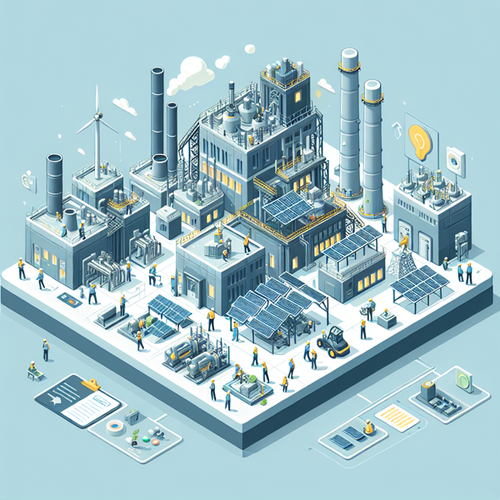
Electrical engineering saw a significant round of international standards updates in April 2026, marking a pivotal moment for high-voltage direct current (HVDC) systems, horticultural lighting, cable construction, critical electrical materials, and digital data models for circuit-breakers. This article explores the five latest standards, each designed to address emerging industrial needs, ensure safety, and enable global harmonization. Whether you’re a compliance officer, design engineer, or procurement manager, understanding these updates is essential for maintaining competitive and compliant operations.
Overview / Introduction
The field of electrical engineering underpins modern infrastructure—from power transmission to lighting, wiring, and household equipment. International standards set the foundation for interoperability, safety, and technological evolution across the sector. The standards published in April 2026 focus on:
- Ensuring the reliability and safety of high-voltage and household electrical systems
- Introducing data-driven approaches for product selection and engineering
- Addressing the needs of specialized sectors, including horticulture and rotating machinery
In this article, you’ll discover detailed insights into each new standard, their key requirements, practical implementation tips, and industry-wide impacts. This guide empowers stakeholders to remain ahead of compliance requirements and market demands.
Detailed Standards Coverage
IEC TS 63529:2026 - DC Side Harmonics & Filtering in HVDC Transmission Systems
DC Side Harmonics & Filtering in HVDC Transmission Systems
This Technical Specification takes a systematic approach to harmonics and filtering on the DC side of high-voltage direct current (HVDC) transmission systems—a crucial aspect as converter technologies evolve. While historically the focus was on harmonics affecting communication lines, modern voltage sourced converters (VSC) introduce harmonics across a wider frequency spectrum (up to 5,000 Hz), impacting both system stability and electromagnetic compatibility.
Key requirements and scope:
- Applies to all forms of harmonic design for the DC side of HVDC projects (frequency range up to 5,000 Hz)
- Provides methods for quantifying, modelling, and limiting harmonic currents originating from both line-commutated (LCC) and voltage-sourced (VSC) converter technologies
- Considers mitigation measures and defines procedures to verify harmonic performance against international noise/disturbance limits (including induced voltages on ancillary systems like telecom lines)
- Outlines analytical and modelling techniques for system studies, emphasizing accurate representation of converter and line dynamics
- Offers verification methodologies, including measurement protocols and compliance monitoring
Who needs to comply:
- HVDC system operators
- EPC contractors and HVDC design engineers
- Suppliers of converter technologies
- Telecommunication and grid interface specialists
Practical implications:
- Improved electromagnetic compatibility and reduced risk of system disturbance
- Streamlined integration of new converter technologies with legacy infrastructure
- Enhanced safety for both adjacent communication networks and the HVDC grid
Key highlights:
- Harmonized harmonic limits for DC systems up to 5,000 Hz
- Methods for evaluating and mitigating interference to telecommunication lines
- Unified procedures for compliance verification and measurement
Access the full standard:View IEC TS 63529:2026 on iTeh Standards
EN IEC 63545:2026 - Horticultural Lighting Luminaires – Safety
Horticultural Lighting – Luminaires for Horticultural Lighting – Safety
With rapid global expansion in controlled environment agriculture, the safety of horticultural luminaires—lighting systems that stimulate plant growth—is increasingly vital. This standard defines robust safety requirements for all electric light sources intended for horticultural use, covering installation environments up to 1,000 V.
Key requirements and specifications:
- Applies to all horticultural luminaires, whether used in greenhouses, indoor farms, or industrial installations
- Specifies construction, marking, and documentation requirements, including photobiological hazard labeling and environmental resilience (e.g., IP rating, UV resistance)
- Covers protection against electric shock, moisture, heat, and fire; insulation resistance; and protective earthing measures
- Requires detailed safety instructions in user documentation, test protocols for endurance and thermal stability, and additional parameters for electronic safety circuits
- Mandates photobiological risk assessment and risk group labelling (following IEC 62471)
Who needs to comply:
- Manufacturers and importers of horticultural luminaires
- Indoor agriculture practitioners
- Electrical inspectors and certifying bodies
- Facility designers for plant factories and greenhouses
Practical implications:
- Increased safety for operators and end-users
- Minimized risk of electrical or photobiological hazards in intensive horticultural environments
- Clear guidance to manufacturers for product design, labeling, and documentation
Key highlights:
- Mandatory photobiological hazard assessment and labeling
- Enhanced resistance to moisture, dust, UV, and environmental stress
- Comprehensive user instructions and installation classifications
Access the full standard:View EN IEC 63545:2026 on iTeh Standards
IEC 60245-4:2026 - Rubber Insulated Cables Rated Up to 450/750 V: Cords & Flexible Cables
Rubber Insulated Cables – Rated Voltages Up to and Including 450/750 V – Part 4: Cords and Flexible Cables
This fourth edition standardizes the construction, dimensions, and testing protocols for rubber-insulated flexible cords and cables, encompassing both rubber and synthetic elastomer sheathings. It is crucial for manufacturers and installers of low-voltage electrical systems requiring durable, flexible connections.
Key requirements and scope:
- Applies to rubber/braided cords and synthetic elastomer-sheathed cables with rated voltages up to 450/750 V
- Defines construction types (e.g., braided, tough rubber, polychloroprene sheathed) and code designations
- Details conductor, separator, insulation, sheath, and filler material requirements
- Specifies dimensional tolerances and mechanical test procedures
- Updates references to align testing protocols with IEC 63294 (replacing references to IEC 60245-2)
Who needs to comply:
- Manufacturers and suppliers of flexible electrical cables
- Electrical installers and contractors
- Equipment manufacturers requiring high-flexibility cords (industrial, domestic, portable devices)
Practical implications:
- Assured mechanical and safety performance for cords deployed in demanding environments
- Simplifies tendering and procurement with harmonized specifications
- Supports compliance with evolving international test methods and material standards
Key highlights:
- Technical revision updates normative references and test methods
- Comprehensive coverage of types, tests, and recommended applications
- Alignment with general cable requirements (IEC 60245-1 and applicable parts)
Access the full standard:View IEC 60245-4:2026 on iTeh Standards
IEC TS 63573:2026 - Technical Requirements for Electrical Sheet Metal and Strip Metal Used in Rotating Electrical Machines
Technical Requirements for Electrical Sheet Metal and Strip Metal Used in Rotating Electrical Machines
This Technical Specification fulfils the immediate needs of electric motor manufacturers and suppliers by specifying detailed requirements for electrical steel sheet and strip metal used in stator and rotor cores. High-performing material selection is key to meeting stringent efficiency classes outlined in the IEC 60034 series.
Key requirements and specifications:
- Covers electrical steel grades for rotating machines per IEC 60034, supplementing IEC 60404 series and related standards
- Establishes material designations, mechanical and magnetic properties, permissible dimensional deviations, and surface quality requirements
- Details insulation types and thickness tolerance
- Specifies requirements for test certifications and documentation, ensuring supplier transparency
- Anticipates harmonization with future amendments to IEC 60404-8-4; this TS will be withdrawn once overlapping requirements are fully incorporated
Who needs to comply:
- Suppliers of electrical sheet and strip steel
- Manufacturers of stator and rotor core assemblies
- Electric motor and generator OEMs
- Material testing laboratories and quality assurance teams
Practical implications:
- Clear benchmarks for raw material procurement and acceptance
- Ensures high energy efficiency for rotating machines, supporting eco-design initiatives
- Facilitates international supply chain harmonization
Key highlights:
- Detailed property tables (magnetic losses, mechanical strength, dimension tolerances)
- Robust approach to insulation and stacking methods
- Integrated test certificate and traceability requirements
Access the full standard:View IEC TS 63573:2026 on iTeh Standards
IEC 63508:2026 - CDD Database – Circuit-Breakers and Similar Equipment for Household Use
CDD Database – Circuit-Breakers and Similar Equipment for Household Use
Digitization drives modern engineering, and this standard advances that trend by systematizing how household circuit-breakers and similar devices are described in electronic product databases. It formalizes data models for inclusion in the IEC Common Data Dictionary (IEC CDD), promoting seamless data exchange among manufacturers, resellers, engineers, and digital catalogues.
Key requirements and scope:
- Defines digital classes and properties for miniature circuit-breakers (MCBs) and similar household protection devices (alignment with IEC 61360-4)
- Establishes attribute libraries to allow efficient product selection and engineering specification
- Enables interoperability between catalogues, engineering tools, procurement platforms, and software
- Lays groundwork for digital B2B workflows and e-commerce, reducing ambiguity in product selection and technical datasheets
Who needs to comply:
- Manufacturers of circuit-breakers and household electrical protection devices
- Data managers and systems integrators for electrical databases
- E-commerce providers, catalogue consortia, and procurement platforms
Practical implications:
- Enhanced speed and accuracy when configuring or sourcing electrical devices
- Unified data structures reduce errors and duplication
- Facilitates modern methods such as Building Information Modeling (BIM), digital twins, and automated configuration
Key highlights:
- Standardized classification and attributes for MCBs in compliance with IEC CDD requirements
- Supports information-rich digital marketplaces and technical inventories
- Anticipates future expansion to other product types (arc fault detectors, RCDs, etc.)
Access the full standard:View IEC 63508:2026 on iTeh Standards
Industry Impact & Compliance
The April 2026 updates reflect the drive for innovation, resilience, and digital transformation across the electrical engineering sector. Compliance with these standards is non-negotiable for organizations seeking to remain on the leading edge—in product development, project delivery, and operational excellence.
Key impacts include:
- Enhanced safety and efficiency through rigorous product and material standards for cables, luminaires, and rotating machines
- Streamlined engineering and procurement enabled by harmonized data models and clear supplier requirements
- Reduced risk of product failure, regulatory penalties, and market exclusion
- Improved global interoperability—essential for multinational projects and cross-border supply chains
Compliance considerations:
- Timelines: Check standard-specific transition periods and any national implementation requirements
- Verification: Revise internal processes for design review, sourcing, and quality assurance to reflect updated specifications
- Certification and labeling: Engage accredited laboratories for testing and obtain certified documentation where required
- Supply chain management: Collaborate with material suppliers and digital solution providers to align with new data and material requirements
Failure to adapt may delay market access, compromise operational safety, or lead to non-conformance in critical inspections.
Technical Insights
Common technical requirements and best practices include:
- Robust documentation: Ensure full traceability for materials, components, and test certifications (especially for critical supply items like electrical steel and cables)
- Data digitization: Integrate standardized product data models into ERP, PLM, and e-catalogue systems for improved interoperability and reduced errors
- Testing protocols: Apply the latest referenced IEC and CLC testing procedures, especially where standards specify updated or replacement methods (e.g., IEC 63294 for cable testing)
- Design for compliance: Incorporate safety labeling (e.g., photobiological hazard), protective features (IP rating, electric shock prevention), and environmental resilience into new product designs
- Continuous monitoring: Establish processes for routine verification against harmonic limits, electromagnetic compatibility, and endurance tests
Certification considerations:
- Use third-party accredited laboratories where applicable
- Retain up-to-date records and certificates for all sourced materials and components
- Monitor for revisions or amendments, as interim technical specifications may be withdrawn in favor of harmonized standards (e.g., IEC TS 63573 to be replaced by IEC 60404-8-4 amendment)
Conclusion / Next Steps
April 2026 marks an important advance for electrical engineering standards, shaping the next chapter of industry best practices, regulatory alignment, and digital transformation. Five new standards set clear requirements for harmonics mitigation, equipment safety, cable quality, material performance, and digital product classification.
Recommendations for organizations:
- Review your compliance status—audit current equipment, designs, and supply chains against new requirements
- Update purchasing and specification documents to reference the latest standards
- Educate engineering and quality assurance teams on updated testing and documentation protocols
- Collaborate proactively with material suppliers, certification bodies, and digital solution providers
- Monitor upcoming amendments to ensure continuous alignment
For comprehensive access to all current and upcoming standards, including detailed requirements and full documentation, visit iTeh Standards.
Stay ahead of the curve—explore these standards in detail, equip your teams, and ensure your organization’s ongoing success in an evolving industry landscape.
Categories
- Latest News
- New Arrivals
- Generalities
- Services and Management
- Natural Sciences
- Health Care
- Environment
- Metrology and Measurement
- Testing
- Mechanical Systems
- Fluid Systems
- Manufacturing
- Energy and Heat
- Electrical Engineering
- Electronics
- Telecommunications
- Information Technology
- Image Technology
- Precision Mechanics
- Road Vehicles
- Railway Engineering
- Shipbuilding
- Aircraft and Space
- Materials Handling
- Packaging
- Textile and Leather
- Clothing
- Agriculture
- Food technology
- Chemical Technology
- Mining and Minerals
- Petroleum
- Metallurgy
- Wood technology
- Glass and Ceramics
- Rubber and Plastics
- Paper Technology
- Paint Industries
- Construction
- Civil Engineering
- Military Engineering
- Entertainment