


Electrical Engineering Essentials: Key Standards for Safe, Reliable, and Scalable Systems
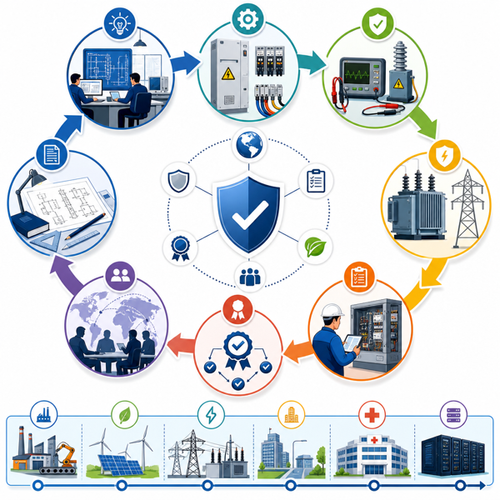
Electric power is at the heart of every modern business and home, powering everything from the smallest electronic gadgets to vast manufacturing lines. Yet, behind the visible wiring lies a backbone of technical standards—vital documents that guide how electricity is generated, transmitted, distributed, and used safely and efficiently. In this thorough guide, we explore three of the most influential standards in electrical engineering today: SIST EN 50160:2023/A1:2025, SIST EN 61543:1998/A12:2006, and SIST EN IEC 61293:2020. Each addresses a unique area, from voltage characteristics and protective devices to clear marking of equipment—essentials for business productivity, safety, security, and scalability in our complex energy landscape.
Overview / Introduction
Electrical engineering is the invisible foundation of the digital age. Ensuring safe, consistent, and high-quality electricity underpins everything from reliable internet connections to manufacturing, healthcare, and smart cities. But delivering on that promise involves intricate, globally harmonized rules: international standards.
Why do these standards matter?
- Today’s electricity networks are more interconnected and dynamic than ever—spanning public utilities, business parks, smart homes, and even individual electronic devices.
- As businesses scale or digitalize, risks like power interruptions, equipment malfunction, or even hazards from electromagnetic interference multiply.
- Competition, regulatory pressure, and the need for operational uptime make non-compliance not just risky, but potentially fatal to a brand’s reputation or business continuity.
What will you learn in this article? You’ll get a clear, business-friendly understanding of three electrical engineering standards you cannot afford to ignore:
- How they contribute to voltage quality, equipment safety, and electromagnetic compatibility
- The practical impact on your organization, whether you manage a hospital, factory, school, or data center
- Concrete tips for implementing their requirements—and the long-term benefits for your bottom line, security, and expansion plans
Detailed Standards Coverage
SIST EN 50160:2023/A1:2025 – Ensuring Public Electricity Voltage Quality
Voltage characteristics of electricity supplied by public electricity networks
This standard defines the main voltage characteristics a user can expect at any point of delivery within public European electricity networks. It’s the benchmark for voltage quality in low-, medium-, high-, and extra-high voltage AC networks—excluding industrial/local grids, but highly recommended for similar private networks.
What does it cover?
- It describes acceptable ranges for voltage magnitude, frequency, dips, swells, flicker, harmonics, and other disturbances, under "normal operating conditions."
- The standard outlines methods to measure these qualities, referring to EN 61000-4-30 for methodologies.
- It also details circumstances where these requirements don’t apply, such as outages due to severe weather, faults, or non-compliant user installations.
Key requirements & specifications:
- Sets specific tolerances for voltage variations (e.g., typical fluctuations of ±10% from nominal values over set periods)
- Regulates limits for harmonics and interharmonics that could disrupt sensitive equipment
- Outlines expectations for rapid voltage changes, transient overvoltages, and frequency stability
- Focuses solely on public distribution networks—but advises private/shared networks with similar users to follow its provisions
Who needs to comply?
- All European public electricity providers and network operators
- Building managers and developers of business complexes or residential quarters (as best practice)
- Any organization connecting loads or distributed generation (e.g., solar) to the public grid
Practical implications:
- Guarantees end-users receive electricity with predictable, "clean" characteristics—critical for data centers, hospitals, industrial automation, and more
- Ensures fairness and transparency; network users and suppliers have a common understanding of voltage quality, offering a basis for complaint resolution or contractual negotiation
- Helps minimize risks of equipment failure, process disruption, or unnecessary downtime due to power quality issues
Notable features:
- Scope explicitly excludes industrial (private) networks, but their users are advised to adopt the same criteria
- Not an EMC standard itself, but its parameters relate closely to electromagnetic compatibility and underpin product, installation, and equipment standards
- May be superseded or tailored by direct contractual agreements with specific users
Key highlights:
- Defines minimum voltage quality for public European electricity supply
- Sets measurement and reporting protocols for network operators
- Lays groundwork for equipment/product design and installation standards
Access the full standard:View SIST EN 50160:2023/A1:2025 on iTeh Standards
SIST EN 61543:1998/A12:2006 – RCDs for Household and Similar Use: Electromagnetic Compatibility
Residual current-operated protective devices (RCDs) for household and similar use - Electromagnetic compatibility
RCDs (Residual Current Devices) are the silent sentinels of electrical safety in homes, offices, and many commercial buildings. Their job: instantly disconnect power if dangerous leakage currents indicate a shock hazard, fire risk, or equipment failure. But for these devices to work reliably, they must withstand the invisible threat of electromagnetic interference—hence, this standard.
What does it cover?
- The electromagnetic compatibility (EMC) requirements for RCDs intended for household, residential, and analogous environments
- Performance under exposure to electromagnetic disturbances (such as voltage surges, radio frequency fields, and electrostatic discharge)
- Amendments align the requirements with evolving European EMC legislation and technology use
Key requirements & specifications:
- Mandates immunity and performance criteria for RCDs: devices must function correctly despite electromagnetic disturbances typically encountered in domestic settings
- Outlines test procedures: surge withstand testing, radiated/conducted immunity, and electrostatic discharge
- RCDs must not produce excessive electromagnetic emission themselves—ensuring harmony with other nearby electronics
- Applies to devices up to 440V AC, commonly found in most European buildings
Who needs to comply?
- RCD manufacturers supplying devices for residential buildings, offices, public places, and light commercial facilities
- Installers and facility operators responsible for periodic maintenance and safety testing
- Electrical product certification bodies
Practical implications for implementation:
- Prevents nuisance tripping or dangerous malfunctions caused by everyday electromagnetic influences (e.g., from nearby appliances or lightning)
- Ensures RCDs provide dependable protection—critical for occupant and property safety
- Supports the “plug-and-play” safety culture: users can trust equipment works out-of-the-box, even in electromagnetically harsh environments
Notable features:
- Fully harmonized with broader European EMC and safety directives
- Updated to reflect new interference sources, denser electronics deployment, and evolving residential power environments
- Focused on devices likely to be used by non-specialist end-users, so clarity and reliability are paramount
Key highlights:
- Applies robust EMC requirements to RCDs for reliable protection
- Prevents equipment failure from everyday electromagnetic disturbances
- Supports electrical safety and compliance in modern households and offices
Access the full standard:View SIST EN 61543:1998/A12:2006 on iTeh Standards
SIST EN IEC 61293:2020 – The Standard for Marking Electrical Equipment
Marking of electrical equipment with ratings related to electrical supply – Safety requirements (IEC 61293:2019 Edition 2)
This standard is often less famous than others—but it’s crucial for safety, traceability, and correct use of equipment. It sets out what information must appear on electrical equipment (and related technical documentation) so users can select, install, and maintain it safely.
What does it cover?
- Universal rules for marking electrical products—covering voltage, frequency, current, power, and other supply-relevant characteristics
- Markings must be clear, durable, and visible during normal operation—vital for both end users and maintenance professionals
- Directs product technical committees to harmonize marking practices across electrical sectors and international markets
- Details how markings should be represented: single values, ranges, tolerances, and the sequence/order of presentation
- Includes requirements for technical documentation to support markings on products when needed
Key requirements & specifications:
- Markings must clearly specify the supply requirements: voltage, frequency, current, and other pertinent features (e.g., phase, protection classes, enclosure ratings)
- Supports the Low Voltage Directive (2014/35/EU) and product conformity for CE marking
- Specifies visibility, permanence, and accuracy criteria for all markings
- Practices for marking ranges and tolerances are included so that products with variable ratings (such as adjustable power supplies or universal motors) are covered
Who needs to comply?
- Equipment and component manufacturers across all electrical sectors
- Technical standardization committees preparing product standards
- Installers, inspectors, and facility operators—from small businesses to massive data centers—who rely on easily accessible equipment data
Practical implications for implementation:
- Reduces the risk of misconnection, overrating/underrating, or operational confusion—minimizing fire hazards, downtime, and legal liabilities
- Streamlines maintenance and installation: technicians can instantly verify ratings without guesswork
- Ensures seamless audit trails for compliance and insurance
- Facilitates international trade by standardizing what information is expected on products and documentation
Notable features:
- Evolved from a ‘basic safety’ standard to a horizontal, harmonized standard: now applies across product families, encouraging consistent implementation
- Extended requirements for marking in documentation, not just on the product surface
- Backwards and forwards compatible—reflecting updates in product reference standards and European directives
Key highlights:
- Sets global rules for safety-driven equipment marking
- Reduces user error during installation/maintenance
- Supports both regulatory compliance and practical business needs
Access the full standard:View SIST EN IEC 61293:2020 on iTeh Standards
Industry Impact & Compliance
Adhering to international electrical engineering standards is not mere bureaucracy. It’s a strategic investment in your organization’s future:
How These Standards Affect Businesses
- Continuity and reliability: Prevent costly outages or failures by enforcing voltage quality and device compatibility
- Safety and legal compliance: Safe equipment means lower risk of injury, fire, or business interruption—and smoother passage through audits, inspections, and certifications
- Brand and customer trust: Visible compliance boosts stakeholder and customer confidence
- Market access: Easily demonstrate product and system compliance for international or European markets (crucial for export or regulatory contracts)
Compliance Considerations
- Regulations: Many jurisdictions require compliance with these (or equivalent) standards by law
- Contractual demands: Utility contracts, facility management tenders, or insurance policies often reference or require these documents
- Documentation: Maintaining up-to-date records of equipment, supply characteristics, and protection systems is essential for proof of compliance
Benefits of Adoption
- Reduced downtime and costly equipment repairs
- Lower total cost of ownership—buying the right product for the job, every time
- Simpler, safer upgrades and scaling as your organization grows
- Enhanced cyber and physical security through robust infrastructure
Risks of Non-Compliance
- Fines, liabilities, and insurance problems
- Increased risk of accidents, product recalls, or incidents causing public harm
- Disrupted operations—potentially disastrous for critical services
- Barriers to expansion due to non-recognition of products or systems internationally
Implementation Guidance
Transitioning from raw awareness to full compliance with top electrical engineering standards can be straightforward with the right approach—and doesn’t need to disrupt your business. Here’s how:
Common Implementation Approaches
- Gap Analysis: Audit existing infrastructure, protection devices, and equipment markings against the latest standards
- Training: Provide regular staff/technician training on voltage quality, RCD maintenance, and compliance documentation
- Procurement & Specification: Ensure tenders/specifications for new hardware demand compliance with these (and related) standards
- Routine Verification: Test power quality and RCD function as part of ongoing facility maintenance; check product markings during audits
- Documentation: Keep compliant files for all equipment, test results, and supplier guarantees
Best Practices for Adopting These Standards
- Stay updated: Subscribe to changes at standards portals like iTeh Standards and periodically review procedures
- Engage certified professionals: Employ or consult with qualified engineers, inspectors, and safety officers for installation and documentation
- Use certified products/suppliers: Purchase only from reputable vendors who offer verified compliance
- Plan for scalability: Build with future growth in mind—choose flexible systems that won’t need costly redesigns when you expand
Key Resources for Organizations
- iTeh Standards catalog for up-to-date international standards and expert commentary
- Local and European regulatory bodies for information on specific requirements and enforcement
- Trade associations and professional bodies (e.g., IEC, CENELEC) for sector-wide guidance, seminars, and community forums
Conclusion / Next Steps
In today’s business environment—where technology, productivity, and risk are tightly interwoven—mastery of critical electrical engineering standards is essential. SIST EN 50160, SIST EN 61543, and SIST EN IEC 61293 together form the backbone for ensuring reliable voltage, robust protection, and clear product information across all electrical infrastructure.
Key Takeaways:
- These standards underpin safety, compliance, and operational security for anyone connecting to public electricity grids, selling electrical equipment, or configuring electrical systems
- Implementing these standards helps reduce legal risk, improves resilience, and lowers long-term costs
- Compliance isn’t just about “ticking boxes”—it’s about fostering a culture of safety, efficiency, and preparedness for future growth
Recommendations:
- Regularly review your organization’s standards compliance status
- Invest in staff training and certified equipment
- Leverage resources at platforms like iTeh Standards for authoritative guidance and the latest documents
Your next step? Explore the full text of each standard using the links above and consult with an electrical standards professional to bring your business in line with industry leaders—scaling up safely, securely, and efficiently.
Categories
- Latest News
- New Arrivals
- Generalities
- Services and Management
- Natural Sciences
- Health Care
- Environment
- Metrology and Measurement
- Testing
- Mechanical Systems
- Fluid Systems
- Manufacturing
- Energy and Heat
- Electrical Engineering
- Electronics
- Telecommunications
- Information Technology
- Image Technology
- Precision Mechanics
- Road Vehicles
- Railway Engineering
- Shipbuilding
- Aircraft and Space
- Materials Handling
- Packaging
- Textile and Leather
- Clothing
- Agriculture
- Food technology
- Chemical Technology
- Mining and Minerals
- Petroleum
- Metallurgy
- Wood technology
- Glass and Ceramics
- Rubber and Plastics
- Paper Technology
- Paint Industries
- Construction
- Civil Engineering
- Military Engineering
- Entertainment