


Key Electrical Engineering Standards: Ensuring Safety, Reliability, and Compliance
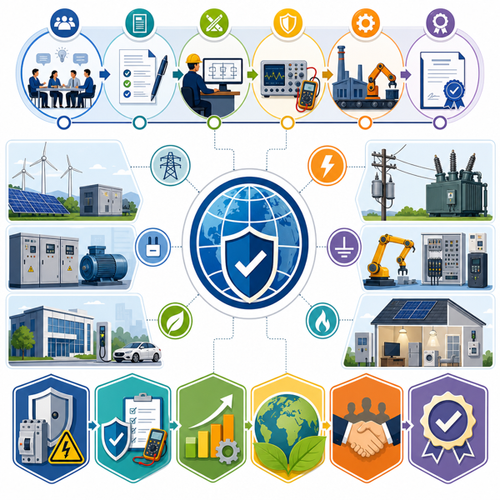
Key Electrical Engineering Standards: Ensuring Safety, Reliability, and Compliance
Electricity is the lifeblood of modern society, powering our industries, homes, hospitals, and cities. Yet, the seamless and safe delivery of electrical power isn’t a given—it relies on rigorous adherence to internationally recognized standards. In today's accelerated digital age and electrified industries, electrical engineering standards like SIST EN 50160:2023/A1:2025, SIST EN 61543:1998/A12:2006, and SIST EN IEC 61293:2020 play a pivotal role. These standards underpin not just the functionality and safety of power systems, but also drive productivity, security, and the capacity to scale operations securely.
This in-depth overview explores three of the most important electrical engineering standards, breaking down their purposes, technical requirements, and the tangible business benefits of compliance. Whether you’re a facility manager, manufacturer, grid operator, or non-specialist keen to understand the backbone of reliable electrical systems, this guide explains why adopting these standards is vital in 2025 and beyond.
Overview / Introduction
Electrical engineering sits at the heart of industrial progress and daily life, ensuring the reliable transmission, distribution, and application of electrical energy. Maintaining the safety, efficiency, and interoperability of components and networks is not a spontaneous outcome; it is achieved through adherence to carefully crafted standards. These standards are designed to protect people and property, guarantee the quality of power delivery, and provide a clear framework for product design, system integration, and maintenance.
- Why Standards Matter:
- Safety first: Prevent accidents and equipment failure.
- Quality assurance: Guarantee performance within predictable parameters.
- Legal and market access: Many markets and contracts now mandate standards compliance.
- Efficiency and scalability: Cut downtime, improve interoperability, and reduce long-term costs.
- Security: Prevent supply disruptions and mitigate emerging cyber-physical threats.
What You'll Learn:
- The scope, technical content, and applications of three critical electrical engineering standards
- Practical implications and compliance requirements
- Benefits for businesses and risks of neglect
- Best practices for adopting these standards
Now, let’s delve into the heart of these three standards shaping modern power systems and electrical products.
Detailed Standards Coverage
SIST EN 50160:2023/A1:2025 – Voltage Characteristics of Electricity Supplied by Public Electricity Networks
Full Title: Voltage characteristics of electricity supplied by public electricity networks
Power quality is a fundamental requirement for all users of electricity, affecting everything from sensitive industrial automation to household appliances. SIST EN 50160:2023/A1:2025 defines the basic rules for voltage quality at the point where the public electricity network connects to the end user, covering low, medium, high, and extra-high voltage networks.
What This Standard Covers:
This standard outlines the permissible limits and expected behaviors of supply voltage characteristics at user connection points within public European electricity networks. Industrial networks are not included, but it’s recommended that non-public networks serving similar end users comply as well.
Key Requirements and Specifications:
- Voltage Magnitude: Specifies allowable voltage variations, including nominal voltage bands and deviations for different voltage levels.
- Frequency: Defines how closely the supply frequency must match the nominal frequency (usually 50 Hz in Europe), and the allowed fluctuation intervals.
- Waveform Distortion: Limits on harmonics, interharmonics, and total harmonic distortion (THD).
- Flicker and Rapid Voltage Changes: Prescribes acceptable levels for visual flicker caused by voltage instability.
- Transient Events and Sags: Outlines the expected frequency and magnitude of short-duration voltage dips and overvoltages.
This standard applies during normal operating conditions, and outlines exceptions for abnormal conditions—such as during faults, maintenance, emergency repairs, or extraordinary events like severe weather or force majeure.
Who Needs to Comply?
- Transmission and distribution network operators
- Utilities responsible for public power systems
- Urban planners and large property management bodies (where local networks mimic public networks)
Practical Implications:
Implementing SIST EN 50160:2023/A1:2025 ensures that end-users receive electricity of predictable and safe quality. This reduces equipment failures, diminishes customer complaints, and lowers operational liability for network providers. It also provides manufacturers with benchmark parameters for designing and testing appliances and industrial equipment.
Notable Features:
- Can inform requirements in product and installation standards
- Supports complaint handling and network-user communication, while cost-sharing for resolutions is outside its direct scope
- Measurement methods referenced via EN 61000-4-30
Key highlights:
- Defines voltage quality standards for public electricity supply
- Covers voltage magnitude, frequency, waveform distortion, and rapid changes
- Sets a foundation for interoperability, complaint resolution, and supply reliability
Access the full standard:View SIST EN 50160:2023/A1:2025 on iTeh Standards
SIST EN 61543:1998/A12:2006 – Residual Current-Operated Protective Devices (RCDs) for Household and Similar Use – Electromagnetic Compatibility
Full Title: Residual current-operated protective devices (RCDs) for household and similar use - Electromagnetic compatibility
Safe electrical installations in households and similar environments depend on robust protective devices. SIST EN 61543:1998/A12:2006 establishes electromagnetic compatibility (EMC) requirements for residual current-operated devices (RCDs), critical for preventing electric shock and electrical fires.
What This Standard Covers:
This standard focuses on ensuring that RCDs, a key component of household and small commercial electrical installations, function reliably in the presence of electromagnetic disturbances. It specifies the immunity and emission requirements, test methods, and performance criteria for RCDs under real-world EMC conditions.
Key Requirements and Specifications:
- Immunity to Disturbances: RCDs must withstand common electromagnetic interference (EMI) from adjacent electronic devices without unwanted tripping or failure.
- Emission Limitation: RCDs themselves must not emit excessive EMI that could interfere with other equipment in the installation.
- Test Procedures: Prescribes laboratory and field-testing scenarios to validate the EMC robustness of both new and existing RCDs.
- Performance Validation: Includes criteria for response under direct and indirect application of EMI, lightning surges, radio-frequency interference, and static discharge.
Who Needs to Comply?
- Electrical equipment manufacturers, particularly those producing RCDs
- Installers and maintenance professionals in residential, commercial, and similar contexts
- Testing laboratories and conformity assessment bodies
Practical Implications:
With the proliferation of electronic devices in homes and offices, the risk of EMI affecting safety-critical devices like RCDs is rising. Compliance with this standard ensures real-world safety by confirming that RCDs will operate reliably even in complex electromagnetic environments. This ultimately reduces risk for consumers, building managers, and insurance providers alike.
Notable Features:
- Addresses immunity from transient and continuous disturbance sources
- Facilitates product certification and market access across the EU and beyond
- Provides a harmonized test framework for consistent evaluation of product performance
Key highlights:
- Ensures RCD effectiveness in high-EMC environments
- Mandates robust testing for immunity and emission control
- Protects end-users from electric shock and fire hazards due to EMC disruptions
Access the full standard:View SIST EN 61543:1998/A12:2006 on iTeh Standards
SIST EN IEC 61293:2020 – Marking of Electrical Equipment with Ratings Related to Electrical Supply – Safety Requirements
Full Title: Marking of electrical equipment with ratings related to electrical supply - Safety requirements (IEC 61293:2019)
Clear and accurate equipment marking is a cornerstone of safety and efficiency in electrical engineering, enabling users to select, install, and maintain products with confidence. SIST EN IEC 61293:2020 sets out minimum requirements for the identification and marking of electrical equipment to ensure safe connection to supply systems.
What This Standard Covers:
IEC 61293 provides fundamental marking rules for all electrical equipment, encompassing ratings like voltage, current, frequency, and power. It seeks to unify marking methods, symbols, and presentation so that electrical products can be properly identified and installed across diverse markets and supply systems.
Key Requirements and Specifications:
- Uniqueness and Visibility: Equipment must be marked with essential ratings and supply characteristics in a durable, visible manner during normal operation.
- Comprehensive Scope: Applies to a wide range of electrical equipment, assemblies, sub-assemblies, and components, without restriction to supply type or manufacturer.
- Technical Documentation: Marks must be present not only on hardware but also in accompanying technical files or manuals when necessary.
- Marking Standardization: Harmonizes symbols, sequence, and presentation order for voltage, current, power, and frequency, referencing internationally recognized standards where applicable.
- Clarity for Multi-Rated Devices: Outlines how to mark products with a range or set of supply characteristics.
- Updated References: Aligns with recent changes in related safety and conformity standards, including references to EU Directives (such as the 2014/35/EU Low Voltage Directive).
Who Needs to Comply?
- Product manufacturers and designers of electrical equipment
- Technical committees producing product standards
- System integrators and installers responsible for safe commissioning
Practical Implications:
By applying SIST EN IEC 61293:2020, manufacturers and installers can significantly reduce the risk of misconnections, overloads, or incompatibilities. This contributes to workplace safety, lowers the likelihood of costly damage or downtime, and streamlines regulatory approvals. Consistent marking also enables global market access by ensuring products conform to international buyers’ and inspectors’ expectations.
Notable Features:
- Supports uniformity in marking across multiple product lines and supply systems
- Facilitates compliance with European market regulations and directives
- Informs new product development and update processes via clear marking rules
Key highlights:
- Standardizes essential equipment rating labels
- Covers marking visibility, documentation, and symbol use
- Boosts safety, traceability, and legal compliance across supply chains
Access the full standard:View SIST EN IEC 61293:2020 on iTeh Standards
Industry Impact & Compliance
How These Standards Affect Businesses
Adherence to electrical engineering standards is not simply a technical concern—it’s a critical business decision. Ensuring compliance with standards like SIST EN 50160, SIST EN 61543, and SIST EN IEC 61293 brings tangible benefits:
- Market Access and Legal Requirements: Products and installations that comply with these standards can be sold, operated, or insured in major global markets. Many jurisdictions mandate compliance for building permits, operational licenses, or government contracts.
- Risk Mitigation: Following standards reduces liability and risk of legal action by ensuring consistent safety and performance.
- Customer Trust and Brand Reputation: Reliable, standards-based products and services build customer confidence and encourage repeat business.
- Operational Efficiency: Predictable voltage quality, robust RCD performance, and standardized markings all contribute to easier maintenance, interoperability, and rapid problem diagnosis.
- Scaling and Growth: Businesses can expand operations, integrate new technologies, and participate in international projects more easily, thanks to harmonized compliance.
Compliance Considerations
- Documentation: Keep detailed records of your design, installation, and testing procedures to demonstrate conformity.
- Certification: Consider third-party certification for critical components or systems—this is often required for legal operation or market entry.
- Ongoing Monitoring: Regularly assess network voltage quality, EMC performance, and marking legibility to ensure continued compliance.
- Staff Training: Provide ongoing education for technical staff and installers regarding changes and updates to relevant standards.
Risks of Non-Compliance
- Financial penalties and product recalls
- Regulatory enforcement actions leading to project delays or shutdowns
- Increased frequency of equipment failures and safety incidents
- Loss of insurance coverage or market reputation
Implementation Guidance
Common Implementation Approaches
- Early Integration: Integrate standard compliance checks in your product design and system planning stages, not just as a final review.
- Testing and Verification: Use certified laboratories and tools to verify voltage quality (SIST EN 50160), RCD EMC performance (SIST EN 61543), and equipment markings (SIST EN IEC 61293).
- Documentation Management: Maintain updated technical documentation, including compliance certificates, test reports, and marking schematics.
- Staff Competence: Train maintenance and installation personnel to recognize and implement standards-compliant procedures.
- Continuous Review: Stay informed about new updates, amendments, and best practices released by standards organizations.
Best Practices for Adopting These Standards
- Conduct regular internal audits to check for gaps in compliance.
- Invest in up-to-date testing equipment and develop in-house familiarity with relevant measurement methods (e.g., EN 61000-4-30 for voltage characteristics).
- Establish close relationships with accredited laboratories and compliance consultants.
- Incorporate standards references into procurement and vendor qualification processes.
- Frequently review and update labeling practices to remain aligned with the latest marking standards.
Resources for Organizations
- iTeh Standards online platform: A leading resource for the latest standards, guidance documents, and updates.
- National and international standards bodies: CENELEC, IEC, and national institutes offer updates and training.
- Industry associations and trade groups: Helpful for peer support and benchmarking best practices.
- Accredited testing labs: Provide certification and tailored testing solutions.
Conclusion / Next Steps
In an environment where electrical infrastructure is both mission-critical and increasingly complex, electrical engineering standards provide the foundation for safety, reliability, and business success. SIST EN 50160, SIST EN 61543, and SIST EN IEC 61293 govern the invisible yet indispensable qualities of voltage stability, safe equipment labeling, and protective device dependability. They ensure that electricity suppliers, manufacturers, and users benefit from a transparent, predictable, and safe electrical ecosystem.
Key Takeaways:
- These standards support organizational productivity by minimizing downtime, maximizing safety, and ensuring seamless scalability.
- Implementing standards not only meets legal and contractual mandates but also builds a reputation for quality and reliability.
- Proactive compliance, continuous education, and regular updates are crucial to derive lasting benefits.
Recommendations:
- Audit your existing systems and products against the latest versions of each standard.
- Engage with trusted sources like iTeh Standards for the authoritative texts and latest updates.
- Foster a culture of safety, compliance, and continual improvement within your teams.
Explore and implement these standards today to future-proof your electrical engineering projects and business—because in the age of electrification, robust standards are your blueprint for success.
Categories
- Latest News
- New Arrivals
- Generalities
- Services and Management
- Natural Sciences
- Health Care
- Environment
- Metrology and Measurement
- Testing
- Mechanical Systems
- Fluid Systems
- Manufacturing
- Energy and Heat
- Electrical Engineering
- Electronics
- Telecommunications
- Information Technology
- Image Technology
- Precision Mechanics
- Road Vehicles
- Railway Engineering
- Shipbuilding
- Aircraft and Space
- Materials Handling
- Packaging
- Textile and Leather
- Clothing
- Agriculture
- Food technology
- Chemical Technology
- Mining and Minerals
- Petroleum
- Metallurgy
- Wood technology
- Glass and Ceramics
- Rubber and Plastics
- Paper Technology
- Paint Industries
- Construction
- Civil Engineering
- Military Engineering
- Entertainment