


Plug-and-Socket Devices & Connectors: Core IEC Standards for Modern Electronics
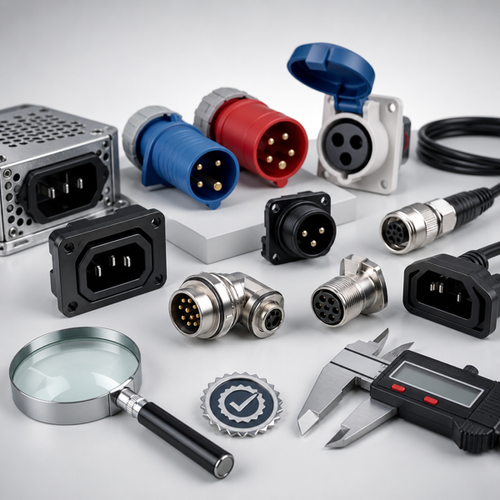
Ensuring the safety, reliability, and performance of plug-and-socket devices and connectors is paramount in today's fast-evolving electronics industry. From automated manufacturing lines to complex digital infrastructures, standards form the backbone of quality and interoperability. This article dives deep into four key international standards from the IEC series, each addressing critical requirements for spring clamp connections and circular connectors. Understanding and adopting these standards isn't just compliance—it's a strategic move for businesses adopting the latest technology, as it ensures robust scaling, heightened security, and increased productivity across operations.
Overview / Introduction
In the digital age, the role of plug-and-socket devices and connectors has expanded dramatically. Whether embedded in smart factories, renewable energy systems, or consumer electronics, connectors are essential for the seamless flow of power and data. As devices become more interconnected and systems grow more complex, the importance of robust, standardized connection solutions cannot be overstated.
Why do standards matter?
- Standards minimize design ambiguities, reduce failures, and foster global interoperability.
- They address safety, environmental, and operational performance—vital as industries drive towards automation and Industry 4.0.
- Compliance supports easier certification, faster scaling, and higher quality, while reducing legal and security risks.
This article offers a comprehensive yet accessible guide to four vital IEC standards:
- IEC 60352-7:2026 (Spring Clamp Solderless Connections)
- IEC 61076-2-104:2026 (M8 Circular Connectors)
- IEC 61076-2-111:2025 (M12 Power Circular Connectors)
- IEC 61076-2:2025 (General Sectional Specification for Circular Connectors)
You’ll gain clarity on what each standard covers, practical implementation issues, and why adopting these guidelines is indispensable for modern electronics businesses.
Detailed Standards Coverage
IEC 60352-7:2026 – Solderless Spring Clamp Connections
Solderless connections – Part 7: Spring clamp connections – General requirements, test methods and practical guidance
Scope: IEC 60352-7:2026 focuses on spring clamp connections for stripped wire (per IEC 60228 or IEC 60189-3), detailing the requirements, methods, and guidance for robust solderless connections in electrical equipment.
Spring clamp connections are prevalent in control panels, industrial automation, and terminals, offering rapid assembly without soldering or crimping – perfect for mass production and field installations.
Key requirements & specifications:
- Quality of workmanship: Only compliant materials, specified surface finishes, and designated dimensional tolerances are permitted.
- Mechanical reliability: Detailed physical tests, including tensile strength, vibration resistance, repeated connection cycles, and deflection force, ensure robust connections.
- Electrical performance: Mandates tests for contact resistance and current-carrying capacity, as well as temperature and corrosion endurance.
- Climatic and aging tests: Exposes samples to temperature cycling, damp heat, and mixed gas environments to validate durability.
- Guidance: Includes actionable advice on correct wire preparation, insertion, and tool use to avoid common installation errors.
- Innovations in Edition 3.0: Adds specific considerations for contact pressure via insulating materials (CoPI) and associated resilience testing (Annex B).
Who must comply?
- Manufacturers of terminal blocks and industrial wiring devices
- Electrical panel builders and OEMs in automation
- Field installers relying on tool-less, maintenance-friendly terminations
Practical implications:
- Robust wire-retention and cost-effective assembly for scalability
- Enhanced durability and uptime for critical infrastructure
- Clear documentation streamlines component sourcing and QA
Key highlights:
- Comprehensive test schedules for both general and specific cases
- Mechanical, electrical, and environmental performance validated
- Practical step-by-step guidance for real-world application
Access the full standard:View IEC 60352-7:2026 on iTeh Standards
IEC 61076-2-104:2026 – M8 Circular Connectors for Automation
Connectors for electrical and electronic equipment – Product requirements – Part 2-104: Circular connectors – Detail specification for circular connectors with M8 screw-locking or snap-locking
Scope: IEC 61076-2-104:2026 specifies the requirements for 3- to 12-way M8 circular connectors featuring either screw-lock or snap-lock mechanisms. These connectors, with an 8 mm nominal diameter, are engineered for the automation sector, supporting both signal and low-power applications (up to 50 V AC/60 V DC, and 4 A per contact).
Key requirements & specifications:
- Connection types: Multiple locking styles (screw, snap) for flexible integration.
- Configurations & coding: Multiple pin counts and codes (A, B, C, etc.) for easy identification and connection integrity.
- Mechanical/electrical performance: Defines insertion/withdrawal forces, contact resistance, insulation resistance, and vibration/shock requirements. Ensures IP protection for rugged installations.
- Environmental ratings: Climatic categories for temperature, humidity, and corrosion resistance enable reliable use in harsh or exposed locations.
- Marked for traceability: Prescribes clear marking of insulation materials and connectors for safe installation and quality tracking.
Who must comply?
- Automation OEMs designing modular sensors, actuators, controllers
- Cable assembly manufacturers and system integrators in process automation
- Engineers selecting connectors for fieldbus, robotics, and IoT installations
Practical implications:
- Reduces risk of mis-mating and connection error due to clear coding and defined mating tolerances
- Enables high-density wiring in control cabinets and field applications
- Supports modular factory networking and plug-and-play scalability
Key highlights:
- Standardizes up to 12-way connector designs for flexible automation
- Enforces robust IP protection and vibration resistance
- Provides rigorous test regimes for lifespan and field reliability
Access the full standard:View IEC 61076-2-104:2026 on iTeh Standards
IEC 61076-2-111:2025 – M12 Power Circular Connectors
Connectors for electrical and electronic equipment – Product requirements – Part 2-111: Circular connectors – Detail specification for power connectors with M12 screw-locking
Scope: IEC 61076-2-111:2025 is tailored to 4- to 6-way M12 circular connectors with screw-locking for power supply/power applications. With current ratings up to 16 A per contact and voltage ratings spanning 50 V AC/60 V DC or 630 V (depending on coding), it targets the connection of high-power devices in industrial premises.
Key requirements & specifications:
- Termination options: Multiple coding options (F, K, L, M, S, T, etc.) for diverse power applications
- Mechanical strength: Stipulates insertion/withdrawal forces, secure locking, and resilience against vibration and shock
- Environmental resilience: Rated for demanding climates and IP-protected enclosures
- Contact performance: Detailed measures for contact retention, insulation, and mechanical operations
- Testing: Comprehensive electrical (voltage, current, resistance), mechanical, and environmental testing
Who must comply?
- Industrial automation manufacturers in power control, robotics, or electric drives
- System integrators deploying decentralized power architectures
- Panel builders and field service engineers handling industrial-grade connectors
Practical implications:
- Ensures secure, scalable, and safe power connections for heavy industrial uses
- Facilitates robust wiring in distributed control systems, reducing downtime
- Enables consistent quality in rapidly expanding or upgrading electrical infrastructure
Key highlights:
- Meets high power handling and environmental durability needs
- Enables clear coding, marking, and alignment for error-free installation
- Test schedules validate both electrical and mechanical performance
Access the full standard:View IEC 61076-2-111:2025 on iTeh Standards
IEC 61076-2:2025 – Sectional Specification for Circular Connectors
Connectors for electrical and electronic equipment – Product requirements – Part 2: Sectional specification for circular connectors
Scope: IEC 61076-2:2025 provides a comprehensive framework and uniform technical requirements for all types of circular connectors, serving as a foundation for the development of detailed specifications under the IEC 61076 series. It is intended for use in conjunction with IEC 61076-1 (Generic Specification) and as a base for other connector standards.
Key requirements & specifications:
- System of performance and compatibility levels: Defines how connectors are qualified for various grades of reliability and interchangeability
- Climatic, electrical, and mechanical attributes: Classification of temperature, humidity, current-carrying, and other essential capabilities
- Critical dimensions: Standardizes engagement, mounting, and interface measurements to promote cross-manufacturer compatibility
- Testing and assessment: Outlines comprehensive schedules for minimum and advanced product verification (mechanical, electrical, environmental)
- Guidance for pin assignments, marking, and traceability: Supports clear system documentation and component management
Who must comply?
- All manufacturers and users of circular connectors in electronics, especially those developing new connector types or seeking multi-vendor compatibility
- Design engineers and product managers in electronics and industrial automation
Practical implications:
- Accelerates connector selection in product development, reducing time-to-market
- Guarantees baseline safety, reliability, and compatibility for all circular connectors
- Enables consistent quality assessment procedures internationally
Key highlights:
- Acts as a unifying platform across connector manufacturers and applications
- Integrates with specific application standards for all markets
- Adapts rapidly to evolving technology via detailed and modular specification structure
Access the full standard:View IEC 61076-2:2025 on iTeh Standards
Industry Impact & Compliance
The electronics sector is increasingly interconnected, digitalized, and safety‑critical. Against this backdrop, robust plug-and-socket standards are a non-negotiable necessity.
How Standards Affect Electronics Businesses
- Risk reduction: Clear reliability benchmarks reduce operational failures and legal exposure.
- Global market access: Standards-based designs meet essential requirements for international trade and contracts.
- Productivity: Plug-and-play compatibility minimizes downtime and speeds upgrades.
- Security: Standardized, certified connectors safeguard data and power against tampering, short-circuiting, and cyber-physical threats.
- Scalability: Modular, interoperable connection solutions adapt easily as systems grow or change.
Compliance Considerations
- Many regulatory agencies and end markets demand documented compliance with recognized standards (like IEC 60352 and 61076).
- Certification supports competitive market differentiation and access to high-value projects (smart factories, rail, building automation).
- Auditable test regimes underpin quality management systems (QMS) and supplier relationships.
Benefits of Adopting These Standards
- Significantly improves product quality and customer satisfaction
- Reduces installation and maintenance errors, lowering TCO (total cost of ownership)
- Enables rapid evolution as industrial systems integrate IoT, AI, and renewable energy extra efficiency for mass production and field operations
Risks of Non-Compliance
- Increased failure rates, recalls, and negative safety incidents
- Compliance breaches lead to market access restrictions and financial penalties
- Damaged reputation and loss of customer trust
Implementation Guidance
Implementing plug-and-socket device standards doesn't have to be daunting. Here are practical steps to streamline compliance and maximize the benefits:
Common Implementation Approaches
- Gap assessment: Review current connector and wiring solutions against new regulatory requirements and best practices outlined in the standards.
- Component selection: Source IEC-compliant connectors and assemblies from reputable manufacturers, ensuring traceability and marking.
- Staff training: Implement regular training for engineering, installation, and maintenance teams using standard-based documentation and guidance.
- Test and verification: Leverage standard-conformant testing protocols for batch qualification and supplier acceptance.
- Continuous improvement: Integrate feedback from the field to fine-tune specifications and elevate in-house quality procedures.
Best Practices
- Establish close partnerships with certified suppliers
- Incorporate standards references into design and QA documentation
- Use standard-compliant tooling and installation instructions
- Join industry forums to stay ahead of new standard developments
Resources for Organizations
- Access full text and updates via iTeh Standards
- Participate in IEC and national standards committees for insights and networking
- Engage with authorized certification bodies for conformity assessment and auditing
- Leverage manufacturer support and training programs for installation and maintenance best practices
Conclusion / Next Steps
Plug-and-socket devices and connector standards like IEC 60352-7:2026, IEC 61076-2-104:2026, IEC 61076-2-111:2025, and IEC 61076-2:2025 set a crucial foundation for today’s interconnected, safety-critical electronic systems. By ensuring compliance with these standards, technology-driven organizations can future-proof their products, scale rapidly, safeguard security, and maximize operational uptime.
Key takeaways:
- International standards support safe, high-performance, and interoperable electronics
- Proactive compliance is both a legal requirement and a key enabler of business growth
- Practical, actionable implementation ensures ongoing productivity and minimized risk
Recommendations:
- Assess your products and facilities for alignment with these IEC standards
- Train your teams and update procedures to include stepwise compliance
- Regularly check for updates and leverage resources like iTeh Standards for full texts, guidance, and emerging trends
Modern businesses can’t afford to overlook the competitive advantage of standards. Explore these guidelines today to secure scalable, safe, and future-ready electrical and electronic systems.
Categories
- Latest News
- New Arrivals
- Generalities
- Services and Management
- Natural Sciences
- Health Care
- Environment
- Metrology and Measurement
- Testing
- Mechanical Systems
- Fluid Systems
- Manufacturing
- Energy and Heat
- Electrical Engineering
- Electronics
- Telecommunications
- Information Technology
- Image Technology
- Precision Mechanics
- Road Vehicles
- Railway Engineering
- Shipbuilding
- Aircraft and Space
- Materials Handling
- Packaging
- Textile and Leather
- Clothing
- Agriculture
- Food technology
- Chemical Technology
- Mining and Minerals
- Petroleum
- Metallurgy
- Wood technology
- Glass and Ceramics
- Rubber and Plastics
- Paper Technology
- Paint Industries
- Construction
- Civil Engineering
- Military Engineering
- Entertainment