

Plug-and-Socket Devices and Connectors: Understanding the Essential Standards for Modern Electronics
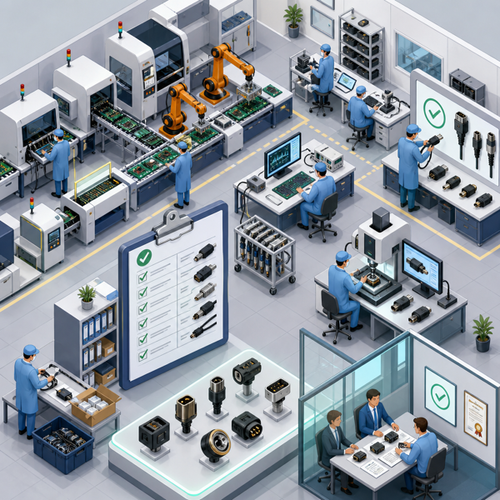
Plug-and-Socket Devices and Connectors: Understanding the Essential Standards for Modern Electronics
Plug-and-socket devices and connectors are the unseen backbone of today’s electronics, playing an essential role in everything from industrial automation to consumer devices. As businesses continue to adopt new technologies—from smart automation and IIoT (Industrial Internet of Things) to high-speed data infrastructure—the reliability, safety, and scalability of electrical connections become mission-critical. That’s why connector standards matter more than ever. This guide explores four major international standards that define the state of the art in plug-and-socket connection technology, ensuring robust, secure, and future-ready implementations.
Overview / Introduction
Why Connector Standards Matter
Today’s world runs on connectivity. Whether it’s machinery on a factory floor, high-speed data networks, building automation, or scalable power systems, the performance of these technologies relies on robust, standardized plug-and-socket devices and connectors. Adhering to internationally recognized standards doesn’t just safeguard performance—it ensures interconnectability, reduces downtime, mitigates risks, and supports the deployment of new technologies at scale.
In this article, you’ll discover:
- The scope and importance of four leading standards: EN IEC 60352-7:2026, EN IEC 61076-2-104:2026, EN IEC 61076-2-111:2026, and EN IEC 61076-2:2026
- Key requirements, technical features, and practical guidance for each
- How standardization facilitates productivity, security, and business growth
- Implementation tips and essential compliance insights
Detailed Standards Coverage
EN IEC 60352-7:2026 – Solderless Spring Clamp Connections
Solderless connections - Part 7: Spring clamp connections - General requirements, test methods and practical guidance
Spring clamp connections are now a standard solution for secure, reliable, and maintenance-friendly electrical terminations in everything from circuit breakers to control panels. EN IEC 60352-7:2026 provides definitive requirements for spring clamp connectors, focusing on the connection of stripped wire without the need for soldering or additional preparation.
The standard outlines:
- Scope covering spring clamp connections using wires per IEC 60228/60189-3
- General and safety requirements for spring clamp types
- Detailed test methods covering mechanical strength, vibration resistance, electrical contact reliability, and climatic stress
- Practical guidance on tool selection, proper wire stripping, and error avoidance in installation
Target industries/organizations:
- Industrial automation
- Building electrical systems
- Appliance and control equipment manufacturers
These requirements help users avoid common faults—such as improper stripping or torque—that could lead to thermal failures or unreliable circuits. Extensive test schedules (mechanical, electrical, and climatic tests) ensure connectors perform under the stresses common to industrial and commercial environments, helping businesses achieve low-maintenance, high-reliability installations.
Key highlights:
- Strict test methods for reliability across mechanical, electrical, and environmental stresses
- Coverage for solid and stranded wires in a range of industry-standard sizes
- Inclusive of practical and tool guidance for field installation teams
Access the full standard:View EN IEC 60352-7:2026 on iTeh Standards
EN IEC 61076-2-104:2026 – M8 Circular Connectors with Screw- or Snap-Locking
Connectors for electrical and electronic equipment - Product requirements - Part 2-104: Circular connectors - Detail specification for circular connectors with M8 screw-locking or snap-locking
In today’s fast-evolving automation sector, miniaturized circular connectors have become a go-to solution for both power and signal applications. EN IEC 61076-2-104:2026 defines the performance and compatibility rules for M8 connectors—a compact yet robust solution widely used in sensor/actuator cabling, robotics, and compact automation systems.
This standard covers:
- 3- to 12-way* circular connectors with M8 screw-locking or an 8 mm snap-locking interface
- Application in signal and low-power transmission up to 50 V AC / 60 V DC, and up to 4 A per contact
- Details on connector coding, pin assignments, and environmental performance
- Mechanical, electrical, and climatic test schedules
- Clear definitions for dimensions, mating properties, and ingress protection (IP ratings)
Target industries/organizations:
- Industrial and process automation
- Robotics
- Measurement and control technology manufacturers
Implementing connectors according to this standard guarantees cross-compatibility, streamlines procurement and maintenance, and supports the demands of high-density, modular system designs. This is crucial for scaling digital operations and ensuring reliability in environments that are subject to vibration, shock, and frequent connect/disconnect cycles.
Key highlights:
- Full specification for M8 connectors with robust locking mechanisms
- Support for multiple coding and contact layouts (3-12 ways)
- Defined test requirements for mechanical, electrical, and climatic performance
Access the full standard:View EN IEC 61076-2-104:2026 on iTeh Standards
EN IEC 61076-2-111:2026 – M12 Power Connectors
Connectors for electrical and electronic equipment - Product requirements - Part 2-111: Circular connectors - Detail specification for power connectors with M12 screw-locking
Power transmission in harsh industrial settings demands both compactness and security. The EN IEC 61076-2-111:2026 standard addresses M12 screw-locking circular connectors—capable of safely carrying up to 16 A per contact and voltages up to 630 V, depending on coding.
Scope includes:
- 4- to 6-way connectors for power supply in industrial applications
- Mechanical and electrical specifications for robust M12 screw-lock design
- Multiple coding options for voltage and current needs
- Guidance on contact resistance, insulation, shock, vibration, and environmental testing
- Full dimensional and interface definitions to support worldwide supply chain alignment
Target industries/organizations:
- Automation & machinery builders
- Power distribution unit (PDU) manufacturers
- Transport/infrastructure electronics
Adoption means safe, dependable power connections, simplifying wiring design and system repair while meeting global reliability standards. This ensures that industrial power systems remain robust under stress and resistant to the challenges of modern smart factories.
Key highlights:
- Power-focused M12 connectors rated up to 16 A and 630 V
- Mechanically and environmentally resilient design
- Flexible system design via coding and pin layouts for multiple applications
Access the full standard:View EN IEC 61076-2-111:2026 on iTeh Standards
EN IEC 61076-2:2026 – Sectional Specification for Circular Connectors
Connectors for electrical and electronic equipment - Product requirements - Part 2: Sectional specification for circular connectors
The foundation for all detailed connector standards, EN IEC 61076-2:2026 provides a unified framework for all circular connector types. It lays down:
- General specifications for circular connectors
- Reference to generic requirements (IEC 61076-1)
- Harmonized system for performance and compatibility levels
- Climatic category classification and current-carrying capacity requirements
- Guidance for clearance and creepage distances to ensure safe operation under varying voltages
- Mechanical, transmission, and other operational characteristics
- Standardized test schedules for both basic and full qualification
Target industries/organizations:
- Connector and electronics manufacturers
- Electrical equipment designers
- Testing & certification bodies
This standard is indispensable for organizations developing new connector variants or assuring supplier compliance, ensuring a seamless approach to plug-and-socket device design and system integration across diverse applications.
Key highlights:
- Baseline sectional specification for all circular connectors
- Clarity on safety and compatibility levels
- Supports preparation and evaluation of detailed connector specifications
Access the full standard:View EN IEC 61076-2:2026 on iTeh Standards
Industry Impact & Compliance
How These Standards Shape Business Success
Plug-and-socket devices and connectors must perform reliably to ensure industrial productivity, workplace safety, and system security. For businesses rolling out digitalization, advanced automation, or critical infrastructure upgrades, compliance with the latest connector standards delivers:
- Productivity: Reduced downtime, easier maintenance, and straightforward upgrades mean faster deployments and efficient troubleshooting.
- Security: Standardized connectors lower the risk of electrical faults, unsafe connections, and incompatible replacements that could lead to costly failures or hazards.
- Scalability: Modular, standards-compliant connectors support rapid growth and adaptation, enabling businesses to easily scale systems or integrate new technology.
- Interoperability: Ensures seamless integration across equipment from different manufacturers and future-proofs investment.
- Regulatory alignment: Streamlined global trade and reduced certification hurdles thanks to harmonized requirements.
Risks of Non-Compliance
- Increased likelihood of system failures, fire, or operator injury
- Invalidated certifications or product recalls
- Interruptions to digital transformation efforts or automation scaling
- Higher operational costs due to custom solutions or non-standard repairs
Implementation Guidance
Best Practices for Embracing Connector Standards
- Gap Assessment: Review existing hardware and wiring practices against the latest standards; prioritize alignment in high-impact areas (power distribution, critical signals, automation controls).
- Supplier Audit: Source only from manufacturers that declare conformity to EN/IEC connector standards. Always check certification documentation.
- Staff Training: Provide electricians, maintenance engineers, and automation teams with up-to-date training on correct installation and connector specification selection.
- Testing and Validation: Adopt the standard’s test schedules as part of your quality assurance process during new installations and maintenance cycles.
- Document Control: Maintain clear documentation of connector types, codings, and test results to simplify audits, troubleshooting, and compliance recordkeeping.
Resources for Organizations
- Training: Many standards bodies and industry associations offer training on standards implementation.
- Consultancy: For complex upgrades or compliance assurance, consult with a certified standards implementation partner.
- Digital Tools: Leverage configuration and compatibility tools provided by leading connector manufacturers.
- Ongoing Monitoring: Stay informed about updates and amendments; standards are periodically revised to capture new technological advances.
Conclusion / Next Steps
Connector standards like EN IEC 60352-7:2026, EN IEC 61076-2-104:2026, EN IEC 61076-2-111:2026, and EN IEC 61076-2:2026 form the bedrock of modern plug-and-socket device implementation. Their rigorous requirements guarantee that new technology rollouts are safe, productive, and scalable—vital for any business pursuing digital transformation or upgrading infrastructure.
Key takeaways:
- Standards-based connectors underpin productivity, safety, and future scalability.
- Effective implementation involves technical alignment, supplier audit, staff training, and attention to evolving industry requirements.
- iTeh Standards offers fully referenced documentation and easy access to all connector standards discussed here.
Recommendations:
- Evaluate your systems and procurement strategies in light of these standards.
- Train your staff and audit your supply chain for compliance.
- For deeper insights and up-to-date compliance resources, explore the referenced standards on iTeh Standards and stay ahead in your industry.
Categories
- Latest News
- New Arrivals
- Generalities
- Services and Management
- Natural Sciences
- Health Care
- Environment
- Metrology and Measurement
- Testing
- Mechanical Systems
- Fluid Systems
- Manufacturing
- Energy and Heat
- Electrical Engineering
- Electronics
- Telecommunications
- Information Technology
- Image Technology
- Precision Mechanics
- Road Vehicles
- Railway Engineering
- Shipbuilding
- Aircraft and Space
- Materials Handling
- Packaging
- Textile and Leather
- Clothing
- Agriculture
- Food technology
- Chemical Technology
- Mining and Minerals
- Petroleum
- Metallurgy
- Wood technology
- Glass and Ceramics
- Rubber and Plastics
- Paper Technology
- Paint Industries
- Construction
- Civil Engineering
- Military Engineering
- Entertainment