


Nuclear Power Plant Safety: Key Standards for Condition Monitoring and Reliable Power Systems
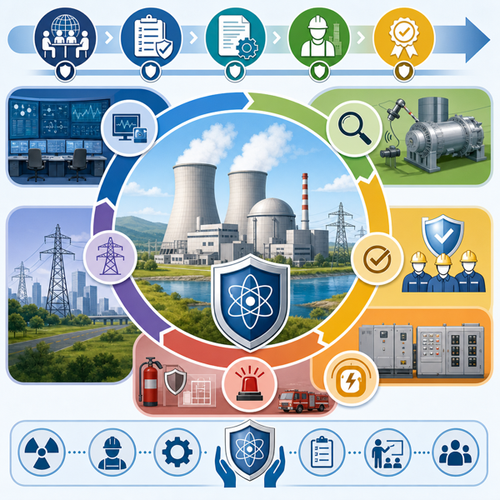
Nuclear Power Plant Safety: Key Standards for Condition Monitoring and Reliable Power Systems
Ensuring the highest possible level of safety, productivity, and reliability is fundamental in the nuclear energy sector. As nuclear plants incorporate new technologies, three international safety standards play a critical role in condition monitoring and resilient power systems. This comprehensive guide demystifies EN IEC/IEEE 62582-4:2026, IEC 61225:2025, and IEC/IEEE 63332-387:2024, offering an accessible overview of their requirements, impact, and practical implementation for business leaders and technical professionals alike.
Overview / Introduction
Nuclear power plants are at the heart of our global energy infrastructure, providing vast amounts of stable, low-carbon electricity. Given the inherent risks associated with radioactive materials and the need for fail-safe operation, stringent standards govern every aspect of nuclear plant safety.
With digitalization, ageing equipment, cybersecurity risks, and economic pressures, nuclear operators must now balance reliable operations with continual modernization. Safety standards are no longer just regulatory hurdles; they are strategic enablers for operational excellence, scaling, and public confidence.
In this article, you'll discover:
- Why nuclear safety standards are a must when implementing new technologies
- How condition monitoring methods and power system requirements are defined
- Who should comply and the broader industry implications
- How these standards improve security, scalability, and productivity
The standards discussed—EN IEC/IEEE 62582-4:2026, IEC 61225:2025, and IEC/IEEE 63332-387:2024—form a foundation for safe, efficient, and resilient nuclear facility operation.
Detailed Standards Coverage
EN IEC/IEEE 62582-4:2026 - Electrical Equipment Condition Monitoring Using Oxidation Induction Techniques
Full Title: Nuclear power plants – Instrumentation and control important to safety – Electrical equipment condition monitoring methods – Part 4: Oxidation induction techniques
This standard specifies cutting-edge methods for the condition monitoring of organic and polymeric materials in instrumentation and control (I&C) systems at nuclear power plants. The focus is on using oxidation induction techniques to assess the ageing and degradation of materials—primarily those based on polyolefins, ethylene-propylene polymers, and ethylene vinyl acetate.
What Does This Standard Cover?
EN IEC/IEEE 62582-4:2026 defines procedures for sample preparation, measurement, calibration, and reporting. The techniques (oxidation induction time—OIT—and oxidation induction temperature—OITP) are vital for:
- Assessing thermal ageing and chemical stability of cable insulations and other critical polymeric components
- Supporting ageing management programs and equipment qualification
- Enabling predictive maintenance and life extension strategies
Key Requirements and Specifications
- Scope: Applies to polyolefin and related polymers in safety-related I&C equipment
- Core Methods: Utilizes differential scanning calorimetry (DSC) and other thermal analysis for precise measurement of material degradation
- Measurement Procedures: Clear requirements for sample preparation (size, handling), calibration, temperature profiles, gas flow, and determination of oxidation onset
- Data Reporting: Standardized approach for documenting and interpreting thermograms, along with reporting guidelines
- Applicability: Intended for test laboratories, nuclear facility operators, systems evaluators, and regulators
Practical Implications
Implementing this standard enables:
- More accurate tracking of equipment ageing, reducing costly unexpected failures
- Informed replacement scheduling for cables and components
- Enhanced compliance with international equipment qualification frameworks
- Data-driven risk management and long-term cost reduction
Notable Features
- Harmonized with both IEC and IEEE approaches for truly international applicability
- Includes example measurement reports and guidelines for interpreting data
- Aligned with IAEA safety terminology and principles
Key highlights:
- Enables precise tracking of polymer aging in safety-critical systems
- Supports predictive maintenance—reducing downtime and maintenance costs
- Increases safety and regulatory compliance for nuclear facility operators
Access the full standard:View EN IEC/IEEE 62582-4:2026 on iTeh Standards
IEC 61225:2025 - Requirements for Static Uninterruptible DC and AC Power Supply Systems
Full Title: Nuclear power plants – Instrumentation, control and electrical power systems – Requirements for static uninterruptible DC and AC power supply systems
Modern nuclear power plants require power systems with extremely high reliability and resilience. IEC 61225:2025 provides the comprehensive requirements for low-voltage static uninterruptible power supply (SUPS, including both DC and AC types) in nuclear facilities, covering their design, performance, functional characteristics, and compatibility with I&C systems.
What Does This Standard Cover?
IEC 61225:2025 defines how nuclear facilities must specify, design, and operate static UPS systems, which are essential to ensure continuous power for safety-related loads—especially during grid disturbances or internal faults. Static UPS units do not rely on rotating parts (unlike diesel generators), offering increased reliability and minimal maintenance.
Key Requirements and Specifications
- Performance Criteria: Specifies input and output voltage/frequency tolerance, transfer/holdover times, waveform quality, redundancy, and monitoring features
- System Boundaries and Load Allocation: Defines how UPS systems interface with plant distribution, critical loads, and safety-classified equipment
- Functional requirements: Includes battery sizing, charger characteristics, inverter and bypass switch design, and strategies for DC/DC converters
- Monitoring and Protection: Encompasses system health monitoring, fault detection, and necessary protections for supply quality
- Testing and Maintenance: Prescribes routine and type testing, qualification for seismic and electromagnetic compatibility, and maintenance programs
- Applicability: Used for new nuclear power plants (including advanced plants and Small Modular Reactors), as well as for upgrades to existing facilities
Practical Implications
- Ensures that critical systems (such as reactor protection, emergency lighting, control systems) can operate uninterrupted during all operational states and emergencies
- Reduces risk of single-point failures and cascading outages
- Supports redundancy and physical separation to meet regulatory safety goals
- Essential for modernizing old nuclear facilities to current safety standards
Notable Features
- Covers a wide range of failure scenarios—grid faults, voltage surges, and more
- Clarifies requirements for SMRs (small modular reactors) and facilities with passive safety features
- Aligns with IAEA and other IEC/IEEE safety and design standards
Key highlights:
- Guarantees continuous power for vital safety systems at all times
- Reduces downtime, business risk, and compliance costs
- Supports digital upgrades and integration of new I&C technologies
Access the full standard:View IEC 61225:2025 on iTeh Standards
IEC/IEEE 63332-387:2024 - Diesel Generator Units Applied as Standby Power Sources
Full Title: Nuclear facilities – Electrical power systems – Diesel generator units applied as standby power sources
In situations where external power or static battery/UPS supplies are unavailable, diesel generator (DG) units serve as the last line of defense in nuclear facility power reliability. IEC/IEEE 63332-387:2024 lays down criteria for the design, application, qualification, and testing of DG units used as safety-class standby power supplies.
What Does This Standard Cover?
This standard details the entire lifecycle management of diesel generator units for new nuclear facilities as well as retrofits and safety upgrades for existing plants. It defines rigorous protocols for design, production, qualification, and testing to ensure DG units meet functional and reliability demands under design-basis events.
Key Requirements and Specifications
- Principal Design Criteria: Sets out requirements for mechanical and electrical capability, power rating, load acceptance, and environmental resilience (e.g., seismic qualifications)
- Design Features: Addresses redundancy, physical separation, control systems, condition monitoring, and status communication
- Factory and Site Testing: Specifies a comprehensive suite of tests—including start/stop cycles, load run, margin, endurance, fault, and synchronizing tests
- Qualification: Covers type-testing, site acceptance, ageing management, ongoing surveillance, and documentation
- Operational Testing and Surveillance: Mandates regular preventive maintenance, performance tracking, and analysis of reliability metrics
- Applicability: Encouraged for implementation in legacy plants, with requirements that boost both regulatory standing and actual plant resilience
Practical Implications
- Provides assurance that DG units will start and deliver power when most needed—especially during loss of offsite power
- Reduces risk of catastrophic failures or cascading safety issues
- Standardizes procedures for reliability, documentation, and compliance with global nuclear safety regulations
Notable Features
- Harmonized approach integrating lessons learned from recent industry events (e.g., Fukushima)
- Supports both immediate and long-duration emergency operations
- Includes ageing and reliability program guidelines for extending equipment life and reducing lifecycle costs
Key highlights:
- Ensures diesel generators are always ready for emergency standby
- Bolsters plant safety and public trust during grid interruptions or unexpected events
- Enables strategic maintenance, upgrades, and cost-effective operation
Access the full standard:View IEC/IEEE 63332-387:2024 on iTeh Standards
Industry Impact & Compliance
How These Standards Affect Businesses
Across the nuclear sector, compliance with these international standards is both a regulatory expectation and a foundation for business sustainability. Implementing EN IEC/IEEE 62582-4:2026, IEC 61225:2025, and IEC/IEEE 63332-387:2024:
- Reduces the risk of unplanned outages, equipment failures, and safety incidents
- Satisfies licensing conditions and audit requirements imposed by regulators
- Enhances corporate reputation for safety—and by extension, public acceptance
- Enables insurance, financing, and government support through demonstrable risk management
Compliance Considerations
- Regular internal audits, third-party inspections, and documentation are essential
- Non-compliance can lead to fines, mandated shutdowns, reputational damage, and even legal liabilities
- Standards provide a universal language and process for integrating new digital technologies into existing plant infrastructure safely
Benefits of Adopting These Standards
- Improved operational reliability and extended equipment life
- Data-driven maintenance, reducing unnecessary repairs and downtime
- Higher productivity from advanced monitoring and mitigation capabilities
- Streamlined scaling of plant capacity and new reactor deployment
- Future-proofing nuclear facilities for cyber, physical, and operational challenges
Risks of Non-Compliance
- Increased vulnerability to equipment failures and blackouts
- Regulatory action, penalties, or loss of license to operate
- Higher maintenance and replacement costs
- Reduced investor, public, and insurer confidence
Implementation Guidance
Common Implementation Approaches
- Gap Analysis: Assess existing systems against new or revised standards
- Upgrade Planning: Develop prioritized improvement plans for monitoring, power supply, and backup systems
- Staff Training: Ensure personnel understand both requirements and context
- System Testing: Conduct routine and special tests to verify compliance and document evidence
- Data Integration: Use digital monitoring tools for real-time asset management and reporting
- Continuous Improvement: Implement lessons learned from audits, incidents, and best practices
Best Practices
- Embed standard requirements in procurement protocols for new equipment
- Apply predictive maintenance using condition monitoring data to schedule replacements proactively
- Conduct regular drills with simulated power loss and emergencies to ensure system readiness
- Collaborate with international peers to benchmark and refine safety strategies
Resources for Organizations
- Access detailed standard documentation and support materials via iTeh Standards
- Leverage training and consulting from accredited nuclear safety experts
- Engage with regulatory agencies for guidance on evolving compliance landscapes
- Adopt digital asset management solutions aligned with standard requirements
Conclusion / Next Steps
Adopting world-class safety standards is not just a compliance obligation for nuclear facility operators—it is a strategic imperative. EN IEC/IEEE 62582-4:2026, IEC 61225:2025, and IEC/IEEE 63332-387:2024 offer a blue-print for condition monitoring, uninterruptible power supply design, and reliable diesel backup.
Key takeaways:
- Safety standards in nuclear power plants are essential for productivity, scalability, security, and public trust
- These standards enable effective adoption of new technologies and digital modernization
- Maintaining up-to-date compliance reduces risk, protects assets, and ensures long-term sustainability
Recommendations:
- Start with a focused assessment to identify compliance gaps
- Prioritize upgrades to condition monitoring and power supply systems as outlined in these standards
- Regularly train staff and update procedures in alignment with evolving requirements
Stay informed, stay compliant, and ensure your nuclear facility is ready for the challenges—and opportunities—of tomorrow’s energy landscape.
Explore these and other critical nuclear power plant safety standards on iTeh Standards to support your journey to greater safety, efficiency, and innovation.
Categories
- Latest News
- New Arrivals
- Generalities
- Services and Management
- Natural Sciences
- Health Care
- Environment
- Metrology and Measurement
- Testing
- Mechanical Systems
- Fluid Systems
- Manufacturing
- Energy and Heat
- Electrical Engineering
- Electronics
- Telecommunications
- Information Technology
- Image Technology
- Precision Mechanics
- Road Vehicles
- Railway Engineering
- Shipbuilding
- Aircraft and Space
- Materials Handling
- Packaging
- Textile and Leather
- Clothing
- Agriculture
- Food technology
- Chemical Technology
- Mining and Minerals
- Petroleum
- Metallurgy
- Wood technology
- Glass and Ceramics
- Rubber and Plastics
- Paper Technology
- Paint Industries
- Construction
- Civil Engineering
- Military Engineering
- Entertainment