


Essential Safety Standards for Nuclear Power Plants: Enhancing Security, Productivity, and Scale
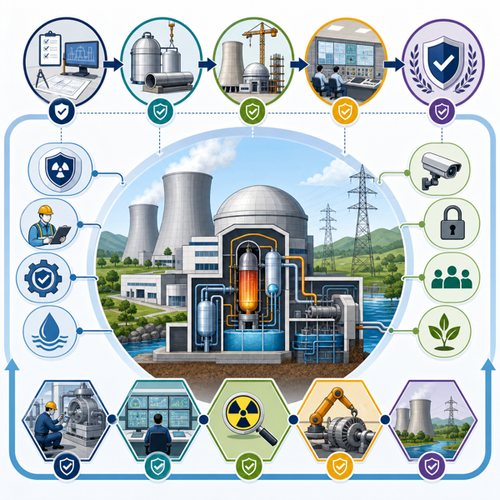
Nuclear power stands at the heart of the world’s drive toward secure, efficient, and sustainable energy. Safeguarding nuclear facilities and the environment is a top priority, making the adoption and implementation of recognized safety standards absolutely essential for businesses and industry professionals alike. This article provides a comprehensive public-friendly overview of three critical international standards that shape safety practices and operational excellence in nuclear power plants today—demonstrating how standards compliance drives productivity, security, and scaling for organizations globally.
Overview / Introduction
Nuclear energy remains a cornerstone of modern power generation, supplying reliable electricity to millions while aiming for the highest safety and environmental standards. As the nuclear sector evolves, so do the expectations for the secure management of radioactive materials, precise monitoring of emissions, and reliable operation of complex plant infrastructure.
Implementing robust safety standards is no longer optional—it is a business imperative. International standards ensure that ventilation systems, radioactive effluent sampling, and critical insulation materials are designed, used, and maintained with demonstrable efficacy and compliance. This article dives into three pivotal ISO standards that every nuclear energy operator, supplier, engineer, or regulator should understand:
- ISO 16659-2:2026: In-situ efficiency test methods for iodine traps using radioactive tracers
- ISO 20041-1:2022: Standardized sampling of tritium and carbon-14 in nuclear effluents
- ISO 23466:2020: Design criteria for thermal insulation of reactor coolant system components
By the end, you’ll have an actionable understanding of these standards, their key requirements, and practical guidance for leveraging them to bolster nuclear plant safety, compliance, and performance.
Detailed Standards Coverage
ISO 16659-2:2026 - In-situ Efficiency Testing for Iodine Traps in Nuclear Ventilation
Ventilation systems for nuclear facilities — In-situ efficiency test methods for iodine traps with solid sorbent — Part 2: Radioactive CH3I method
Iodine traps are a vital part of nuclear facility ventilation systems: they prevent the release of radioactive iodine into the environment, fulfilling both safety regulations and corporate social responsibility. ISO 16659-2:2026 specifically introduces a reproducible, safety-focused test method for determining the in-situ efficiency of iodine traps using radioactive methyl iodide (CH3I) as a tracer.
Scope and Application: This standard addresses:
- Direct measurement of the decontamination factor of an iodine trap in its actual installation (not just lab conditions).
- Safety requirements for workers, public, and the environment during test procedures using radioactive tracers.
- Tool requirements, accuracy expectations, and methodology for reliable, comparable testing.
It is primarily relevant for facilities monitoring gaseous radioactive iodine releases (especially with low inventories), such as nuclear power stations, research labs, and facilities with high-integrity ventilation systems.
Key Requirements and Specifications:
- Test Principle: Radioactive methyl iodide (CH3I) is injected into the ventilation duct. Quantities are sampled both upstream and downstream of the iodine trap, with results used to calculate the actual decontamination factor.
- Applicable to Various Sorbents: Although the method is designed for impregnated activated carbon traps, it can be adapted for alternative sorbents, such as silver-doped zeolites.
- Test Equipment: Specified requirements for injection and sampling devices, charcoal cartridges, measurement instruments (gamma spectrometer for radioactivity), and monitoring of humidity and temperature.
- Worker and Environmental Safety: Detailed protocols to limit exposure, manage radioactive material, and ensure that test conditions do not lead to hazardous contamination.
- Comparative Analysis: Enables operators to compare real-world trap efficiency with safety benchmarks and legislative limits, supporting both operational safety and regulatory reporting.
Who Needs to Comply:
- Nuclear power plant operators
- Nuclear facility ventilation system designers and maintainers
- Laboratories handling radioactive iodine
- Regulators and safety inspectors assessing compliance
Practical Implications:
- Establishes a conservative, realistic measure of ventilation safety.
- Helps identify equipment degradation or operational issues before they pose a safety risk.
- Supports trend analysis and long-term reliability planning for air filtration systems.
- Ensures legal and public trust in nuclear safety operations.
Key highlights:
- Defines in-situ testing using radioactive methyl iodide, reflecting real-world efficiency of iodine traps.
- Prioritizes comprehensive safety measures for workers and the environment during tests.
- Delivers a reproducible, reference method supporting compliance with national and international regulations.
Access the full standard:View ISO 16659-2:2026 on iTeh Standards
ISO 20041-1:2022 - Sampling Methods for Tritium and Carbon-14 in Gaseous Effluents
Tritium and carbon-14 activity in gaseous effluents and gas discharges of nuclear installations — Part 1: Sampling of tritium and carbon-14
The release of radioactive materials, especially tritium and carbon-14, through gaseous discharges is a regulated aspect of nuclear facility operations. ISO 20041-1:2022 sets out internationally accepted methods for reliably sampling these isotopes, critical for both regulatory compliance and environmental stewardship.
Scope and Application:
- Applies to nuclear facilities producing and discharging gaseous effluents during both operation and decommissioning stages.
- Covers methods for identifying optimal sample extraction locations, transport and collection of air samples, and preliminary measurement protocols.
- Provides a framework for setting up, evaluating, and maintaining sampling systems suitable for later detailed analysis of tritium and carbon-14 activity.
Key Requirements and Specifications:
- Sampling Location Criteria: Emphasizes representative sampling from well-mixed duct or stack airflows, using CFD modeling and tracer gas where necessary.
- System Design: Addresses leakage, transport line integrity, and collector specifications to avoid contamination or measurement errors.
- Sampling Techniques: Includes bubbling, molecular sieves, and condensation methods for effective physical collection of radioactive gases and vapors.
- Operational Guidance: Instructions for safe access, minimizing worker exposure, and proper sample documentation (sampling sheets and follow-up sheets provided).
- Exclusions: Does not include real-time measurement—refer instead to ISO 2889 for those protocols.
Who Needs to Comply:
- Nuclear facility environmental and safety managers
- Air emission monitoring professionals
- Regulatory and compliance officers
- Environmental consultants supporting nuclear entities
Practical Implications:
- Ensures accurate monitoring of controlled radioactive discharges.
- Provides defensible data for environmental permitting, public reports, and compliance audits.
- Minimizes the risk of false negatives or sampling errors that could threaten regulatory status or environmental health.
- Lays groundwork for further analysis and reporting (to be addressed in future ISO 20041 parts).
Key highlights:
- Standardizes sample withdrawal, extraction, and transport for tritium and carbon-14 in gaseous discharges.
- Prevents environmental contamination via robust system design and operational protocols.
- Facilitates transparent, regulator-accepted emissions monitoring.
Access the full standard:View ISO 20041-1:2022 on iTeh Standards
ISO 23466:2020 - Design Criteria for Thermal Insulation in Reactor Coolant Systems
Design criteria for the thermal insulation of reactor coolant system main equipments and piping of PWR nuclear power plants
Efficient and safe reactor operation depends on the reliable insulation of high-temperature equipment and piping. ISO 23466:2020 specifies the foundational requirements for designing both metallic and non-metallic thermal insulation, directly addressing safety, reliability, and maintainability in pressurized water reactor (PWR) environments.
Scope and Application:
- Focuses on the reactor coolant system (RCS), notably insulation of the reactor pressure vessel (RPV), associated piping, and ancillary components.
- Provides detailed criteria for both metallic and non-metallic insulation materials, design logic, and supporting calculations.
- Referenceable for other reactor types beyond PWRs, supporting harmonized global best practices.
Key Requirements and Specifications:
- Safety Considerations:
- Insulation must not interfere with critical safety systems (e.g., emergency core cooling), even in accident scenarios or after insulation breakage.
- Surface temperatures of the insulation must be regulated to prevent worker injury.
- Requirements for seismic, vibration, and general structural integrity.
- Material Selection:
- Metallic insulation (typically austenitic stainless steel) relies on low emissivity to reduce heat transfer.
- Non-metallic insulation (fibers, microporous materials) must demonstrate radiation resistance, low fire/fungi risk, and minimal hazardous byproducts.
- All materials must be proven resistant to operational and environmental stressors over the entire design life.
- Thermal and Mechanical Design:
- Thermal insulation thickness is calculated based on detailed heat transfer equations (flat and cylindrical walls), considering operational heat loss limits and safety margins.
- Mechanical properties tested under load combinations (weight, vibration, seismic, adjacent equipment stress) to guarantee structural soundness.
- Provisions for conservative assumptions where modeling is difficult, bolstering design confidence.
- Documentation and Testing:
- Mandates heat transmission testing of insulation panels, representative of real-life conditions.
- Requires mechanical properties validation (tensile, compression, vibration, connection strength) before mass production.
- Maintenance, inspection, and replacement are integrated in design planning, supporting operational efficiency and cost control.
Who Needs to Comply:
- Nuclear plant engineers and designers
- Insulation material manufacturers and suppliers
- Reactor equipment vendors
- Operations and maintenance teams
- Regulatory inspectors and safety auditors
Practical Implications:
- Supports thermal efficiency (reducing energy waste), system longevity, and maintenance safety.
- Reduces operational risk and cost through robust, tested insulation solutions.
- Facilitates safer working environments and minimizes accident potential.
Key highlights:
- Holistic design criteria for insulation materials, thermal and mechanical behavior in PWR coolant systems.
- Integrates safety, reliability, and lifecycle maintenance from specification through implementation.
- Applies robust testing and qualification standards for both materials and finished insulation systems.
Access the full standard:View ISO 23466:2020 on iTeh Standards
Industry Impact & Compliance
Elevating Nuclear Facility Operations
Adopting these ISO standards delivers substantial advantages for nuclear sector organizations:
- Enhanced Safety: Implementing standards like ISO 16659-2:2026 and ISO 23466:2020 means incorporating rigorous safety requirements that protect workers, the public, and the environment from nuclear and radiological risks.
- Regulatory Compliance: Standards represent internationally recognized benchmarks. Compliance reduces exposure to legal penalties, streamlines licensing, and supports reliable reporting to regulatory bodies.
- Operational Efficiency & Productivity: Standard-driven procedures (such as regular in-situ iodine trap testing and effective insulation management) translate to optimized plant performance, reduced waste, and addressed bottlenecks before they become severe.
- Public Trust and Market Position: Transparent application of safety standards reassures stakeholders, communities, and investors of your proactive commitment to safe, ethical nuclear operations.
- Credible Benchmarking: Consistent methods for monitoring, data recording, and analysis support internal improvement as well as external audits and accreditations—enabling scaling and business growth.
Risks of Non-Compliance
- Regulatory Sanctions: Non-compliance can result in fines, operating restrictions, or forced shutdowns.
- Loss of Market Access: Many international projects and markets require verifiable compliance with recognized standards.
- Increased Safety Incidents: Without proven standards-based practices, the risk of accidents or system degradation increases.
- Reputational Harm: Any lapse in visible compliance can damage trust with governments, investors, and citizens, affecting long-term viability.
Implementation Guidance
Practical Adoption Strategies
Initial Gap Assessment:
- Evaluate current operational practices and documentation against the requirements in each standard. Identify priority actions for closing compliance gaps.
Training and Competency Building:
- Ensure all relevant staff are trained on procedural details and safety provisions outlined in the standards.
- Use scenario-based training for emergency, test execution, and maintenance situations.
Procurement and Materials Alignment:
- Audit material suppliers and contractors for standard conformity, particularly for insulation materials (ISO 23466:2020) and test equipment.
Procedure and Routine Integration:
- Integrate standardized testing and sampling into normal operations. Use standardized sampling sheets, maintenance logs, and test protocols to build traceable records.
Safety and Environmental Controls:
- Implement the standards’ prescribed protection measures for worker, public, and environmental safety—especially where radioactive materials are handled.
- Establish clear waste management systems for any radioactive byproducts or used testing materials.
Continuous Improvement:
- Schedule regular reviews using test and inspection data to improve systems, address emerging risks, and maintain compliance as standards and regulator expectations evolve.
Resources for Organizations
- Use the iTeh Standards platform to access the latest versions of ISO standards, guidance notes, national equivalents, and amendments.
- Seek support from industry consortia, national nuclear safety agencies, or technical consultants with proven implementation experience.
- Participate in workshops, webinars, and professional forums dedicated to nuclear facility management and safety compliance.
Conclusion / Next Steps
Understanding and implementing international nuclear safety standards is a must in today’s regulatory, operational, and public-facing environment. The three ISO standards discussed—ISO 16659-2:2026 (iodine trap efficiency), ISO 20041-1:2022 (gaseous emission sampling), and ISO 23466:2020 (thermal insulation design)—lay the groundwork for robust safety, efficiency, and accountability frameworks in nuclear power generation.
Key Takeaways:
- Safety standards are foundational to legal compliance, operational excellence, public trust, and long-term scaling for nuclear energy organizations.
- Adopting and integrating ISO requirements minimizes risk, boosts productivity, and streamlines regulatory processes.
- Ongoing training, documentation, and continuous improvement are essential for sustained compliance.
Recommendations:
- Regularly review and update internal policies to reflect the most current safety standards.
- Use the iTeh Standards platform to stay ahead of regulatory changes and access full, authoritative standard texts and support materials.
- Engage personnel at all levels in standards awareness and safety culture initiatives.
Nuclear safety isn’t just a regulatory checkbox—it’s a strategic advantage. Explore, implement, and lead with the best practices found in the world’s leading nuclear power plant safety standards. To get started or dive deeper, visit the authoritative resources available from iTeh Standards.
Categories
- Latest News
- New Arrivals
- Generalities
- Services and Management
- Natural Sciences
- Health Care
- Environment
- Metrology and Measurement
- Testing
- Mechanical Systems
- Fluid Systems
- Manufacturing
- Energy and Heat
- Electrical Engineering
- Electronics
- Telecommunications
- Information Technology
- Image Technology
- Precision Mechanics
- Road Vehicles
- Railway Engineering
- Shipbuilding
- Aircraft and Space
- Materials Handling
- Packaging
- Textile and Leather
- Clothing
- Agriculture
- Food technology
- Chemical Technology
- Mining and Minerals
- Petroleum
- Metallurgy
- Wood technology
- Glass and Ceramics
- Rubber and Plastics
- Paper Technology
- Paint Industries
- Construction
- Civil Engineering
- Military Engineering
- Entertainment