


Nuclear Power Plant Safety: Key International Standards for Equipment Reliability and Emergency Power
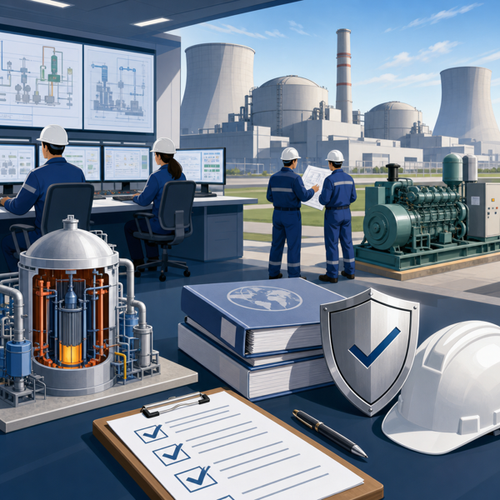
Nuclear Power Plant Safety: Key International Standards for Equipment Reliability and Emergency Power
Safety, reliability, and emergency preparedness are at the heart of every nuclear power plant’s operational philosophy. Organizations worldwide depend on stringent international standards to guide safe implementation, ongoing maintenance, and modernization as they adopt new technologies. Three pivotal standards play a central role: EN IEC/IEEE 62582-4:2026, addressing the monitoring of electrical equipment ageing; IEC 61225:2025, defining the requirements for static uninterruptible power systems; and IEC/IEEE 63332-387:2024, focused on diesel generator standby power for emergency resiliency. Embracing these frameworks is a must for businesses focused on security, cost-effective scaling, regulatory compliance, and innovation in nuclear energy.
Overview / Introduction
Nuclear power plants are among the most tightly regulated and scrutinized facilities worldwide, given their potential impact on both public safety and the environment. With today’s rapid technological advances—ranging from digital instrumentation to new materials—there is a heightened need for up-to-date, harmonized standards. These standards serve multiple critical functions:
- Enhancing safety and security: By establishing rigorous protocols, they ensure that nuclear facilities meet or exceed internationally accepted safety benchmarks.
- Facilitating the integration of new technologies: New methods, materials, and digital systems require evolving guidance to maintain and improve safety margins.
- Boosting operational productivity and resilience: Standardized monitoring and backup strategies minimize equipment failures and downtime, enabling effective scaling and modernization.
- Meeting regulatory and legal requirements: Standards provide the transparency and traceability regulators and stakeholders demand.
In this article, we detail three cornerstone standards for nuclear power plant safety—clarifying their scope, practical implications, and the business benefits of their adoption. Whether you are a plant operator, system designer, regulator, or interested member of the public, this guide provides accessible, actionable insights into nuclear safety standards.
Detailed Standards Coverage
EN IEC/IEEE 62582-4:2026 – Oxidation Induction Techniques for Electrical Equipment Monitoring
Full Title: Nuclear power plants – Instrumentation and control important to safety – Electrical equipment condition monitoring methods – Part 4: Oxidation induction techniques
Safety-critical electrical equipment in nuclear power plants ages over time, especially when exposed to harsh operating environments. EN IEC/IEEE 62582-4:2026 is an internationally harmonized standard detailing reliable ways to monitor the condition of these materials using oxidation induction techniques. This is crucial for managing ageing in polymeric and organic materials, preventing unforeseen failures, and assuring long-term safety.
The standard specifies:
- Methods for measuring oxidation induction time (OIT) and oxidation induction temperature (OITP), both used as indicators of material degradation.
- Requirements for sample preparation, instrumentation, calibration, and reporting protocols, enabling accurate and reproducible measurements.
- Applicability to various polymeric materials (e.g., polyolefin, ethylene propylene, and ethylene vinyl acetate polymers) used in cables, insulation, and other vital equipment.
- Utilization in both type qualification (before installation) and ongoing condition monitoring during service.
For nuclear operators, compliance mitigates the risk of age-related failures, supports predictive maintenance, and feeds into equipment qualification strategies. The standard is also referenced within a larger framework that includes IEC/IEEE 62582-1 and IEC/IEEE 60780-323, ensuring compatibility with both IEC and IEEE regimes.
Key highlights:
- Enables predictive maintenance through accurate material ageing assessment
- Reduces unscheduled downtime and extends equipment service life
- Supports safe implementation of modernization and digital retrofits
Access the full standard:View EN IEC/IEEE 62582-4:2026 on iTeh Standards
IEC 61225:2025 – Static Uninterruptible Power Supply (SUPS) Systems
Full Title: Nuclear power plants – Instrumentation, control and electrical power systems – Requirements for static uninterruptible DC and AC power supply systems
Uninterruptible power is a backbone requirement for nuclear safety—especially for systems protecting the reactor, maintaining cooling, and ensuring safe shutdown. IEC 61225:2025 establishes comprehensive requirements for the design, performance, and functionality of static uninterruptible power supply (SUPS) systems in nuclear power plants, including both DC and AC variants. Unlike rotating UPS systems, a SUPS uses no moving parts, improving both reliability and maintainability.
Key elements of the standard:
- Defines performance criteria to ensure power quality, voltage and frequency stability, and fault tolerance essential for instrumentation, control, and loads critical to plant safety.
- Specifies requirements for batteries, battery chargers, inverters, converters, bypass switches, and downstream distribution systems.
- Addresses electromagnetic compatibility (EMC), seismic qualification, redundancy, segregation (to avoid common cause failures), earthing, monitoring, protection, and ageing management.
- Articulates special guidance for passive plant designs and small modular reactors (SMRs), enabling innovation and advances in plant architecture while maintaining rigorous safety.
Implementing this standard helps organizations safeguard mission-critical I&C and safety-related systems, avoid costly interruptions during mains failures, and supports digital plant upgrades. It is an essential reference for new builds, retrofits, and facility upgrades, ensuring that SUPS systems support all facets of nuclear safety.
Key highlights:
- Guarantees robust, continuous power to essential safety systems during all operational and emergency modes
- Incorporates best practices in power divisioning, redundancy, and monitoring
- Facilitates compliance for new plants (including SMRs and digitalized systems) and upgrades to existing facilities
Access the full standard:View IEC 61225:2025 on iTeh Standards
IEC/IEEE 63332-387:2024 – Diesel Generator Units as Standby Power Sources
Full Title: Nuclear facilities – Electrical power systems – Diesel generator units applied as standby power sources
Diesel generator (DG) units are a last line of defense against loss of offsite power and are vital for maintaining safety, especially during emergencies or grid instability. IEC/IEEE 63332-387:2024 is a joint IEC and IEEE standard that provides a comprehensive framework for the design, qualification, site testing, maintenance, and operation of DG units as standby AC power sources.
The standard:
- Defines principal design criteria, including mechanical and electrical capabilities, redundancy, and nuclear-specific reliability requirements.
- Details qualification requirements—e.g., load capability, seismic performance, start and load acceptance, ageing management, and component categorization—for both new and retrofitted units.
- Covers extensive production, site acceptance, and operational testing protocols, including simulation of accident and loss-of-offsite-power scenarios.
- Provides guidelines for preventive maintenance, ongoing surveillance, record-keeping, and performance benchmarking.
This unified approach—harmonizing the best practices from both the IEC and IEEE—is crucial for plant operators, design engineers, and regulatory authorities. Adopting the standard means greater confidence in emergency preparedness and helps fulfill regulatory requirements for highly reliable onsite power at nuclear facilities.
Key highlights:
- Defines detailed criteria for sizing, testing, and maintenance of diesel generators as nuclear standby power sources
- Supports both new-build nuclear facilities and retrofitting/upgrading of existing plants
- Improves reliability and regulatory acceptance for emergency power infrastructure
Access the full standard:View IEC/IEEE 63332-387:2024 on iTeh Standards
Industry Impact & Compliance
Adopting these standards delivers transformative benefits for nuclear operators, suppliers, and technology vendors.
Why These Standards Are Essential in the Modern Landscape
- New technology integration: As plants migrate towards digitalization (e.g., digital I&C, smart sensors), standards like EN IEC/IEEE 62582-4:2026 ensure effective equipment monitoring and qualification.
- Regulatory alignment: International and national regulatory authorities increasingly require explicit reference to these core standards for operating licenses, periodic reviews, and upgrades.
- Productivity and scaling: Through predictive maintenance, increased equipment lifespan, and standardized test procedures, facilities can scale up or modernize with confidence, minimizing unplanned outages.
- Security and reliability: SUPS and reliable DG backup ensure that safety-critical systems remain operational during all conceivable events—ranging from electrical faults to natural disasters—supporting rapid, coordinated emergency response.
- Risk mitigation: Non-compliance exposes organizations to regulatory action, reputational damage, or catastrophic failure.
Compliance in Practice
- Assessment of current infrastructure: Gap analyses against the standards help prioritize upgrade needs and resources.
- Supplier alignment: Procurement specifications can require conformance with these standards, driving uniformity across system integrators and manufacturers.
- Documentation and traceability: Following standard protocols greatly simplifies audits, incident investigations, and regulatory reporting.
Implementation Guidance
Getting Started with Nuclear Safety Standards
- Establish a multi-disciplinary team: Include electrical, instrumentation and control (I&C), maintenance, operations, and safety specialists.
- Conduct a standards compliance assessment: Review current systems, procedures, and maintenance records, comparing them to the requirements in EN IEC/IEEE 62582-4:2026, IEC 61225:2025, and IEC/IEEE 63332-387:2024.
- Prioritize gaps: Develop an implementation roadmap based on risk, cost-benefit, and regulatory deadlines.
- Engage with suppliers and experts: Work with qualified vendors and, if needed, standards consultants to ensure all equipment and procedures meet or exceed requirements.
- Update operational, maintenance, and training procedures: Ensure personnel understand both the technical requirements and the rationale behind the standards.
- Plan for ongoing monitoring: Leverage condition monitoring methods (e.g., oxidation induction for polymers) and robust surveillance testing (e.g., diesel generator runs and SUPS transfer simulations).
Best Practices for Adoption
- Regular Training and Knowledge Sharing: Keep teams updated on standard revisions and best practices.
- Continuous Improvement: Use insights from monitoring and testing to drive process enhancements.
- Strong Documentation Culture: Maintain meticulous records, both for compliance and to inform future upgrades.
- Leverage Digital Tools: Adopt digital asset management systems for tracking inspections, tests, and maintenance—integrating condition monitoring results with reliability-centered maintenance programs.
Resources for Organizations
- iTeh Standards Platform - Nuclear Power Standards Collection
- IEC, IEEE, and CENELEC official guidance and interpretation documents
- Industry associations such as the IAEA and WANO
- Technical consultants specializing in nuclear safety compliance and digital modernization
Conclusion / Next Steps
As the nuclear industry navigates the twin challenges of modernization and uncompromising safety, a commitment to international standards is non-negotiable. EN IEC/IEEE 62582-4:2026, IEC 61225:2025, and IEC/IEEE 63332-387:2024 jointly provide the foundation for:
- Enhanced predictive maintenance strategies
- Uninterrupted power delivery to all safety-critical systems
- Fast, dependable emergency power backup
- Seamless integration of new technologies and digitalized systems
- Risk reduction and improved stakeholder confidence
Nuclear operators, system designers, and suppliers are encouraged to review their current practices and prioritize full compliance. By doing so, organizations not only ensure safety and regulatory alignment, but also future-proof their assets for years to come.
Stay proactive, stay compliant, and explore the full standards today: the path to a safer, more resilient nuclear sector starts with best-in-class guidance.
Categories
- Latest News
- New Arrivals
- Generalities
- Services and Management
- Natural Sciences
- Health Care
- Environment
- Metrology and Measurement
- Testing
- Mechanical Systems
- Fluid Systems
- Manufacturing
- Energy and Heat
- Electrical Engineering
- Electronics
- Telecommunications
- Information Technology
- Image Technology
- Precision Mechanics
- Road Vehicles
- Railway Engineering
- Shipbuilding
- Aircraft and Space
- Materials Handling
- Packaging
- Textile and Leather
- Clothing
- Agriculture
- Food technology
- Chemical Technology
- Mining and Minerals
- Petroleum
- Metallurgy
- Wood technology
- Glass and Ceramics
- Rubber and Plastics
- Paper Technology
- Paint Industries
- Construction
- Civil Engineering
- Military Engineering
- Entertainment