


Understanding Key Standards for Cooking Ranges, Work Tables, Ovens, and Similar Appliances
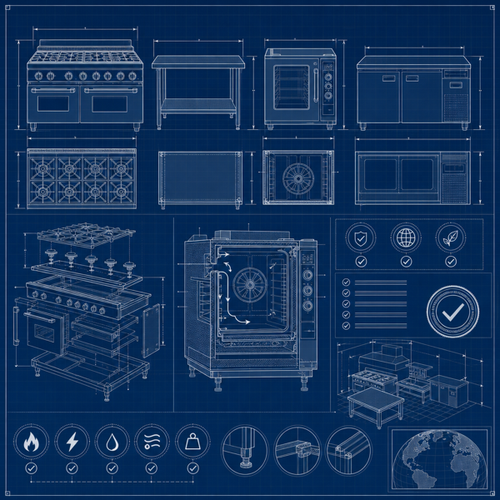
Cooking ranges, working tables, ovens, and similar appliances are at the heart of any culinary operation—whether in restaurants, hotels, catering businesses, or household kitchens. Ensuring these appliances are not just efficient but also safe and reliable is essential for business success, consumer confidence, and regulatory compliance. Modern international standards have become the cornerstone for achieving consistent performance, cutting-edge security, and scalable operations in today's competitive food service environment. In this article, we explore three authoritative standards: SIST EN 203-2-4:2005 for gas heated fryers, SIST EN 60350-2:2018 for household electric hobs, and SIST EN IEC 60335-2-37:2025/A11:2025 for commercial electric fryers. Adopting these standards is not just about compliance—it’s an investment in productivity, safety, and growth.
Overview / Introduction
The entertainment and hospitality sectors demand robust standards for cooking ranges, working tables, ovens, and other kitchen appliances. From large-scale catering events to home-based culinary experiences, the need for equipment that meets the highest benchmarks is more pressing than ever. Not only do these standards set safety requirements and energy efficiency criteria, but they also provide performance guidelines that help organizations scale their operations securely and productively. This article offers an accessible yet thorough guide to three essential standards covering fryers and hobs, shedding light on their impact, application, and practical value.
Benefits of Standardization in Kitchen Appliances
- Enhances operational safety for staff and customers
- Enables more efficient energy use, leading to lower costs
- Facilitates consistent food quality and quicker service
- Supports easier maintenance and safer handling
- Boosts brand reputation and trust through demonstrated compliance
In the sections below, we break down each standard, what it covers, and why adherence is a must for any professional or household kitchen aiming for excellence.
Detailed Standards Coverage
SIST EN 203-2-4:2005 – Specific Requirements for Gas Heated Fryers
Gas heated catering equipment – Part 2-4: Specific requirements – Fryers
What this standard covers: SIST EN 203-2-4:2005 lays out precise construction and performance requirements for commercial gas heated fryers. Its primary focus is on safety, rational use of energy, and comprehensive marking guidelines for fryers used in professional kitchens. The standard covers type testing procedures for fryers, ensuring that only products meeting strict safety and energy use benchmarks make it to market.
Key requirements and specifications:
- Appliance design must prevent oil or fat from reaching burners or insulation
- Fryers must feature proper drainage devices and clearly marked oil level guides
- Temperature regulation and overheat protection systems are mandatory
- Appliances must be accessible, easy to clean, and energy-efficient
- Comprehensive instructions for use, maintenance, and data plate labeling
Who needs to comply:
- Commercial kitchen operators
- Equipment manufacturers and suppliers
- Large-scale food service providers (restaurants, caterers, hotels)
- Regulatory and safety inspection bodies
Practical implications for implementation: Implementing this standard ensures robust protection from fire risks, optimizes energy consumption, and leads to safer, more reliable fryer operation. Proper marking improves staff training and operational safety, while clearer maintenance and cleaning instructions reduce downtime and hazards.
Key highlights:
- Safety-focused construction prevents oil fires and burns
- Rational energy use reduces operational costs and environmental impact
- Comprehensive instructions support staff training and maintenance
Access the full standard:View SIST EN 203-2-4:2005 on iTeh Standards
SIST EN 60350-2:2018 – Methods for Measuring Performance of Household Electric Hobs
Household electric cooking appliances – Part 2: Hobs – Methods for measuring performance
What this standard covers: SIST EN 60350-2:2018 (aligned with IEC 60350-2:2017) defines reliable, repeatable methods for assessing the performance of electric hobs (stovetops) in household settings. It is applicable to both built-in and freestanding hobs, including those integrated into cooking ranges. The document outlines test procedures and measurement criteria for energy consumption, control accuracy, heat distribution, and low-power modes, promoting transparent and comparable performance results.
Key requirements and specifications:
- Clear definitions for flexible and induction cooking zones (cooking areas)
- Standardized and alternative cookware setups for testing
- Procedures to measure energy consumption simulating real-world cooking
- Revised measurement protocols for temperature control and heat distribution
- Compliance options for low-power and standby mode requirements
Who needs to comply:
- Appliance manufacturers and brands seeking CE marking
- Testing laboratories and certification agencies
- Retailers focusing on energy-efficient products
- Consumers interested in comparing product performance
Practical implications for implementation: Manufacturers designing or marketing hobs in Europe must ensure products undergo these standardized tests, thus delivering reliable, energy-efficient, and high-performing appliances. Transparent performance data benefits both suppliers and consumers, paving the way for informed purchasing decisions and better energy management.
Key highlights:
- Consistent, transparent measurement of hob performance
- Integration with ecodesign and low-power consumption regulations
- Supports accurate product comparisons for both professionals and consumers
Access the full standard:View SIST EN 60350-2:2018 on iTeh Standards
SIST EN IEC 60335-2-37:2025/A11:2025 – Safety of Commercial Electric Doughnut Fryers and Deep Fat Fryers
Household and similar electrical appliances – Safety – Part 2-37: Particular requirements for commercial electric doughnut fryers and deep fat fryers
What this standard covers: SIST EN IEC 60335-2-37:2025/A11:2025 introduces updated safety requirements and construction provisions for commercial electric doughnut fryers and deep fat fryers. This amendment harmonizes the standard with Low Voltage and Machinery Directives (LVD and MD), ensuring state-of-the-art protection from electrical, mechanical, and operational hazards in commercial kitchens. The scope includes user instructions, ergonomic and stability requirements, lid design, and enhanced construction details.
Key requirements and specifications:
- Appliances must include safety features such as temperature sensors, overheat cut-outs, and ergonomic lid handles
- Marking and instructions must emphasize safe use and maintenance
- Structural requirements for mechanical stability, particularly for standalone and tabletop appliances
- Guidance on preventing spillage and accidental burns
- Operator instructions for correct training, use of personal protective equipment (PPE), and safe cleaning procedures
Who needs to comply:
- Manufacturers of commercial kitchen equipment
- Equipment importers and distributors
- Commercial kitchen operators and food service businesses
Practical implications for implementation: Implementing this standard significantly increases user safety, reduces the chances of workplace accidents, and ensures appliances are easy to use and maintain. The updated marking, operational clarity, and focus on noise, ergonomics, and mechanical hazards all contribute to highly productive, secure, and regulation-compliant food preparation environments.
Key highlights:
- Comprehensive electrical and mechanical safety measures for commercial fryers
- Clear, user-oriented instructions and markings to guide safe operation
- Enhanced requirements for construction, ergonomic design, and maintenance
Access the full standard:View SIST EN IEC 60335-2-37:2025/A11:2025 on iTeh Standards
Industry Impact & Compliance
The adoption of rigorous standards in cooking ranges, work spaces, and ovens delivers wide-ranging benefits beyond regulatory box-ticking. The hospitality and entertainment sectors, in particular, rely on the proven benchmarks these standards establish.
How Standards Affect Businesses
- Safety: Drastically lowers the risk of fire, burns, electrical shocks, and mechanical accidents
- Productivity: Reduces appliance downtime and maintenance costs; supports continuous kitchen operations during busy periods
- Legal Compliance: Meets mandatory CE and EU directives for placement on the European market
- Customer Confidence: Reinforces credibility with stakeholders, insurers, and regulatory authorities
- Sustainability: Promotes energy-efficient cooking, aligning with eco-friendly business goals
Risks of Non-Compliance
- Legal fines, recalls, or bans on non-conforming products
- Increased liability and insurance costs
- Reputational harm in the event of safety incidents
Adhering to these standards is not just smart business—it’s a basic prerequisite for scaling reliably in a competitive industry. The momentum towards safer and more sustainable kitchen appliances will only continue as consumer and legislator expectations rise.
Implementation Guidance
Executing a successful transition to standardized kitchen appliances is a strategic imperative for both new market entrants and established organizations. Below are actionable steps and best practices for organizations aiming to comply:
Common Implementation Approaches
- Initial Gap Assessment: Conduct a thorough review of current appliances and procedures against relevant standards.
- Staff Training and Education: Provide training on new equipment features, safety protocols, and maintenance requirements as outlined in the standards.
- Supplier Engagement: Source products only from manufacturers that demonstrate third-party certification or compliance with standards like SIST EN 203-2-4, SIST EN 60350-2, and SIST EN IEC 60335-2-37.
- Documentation and Marking Review: Confirm all equipment is properly labeled, complete with operating instructions, safety warnings, and maintenance guidelines.
- Regular Audits and Testing: Implement periodic checks to ensure ongoing compliance, especially when appliances are replaced or upgraded.
Best Practices for Adoption
- Choose appliances carrying CE or equivalent marks and referenced standards
- Integrate regular compliance and safety checks into maintenance cycles
- Centralize supplier management to ensure a single compliance assurance process
- Establish clear operational manuals tailored to your staff’s experience level
- Promote a culture of safety and energy efficiency
Resources for Organizations
- Engage with certification and testing labs with ISO/IEC 17025 accreditation
- Refer to user guides and instruction manuals included with compliant appliances
- Keep abreast of updates by subscribing to reputable standards organizations like IEC, CENELEC, and iTeh Standards
- Participate in sector-specific safety and compliance workshops
Conclusion / Next Steps
International standards for cooking ranges, work tables, ovens, and similar appliances unlock powerful advantages in safety, energy efficiency, and operational scalability. As regulations tighten and markets become more discerning, forward-thinking organizations—large and small—are weaving these standards into every aspect of their kitchen operations.
By embracing protocols set out by SIST EN 203-2-4:2005, SIST EN 60350-2:2018, and SIST EN IEC 60335-2-37:2025/A11:2025, businesses are not only protecting their teams and guests but also ensuring sustainable, cost-efficient, and future-proofed growth.
Recommendations for Organizations
- Conduct a standards audit to identify compliance gaps
- Upgrade equipment as required to meet or exceed the latest benchmarks
- Train all staff in the safe operation and maintenance of new appliances
- Monitor evolving standards and implement continuous improvements
Explore these standards in-depth at iTeh Standards and stay ahead in safety, performance, and compliance for your kitchen operations.
Categories
- Latest News
- New Arrivals
- Generalities
- Services and Management
- Natural Sciences
- Health Care
- Environment
- Metrology and Measurement
- Testing
- Mechanical Systems
- Fluid Systems
- Manufacturing
- Energy and Heat
- Electrical Engineering
- Electronics
- Telecommunications
- Information Technology
- Image Technology
- Precision Mechanics
- Road Vehicles
- Railway Engineering
- Shipbuilding
- Aircraft and Space
- Materials Handling
- Packaging
- Textile and Leather
- Clothing
- Agriculture
- Food technology
- Chemical Technology
- Mining and Minerals
- Petroleum
- Metallurgy
- Wood technology
- Glass and Ceramics
- Rubber and Plastics
- Paper Technology
- Paint Industries
- Construction
- Civil Engineering
- Military Engineering
- Entertainment