


Playground Equipment Safety Standards: Swings, Slides, and Rockers Demystified
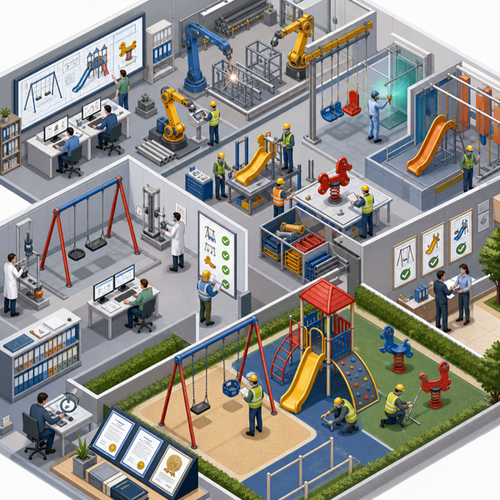
Ensuring playground safety is no longer a luxury—it is an absolute necessity for modern public spaces, schools, and businesses specializing in recreational environments. In today’s fast-growing playground industry, robust safety standards not only minimize risks and hazards but also bolster productivity, enhance playground security, and support business scalability. This ultimate guide explores three essential playground equipment safety standards—specifically for swings, slides, and rocking equipment. By understanding these internationally recognized requirements, playground operators and businesses can cultivate safer and more enjoyable play spaces while demonstrating their commitment to community welfare and regulatory compliance.
Overview / Introduction
Playgrounds serve an indispensable role in children’s physical development, social interaction, and overall well-being. With increased demand for high-quality recreational facilities, the stakes have never been higher for playground safety. Recent studies consistently link compliant playground design and maintenance to lower injury rates, improved user confidence, and greater public utilization. This makes adhering to playground equipment safety standards an operational must for public authorities, schools, private playground businesses, and any organization dedicated to providing quality play facilities.
This article breaks down three major international standards:
- SIST EN 1176-2:2008 for swings
- SIST EN 1176-3:2008 for slides
- SIST EN 1176-6:2018 for rocking equipment
You’ll find:
- Plain-language summaries of what each standard covers
- Key requirements and unique features
- Practical implications for playground owners and designers
- Implementation advice and compliance strategies
Whether you’re an industry professional, a school administrator, or a concerned parent, understanding these essential playground safety norms is the first step in safeguarding children, empowering communities, and future-proofing your business.
Detailed Standards Coverage
SIST EN 1176-2:2008 - Additional Safety Requirements and Test Methods for Swings
Playground Equipment and Surfacing – Part 2: Additional Specific Safety Requirements and Test Methods for Swings
This standard delivers explicit safety parameters and test procedures for swings intended for permanent installation in public and private playgrounds. It extends the general requirements defined in EN 1176-1 by addressing hazards unique to swings—one of playgrounds’ most popular but potentially hazardous attractions.
Scope & Target Audience
The standard covers equipment where a user sits or stands below a pivot or universal joint, allowing swinging movement. It applies primarily to traditional swing structures (single-axis, multi-axis, single-point, and group swings), specifying requirements for:
- Equipment design
- Siting and installation
- Impact attenuation
- Suspension systems
Anyone involved in manufacturing, designing, installing, or operating swings—schools, municipalities, and commercial playground owners—should comply.
Core Requirements
- Ground and seat clearance: Detailed minimum distances based on swing type
- Suspension security: Chains/ropes must be robust and properly anchored
- Impact attenuation: Mandated for all swing seats; average values taken from multiple impact tests
- Falling space zones: Defines required clear areas and surfacing to minimize injury risk
- Special rules: For contact swings, single-point swings, and swings with rotational axes
Practical steps include using certified impact-absorbing surfaces, ensuring ample clearance around the swinging arc, and regular suspension integrity checks. The standard features guidance on the design and placement (Annex A) and outlines thorough test protocols for confirming compliance.
Key highlights:
- Enhanced safety for a wide variety of swing types
- Stringent dynamic load testing for frames and suspension
- Specific impact tests and required clearances to prevent common injuries
Access the full standard:View SIST EN 1176-2:2008 on iTeh Standards
SIST EN 1176-3:2008 - Additional Safety Requirements and Test Methods for Slides
Playground Equipment and Surfacing – Part 3: Additional Specific Safety Requirements and Test Methods for Slides
Slides are among the most beloved playground features but also carry considerable risk if not designed, installed, and maintained properly. This standard rigorously defines safety requirements for various slide configurations—free-standing, embankment, tunnel, and multi-track slides.
Scope & Exclusions
Applies to permanently installed slides for children, except for waterslides, rollerways, or steep inclined surfaces like railings. The requirements address slide structure, access, descent, and exit, helping safeguard users through meticulous engineering criteria.
This standard is indispensable for playground designers, equipment suppliers, parks departments, and anyone overseeing playground safety.
Core Requirements
- Access and starting section: Must be age-appropriate, safe, and secure (limited height unless special guardrails are installed)
- Slide profile: Precise definitions for the starting, sliding, and run-out sections to control speed and safe exit
- Lateral protection: Required sides to prevent children from falling off the slide
- Free space and impact area: Mandates adequate zones around slides for safe play and emergency access
- Surface finishes: Obligatory smoothness to avoid splinters, burns, or friction injuries; guidance for both open and tunnel slides
- Multi-track/mixed slides: Specific divider and space rules
A typical implementation involves verifying access design, ensuring proper slide height per age group, and using appropriate surfacing like rubber mulch. Any modifications or repairs must be documented and checked for compliance to maintain certification.
Key highlights:
- Clear design rules for popular slide types, including embankment and multi-track
- Requirements limit dangerous speeds by prescribing slide geometry
- Lateral protection and run-out sections reduce fall and collision risks
Access the full standard:View SIST EN 1176-3:2008 on iTeh Standards
SIST EN 1176-6:2018 - Additional Safety Requirements and Test Methods for Rocking Equipment
Playground Equipment and Surfacing – Part 6: Additional Specific Safety Requirements and Test Methods for Rocking Equipment
Rockers and seesaws offer dynamic, enjoyable play opportunities—but only when risks are tightly controlled. This standard is dedicated to rocking equipment (seesaws, spring rockers, and their derivatives), ensuring these features are safe for use while still providing the challenge and fun children seek.
Scope & Target Audience
Covers all rocking equipment with one or more seats/stations, including vertically and horizontally rocking variants, and applies broadly across all playgrounds—public, school, and commercial.
Core Requirements
- Free height of fall: Maximum permitted distances to ensure falls don’t result in serious injury
- Entrapment and crush points: Specific safeguards against finger, limb, or clothing entrapment
- Motion control: Restrictions on arc and speed of rocking to suit age and ability
- Hand and foot supports: Mandatory on all equipment types to aid stability and prevent falls
- Anchor covering and stability: Requirements for securely fixed and shielded anchors
- Special provisions: For multi-user, standing-use, and overhead-seesaw configurations
Manufacturers and playground managers must ensure proper installation, correct ground clearance, and regular functional safety checks. Annexes provide detailed assessment and testing methods to support ongoing safety management.
Key highlights:
- Covers all major forms of rocking/seesaw equipment
- Comprehensive rules for movement, foot/hand holds, and impact surfaces
- Focused on eliminating common injuries (pinch, crush, entrapment)
Access the full standard:View SIST EN 1176-6:2018 on iTeh Standards
Industry Impact & Compliance
The Business Case for Playground Standards
Implementing playground equipment safety standards is not only a regulatory requirement in most jurisdictions; it is key to business resilience, risk reduction, and reputation management. Playground-related injuries can result in significant costs—from medical bills and lawsuits to reputational damage and business disruption—but adherence to these standards minimizes such risks.
For businesses and institutions, the benefits of compliance include:
- Demonstrable commitment to health and safety, boosting trust among clients and communities
- Competitive differentiation when bidding for contracts or public projects
- Reduced liability insurance costs
- Smoother operations thanks to clearly defined inspection, testing, and maintenance processes
- Long-term cost savings by preventing major repairs or redesigns due to safety failures
Non-compliance exposes organizations to:
- Legal penalties or closure orders
- Costly recalls and retrofits
- Increased insurance premiums
- Loss of reputation and trust with the public and regulators
Proactive compliance ensures organizations remain ahead of evolving regulatory landscapes while fostering environments that allow children and families to thrive.
Implementation Guidance
Best Practices for Adopting Playground Safety Standards
Implementing these standards doesn’t have to be daunting. Here’s a concise roadmap for organizations:
- Conduct a Gap Analysis:
- Audit current playground facilities against standards to identify areas of non-compliance.
- Develop an Action Plan:
- Prioritize issues such as surface upgrades, equipment replacement, and signage.
- Engage Qualified Vendors:
- Source equipment and installers who are certified and familiar with SIST EN 1176 standards.
- Educate and Train Staff:
- Run regular training on inspection, maintenance, supervision, and emergency response.
- Establish Inspection and Maintenance Routines:
- Follow manufacturer and standard-specific instructions for frequency and scope of checks.
- Document Everything:
- Keep records of purchases, inspections, incidents, and remedial actions as proof of proactive compliance.
- Communicate with Users:
- Display visible compliance certifications and playground rules to inform and reassure users.
Resources and Support:
- National and regional authorities often provide implementation guides, compliance checklists, and training.
- The iTeh Standards platform is a central source for the latest standards and updates.
- Third-party certification bodies can perform audits and provide official compliance certification.
Adhering to playground safety standards greatly boosts operational security and scalability—laying the foundation for safe expansion, grant eligibility, and innovative play features.
Conclusion / Next Steps
Safe playgrounds don’t happen by chance—they require dedication to internationally recognized safety standards. SIST EN 1176-2:2008, SIST EN 1176-3:2008, and SIST EN 1176-6:2018 each address critical hazards and establish best-in-class safety protocols for swings, slides, and rocking equipment. By embracing these standards, organizations:
- Protect children and families
- Streamline scaling and upgrading processes
- Build community trust and business resilience
Leverage the resources available at iTeh Standards to stay updated on the latest regulatory changes, access full documentation, and connect with industry leaders. Successful implementation is a continual journey—begin with these standards, foster a safety-first culture, and watch your playground and business thrive.
Ready to take your playground safety to the next level?
- Audit your facilities
- Educate your teams
- Explore the latest standards at iTeh Standards
- Make safety your top priority—today, and for the future of play.
Categories
- Latest News
- New Arrivals
- Generalities
- Services and Management
- Natural Sciences
- Health Care
- Environment
- Metrology and Measurement
- Testing
- Mechanical Systems
- Fluid Systems
- Manufacturing
- Energy and Heat
- Electrical Engineering
- Electronics
- Telecommunications
- Information Technology
- Image Technology
- Precision Mechanics
- Road Vehicles
- Railway Engineering
- Shipbuilding
- Aircraft and Space
- Materials Handling
- Packaging
- Textile and Leather
- Clothing
- Agriculture
- Food technology
- Chemical Technology
- Mining and Minerals
- Petroleum
- Metallurgy
- Wood technology
- Glass and Ceramics
- Rubber and Plastics
- Paper Technology
- Paint Industries
- Construction
- Civil Engineering
- Military Engineering
- Entertainment